
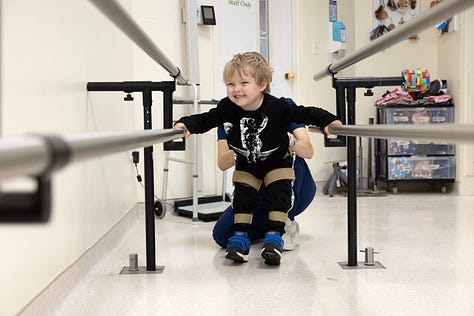
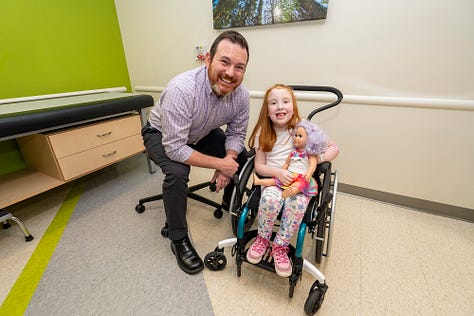
I recently watched my three-year-old daughter take her first weight-bearing steps, clutching a toy shopping cart, her legs in orthotic braces, one of her beloved physical therapists steadying her — paid for by you, the taxpayers, through Medicaid. I want to start with gratitude. Every time our government pays for a life-changing surgery for my daughter, or another round of therapy, I am overcome by the miracle of it. It’s easy to take for granted that America is, as disability law scholar Samuel Bagenstos puts it, “the envy of the world” when it comes to disability support.

Sure, there are days I want to beat my head against a wall navigating the Medicaid waiver system. Days I lament that if it’s this hard for me — with a graduate degree from Duke — how impossible it must be for a single mother whose first language isn’t English. No social worker walks you through the system; there’s no funding for that. We still have much work to do. But my daughter’s experience of life is dramatically better than most of her peers with disabilities around the world.
A few days before we got the prenatal diagnosis that she had the most severe form of spina bifida, I was talking with a woman at the park who had immigrated from Russia. She told me one of the things that struck her most about America was how much easier life was here for people with disabilities — that being born disabled in Russia was often a life sentence of suffering.
For 50 years, America has built a remarkable, bipartisan legacy of disability rights, thanks to tireless advocacy from disability activists across the political spectrum:
The Rehabilitation Act under Nixon
The right to public education for disabled children under Ford
Section 504’s guarantee of reasonable accommodations under Carter
The Fair Housing Act Amendments under Reagan
The Americans with Disabilities Act itself under George H.W. Bush and its later strengthening under George W. Bush
The Affordable Care Act’s ban on denying coverage for pre-existing conditions under Obama.

It’s the Americans with Disabilities Act that lets my wheelchair-using daughter access our church, her school, our grocery store. As a passionate Christian, I look at this 50-year, bipartisan project and can only call it divine intervention.
Which is why, as a follower of Jesus, I read a new Department of Justice memo — one that threatens the legal protections that give children like my daughter the option to live in their homes rather than in an institution — and call it contrary to all that is good and sacred. I first heard about the memo the same day my daughter took her first steps, and my spirit went from elated to gutted.
Stephen Miller, the White House deputy chief of staff, was reportedly the driving force behind the memo, according to Bloomberg Law. In plain terms, as the journalist Lynn Schmidt has written, it means states could stop funding the therapy, home care and community supports that let people like my daughter (and hers) live among us, “and face no federal accountability for doing so.” America’s bipartisan legacy against institutionalization is focused on keeping families together and protecting the most vulnerable, and is a priority not only for people of faith but also for the vast majority of Americans. How could we reverse direction?
The politics being sold to the public are about getting mentally ill people off the street. But the legal mechanism being used is broad enough to reach any Medicaid-funded disability service in the country. A Texas-led lawsuit, joined by five other states, is simultaneously working towards this end.
Between the lawsuit, the memo, and last year’s deep Medicaid cuts, the future care of the 5.1 million people who receive Medicaid-funded home care (and the 600,000 people on waiting lists) now depends on a legal fight most Americans have never heard of.
While it is true that there is a serious lack of high-quality institutional options for those whose needs cannot be met within the community (who end up in jails or ERs), it should be Congress that thoughtfully legislates these institutions into being, in consultation with the community. Any forced institutionalization under the Trump administration is likely to resemble corporate-run immigration detention centers.
It’s hard to overstate how horrific institutionalization was before we prioritized in-home andcommunity-based care. When Robert Kennedy — RFK Jr.’s father — visited the Willowbrook State School in 1965, he found thousands of residents “living in filth and dirt, their clothing in rags, in rooms less comfortable than the cages we put animals in at the zoo.”
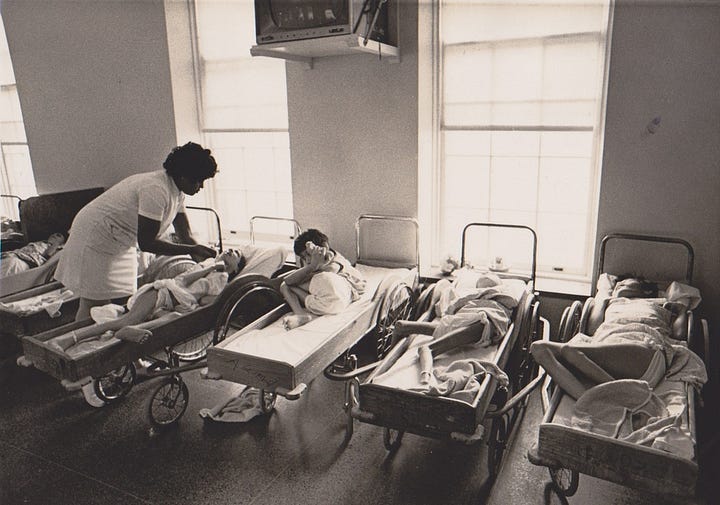
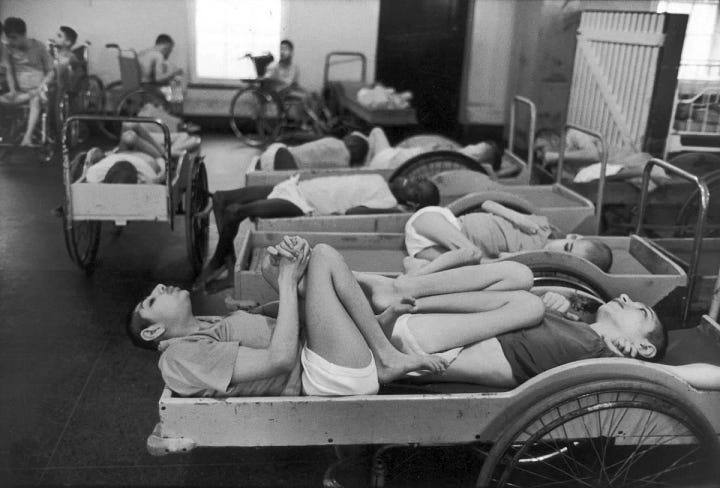
The public outcry led to a sea change in policy. That history is why no doctor pushed us toward institutionalizing our daughter, as one might have just decades ago. They knew state-funded therapists would come to our home starting in infancy. Termination rates following a prenatal disability diagnosis are already tragically high in America—63% for spina bifida and 74% for Down Syndrome, to name just two conditions. How much higher would they be without the supports we currently have?
My friend Sloan Meek, a musician and disability activist with severe cerebral palsy, put it starkly: “The way I move through the world, the way I communicate, the people who help me do the things I want for my life — it’s all supported by Medicaid. Without it, I’ll be forced into a nursing home to spend the rest of my life in a hospital bed.”
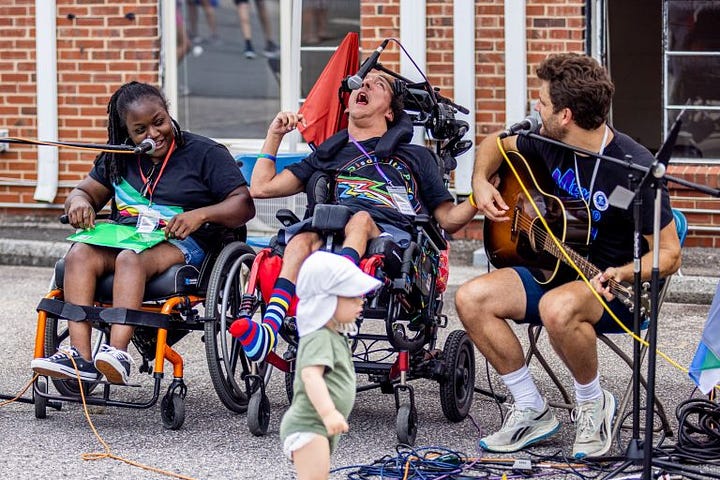
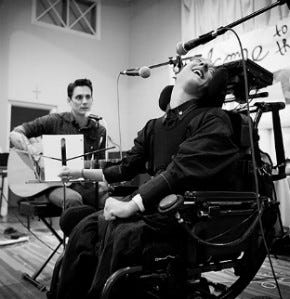
I met Sloan a decade before I had a child with a disability myself, at Reality Ministries, an intentional community in Durham, NC where people with and without intellectual and developmental disabilities share life together. The community upended my worldview. I’d grown up steeped in American meritocracy — the belief that my worth lay in my productivity, my intelligence, my appearance. Five glorious minutes at a Reality Ministries dance party expose those premises as lies.
As theologian Stanley Hauerwas would encourage us, the primary question isn’t how we include people with profound disabilities, but how people with profound disabilities might convert the rest of us to a life free from the bondage of meritocracy and self-sufficiency. If we warehouse people with disabilities out of sight and out of mind, we are all impoverished.
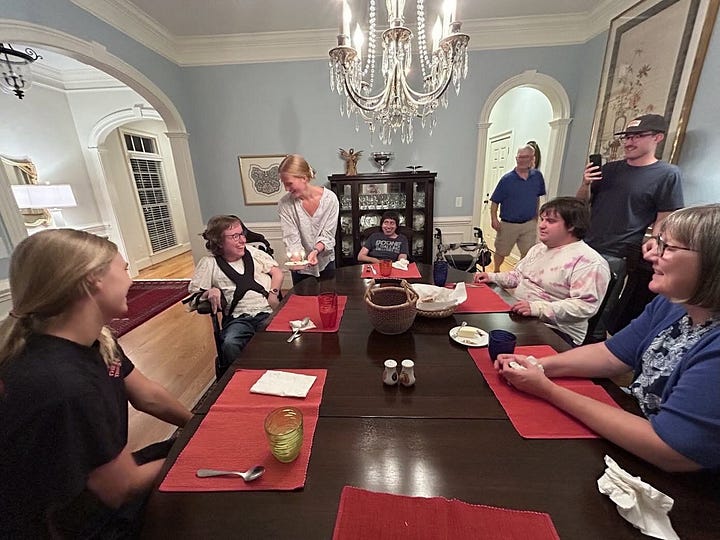
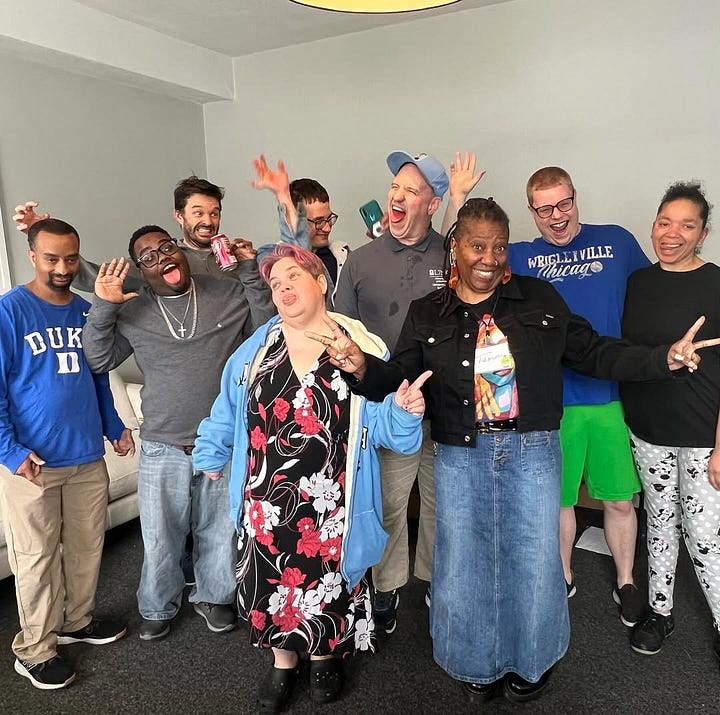
“All flourishing is mutual,” as the writer Robin Wall Kimmerer says. I felt this viscerally in that intentional community, watching my own defenses — years of academic striving built to mask my own neurodivergence — melt like wax in the candle glow of love and openness embodied in that space.
I keep wondering what might have happened if, in 2007, my fellow Duke alumnus Stephen Miller had wandered two blocks from campus to the newly founded Reality Ministries, and felt his own loneliness and academic posturing melt in that same glow.
Lena Van Wyk holds a Master of Divinity from Duke Divinity School and is the founder of New Garden Farm Ministry in Greensboro, North Carolina. She writes here as the mother of a three-year-old with spina bifida.
No posts
Comments
Nothing yet. Say the first thing.
Sign in to join the conversation.