
Artificial intelligence based on faulty neuroscience is likely to reach a dead end. The narrative of the research program at DeepMind, at least as described by Demis Hassabis, rests on a claim about visual imagination that he published as a graduate student. This was his first and biggest neuroscience paper, the co-authored “Patients with Hippocampal Amnesia Cannot Imagine New Experiences,” published in the Proceedings of the National Academy of Sciences in 2007. The authors can be forgiven for not yet conceiving of aphantasia because the University of Exeter neurologist Adam Zeman’s first paper about an individual without a visual imagination was three years away and Zeman did not name the condition until 2015.1
Hassabis’s 2007 experiment was simple. Five men with amnesia from hippocampal damage and ten healthy men sat across from an examiner who read out short scenario cues, like “Imagine you’re lying on a white sandy beach in a beautiful tropical bay.” Each man was asked to describe the imagined scene aloud in as much detail as possible. The examiner encouraged them to “see the situation and setting in their mind’s eye” as if they were physically present.
The argument for linking episodic memory and imagination was that both “involve the salient visualization of an experience within a rich spatial setting or context,” as distinct from “‘simple’ visual imagery (e.g., for faces or single objects).” The descriptions were then scored on a composite called the experiential index, running from 0, “not experienced at all,” to 60, “extremely richly experienced.” The scorer was asked to rate, on a scale of 0 to 10, “how well they felt the description evoked a detailed ‘picture’ of the experience in their own mind’s eye (0, no picture at all; 10, vivid, extremely rich picture).”
Visual imagery is crucial here in three ways: the examiner asks for it, the participant rates his own, and the scorer consults theirs. The conclusion rests on the imagery ratings: “the critical attribute determining whether internally generated experiences, either real or imaginary, are hippocampal-dependent may be the extent to which they are vividly (re-)experienced.” One of the five patients, P01, performed normally. The patients rated their own sense of presence and the salience of what they imagined no differently than the healthy controls did.
Hassabis and one of his co-authors, the late Eleanor Maguire, went on to publish two more theory papers generalizing the experiment. A 2007 paper in Trends in Cognitive Sciences, “Deconstructing Episodic Memory with Construction,” defined scene construction as “the process of mentally generating and maintaining a complex and coherent scene or event,” whose product “has a coherent spatial context, and can then later be manipulated and visualized.” The paper defines imagination as “richly imagining and visualizing a new fictitious experience,” and assigns visual imagery as a component process of imagination, episodic recall, future thinking, navigation, viewer replay, and vivid dreaming. They further claim that “Being able to accurately and richly mentally simulate or construct what those possible future states might be like, before making the decision, would aid both the evaluation of the desirability of those outcomes and the planning processes needed to make them happen.” A 2009 paper in Philosophical Transactions of the Royal Society B, “The Construction System of the Brain,” extends the framework to a cross-species “construction system.”
The 2007 findings were disputed almost immediately. Other labs found amnesia patients who could imagine scenes perfectly well, and by 2012 Hassabis co-wrote a review admitting no one knew why. But the dispute was largely about which patients and which brain damage. I have not seen reconsiderations of the paper’s conclusions as the basis of DeepMind’s AI work in light of aphantasia research about intelligence without visualization.2
Even with the 2012 revision, there is a fairly straightforward line of thought from Hassabis’s 2007 paper presuming a clear link between visual imagery and construction to the 2017 review in Neuron, “Neuroscience-Inspired Artificial Intelligence,” the agenda-setting manifesto for neuro-AI. Hassabis and coauthors argue that the human brain is “the only existing proof that such an intelligence is even possible.” The section “Imagination and Planning” tells AI researchers to consult “the related literature on how humans imagine possible scenarios, envision the future, and carry out simulation-based planning, functions that depend on a common neural substrate in the hippocampus (Doll et al., 2015; Hassabis and Maguire, 2007, 2009; Schacter et al., 2012).” The deep generative models that produce image sequences are “a parallel to the function of the hippocampus in binding together multiple components to create an imagined experience that is spatially and temporally coherent (Hassabis and Maguire, 2007).”
The same month as the July 2017 manifesto, DeepMind released two research papers and a blog post announcing “agents that imagine,” programs that plan by running predictions forward.3
Hassabis’s neuro-AI program was entangled from the beginning with a definition of imagination as generating coherent, vivid, visualizable scenes. DeepMind’s newer systems, Genie and Veo, generate realistic video of imagined environments.4 DeepMind touts Genie 3, with its interactive visual worlds, realism, physical consistency, and persistence over time, as “key on the path to AGI.” But visual realism, frame-to-frame persistence, and the ability to regenerate an object after it leaves the camera view are about continuity, not necessarily evidence of causal understanding, abstraction, or general intelligence.
As Zeman et al. showed in “Lives Without Imagery — Congenital Aphantasia” (2015), visualization is not necessary for imagination. People with profound congenital aphantasia (and I am one) have no capacity for voluntary visual imagery. Over the last ten years a growing body of scholarship has demonstrated that aphantasiacs can plan, remember, navigate, and create with spatial or verbal structures, without pictures.5 I write about it regularly as a literary scholar and reviewed Zeman’s 2025 book, The Shape of Things Unseen: A New Science of Imagination. Ed Catmull, who invented much of computer rendering and co-founded Pixar, has aphantasia; as does Glen Keane, who animated Ariel in Disney’s The Little Mermaid. I credit my own talent at recognizing current AI writing to my aphantasia.
The neuroscience-to-AI argument conflates one mode of conscious experience (visual imagery) with the computational functions of imagination, memory, and planning.6 But aphantasia research provides evidence that visualization isn’t necessary and fiction provides evidence that agents can be constructed with language. DeepMind’s own MuZero and Dreamer prove the point. They “imagine” and plan without pictures. A world model does not need a mind’s eye.
Finally, the Science of Language?
What did persistent assumptions about visualization cost? DeepMind devalued the role of language and fiction, which may be far more important for AI.7 “Visual” appears 24 times in the 2017 manifesto. “Language” appears 5 times. The manifesto acknowledges that “imagination has an intrinsically subjective, unobservable quality.” The success of large language models demonstrates that visually rendered simulation is likely not the best route to general intelligence.
Reading Sebastian Mallaby’s (Machine Readable’s) recent book, The Infinity Machine, on Hassabis, I get the sense that Hassabis has a well-functioning visual imagination.8 The philosopher Christian O. Scholz coined “the visualizer’s fallacy” to describe the false assumptions of visualizers who visualize when carrying out a task assuming that anyone with aphantasia cannot do the task. His examples are mental rotation tasks and the animal-tails test, “widely considered to test for mental imagery, until recent findings showed that they can also be solved by aphantasics.”
According to Mallaby, Hassabis believes, via Kant, that the universe reaches you only through the brain, so after an early career in game design, he thought neuroscience was the logical next step. It seems like more game design to me: if the world is a simulation, the brain is a game engine and the builder of the engine can reverse engineer it. So the hippocampus experiments were designed like a game: ask a person to generate a scene, describe (render) it in detail, make it spatially coherent. The patients were scored the way someone might score game graphics.
Reverse-engineering the brain this way hasn’t worked, it seems.
Where does fiction fit in? In nearly every interview, Hassabis talks about being influenced by certain works of science fiction: Orson Scott Card’s Ender’s Game (1985), Isaac Asimov’s Foundation series (1951–1953), Iain M. Banks’s Culture series (1987–2012), Philip K. Dick’s Do Androids Dream of Electric Sheep? (1968), which became Ridley Scott’s Blade Runner (1982), John Fowles’s The Magus (1965), and Lana and Lilly Wachowski’s The Matrix (1999).9 And yet he mentions none of these works or authors as part of the formal intellectual genealogy for his AI work. The 2017 manifesto cites Turing, Craik, Tolman, Marr, Tulving, and his own neuroscience; no fiction. The 2007 paper, tons of theory, no fiction.
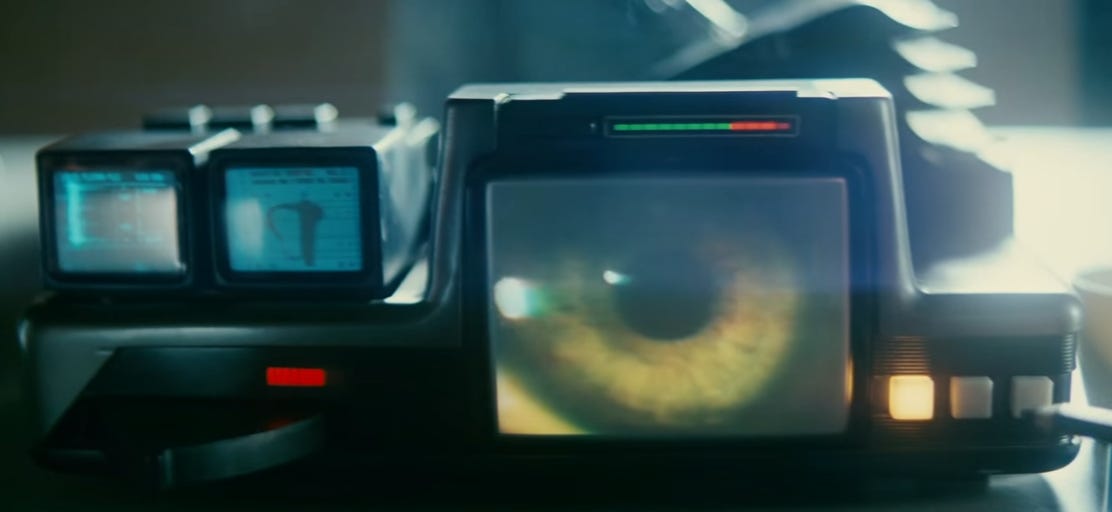
Fiction is an inspiration, a kind of “giving tree,” as I put it on X, but not yet a body of knowledge about how imagination constructs agents, worlds, motives, beliefs, and possible futures via language.
Yet narrative-comprehension research shows that readers build “situation models,” coherent representations of characters, locations, actions, and events. More recent work describes how people understand stories by abstracting away from perceptual details with situational models. The hippocampus is involved with how narrative events are organized and encoded.
Fiction is also more about agents (Ender, Hari Seldon) than scenery. Readers have to grasp other people’s beliefs, intentions, and emotions. Research has shown that neural responses become more similar among people who share an interpretation. There is substantial neuroscience on how readers and listeners represent the beliefs and emotions of fictional characters. The linguistic practices for creating artificial (fictional) persons and worlds in readers’ minds are far older and more tested than neuroscience.
Agents maintain their identity across long novels. Fiction represents events that are far away from a scene being described. Fiction can embed one person’s beliefs inside another person’s beliefs. Fiction is all about causal histories, counterfactual possibilities, shifting viewpoint, compressed time, withholding information, and allowing later information to revise the interpretation of earlier events. Readers understand situations that stretch far beyond what is explicitly stated in language on the page.
Literary criticism has developed rich and rigorous practices for teaching and studying all of this. Why not bring the work that authors do, from Homer to Orson Scott Card to the Wachowskis, of bringing to life beings—artificial intelligences in fully created worlds—that live and breathe in our human imaginations as fully alive for thousands of years, in the case of Odysseus and Penelope and Circe and Telemachus and all the rest.
I would love to see Hassabis turn to questions about fiction and AI. How did the authors who inspired him make characters and situations feel alive, in language, to him? What are the techniques by which some characters becomes embedded in the cultural consciousness, so that they seem like a real person, with voice, interiority, hopes, fears, a trajectory, some real coherence? How is it that most attempts at this fail, as the remainder tables at any bookstore sadly make clear. Most characters are forgotten. The ones the world remembers are the ones that should be studied.
On July 14, 2026, weeks before stepping down, Hassabis posted on X a framework essay on AGI governance. It describes “a post-scarcity world,” which Banks described as the Culture’s defining condition, and asks the Culture novels’ standing question, “what will meaning and purpose be,” without mentioning Banks. DeepMind’s leadership transition creates an appropriate moment to examine its scientific assumptions under Hassabis. (I note that AlphaFold is technically independent of the hippocampal imagination thesis of the 2017 paper.10)
As a person with aphantasia I simply note that DeepMind treated the mind’s eye as a route to general intelligence in the exact era that aphantasia research was showing that intelligent thought does not require one.
Francis Galton first noted the absence of voluntary visualization ability in 1880, as Adam Zeman describes. Zeman’s first paper was on the case of MX, who lost imagery after a cardiac procedure: Adam Zeman et al., “Loss of Imagery Phenomenology with Intact Visuo-Spatial Task Performance: A Case of ‘Blind Imagination,’“ Neuropsychologia 48, no. 1 (2010): 145–155, https://doi.org/10.1016/j.neuropsychologia.2009.08.024. Zeman named the condition in Adam Zeman, Michaela Dewar, and Sergio Della Sala, “Lives Without Imagery — Congenital Aphantasia,” Cortex 73 (2015): 378–380, https://doi.org/10.1016/j.cortex.2015.05.019.
Larry R. Squire, Anna S. van der Horst, Susan G. R. McDuff, Jennifer C. Frascino, Ramona O. Hopkins, and Kristin N. Mauldin, “Role of the Hippocampus in Remembering the Past and Imagining the Future,” Proceedings of the National Academy of Sciences 107, no. 44 (2010): 19044–19048, https://doi.org/10.1073/pnas.1014391107 (hippocampal amnesics “showed an intact ability to create detailed imaginary future events”); Eleanor A. Maguire, Faraneh Vargha-Khadem, and Demis Hassabis, “Imagining Fictitious and Future Experiences: Evidence from Developmental Amnesia,” Neuropsychologia 48, no. 11 (2010): 3187–3192, https://doi.org/10.1016/j.neuropsychologia.2010.06.037; Daniel L. Schacter, Donna Rose Addis, Demis Hassabis, Victoria C. Martin, R. Nathan Spreng, and Karl K. Szpunar, “The Future of Memory: Remembering, Imagining, and the Brain,” Neuron 76, no. 4 (November 21, 2012): 677–694, at 683, https://doi.org/10.1016/j.neuron.2012.11.001.
Théophane Weber et al. (including Demis Hassabis), “Imagination-Augmented Agents for Deep Reinforcement Learning,” Advances in Neural Information Processing Systems 30 (2017), https://arxiv.org/abs/1707.06203; Razvan Pascanu et al., “Learning Model-Based Planning from Scratch,” arXiv (July 2017), https://arxiv.org/abs/1707.06170.
There are experimental research prototype models whose advertised capability is about a minute of “visual memory,” meaning that previously seen details can reappear consistently when the camera returns to them after being elsewhere. This solves a continuity engineering problem for interactive video generators. Genie 3 can refer back and reconstruct a feature that has left the frame, like a group of trees beside a building that remains in place as the viewpoint moves away and returns.
Alexei J. Dawes, Rebecca Keogh, Thomas Andrillon, and Joel Pearson, “A Cognitive Profile of Multi-Sensory Imagery, Memory and Dreaming in Aphantasia,” Scientific Reports 10 (2020): 10022, https://doi.org/10.1038/s41598-020-65705-7, found reduced episodic detail with otherwise typical cognition. Fraser Milton et al., “Behavioral and Neural Signatures of Visual Imagery Vividness Extremes: Aphantasia versus Hyperphantasia,” Cerebral Cortex Communications 2, no. 2 (2021), https://doi.org/10.1093/texcom/tgab035, administered the Hassabis scenarios to aphantasics, dropping the spatial coherence index that presumed visual imagery. Subjects with aphantasia scored far below controls on participant vividness ratings and the scorer’s mind’s-eye picture but with no significant differences on any standard memory test. Wilma A. Bainbridge, Zoë Pounder, Alison F. Eardley, and Chris I. Baker, “Quantifying Aphantasia through Drawing,” Cortex 135 (2021): 159–172, https://doi.org/10.1016/j.cortex.2020.11.014, found subjects with aphantasia could draw rooms from memory with accurate spatial layout, fewer object details, with fewer intrusions from false memories. Rebecca Keogh, Michael Wicken, and Joel Pearson, “Visual Working Memory in Aphantasia: Retained Accuracy and Capacity with a Different Strategy,” Cortex 143 (2021): 237–253, DOI 10.1016/j.cortex.2021.07.012. Also Rebecca Keogh and Joel Pearson, “The Blind Mind: No Sensory Visual Imagery in Aphantasia,” Cortex 105 (2018): 53–60, https://doi.org/10.1016/j.cortex.2017.10.012.
One influential strand of DeepMind’s research has focused on scene representation and rendering. GQN looks at a few pictures of a room, builds an internal description, and produces an image of the room from a viewpoint it has never seen. See S. M. Ali Eslami et al., “Neural Scene Representation and Rendering,” Science 360, no. 6394 (2018): 1204–1210, https://doi.org/10.1126/science.aar6170. MuZero (2020) planned inside a learned model that predicted outcomes rather than images. The Dreamer line trained agents through “imagined” rollouts in latent states rather than rendered pictures. See Julian Schrittwieser et al., “Mastering Atari, Go, Chess and Shogi by Planning with a Learned Model,” Nature 588 (2020): 604–609, https://doi.org/10.1038/s41586-020-03051-4; Danijar Hafner et al., “Dream to Control: Learning Behaviors by Latent Imagination,” ICLR 2020, https://arxiv.org/abs/1912.01603; and Danijar Hafner et al., “Mastering Diverse Control Tasks through World Models,” Nature 640 (2025): 647–653, https://doi.org/10.1038/s41586-025-08744-2.
See Raymond A. Mar, “The Neural Bases of Social Cognition and Story Comprehension,” Annual Review of Psychology 62 (2011): 103–134, https://doi.org/10.1146/annurev-psych-120709-145406; Raymond A. Mar and Keith Oatley, “The Function of Fiction Is the Abstraction and Simulation of Social Experience,” Perspectives on Psychological Science 3, no. 3 (2008): 173–192, https://doi.org/10.1111/j.1745-6924.2008.00073.x; and Lisa Zunshine, Why We Read Fiction: Theory of Mind and the Novel (Ohio State University Press, 2006), https://muse.jhu.edu/book/28189.
As I’ve described, I too was a very good chess player in elementary and middle school but I hit a cognitive wall with my inability to visualize and play games in my head. I was highly mathematical but turned to language in college, because it turned out I imagine in language, not images or abstractions.
Note the pattern of simulation stories about a constructed world (The Matrix, the Culture, the Magus’s godgame), a constructed person (Blade Runner’s replicants, with implanted memories), and a constructed training environment (Ender’s battle school, Seldon’s predicted futures). It seems what Hassabis took from fiction was the subject matter, overlooking that each work is a simulation made with language. (Blade Runner and The Matrix were in language before they existed as film.)
Some AlphaFold mechanisms resemble themes in the 2017 paper, such as attention, relational representations, iterative internal computation, and AI as a tool for science. These are broad family resemblances rather than a technical derivation from the hippocampal imagination thesis.
Comments
Nothing yet. Say the first thing.
Sign in to join the conversation.