
This is the seventh in a series of posts for Hogwarts Professor Paid Subscribers that introduces the Perennialist interpretation of fiction via a book by Ray Livingston titled The Traditional Theory of Literature (University of Minnesota Press, 1962). I have sent out six chapters thus far in single posts — Prologue, Man, Society, and Art, The Creative Process, The Work of Art, Part One, The Work of Art, Part Two, and The Function of Works of Art— and we have only the Conclusion to send out after the chapter below, Judgement and Criticism.
It is also arguably the most relevant and challenging of Livingston’s chapters because it discusses how a literary work of any quality is properly read and interpreted.
It is challenging, because traditional literary criticism is as demanding and can be as creative as the original artist’s efforts. Interpretation, if done properly, is potentially as important for the reader of a work understanding its depth and power as the symbols and anagogical artistry the writer of the story wove into a narrative-tapestry. That kind of exegesis, however, requires the critic to grasp the intention of the work or of the author to gauge the success of the result in realizing it, which understanding necessitates familiarity at least with its archetypal roots.
This chapter is relevant to Rowling Readers because we are entering a Renaissance of Potter Mania subsequent to the HBO+Bronte Studios adaptation of the Hogwarts Saga for television. What are the right and wrong ways to interpret Harry Potter’s seven volume Bildungsroman?
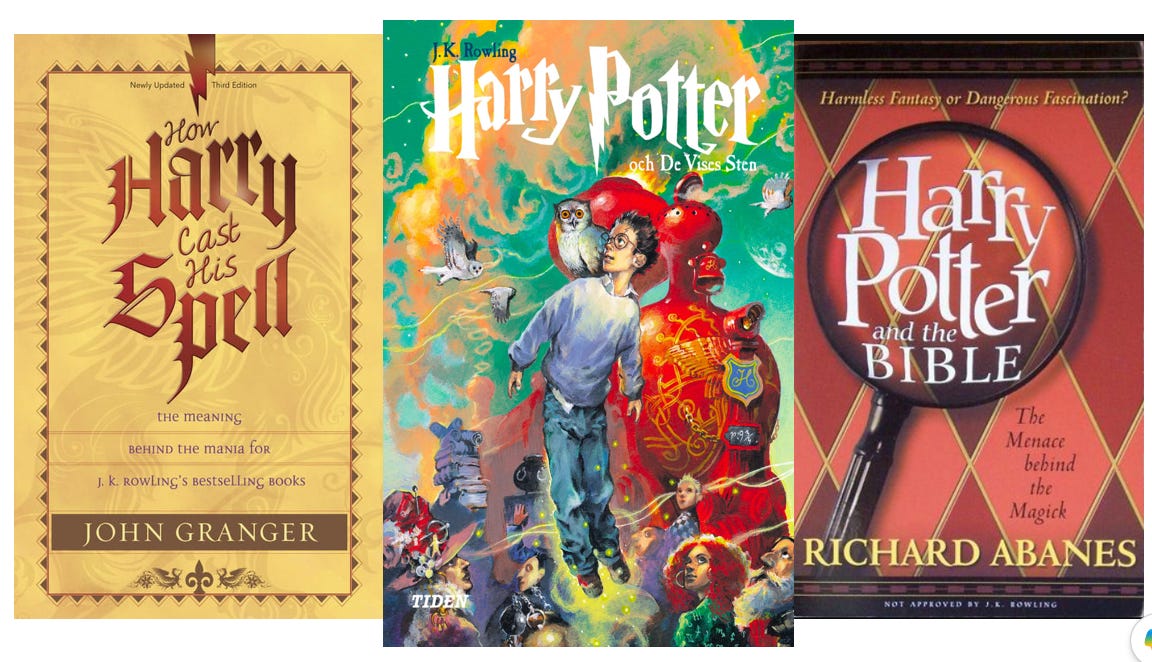
In the Potter Panic years, 1999 to 2007, there was a surfeit of illustrations of what Coomaraswamy would consider the wrong ways, most notably, literary criticism that did not judge Rowling’s work either by measuring whether the text as published succeeded in doing what Rowling intended it to do or by interpreting the symbols, allegories, and other transcendent content of her books.
A traditional understanding of Harry Potter and the ability to write about it requires
a knowledge of the tools with which Rowling was working,
a determination to explain the author’s artistry for the reader’s greater conscious appreciation of what he or she had experienced imaginatively, and
the personal watchfulness and sufficient self-awareness to prevent making the text into a sock-puppet or project screen for the critic’s identity issues, psychological, political, or religious.
In the near absence of critics having any familiarity with the writing tools in Rowling’s Shed, what serious readers found instead on book stores’ shelves and online in the way of Harry Potter criticism was:
superficial praise and blame of Rowling’s vocabulary and story-telling chops,
academic celebration and dismissal of Rowling as a brilliant writer or one “unworthy of adult attention,” and
attacks from religious Culture Warriors determined to make refusing to read the series a touchstone of righteousness and falling under its spell a token of godlessness, even demonic possession.
These last bits were especially embarrassing to thoughtful Christians and readers if understandable in light of proper concerns about the occult and the corruption of children’s morals. As Mark Shea explained in his Harry Potter and the Christian Critics (First Things, 13 September 2008), the Protestant, Catholic, and Orthodox professional Culture Warriors’ objections to the books revealed only that they had not read the books or were unable to comprehend what they had read.
Shea is spot-on in his arguments and conclusion, but he responds to the tribe of Harry Potter’s Christian Critics on almost exactly the same level of thinking as the sophists he rebukes. For a truly profound explanation of where the devotional religious Pecksniffs go off the rails, the chapter of Livingston’s book below, ‘Judgement and Criticism,’ is essential reading. Coomaraswamy’s explanation of proper, which is to say, traditional literary criticism is one I think all Rowling Readers need to have firmly in mind as we begin the renaissance not only of Potter Mania but also of misuse of the books by Heresy Hunters and Harry Haters to advance their claims of Greater Grace.
The Chapter is not easy reading and I apologize if my highlighting and coloration of sentences I thought especially meaningful does not make that reading any easier. As always, the effort put into appreciation of Livingston’s writing rewards itself many times over. If you are like me, as you read it, you will find yourself reflecting on how much AKC and Livingston’s ideas do and do not apply to the writing of insightful criticism about the work of J. K. Rowling. I look forward to reading what you think in the comment thread below!
Thank you as always to our Paid Subscribers for helping us keep the lights on! We set up the lighting, backdrops, and sound systems in the Rowling Studies film studio this week; stay tuned for Nick’s and my ‘Lake, Shed, and Golden Threads’ Summer School coming up soon.
Comments
Nothing yet. Say the first thing.
Sign in to join the conversation.