
This episode is branched from Season 6, Episode 2, Episode 3 and Episode 4. However, it doesn’t take the main themes of these episode, but reflects one of the causes of the issues discussed in the three articles.
Since episode 2 is about the decay, so this episode number is reflected in the extension of the number in its subtitle. This explanation is enough to make it Episode 2-1, because it is directly connected with the expected decay, when the situations continue running in the same direction toward human rights violations and injustice.
Decay doesn’t occur fast, but slowly. People in a hurry to coup with the fast tempo of life will miss it, if they don’t take a break to think wisely of every development.
The decay described in Episode 2, the rupture outlined in Episode 3, and the systemic collapse traced in Episode 4 converge into a single European contradiction: democratic frameworks that quietly reproduce authoritarian behavior.
This episode examines that contradiction not as an abstract political flaw, but as a structural mechanism... one that emerges whenever institutions prioritize stability over justice, procedure over accountability, and national interest over human rights.
In this zone, authoritarianism does not arrive through force; it arrives through continuity. It grows inside the very democratic systems designed to prevent it.
Authoritarianism is not a European phenomenon alone; it is a structural pattern that emerges wherever institutions drift away from justice. Whether in parts of Africa, America, Asia, or Australia, the same mechanism appears.
It appears clearly in systems that claim democratic legitimacy while quietly adopting practices that restrict rights, suppress accountability, and normalize injustice. These patterns show that authoritarian drift is not tied to geography but to institutional behavior.
Europe is not isolated from this global pattern; it is one of its clearest mirrors of this global motion, not because it is uniquely vulnerable, but because its democratic identity makes the contradictions more visible.
When institutions continue moving in the same direction toward violations of human rights and injustice, the drift becomes structural, and the democratic surface begins to conceal an authoritarian core.
Europe presents itself as a continent of mature democracies, fortified by constitutions, courts, and long‑standing institutional traditions. Yet within these same structures, authoritarian patterns can quietly take root.
The paradox emerges when democratic systems rely so heavily on procedural legitimacy that they overlook the moral legitimacy required to protect rights, dignity, and justice. In this zone, democracy becomes a surface architecture: stable on paper, but vulnerable in practice.
Authoritarianism inside European democracy does not arrive through dramatic seizures of power; it arrives through administrative continuity. It grows when institutions prioritize self‑preservation over accountability.
This happens when legal frameworks are interpreted in ways that shield state actors, and when political culture normalizes the marginalization of vulnerable groups.
The paradox is not that democracy fails suddenly; it is that democracy can drift into authoritarian behavior while still calling itself democratic.
The drift toward injustice inside European systems does not begin with dramatic decisions or visible confrontations. It begins with small institutional movements, subtle shifts in administrative behavior, procedural interpretations, and political habits that gradually reshape how rights are applied.
These shifts are rarely announced, rarely debated, and rarely recognized as dangerous. They accumulate quietly, forming a slow motion that pushes institutions away from their moral foundations while still maintaining the appearance of democratic order.
This drift becomes structural when institutions start prioritizing continuity over correction. When a system repeatedly chooses stability instead of accountability, efficiency instead of fairness, and national interest instead of human dignity, injustice becomes normalized.
It enters the daily operations of courts, ministries, municipalities, and agencies. It becomes embedded in how decisions are justified, how complaints are processed, and how vulnerable groups are treated.
Over time, the system no longer needs explicit authoritarian policies; the drift itself produces authoritarian outcomes.
In this zone, injustice is not an event; it is a direction. It is the predictable result of institutions that continue moving along the same path even when that path leads toward violations of rights.
The structural drift toward injustice is therefore not accidental; it is the natural consequence of systems that refuse to confront their own decay.
Authoritarian continuity inside European democracies does not depend on explicit authoritarian leaders. It survives through structural mechanisms that allow institutions to reproduce the same patterns of control, exclusion, and injustice over long periods of time.
These mechanisms operate quietly, often under the cover of legality, administrative procedure, or political tradition.
Each mechanism forms a pathway through which authoritarian behavior can persist even when the system calls itself democratic.
Below are the five core mechanisms, each expressed in its own paragraph to preserve clarity and analytical depth.
Bureaucratic shielding occurs when administrative bodies protect themselves from scrutiny by creating layers of procedure that make accountability nearly impossible. Complaints are redirected, delayed, or dissolved through technicalities. Decisions are justified through internal rules that the public cannot challenge.
Over time, the bureaucracy becomes a self‑defending organism, capable of hiding misconduct, suppressing dissent, and neutralizing criticism without ever appearing authoritarian.
Shielding transforms institutions into closed systems where injustice can continue unchallenged.
Legal ambiguity allows authoritarian behavior to grow inside democratic frameworks by exploiting unclear laws, vague regulations, or contradictory statutes. When the law is open to multiple interpretations, authorities can choose the interpretation that strengthens their power or weakens the rights of individuals.
Courts may defer to state agencies, police may rely on discretionary powers, and ministries may interpret regulations in ways that disadvantage vulnerable groups.
Ambiguity becomes a tool: it gives institutions the freedom to act without clear limits, enabling authoritarian outcomes through legal pathways.
Institutional self‑protection emerges when systems prioritize their own stability over justice. Instead of correcting wrongdoing, institutions defend themselves, their reputations, and their internal networks. Investigations are softened, internal reviews are symbolic, and responsibility is diffused across departments so no one is held accountable.
This mechanism ensures continuity: even when violations occur, the institution survives untouched. Self‑protection creates a culture where injustice is tolerated because confronting it would threaten the institution’s image or authority.
Political inertia is the refusal or inability of political actors to confront systemic injustice. Leaders avoid difficult reforms, postpone decisions, or rely on symbolic gestures instead of structural change.
Inertia allows harmful practices to continue simply because no one chooses to stop them. It is not active authoritarianism; it is passive authoritarianism. When political systems remain motionless in the face of violations, the drift toward injustice becomes inevitable.
Inertia ensures that authoritarian patterns persist across electoral cycles, regardless of which party is in power.
Administrative opacity is the mechanism through which institutions hide their operations from public view. Information is restricted, documents are inaccessible, and decision‑making processes are concealed behind closed doors.
Citizens cannot see how decisions are made, how cases are handled, or how rights are applied. Opacity creates an environment where injustice can flourish because transparency as the primary safeguard against abuse is absent.
When systems operate in darkness, authoritarian behavior becomes easier to implement and harder to challenge.
(Denmark, England, France, Greece, Italy, Spain, Sweden, Switzerland) These illustrations do not generalize entire nations.
They highlight documented cases where democratic systems produced authoritarian outcomes through the mechanisms described in Section 4. Each example is grounded in publicly reported events, investigations, or rulings.
Readers should confirm details also with other trusted sources.
Denmark’s democratic institutions are strong, yet several cases reveal how administrative opacity and bureaucratic shielding can produce authoritarian outcomes.
One example is the “ghetto laws” (2018–2021), which imposed harsher penalties, mandatory daycare, and forced relocation on residents in designated “ghetto” areas.
Forced relocation occurs in many places, although the making of “ghettos” was not the mistake of the residents in the ghettos, but the failure of planning good integration program I pointed out in 2001, while criticising that program and warning of sever outcomes. Read The Reality of Renovation in Denmark, Series 4, Episode 32 in the Blog-let at the bottom.
Human rights groups, including Amnesty International, criticized these laws as discriminatory and violating equal treatment principles. Amnesty also published a memorandum about recently impacted residents forced out of their homes, as a result of the renovation I described above.
Many human rights violations, and injustice including the cruelty of some of the police, their neglect to one call that resulted in the killing of the ones who called, the framing and lying of one of the police in court to incriminate an innocent, the silencing of some people by injection, the suicide of one of Geneva Convention refugees, all of that was reported to all human rights organizations. Details are on the Blog-let at the bottom.
Another case involves the Støjberg impeachment (2021), where the former immigration and integration minister was convicted for unlawfully separating asylum‑seeking couples. The case exposed how administrative decisions can override human rights protections when institutional self‑protection dominates.
The terrorizing acts, the stalking, the spying on a person from the apartment above his own I reported to the police from January 203 until October in that year was neglected, despite the attached evidences in recording. When the housing company was reported to the police in October 2023, the police neglected that too to protect the real estate company.
The police used my reports to convert them into incriminating acts against me, framed me, lied in a court hearing and paved the way for the company I reported to evict me and proceed with forcing payment for three moths for the period that followed the eviction.
Parallel to this a TV program has been broadcasted to motivate and promote inside residency surveillance and immediately I received a note that anything happening in the section of the building in which I was living will be under surveillance.
That violates privacy rights severely. Read the relevant articles in the Blog-let at the bottom.
In England, the expansion of mass surveillance powers under the Investigatory Powers Act (”Snooper’s Charter”) raised concerns about disproportionate state access to private communications. Civil liberties organizations argued that the law enabled intrusive monitoring without sufficient safeguards.
Additionally, the Windrush scandal revealed how bureaucratic systems wrongfully detained, deported, or denied rights to lawful residents.
The scandal demonstrated how political inertia and administrative opacity can produce authoritarian outcomes inside a democratic framework.
France has faced repeated criticism for police violence, particularly during protests such as the Yellow Vest movement. International observers documented excessive force, raising questions about accountability mechanisms.
Following the 2015 attacks, France’s state of emergency lasted nearly two years, expanding police powers and enabling warrantless searches.
Human rights groups warned that emergency powers were becoming normalized, illustrating how legal ambiguity can sustain authoritarian practices.
Greece has been repeatedly accused by NGOs and journalists of illegal pushbacks of migrants in the Aegean Sea. Reports describe cases where asylum seekers were denied entry or forcibly returned without due process.
The prolonged economic crisis also produced administrative failures in healthcare, housing, and social services, where vulnerable groups faced systemic neglect.
These patterns reflect how institutional self‑protection and political inertia can generate authoritarian outcomes.
Italy’s handling of migrant detention centers has drawn criticism for overcrowding, inadequate conditions, and limited legal access. Investigations by human rights organizations documented cases where detainees were held without clear procedural safeguards.
Additionally, political pressure on journalists, especially those reporting on corruption or organized crime has raised concerns about freedom of expression.
These cases show how authoritarian drift can emerge through legal ambiguity and bureaucratic shielding.
Spain’s response to the Catalonia independence referendum (2017) included police violence, arrests of political leaders, and charges of sedition. International observers questioned whether the response aligned with democratic norms.
Spain’s Citizen Security Law (”Gag Law”) has also been criticized for restricting protests and imposing heavy fines for public dissent.
These examples illustrate how democratic systems can adopt authoritarian tools during political crises.
Sweden’s democratic reputation is strong, yet controversies have emerged around child protection removals, where families, particularly migrants reported opaque procedures and limited avenues for appeal.
Sweden’s expansion of data retention laws and cooperation with intelligence agencies has also raised concerns about privacy and surveillance.
These cases show how administrative opacity and bureaucratic shielding can produce authoritarian outcomes even in high‑trust societies.
Switzerland has faced criticism for detention conditions in certain cantonal facilities, where migrants and asylum seekers reported inadequate medical care and prolonged confinement.
Cases of police misconduct, including excessive force and racial profiling, have been documented by human rights groups. Switzerland’s decentralized system sometimes makes accountability difficult, illustrating how institutional self‑protection can sustain authoritarian patterns.
Authoritarian drift is not confined to Europe; it is a structural phenomenon that appears wherever institutions begin prioritizing continuity, control, and self‑protection over justice.
The patterns described in this episode: bureaucratic shielding, legal ambiguity, institutional self‑protection, political inertia, and administrative opacity are not geographically limited.
They emerge in different forms across continents, shaped by local histories but driven by the same underlying motion: systems that slowly detach themselves from the moral responsibility to protect human dignity.
Across Africa, America, Asia, and Australia, similar dynamics surface when democratic frameworks are strained by political pressure, economic instability, or social fragmentation.
In some countries, emergency powers become normalized; in others, surveillance expands beyond proportional limits; in others still, vulnerable groups face systemic neglect or discriminatory treatment.
These variations differ in intensity and context, but they share a common structural root: institutions drifting toward injustice while maintaining the outward appearance of legitimacy.
This cross‑border reflection is essential because it prevents you from isolating Europe as a unique case. Europe is a mirror, not an exception. The authoritarian mechanisms identified here are part of a global pattern that emerges whenever systems move in the same direction for too long without correction.
By recognizing this broader landscape, the episode situates European authoritarian drift within a worldwide architecture of institutional decay... an architecture that Season 6 continues to reveal piece by piece.
The structural drift toward authoritarianism always reveals itself most clearly in its human impact. Institutions may speak the language of procedure, legality, and democratic continuity, but the lived experience of individuals tells a different story.
When systems begin prioritizing their own stability over justice, the first to feel the consequences are those already standing at the margins: migrants, minorities, the poor, the socially unprotected, and anyone whose rights depend on the integrity of institutions rather than on social privilege.
Human rights violations in democratic contexts rarely appear as dramatic ruptures. They appear as denials, delays, exclusions, and silent harms.
A person is denied access to legal counsel because of administrative ambiguity.
A family loses its housing due to opaque municipal decisions.
A journalist faces pressure or intimidation because an institution prefers silence over accountability.
A migrant is detained or deported through procedures that appear lawful but violate dignity.
These are not isolated incidents; they are symptoms of a system drifting away from its moral foundation.
As the drift continues, injustice becomes normalized. Violations are reframed as “exceptions,” 2technical errors,” or “necessary measures.” Vulnerable groups become targets of policies that claim efficiency or security but produce harm.
The public grows accustomed to stories of mistreatment, and institutions grow accustomed to surviving them. In this environment, human rights are no longer protected by the system; they are protected despite the system.
The consequence is profound: when democratic institutions allow authoritarian mechanisms to operate within them, they create a landscape where rights exist on paper but not in practice.
The moral promise of democracy becomes conditional, unevenly applied, and easily withdrawn. This is the human cost of authoritarian continuity: the erosion of dignity, the weakening of protection, and the slow collapse of trust between people and the institutions meant to safeguard their freedoms.
The authoritarian drift described in this episode is not an isolated malfunction; it is part of a larger systemic motion that began long before the present moment.
Season 6 has already traced this motion through the repetition of historical decay (Episode 2), the pattern of rupture (Episode 3), and the collapse of world systems in motion (Episode 4).
What emerges here is the continuation of that same trajectory inside European democracies: a movement that does not stop, does not correct itself, and does not reverse direction even when confronted with evidence of injustice.
Decay becomes systemic when institutions normalize the very practices that weaken their moral foundations. Each mechanism described earlier: bureaucratic shielding, legal ambiguity, institutional self‑protection, political inertia, and administrative opacity... all of them act like a structural engine, pushing the system forward along a path that leads away from justice and toward decay.
The motion is slow, but it is constant. It does not require dramatic political upheaval; it requires only that institutions continue behaving as they already do. In this sense, decay is not a sudden event but a sustained direction.
As this motion continues, the system begins to lose its ability to self‑correct. Violations become routine. Accountability becomes symbolic. Rights become conditional. The public grows accustomed to institutional failures, and institutions grow accustomed to surviving them.
This is the moment when decay becomes irreversible, not because the system collapses visibly, but because it collapses morally. The architecture remains standing, but its purpose dissolves.
This section connects the European authoritarian drift directly to the broader arc of Season 6: a world moving in one direction for too long, unable or unwilling to confront the consequences of its own continuity.
The decay described here is not new; it is the same decay that repeats across history, ruptures systems, and ultimately leads to collapse. Europe is simply one of the mirrors in which this motion becomes visible.
The exposure of authoritarian drift inside European democracies is not only an analytical task; it is a moral and structural imperative. When institutions begin to normalize injustice, the responsibility shifts to those who can see the motion clearly.
Democracies do not collapse because people fail to understand their laws; they collapse because people fail to confront the moral consequences of institutional behavior.
The imperative here is to restore the connection between democratic identity and democratic practice... a connection that weakens each time a system chooses continuity over justice.
This imperative is structural because authoritarian drift is structural. It does not disappear through symbolic reforms, public statements, or temporary political gestures. It requires a re‑examination of the mechanisms that allow injustice to persist: the shielding, the ambiguity, the self‑protection, the inertia, and the opacity.
Each mechanism must be confronted directly, not as isolated flaws but as interconnected components of a system moving in the wrong direction. Without structural correction, the drift continues, and the decay deepens.
It is also a moral imperative because human dignity is not negotiable. When institutions fail to protect the vulnerable, when rights become conditional, and when injustice becomes routine, the moral foundation of democracy erodes.
The system may remain standing, but its purpose dissolves. The imperative, therefore, is to insist that democratic structures serve their original function: to protect the individual from the power of the state, not to protect the state from accountability to the individual.
Season 6 exposes this imperative by tracing the motion of decay across episodes. Episode 2‑1 stands at a critical point in that arc: it reveals how authoritarianism can grow inside systems that claim democratic legitimacy, and why confronting this drift is essential for preventing deeper collapse.
The moral and structural imperative is clear: to recognize the motion, to name it, and to resist it before it becomes irreversible.
Human rights organizations present themselves as guardians of dignity, justice, and accountability. Their reports, campaigns, and investigations form an essential part of the global democratic landscape.
Yet their actual impact varies widely, shaped by political constraints, funding structures, institutional priorities, and the limits imposed by the very systems they seek to monitor.
Some organizations confront violations with courage and clarity; others operate within narrow frameworks that prevent them from addressing deeper structural decay.
Many organizations focus on documenting violations rather than preventing them. They produce reports, issue statements, and raise awareness, but their influence often stops at the threshold of institutional power. Governments may acknowledge their findings, but rarely act on them.
In some cases, organizations become part of a predictable cycle: violations occur, reports are published, public attention rises briefly, and the system continues unchanged.
This cycle reflects a structural limitation: human rights organizations can expose injustice, but they cannot force institutions to correct it.
At times, organizations face political pressure that shapes what they can say and how far they can go. Funding sources may influence priorities. Diplomatic relationships may limit criticism. Some organizations become cautious, choosing language that is technically accurate but morally softened.
Others focus on individual cases while avoiding systemic analysis, leaving the deeper mechanisms of authoritarian drift untouched. In these situations, the defence of human rights becomes procedural rather than transformative.
Yet there are organizations that push beyond these limits. They confront governments directly, challenge institutional opacity, and insist on accountability even when it is politically inconvenient.
Their work reveals the structural truth: authoritarian drift cannot be confronted by silence, neutrality, or symbolic gestures.
It requires persistent exposure, moral clarity, and a refusal to accept the normalization of injustice. These organizations remind us that human rights protection is not a technical activity; it is a moral stance.
This section exposes the reality behind the global human rights landscape: organizations can illuminate violations, but they cannot stop the systemic motion unless institutions themselves choose correction over continuity. Their role is essential, but their power is limited by the very structures they seek to reform.
In the architecture of decay described in Season 6, human rights organizations stand as witnesses... powerful, necessary, but ultimately constrained by the systems that drift toward injustice.
The motion traced in this episode reveals a truth that cannot be ignored: authoritarianism does not need to overthrow democracy to exist inside it. It grows through continuity, through habits, through structures that slowly detach themselves from the moral purpose they were built to serve.
Europe becomes one of the clearest mirrors of this motion, not because it is uniquely flawed, but because its democratic identity makes the drift more visible when the system begins to contradict its own principles.
The sections of this episode form a single architecture: the global pattern, the European paradox, the structural drift, the mechanisms of continuity, the country illustrations, the cross‑border reflections, the human rights consequences, the systemic decay, and the role of human rights organizations.
Together, they expose a world where institutions continue moving in the same direction even when that direction leads toward injustice. This is the central warning of Season 6: decay is not an event; it is a motion. And once that motion becomes structural, it becomes difficult to reverse.
The moral and structural imperative described earlier returns here with greater clarity. Democracies cannot rely on their identity to protect them from authoritarian drift. They must rely on their willingness to confront the mechanisms that sustain it.
They must recognize that injustice is not a technical failure but a moral collapse. And they must understand that the preservation of human dignity requires more than laws, procedures, or institutions... it requires a refusal to accept the normalization of harm.
This closing reflection prepares you for the outward movement that Season 6 will continue to explore. The decay inside Europe is one chapter of a larger global architecture.
The next episodes will move beyond this mirror, tracing how systems across the world respond to the same motion, the same drift, and the same structural contradictions.
Episode 2‑1 stands as a critical point in that journey... a reminder that authoritarianism grows quietly, structurally, and predictably when systems continue moving in one direction without correction.
Link yourself... your motion https://www.hoa-politicalscene.com/exile-archive-action-guide-builds-the-grassroots-of-social-movement.html
Those Who Stand By Me
Those who carry truth quietly are part of this Archive.
You reached tens of thousands.
Now help this Archive of Truth reach hundreds of thousands.
Our next move begins... to make this world better.
Fifty Years in Motion - From fleeing dictatorial injustice to being displaced for standing with the people, the sacrifices continue. Victory to the mass.
You are entering a living system here... a dynamic index. a structural commentary layer. a digital museum, a civic‑ethical library, a multi‑continent witness archive, a reader‑retention engine - it is your engine, so explore the deepest knowledge treasury it has:
It’s a micro‑entry in the Archive of Truth, combining documentation, analysis, and navigation in a compact form.

A distilled reflection from the Archive of Truth in Exile documenting how institutions reshape reality, bypass due process, the appeal and protect authority at the expense of innocence.
Navigating Europe’s Hidden Authoritarianism - Archive of Truth in Exile: An examination of how democratic frameworks in Europe quietly generate mechanisms of control that mirror authoritarian behavior beneath the surface. Season 6, Episode 2.1
Season 1, Episode 1: Why Testimony Matters? Archive of Truth in Exile: As long as erasure is structural, the ethics of witness remains the only mechanism capable of disabling harm and dismantling the systems that produce it. Because testimony is the only force that travels when borders close. Because witness creates pressure where institutions collapse into silence. Because truth, once spoken, becomes a structure that protects those still exposed to harm and motivates societies to stand up and execute real changes. The Archive holds the vulnerable within its protective system, raising their voices with calm precision and activating cross‑border support that helps release them from the harm they continue to face.
Season 1, Episode 4-1: Terrorizing Bats of Darkness 1 in Denmark! Terror from within! - Archive of Truth in Exile: In Denmark - practicing from above the same psycho‑torturing, relentless noises once used to unnerve opponents of Arab‑Islamic dictators resurfaces in Denmark! The practices here reveals that some of those bats of darkness use the same psycho-terroristic mechanisms of their homelands’ dictatorial systems.
Season 1, Episode 4-2: Terrorizing Bats of Darkness 2 in Denmark! Terror from within! - Archive of Truth in Exile: From Denial to Retaliation: How Witness Becomes the Target? Through the last three years those “bats” started illegal residency above my apartment, got the keys from the local office of the housing company, where their relatives work there and then legalised when renting the apartment to a relative from the same cultural background.
Season 1, Episode 4-3: Terrorizing Bats of Darkness 3 in Denmark! Terror from within! - Archive of Truth in Exile: Neighbour’s Secrets - Living Behind Non‑soundproof Walls, Under Non‑soundproof Ceilings, Among Broken Doors and Broken Trust! The woman was positioned in the apartment to let those “bats” continue their terrorizing acts under the cover of the housing company. The same real estate that violates privacy rights.
Season 1, Episode 4-4: Terrorizing Bats of Darkness 4 in Denmark! Terror from within! - Archive of Truth in Exile: Three years of ignored reported terrorising attempts & surveillance abuses... now the victim becomes the one accused! Testimony from Denmark’s Housing Shadows! Those people from the same cultural background allowed by the housing company to poison my life. These practices of the real estate company are retaliatory.
Season 1, Episode 4-5: Terrorizing Bats of Darkness 5 in Denmark! Terror from within! - Archive of Truth in Exile: How a Case Became a Weapon - The Architecture of Destabilization, January 2023 to Now - When I reported the housing company to the police, the police ordered me out of the station, although the first one I reported to her said: all of these are crimes. Yet, moments later, I was ordered out of the station. Closing the door in my face allowed those crimes to continue and opened the way for further plans to destabilize me.
Season 1, Episode 4-6: Terrorizing Bats of Darkness 6 in Denmark! Terror from within! - Archive of Truth in Exile: How the rhythm of the conspiracies & the flow of violations continue for more than 3 years - The terrorising acts paved the way to incriminating me and then the housing company, which I reported to the police later used false information from those “bats” and the woman above to evict me. It was a prepared plan from the beginning. It is because I have reported illegal apartments they rent including 35 apartments that violate privacy to human rights organizations.
Archive in Exile: When Privacy Becomes Currency! Archive of Truth in Exile: Testimony from Denmark’s Housing Shadows - No Control Over Real Estates in Denmark! The same housing company rents a lot of illegal apartments with no authority or law stopping it. I reported these violations alongside many others who were forced to relocate and some even took their testimonies to Amnesty. In fact most of the apartments he housing company rent in the area violate privacy.
Closing Doors, Opening Conspiracies! - Archive of Truth in Exile: How Denmark’s Police and Courts Weaponize Silence Against Witnesses? When the police ordered me out of the station, the plan was already in motion: to frame me and convert my complaints against the housing company into accusations against me. This is why the woman was positioned in the apartment above mine. My case from the beginning is the prove of the ongoing conspiracy of these actors.
Echoes of Fascist Practice Inside a Home!
·
December 15, 2025
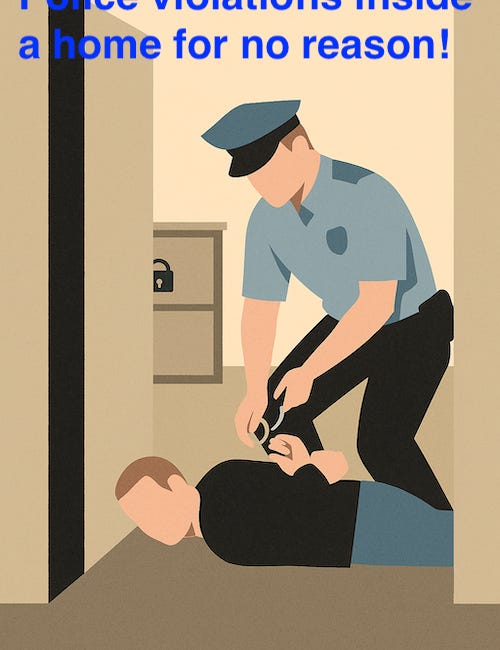
Facing this attack of one of two policemen inside my home, through every action of the policeman, my memory was opened back to the same acts of the Nazi police. Those images ran through my mind as the violence unfolded inside my home.
Echoes of Fascist Practice Inside a Home! Archive of Truth in Exile: Danish policeman’s violations protected by law! The policemen entered my home without announcing themselves. With guns pointed at me, one struck my back, kicked me on the floor, and handcuffed me... a scene that revived dark memories from history. What followed in court protected their actions instead of seeking the truth. So, the court followed political regulations that came forward to support the police.
The Myth of Good Policeman! Archive of Truth in Exile: When a Policeman Lies Without Shame & His Oath, If Found, Is Violated! The policemen did not introduce themselves, framed me and lied in the first hearing... lies that the system accepted without examination. They repeated these falsehoods in two other places. Nothing was done in court to reach the truth; the process relied entirely on believing whatever the police said. This myth began in 2009 by having the government to come with flawed law articles to support the police no matter what they do.
Policeman’s Word Becomes Bible in Denmark! Archive of Truth in Exile: When a Court Align Itself with a Lying Policeman, Justice Wears a Light Parada that Exposes Its Private Organs! When the system allows this through flawed legal articles, it protects itself and its authorities instead of seeking truth. A court that accepts a policeman’s unexamined word over evidence does not act like a democracy... it behaves like a structure drifting toward authoritarian practice.
Funded Silence - Shadow Beneath State! - Archive of Truth in Exile: Legal Resistance Against Manufactured Guilt! This shadow becomes the structure of injustice. It enables authorities to frame innocents and makes the formal system appear determined to break anyone who resists such wrongdoing. And beneath it all lies a financial motive... a system protecting its own interests rather than the truth.
A Case That Was Never A Case! - Archive of Truth in Exile: Seven legal and procedural requirements the court ignored for the favour of lying policeman. There was no case at all... no injury, no attempt of attack, and the two policemen were healthier than I was. Yet the court ignored seven legal and procedural requirements and accepted the officer’s false testimony without question. Sarcastically: as if the judge and his two assistants did not see the obvious.
Civil Hearing Framed as Criminal! - Archive of Truth in Exile: Court Upholds Police Authority, Ignores the Victim! When no crime is committed, a case is not criminal, yet the court was predetermined to side with the representatives of police authority and never question them. This is the most embedded injustice in the Danish system: a civil matter transformed into a criminal one to protect authority, not truth.
Court Hearing: Justice First Cut! - Archive of Truth in Exile: When due process is bypassed, innocence itself becomes the first victim of injustice! This is the deepest cut in the Danish justice system: a hearing where due process was ignored, and innocence was sacrificed to protect authority. What remains shocking is how Danish lawyers, prosecutors, and oversight organisations failed to see - or chose not to see - the violations unfolding in front of them.
Lies in Danish Court Hearing NOT EXAMINED! Archive of Truth in Exile: How a Court in Denmark Declared “Guilt” Without Cross-Examination of Lies? In any developed justice system, such a process would never pass, whether an authority is involved or not. But in Denmark, the entire structure works to protect authority, no matter how wrong the officers were, and no matter how clear the violations.
When Even Defence Lawyer Won’t Object! - Archive of Truth in Exile: A testimony on silence, psychiatric framing, and authority over innocence! The lawyer was not free. I refused the free one because I had already seen how they failed many innocents. I hired one, believing it would be better. It was not. He aligned himself with the lies, remained silent when he should have objected, and allowed injustice to continue. When a defence lawyer will not defend, innocence stands alone against authority.
The Court of Manipulation! - Archive of Truth in Exile: Resistance in the Face of Institutional Theater! A hearing that looked like justice but behaved like choreography... every move predetermined, every silence rehearsed. The court did not seek truth; it performed authority. Lies were protected, and innocence was treated as an inconvenience. In that room, justice was not blind... it was scripted. And resistance became the only honest act left.
Reframing Testimony: Injustice in Denmark! - Archive of Truth in Exile: No Public, No Oath, No Cross-Examination, No Justice! A hearing without public oversight, sworn testimony, cross‑examination is not justice. It is a controlled narrative. In Denmark, my testimony was reframed, stripped of context, and placed into a structure designed to protect authority. When lies are accepted without challenge, and truth is denied the tools to defend itself, the court becomes an echo chamber of power. What happened in that room was not a search for facts but a performance of guilt... manufactured, rehearsed, and imposed.
The Archive as Cultural Engine:
·
Jan 14
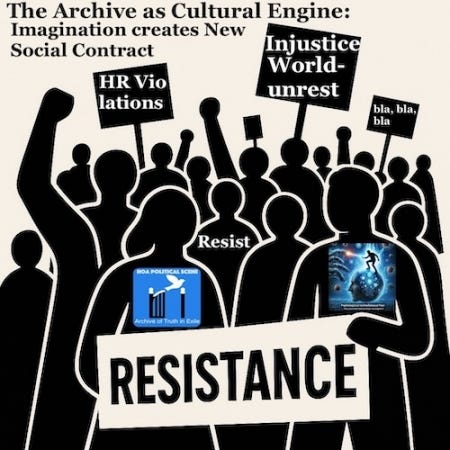
Traditional Court Procedures Produce Injustice - Episode 19 — The Archive as Cultural Engine: Renewal, Imagination, Justice, and the New Social Contract
Six Scenarios of Retaliation and Refusal! - Archive of Truth in Exile: Why Human Rights Organizations are Sleeping in Denmark? Enter lived stories where retaliation is not an accident but a method. Each one exposes how institutions in Denmark quietly refuse responsibility while protecting their own image. If you want to understand why human rights organizations remain asleep, click Six Scenarios of Retaliation and Refusal! to read the full account.
Selecting Juries in Danish Courts! - Archive of Truth In Exile: How the process of selecting juries in Danish courts is fragile and is reflecting injustice? No unjustifiable verdict can erase the dignity earned through 50 years of humanitarian and journalistic work that stands as clear evidence that a person with such a record is not violent. A fragile jury‑selection process in Danish courts quietly shapes outcomes long before a trial begins, and this reveals how this hidden weakness reflects deeper injustice.
Entrapment by Silence, Dignity Restored! - Archive of Truth in Exile: Testimony: Rotation as Evasion! Institutional silence often hides the very mechanisms meant to ensure accountability. Patterns of evasion emerge when officials rotate responsibility instead of confronting the truth. Testimony becomes the only force capable of breaking that cycle. Such silence eventually exposes the system itself, revealing how evasion becomes a practiced institutional habit.
Courts Ignore Fundamental of Justice! - Archive of Truth in Exile: How a court ignores the fundamentals of justice in favor of police authority? Courts undermine justice when they treat police claims as unquestionable words rather than evidence to be tested. This imbalance shifts the entire process away from fairness and toward institutional loyalty. Such deference erases the core principle that courts must remain independent arbiters, not extensions of police authority. The result is a system where the fundamentals of justice are ignored long before a verdict is ever reached.
No Crime, Yet Declared Guilty! - Archive of Truth in Exile: How a Danish court ignored corpus delicti, actus reus, and mens rea in favor of authority? This was intentional, because no real justice can cross these fundamental mechanisms of justice. Any court that performs without applying these would be considered biased and working for the parties who opened the case. This is the deep injustice process in Denmark.
Verdict Declared Without Due Process! - Archive of Truth in Exile: Archive of Truth in Exile: How a court ignores the fundamentals of justice in favor of police authority? This deliberate abandonment of core legal principles turns the courtroom into an arena where authority replaces truth, and the innocent stand defenceless before a predetermined outcome. Such a system teaches the vulnerable that truth alone is never enough when authority has already chosen its narrative.
Premeditated Court, Unjustifiable Guilt! Archive of Truth in Exile: A court becomes premeditated when its direction is set long before evidence is heard. Such a posture reveals an intention to validate authority rather than examine facts. Every decision that follows reflects this early alignment, turning the process into a performance rather than a search for truth. In that environment, guilt is manufactured because the outcome was never meant to be justifiable.
Denmark’s Institutional Insulation! Archive of Truth in Exile: A phenomenon inside the justice system that reveals deep injustice and victimizes innocents! Denmark’s institutions create layers of protection around themselves that prevent scrutiny from ever reaching the core. This insulation allows errors, misconduct, and bias to circulate without consequence. Innocent people become collateral because the system prioritizes its own stability over truth. Such a structure reveals injustice not as an accident, but as a built‑in feature of institutional survival.
The Brain Scanning That Never Was! Archive of Truth in Exile: An Example of Denmark’s Injustice! How Silence, Jurisdiction, and Psychiatric Framing Became Tools of Injustice!Silence becomes a strategic shield when institutions refuse to acknowledge their own failures. Jurisdiction is manipulated to delay responsibility, shifting action from one office to another until accountability disappears. Psychiatric framing is then introduced as a tool to weaken the victim’s credibility rather than to uncover truth.
Denmark: Exclusion Disguised as Justice! - Archive of Truth in Exile: An Unjustifiable Verdict of Lifetime Medicalization as Punishment to Silence a Veteran Human Rights Activist & Journalist! Denmark’s justice system reveals its exclusionary nature when punishment is disguised as medical necessity. Lifetime medicalization becomes a tool to neutralize a voice the institutions cannot confront openly. Such a verdict signals not protection, but a calculated effort to silence a veteran human rights activist and journalist.
Courtroom: Statement of Resistance and Truth! - Archive of Truth in Exile: Court Predetermined “Guilt” to Protect a Policeman Who Violated his Own Authority and Lied! The courtroom became a stage where the judge accepted the policeman’s words without a single act of examination. No injury was presented, no attempt to attack existed, yet the court treated the claims as unquestionable truth. By ignoring the basic requirements of justice, the process collapsed into pure authority‑driven judgment.
The Protective Power of Memory:
·
Jan 8

Traditional Court Procedures Produce Injustice - Episode 13 — The Protective Power of Memory: Whistleblowers, Advocacy, State Narratives, and Justice
When Testimony Outgrows Institutions! - Archive of Truth in Exile: Painting the Resistance Movement: Co‑optation, Sovereignty, Movements, and Ethical Inheritance! Testimony grows beyond institutional boundaries when lived truth refuses to shrink to official narratives. Movements inherit their ethical force from those who speak despite exclusion and co‑optation. Sovereignty becomes a collective act when resistance is painted not as defiance, but as continuity of moral responsibility.
This Post Has No Title, Nor Subtitle! Its Headings Are Enough! Archive of Truth in Exile: Every time I look into this case I find solid legal grounds that strengthen my legal points. Each revisit exposes another overlooked principle that should have protected the integrity of the process. The deeper the review goes, the clearer it becomes that the injustice was not accidental but structurally enabled. Every legal point I raise stands firm because the contradictions within the case are impossible to reconcile.
Funded Silence: The Letter That Should Never Have Come! - Archive of Truth in Exile: When Legal Process Is Violated to Protect a Lying Policeman! I returned from Geneva only to find an outdated letter waiting for me, asking for my comments on what the two policemen had said in an interview with them at the station. They wanted me to comment on what they said and that was before the case opened in the court. When I went to the station to explain I was abroad I couldn’t reach the one who wrote the letter. After this, the case moved to the court, before even hearing my comments on their lies. And here I was informed that one of the two policemen left the service.
Truth Carries Its Own Weight! - Archive of Truth in Exile: Parts of Lifetime Stories in Motion: Entrapment by Silence, Dignity Restored! → Rotation of officers → Criminal Checks → Psycho Tests All False! Each fabricated step was designed to create the illusion of a process that never truly existed. The rotation of officers, the criminal checks, and the psycho tests were tools of appearance, not instruments of truth. When silence is broken, these false mechanisms reveal themselves as nothing more than institutional choreography meant to contain a witness who refused to bend.
Calling Police Forces: Stand for Truth! Archive of Truth in Exile: Grounds for Police Reform and Public Conscience - A Way to Purify the Badge! But, if they didn’t do, they will show how the system is controlling their ethics too.
The Deepest of All Cuts, Even Rod Stewart Didn’t Experience! - Archive of Truth in Exile: Archive of Truth in Exile: Just to help me dry the tears that I’m still crying all over 50 years! The cut runs deeper because it was inflicted by institutions that were supposed to protect, not harm. Fifty years of tears do not fade when injustice keeps renewing itself in different forms, in different countries. What remains is a lifetime of resilience carried by someone who was never meant to survive the weight placed upon him.
Motive for Human Rights Action! - Archive of Truth in Exile: Bypassing Justice - Exclusion Through Lifetime Psycho Sentencing... What’s the Crime?
Call to Solidarity!
·
December 15, 2025
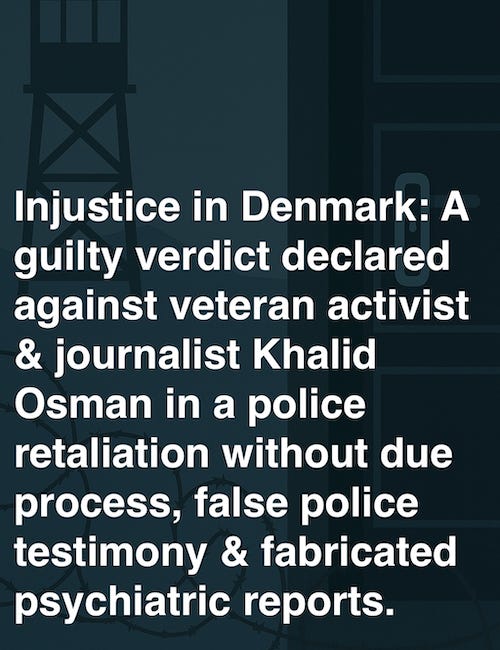
👉 If my daily posts are interrupted and you do not hear from me, please use the complete information I have shared in the series of the posts to write strong appeals to human rights organizations. It is urgent. Demand that they act fast to stop this injustice.
Call to Solidarity! - Archive of Truth In Exile: Urgent Appeal: Injustice in Denmark! You can copy this and write your case and other cases you know about to submit together as one collective memorandum to human rights organizations. Keep knocking on the doors, until they open their heads.
National Pride HAS No Meaning! - Archive of Truth In Exile: Seeing systemic failures and being told “that’s just the way it is.” National pride becomes hollow when institutions refuse to confront the failures that harm anyone. Pride gains substance only when a nation chooses accountability over denial. What matters is not the slogan of pride, but the courage to repair what has been broken. The Danish system is deeply broken.
I Should Shake Denmark Awake! - Archive of Truth in Exile: Why? Because I loved Denmark since 1980 and I write for reform, for improvement, and for the country I cherished before all of you did. Here are the proofs.
Episode 1: Traditional Court Procedures Injustice! Archive of Truth in Exile: Testimonies Showing How Traditional Procedures Produce Injustice Even in “Developed” Systems!
Episode 2: When Procedure Replaces Justice! Archive of Truth in Exile: How Bureaucratic Rituals Eclipse Accountability in Denmark... They initiated procedures that had no legal basis because, from the start, there was no case to justify any action. Sending someone with no criminal record to a so‑called criminal examination unit in the state prison exposes how far they were willing to stretch the injustice system. This alone shows that their actions were intentional, unlawful, and carried out under the cover of bureaucratic ritual rather than genuine justice.
Episode 3: The Silence That Protects the System! Archive of Truth in Exile: How Danish Institutions Use Silence to Shield Themselves? Everything in my story proves this. I’ll never be silent. You shouldn’t do it. You shouldn’t keep silence. You shouldn’t think that you are powerless in front of a strong system. You are stronger than any system. You brought system into power. Your vote is your strength. Connect with groups, use the human rights memorandum you see linked. Write your story the way I am doing.
Episode 4: When Psychiatry Becomes a Weapon! Archive of Truth in Exile: The Machinery That Turns Vulnerability Into Control in Denmark!
Episode 5: Paperwork as Architecture of Evasion! Archive of Truth in Exile: How Institutions Fabricate Due Process on Paper. This is what it does really reveal: a policeman shouldn’t be questioned in any court. His word is confidential and it requires no examination. What justice is this?
Episode 6: The Afterlife of Injustice: Archive of Truth in Exile: How Post‑Hearing Communications Extend Institutional Avoidance... The Communications That Rewrite What the Court Refused to See!
Episode 7: The Long Shadow: Archive Of Truth In Exile: How Institutional Avoidance Shapes Lives Long After the Case Ends? And the shadow, is it the shadow of the system, or the shadow of injustice? How these two shadows draw a third shadow? How three shadows turn to become a maze to bypass ethics and create immoral structure inside its procedures? How could this be happening in a modern state?
Episode 8: Refusing Erasure: Archive of Truth in Exile: The Work of Resistance and Reclamation - A Framework for You and Me... Whispered by the Archive of Truth in Exile! A witness struggles to prove his points that the system is broken and it requires urgent reforms, providing his own case as a proof of the system failure. Each episode here provides a truth maintained by these proofs.
Beyond the Witness:
·
Jan 11
Traditional Court Procedures Produce Injustice - Episode 16 — Beyond the Witness: Intuition, Legacy, Institutions, Memory, and Moral Infrastructure
Episode 16: Beyond the Witness: Traditional Court Procedures Produce Injustice - Archive Of Truth In Exile: Intuition, Legacy, Institutions, Memory, and Moral Infrastructure. Justice collapses when a word of a witness has no chance to pass along legally through cross examination, whether the other parties are representatives of an authority, or even members of a government. Real justice has no favour to any person in power.
Series 4, Episode 1: Eviction Before Justice in Denmark! - Archive of Truth in Exile: How a Non‑Final Verdict Becomes a Weapon of Institutional Injustice? The eviction meeting was a complete legal disaster. No interpreter, no lawyer, no chance to concrete understanding of what was going there and complete determination to go with the claims of the housing company.
Series 4, Episode 2: When the System Pretends It Cannot See! Archive of Truth in Exile: Witnessing the moment when justice looked away, and the consequences refused to end. This reveals that the system is pretending to be both blind and defiant. And when the system pretends this it reveals that it has intention to incriminate without proofs.
Series 4, Episode 3: Why Systems Protect Authorities Even When the Truth Is Plain?: Archive of Truth in Exile: When any policeman, frames an innocent and then lie in the court, he first betrays his colleagues, disrespects his badge and will eventually be a shame for the services to have him.
Series 4, Episode 4: See Terrorizing Bats of Darkness 5 Above in the Navigation. This is how the Exile Archive organizes episodes in their internal episode according to their titles, although they can have external section indexing.
Series 4, Episode 5: Inside a Fracture of a Faulty Law! Archive of Truth in Exile: Where Legal Texts Hide Their Injustice - There are some phrases in some flawed law articles that require adjustment as they come with injustice embedded in their own texts. Oversight bodies should rise up. Fight unjust law articles, lawyers!
Series 4, Episode 6: How Systems Allow Decisive Procedures? Archive of Truth in Exile: The Hidden Intent Behind Administrative Decisiveness... insufficient procedures don’t produce justice. And as long as they are designed to serve officials in authorities they turn into injustice.
Series 4 Episode 7: The Deeper Injustice Hurting Truth! Archive of Truth in Exile: A system that once corrected itself has been redesigned to hide its own failures at the time of quite & slow shift toward capitalism! The changes started in 2001, developed in 2005 and strengthened in 2011. The first Denmark people know is hurt!
Series 4 Episode 8: Welfare Communes As Business Centres! Archive of Truth in Exile: How Municipalities’ Welfare Spaces Become Administrative Marketplaces… Many people are harmed, but they keep silent. Some choose to collect bottles and cans from garbage places, other choose to be homeless, or lose themselves in drugs.
Series 4, Episode 9: Read it at Terrorizing Bats of Darkness 6 above. This is how the Archive of Truth in Exile indexes posts in their right internal episode they belong to, although they can have external series indexing.
Series 4, Episode 10: Human Rights Violations Memorandum! Archive of Truth in Exile: Formal Documentation Submitted to all Human Rights Organizations Including the United Nations High Commissioner for Refugees (UNHCR), the United Nations Hight Commissioner for Human Rights and some oversight bodies in Geneva, Switzerland.
Series 4, Episode 11: The Noise Above My Head! Archive of Truth in Exile: Continuing the Patterns That Try to Break a Person... Teaching ethics & experience to those who deliberately harm in a fossil city, where law & justice do nothing to them. This is where ethics collapse and conspiracies continue. They began with the police responding to my reports saying that I was hearing noises inside my head, despite the recorded evidences I attached to them.
Series 4, Episode 12: Conspiracy Logic I Am Seeing Walking... Archive of Truth in Exile: When the scheme unfolds between authorities who assume the public knows nothing of law... and then some individuals who act above the law and the law keepers neglect many reports submitted to them to address such conspiracy, despite the evidences presented to them.
Series 4, Episode 13: Lived Story Behind the Architecture - Archive of Truth in Exile: How the conspiracy moved from design to my life. These are the same similar conspiracies that the UN has saved me from, but the only difference is in the methods used. What is identified here is that the first actors are the same people who came from the same background of inherited culture.
Series 4, Episode 14: A System That Shows Its Face! Archive of Truth in Exile: Before the appeal, the eviction steps and the advocates’ retreat make the structure of injustice visible. It also reveals more and confirms the retaliation... Procedural faces are unmerciful because they don’t see the fractures of their procedures and where the injustice is residual within them.
Series 4, Episode 15: A Lawyer Who Might Stand in the Fire! Archive of Truth in Exile: I am still hoping people see how their system isn’t perfect & how it harms innocents. I am hoping also to see a lawyer who can really understand his system perfectly and honestly to challenge its injustice.
Series 4, Episode 16: Evict Now, Appeal Later! Have you heard about this in any modern, civic society? Archive of Truth in Exile: In Denmark’s housing system, the eviction moves immediately while the appeal limps behind it. This is a real dilemma in the Danish justice system This phrase itself proves how the understanding of justice is missing and how responsible officials ignore what a legal meeting requires.
Series 4, Episode 17: Nine Key Points Ignored in the Eviction Meeting! Archive of Truth in Exile: A Record of Misuse, Retaliation & Silenced Evidence, Where Care Was Required Instead of Eviction. They even neglected my points and didn’t offer a chance to explain myself while giving a good time for the lawyer of the housing company to present his claims, which I didn’t understand many of them.
Series 4, Episode 18: Why Eviction Pushed Before Appeal? Archive of Truth in Exile: The Architecture of Pre‑Appeal Punishment - How the system acts before oversight can intervene? This is a clear retaliation to save money. It also reveals coordination between authorities. Such coordination reveals retaliation too.
Series 4, Episode 19: Intention Behind Injustice In Denmark! Archive of Truth in Exile: A report that reveals not only injustice, but intention... and a system built to erase a witness. It indicates why the police has closed the doors on my face when I reported the abuse and violations of the housing company.
Series 4, Episode 20: How a System Manufactures Guilt? Archive of Truth in Exile: When a system tries aggressively to incriminate anyone who challenges it.
Series 4, Episode 21: How Injustice Structure Reveals Itself - Archive of Truth in Exile: The Patterns of a System That Pretends Not to See...
Series 4, Episode 22: The Economics Behind My Eviction! Archive of Truth in Exile: How the Money Replaced Law in a Planned Eviction... They know that the housing company owes me a lot of money. I lived in the apartment for more than 15 years. That apartment should be mine. So the housing company’s move is to find any way not to pay back that money. It found it, illegally.
Series 4, Episode 23: Architecture of the Plot to Eviction! Archive of Truth in Exile: How coordinated actors, flawed laws, and protected networks construct the path toward eviction. By aligning itself with the housing company advocate, when mine was missing, the meetings had a chance on me, which is absolutely against any fair justice. The meeting decided to go with the money.
Series 4, Episode 24: Bailiffs Court Crossed Its Mandate! Archive of Truth in Exile: When an Eviction Becomes an Incrimination. This is how even a civil procedural case is manipulated by design using phrases that violate the procedure and represent injustice. I just cannot believe this happens in a modern state! The injustice began by putting me in a situation between two forced choices: either evict now and have a chance to appeal within two weeks, or discuss with company’s advocate to give me a time to evict.
Series 4, Episode 25: Criminal Term in Bailiffs Court - Defamatory, Intentional, Illegal and Personal! Archive of Truth in Exile: A structural reading of how a bailiffs court crossed boundaries to adopt criminal phrasing. No one of them has been there when the police framed me, invaded my home like a Nazi and then lied in the court and its lies passed without any cross examination. So, who has committed a serious crime now?
Series 4, Episode 26: When an Eviction Turns Illegal... A civil eviction conducted without legal safeguards: denied counsel, denied translation, denied evidence, denied equality. Archive of Truth in Exile’s Episodes reveals the deeper injustice that shows its face in a legal meeting that supposed to be civic, just, logical and un biased. What has happened exposes intention.
Series 4, Episode 27: The Architecture of Failure! Archive of Truth in Exile: When institutions deny rights before the case even begins. Any legal meeting in any developed country has rules and principles to provide a lawyer to the party in question. If such required defence presence is absent any results of the meeting will be illegal. When this happens, justice collapses. It is not just architecture of failure, it is authoritarian.
Series 4, Episode 28: Help Denied After Eviction - Archive of Truth in Exile: How a municipality uses delay, confusion, and silence to deny legal rights. A municipal employee writes letters to provide help to those exposed to eviction following required regulations to offer help, but disappears when approached to help. This is a phenomenon in some municipalities when the intended person to receive help criticises the municipality.
Series 4, Episode 29: Municipal Retaliation Architecture - Archive of Truth in Exile: Inside a municipal system that turned a legal right into an obstacle course. Staffs from specific different cultural backgrounds damage municipalities through their personal relations with other employees and target those who reveal how they protect other individuals from their cultural backgrounds. This is the time for worldwide actions, activists. Human rights violations and injustice are not local.
Series 4, Episode 30: Back to the Beginning - Reporting Becomes Eviction Trigger - Archive of Truth in Exile: How reporting the housing company has turned into an eviction machinery? This has happened when the real estate company ignored a journalist’s complaints and when he reported it to the police and human rights organizations. So, the retaliation is clear. It becomes really strong when reporters support each other worldwide.
Series 4, Episode 31: Eyes That Heal, When A System Hurts - Archive of Truth in Exile: The human heartbeat before the scalpel of truth. Many people are capable to see where the truth is. So, I see them smiling, greeting, and some of them walk with me to show me the way and maybe know more. These acts are still rejuvenating and I have a feeling that I am always stretching my wings and receive more wings around me. See the connected episode with this one.
Series 4, Episode 32: The Reality of Renovation in Denmark - Archive of Truth in Exile: How a “renovation project” exposes 26 years of failed integration policy and why the whistleblower becomes the target? He was the first person to criticize the assumption of integration in 2001 and continued to do that with his insights. So, why targeting the truth? The renovation has many illegal secrets that motivated it.
Series 4, Episode 33: When Provoking You Stops Working - Archive of Truth in Exile: How coordinated pressure exposes retaliation, abuse of power, and the fear of an unbreakable person? This experience proves that there is intention behind the scene. When provoking stops working, the same attempts continue in another direction. Morality collapses and the targeted becomes stronger.
Series 4, Episode 34: A Morning A City Showed Its Real Face - Archive of Truth in Exile: The small incident that revealed a larger truth - How a routine DSB trip exposed the city’s hidden architecture. The travelling file, which is illegal has compromised offices in this city, which the witness criticises sharply to adjust to its ethical foundation and reform its institutions, instead of targeting the person who tries to help real citizenship.
Series 4, Episode 35: They Created the Issues, Not Me - Archive of Truth in Exile: The one who asks for protection is never the one who caused the harm. I didn’t start the hatred, they did and they continued their acts to harm me more, at the time when I spoke to them to spend their time doing something useful… explaining that their acts are even “haram” in their beliefs. Those are the same relatives, I reported and who are now used in informal network to serve their personal interests.
Series 4, Episode 36: When Protection Becomes Neglect: The Door Denmark Closed - Archive of Truth in Exile: How a Geneva‑Convention Refugee Was Met with Retaliation, Informal Networks, and a System That Protects Itself Instead of the Vulnerable? This issue repeats itself in some other resettlement places across-borders, although the stories differ. Individual struggle against human rights violations and injustice should be collective.
Series 4, Episode 37: Facts of Local Human Rights: Inside the Collapse of Their Mandate - Archive of Truth in Exile: How a Local Human Rights Institution Narrowed Its Mandate Until Protection Disappeared. No one should accept institutional retreat as normal; neglect must be named, documented, and confronted. Anyone experiencing this kind of dismissal should report it to international human rights bodies so the failure does not remain hidden.
Season 5, Episode 1: When the Moral Order Breaks - Archive of Truth in Exile: How institutions invert justice and turn protection into punishment? Series 4 together with the earlier series documents a single, continuous pattern of harm: refusal to hear an innocent man’s complaints, framing him, forging documents, telling lies, then performing eviction & many other acts meant to destabilize him for the truth he is telling.
Season 5, Episode 2: When Exhaustion Becomes a Tool - Archive of Truth in Exile: A comparative analysis: How democratic exhaustion mirrors authoritarian pressure... showing the politics of forced displacement in a democratic system that resembles what authoritarian systems do in some countries in Africa and the Middle East. Sarcastically: How could they criticise those countries? Similarity is not accidental.
Season 5, Episode 3: The Traveling File - Filled to Encounter Suspicion, While the New Town Smiles, with the Human Truth that Erases Institutional Harm... all at Once in the Archive of Truth in Exile: Despite systemic and informal distortion, people always recognize it: when an entire system targets one person, it is because that person is telling the truth. The system, without realizing it, provides the evidence against itself: proving that the story of the whistleblower is the real one.
Season 5, Episode 4: When the System Knocks Twice - Archive of Truth in Exile: A Letter Arrives Again to Deepen the Suspicion Carried by the Traveling File & to Shape a New Town’s First Impression Through Official Authority. The indication is clear. The intention is visible. But, the truth is: Many people know what institutions do, specially when many of these institutions target only one person. Let’s stick together to stop human rights violations and injustice everywhere.
Season 5, Episode 5: Injustice Phrases in an Appeal Letter - Archive of Truth in Exile: How an Appeal Notice Reveals the Deepest Structural Injustice. Something tells me that these phrases are old and never checked for renewal. These phrases look like mummies. They also indicate clear intent to hide harm, when some paragraphs are written in very small letters, so the readers wouldn’t focus on what they mean legally.
Season 5, Episode 6: How Institutions Distort Reality - Archive of truth in Exile: A look at the tactics institutions use to shield their elites, instead of admitting their failure and beginning necessary reforms. They keep the procedures that produce harm and defend the way they function, instead of starting immediate reforms to keep the people save. So, human rights violations persist, injustice continues in many offices.
Season 5, Episode 7: When Systems Fear the Truth - Archive of Truth in Exile: The Mechanics of Retaliation - How Power Responds When Truth Threatens the System. This is what has unfolded over the last three years: a coordinated effort to erase a veteran human rights activist and journalist with decades of professional experience. If you don’t believe that systems fear the truth, tell me of one system that doesn’t fear it.
Season 5, Episode 8: When the System Shows Its Hand - Archive of Truth in Exile: How Institutional Fear Turns Into Action - Tracing the moment when fear stops being internal and becomes operational... when the system turns toward you not because you are wrong, but because your truth threatens its architecture. Are you trustworthy enough? Let’s be strong together.
Season 5, Episode 9: The Aftermath of Truth - Archive of Truth in Exile: How Systems Live With What They Are Trying to Bury? Examining the period after exposure, when institutions attempt to stabilize themselves while the truth they tried to suppress continues to reshape the vision of the people harmed by institutions worldwide. This is your challenge: Let’s combine.
Season 5, Episode 10: When Clarity Becomes Power - Archive of Truth in Exile: The individual after the aftermath - with the clarity you acquire, which becomes a lens that reveals the system’s internal wiring and builds your agency... a clarity of a witness that leads to public awareness and social movement. Every one becomes an engine driving the coming history forward, with the vision of the witness who lived through harm for more than 50 years.
Season 5, Episode 11: When the World Looks Different - Archive of Truth in Exile: How Clarity Changes Your Relationship to Everything Beyond the System. When clarity is learned, the world stops appearing as the system trained you to see it. Structures, people, and motives reveal their true form... not the version designed by the system for you. And once the witness sees this, the world is never the same again.
Season 5, Episode 12: When Patterns Reveal Their Consequences - Archive of Truth in Exile: What Global Clarity Exposes About the World’s Deep Structures. It marks the point where clarity exposes the deep structures shaping the world’s unfolding trajectory. From here clarity becomes action. Action removes systems and builds alternatives. The world totally changes. That is the future.
Season 5, Episode 13: When Deep Structures Surface - Archive of Truth in Exile: How Global Consequence Reveals the Hidden Architecture Beneath the World’s Behavior. Tracing how consequence exposes the architecture beneath systems, revealing what drives nations, institutions, and alliances at their core. This episode continues the descent into structural truth, where clarity becomes the world’s most reliable signal.
Season 5, Episode 14: When Systemic Architecture Reorganizes - Archive of Truth in Exile: How Exposed Foundations Reshape Global Behavior. Following the moment when exposed foundations begin to reorganize internal & global behavior in real time. It shows how systems adjust, bend, or fracture once their underlying architecture is no longer hidden.
Season 5, Episode 15: Concealed Architecture Returns - Archive of Truth in Exile: Exposure Forces Change, But the Hidden Structure Endures - The witness sees the layer the public was never taught to recognize: the architecture that operates beneath every visible reform. Its purpose is continuity, not secrecy: a structure so familiar that people mistake it for the natural order. Enter this depth directly, TO KNOW how to react when the witness makes the “concealed mechanics” finally visible.
Season 5, Episode 16: Individuals Inside the System - Archive of Truth in Exile: How Daily Behavior of Officials Restores the Old Architecture? Following officials concealed procedures that bury truth beneath institutional routines. Their obedience to flawed laws and rigid instructions becomes the engine that restores the old architecture and expose people to human rights violations and injustice. Through their unfair daily actions, injustice survives under the appearance of order.
Season 5, Episode 17: Peripheral: Out of the System Actors - Archive of Truth in Exile: How External Individuals Become Instruments of the Returning Architecture? Those individuals are often from a specific cultural backgrounds. Check the episodes about Bats of Darkens as examples. Their behaviors not only restore the concealed architecture in official, social and commercial spaces, making recurrence a human pattern rather than an administrative failure, but also harm innocent people.
Season 5, Episode 18: Where Decay Becomes Visible - Archive of Truth in Exile: How Systems Survive by Avoiding Their Own Depth?* When the architecture beneath us refuses to change... the world keeps failing for the same hidden reason. While systems create a potential decay, social movements keep failing. Why? Because they miss what “social movements” mean by principles. They don’t know how to build systems. I do.
Season 5, Episode 19: When the Surface Breaks, That is the Moment Systems Lose Control and Powers Fall... Archive of Truth in Exile: You sense the exact second when a system’s story stops matching its behavior, and that fracture is where truth begins to rise. When the surface finally gives way, you witness not chaos but clarity: the moment power loses control because it can no longer hide its own mechanisms.
Season 5, Episode 20: What We Learned So Far? - Archive of Truth in Exile: A Collapse Trajectory Already Begun and a World Entering a New Era. Our vision was solid from the beginning. Across history, societies have witnessed the same pattern of decay: institutions collapsing for nearly identical reasons... blindness, arrogance, and structural failure. Systems believe they are untouchable. They also underestimate the people they rule. Now, it is your time.
Season 6, Episode 1: Witness Clarity - Societal Awakening - Archive of Truth in Exile: Back to its ethos - When truth creates social movements everywhere. Clarity spreads once people see institutional harm, they recognise its pattern across-borders. Recognition becomes collective as private clarity turns into shared awareness, and shared awareness becomes movement. Movements form naturally, not from ideology, but from lived truth that people can no longer ignore.
Season 6, Episode 2: The World Repeats Historical Decay - Archive of Truth in Exile: When Collapse Clears the Space for Renewal... How Society Builds What Institutions Could Not Sustain? The Emergence of a World Shaped by Clarity. Historical decay repeats itself across eras and why the present moment mirrors those cycles with unprecedented clarity. It shows how collapse clears the space for renewal and how society becomes the architect of the next era. This is your momentum. Catch it.
Season 6, Episode 3: The Pattern of Rupture - Archive of Truth in Exile: How Historical Breaks Clear the Ground for Societal Renewal? Rupture is the moment when accumulated contradictions finally lose their protective shell. It exposes what institutions could no longer sustain & reveals the space society needs to move forward. Clarity becomes visible, and society begins shaping the world that institutions failed to build. Each rupture marks the transition from exhausted structures to emerging possibilities that carry the rhythm of a new era.
Memoir: Deng Akok’s Suicide and Denmark’s Ongoing Violations! Archive of Truth in Exile: A testimony that begins with loss, exposing how denial becomes a funded silence that cost the life of a Geneva Convention political refugee... pushed to hunger when his welfare was stopped, until he took his own life to send a message to both Denmark and the UNHCR. This tragedy has never moved any conscience in these authorities related to this topic.
A Call to Extend UNHCR Mandate of Care!
·
October 27, 2025

In the newsletters I receive from UNHCR, gestures of care arrive wrapped in statistics and snapshots: a school built in Jordan, a water system repaired in Burkina Faso, a shelter opened in Chad. These are important acts. But they often read like closures—like the story ends there.
A Call to Extend UNHCR Mandate of Care! Archive of Truth In Exile: Beyond Arrival to Resettlement: Humanitarian Job Unfinished! UN Convention Political Refugees are unsafe in their resettlements. Families are scattered by divorce, children are taken from their parents, whistleblowers are incriminated because of their critiques.
Under the Tram Rails in Geneva at the Side of the UNHCR, a Face Stares Back! Archive of Truth in Exile: Fragments of witness emerge in unexpected places, staring back at institutions that refuse to see. When you arrive to report human rights violations and injustice, you may find your own face reflected in that gravity. That gravity was painted exactly as it should be: positioned at the silent UNHCR headquarters. It invites you to keep knocking on its door until it opens its head.
Episode 22: The Archive as Healer: Archive of Truth in Exile: Democratizer, Ethical Compass, and Guardian of Truth - There is immoral distance between what institutions claim and what they actually do. Exploring this through history in lived experiences offer you structural lens that dissolves official narratives. The Archive’s healing acts as a democratizer, returning analytical power to ordinary people who have been excluded from understanding the architecture shaping their lives.
Episode 23: The Archive as Generator: Archive of Truth in Exile: Civic Renewal, Political Imagination, Global Solidarity, and Post‑Institutional Future. This is how the Achieve generates ethical and fundamental architecture, structure and deeper mechanisms for societies across borders to solve the problems of unfair policies, human rights violations and injustice.
Episode 26: The Archive as Ecosystem: Archive of Truth in Exile: Morality, Imagination, Accountability, and Civic Future. Through these ethical and fundamental architecture, structure and deeper mechanisms the ecosystem becomes complete and ready for societies to implement to make this world a better place and insure that there is no going back to unfair era.
Series 2 - Episode 7: The Eritrean Martyr’s Tree - Grassroots Act As Future Architecture! Archive of Truth in Exile: You can use my dynamic system in your society to drive it into future civic‑system‑power. The ethics from which the ecosystem is built were stemmed from a TREE. Its implementation created a tree-ecosystem. The tree ecosystem has given brith to the Archive’s Ecosystem... a living structure that organizes memory, ethics, and civic direction.
Series 2 - Episode 8: The Eritrean Martyr’s Tree - THINK LOCALLY, ACT GLOBALLY! Archive of Truth in Exile: How a Local Act Becomes a Global Method? This saying which is mine is a true architecture to world development. It reverts the NGOs’ global moto into locality which is the foundation of Globality. The philosophy is simple and clear: we always begin from the small parts (units) that make the whole.
A Gesture at the Gate! Archive of Truth In Exile: UNHCR’s Knee Pain, and the Ethics of Humanitarianism... The veteran activist & journalist who offered help to the UNHCR through the years & especially the one he did in the office with one of the guards who had joints pain. It was simply human behavior: offering help when help is needed. Yet the gesture stands at the gate of a silent institution, exposing the ethical distance between humanitarian claims and humanitarian practice.
Geneva Beneath the Flag: Where the Forgotten Sleep! Archive of Truth In Exile: A poet’s return, a city’s contradiction, and the urgent need for a deeper humanitarian lens! Beneath the symbols of international protection, the city hides those it refuses to see. The poet’s return exposes a humanitarian gap between Geneva’s image and its lived reality. What sleeps under the flag reveals more truth than the institutions standing above it.
International Pain Walks with Us! Archive of Truth In Exile: From Geneva to Copenhagen, Khartoum, Port-au-Prince & Beyond! Pain is not confined, it walks internationally, threading exile into collective witness. The witness walked your pain through continents, exploring what people are exposed to worldwide, following the pain wherever it lived, because the witness himself has carried the same pain.
The Ethics of Proximity: Faith in Fracture! Archive of Truth in Exile: The Threshold of Belief That Exposes that There’s No Belief, But Personal Interests! Proximity reveals fracture, where faith is traded for interests whether economical, personal or political, and belief collapses into convenience. Across centuries belief systems have produced destructive human realities that dismantled entire societies. It continues to do the same in our modern lives, shaping fractures that appear ethical but operate as self‑interest.
Arab - Muslim: Untangling Faith Identity 1! Archive of Truth in Exile: The Arab–Muslim conflation is not just inaccurate, it is dangerous, a tool of division across geographies! This confusion erases real cultural diversity and turns identity into a political instrument. It allows institutions to generalize entire populations instead of understanding their distinct histories. Untangling the two restores clarity, dignity, and the structural truth behind regional narratives.
Arab - Muslim: Untangling Faith Identity 622! Archive of Truth in Exile: Lebanon Wars Continue... Secularism Must Rule Gradually! The region’s conflicts show how identity is weaponized when faith and ethnicity are fused into one label. Wars in regional zones reveal the cost of this confusion, where sectarian narratives override civic possibility. Untangling identity is the first step toward a secular structure that can hold society together.
Arab - Muslim Conflation in Lebanon! Archive of Truth in Exile: Lebanon Wars Continue... Secularism Must Rule Gradually! Lebanon’s conflicts show how the Arab–Muslim conflation becomes a structural tool that fuels sectarian alignment. When identity is collapsed into a single label, political actors gain leverage while society loses its civic center. Untangling this confusion is essential for any gradual secular path capable of stabilizing Lebanon’s future.
Politics Before Religion, Secular Continuation! Archive of Truth in Exile: Safeguarding Integrity and Fairness Through Secular Separation. When politics leads, society gains a civic center that cannot be manipulated by sectarian interests. Secular separation protects institutions from becoming extensions of religious rivalry. It creates a framework where fairness is not negotiated through belief, but upheld through structure.
Comments
Nothing yet. Say the first thing.
Sign in to join the conversation.