
This is Part 2: Supply in the Are stocks in a bubble? series. If you haven’t read Part 1 yet, I would start there:
It’s not as simple as a theme gets overhyped and a bubble forms. Game theory also plays a factor. Those who are vying for market share (and survival) have a rational reason to err on the side of overbuilding and overinvesting.
From an investor point of view, call the bubble too early and you may not survive to hold the trade long enough. You may not even make a net profit when the bubble bursts.
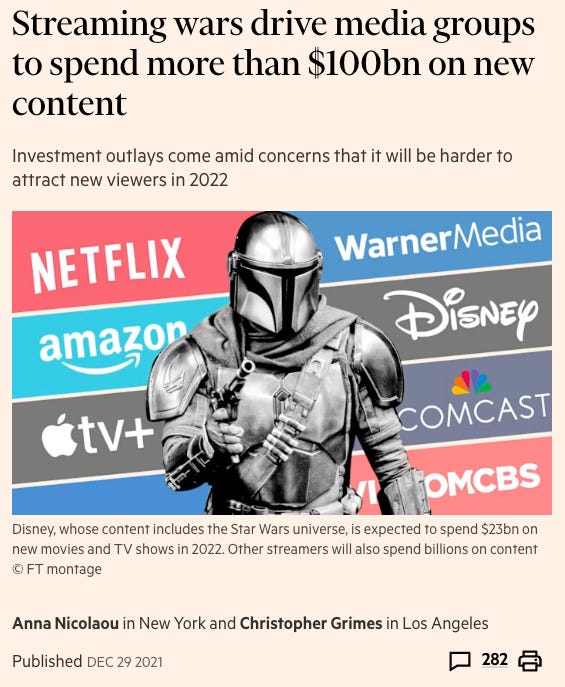
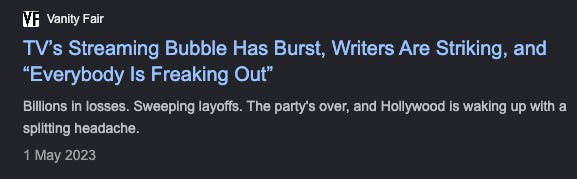
When people think of bubbles they tend to point out the housing bubble or the dotcom bubble but we’ve had several other (smaller) bubbles along the way. A few that come to mind are the streaming wars, EVs, and NFTs.
Not all bubbles are the same. There was a genuine utility to the dotcom theme. Whereas easily available mortgages with teaser rates were an unsustainable liquidity boost.
In the same light, the AI infrastructure buildout is not at all like NFTs but it does resemble the streaming wars and EVs.
Let’s review the narrative surrounding these two other themes.
Streaming Wars - Online streaming is the future. Legacy media is dying. Attention is everything.
EVs - World will run out of oil. Climate change accelerates the move to renewables. Nearly everyone needs a car.
Give the world an urgent, globally relevant theme, and it will give you back an investment bubble.
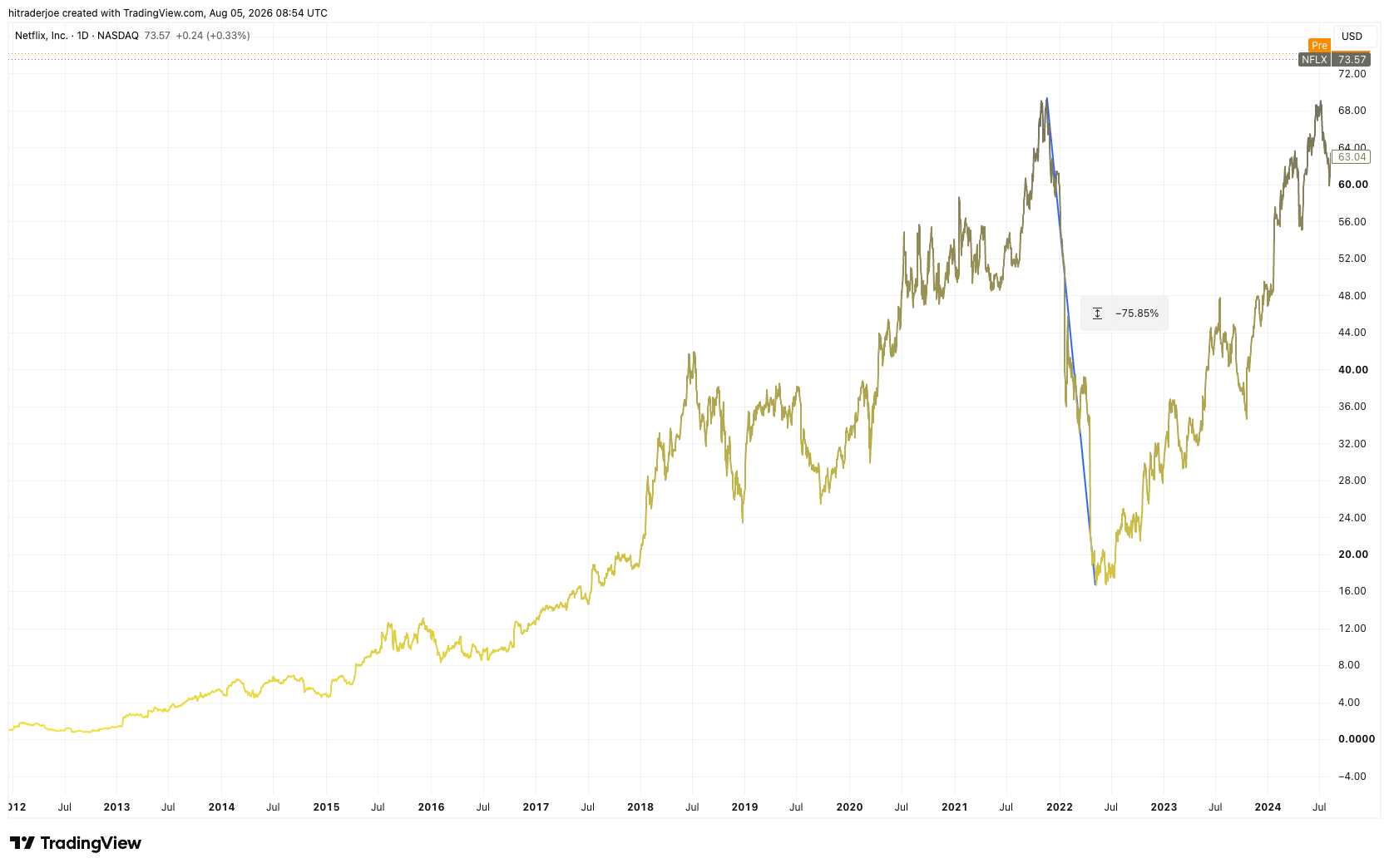
Streaming Wars. Netflix saw a 75% drop from its peak in 2021. Yes, rate hikes had a part in it but the narrative changed when the company reported weaker guidance for subscriber growth in its Q4 2021 earnings, which coincided with worsening negative free cash flow (FCF) driven by heavy spending on content.
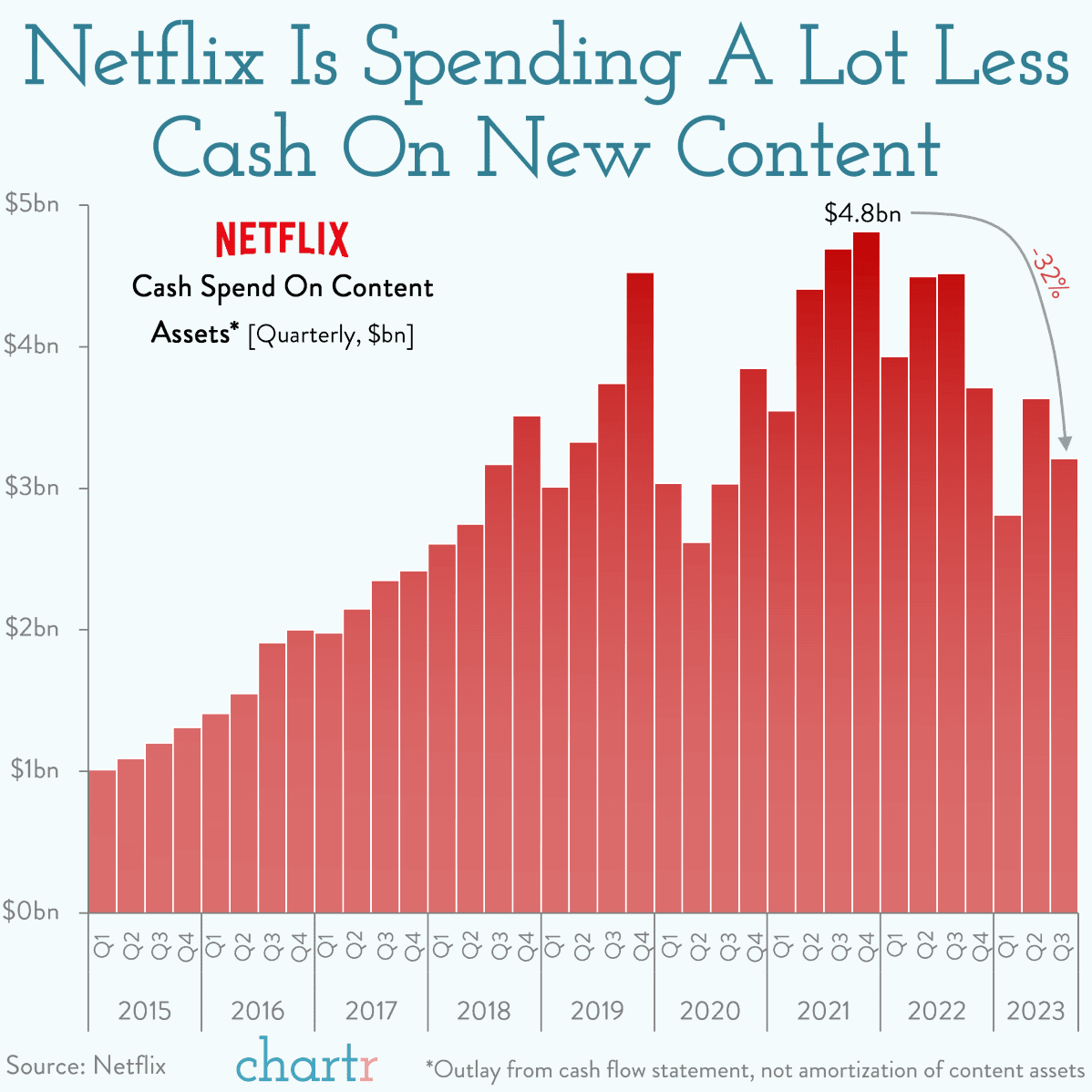
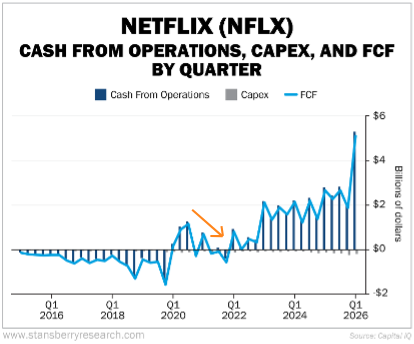
A negative FCF is not inherently the sign of a bad company. The FCF of a company that is wastefully spending money vs one that is rightly investing to produce more revenue down the road will have similar FCF profiles in the beginning stages - descending before (hopefully) inflecting upwards.
The slowdown in subscriber growth led Netflix to cut back its content spending in 2022 and 2023.
Fast forward to now. It’s been 5 years since its 2021 local price peak and Netflix’s stock sits within 10% of that former peak despite FCF having massively inflected upwards and the Nasdaq being some 70% or so higher.
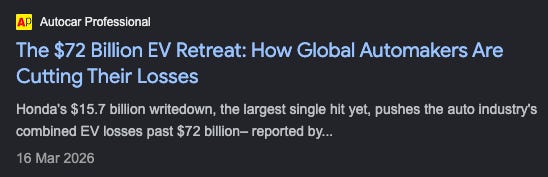
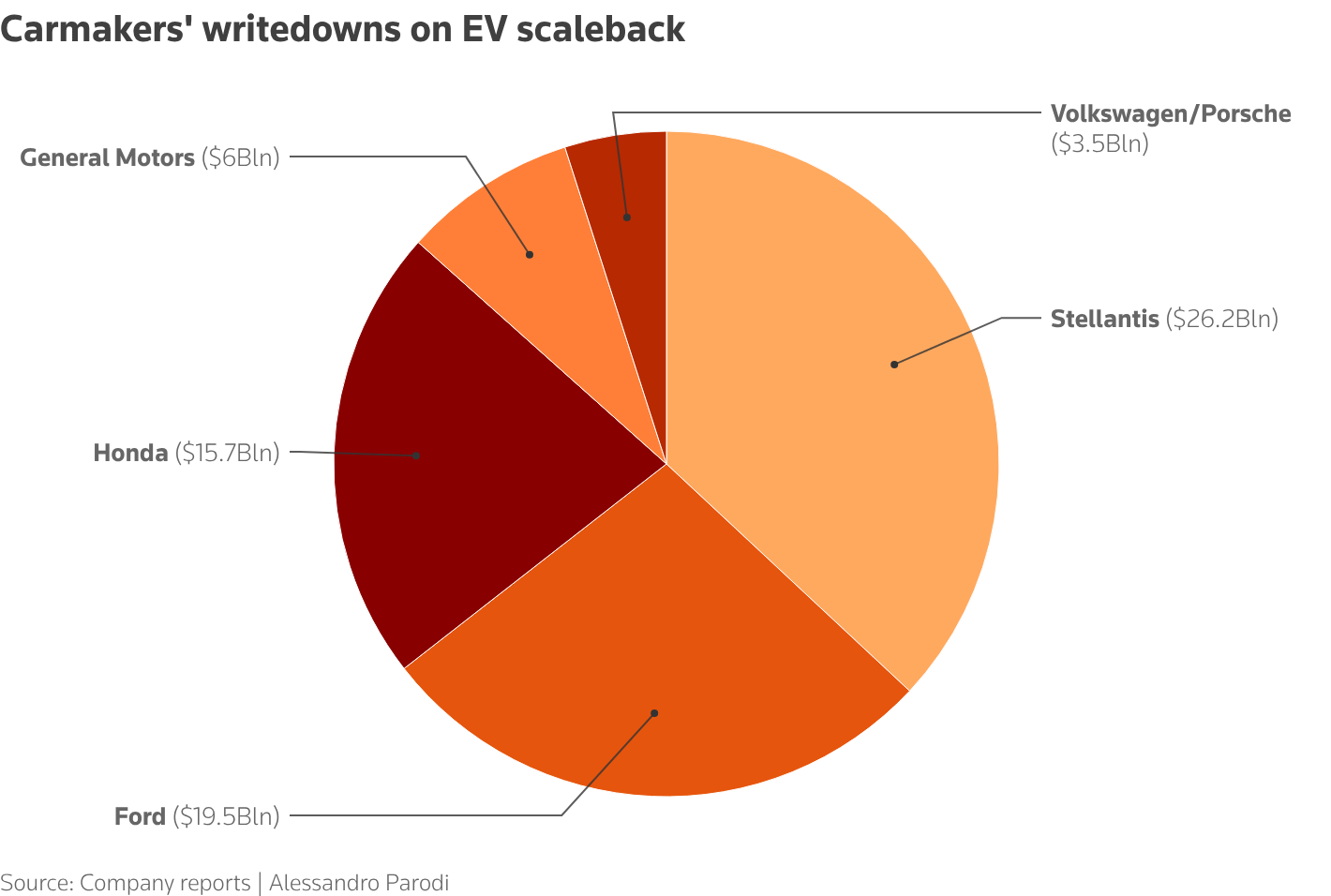
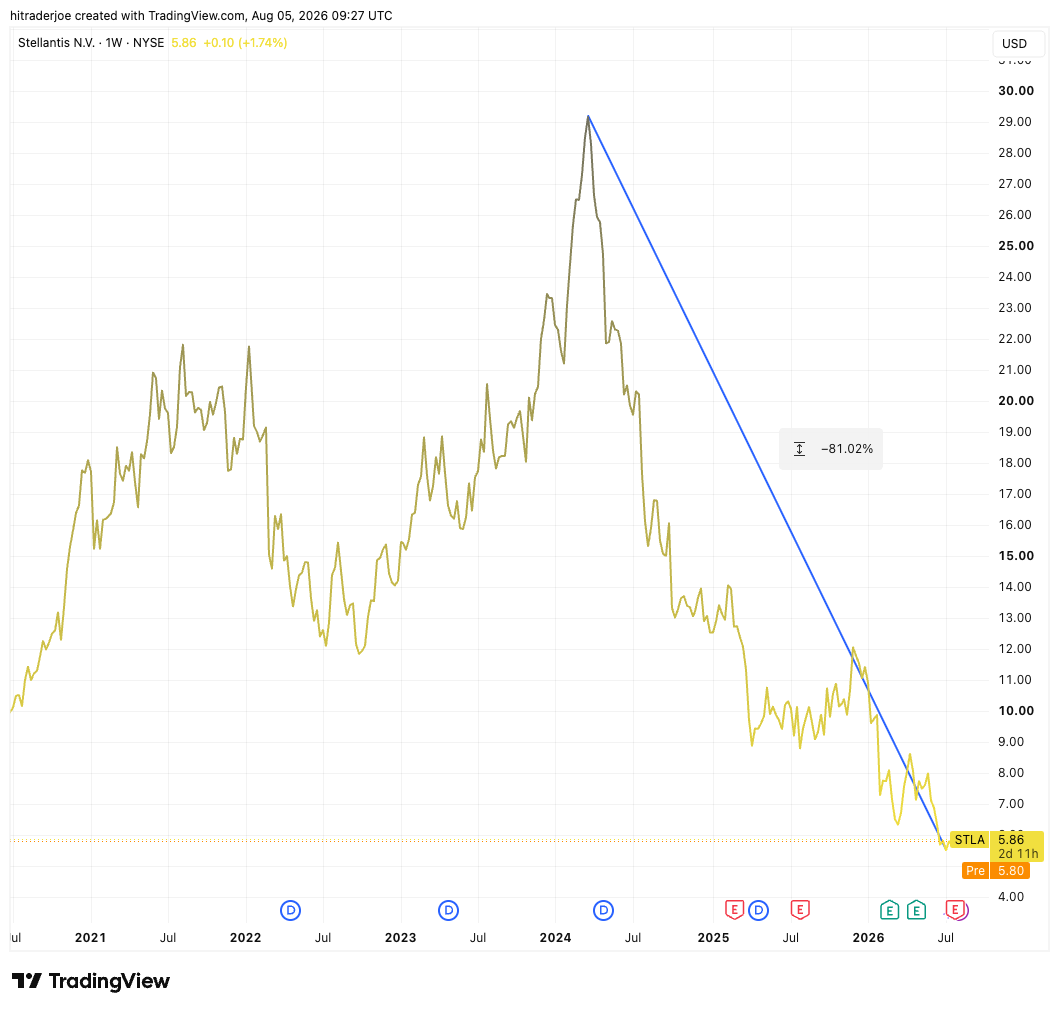
EVs. Many people are still driving EVs but automakers overestimated consumer adoption and overbuilt along with underestimating production costs. For some companies the hit to overbuilding was more manageable than others.
The reason why technology narratives turn into bubbles is because there’s a strong (usually correct) consensus that the theme will become prevalent with staying power. So it’s not a question of if you should invest into the theme, the question is, how much and when, and it’s extremely hard to get the timing and scale right.
The dotcom thesis wasn’t wrong, just early. At some point we will phase out petrol cars. Streaming overtook traditional media in May 2025. AI will forever be a part of our lives going forwards.
A new theme, can create a paradigm shift. A paradigm shift creates new winners and losers. You could end up as Blockbuster instead of Netflix if you don’t adapt to the correct shifts. But, you could end up as Yahoo if you chase too many shifts.
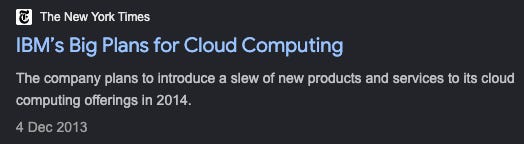
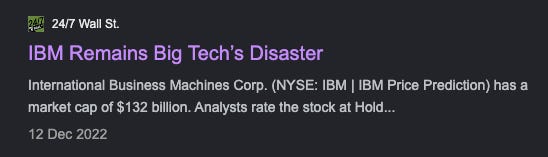
The risk is also high if you under-build into a new theme. IBM was one of the first ones to the cloud trade. They acquired the cloud infrastructure company SoftLayer in 2013 and mentioned cloud repeatedly in earnings calls. But the hyperscalers (as we know now) poured more than 10x the capex that IBM did into the cloud during the late 2010s and now nobody really speaks of IBM cloud.


Intel was a chip manufacturing leader, but they moved too slowly and underinvested in the transition to EUV lithography while TSMC took the risk and fully committed. TSMC now produces over 90% of the world’s advanced semiconductor chips. The irony is that Intel helped fund EUV lithography research in the first place.


Larger, proactive companies can protect more heavily against What Ifs. If you’re a hyperscaler, what’s spending a few years of your free cash flow to hedge against an existential threat? Or spending a few billion here and there to invest or buy out the startups that could one day threaten core business lines?
Take for example, this quote by Meta CEO Zuckerberg:
"If we end up misspending a couple of hundred billion dollars, I think that that is going to be very unfortunate obviously. But what I'd say is I actually think the risk is higher on the other side. If you build too slowly and then super intelligence is possible in 3 years, but you built it out assuming it would be there in 5 years, then you're just out of position".
The risk in under-building is arguably greater than with over-building - provided the level of capex spend isn’t an existential threat itself. Would you rather be overinsured or underinsured if the higher premiums were manageable?
Inevitably at some point, new technology adoption shifts from seeking to capture value to seeking to protect value - less focus on short-term ROI and a higher priority on ensuring longevity.
So, how do we determine that point?
The tea leaves for the AI trade sit in hyperscaler backlogs. As a reminder, these backlogs are referred to in the earnings as RPO. This is contracted revenue yet to be realized as the services have not yet been delivered (usually due to capacity constraints).
The backlog serves as a forward indicator for peak capex. More specifically, the indicator is the growth rate of backlog growth - the second derivative.
In plain language, even if the backlog is growing, if it doesn’t keep growing as quickly as it did in the previous quarters, you’re likely getting closer to the peak of the backlog, and in turn, the peak of capex.
The foundational premise for relentlessly investing into AI infrastructure, is that inference demand is rising exponentially. Hyperscaler backlogs should be correlated to that exponential rise in demand.
We can also roughly estimate whether or not the forecasted capex spend covers the existing backlog or requires further aggressive growth in the backlog to be justified.
Spending more capex than visible by the backlog raises the risk of overspending and lower ROI expectations but it could also be interpreted as hyperscalers shifting from the “capture value phase” to the “protecting value phase” by building excess capacity to hedge the What If.
What if an AGI breakthrough comes soon?
What if inference needs keep growing exponentially?
To be clear, the peak in the backlog will not likely coincide directly with the peak in capex. It is more likely to act as a forward indicator and later on in the article we’ll discuss how we can try to estimate the lead/lag.
As Meta does not have a cloud business (yet), I’ve defined hyperscalers here as Amazon, Google, Oracle, and Microsoft.
To get a rough gauge of how much of the hyperscaler backlog (RPO) is AI-related, we can look at the backlog level and trend before AI really started to move the needle.
To do this I measured the backlog trend from mid 2022 to mid 2023.
2021 figures had a larger pandemic bias and stronger cloud growth trends. The ChatGPT moment was in November 2022 but it wasn’t until a year later we really saw the AI effect come through. The first major deal that visibly showed up in a hyperscaler RPO was the September 2023 AWS-Anthropic deal.
Is this perfect? No. But this is a top down exercise to see what remote ballpark we are in.
Performing this exercise across Microsoft, AWS, Google, and Oracle gave the following result:
Microsoft
2022-23 Growth Rate: 19% | Mid-2023 Backlog: $224bn | Latest Backlog: $678bn | Implied AI Backlog: ~$301bn (44%)
AWS*
2022-23 Growth Rate: 21% | Mid-2023 Backlog: $122bn | Latest Backlog: $496bn | Implied AI Backlog: ~$280bn (56%)
Google Cloud
2022-23 Growth Rate: 25% | Mid-2023 Backlog: $64bn | Latest Backlog: $514bn | Implied AI Backlog: ~$389bn (76%)
Oracle
2022-23 Growth Rate: 13% (adjusted for Cerner acquisition) | Mid-2023 Backlog: $78bn | Latest Backlog: $638bn | Implied AI Backlog: ~$526bn (82%)
Total Implied AI Backlog: ~$1.5 trillion (~64% of $2.33tn total)
We also need to do a similar exercise for backing out the AI-related capex.
What did they spend before AI? Total capex 2022-23: $125bn
Where would it be today? Pre-AI capex grew ~10-15%/yr. Compounding to 2026 gives you around $200bn in “ordinary” cloud capex in 2026-2027.
Total Capex: $670bn
Inferred AI capex for 2026-2027: $470bn
Rather than calculating how much revenue each unit of capex generates (for this you need to assess utilization rates, $/MW deal terms, etc), the question we’re aiming to answer is how much revenue does each unit of capex NEED to generate in order to breakeven from an ROI perspective.
Stated differently, calculate the minimum return you need from an investment first, not how much a specific investment is going to return. There’s no point in analyzing if a stock is going to return 3% vs 8% if your required rate of return is 15%.
So, are hyperscaler backlogs big enough to justify the current amount of capex?
< My macro deep dives, stock specific analysis, and personal positioning is usually paywalled and prices will continue to rise over time to reward my earliest subscribers. If you want to be the first to see them or support my work in general please consider upgrading to a paid subscription. Students get 50% off - please use this link. >
Comments
Nothing yet. Say the first thing.
Sign in to join the conversation.