
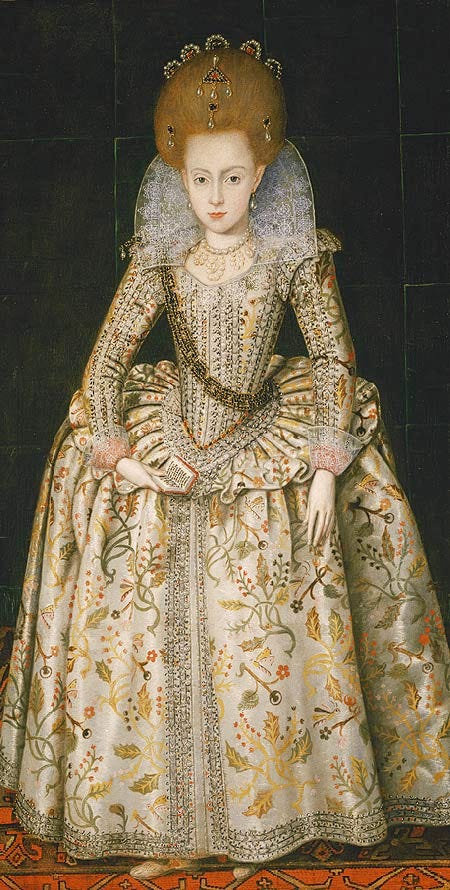
If Anne of Denmark was the cultural architect who remade the British court, her eldest daughter, Elizabeth Stuart, was the firebrand whose marriage accidentally set the entire European continent ablaze. Known to history by the hauntingly poetic moniker ‘The Winter Queen’, Elizabeth of Bohemia lived a life that reads like an epic, multi-generational Shakespearean tragedy. She was a woman of immense charm, political consequence, and staggering resilience. Though she spent most of her life stripped of her crown and living in precarious exile, her bloodline would ultimately redefine the British monarchy forever.
The Pearl of Britain and the Gunpowder Plot
Born in Scotland on August 19, 1596, Elizabeth was named in honour of her godmother, Queen Elizabeth I. Growing up, she was the undisputed darling of the Stuart family. Blessed with her mother’s sharp eye for culture and her brother Prince Henry’s fierce charisma, she was widely adored by the public. She was highly educated, fluent in several languages, and shared her mother’s deep love for theatrical performance and equestrian sports.
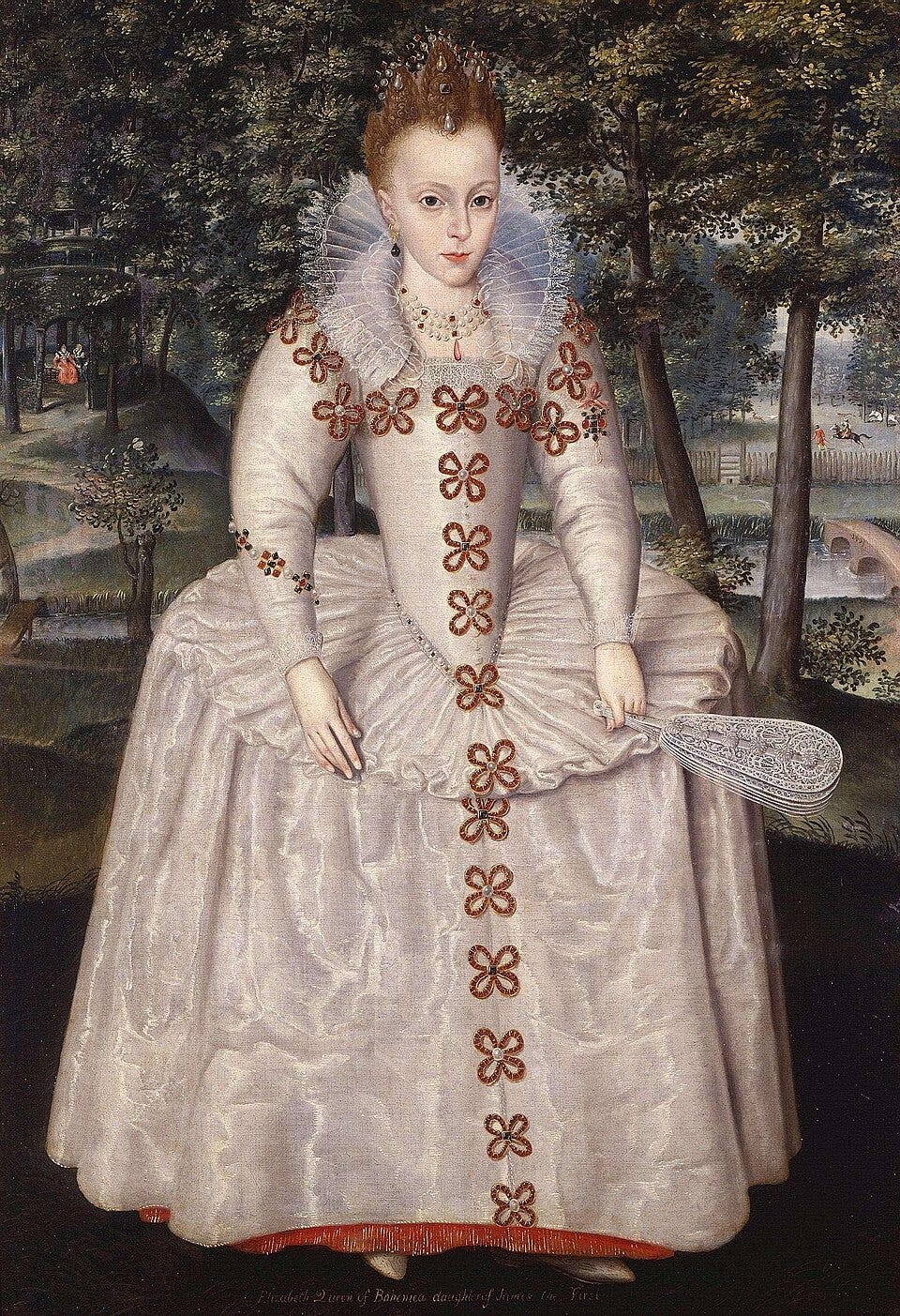
Her position as a highly eligible Protestant princess made her an immediate target for political intrigue. In 1605, when Elizabeth was just nine years old, a group of radical provincial Catholics formulated the infamous Gunpowder Plot. While Guy Fawkes and his co-conspirators planned to blow up King James I and the House of Lords in London, a secondary faction was tasked with kidnapping the young Princess Elizabeth from Coombe Abbey in Warwickshire. The plotters intended to murder her brothers, place Elizabeth on the throne as a puppet Catholic monarch, and marry her off to a loyal Catholic nobleman. The plot was spectacularly foiled, but the terrifying event instilled in the young princess a lifelong, fierce commitment to the Protestant cause and an acute understanding that her body was a weapon of international diplomacy.
A Wedding of Cosmic Proportions
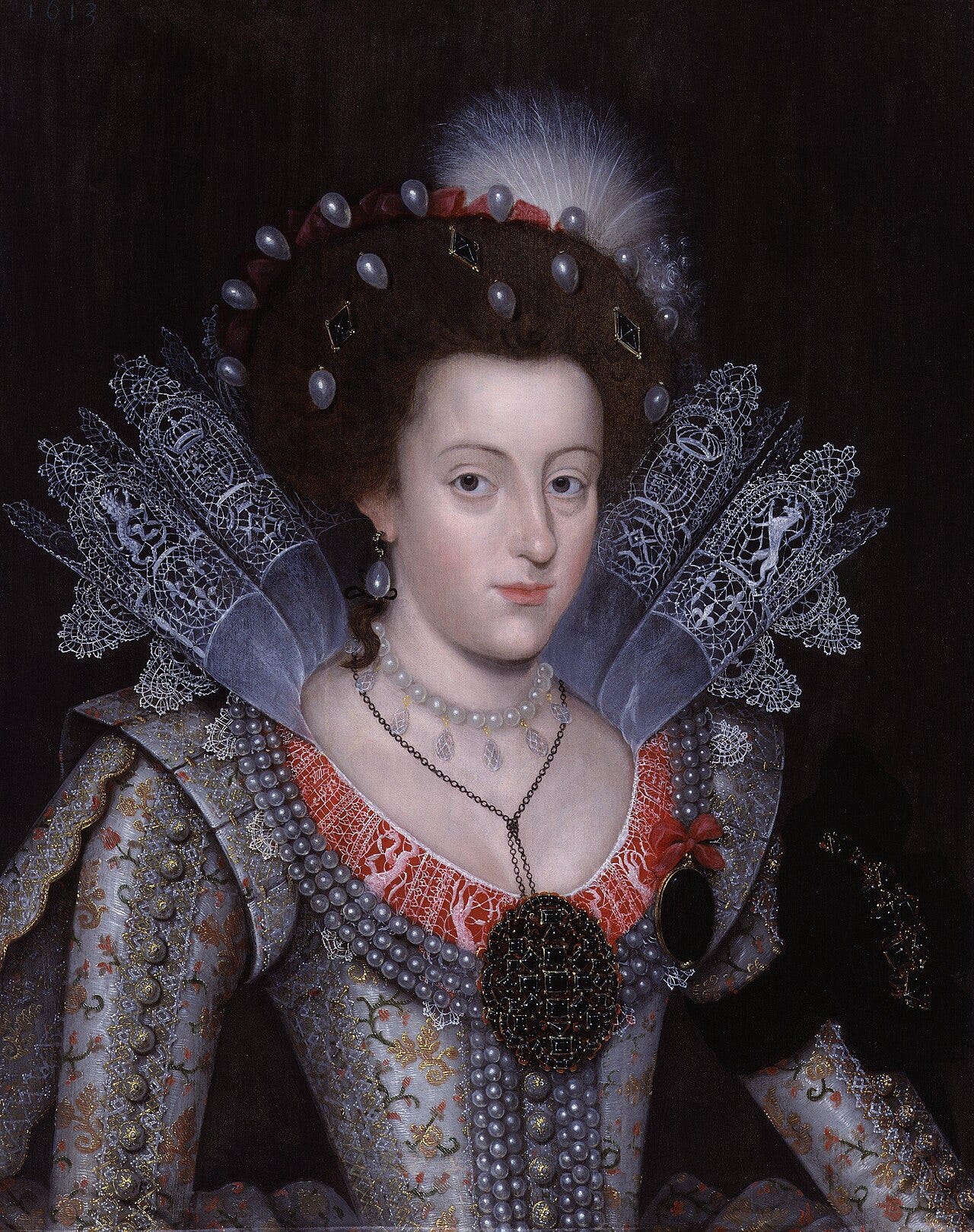
In February 1613, London hosted the wedding of the century. Elizabeth was married to Frederick V, the Elector Palatine of the Rhine, a handsome and staunchly Protestant prince. Anne of Denmark initially opposed the match because she believed an elector was too low a rank for a British princess. However, King James I saw the marriage as the ultimate anchor for his vision of a grand European Protestant alliance.
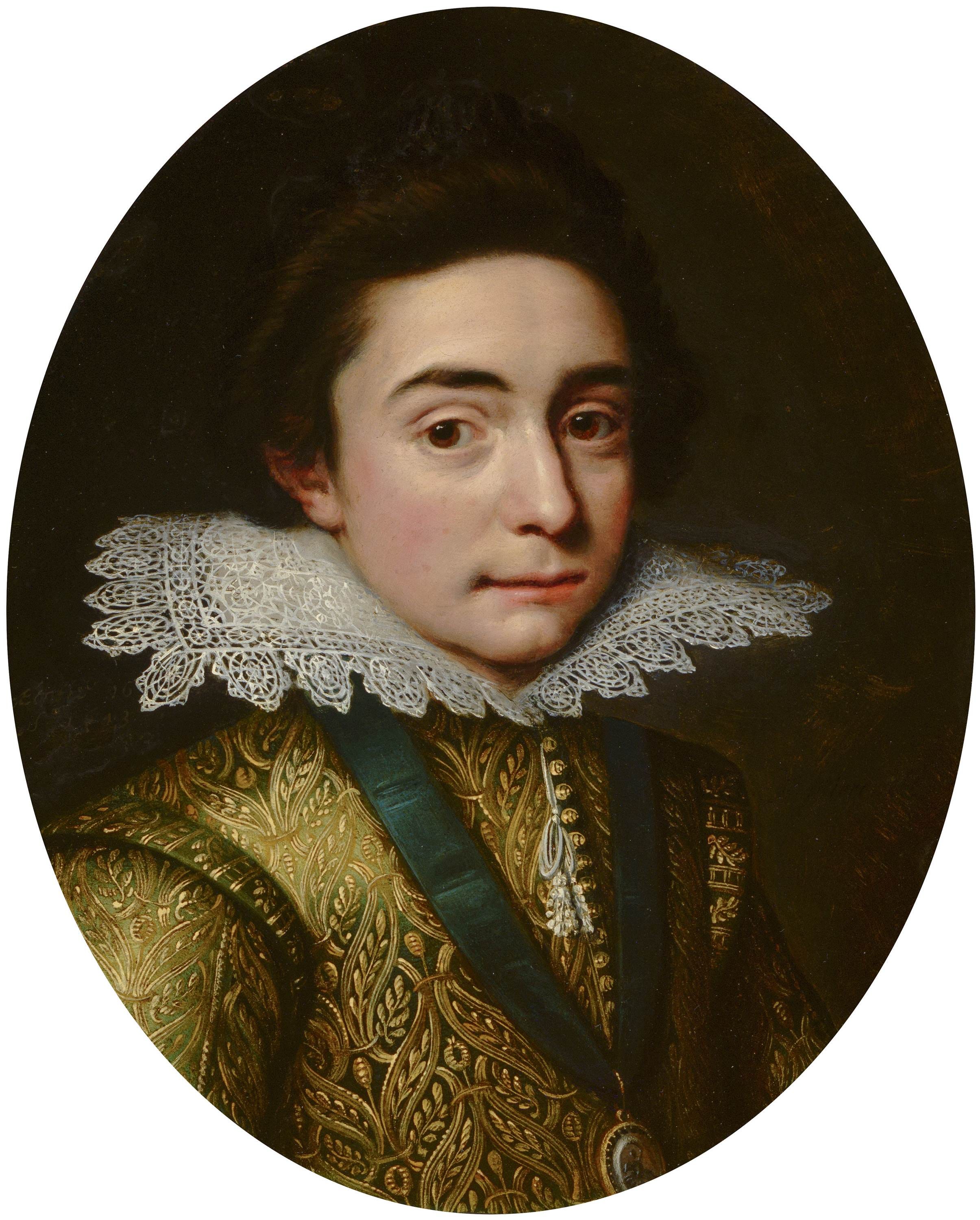
The wedding celebrations were a breathtaking display of Jacobean luxury, featuring lavish fireworks over the River Thames and spectacular court masques designed by Inigo Jones. The young couple was deeply, genuinely in love - a rarity in the cold world of royal marriages. When they departed for Frederick’s castle at Heidelberg, they established a vibrant court featuring magnificent Renaissance gardens that were hailed as the eighth wonder of the world. For a brief window, Elizabeth lived the idealised life of a renaissance princess, surrounded by philosophy, art, and her rapidly growing family.
The Fatal Crown and the Outbreak of War
The idyllic dream shattered violently in 1619. The Protestant estates of Bohemia rose up in rebellion against their tyrannical Catholic Habsburg ruler, Ferdinand II. In a bold act of defiance, the rebels declared the throne vacant and offered the crown of Bohemia to Elizabeth’s husband, Frederick. It was a poisoned chalice. Accepting the crown meant declaring open war on the Holy Roman Empire, the most formidable military powerhouse in Europe.
While King James begged his son-in-law to refuse the offer to avoid a catastrophic European war, Elizabeth urged her husband to accept. She possessed the fierce, uncompromising spirit of her mother and believed it was their divine duty to champion the Protestant liberties of Europe. Frederick accepted the crown, and the couple rode into Prague in triumph.
Their reign lasted a mere year. By the winter of 1620, the imperial Catholic armies smashed the Protestant forces at the Battle of White Mountain. Frederick and a heavily pregnant Elizabeth were forced to flee Prague in the dead of night, leaving behind their possessions and their short-lived kingdom. The London satirists mockingly labelled them ‘The Winter King and Queen’ because their royal status had melted away with the first snows. This single, fateful political gamble triggered the Thirty Years’ War, a devastating conflict that decimated Central Europe and cost millions of lives.
The Empress of Exile and the Stuart Shadow
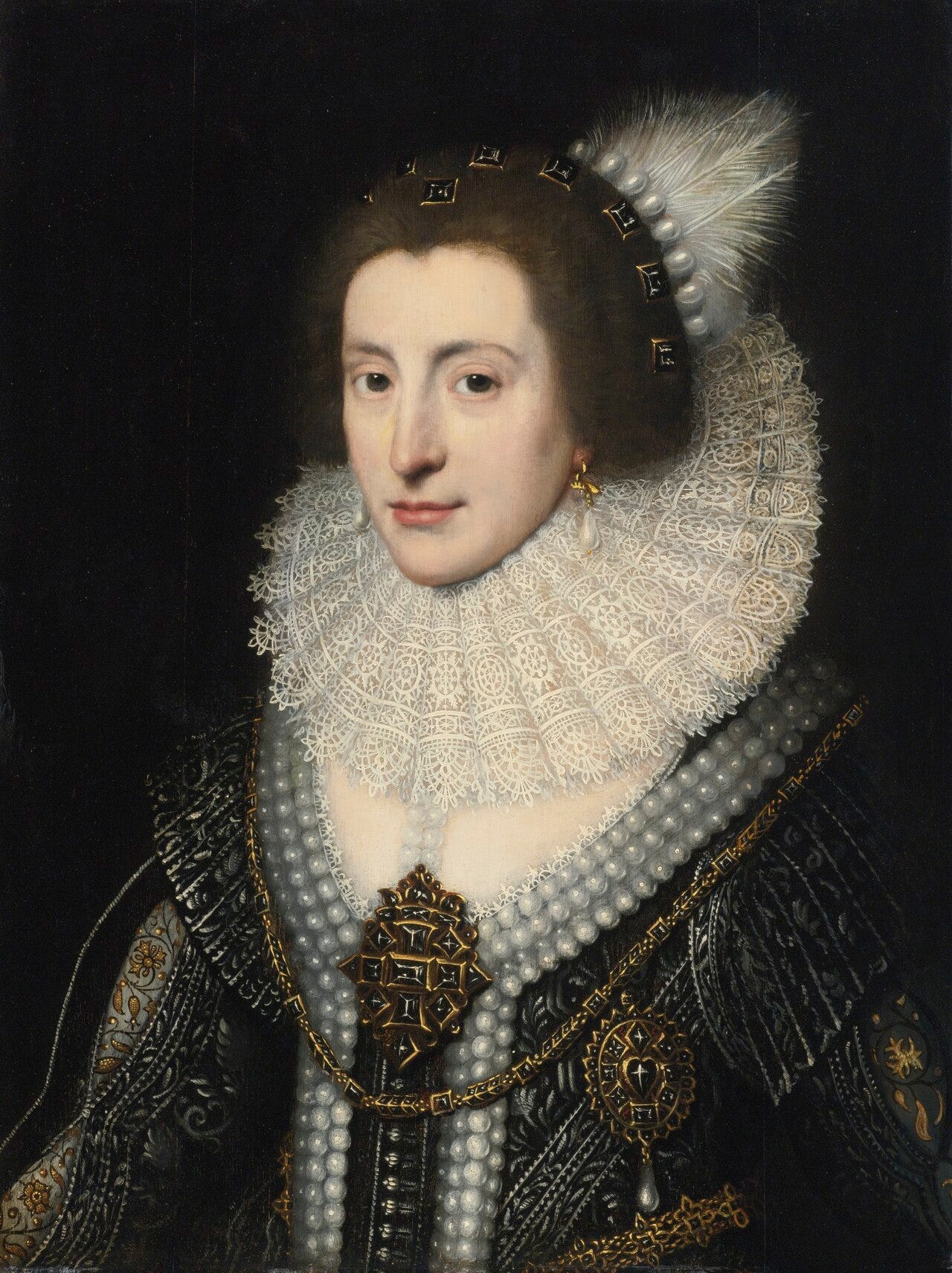
Stripped of both their Bohemian crown and their ancestral lands in the Palatinate, Elizabeth and Frederick found refuge in The Hague under the protection of the Prince of Orange. From here, Elizabeth entered her true element as a brilliant, untiring political diplomat. Rather than sinking into obscurity, she transformed her exiled court into an international hub for the anti-Habsburg resistance. She wrote thousands of letters to monarchs, generals, and diplomats across Europe, using her immense charm and British connections to raise funds and armies for her husband’s cause.
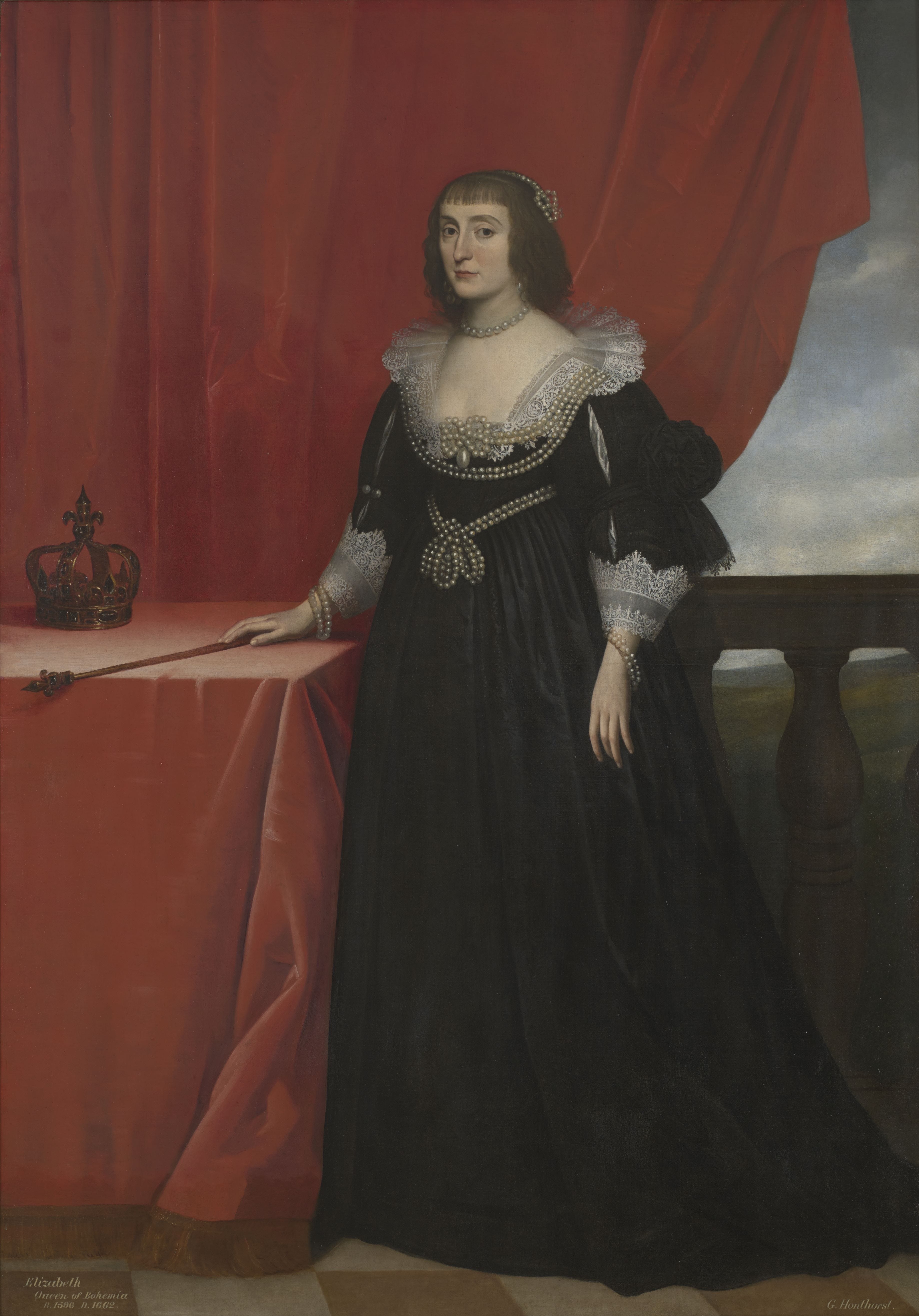
Her resilience was tested to its absolute breaking point over the subsequent decades. Over the course of her marriage, Elizabeth gave birth to a staggering thirteen children, and remarkably for the era, nine of them survived the dangerous perils of infancy to reach full adulthood. Yet, this large family brought its own immense emotional tolls. In 1629, her eldest son, Frederick Henry, tragically drowned in a boating accident before her eyes, and in 1632, her beloved husband Frederick died of a pestilential fever, leaving her a grieving widow with a massive household to support on meagre foreign pensions. As the decades dragged on, she lost several more of her adult children to the brutal realities of war and illness. From her exile in Holland, she also watched in horror as her native Britain collapsed into civil war, culminating in the execution of her brother, King Charles I, in 1649. Yet, through poverty, displacement, and personal grief, she maintained her rigid dignity, refusing to ever compromise her royal status or drop her title as Queen of Bohemia.
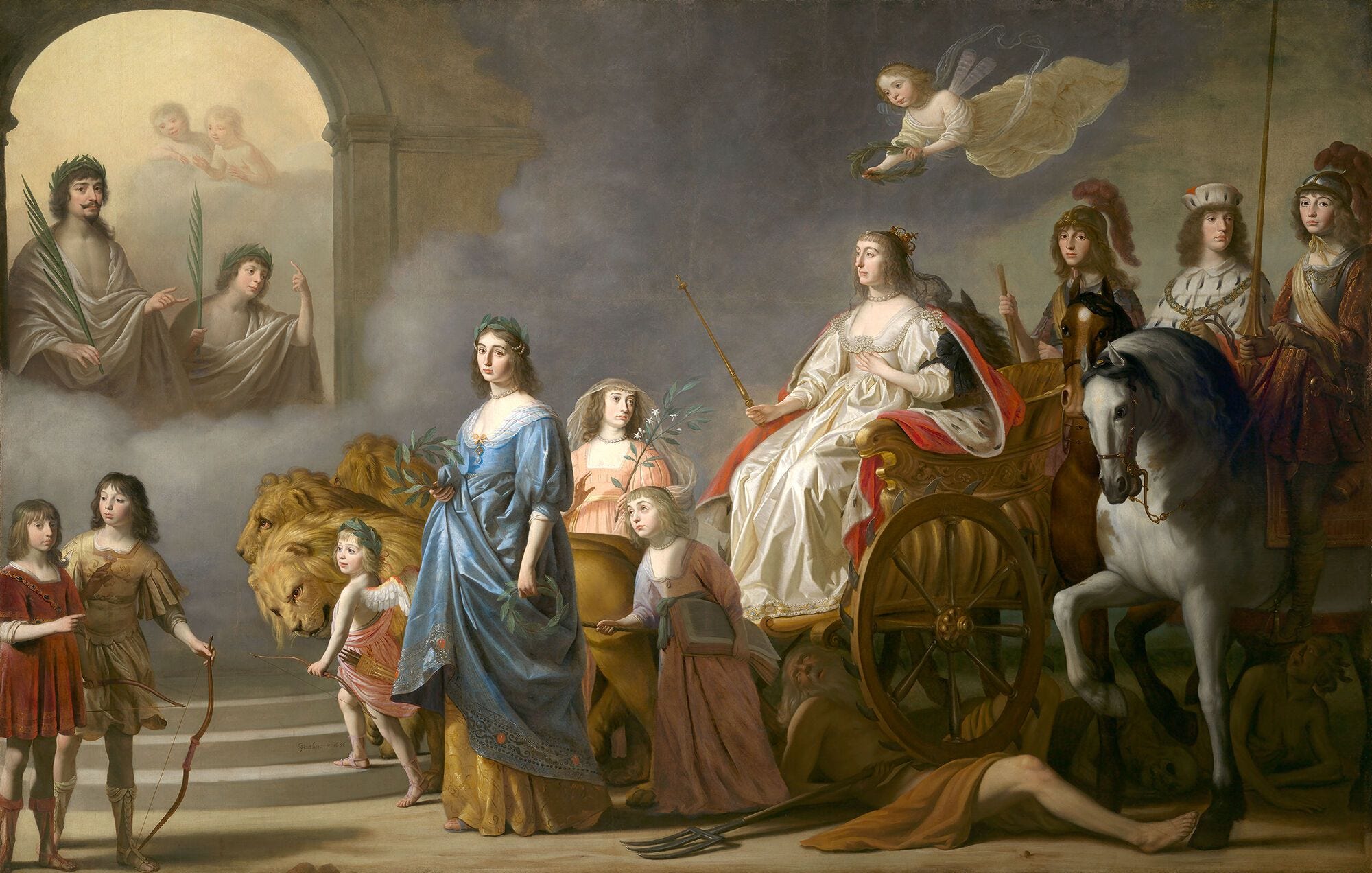
The Matrix of the Modern Monarchy
Elizabeth finally returned to her beloved England in 1661, following the restoration of her nephew, King Charles II, to the throne. She died in London on February 13, 1662, and was buried alongside her ancestors in Westminster Abbey.
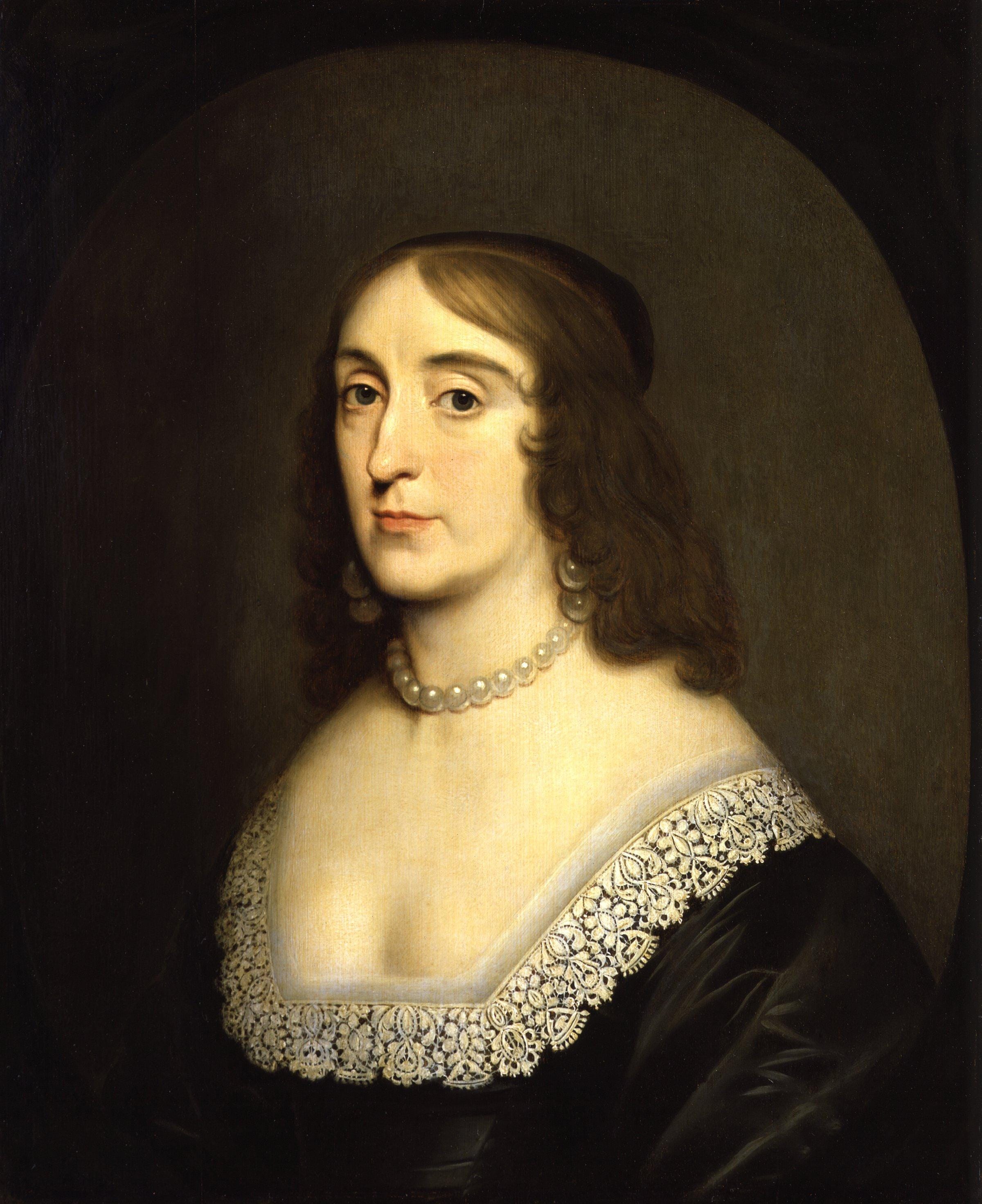
Though she died without a kingdom of her own, Elizabeth achieved the ultimate dynastic victory from beyond the grave. In 1701, when the English Parliament sought to permanently secure a Protestant succession and exclude the Catholic Stuart line, they passed the Act of Settlement. This law decreed that the crown of Great Britain would pass exclusively to the Protestant heirs of Elizabeth Stuart, the Winter Queen.
Through her youngest daughter, Sophia of the Palatinate, Elizabeth’s grandson travelled to London in 1714 to be crowned as King George I, initiating the House of Hanover. Every British monarch who has sat on the throne since - including Queen Victoria, King George V, Queen Elizabeth II, and King Charles III - derives their absolute legitimacy and right to rule directly from the unbroken bloodline of the indomitable Winter Queen.
No posts
Comments
Nothing yet. Say the first thing.
Sign in to join the conversation.