
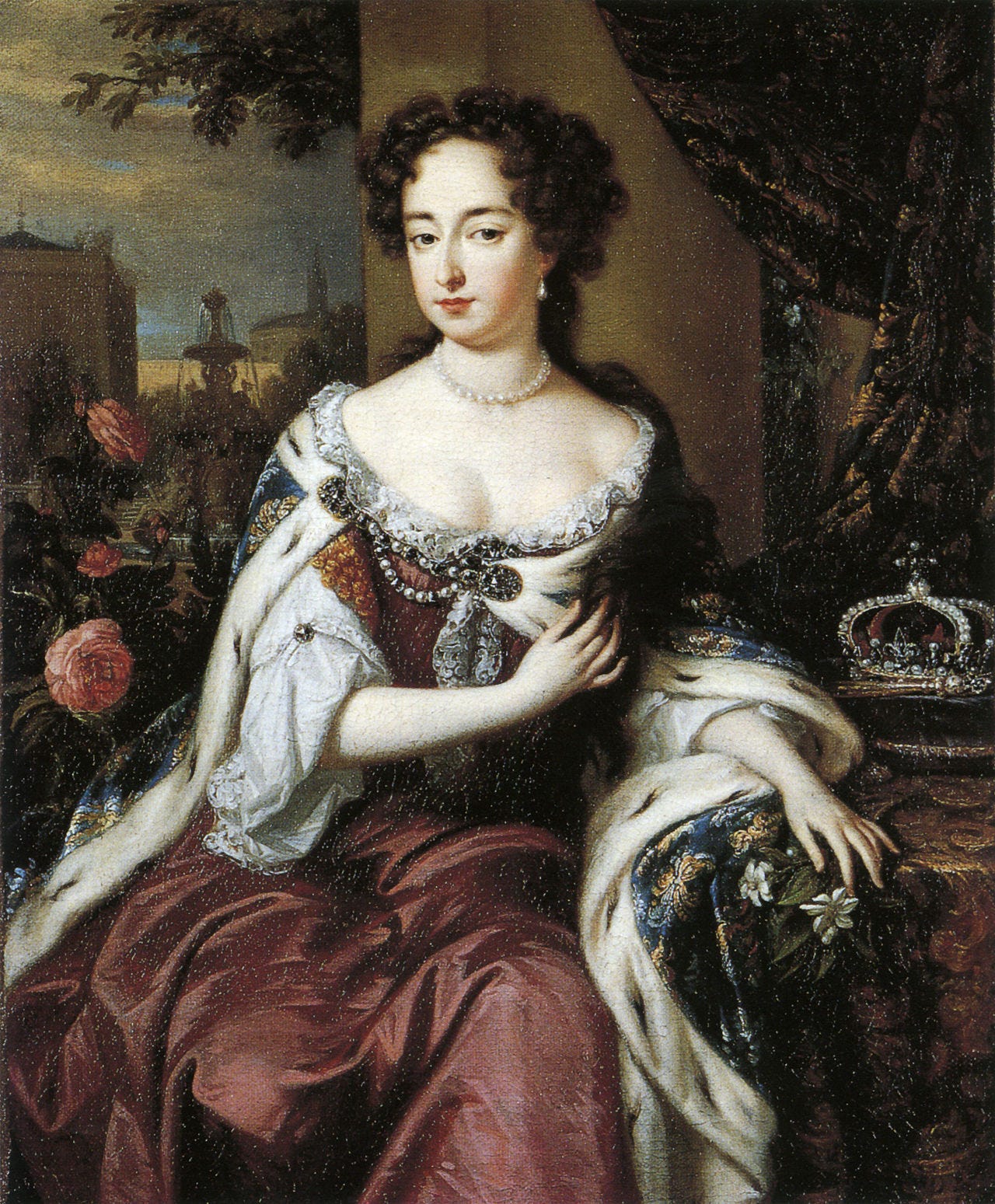
When we think of the great queens of British history, names like Elizabeth I, Victoria, or Elizabeth II instantly dominate the conversation. But there is another queen who sat upon the throne - one who reigned with immense popularity, completely revolutionized British style, and yet is routinely reduced to the passive half of a joint-stock historical brand.
I’m talking, of course, about Mary II, the literal ‘Mary’ of William and Mary.
To the casual observer, Mary’s story looks like a triumph of Protestant victory. But peel back the glittering layers of the late seventeenth century, and you find a deeply complex woman who was forced to choose between her family and her crown, who wept her way to the throne, and who filled an empty nursery with a spectacular, enduring passion for the arts.
A Child Bride Torn from Home
Born on 30 April 1662, Mary was the eldest daughter of our previous protagonist, Anne Hyde, and the future King James II. As a young girl, she was tall, striking, and thoroughly enjoyed the sheltered, gossipy luxury of Richmond Palace.
All of that came to a screeching halt when she was just 15 years old.
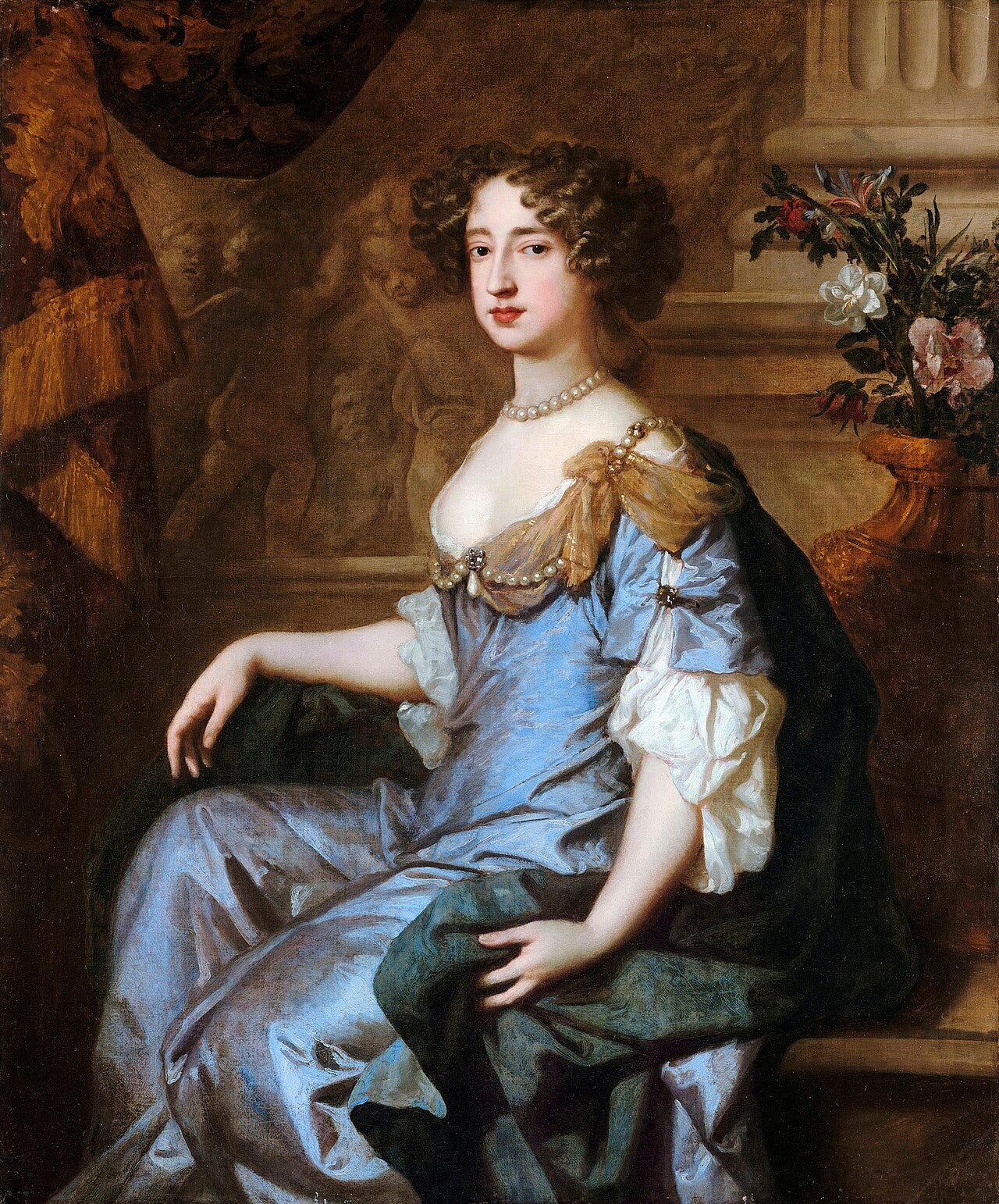
For political reasons, it was decided that she should marry her first cousin, the protestant Dutch stadtholder William of Orange. William was 27, short, asthmatic, notoriously sullen, and entirely unconcerned with the charms of women. When the 15-year-old Mary was told she had to marry this grim foreign prince, she reportedly wept for an entire afternoon and all of the following day.
They were married in a bleak, sombre ceremony in Mary’s bedchamber on 4 November 1677. Weeks later, she was packed onto a ship and sent across the freezing North Sea to the Netherlands, leaving behind everything she had ever known.
Exile, Isolation, and the Empty Nursery
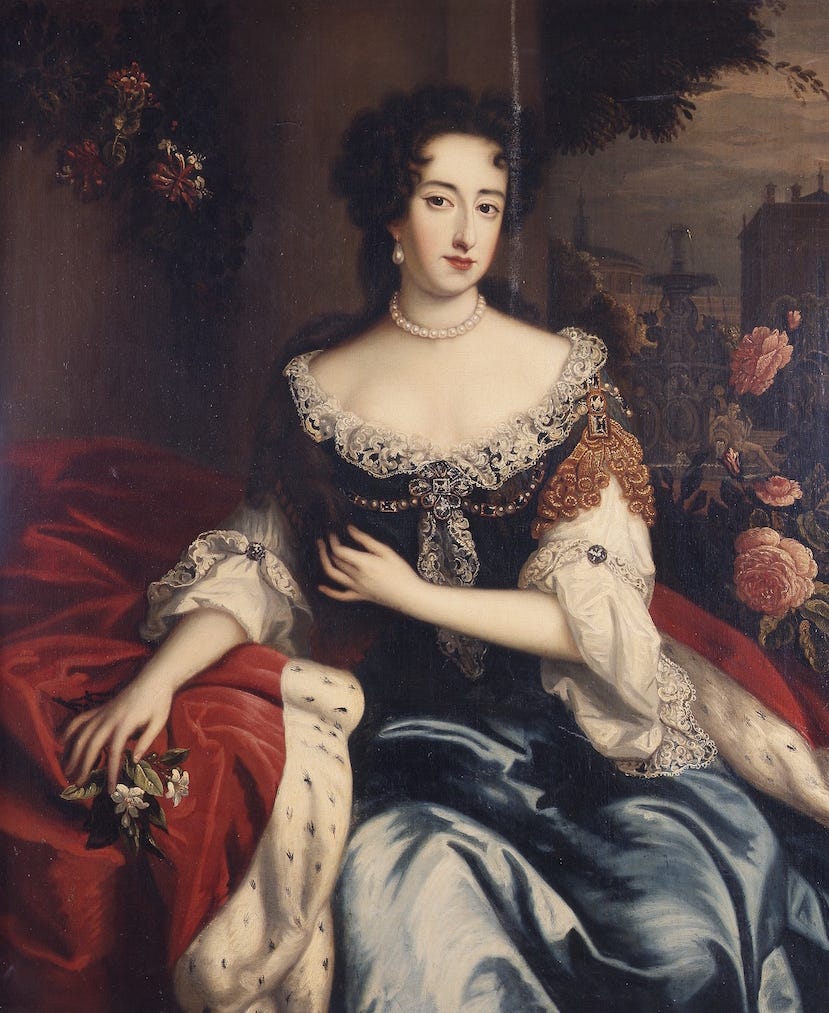
Mary’s early years in the Dutch Republic were a trial by fire. She spoke no Dutch, found the Calvinist court austere compared to the raucous luxury of Whitehall, and had to contend with a husband who was frequently away at war - and who was carrying on a blatant, humiliating affair with her own lady-in-waiting, Elizabeth Villiers.
Worse still was the personal grief that met her in the nursery. Desperately wanting to be a mother, Mary became pregnant within months of her arrival. Tragically, she suffered a miscarriage in early 1678, followed by another devastating miscarriage in 1679. A subsequent severe illness left her permanently unable to conceive.
In a world where a royal woman’s sole purpose was to secure the succession, Mary’s lack of children was a heavy psychological burden. But rather than collapsing under the weight of isolation and grief, Mary chose to build. Over her eleven years in the Netherlands, her warmth and genuine piety thoroughly won over the sceptical Dutch public, who affectionately called her Marijntje.
The Birth of a Style Icon: Masterminding Paleis Het Loo
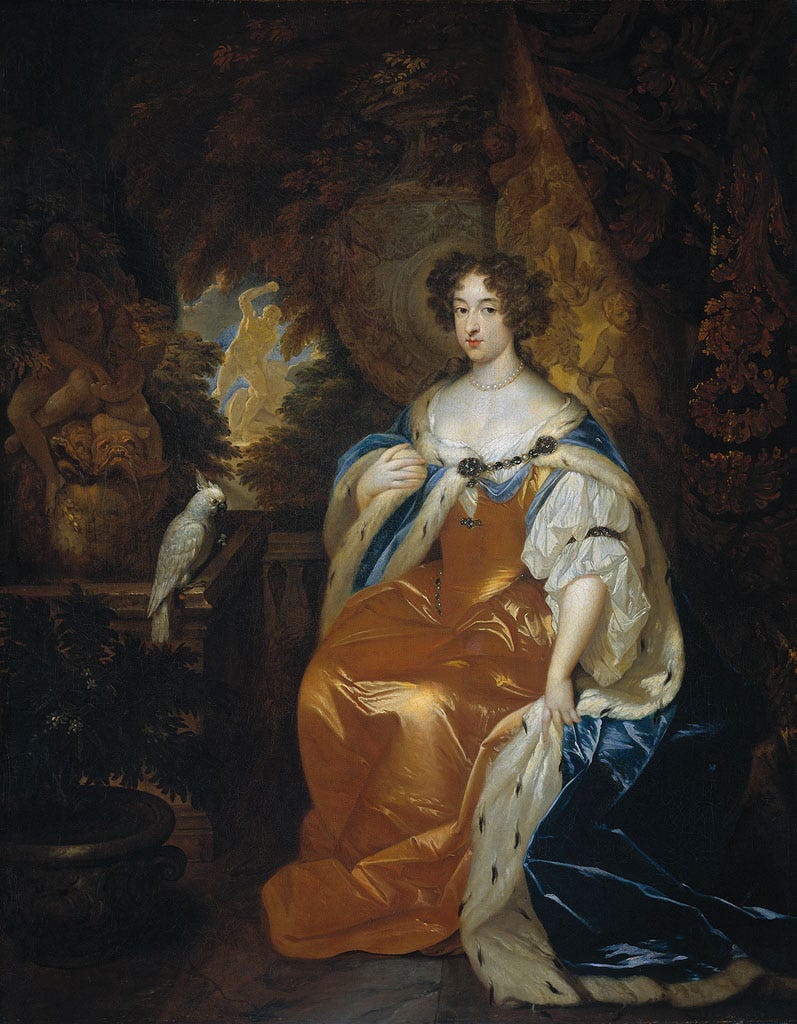
It was during this time in the Netherlands that Mary discovered her true calling: architectural patronage and interior design. In 1684, William purchased a modest medieval hunting lodge in Apeldoorn. Together, they set out to build a grand summer palace that could rival Versailles: Paleis Het Loo.
Comments
Nothing yet. Say the first thing.
Sign in to join the conversation.