
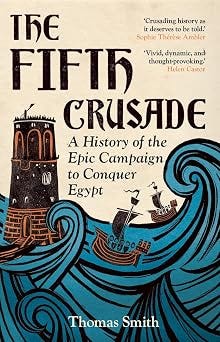

The Fifth Crusade ended in failure. But Thomas Smith’s new history raises a more interesting question: how did an expedition that came so close to success manage to lose almost everything?
The familiar story is straightforward. The crusaders captured Damietta, rejected peace, advanced towards Cairo, became trapped by the rising Nile and surrendered their hard-won Egyptian stronghold.
Smith complicates that picture.
By 1219, the crusaders had captured one of Egypt’s most important cities and placed the Ayyūbid regime under serious pressure. Smith argues that, before the final disaster, the campaign had arguably become the most successful major crusading expedition since the First Crusade.
That does not turn defeat into victory. But it does suggest that failure was neither inevitable nor simply the product of one disastrous decision.
Below the paywall, I want to look at three questions that particularly interested me while reviewing the book: Was Cardinal Pelagius really the villain? Did the crusaders foolishly reject Jerusalem? And what actually caused the campaign to collapse?
For readers wishing to explore the subject further, pick up a copy of The Fifth Crusade: A History of the Epic Campaign to Conquer Egypt by Dr Thomas Smith.
Comments
Nothing yet. Say the first thing.
Sign in to join the conversation.