
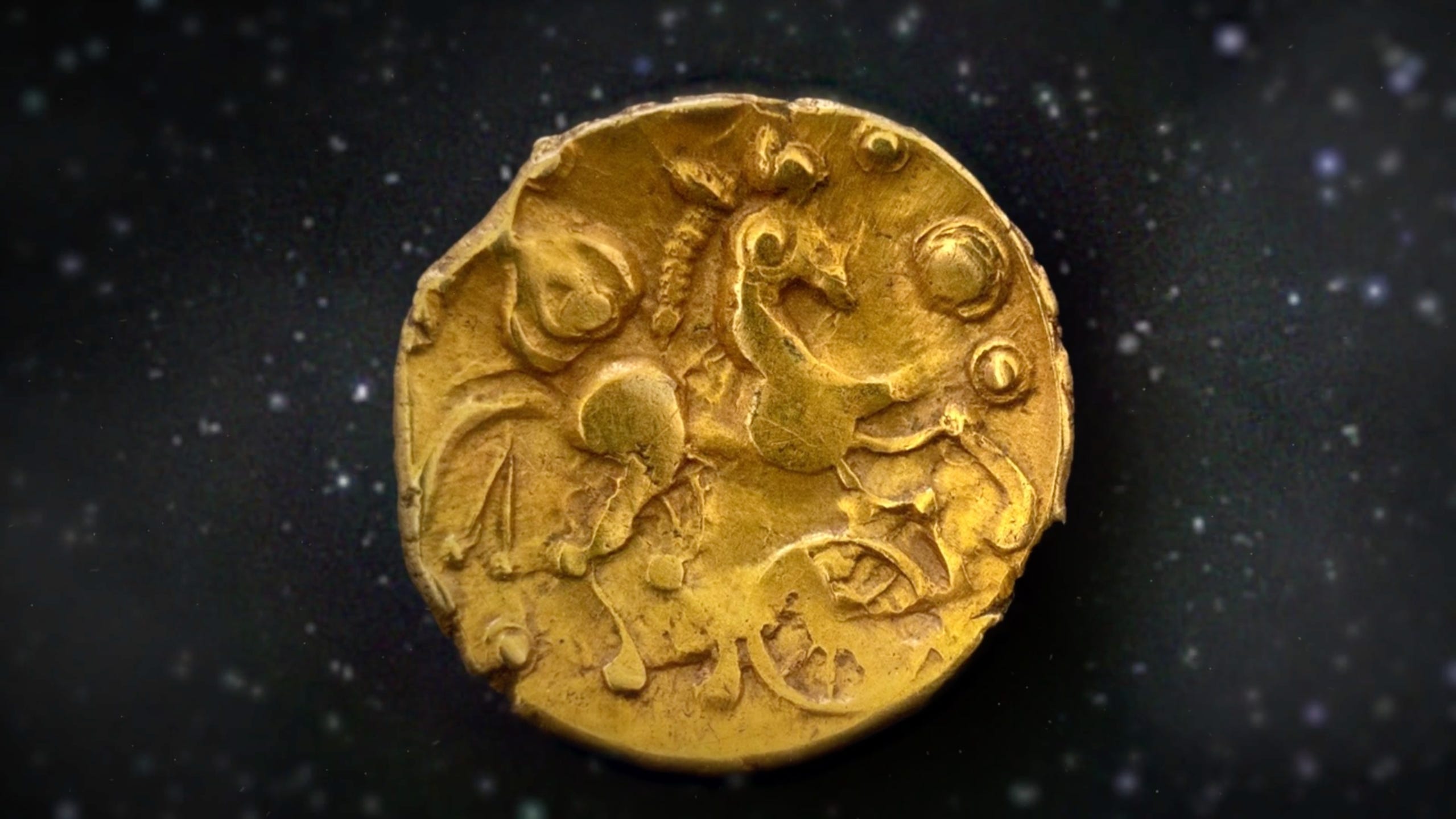
What do ancient treasure hoards, tactical battle maps, heatwave survival hacks, and Dan Snow dancing have in common? They’ve all landed in this week’s Substack!
Here’s a quick peek at what’s inside today’s issue:
🪙 Tristan Hughes spills the tea on what it’s really like to get up close and personal with The Great Baddow Hoard (including which of the coins
he secretly wanted to pocketwas his favourite)🖊️ Dan’s ‘Big Pad’ Chronicles: Mapping out the History of Britain, from Caesar to the Vikings
☀️ Heatwave Survival: As the UK mostly melts, Gone Medieval podcast host Matt Lewis drops by with some surprisingly practical tips on surviving the heatwave
🪩 Awards: News of recent shiny new awards! Naturally, Dan Snow celebrated by breaking out some dance moves (footage located! 👀)
🦘 Aussie Bound: Why Tristan is jetting off Down Under for The Ancients.
Add in our podcast highlights, weekly team history picks and some ultimate weekend reading and you’re all set.
Thanks for being part of our subscriber family. If you enjoy this week's Substack, please hit the share button and help us grow the tribe!

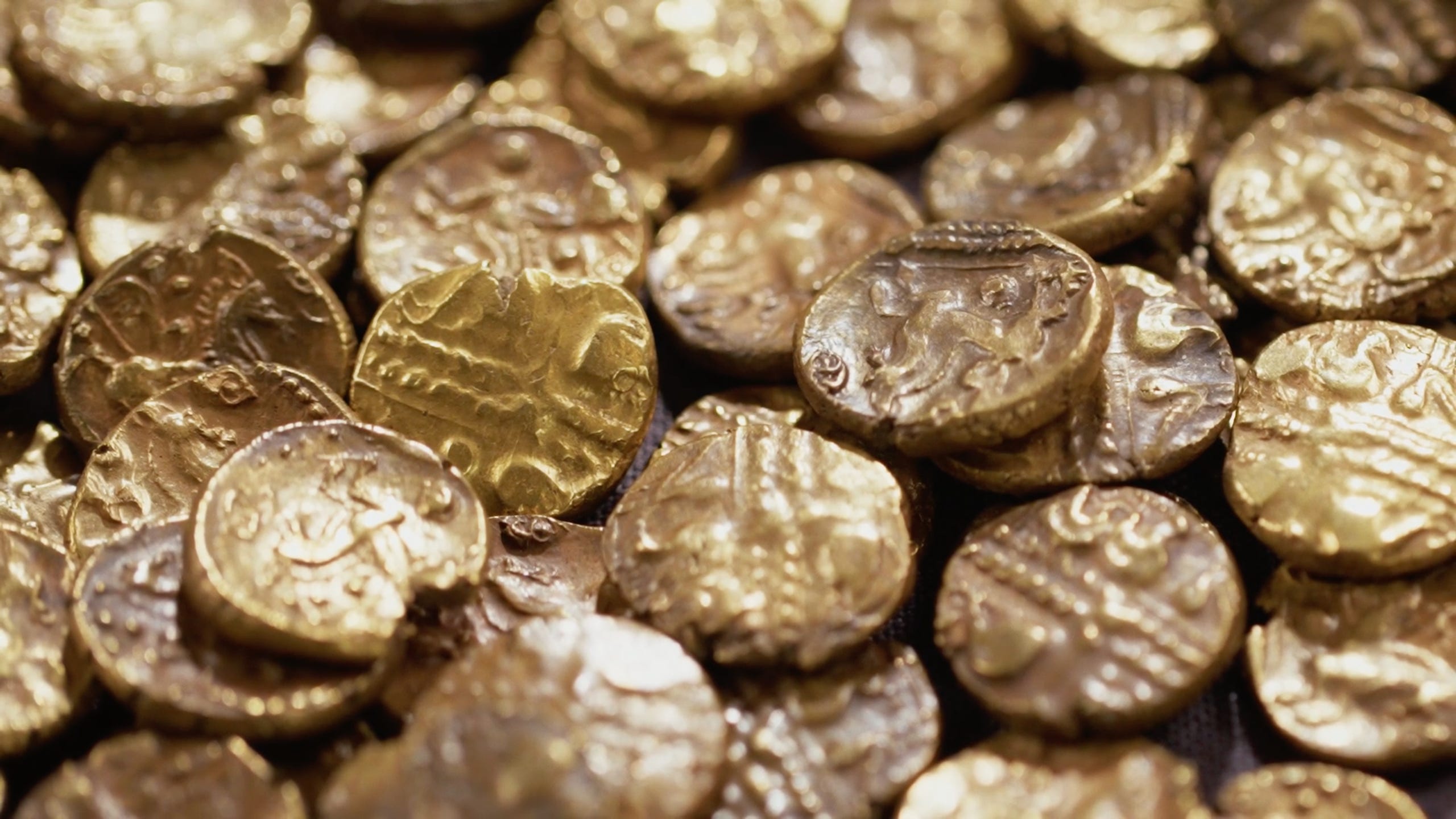
Over 900 gleaming gold coins. A mystery over 2,000 years in the making. Unearthed in the village of Great Baddow near Chelmsford, Essex, The Great Baddow Hoard is the largest discovery of Iron Age gold coins ever found in Britain. Buried deep in the earth during the Late Iron Age - around the same time Julius Caesar was launching his first invasions of Britain - this incredible collection of decorated staters is being revealed to the world in a brand new exhibition at the Museum of Chelmsford.
In our exclusive new documentary, The Great Baddow Hoard: Decoding the Iron Age, History Hit’s Tristan Hughes heads to the museum to investigate this extraordinary discovery. Alongside curator Claire Willetts, he gets special access to examine the coins up close and unpick their hidden history. Together, they explore the wider context of the discovery and tackle the great lingering mystery: why was this massive fortune buried in the Essex countryside, and did Julius Caesar’s arrival in Britain at roughly the same time spark its concealment?
But that’s not all. Iron Age coins can tell us a lot about the people who made them. Joining forces with Dr. Eleanor Ghey of the British Museum, Tristan explores the intricate and breathtaking iconography stamped into the gold - from abstract heads of Apollo and winged horses to several mysterious, unexplained outliers. Discover what these ancient treasures reveal about the powerful, sophisticated society that minted them.
Subscribe to History Hit and watch The Great Baddow Hoard: Decoding the Iron Age
Just before Tristan jetted off to Australia (more on that soon!), I grabbed a moment with him to talk about what it was really like to get up close and personal with the hoard. Here’s what he had to say:
Britain’s late Iron Age gold coinage ranks amongst the most beautiful from anywhere in the ancient world. To go and see more than 900 of these up close was an incredible experience.
What strikes you is the amazing quality of each and every coin; they have survived in incredible condition. The ‘Pegasus’ winged horse image shown on almost all of the coins is immaculate, although the lone Norfolk ‘wolf’ stater will forever be my favourite with its hairy back!
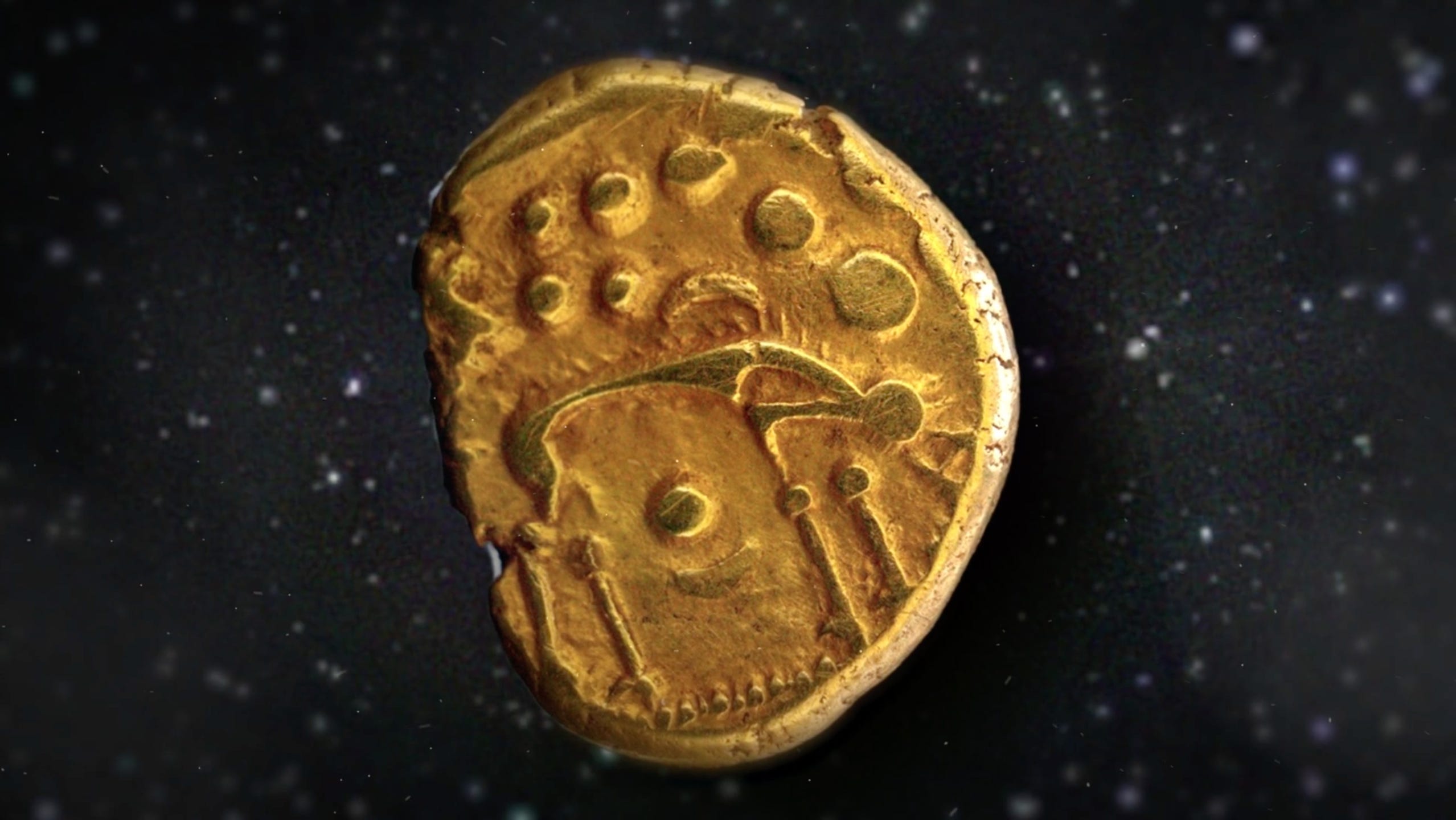
Most of all, it was a pleasure to hear from the experts - from Claire and Eleanor. To learn about the details, the context. And, just as interesting, the uncertainties that remain.
At the heart of this hoard is the great mystery of why it was buried. The fact that most of the coins are of the same type, showing little to no wear at all, makes me think they were minted for a special ceremonial purpose. The classic ‘it’s ritual’ answer I know. But to me that seems more likely than being someone’s hidden treasure or a lost tribute for Julius Caesar. But that’s just my opinion. We’ll likely never know for sure.
Great Baddow now boasts a new record. The home of Britain’s largest ever Iron Age gold coin hoard. Not bad!
The exhibition, Timeless Treasure: The Great Baddow Hoard, is now open at the Museum of Chelmsford.
Subscribe to History Hit and watch The Great Baddow Hoard: Decoding the Iron Age

Dan Snow’s History Hit podcast has launched a new, YouTube-exclusive series on ‘The History of Britain’.
Armed with his trusty ‘Big Pad’ (ooh, fancy!), Dan maps out the movement of people and battle sites - combining tactical diagrams with rich documentary footage and imagery to bring the rich stories of Britain’s past to life like never before.
In Episode 1, Dan Explains the Entire Roman Conquest of Britain, exploring how Rome’s hunger for conquest and glory reshaped the ancient world, and why it set its sights on a mysterious, stormy island at the edge of the empire. From Julius Caesar’s first daring expeditions to the dramatic collapse of Roman power, Dan maps four turbulent centuries of emperors, rebellions, and epic battles.
The fall of Rome left Britain a fractured, divided hellscape. As old loyalties collapsed and rival kingdoms fought for survival, new peoples crossed the North Sea, seeking opportunity in the chaos.
In Episode 2 (out today!), Dan Explains The Fallen Kingdoms of ‘Dark Age’ Britain and how the Anglo-Saxons conquered Britain. From the decline of Rome to the rise of great Anglo-Saxon realms, Dan breaks out his ‘Big Pad’ to map the migrations, bloody wars, and legendary rulers that forged a new world from the ruins of Roman Britain.
Episode 3 (released on 6 August) will explore the next age of conquest in Britain: the age of the Vikings.
Explore more fascinating video podcasts and documentaries on History Hit’s YouTube channel 🍿

Let’s face it, it’s been a scorcher for most of the UK this summer, with plenty more heat on the horizon. As I write this from our nicely air-conditioned office (I’m ok thanks!), I spare a thought for those suffering in stifling heatwave humidity (aka future-me, working from home tomorrow, with a single fan).
To help us all survive, I decided to consult the experts here at History Hit. I turned to Matt Lewis - host of our Gone Medieval podcast and presenter of countless brilliant medieval documentaries - to ask how he survives the swelter. Here’s his guide to beating the heat:
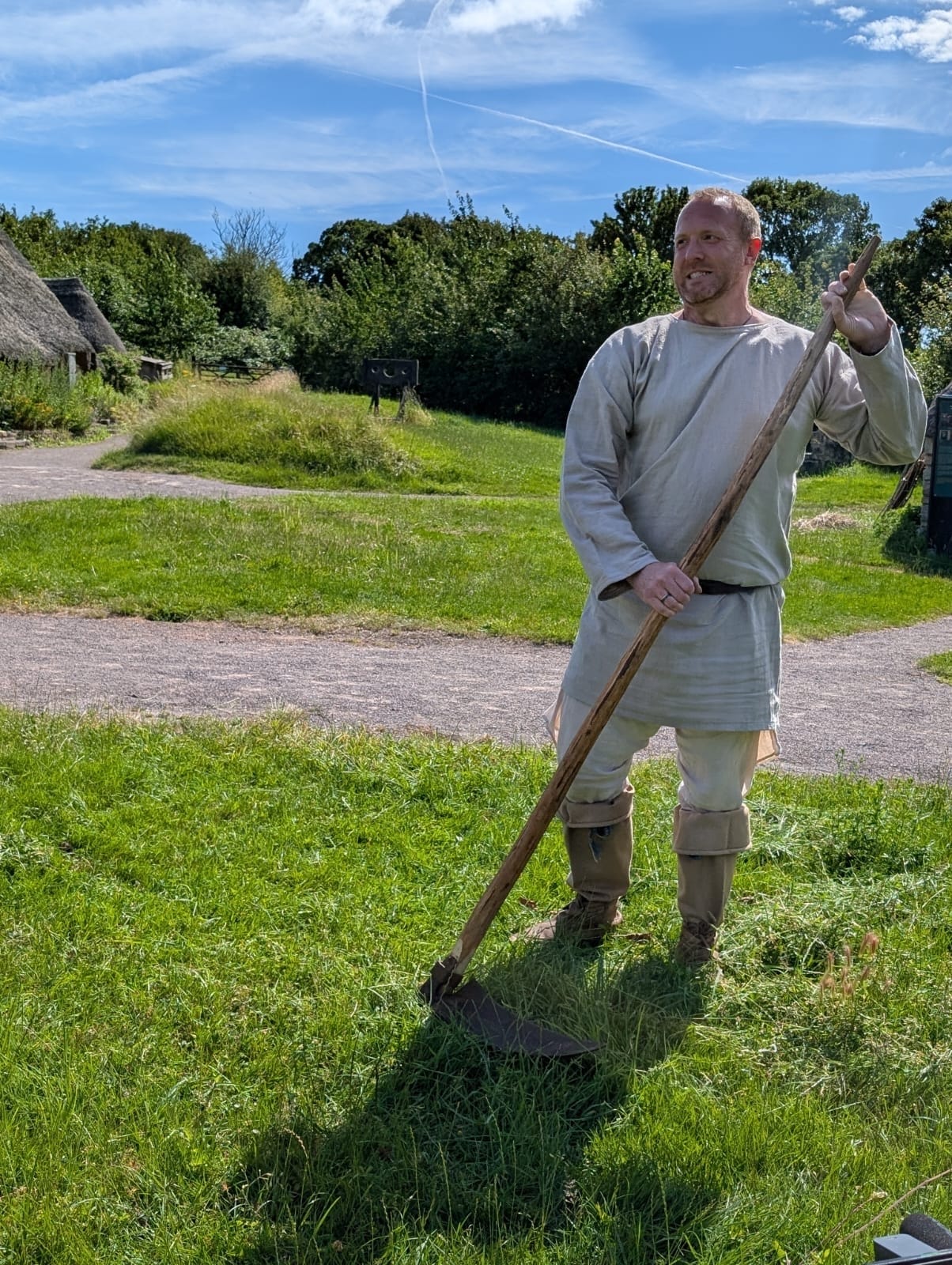
As a pasty ginger, I’m not built for heatwaves. This summer is proving tricky. I can’t tell whether I’m getting a tan or my freckles are just swelling and joining up. Anyway, between medieval know-how and ginger survival instincts, I’ve got a few hints for surviving this weather.
Keep windows and curtains closed on the side of the house the sun is on. It stops heat building up in rooms so much. And don’t open windows until the late evening, to let some heat out rather than in. I’ve read that you should point a fan out of a window, to blow hot air out. I don’t know if that’s real science, but I’ll try anything.
There’s lots of medieval manuscript images of people going for a paddle in rivers. Medieval people didn’t necessarily swim particularly well, but we can see them cooling off in the water whenever they can. So get the paddling pool out, and splash away. It’s what our ancestors would want!
Drink plenty - mead, small beer, cider. No. Wait. We’re being responsible here. Water. Lots of water. I drink hot tea when the weather is like this too. Supposedly, raising your body temperature with a hot drink makes you feel cooler. Is that real? I’m sure someone will know. Maybe it’s a placebo, or an excuse to drink tea, but I think it works.
Medieval folk were also partial to a wide-brimmed field hat to keep the sun off as much as possible. Portable shade. They would often soak the hat in cool water too, buying them a few more hours of relief when they had no choice but to be outside. You might also wear a linen coif under your hat, which could be soaked in water too. You can try that if you want. You do you! I can’t wear hats. People laugh at me. True fact.
Wearing linen was the norm for medieval folk in Europe, and it’s still a great option when the weather’s hot. They knew a thing or two, our clever medieval forebears.
If all else fails, grab an ice cream or a lolly. My current favourite is a Fiesta. I think you can only get them from Aldi. They’re like a Feast but more caramel. And now I want one.
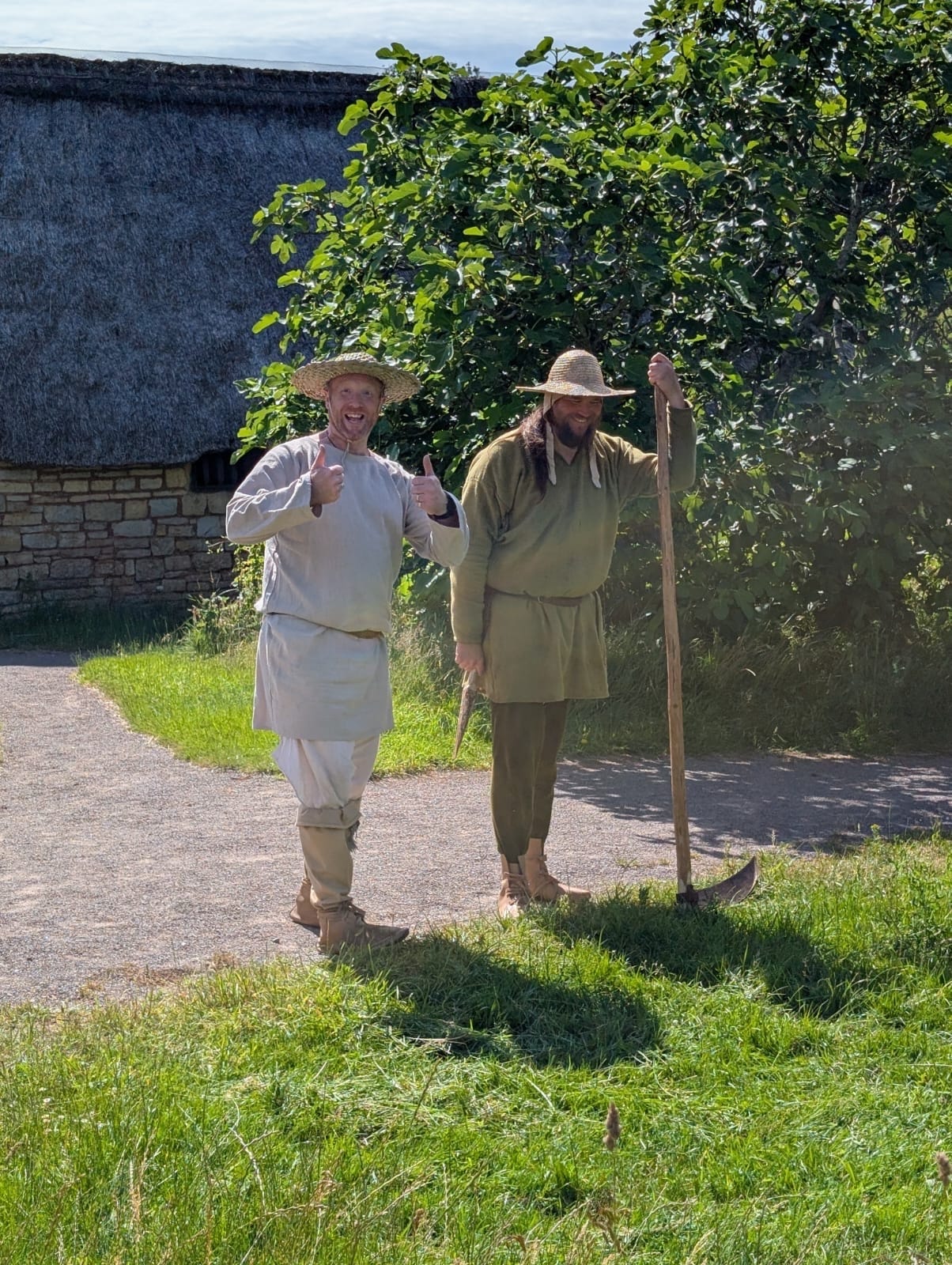
…What those Medieval people would’ve given for a lollipop while ploughing the fields huh? For the record I prefer a Twister, but I digress. If you enjoyed Matt’s tips, then you can find out more in History Hit’s upcoming ‘Medieval Summer’ documentary (released 21 August), where Matt Lewis and Eleanor Janega head to Cosmeston Medieval village to investigate how people survived the long hot days of medieval summer.
With the help of experimental archeologists they’ll be exploring how you dress, work, play and eat in one of their favourite time periods, the 14th century. I’ll be speaking to Matt nearer the time to find out more (and giving him my feedback on a ‘Fiesta’ lollipop).


A few weeks ago at the Broadcast Digital Awards, History Hit won Factual Channel of the Year (2nd time in a row) as well as the top spot of Channel of the Year!
To quote our Head of Programming, Bill Locke:
“Next time we’re standing in the rain filming an empty field, exhaustedly loading kit, DITing, writing, editing and generally keeping the whole show on the road, we’ll remember this.”
As promised, here’s a sneaky video of our glorious leader celebrating, alongside (wonderful) producer Fiona Turnock.
© Dan Snow / History Hit
Those hips don’t lie.
We’ve also been nominated for two categories at this year’s British Podcast Awards - Dan Snow’s History Hit has been shortlisted for Best History Podcast, and the History Hit network has been shortlisted for Best Network. How exciting!
(Just think what the celebrations might look like if we were to be successful…)


Was Elizabeth I really as angry and bad tempered as history has always claimed? How did some of her most secret state letters come to be penned by a Spaniard, while England was at war with Spain?
In a groundbreaking new episode released today, New Discovery: Who Really Wrote Elizabeth I’s Letters?, renowned historian Professor Suzannah Lipscomb breaks the news of groundbreaking research that proves Elizabeth’s secretaries - especially her ‘spymaster’ Francis Walsingham - put words into the Queen’s mouth to amplify her tough image. Suzannah finds out more from Dr. Clodagh Murphy and Professor Nadine Akkerman.
As Professor Suzannah Lipscomb, host of Not Just the Tudors, notes:
“I’m thrilled to be the one revealing this new discovery that will change the way we have always thought about Elizabeth I. For centuries, Elizabeth’s correspondence has been taken as proof of an impulsive, emotional queen. [The insights uncovered in this episode] will change our understanding of gender, power, and authorship.”

American History Hit have done a deep dive into some of the most notorious outlaws in American history. From gunfighters and bank robbers to larger-than-life legends of the Wild West, they explore the lives, crimes and myths surrounding three of these figures, separating fact from folklore and uncovering how they came to define an era of lawlessness in the American imagination.
All 3 episodes are available to listen to now:
Billy the Kid - Who was he? What crimes did he really commit? Is there any chance he survived that final ambush?
The Robin Hood of the Wild West - Robbing from the rich to give to the poor and downtrodden - this is the legend of Joaquin Murrieta. But how true was it?
Life in Mobland Chicago - Just how dangerous was it to live in Chicago during the 1920s? Was it all gangsters, tommy guns and spilt moonshine?
In these upcoming episodes (on 3 and 6 August) Dan Snow travels to the remote jungles of Belize to uncover the secrets of the Ancient Maya as he explores their cities, temples and culture.
The Maya were a visionary civilisation that rose to build great cities, map the stars, master agriculture and develop a sophisticated writing system. But then, at the height of their power, the Mayan civilisation ruptured. Cities were abandoned and reclaimed by the jungle, but what brought about their mysterious decline and did the Maya ever truly disappear?
The captain of the HMS Hermione was a sadist even by the not-very-high standards of the British Royal Navy in the 1700’s. He was a prolific flogger, subjecting his crew to the cat-of-nine-tails. It was hardly a surprise when his crew rose up and mutinied. Even if the British Navy couldn’t for one second let them get away unpunished.
This is the brutal and bloody story of Britain's most horrific mutiny, told by the one and only Dan Snow!
Here are some sneaky pics taken during the recording…
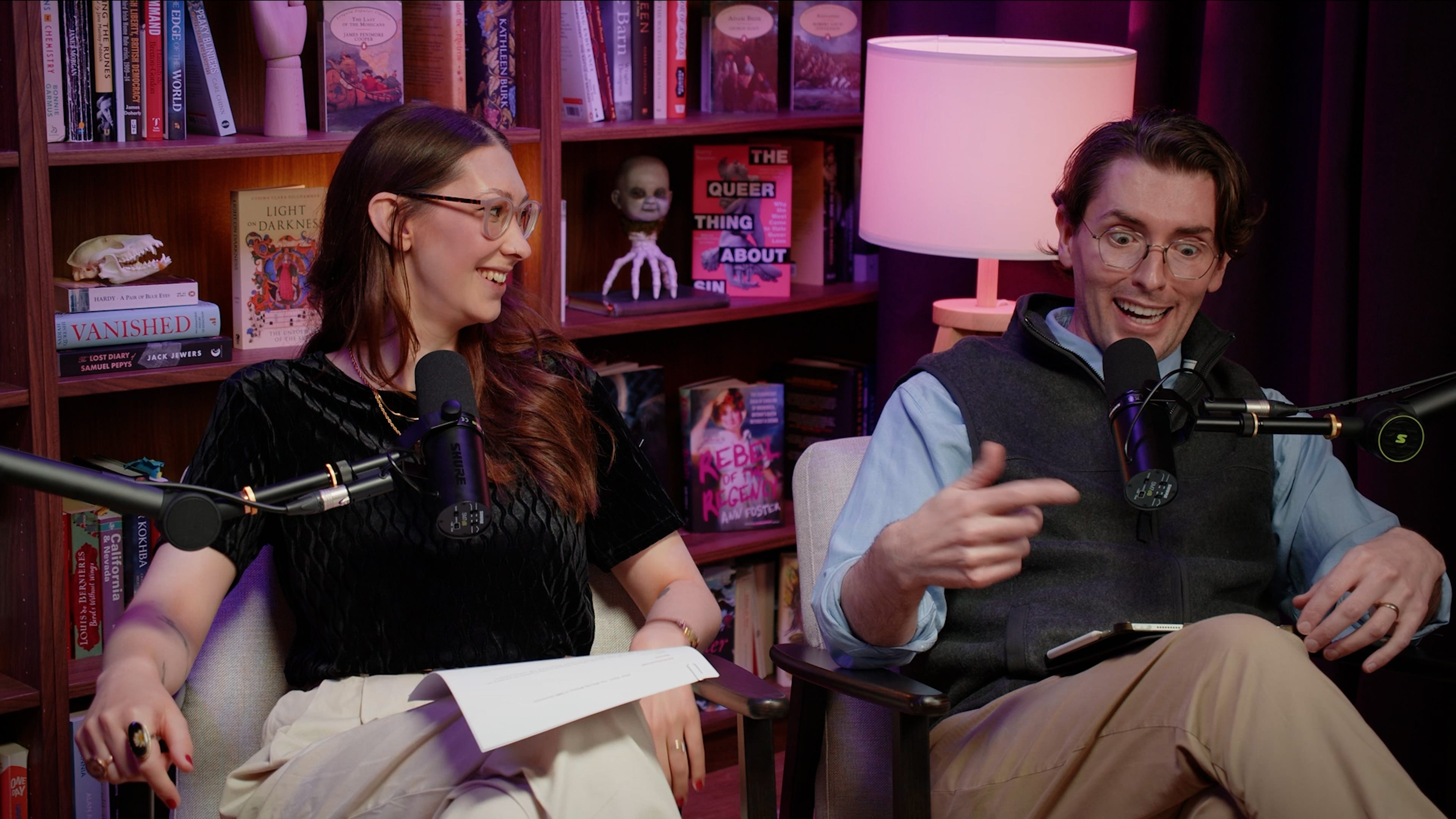

It was a busy day recording, as After Dark also recorded an episode with Historian and award-winning author Clare Mulley about Agent Zo: the remarkable (female) Polish resistance fighter. This will be on the podcast on 16 August. (Personally I can’t wait!)


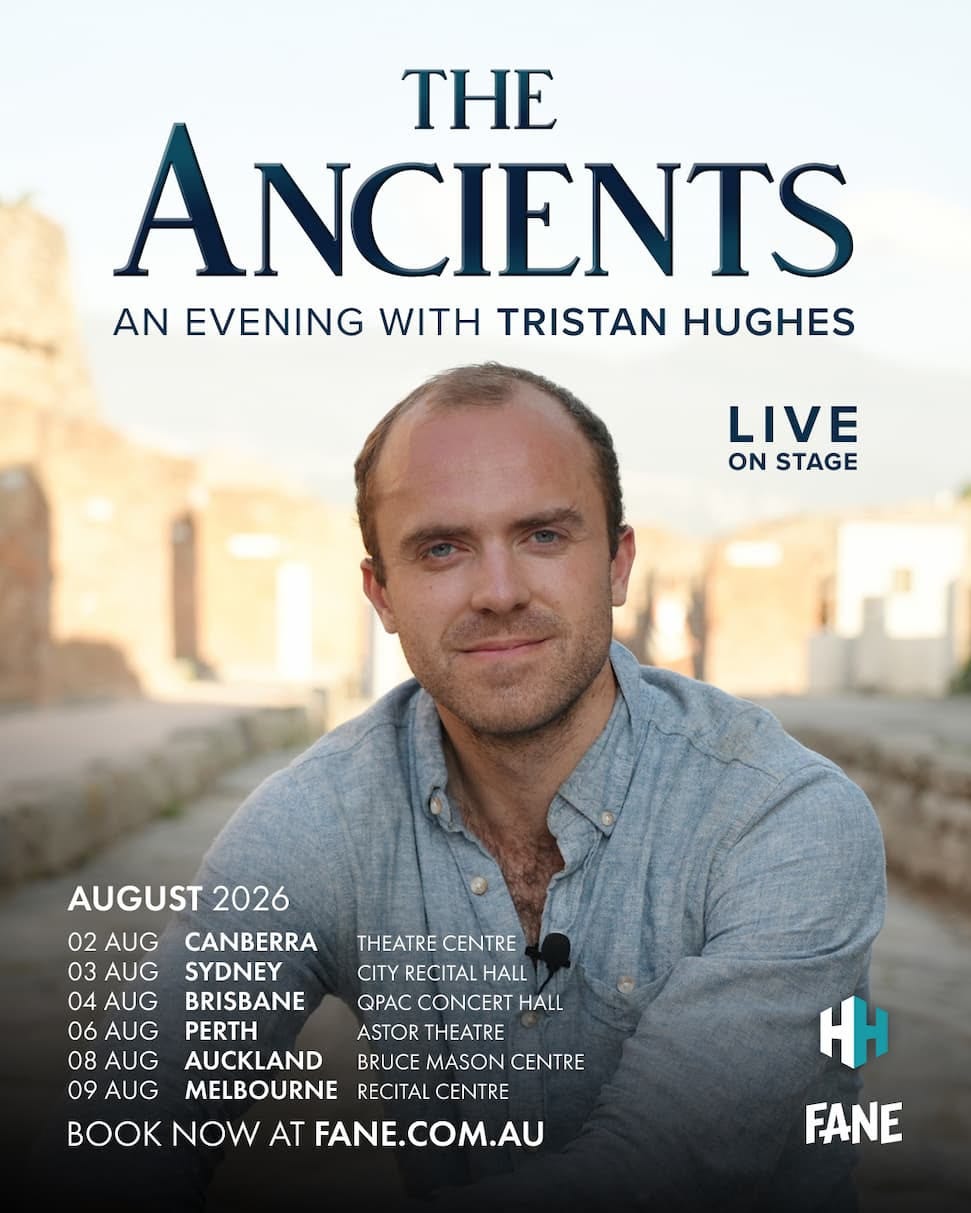
The countdown is on, our intrepid host of The Ancients podcast Tristan Hughes is on his way Down Under to Australia and New Zealand for his first live tour outside the UK. Each night, Tristan will explore a different monumental chapter of ancient history (Mesopotamia, Rome, Kushan, Angkor Wat – the full tapestry is on the table), joined by a special guest, with his own past and inspirations as the thread tying it all together.
Don’t miss your chance to get tickets, book now.
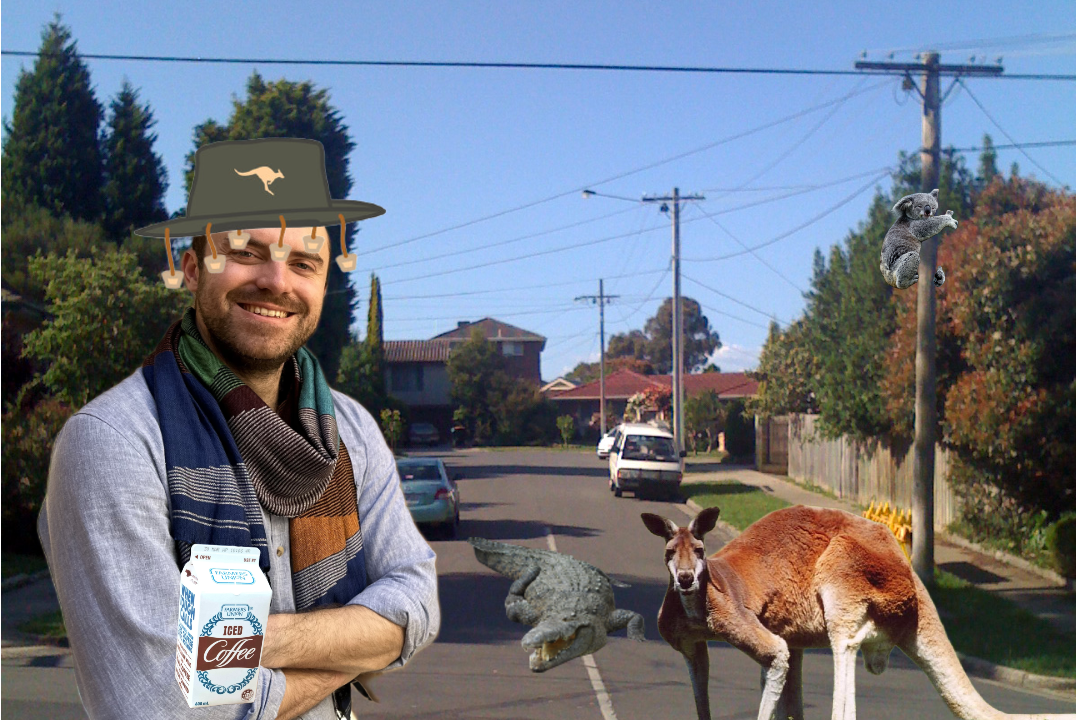
Over the next few weeks I’ll be bringing you Tristan’s behind-the-scenes pictures from The Ancients on tour, along with any amusing anecdotes I can get out of him.
(I imagine the pics will look something like this👇)

If you liked our (superb) Marketing Executive, Rosie Maggs’ book suggestion last week, then you’re in for a treat because “Reliable Rosie” has only gone and recommended another, which she describes as “one of my favourites I’ve read all year” - direct quote! Here are the details:
The Traitor’s Circle by Jonathan Freedland
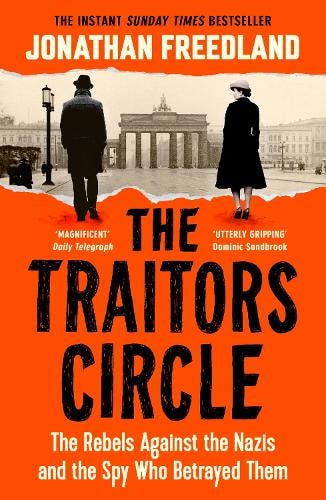
The Traitors Circle tells the true, but scarcely known, story of a group of secret rebels against Hitler. Drawn from Berlin high society, they include army officers, government officials, two countesses, an ambassador’s widow and a former model - meeting in the shadows, whether hiding and rescuing Jews or plotting for a Germany freed from Nazi rule. One day in September 1943 they gather for a tea party, unaware that one among them is about to betray them all to the Gestapo. But who is the betrayer of a circle themselves branded “traitors” by the cruelest regime in history?
Rosie says:
This book is one of my favourites I’ve read all year. It had me gripped throughout, it read like a mystery or thriller, wondering who had betrayed this impressive group of people and what fate would befall them. It was a story I’d never heard of, but I was left wondering why more people don’t know about it. If you love history, you’ll enjoy this book.
The book has just been released in paperback.
Meanwhile, our (incredible) Senior SVOD Producer Annie Woodman (and all-round Norwich expert!) has recommended the ‘Living by the Rule: Contemporary meets Medieval’ exhibition at the Sainsbury Centre.
This exhibition reflects on the ‘rules’ that we live by today. Exploring the idea of routine and regulation, the exhibition vividly presents the richness and complexity of the dialogue between medieval experiments in a different way to live, and modern reflections upon how life is (and might yet be) organised.
Living by the Rule: Contemporary meets Medieval is part of the Sainsbury Centre’s What is the Meaning of Life? exhibition season.
Speaking of exhibitions, our (excellent) Junior Editor Tim Arstall recommends the Natural History Museum’s Jurassic Oceans: Monsters of the Deep, where visitors can take a thrilling deep dive back in time into ancient waters with this monstrous exhibition.
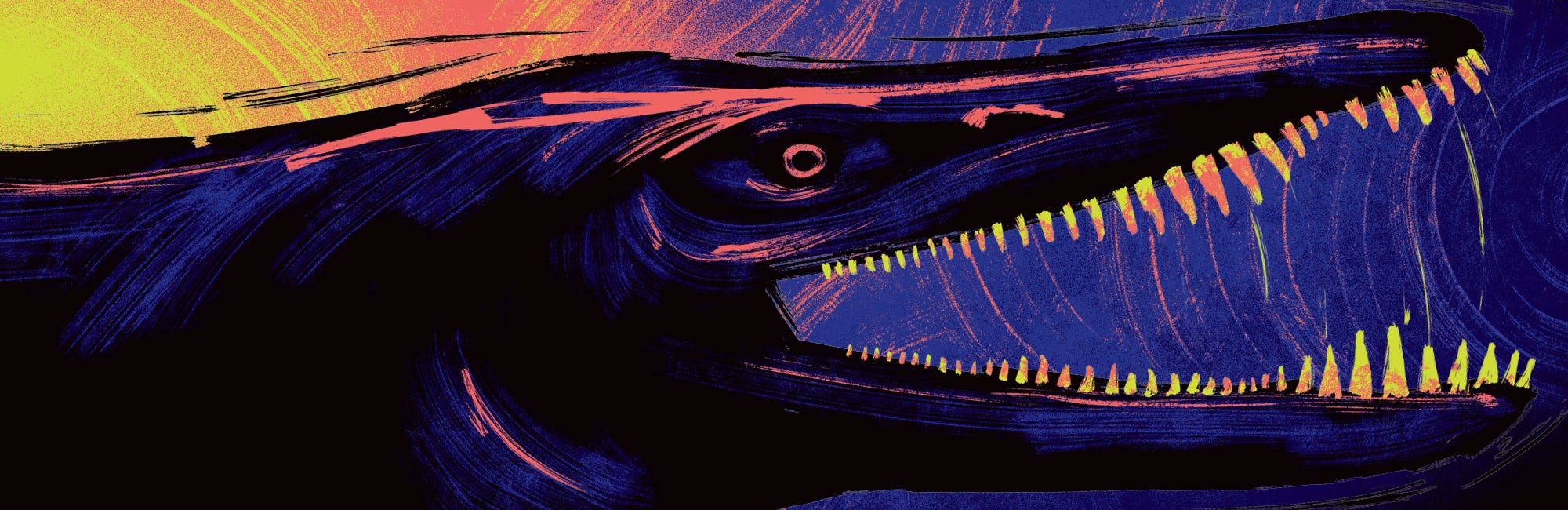
Meet the legends of Earth’s prehistoric oceans, from the pliosaur – a gigantic, gnarly toothed creature – to the ichthyosaur, a majestic and speedy, dolphin-like predator. Not to mention, the fiercest hunter to ever rule the waves, T. rex of the sea, the mighty mosasaur.
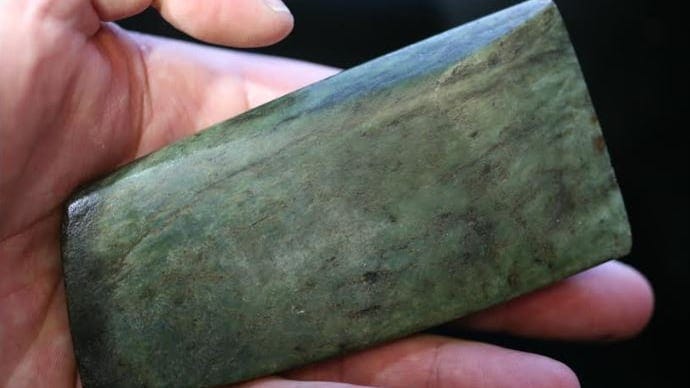
CBC’s interesting article caught the eye of our (lovely) podcast editor Hannah Feodorov - it describes how new research analysing jade artefacts, unearthed east of the Rocky Mountains, sheds light on vast Indigenous trade networks that once cut across pre-colonial Western Canada.
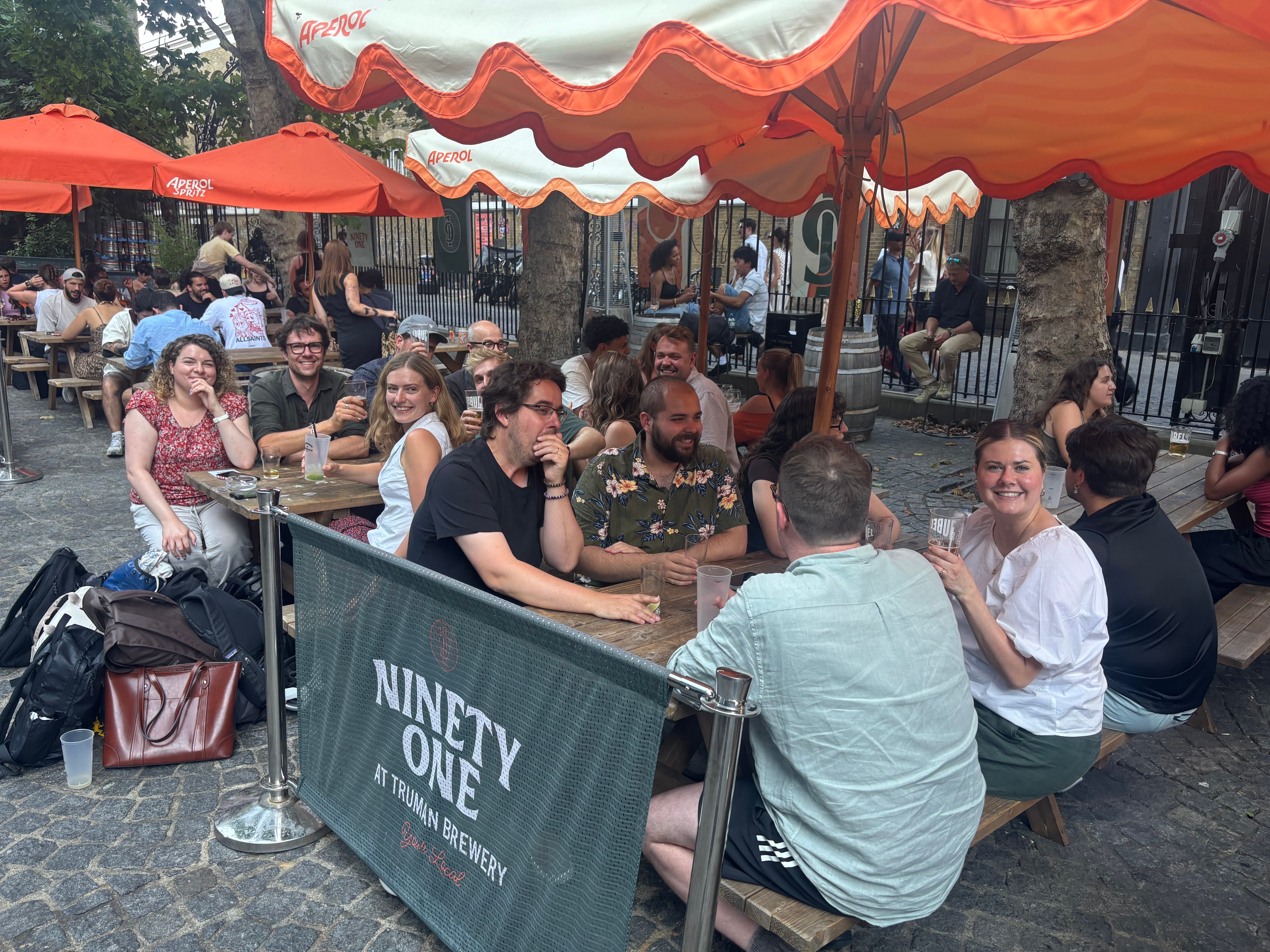
Speaking of the team, here are a few of the History Hit gang enjoying the sun (after work) yesterday - another thing we highly recommend! We hope you’re having a great week too.

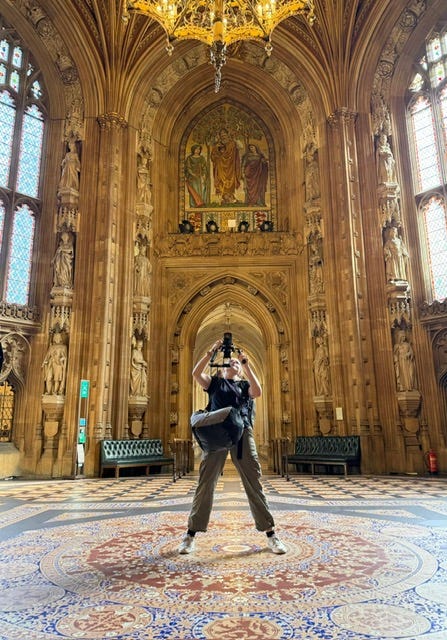
More Behind-the-Scenes Gold: Fresh, unfiltered photos and production mishaps straight from our latest filming sets.
Meet the Presenter: Learn more about our plucky presenters
More! Clue:
📺 Never Miss a Moment on History Hit Can’t wait a week for your next history fix? Dive into our massive library of ad-free documentaries, including our latest SVOD releases.

👉 Subscribe to History Hit & Start Streaming

© History Hit
No posts
Comments
Nothing yet. Say the first thing.
Sign in to join the conversation.