
The first really hot day of summer had finally arrived.
“We’re going to melt!” laughed Mr Rogers as he stepped off the train at Barmouth station. Billy wagged his tail enthusiastically. Any journey by train was a good journey in Billy’s opinion.
Spud stretched her legs after the ride from home before sniffing eagerly at the warm sea breeze drifting across the platforms. The three friends crossed the footbridge and emerged into the busy seaside town.
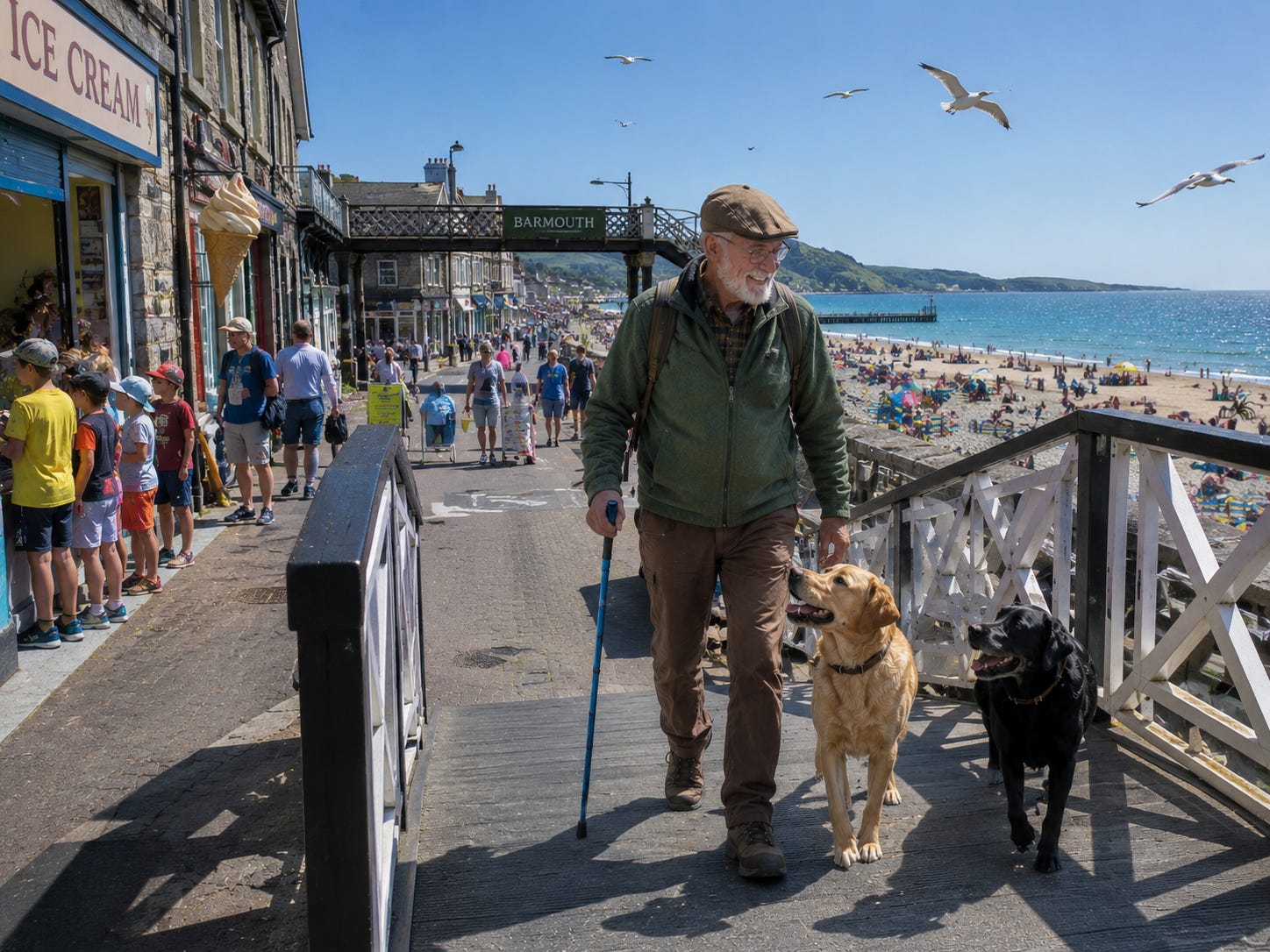
Children queued for ice creams. Families wandered towards the sandy beach carrying buckets and spades. Gulls wheeled overhead calling noisily. The sea sparkled brilliantly beneath a cloudless blue sky.
Billy looked hopefully towards the beach.
Mr Rogers smiled. “I know exactly what you’re thinking.”
Billy barked once.
“But I have another idea.” Spud tilted her head.
“It’ll be much cooler up on the Panorama Walk. There are shady woods, plenty of fresh air, and some of the finest views in Eryri.”
Billy wasn’t entirely convinced. The beach looked very inviting.
But experience had taught him something important. Whenever Mr Rogers said, “I’ve got an idea...” something interesting usually happened.
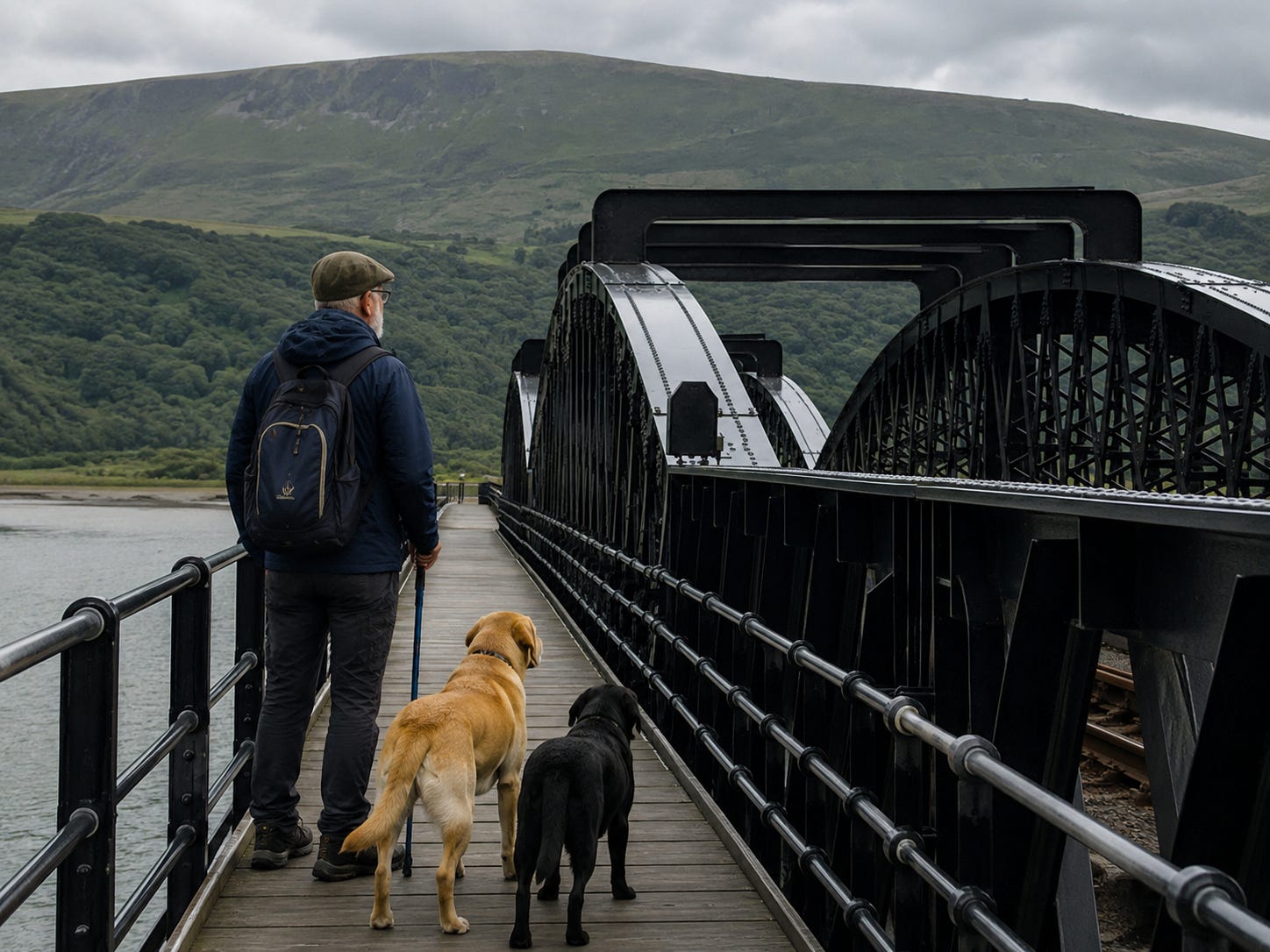
They walked towards the famous Barmouth Railway Bridge. A train had just crossed and disappeared towards Harlech.
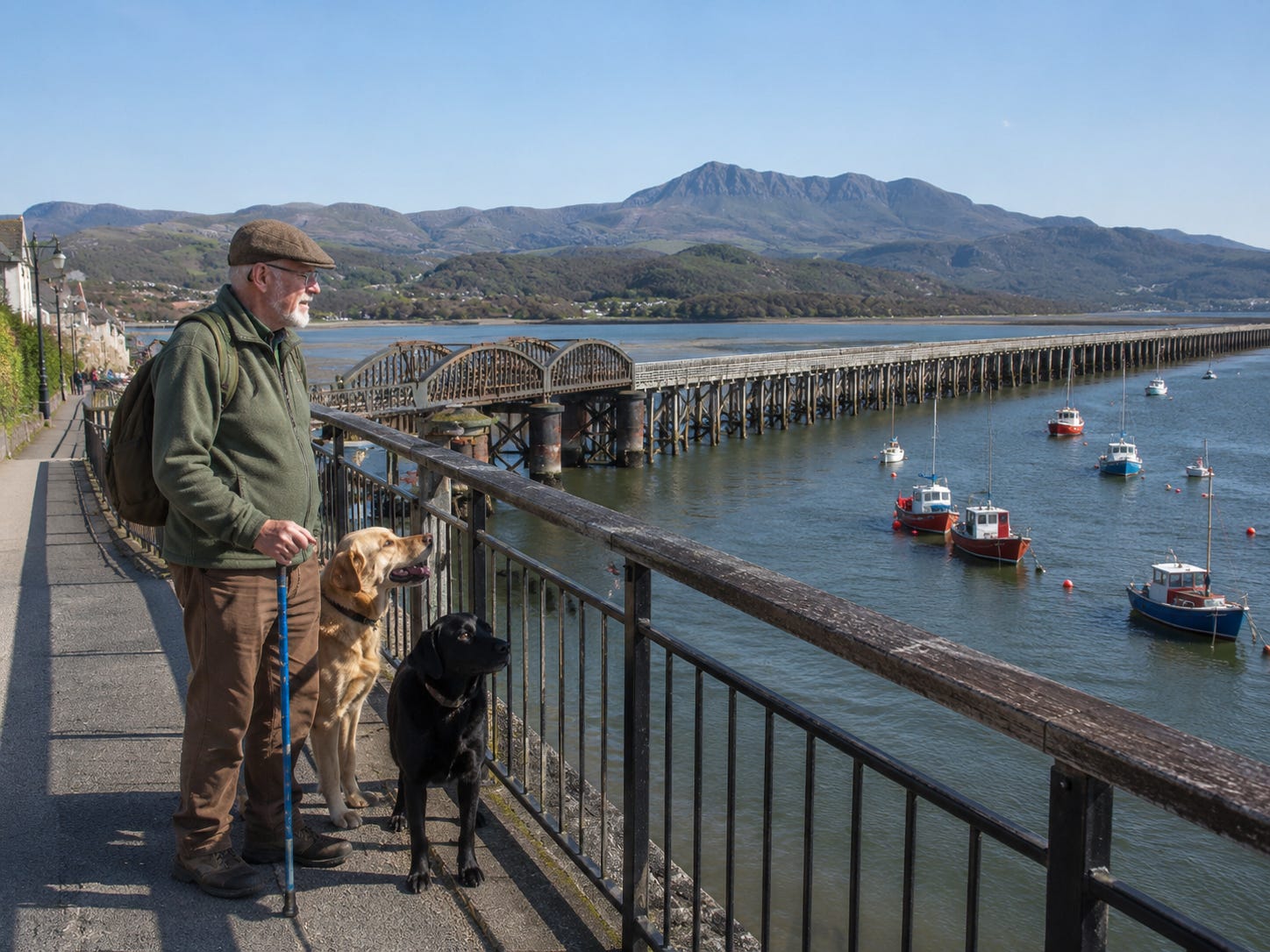
Billy paused, and walked closer to the bridge to admire the view. Below them the tide was quietly flowing through the wooden bridge supports. Fishing boats rocked gently on their moorings. Across the estuary rose the dark outline of Cadair Idris.
They walked a little further on, then Spud suddenly looked sea-wards. The great swinging span of the bridge stood ahead of them.
Billy stared. “It looks funny.”
Mr Rogers looked carefully. “It does rather.”
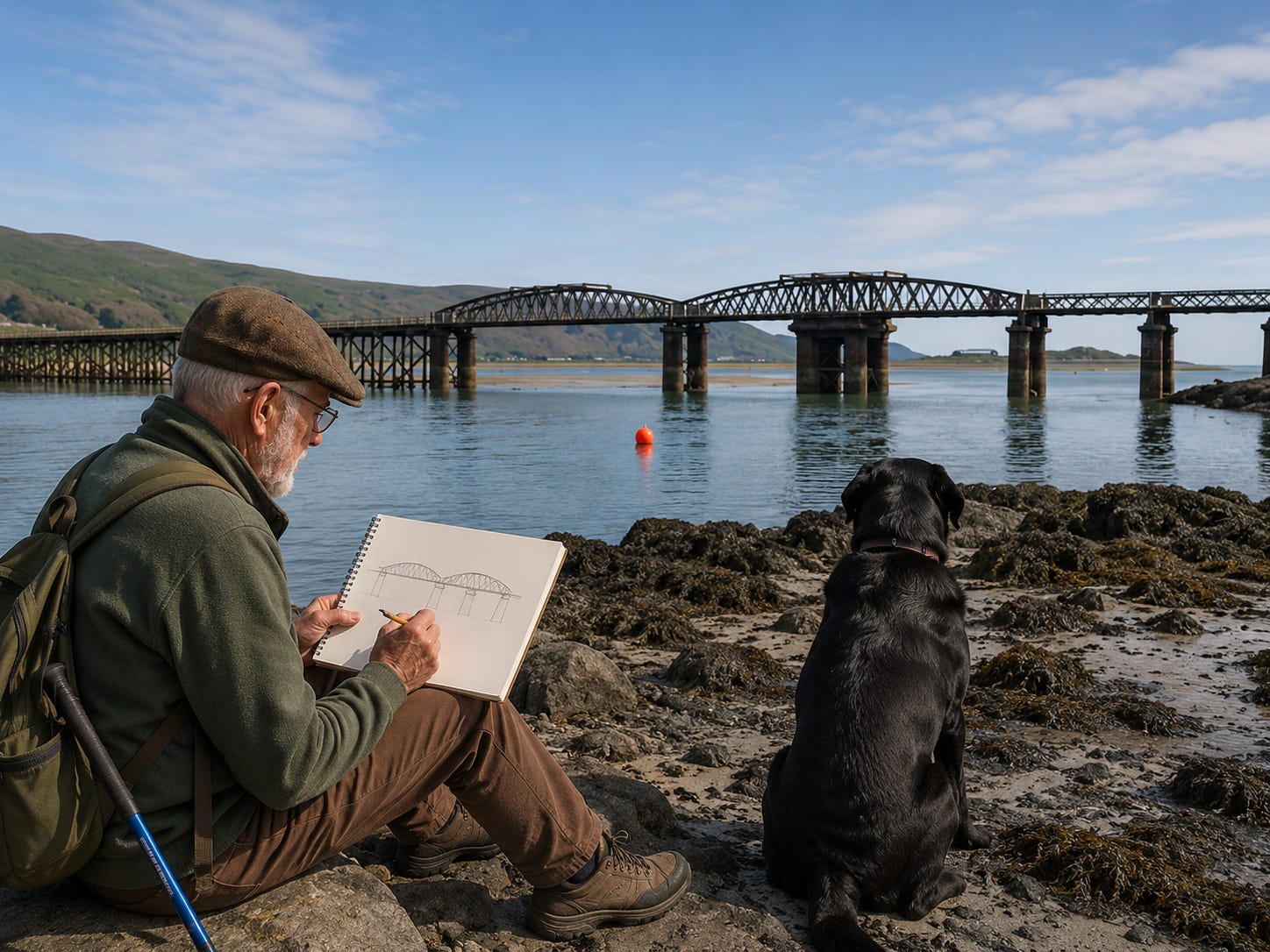
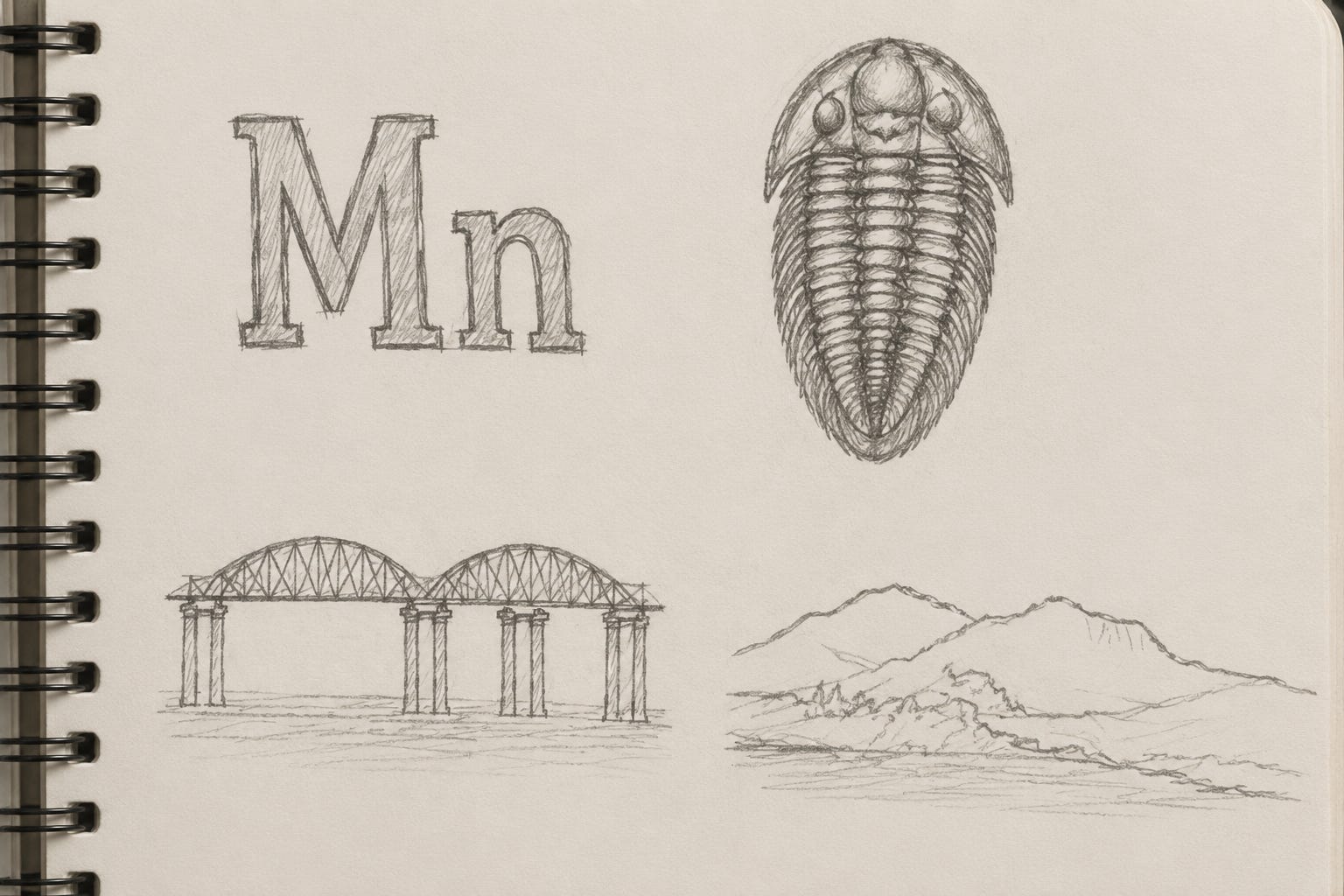
From this angle the curved steel arches almost resembled two rounded humps joined together. Mr Rogers opened the little notebook he always carried. He made a quick pencil sketch. Just two simple curves.
Billy watched with interest. “What are you drawing?”
“Oh... probably nothing.” Mr Rogers smiled. “But detectives learn to notice small things.”
Billy remembered that.
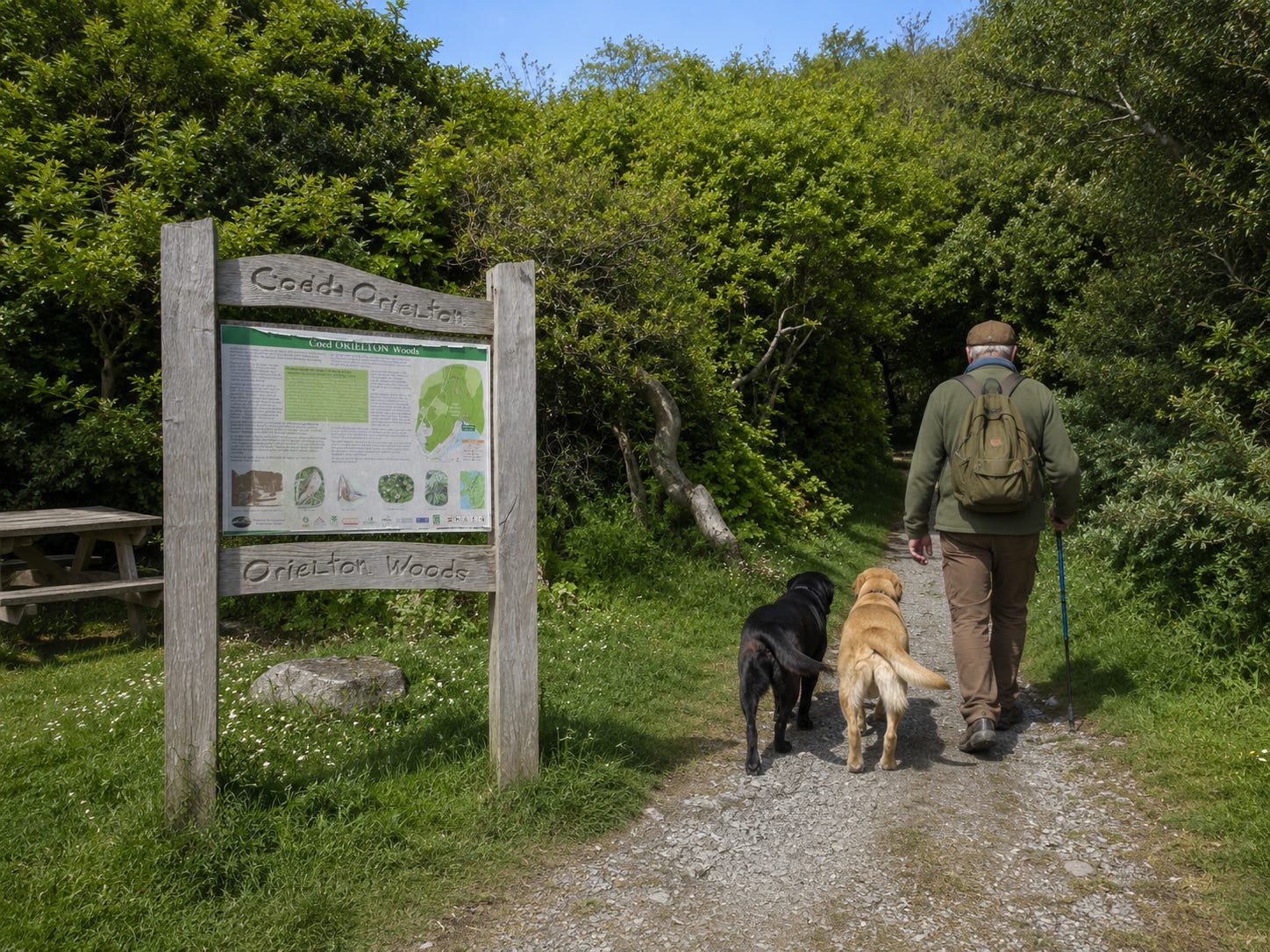
Soon they entered the cool shade of Coed Orielton. Instantly the temperature dropped. Sunlight filtered through the oak branches. Ferns crowded the woodland floor. Birdsong echoed through the narrow wooded ravine.
“This is better,” sighed Mr Rogers.
Billy wandered from side to side, nose pressed to the ground. Suddenly he stopped.
Scratch. Scratch. Scratch… Something hard lay beneath the leaves.
Spud hurried over. Together they uncovered a curious grey stone.
Mr Rogers gently brushed away the soil. “Now that’s interesting.” The stone contained the perfect imprint of a trilobite.
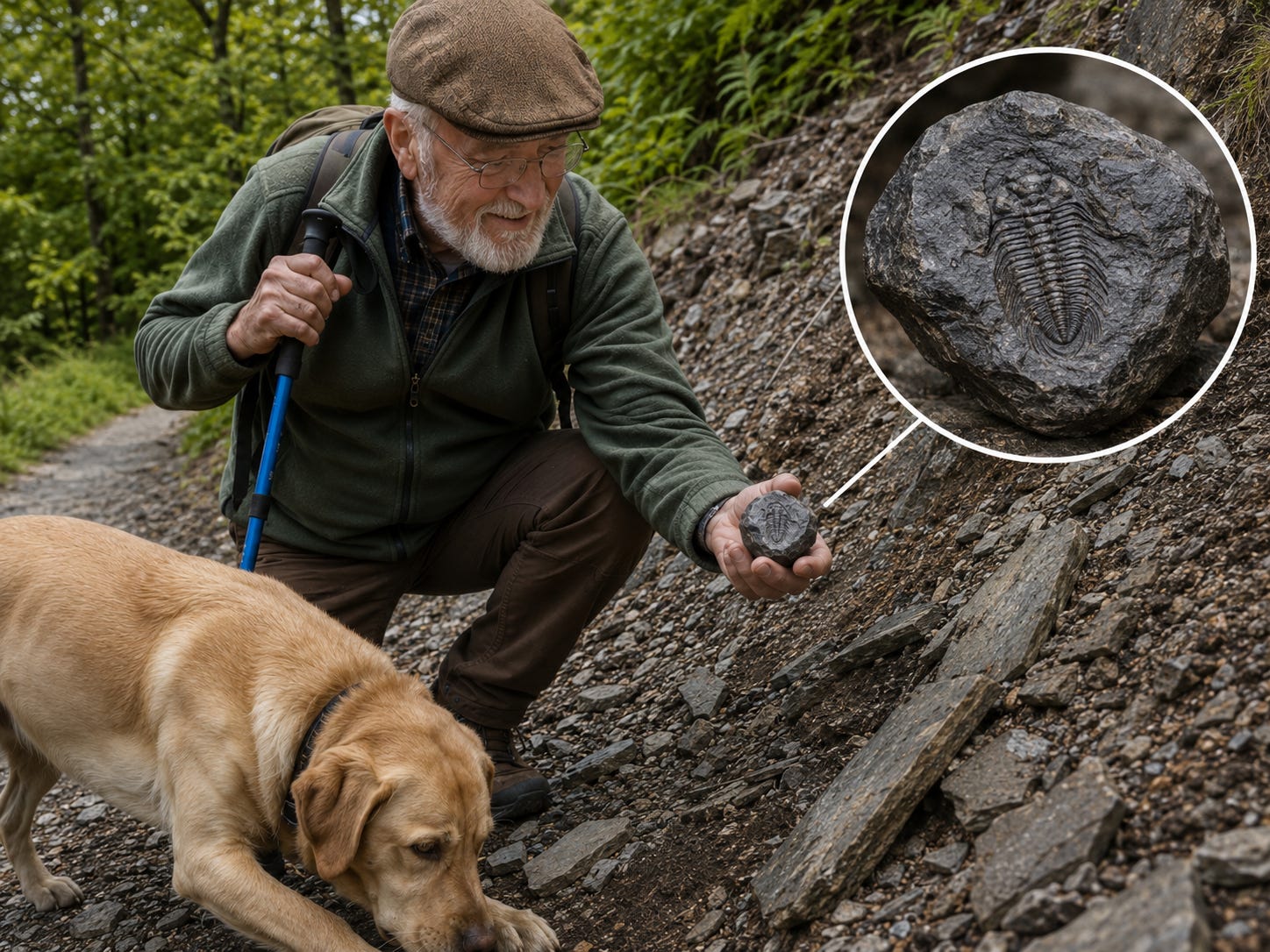
Billy examined the fossil carefully. “What sort of animal is that?”
“It lived in the sea.”
Billy looked around. “But we’re on a hill.”
“We are now.” Mr Rogers laughed. “But nearly five hundred million years ago this part of Wales lay beneath a warm tropical ocean.”
Billy found that almost impossible to imagine.
Mr Rogers carefully sketched the fossil in his notebook beside the bridge drawing. As he finished, he paused. “Hmm...”
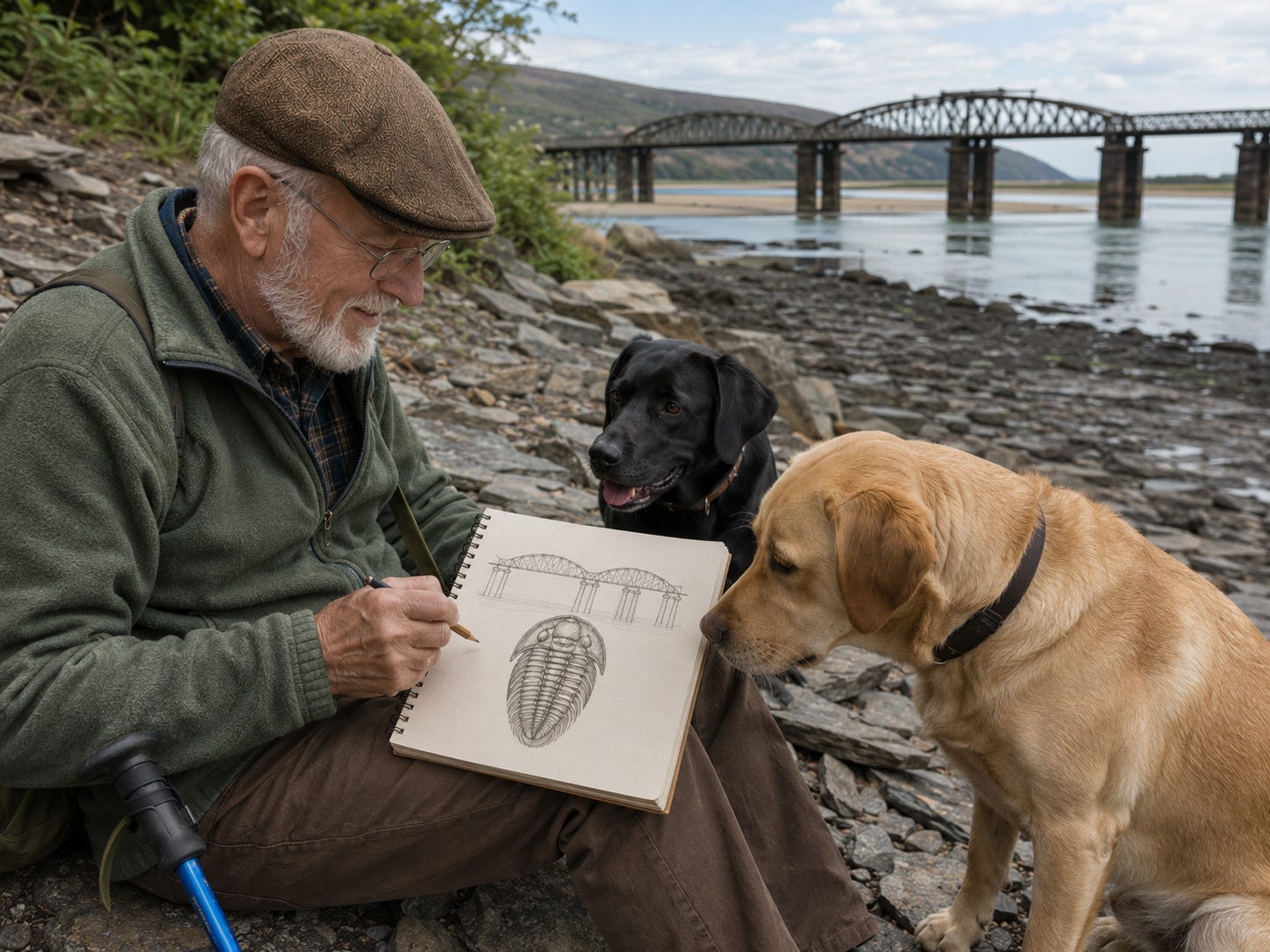
Billy looked at the notebook. The rounded head of the trilobite reminded him rather strangely of the curved arches on the railway bridge.
Probably just coincidence...
The woodland path climbed steadily until they reached a wooden sign.
“PANORAMA WALK”
“This way,” said Mr Rogers. The broad track curved gently around the hillside.
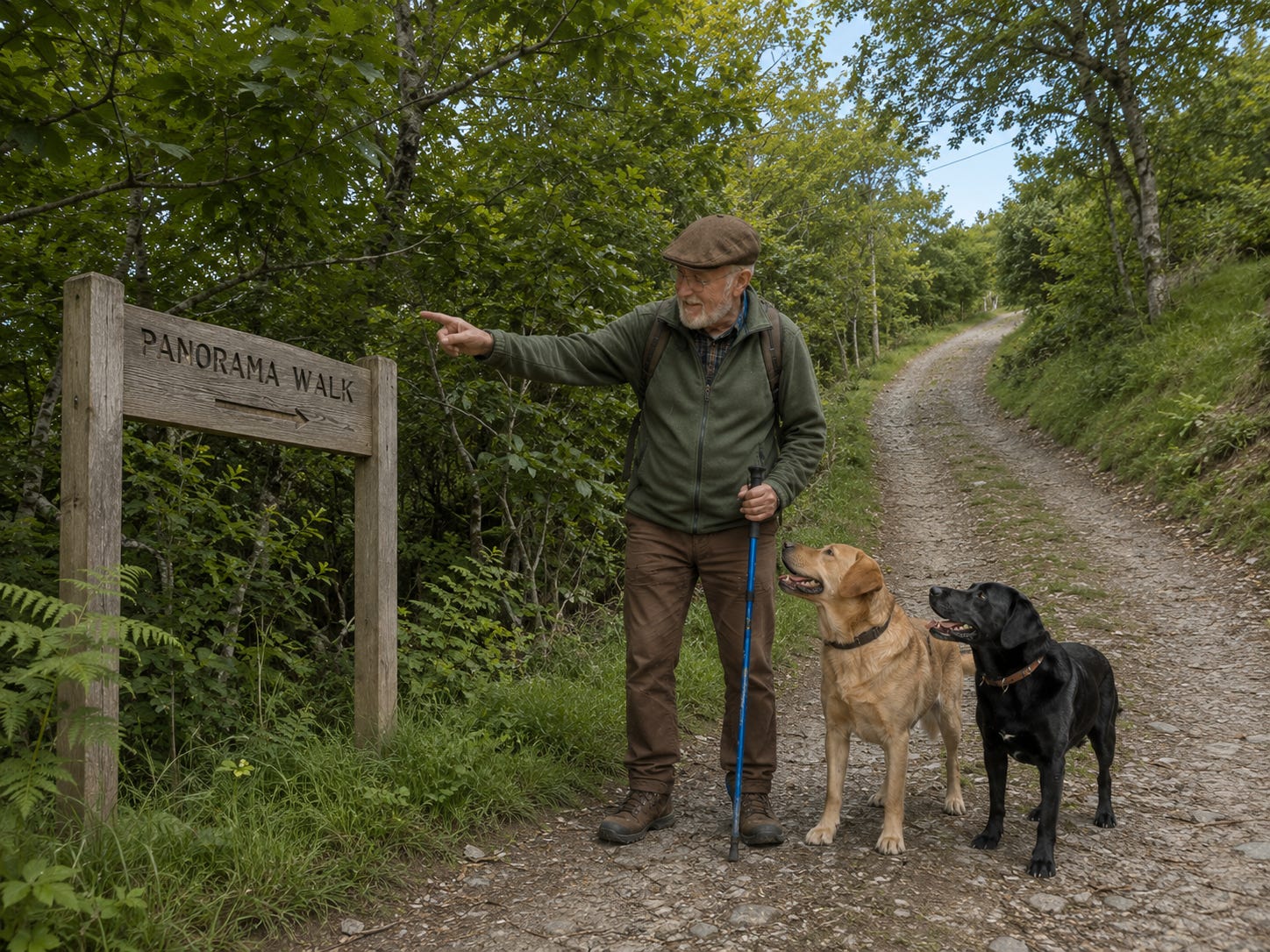
“It looks almost like an old road,” observed Billy.
“It probably is,” replied Mr Rogers. “Long before cars, routes like this were used by horses and carts.”
Before long another narrow woodland path branched away uphill. “Let’s see where that goes.”
Only a few minutes later Billy disappeared into thick bracken. There came an excited bark. Mr Rogers and Spud hurried after him.
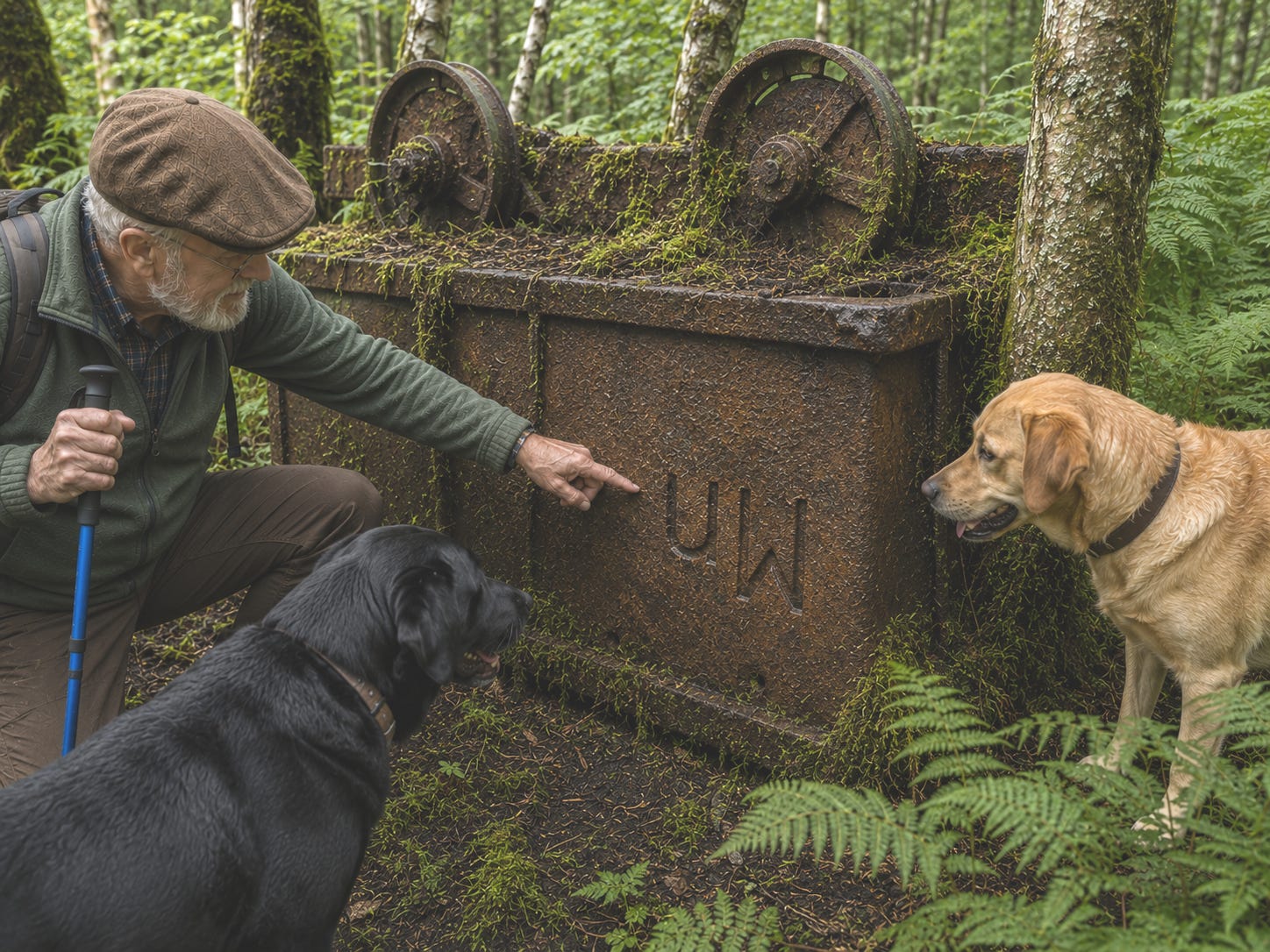
Half-hidden beneath moss and ferns lay an old iron quarry wagon. It had been upside down for many years. Rust covered every surface. Trees had grown around its wheels.
Billy sniffed one side carefully. Then he barked again.
Mr Rogers knelt beside the wagon. There, scratched deeply into the rusty metal, were two curious joined letters.
“Mn”
Mr Rogers slowly traced them with his finger. “Manganese?”
Billy looked puzzled. “What does that mean?”
“It might explain what the wagon once carried.” He opened his notebook again. This time he copied the symbol carefully.
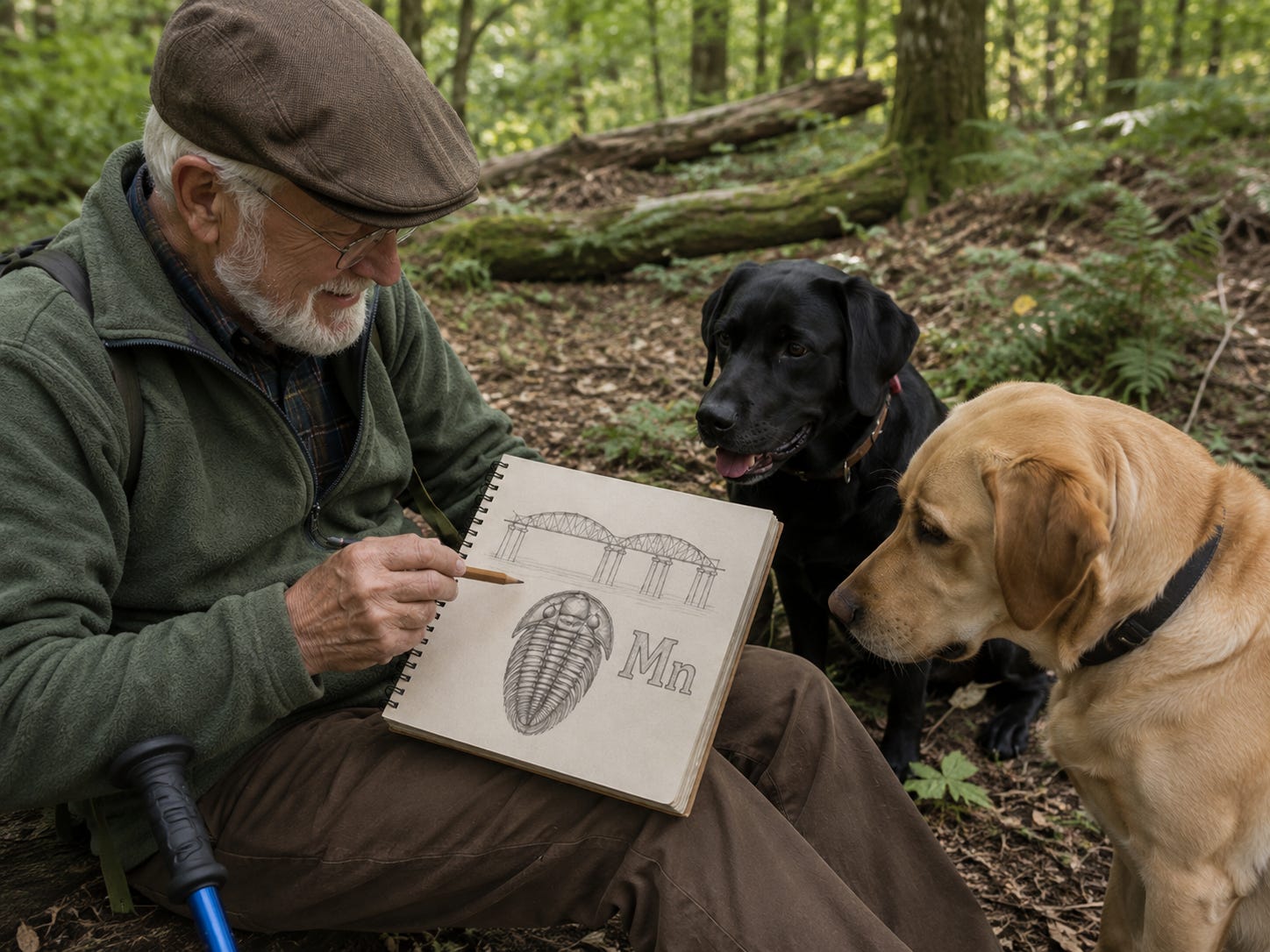
Then he paused and studied the page again… The bridge. The trilobite. Now the mysterious letters.
For a few moments he said nothing. Instead he simply smiled to himself. “I wonder...”
Billy couldn’t stop thinking about the rusty wagon.
As they climbed back onto the main Panorama Walk, he kept glancing at Mr Rogers’ notebook.
Inside were three sketches.
The railway bridge.
The trilobite.
The curious letters scratched onto the wagon: Mn
Billy frowned. “I still think it’s a secret code.”
Mr Rogers smiled. “It might be.”
“It must mean something.”
“It certainly does.”
“So we’ve solved it?”
Mr Rogers laughed. Billy already knew the answer.
“No...” Mr Rogers replied, “...let’s not decide too soon.”
The broad track wound gently around the hillside. On their right, tall oak trees shaded the path. On their left, glimpses of the shining Mawddach Estuary appeared between the branches.
Warm air drifted up from the sea. A gentle breeze rustled the leaves overhead.
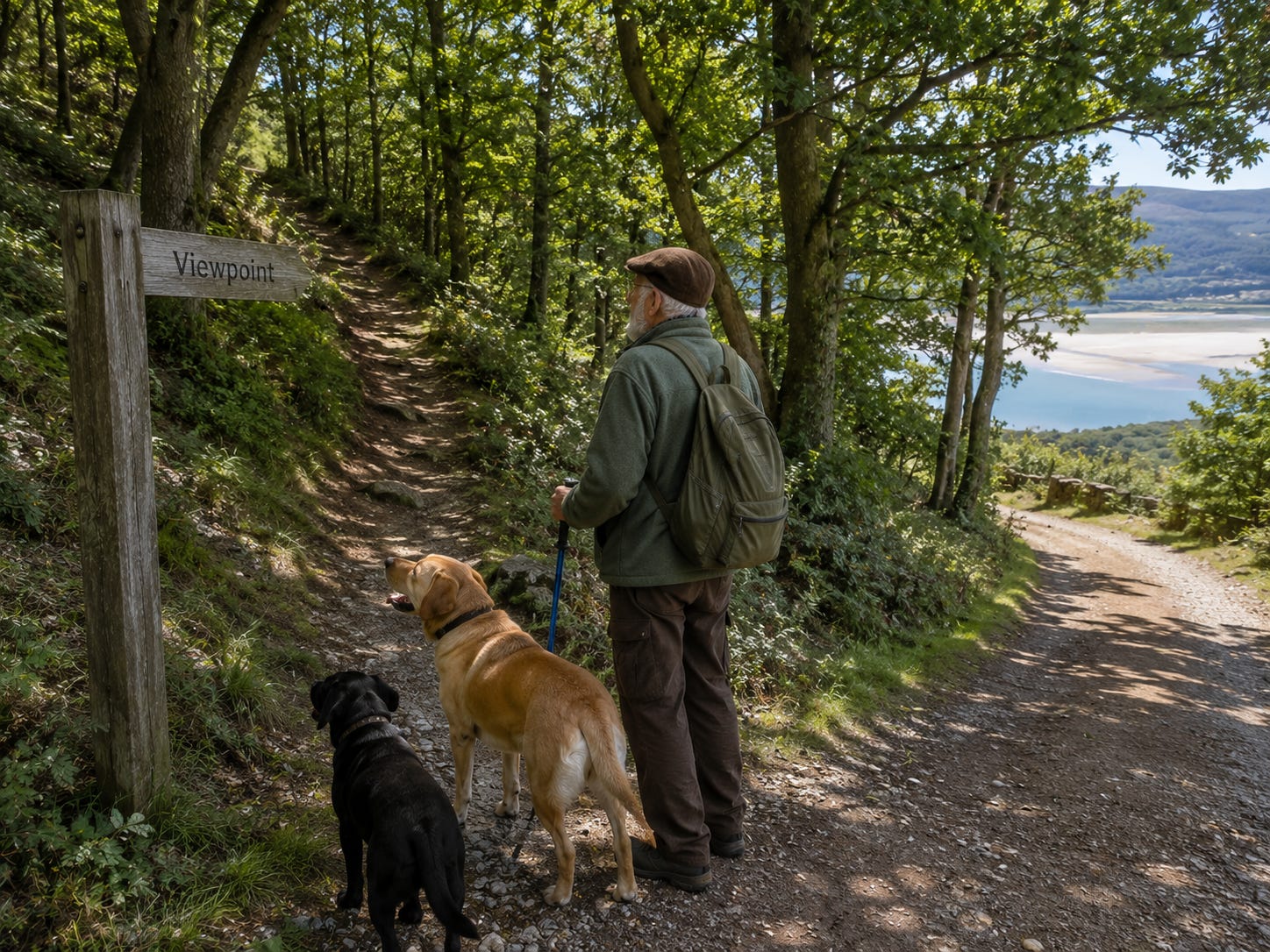
“This was a good idea,” said Billy.
“I thought you’d agree.”
A little further on they reached a narrow path climbing steeply through the woodland. A weathered wooden fingerpost simply read:
“VIEWPOINT”
“That sounds promising,” said Spud.
The climb was short but surprisingly steep. Roots twisted across the path. Sunlight flickered through the canopy. Suddenly the trees opened.
Billy stopped. “So that’s why it’s called Panorama.”
Far below lay Barmouth. The great railway bridge stretched gracefully across the estuary. Beyond it rose the magnificent mountains of southern Eryri.
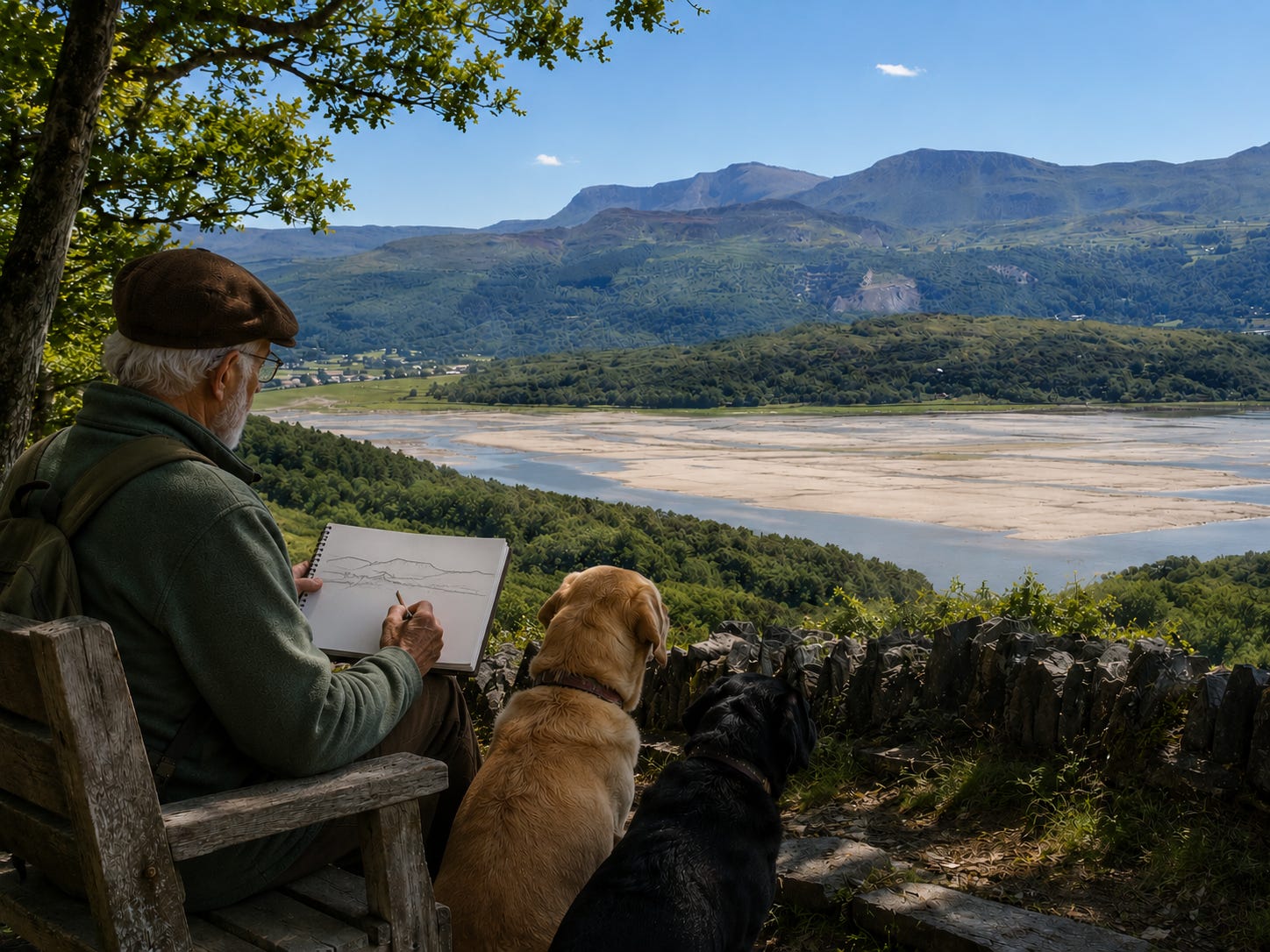
Mr Rogers quietly sat on a bench. He didn’t say anything for several moments.
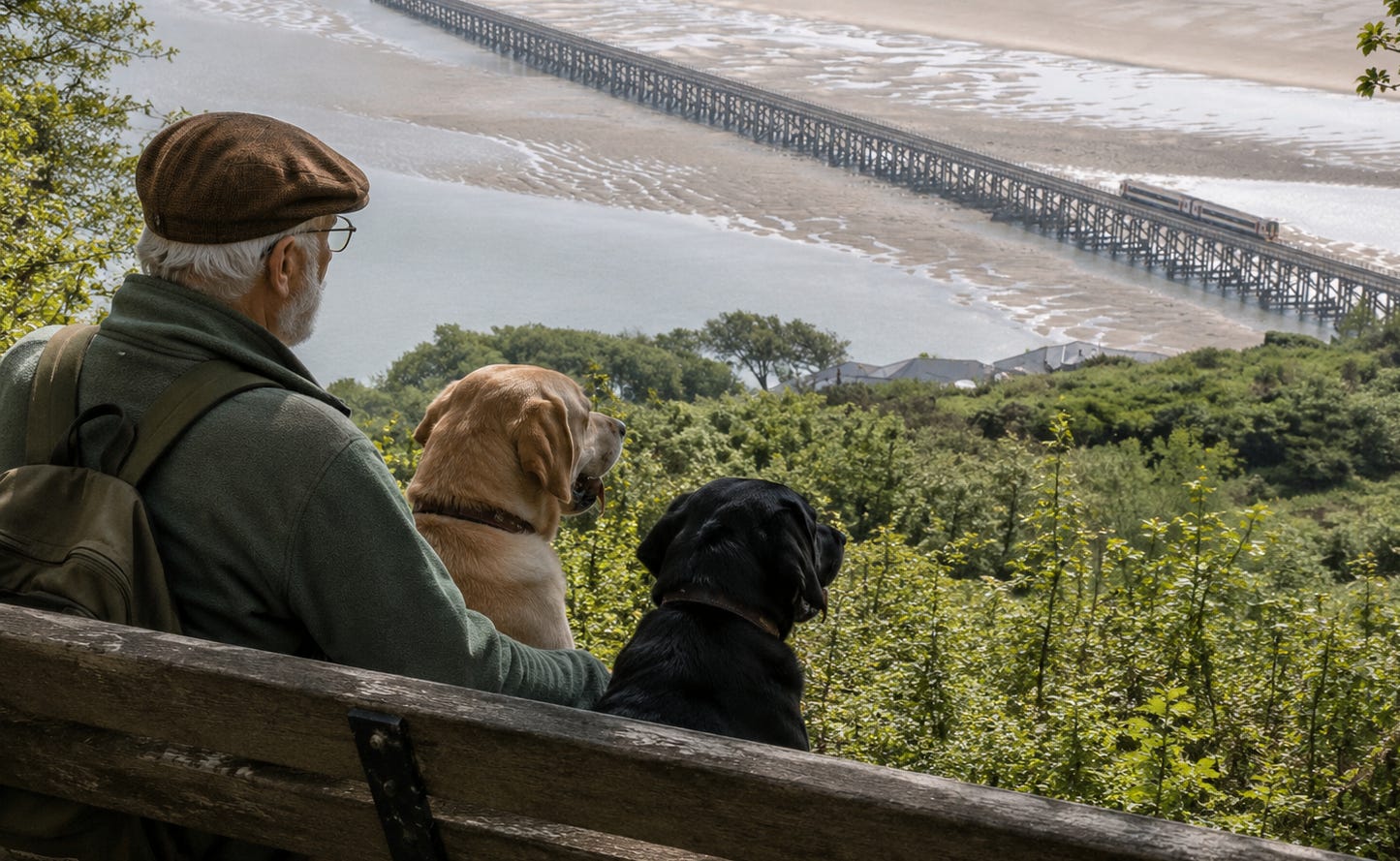
Sometimes the best views deserved silence first.
Billy eventually broke it. “I can see Cadair Idris!”
“Good spotting.”
“And what’s that one?”
Mr Rogers unfolded his map. “Craig-las.”
Billy studied the skyline. The broad shoulder of Cadair Idris rose in one graceful curve. Beside it Craig-las formed another.
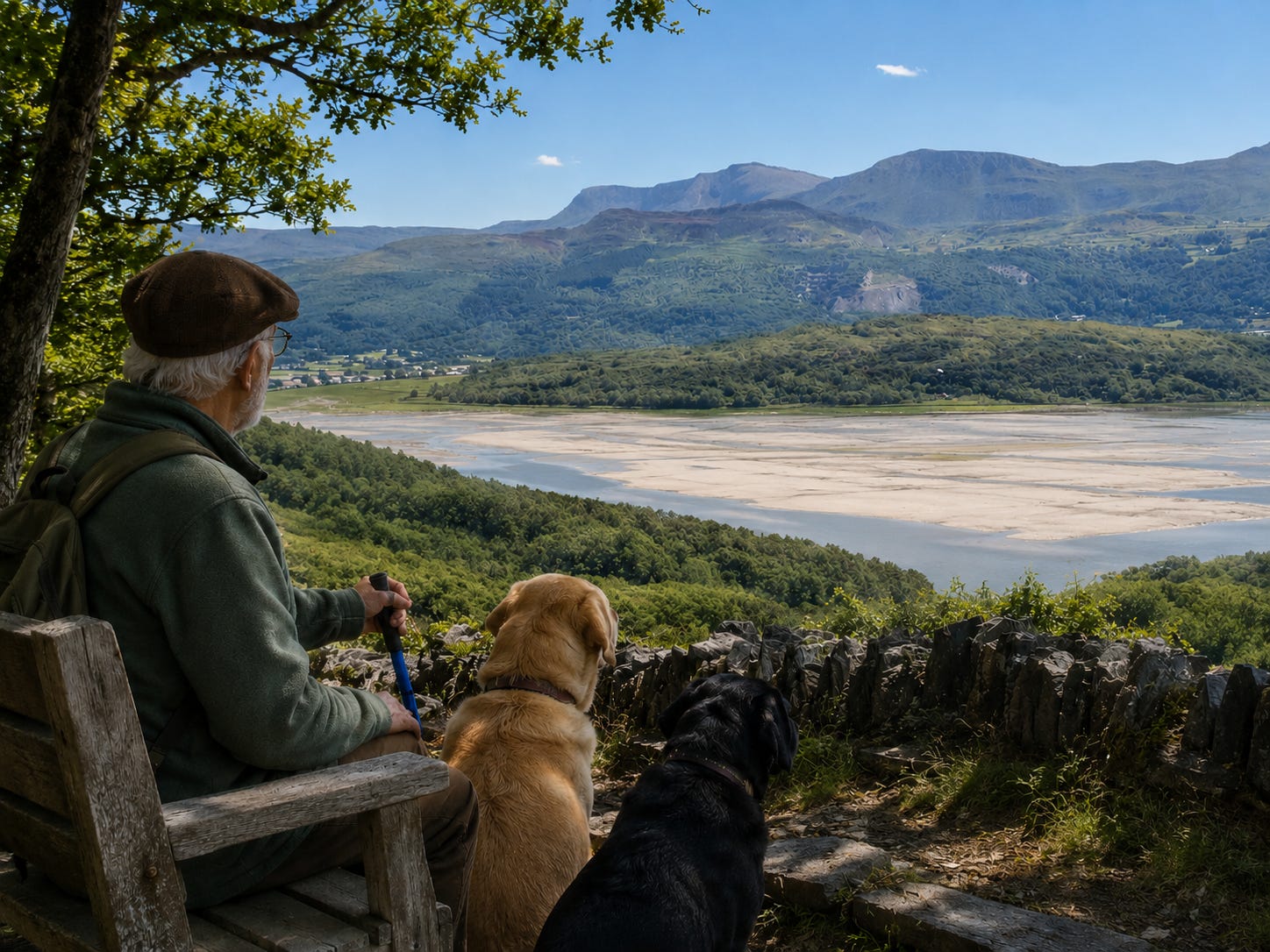
Billy suddenly froze. He looked again… Then again…
“Mr Rogers...”
“Hmm?”
“Doesn’t that look familiar?”
Mr Rogers looked where Billy was pointing. Then he slowly opened his notebook.
On one page sat the sketch of the bridge. On another, the trilobite. Then the wagon.
He made another tiny drawing. Just the outline of the mountains.
He laid the notebook flat. Billy leaned over, and Spud looked too.
None of the drawings were identical.
Yet... they all seemed to have the same flowing rhythm.
Billy looked astonished. “It’s another Mn!”
Mr Rogers didn’t answer immediately. Instead he looked back towards the mountains. Finally he spoke. “It certainly reminds us of the same shape.”
“So it is another clue?”
Mr Rogers smiled. “...let’s not decide too soon.”
Billy sighed. “You always say that.”
“I do.”
“Why?”
“Because detectives have to be careful.”
Mr Rogers closed the notebook. “Our brains are brilliant at recognising patterns.”
Billy looked puzzled.
“They’re almost too good.”
“What do you mean?”
Mr Rogers pointed towards a cloud drifting above the mountains. “What does that cloud look like?”
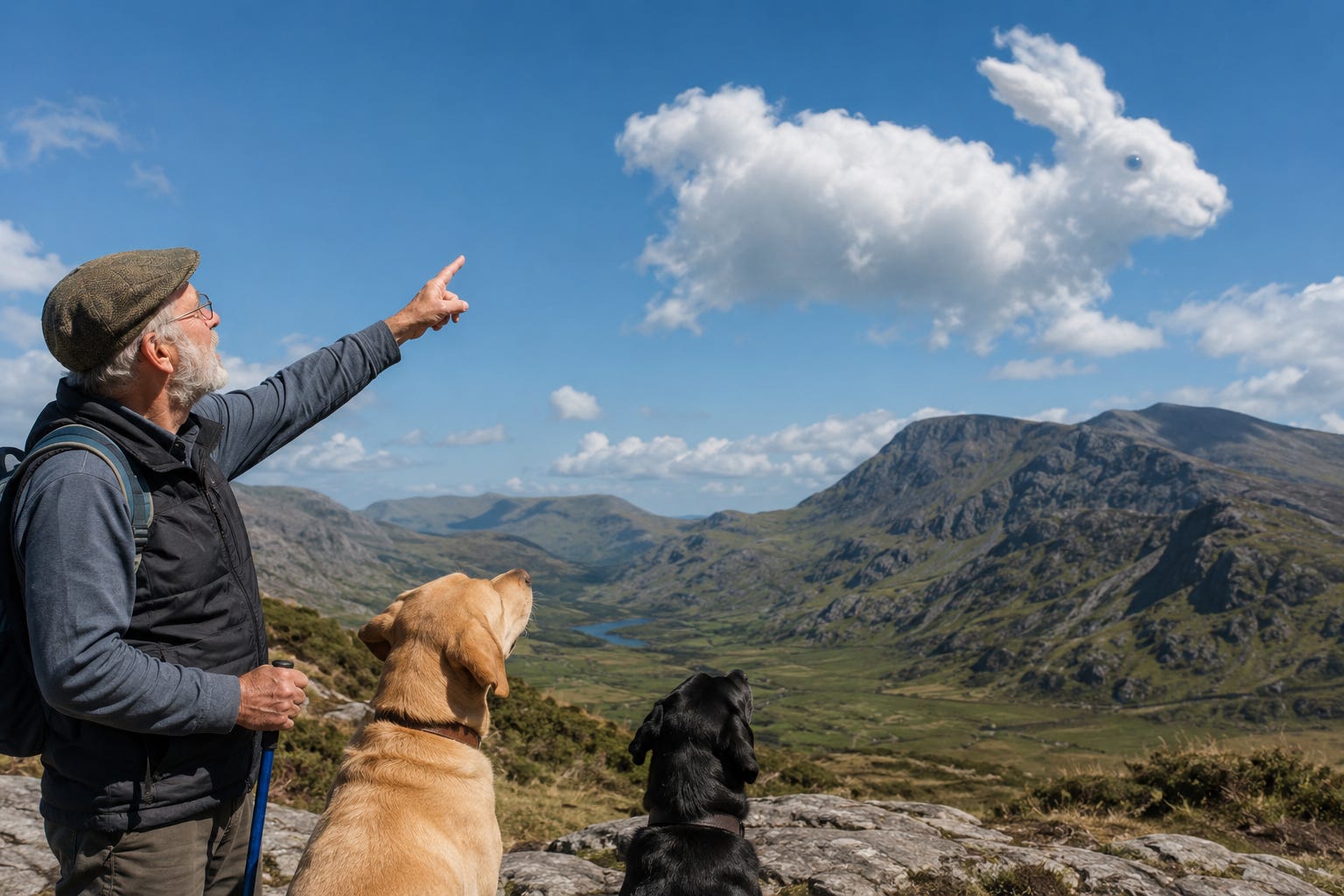
Billy stared. “A sheep.”
Spud tilted her head. “I think it looks like a rabbit.”
Mr Rogers laughed. “Exactly. The cloud isn’t really either.”
“No. Our brains simply enjoy making sense of shapes.”
Billy looked back towards the mountain skyline. “So perhaps the mountain isn’t really another Mn.”
“Perhaps not.”
“But,” Mr Rogers smiled, “it certainly made us stop and look more carefully.”
Billy decided that was a very detective-like answer.
As they prepared to leave the viewpoint, a deep croaking call echoed across the crags above them.
“Cronk... Cronk...” Two ravens circled lazily high overhead.
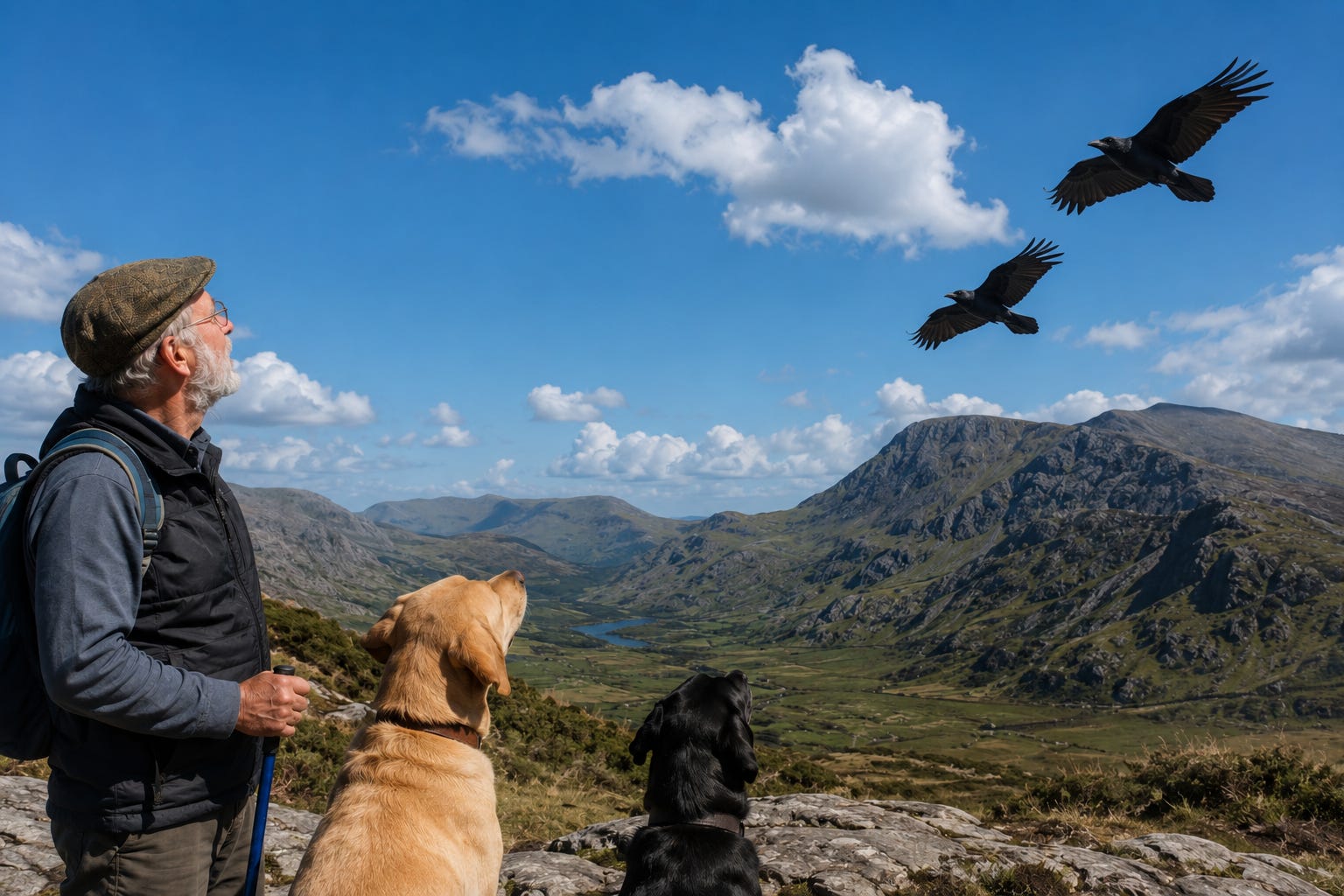
Billy watched them disappear towards the rocky cliffs. “They’re going somewhere.”
“They usually are,” said Mr Rogers. “I wonder where.”
Mr Rogers looked at the map. Above them lay the famous Barmouth Slabs. The ravens seemed to have chosen exactly that direction.
He smiled. “Shall we follow them?”
Billy’s tail began wagging furiously. Spud was already heading towards the path. Another clue awaited.
The path became steeper. Great slabs of grey rock rose above the trees. Billy could hear the ravens long before he saw them. “Cronk... cronk...”
One enormous black bird glided effortlessly across the cliff face before disappearing behind a rocky ledge. Another followed.
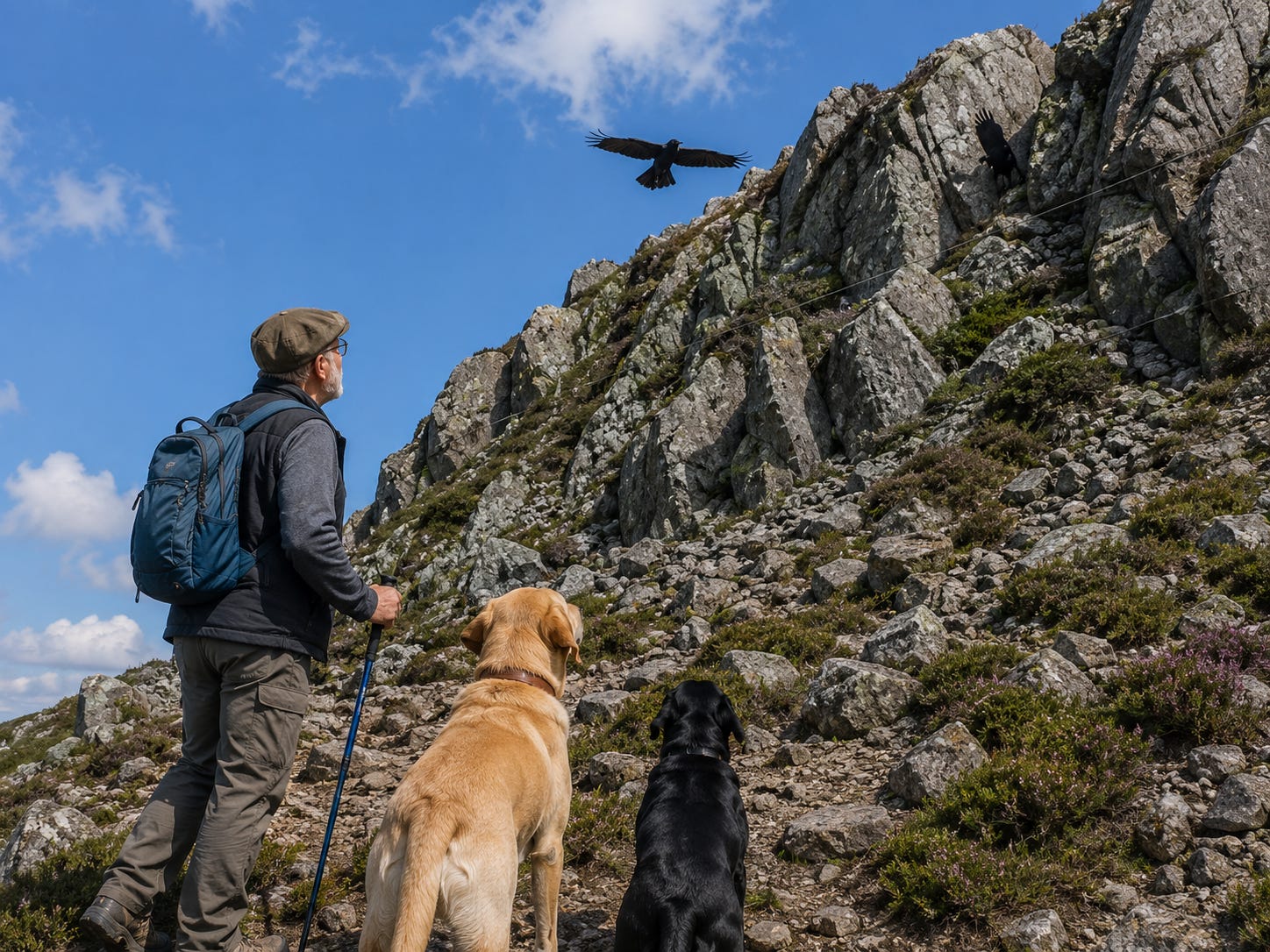
Spud watched them carefully. “They seem very interested in that crag.”
“So am I,” smiled Mr Rogers.
The woodland gradually gave way to open hillside. A cool breeze drifted across the rocks. Below them, the whole Mawddach Estuary shimmered in the summer sunshine. The only sounds were the wind... and the ravens.
Billy stood perfectly still.
One raven suddenly swooped down carrying something shiny in its beak. It disappeared behind a boulder. A few seconds later it reappeared... without it.
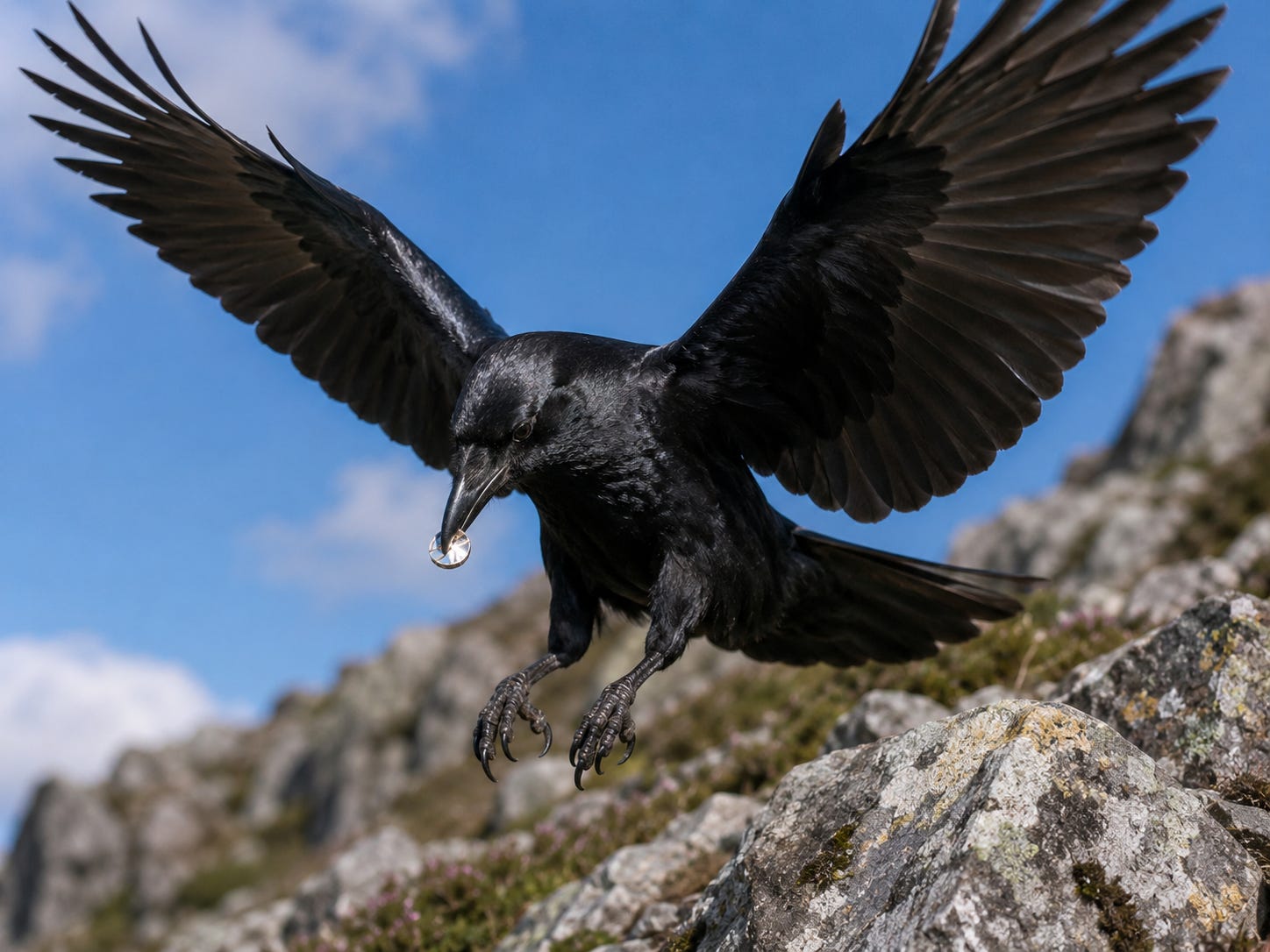
Billy’s ears stood upright. “It dropped something!” He bounded across the rocks.
“Wait for me!” called Spud.
Mr Rogers followed rather more slowly.
Behind the boulder lay a shallow hollow.
Billy sniffed excitedly. There were feathers. Small twigs. Sheep’s wool. Nothing unusual.
Then Spud noticed something half hidden beneath a tuft of grass. She carefully pulled it free. It was a small brass disc, green with age. Billy nudged it towards Mr Rogers.
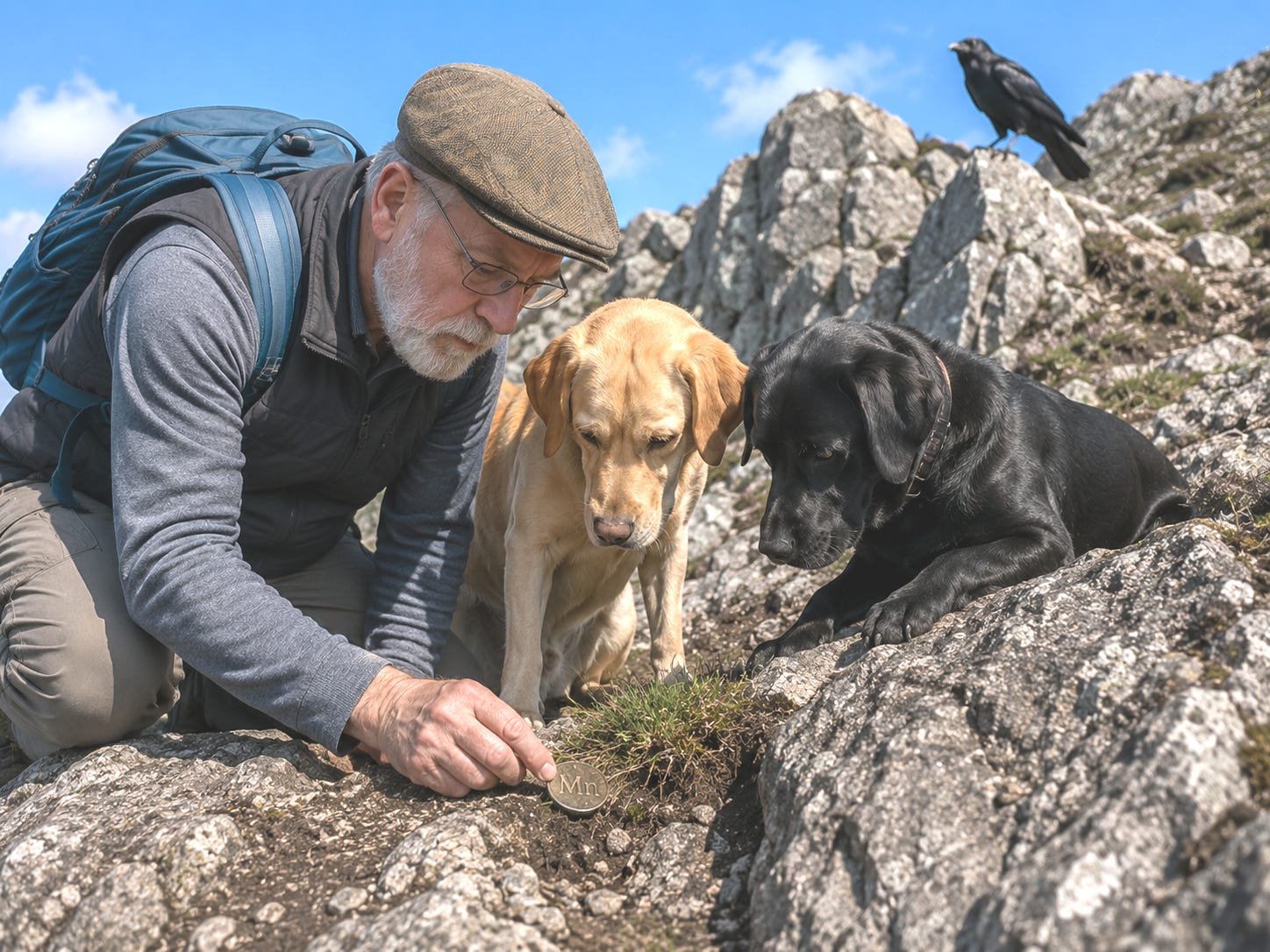
He brushed away the dirt. Stamped into one side was a number. On the other... there it was again. The familiar symbol.
“Mn”
Billy’s tail began wagging furiously. “Another one!”
Mr Rogers turned the disc over several times. “It looks rather like a survey marker... or perhaps a tally.”
“What sort of tally?”
“Possibly something used by the miners.”
Billy looked puzzled. “Why would a raven want that?”
Mr Rogers laughed. “Ravens are curious creatures. They often collect interesting objects.”
“So...” Billy grinned, “...the ravens have their own museum?”
“I rather think they do.”
Spud began looking more carefully around the hollow. Almost immediately she discovered another object. An old iron buckle. Nearby lay a tiny brass button.
Then Billy uncovered something else - A little sheep bell. Its clapper had long since disappeared.
Mr Rogers laid all four objects together on a flat stone. “They don’t belong together.”
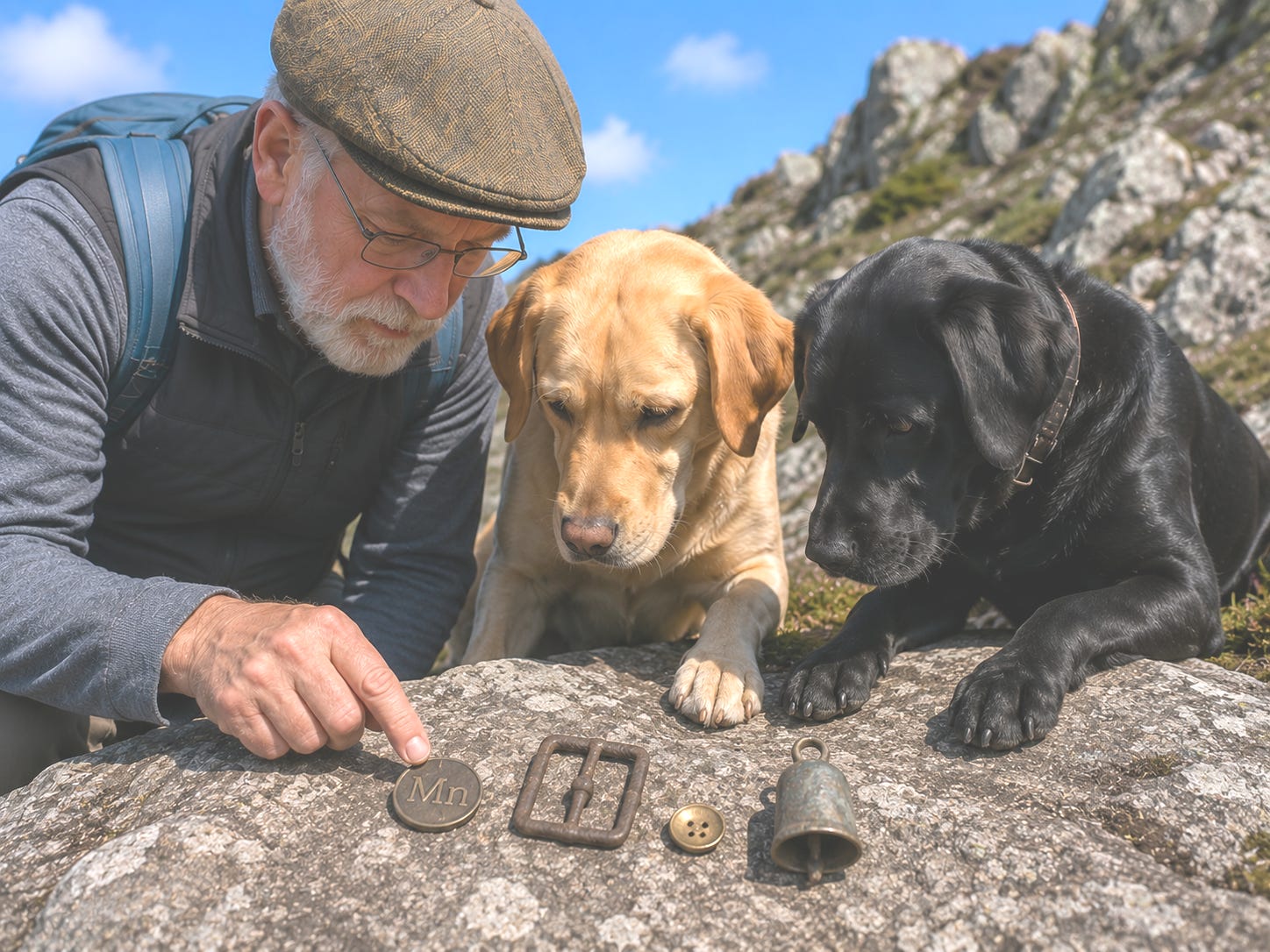
Billy looked confused.
“They’ve come from different times. The raven simply collected anything it found interesting.”
Mr Rogers opened his notebook. Instead of writing the objects down separately he drew a little circle around them all. Above it he wrote:
Raven Collection.
Then underneath: “Every object has a story.”
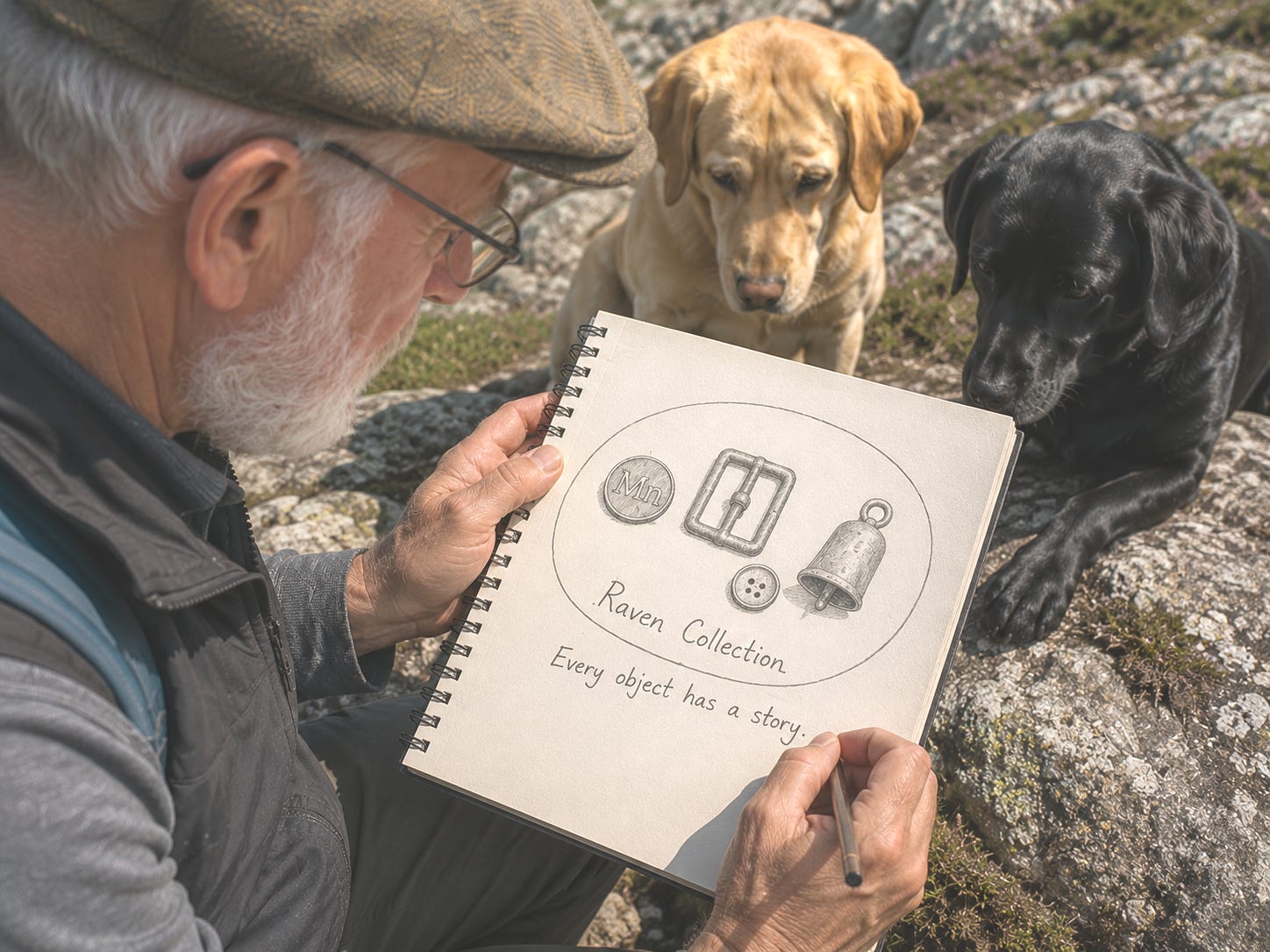
Billy read the words aloud. “What story would the bell tell?”
Mr Rogers smiled. “Perhaps it belonged to a shepherd whose sheep grazed these very hills.”
“And the button?”
“Maybe a quarryman.”
“And the brass disc?”
Mr Rogers turned it over once more. “That...” he said thoughtfully, “...is still keeping its secret.”
As they continued climbing, Billy kept looking upwards. The ravens circled effortlessly above the cliffs. “They know this place much better than we do.”
“They certainly do,” agreed Mr Rogers. “They’ve probably watched people crossing these hills for hundreds of years.”
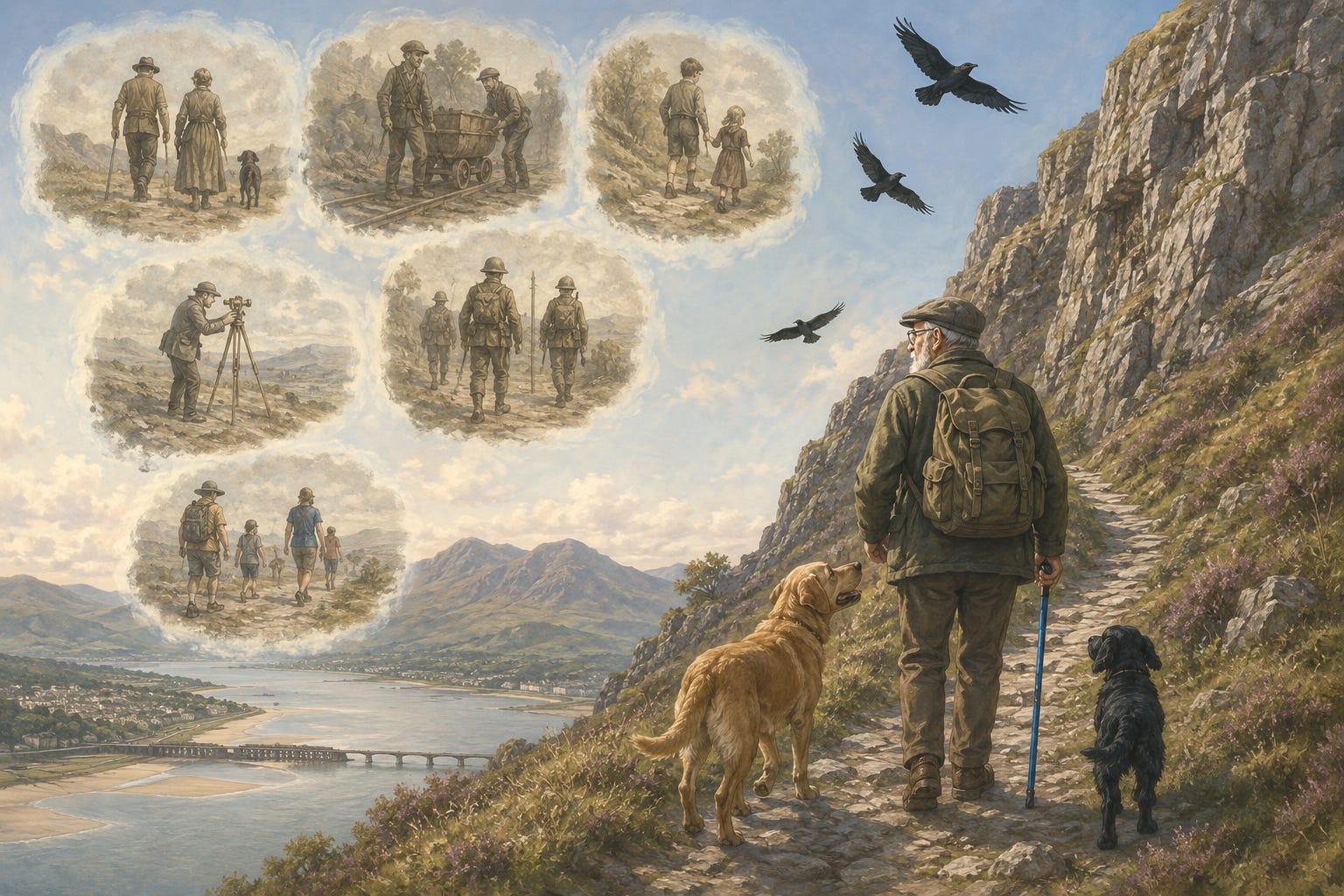
Billy imagined generations of walkers. Farmers. Miners. Children. Surveyors. Soldiers. Holiday-makers.
The ravens had seen them all.
Soon the path emerged beside the famous Barmouth Slabs. Sunlight gleamed on the smooth rock faces. Several young people wearing climbing helmets were learning to abseil. An instructor pointed towards ropes anchored high above.
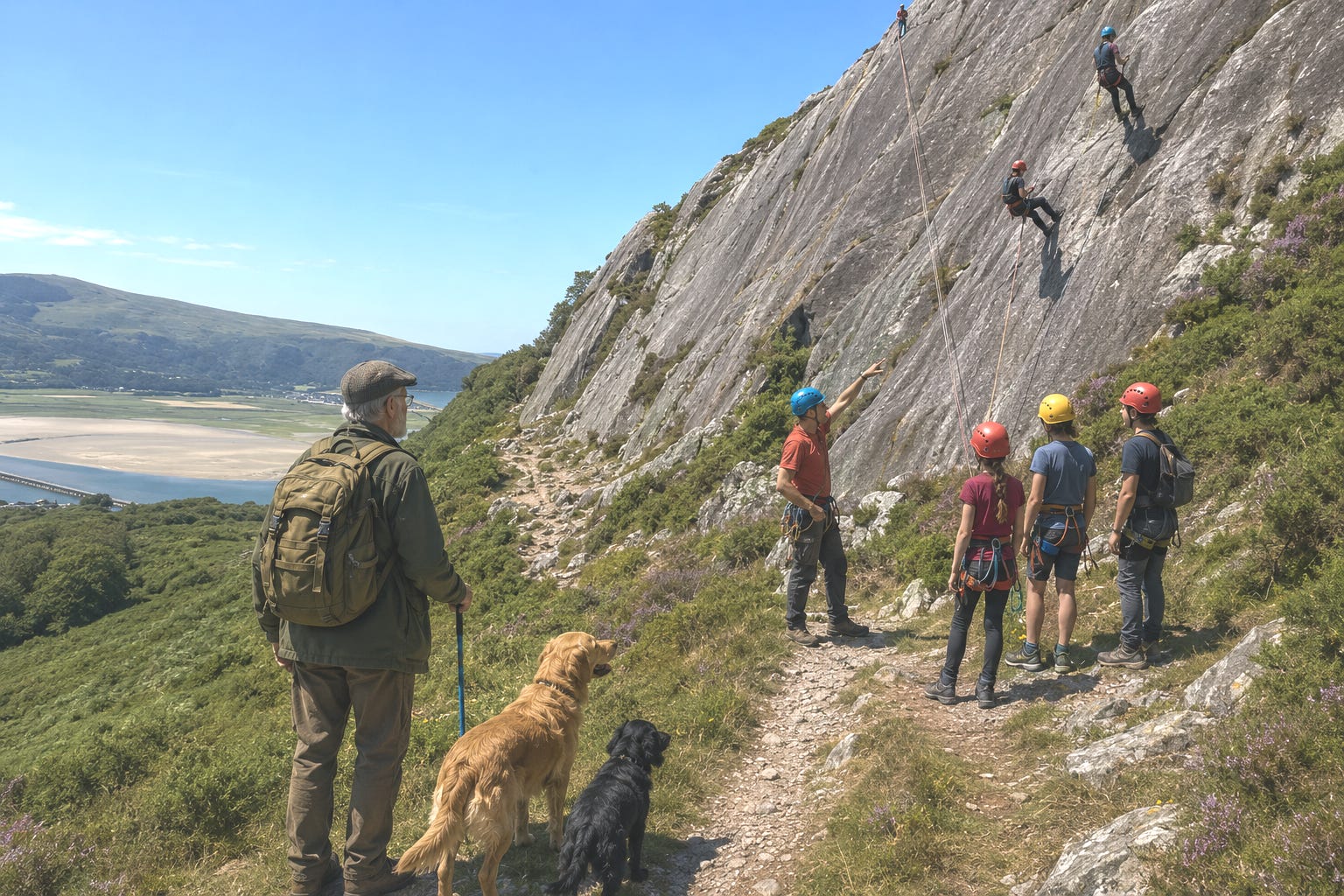
Billy watched with wide eyes. “They’re climbing down!”
Mr Rogers laughed. “Sometimes learning history isn’t the only adventure happening on these hills.”
Just beyond the climbing rocks, the path crossed a shallow hollow. Spud stopped suddenly. “Look over there.”
Nestled beneath the crags stood an old stone sheepfold. Its walls curved in unusual directions before meeting in the centre.
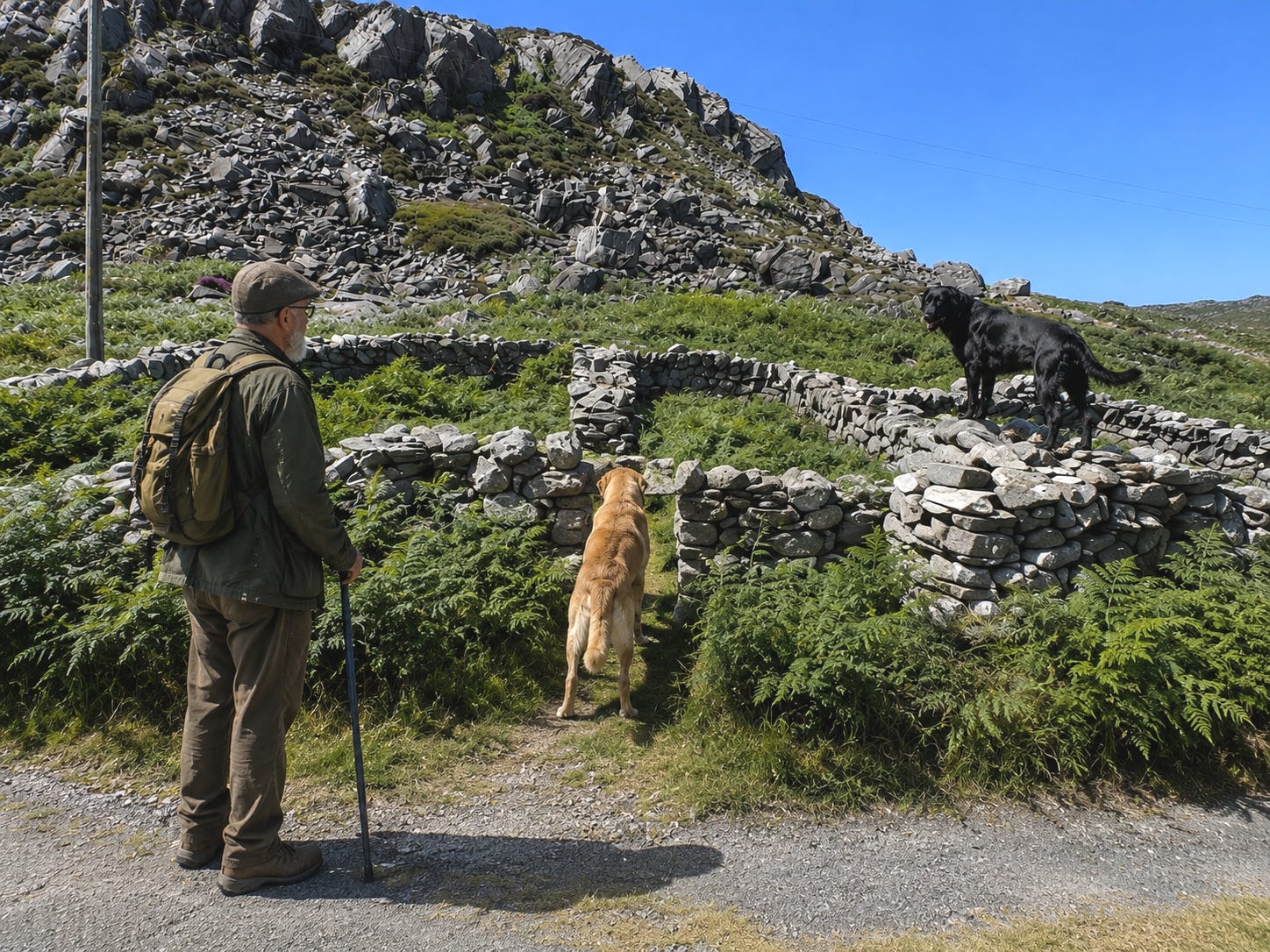
Billy walked around it slowly. “It doesn’t look like any sheepfold I’ve seen before.”
“It is rather distinctive,” agreed Mr Rogers.
They climbed onto a nearby bank. From there they could see the whole enclosure at once. Billy suddenly blinked, then looked again. “Mr Rogers...”
“I know.” The outline seemed strangely familiar. Mr Rogers didn’t even need to open his notebook this time. He already knew what Billy was thinking.
“It reminds us of the Mn shape again.”
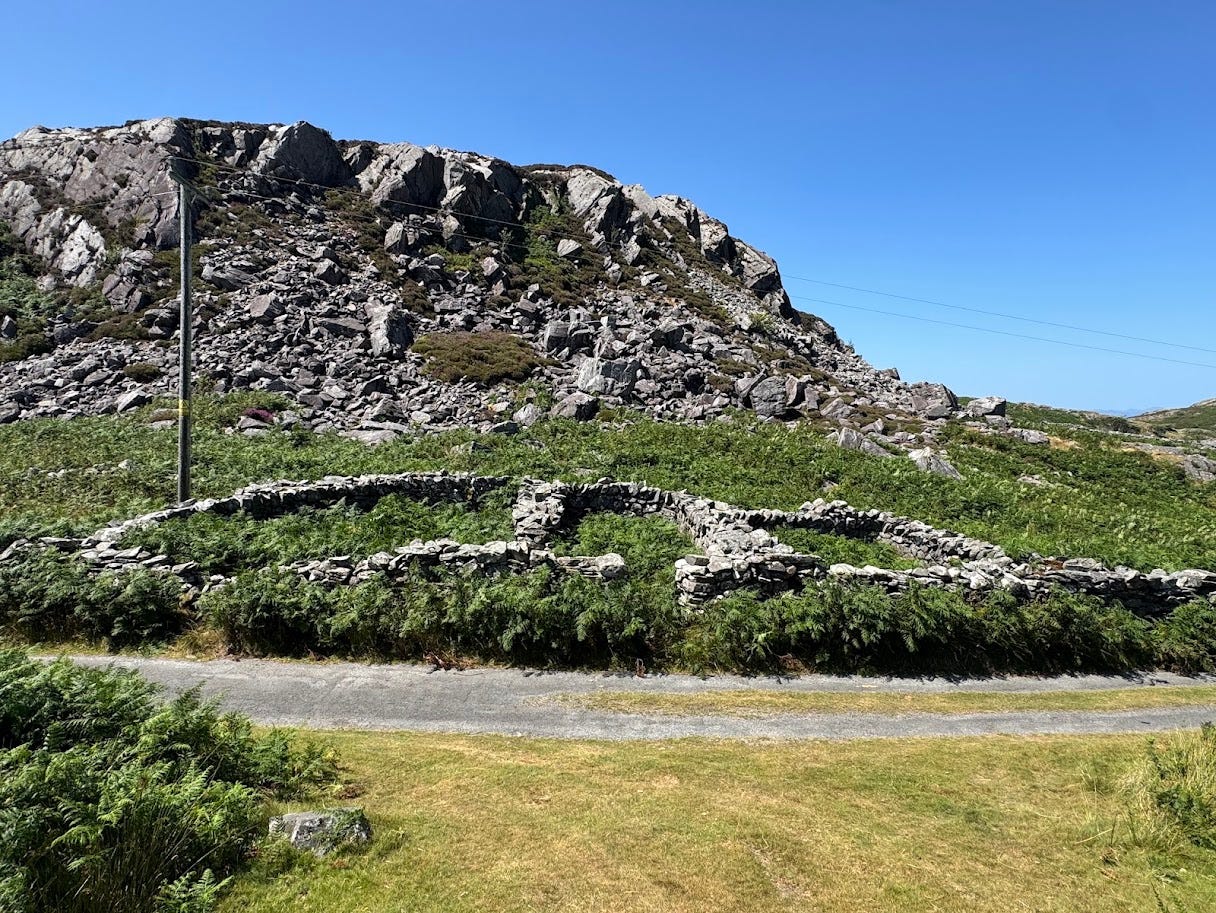
Billy laughed. “It’s everywhere!”
Mr Rogers smiled. “And what do detectives say?”
Billy answered immediately. “Let’s not decide too soon.”
“Exactly.”
They sat down on the warm grass to eat their sandwiches. While they ate, Billy couldn’t stop looking at the sheepfold.
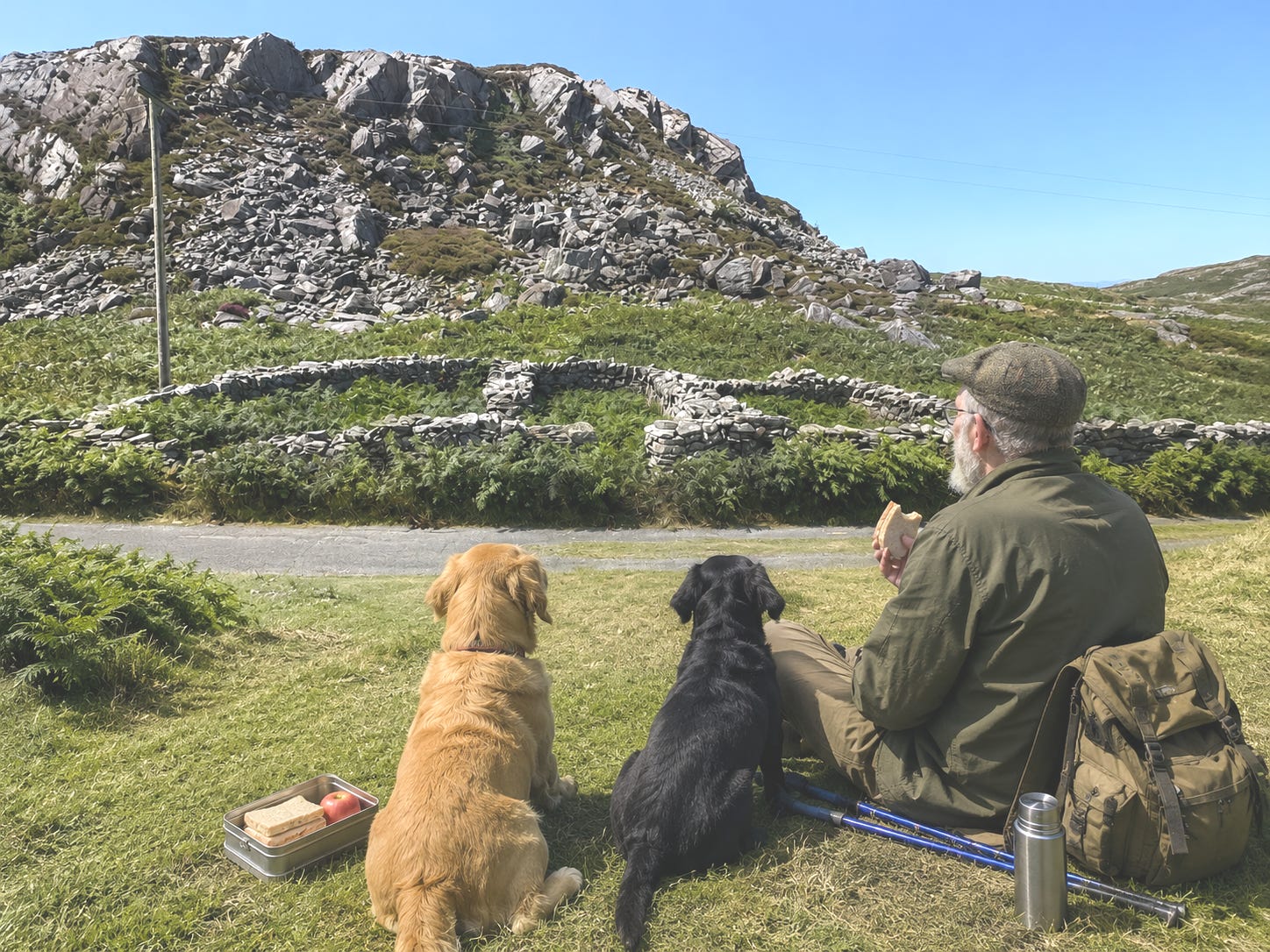
Then he looked towards the estuary. Then back at the bridge. Then at the sketch in Mr Rogers’ notebook. Finally he asked quietly, “Do you think all these things are connected?”
Mr Rogers was silent for a moment. “I honestly don’t know.”
Billy seemed surprised. “You don’t?”
Mr Rogers shook his head. “And that’s perfectly all right.” He closed the notebook. “A good detective doesn’t pretend to know the answer.”
“What does a good detective do?”
“He keeps collecting evidence.”
Billy nodded thoughtfully. Somehow that felt like a much more interesting way to solve a mystery.
The Panorama Walk left the rocky crags behind and wandered gently across the open hillside. Billy took a deep breath. The air smelled completely different now. Warm grass. Heather. Sun-warmed stone. And sheep. Lots of sheep.
Some watched the three visitors with quiet curiosity before returning to their grazing. Others barely bothered to look up. “They seem very relaxed,” said Billy.
“They’ve probably seen thousands of walkers,” laughed Mr Rogers.
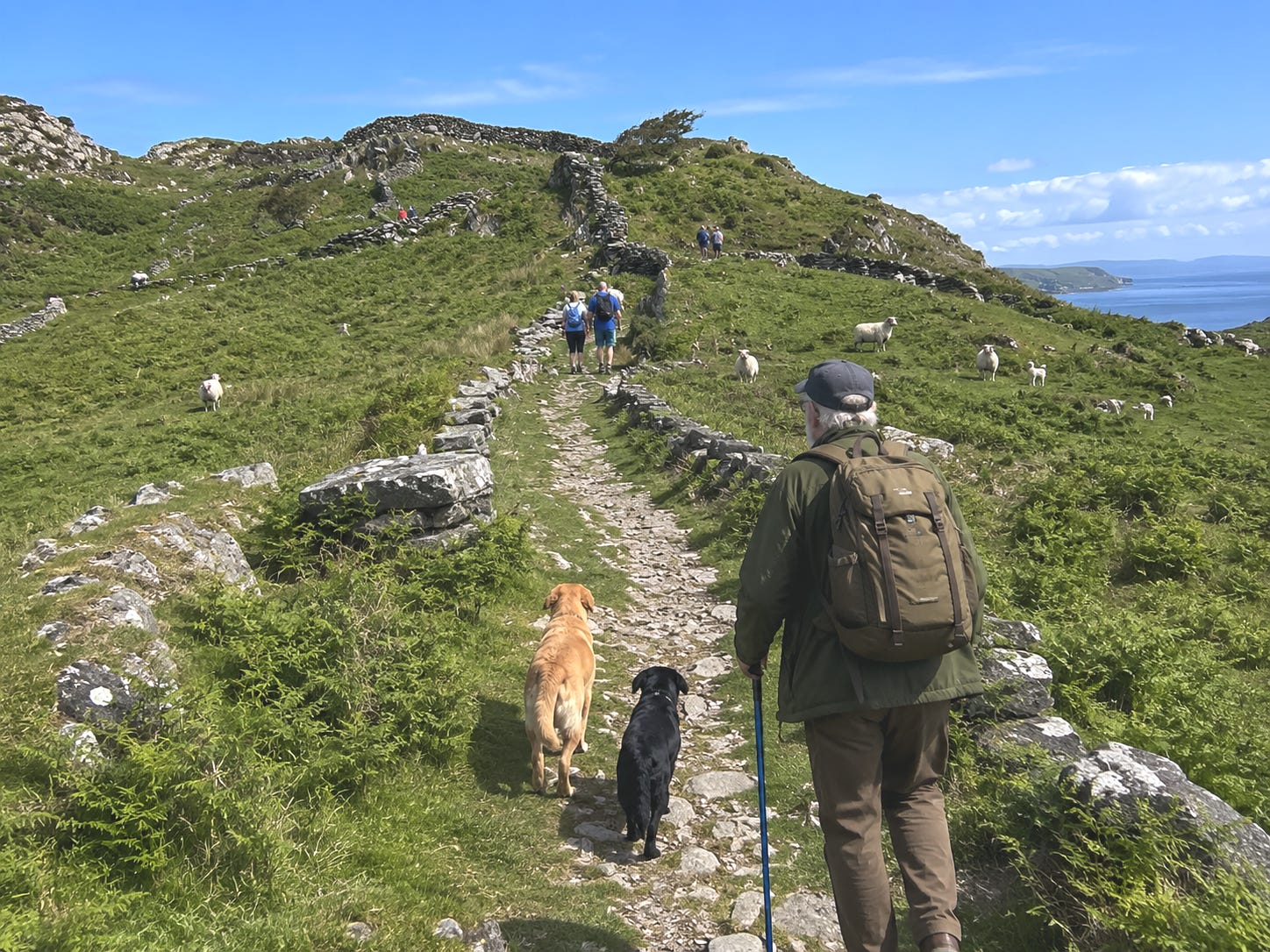
The path climbed steadily across the hillside. Stone walls divided the fields into irregular shapes. Some looked almost new. Others leaned gently where generations of weather had slowly pushed them out of line.
Spud stopped beside one. “I wonder who built this.”
Mr Rogers rested his hand on the warm stone. “Perhaps someone whose name has long been forgotten.”
Billy looked along the wall disappearing over the hillside. “It must have taken ages.”
“It certainly did.”
“And all without cement?”
Mr Rogers nodded. “Just skill.”
Billy ran his paw gently over one carefully balanced stone. The stone stood firmly in place. “It still works.”
“That’s usually the sign of good engineering.”
A little further on they came to the remains of an old farmhouse. Its roof had long since disappeared. Only the thick stone walls remained. A rowan tree had taken root where the kitchen might once have been.
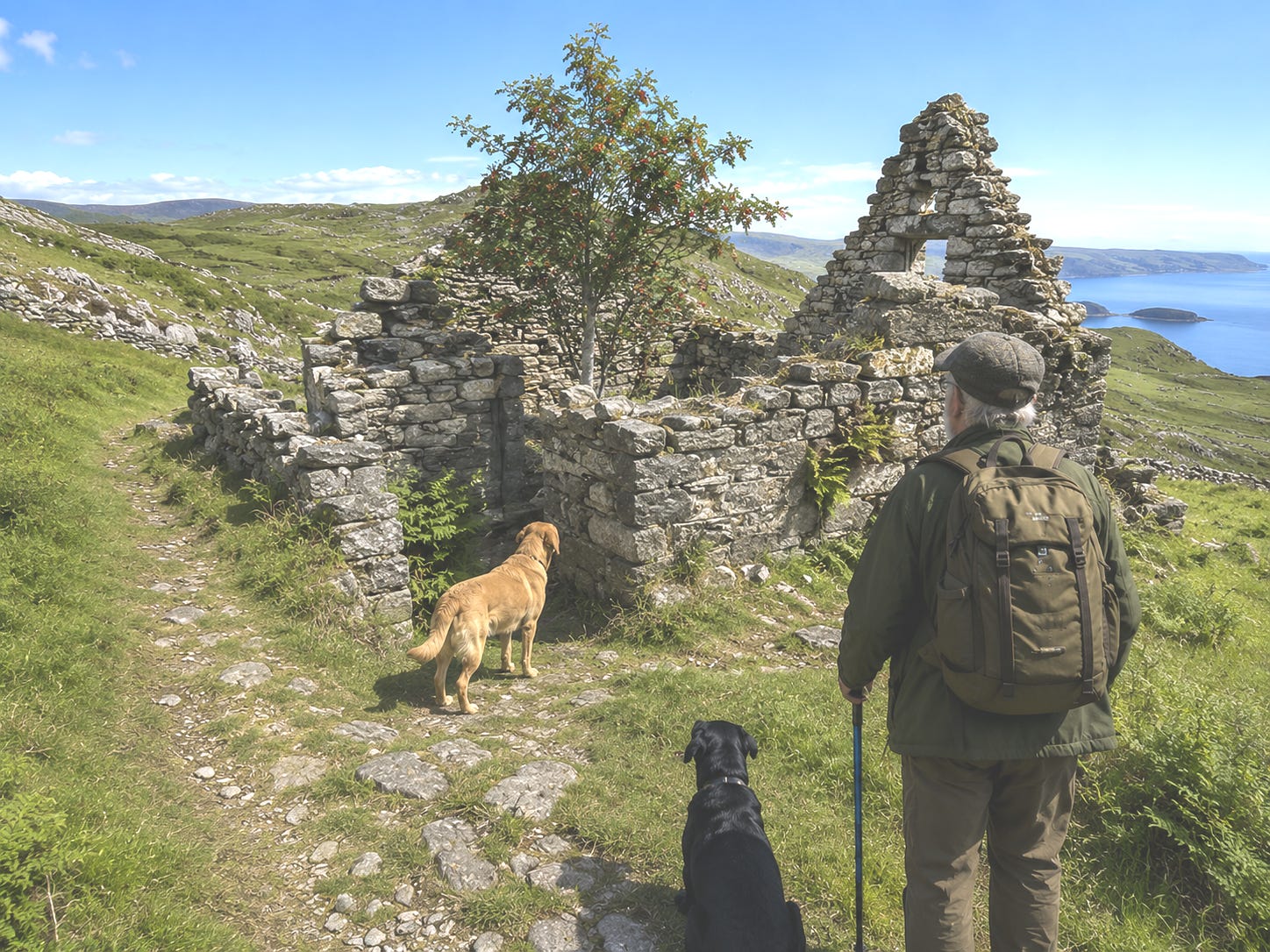
Billy wandered slowly through what had once been someone’s home. He imagined children playing outside. A dog sleeping beside the doorway. Smoke rising from the chimney on a cold winter evening.
Now only swallows nested there.
Mr Rogers sat on a fallen wall. “If this house could talk...”
Billy smiled, “...what story would it tell?”
Mr Rogers nodded. “Exactly.”
Spud looked around. “It might tell us about shepherds. Or hard winters. Or lambing. Or children walking miles to school…”
Billy looked out across the hills. “Or perhaps miners who farmed as well.”
Mr Rogers smiled. “That’s a very good thought.”
He opened his notebook again. This time he didn’t draw another Mn shape. Instead he sketched the outline of the ruined farmhouse.
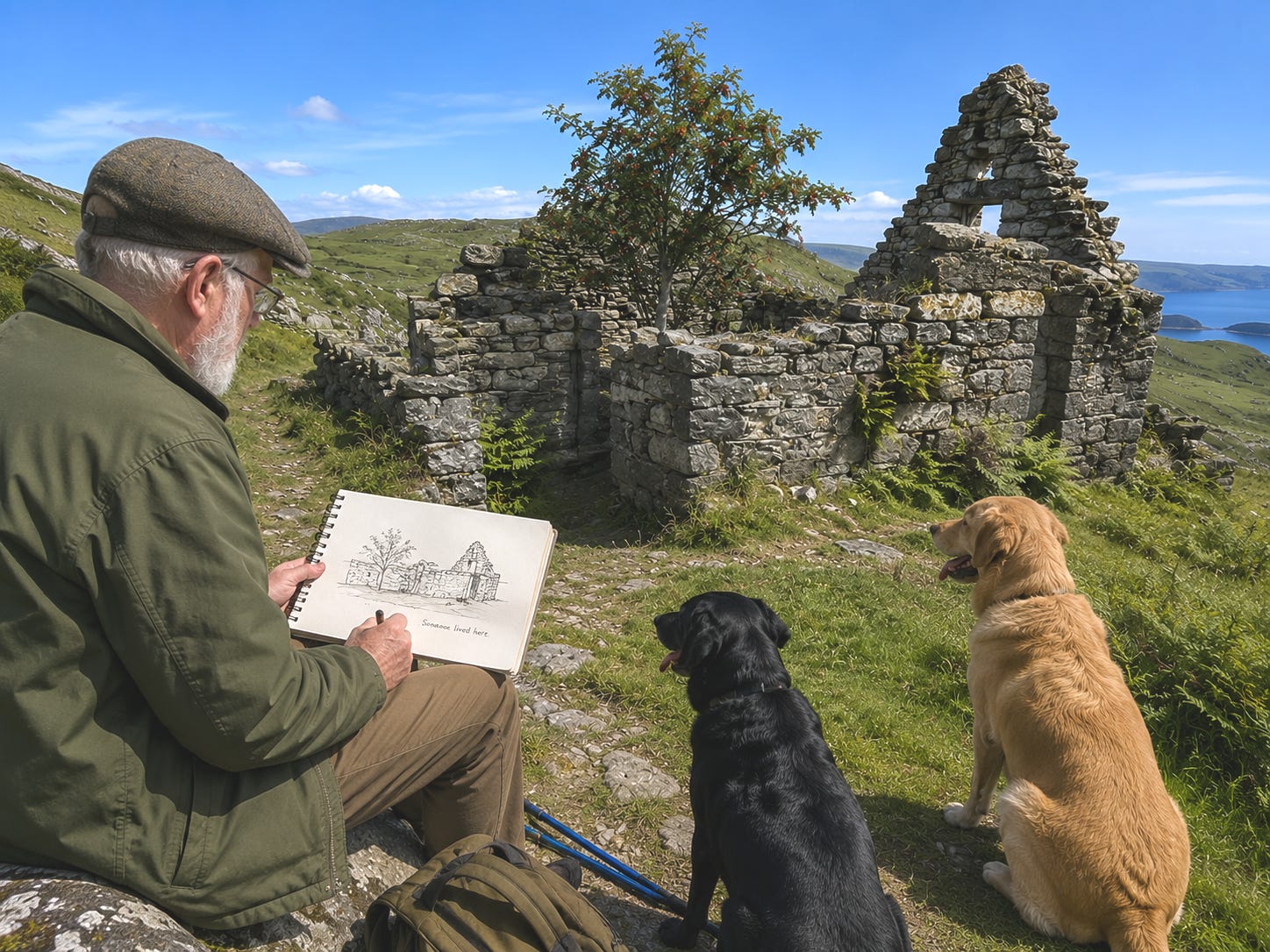
Beside it he just wrote:
“Someone lived here”
Billy looked surprised. “That’s all?”
Mr Rogers closed the notebook. “Sometimes that’s the most important clue of all.”
The path continued climbing. Ahead, the ridge rose gently against the bright blue sky. Beyond it they could just make out a wooden signpost. Billy bounded ahead. “I’ll race you!” Spud laughed and followed.
Mr Rogers smiled to himself. Some mysteries required patience.
Others simply required keeping up with enthusiastic dogs.
When Billy reached the signpost he stopped so suddenly that Spud almost bumped into him.
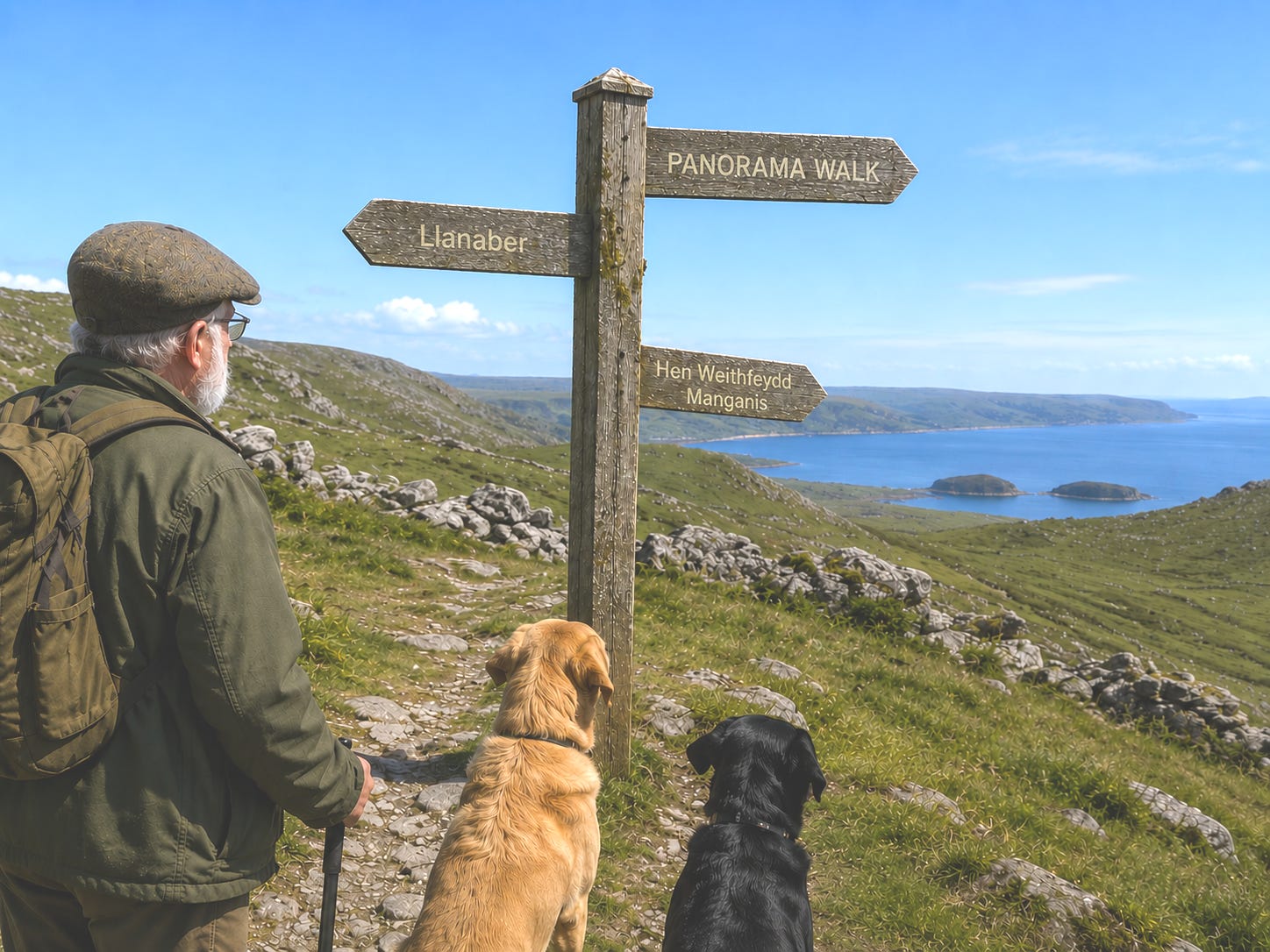
One finger pointed ahead.
“PANORAMA WALK”
Another pointed towards Llanaber. A third, much smaller one, pointed away across the hillside. The lettering had almost faded away. Mr Rogers brushed away a little moss.
“Hen Weithfeydd Manganîs”
Billy’s ears immediately stood upright. “Manganese!”
Mr Rogers looked at the map. “That explains why the old wagon carried the Mn mark.”
Billy grinned. “So we’ve solved it!”
Mr Rogers folded his map very slowly. Then he smiled. “What do detectives say?”
Billy sighed dramatically. “Let’s not decide too soon.”
They followed the smaller track. Almost immediately it became rougher. Grass grew between scattered stones. The air seemed strangely still. Even the sheep had disappeared.
Ahead lay a line of shallow excavations stretching along the hillside. Nothing spectacular. No towering cliffs. No deep mine shafts. Just a series of modest hollows.
Billy looked puzzled. “I expected something much bigger.”
“So did I,” admitted Mr Rogers. He knelt beside one of the spoil heaps. Among the loose rocks he picked up a heavy, dark grey stone. Unlike the surrounding rock, it felt unusually dense.
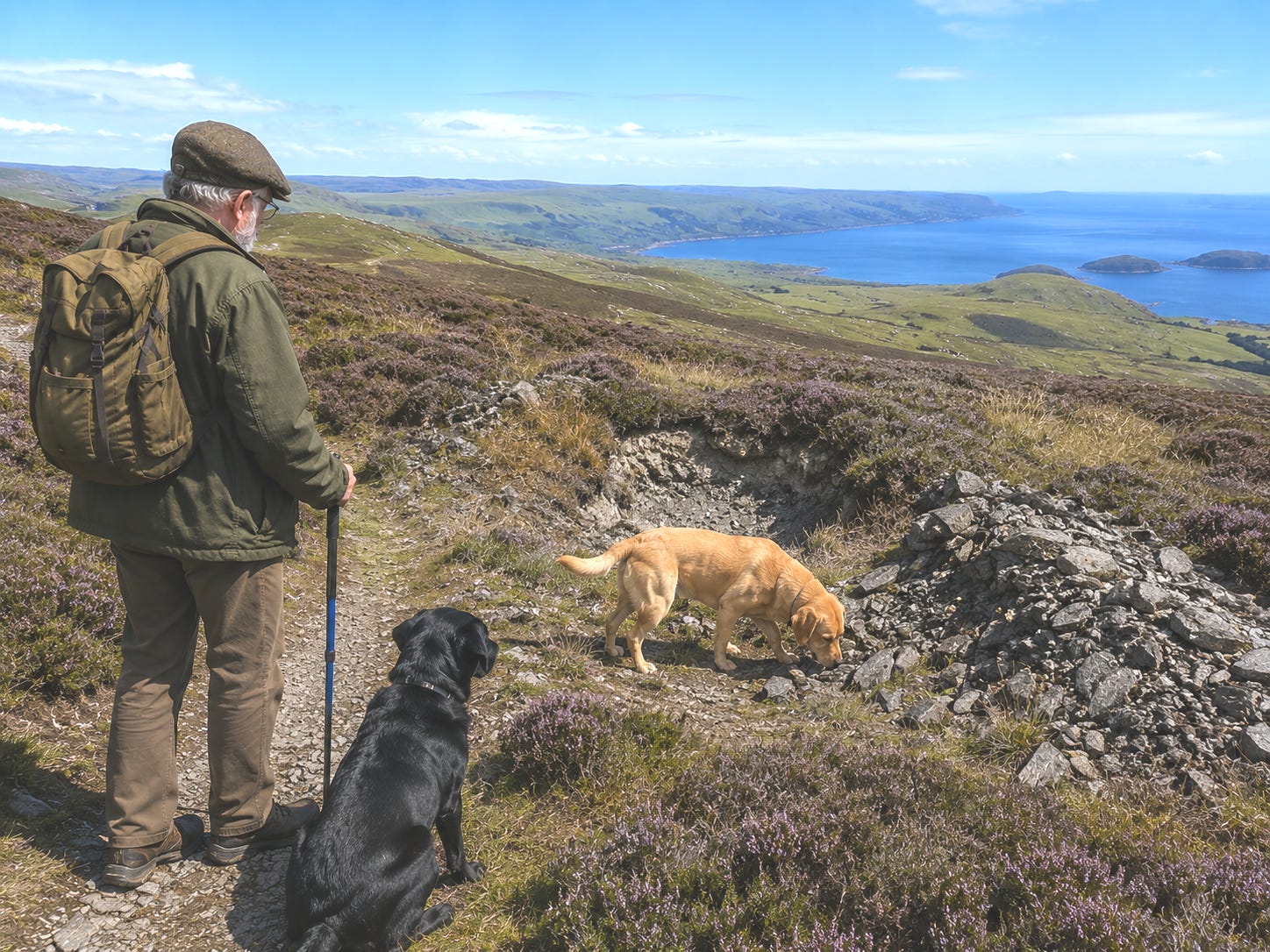
He handed it to Billy, who sniffed it, then rolled it about. “It’s heavy!”
“It is.”
“What is it?”
Mr Rogers turned it over in the sunlight. Tiny black crystals sparkled faintly. “I think...” he said thoughtfully, “...Billy may finally have found some manganese.”
Billy held the stone proudly between his paws. “So this is where it all began?”
Mr Rogers looked along the quiet line of workings disappearing into the heather.
“I wonder.”
For several minutes nobody spoke. The place felt unexpectedly peaceful. Only the breeze whispered through the grass. Billy found it difficult to imagine dozens of miners working here with picks and shovels. “So quiet now.”
Mr Rogers nodded. “Places don’t always tell us what they used to be.”
Billy looked again. Then, in his imagination, the hillside changed. Men swung hammers. Wagons rattled. Horses waited beside heaps of ore. Someone called instructions across the workings.
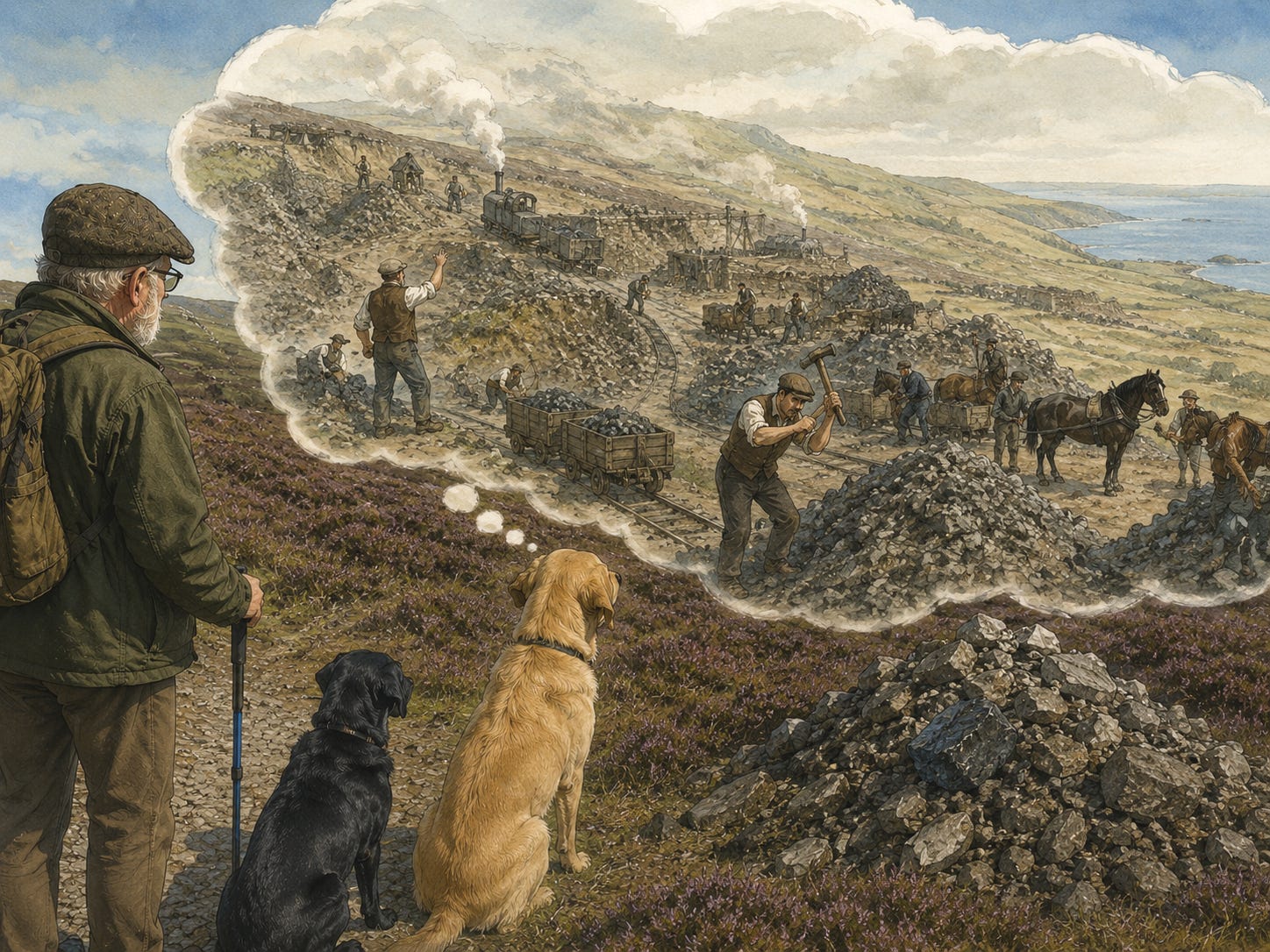
The silence slowly returned. “It doesn’t look like a mine anymore.”
“No.” Mr Rogers smiled. “But if you know how to read the landscape...”
Billy finished the sentence. “...you can still see the story.”
Mr Rogers looked at him with quiet satisfaction. “I think you’re becoming a very good detective.”
The little path gradually left the old mine workings behind. Before long it crossed the crest of the ridge. Billy stopped. “Oh!”
A completely different valley opened before them. Green fields stretched into the distance. A small stream wandered lazily along the valley floor. Clusters of old stone farm buildings stood peacefully beneath the hills. Far away, a modern radio mast stood on another ridge, reminding them that this landscape still continued to change.
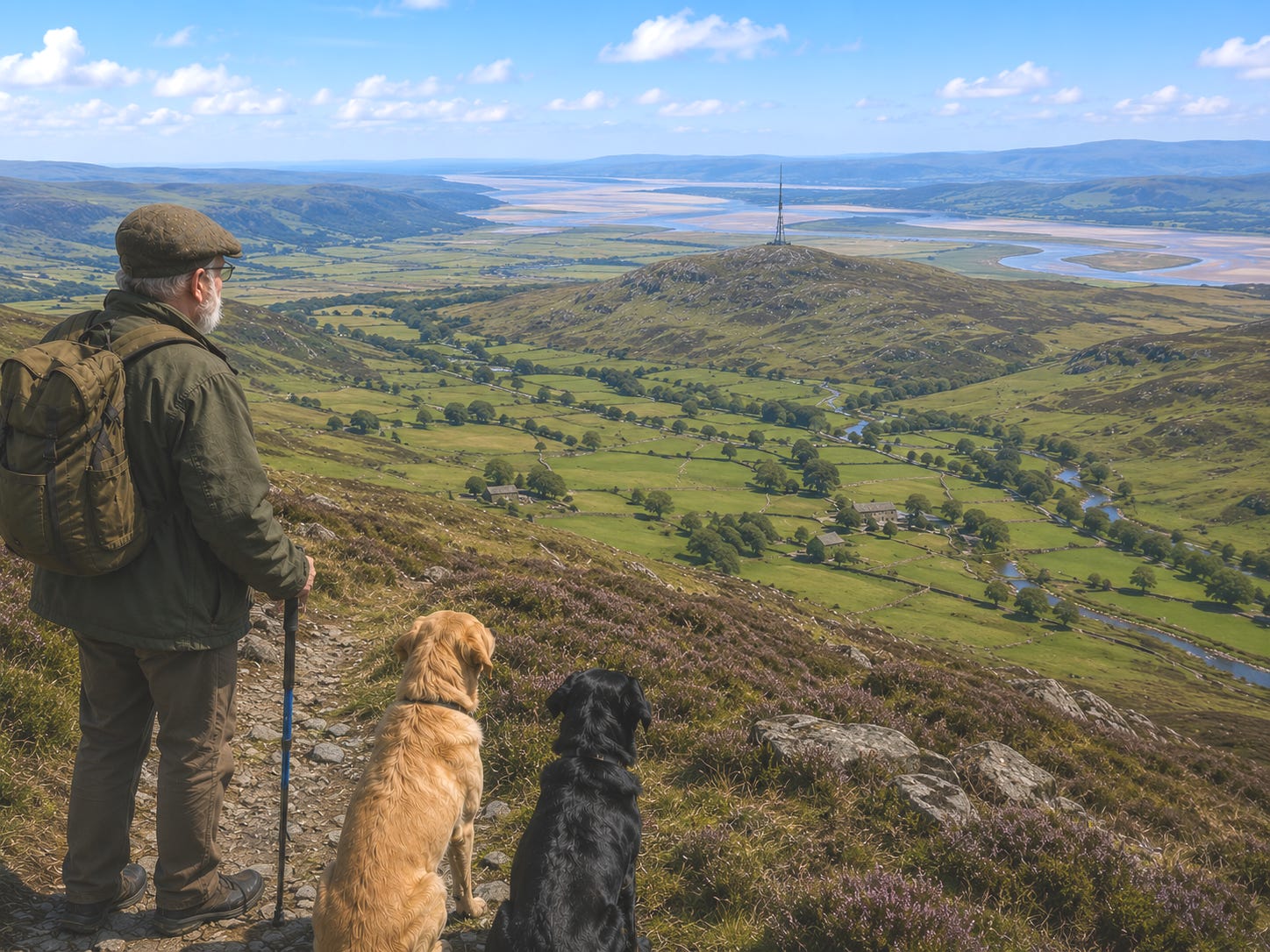
Spud looked across the fields. “It’s very quiet.”
Mr Rogers nodded. “It has probably been quiet here for a very long time.”
The path wandered gently downhill. Soon they reached an old farm. A friendly farmer waved from the yard. Billy wagged his tail. The farmer smiled. “Off up to Cerrig Arthur, are you?”
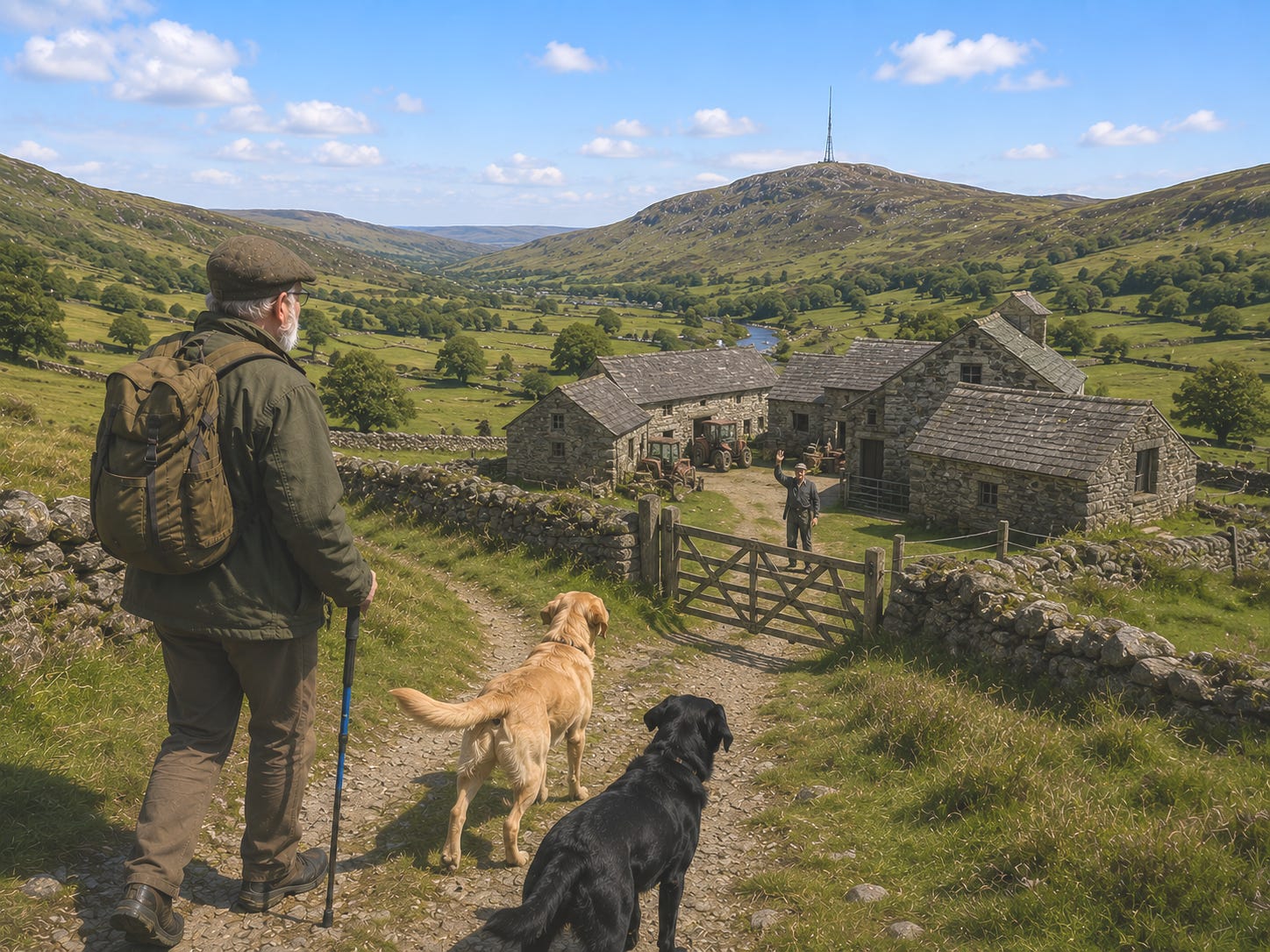
“We are indeed,” replied Mr Rogers.
“Fine afternoon for it.”
“It certainly is.”
The farmer looked towards the distant field. “My grandfather always used to say those stones had watched every generation come and go.”
Billy looked interested. “Is that true?”
The farmer laughed. “They’ve certainly watched more than I have.”
Beyond the farm a grassy path crossed into another field. There they were. Three weathered standing stones. Simple. Silent. Unmoving.
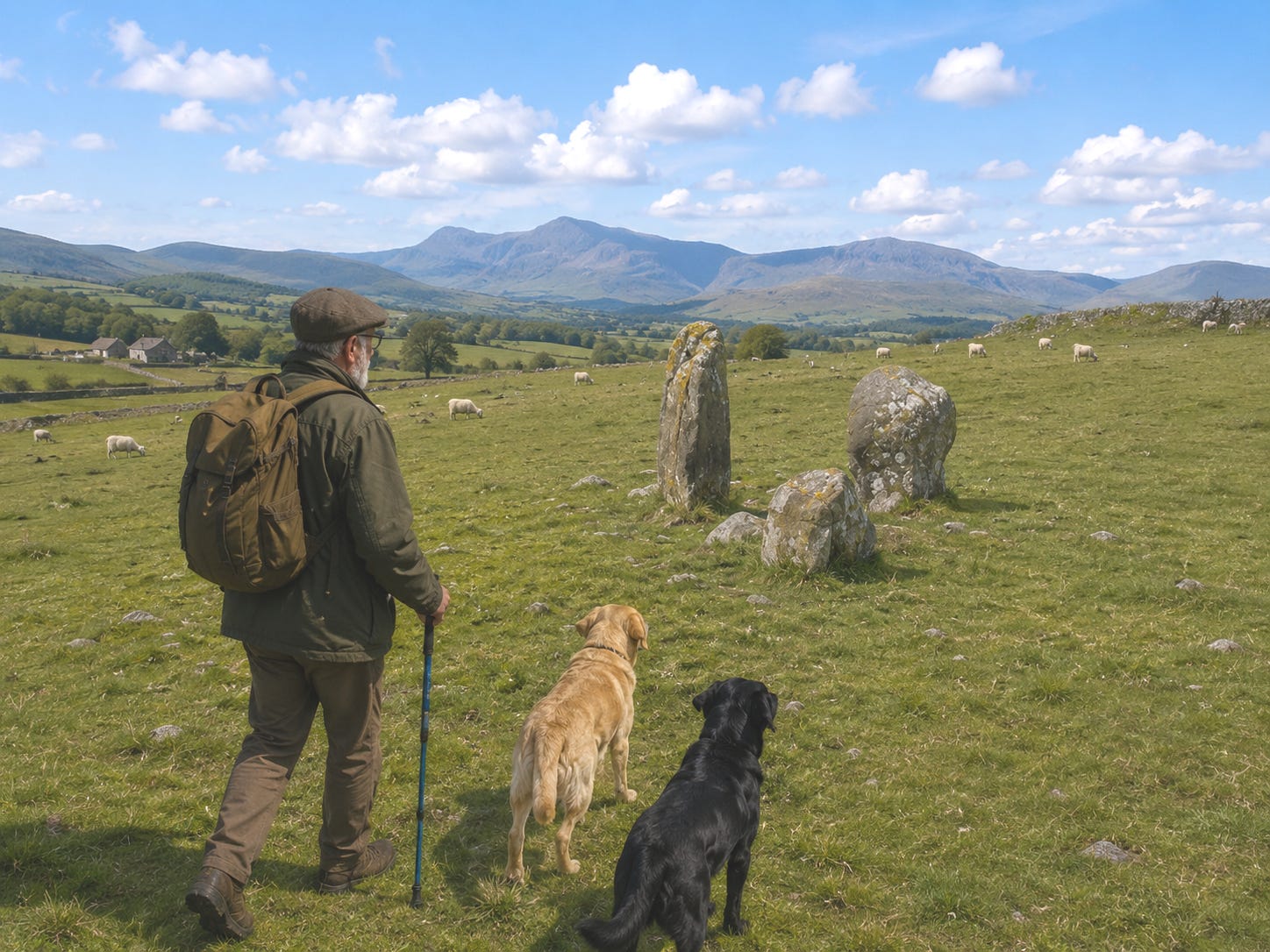
Billy had expected something much larger. Instead they seemed to belong naturally to the hillside. As though they had always been there.
Perhaps they had.
Nobody spoke for several moments. Even the dogs seemed reluctant to disturb the stillness. Only the breeze moved gently through the long grass.
Mr Rogers quietly removed his hat. “These stones are much older than anything we’ve seen today.”
Billy slowly walked around them. “Older than the ruined farmhouse?”
“Much older.”
“Older than the sheepfold?”
“Yes.”
“Older than the manganese mine?”
“By thousands of years.”
Billy looked astonished. “They’re really that old?”
Mr Rogers nodded. “No one knows exactly why people placed them here.”
Billy frowned. “So... that’s another mystery?”
Mr Rogers smiled. “It certainly is.”
Spud wandered a little further away. “Come over here.”
Billy joined her. From where they were standing, the three stones suddenly formed an unexpectedly familiar outline. Billy blinked. He moved a step to one side…
The shape disappeared. He stepped back again. There it was once more.
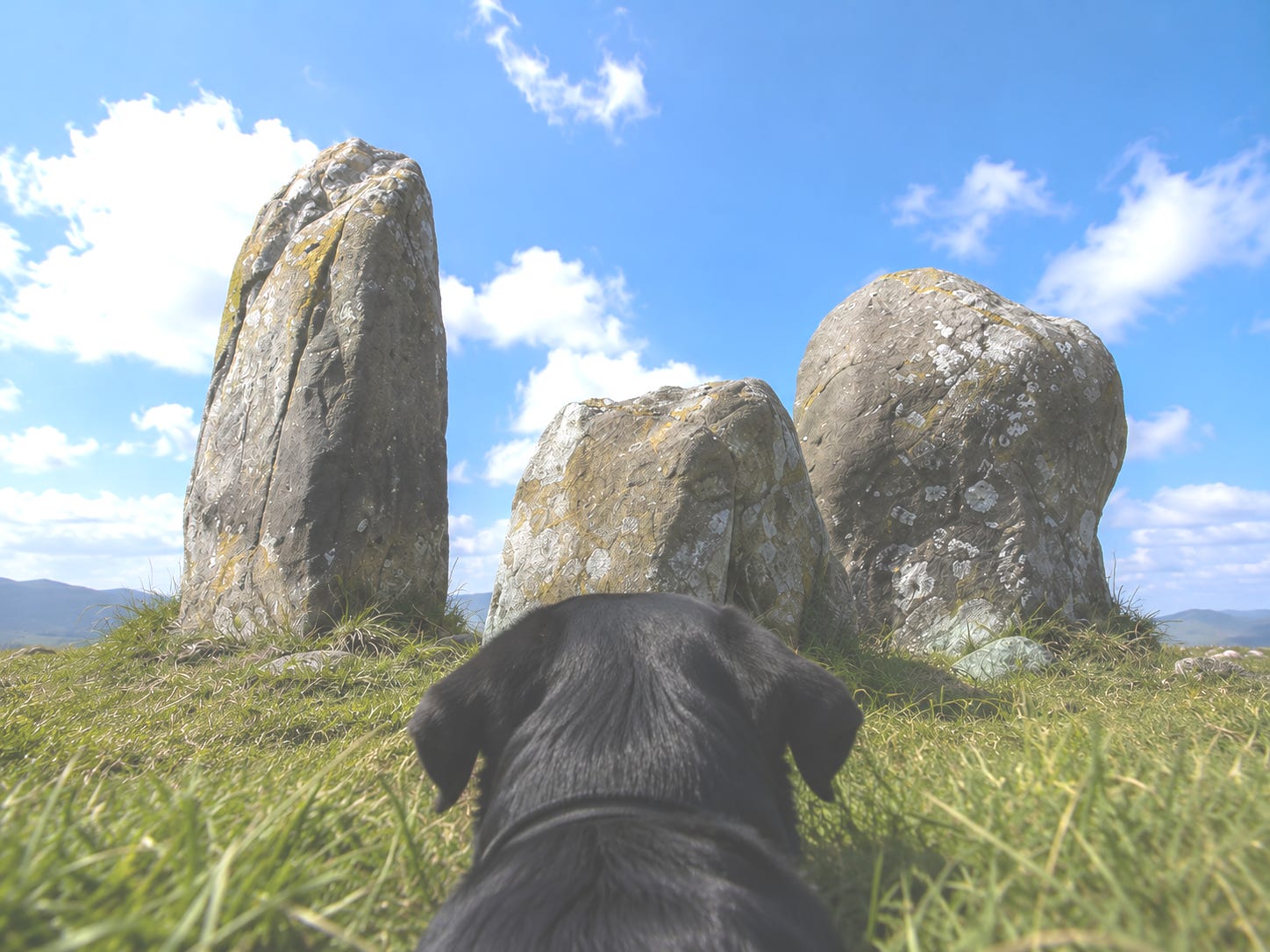
He looked at Mr Rogers. “You can see it too, can’t you?”
Mr Rogers came across and stood beside him. For a long moment he simply looked. Then he opened his notebook.
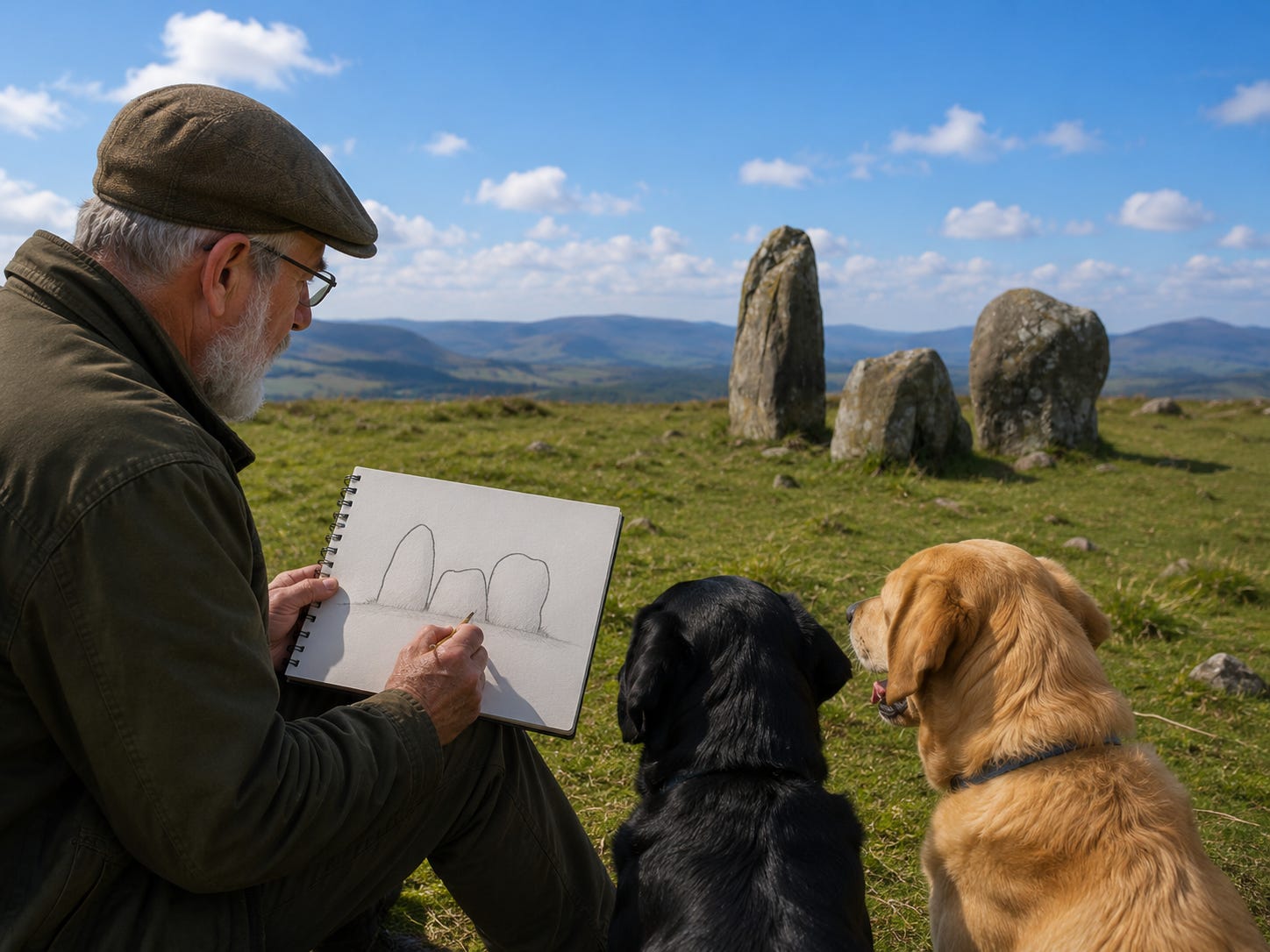
Very carefully he sketched only the skyline formed by the tops of the stones. Three gentle curves. Nothing more.
Billy compared it with the earlier sketches. The bridge. The trilobite. The mountain skyline. The sheepfold. The wagon mark.
Now... the stones.
“They all remind me of the same shape.”
“They do.”
“So...” Billy began, “...perhaps the people who built these stones invented it first?”
Mr Rogers smiled. “What do detectives say?”
Billy laughed. “I know... Let’s not decide too soon.”
They sat beside the largest stone to eat the last of their sandwiches. Billy looked thoughtfully across the valley. “I keep thinking we’ve solved the mystery.”
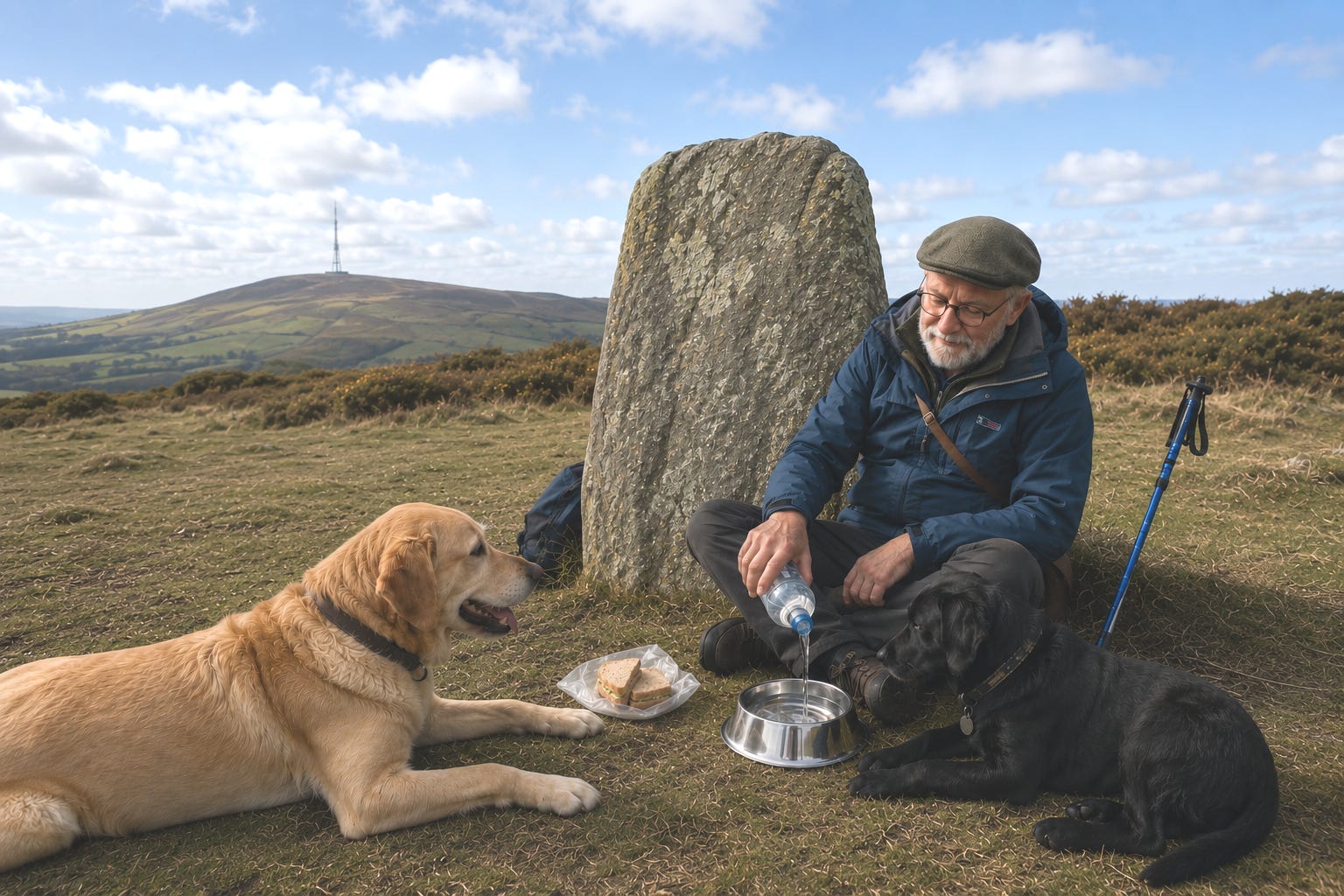
“And then?”
“Then we find something even older.”
Mr Rogers nodded. “History often works like that.”
Billy thought quietly for a while. Then he asked, “What if none of these places copied each other?”
Mr Rogers looked interested. “Go on.”
“What if...” Billy searched for the right words, “...people simply kept noticing the same sort of shape?”
Mr Rogers didn’t answer immediately. Instead he smiled. “I think that’s a very sensible idea.”
Spud looked puzzled. “But why?”
Mr Rogers picked up a fallen oak leaf. “Have you ever noticed that leaves, rivers, lightning, tree branches and our own veins all have branching patterns?”
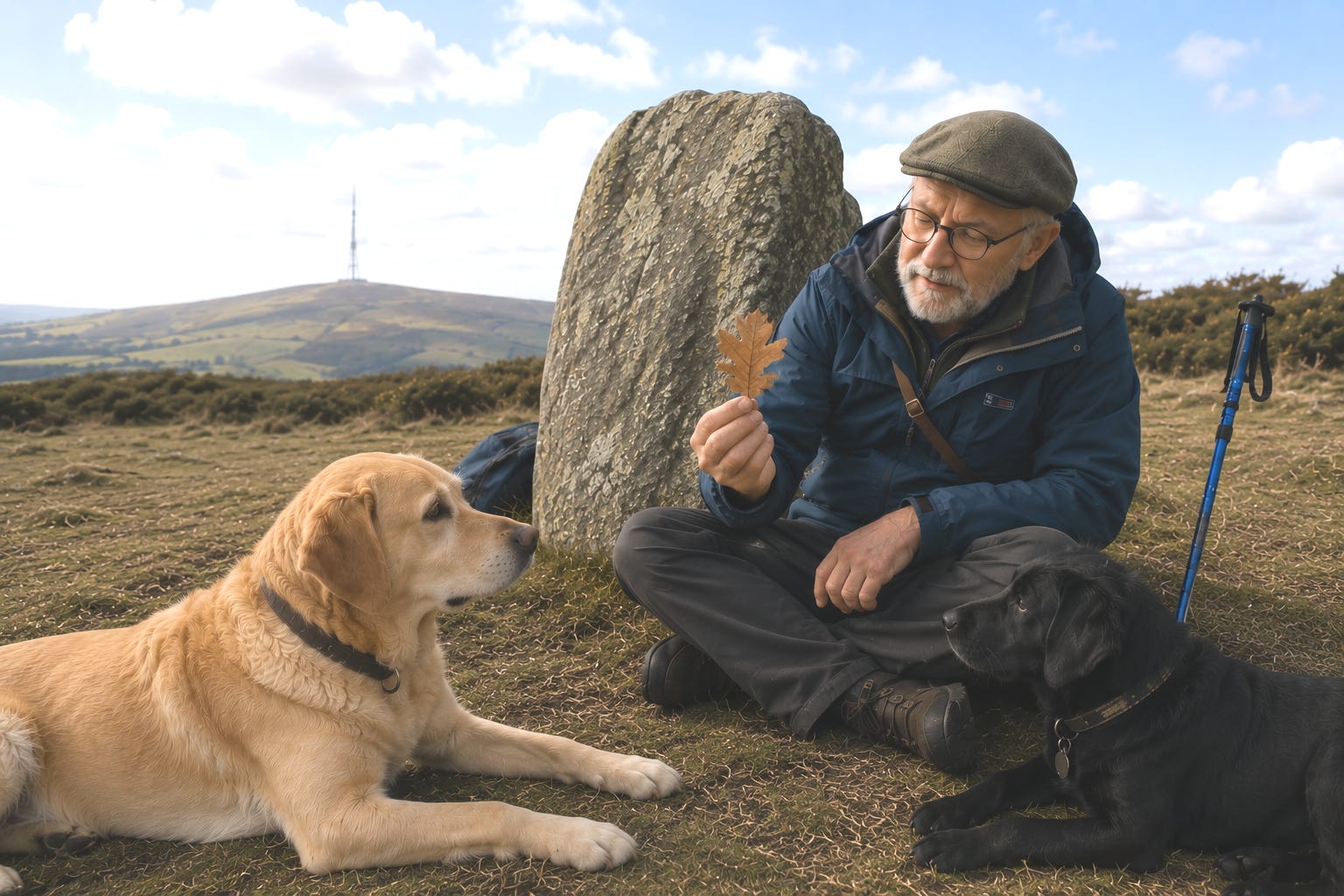
Billy nodded. “I suppose they do.”
“Nature often repeats successful shapes.” He looked towards the standing stones. “And people often repeat shapes they find pleasing, useful or memorable.”
Billy looked back at the stones. “So perhaps the Mn isn’t really a code.”
“Perhaps.”
“Perhaps it’s just...” He paused. “...a shape that keeps appearing.”
Mr Rogers closed his notebook. “I think you’ve just made the biggest discovery of the day.”
As they prepared to leave, Billy took one last look at Cerrig Arthur. Something about the place made him feel peaceful. He realised something else. Every clue they had found so far had belonged to a different age.
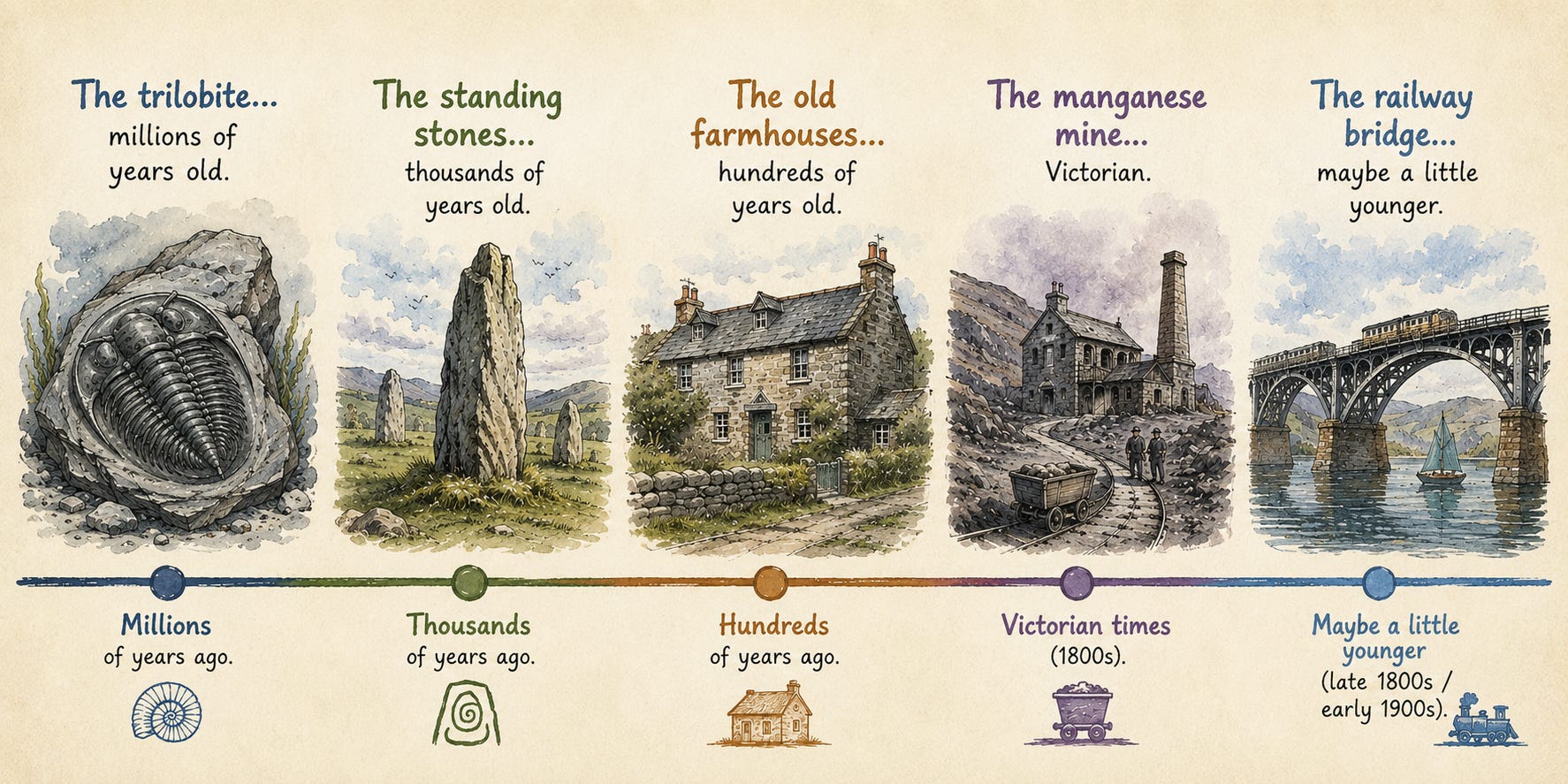
The trilobite... millions of years old.
The standing stones... thousands of years old.
The old farmhouses... hundreds of years old.
The manganese mine... Victorian.
The railway bridge... maybe a little younger.
Yet all of them belonged to one landscape. The Panorama wasn’t simply a beautiful view. It was a place where every generation had left something behind.
As they climbed back onto the main track, Mr Rogers tucked his notebook into his rucksack. Billy couldn’t resist asking. “How many clues have we found now?”
Mr Rogers pretended to count on his fingers.
“Bridge...”
“Trilobite...”
“Wagon...”
“Ravens...”
“Sheepfold...”
“Mountain...”
“Mines...”
“Cerrig Arthur...”
Billy smiled. “Quite a lot.”
Mr Rogers laughed. “And we’ve only been collecting evidence.”
The afternoon sun had begun its slow journey towards the western sea. Long shadows stretched across the hillsides. The three friends followed the Panorama Walk as it gently curved back towards Barmouth. Nobody hurried. There seemed no reason to.
After all, the train home was not due for quite some time.
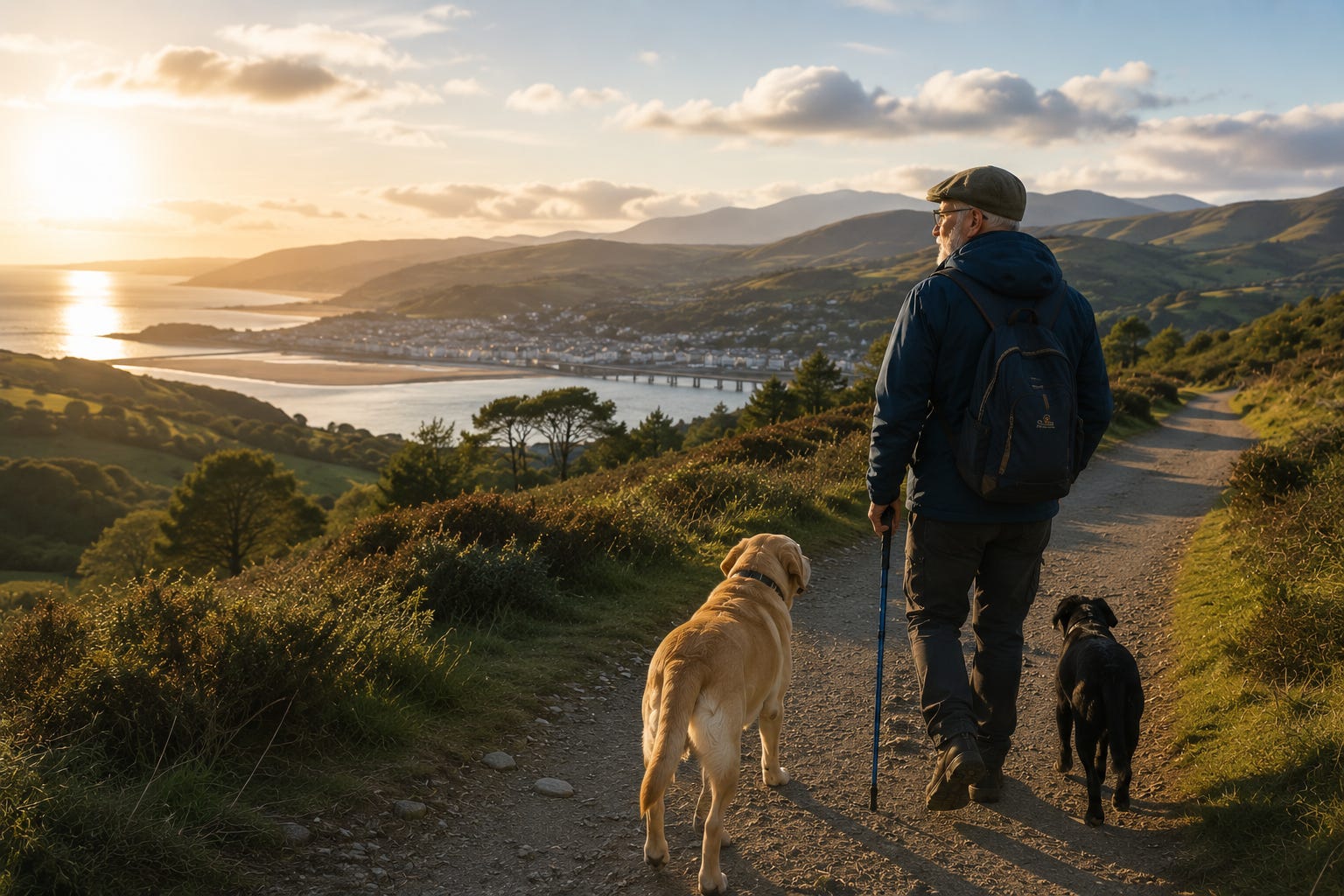
Billy stopped every now and then to look back. The ridge they had crossed now lay peacefully behind them. From here, it was difficult to believe they had walked so far.
Somewhere beyond those hills lay the little manganese workings. Beyond them stood Cerrig Arthur. Further still were the sheepfold and the great rocks where the ravens nested. The clues were slowly disappearing behind the folds of the land.
Yet somehow they felt closer than ever.
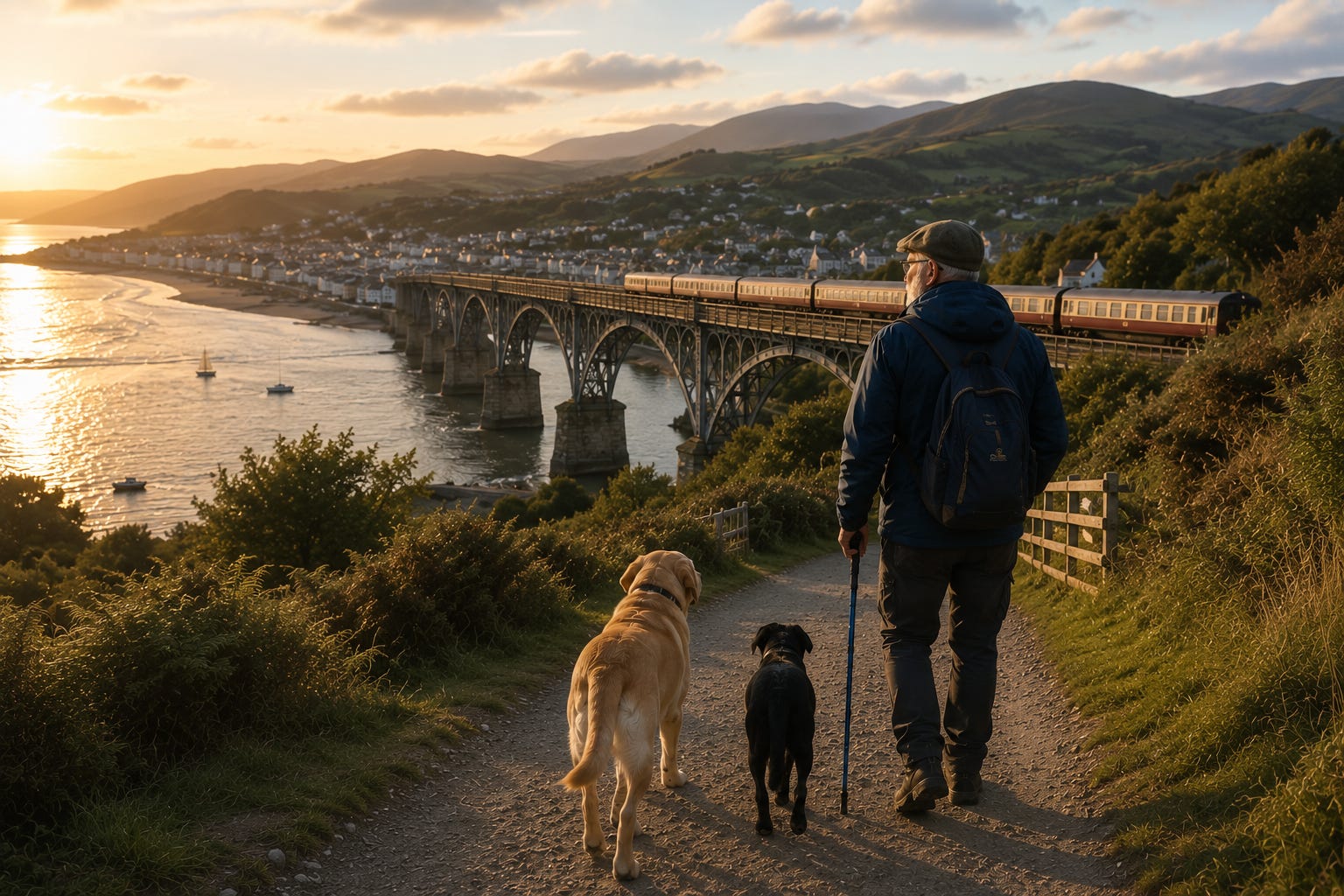
As they descended towards the woodland once again, the Mawddach Estuary came into view. The tide had risen while they had been walking. The water now shimmered silver beneath the afternoon sun. Far below, a small sailing yacht glided quietly towards the bridge. Billy stopped to watch. “Mr Rogers...”
“Yes?”
“The bridge.”
“What about it?”
Billy smiled. “I noticed something.”
Mr Rogers waited.
“The bridge doesn’t remind me of the Mn shape anymore.”
“Oh?”
Billy looked across the estuary. “Now, it reminds me of all the people who built it.”
Mr Rogers smiled quietly. “I think that’s a much better observation.”
They walked on. Soon they reached the entrance to Coed Orielton once more. Standing proudly beside the path was the great sculpture of a trilobite. Billy laughed. “I’d forgotten about him!”
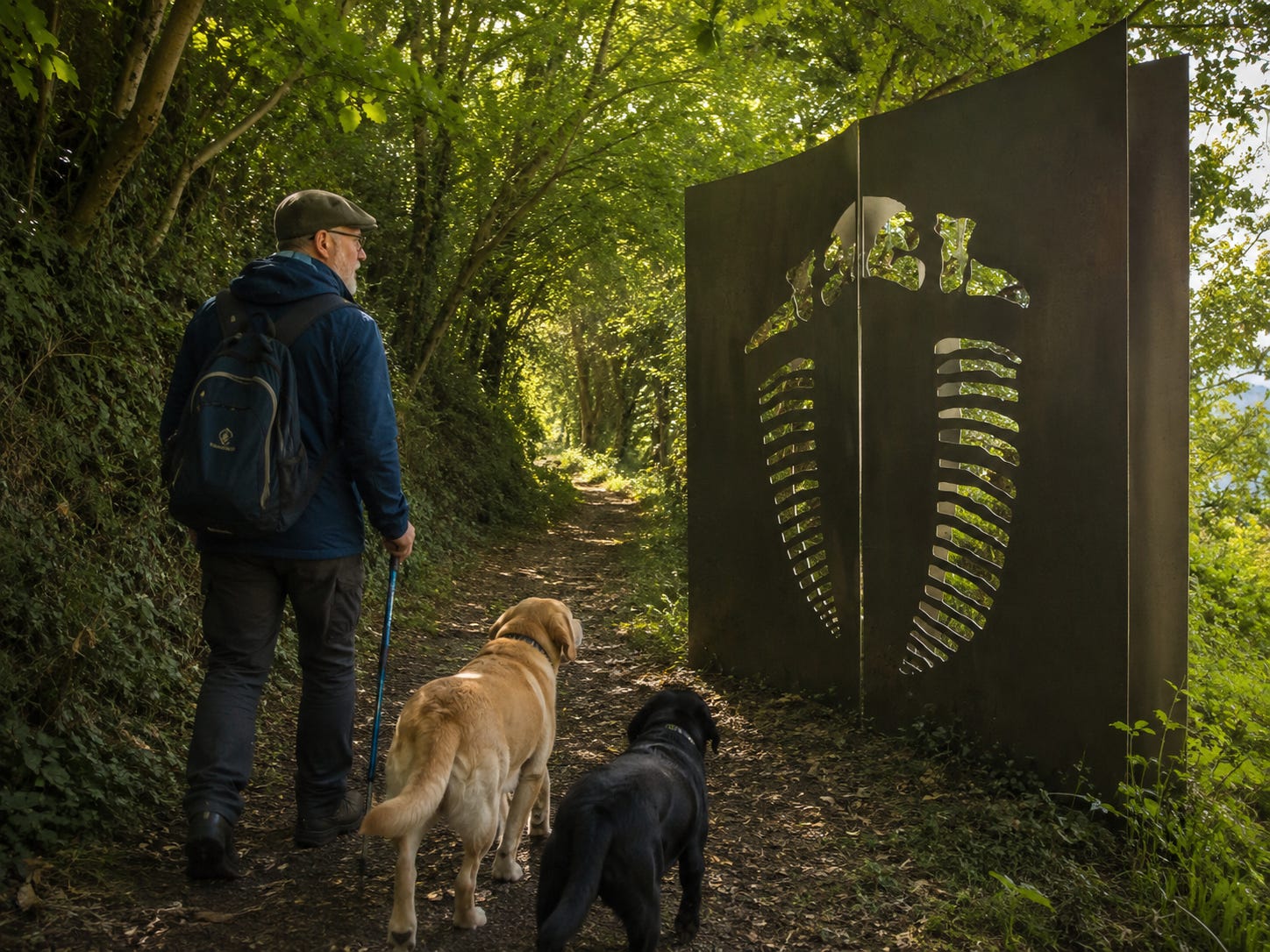
Spud walked slowly around it. “It looks much bigger than the one we found.”
“It certainly is.”
Billy stood looking at the sculpture. Then at the cliffs above. Then down at the rocks beside the path. He suddenly realised something. “This is where our mystery really began.”
Mr Rogers nodded. “Or perhaps...”
Billy grinned, “...it began nearly five hundred million years ago.”
Mr Rogers laughed. “I couldn’t have put it better myself.”
The woodland seemed cooler now. Late afternoon sunlight filtered through the trees. The same path that had led them upwards in the morning now carried them gently downhill. Billy found himself looking much more carefully than before. Interesting tree roots. Old stone culverts. Tiny ferns growing from cracks in the rocks.
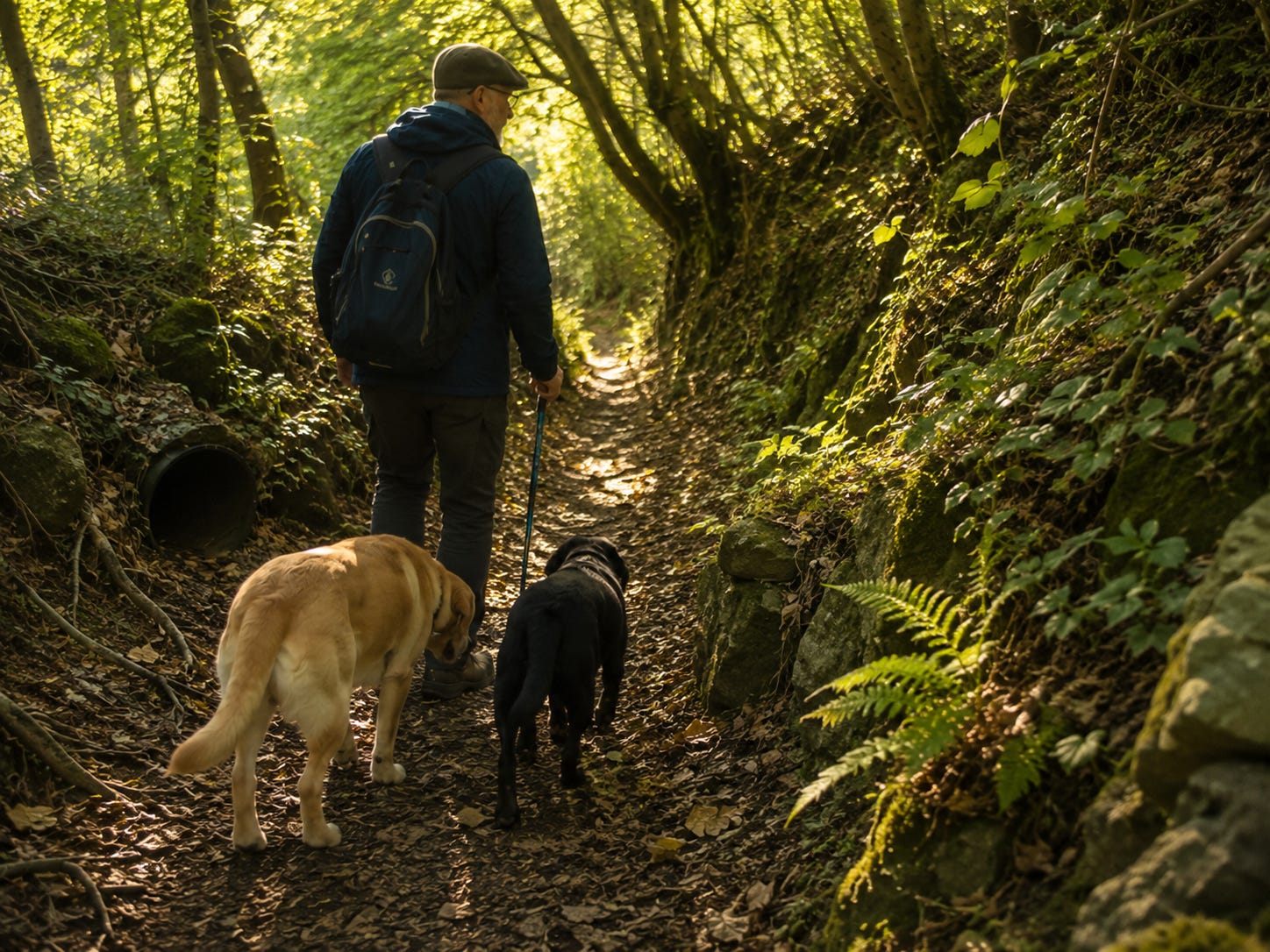
He smiled. There were clues everywhere. You simply had to notice them.
Before long they reached the railway bridge once again. A train was approaching from the Fairbourne direction. The warning bells began to ring. They waited while the train crossed the estuary.
Passengers waved from the windows. Billy wagged his tail. Perhaps some of them had been on adventures of their own today.
Back at Barmouth Station, they found an empty bench beneath the old canopy. The train home would arrive in twenty minutes. Billy stretched contentedly. Spud curled up beside the bench. Mr Rogers opened his faithful notebook one final time.
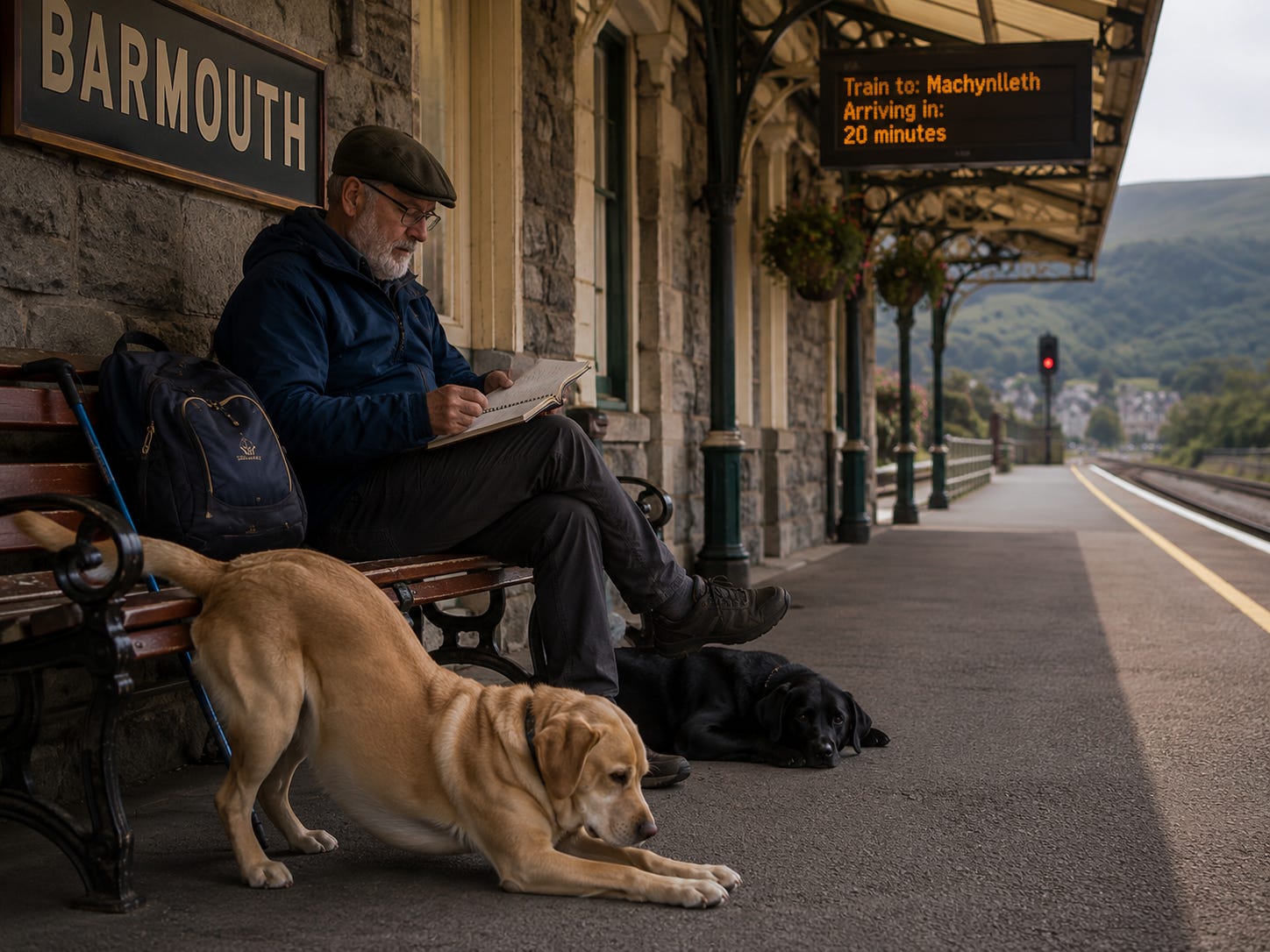
He turned the pages slowly. There was the railway bridge.
The trilobite.
The mysterious wagon.
The little brass disc from the ravens’ collection.
The mountain skyline.
The sheepfold.
The old farmhouse.
The manganese workings.
Cerrig Arthur.
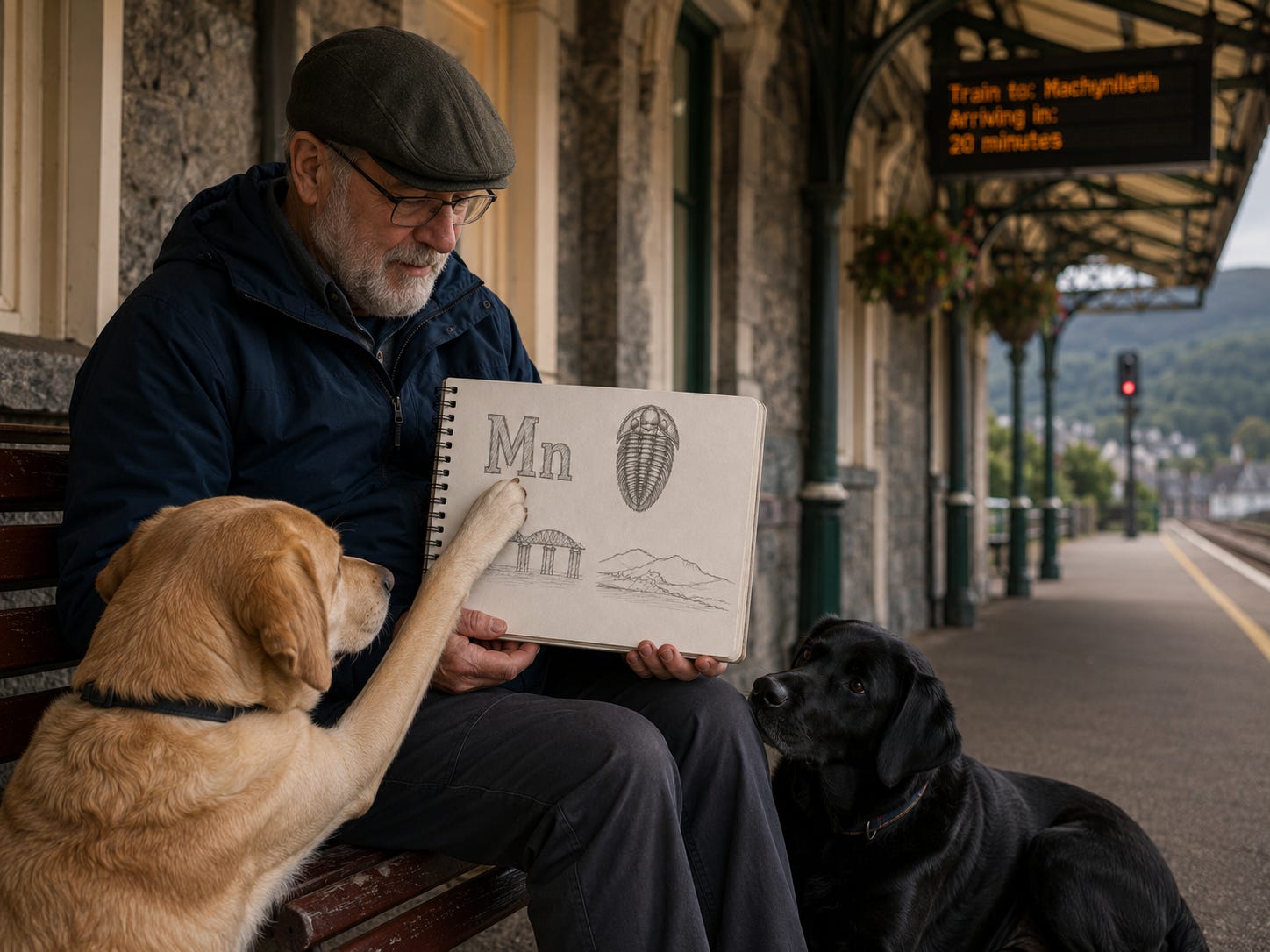
Billy looked carefully at every sketch. Then he pointed with one paw. “There’s something I hadn’t noticed.”
“What is it?”
Billy looked at the page. “Only one of them is actually the letters ‘Mn’.”
Mr Rogers nodded. “The carving on the wagon.”
“The rest are only shapes that remind us of it.”
“Exactly.”
Billy looked puzzled. “So...”
“Yes?”
“We never really solved the mystery.”
Mr Rogers closed the notebook very gently. “I think we did.”
Billy looked surprised. “But we never discovered who first thought of the shape.”
“No.”
“We never found any treasure.”
“No.”
“We never proved that any of the places were connected.”
“That’s true.”
Billy scratched one ear thoughtfully. “So how did we solve it?”
Mr Rogers looked out through the station windows towards the Panorama ridge, now glowing golden in the evening sunshine. “The mystery was never really about Mn.”
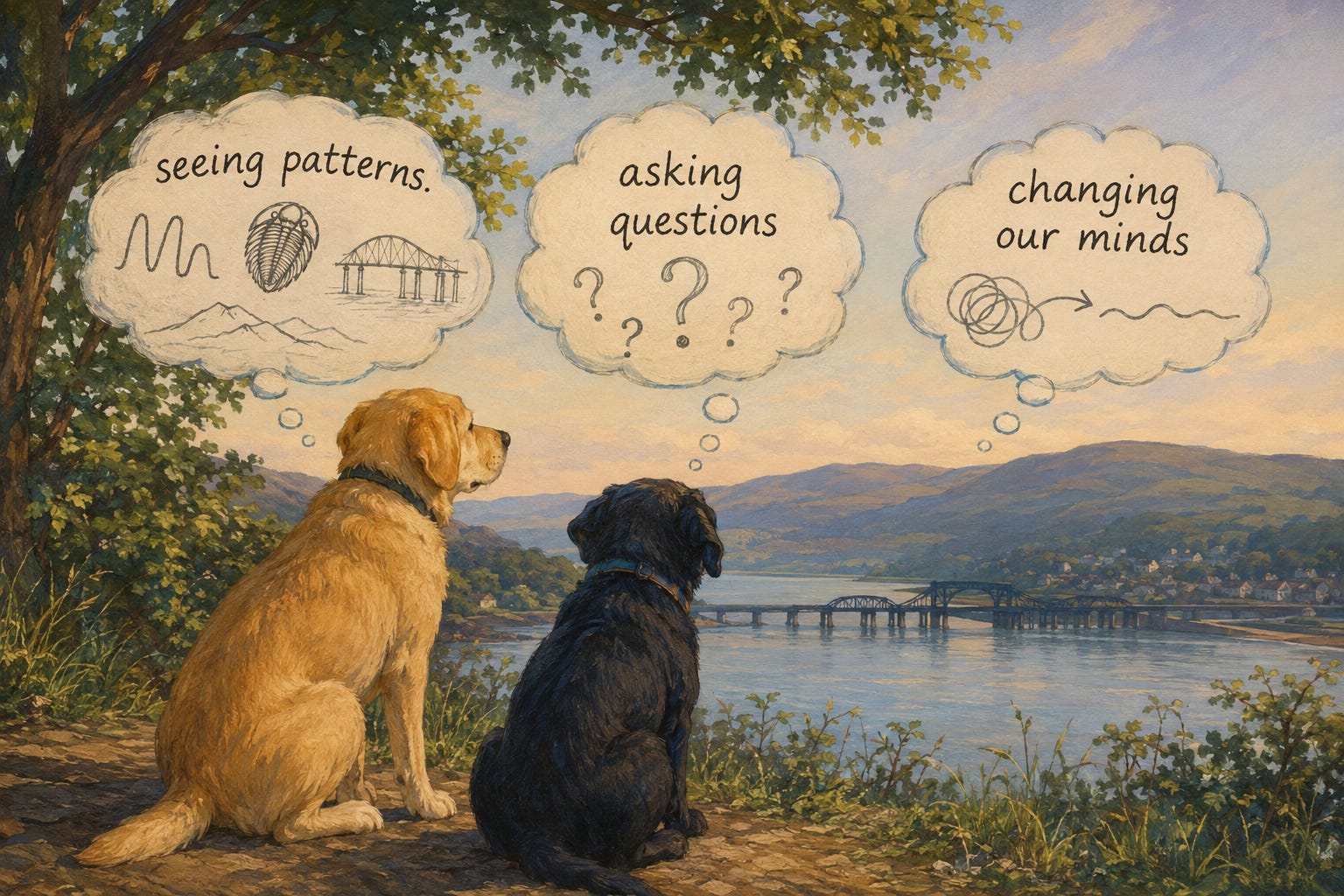
Billy listened carefully. “It was about learning to look.”
Billy thought about that.
“We kept seeing patterns.”
“Yes.”
“We kept asking questions.”
“Yes.”
“We kept changing our minds.”
“Exactly.”
Mr Rogers smiled. “That’s what good detectives do.”
For a little while they simply watched the estuary. A heron flew slowly across the mudflats. The evening train could be heard somewhere in the distance. Billy suddenly smiled. “I’ve just thought of something.”
Mr Rogers raised an eyebrow.
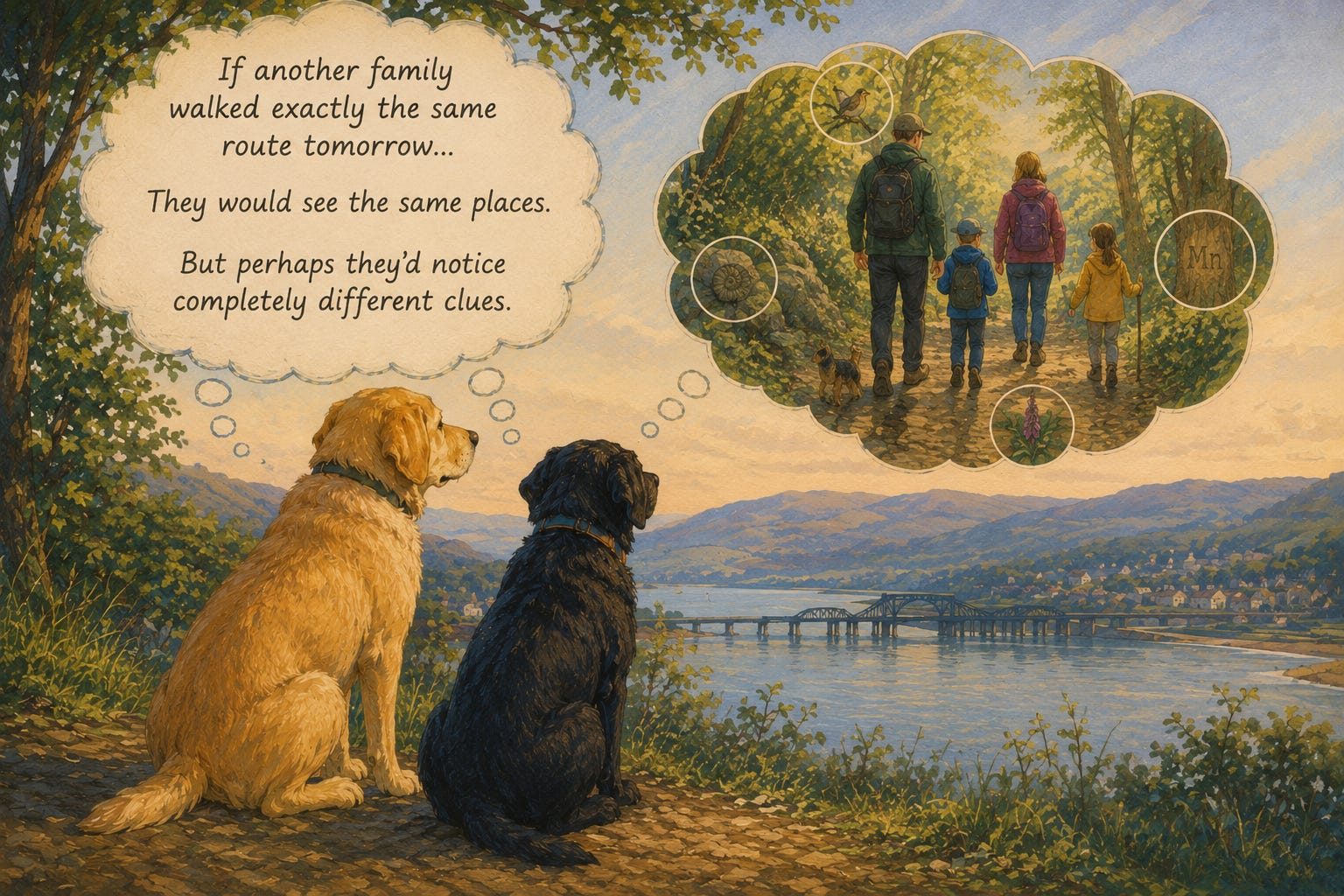
“If another family walked exactly the same route tomorrow... They would see the same places. But perhaps...” Billy continued, “...they’d notice completely different clues.”
Mr Rogers’ face lit up. “I think you’ve understood the most important lesson of all.”
Just then the train rolled gently into the station. Billy and Spud climbed aboard beside Mr Rogers. As the train crossed the great wooden viaduct, Billy looked back through the window. The Panorama ridge stretched peacefully above the estuary.
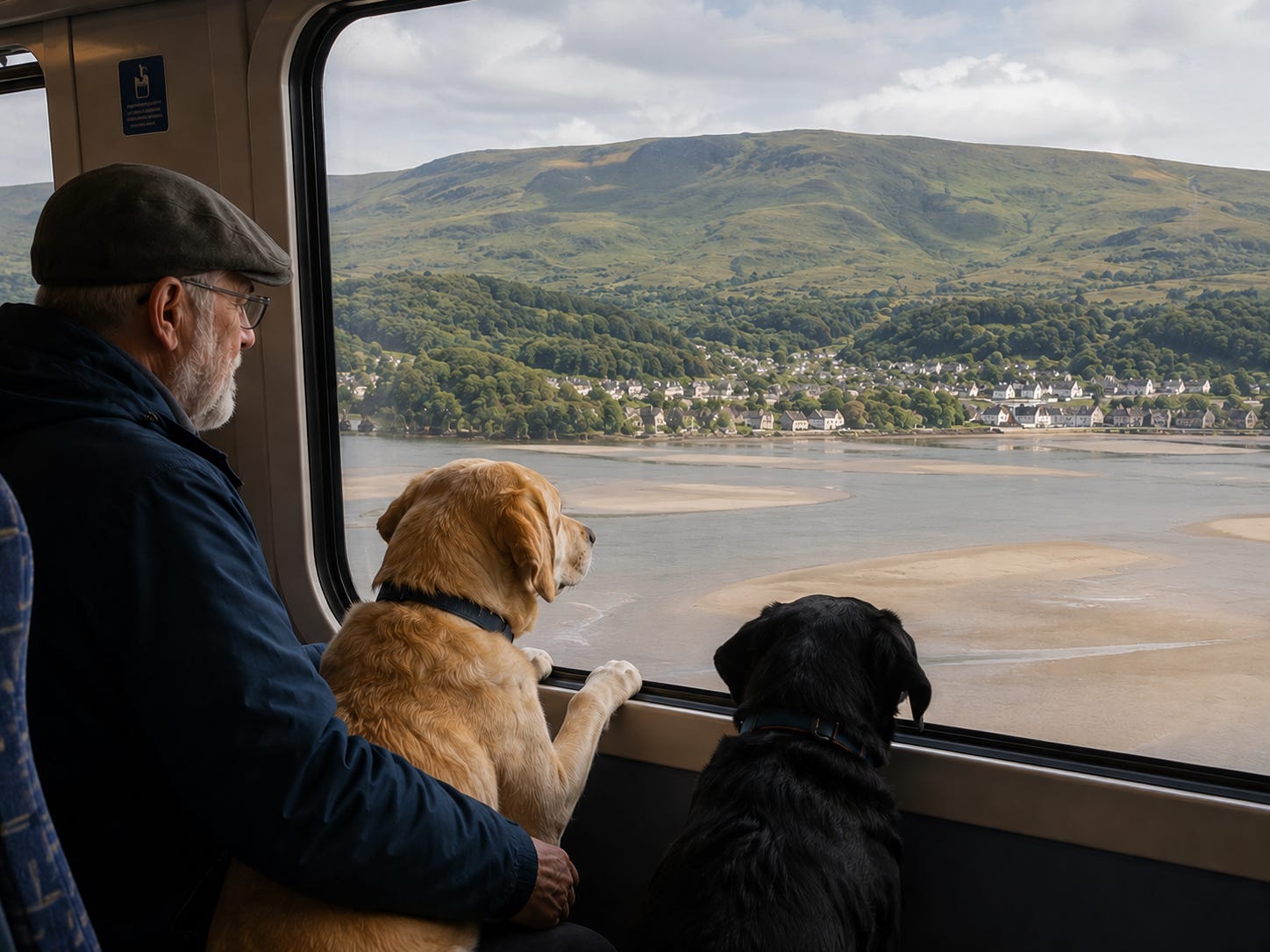
From this distance it was impossible to make out the sheepfold. Or the wagon. Or the standing stones. Or the little mine workings.
But Billy knew they were all still there.
Quietly waiting... for the next detectives to come looking.
Comments
Nothing yet. Say the first thing.
Sign in to join the conversation.