
The wind swept low over the rough track, winding its way from Cors-y-Gedol toward Dolgellau. It wasn’t much of a road… just a stony path threading through the wild Rhinogydd.
Spud hopped from rock to rock. “This is a road?!”
Billy followed more carefully. “Mr. Rogers said this is the old route over the Rhinog mountains. People really used to travel this way.”
They soon reached a narrow stone bridge, arched over a tumbling stream.
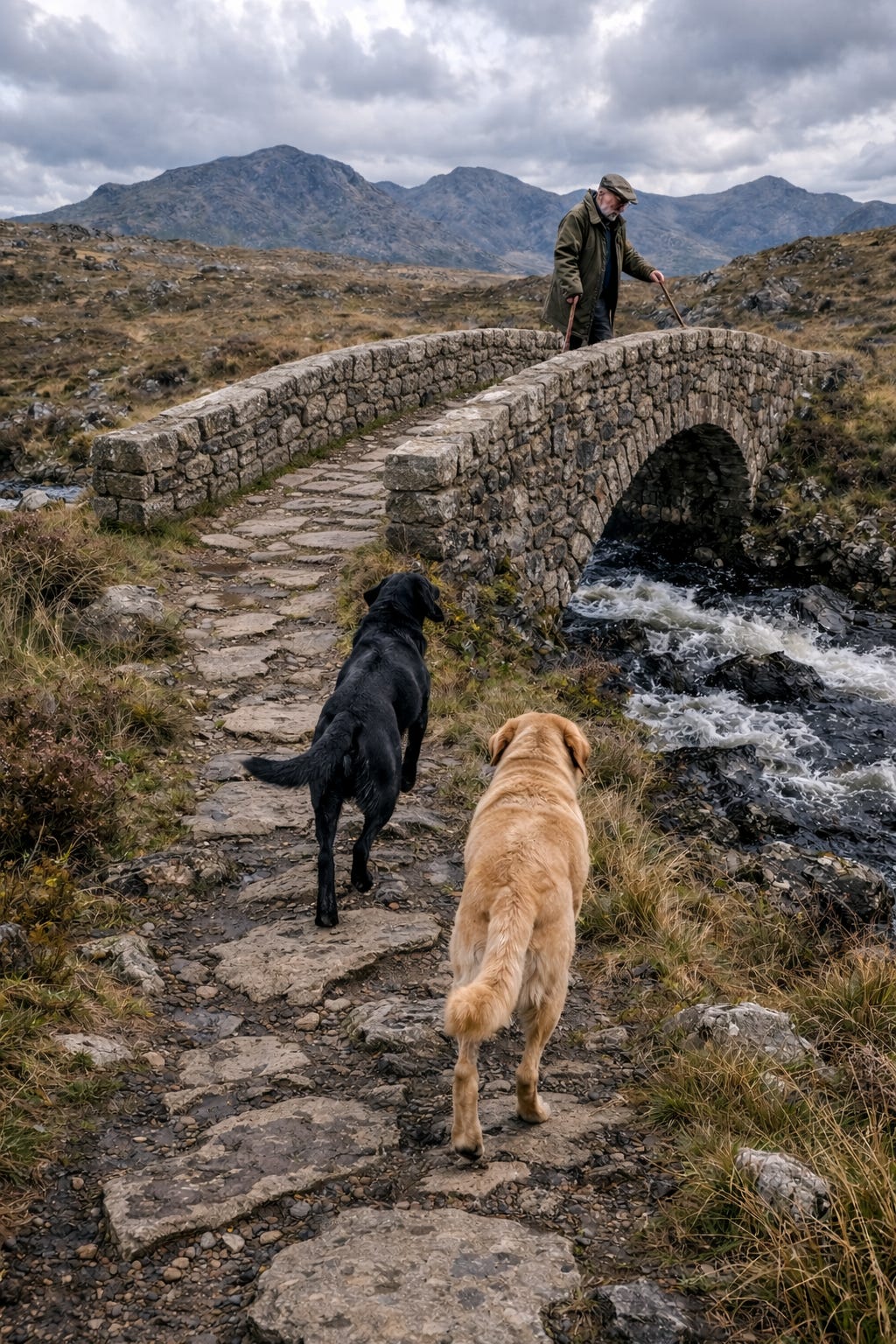
Spud peered over the edge. “Whoa… that’s a long way down.”
Mr. Rogers was already there, tapping the bridge with his stick.
“Pont Scethin,” he said. “And one of the most important clues in our mystery.”
“Indeed, this route was used by all sorts of people. Villagers would walk this way to go to market in Dolgellau; drovers would drive huge herds of cattle along here, too, to get them to market in the big towns, far away, like Shrewsbury.
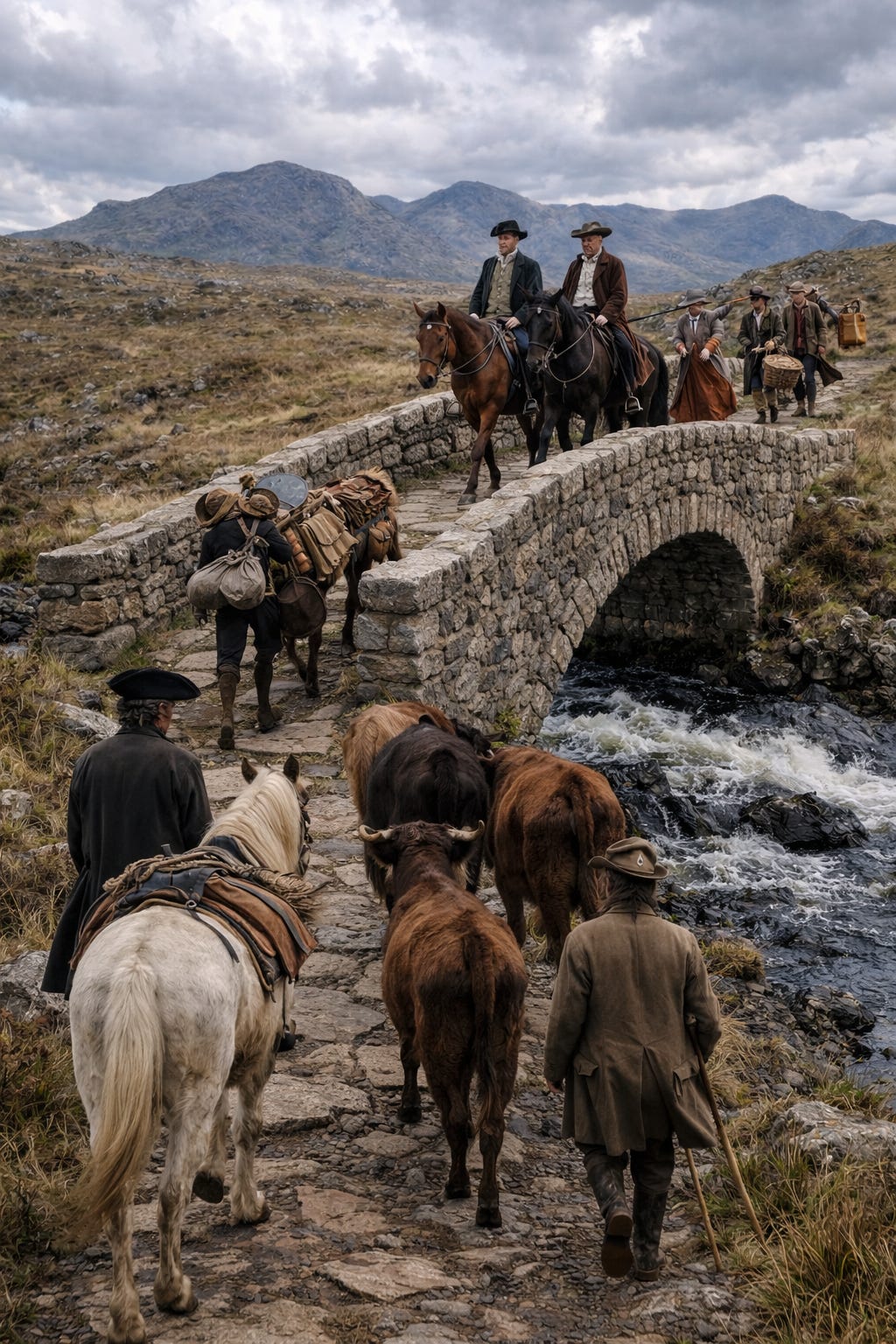
Tinkers and peddlers would come this way, bringing things to sell to the villagers. Even rich and important people would need to travel this way, like the MP Richard Vaughan, who would journey from his big mansion house to do business and go to meetings in London.”
“I’ve been thinking about Richard Vaughan,” Billy said. “You called him an MP.”
Spud tilted her head. “What’s an MP?”
Mr. Rogers smiled. “It means he was chosen to travel all the way to London,” he said, “to speak for the people who lived here... people from this valley.”
Spud’s eyes widened. “So he was like… their voice?”
“Exactly,” said Mr. Rogers. “And that meant he had to make a very long journey.”
Spud looked back along the steep, rocky track. “So he had to cross this first?!”
“Richard Vaughan of Cors-y-Gedol,” Mr. Rogers began, “was said to be a very large man. He was so large, the story claims, that no horse could carry him over the mountains.”
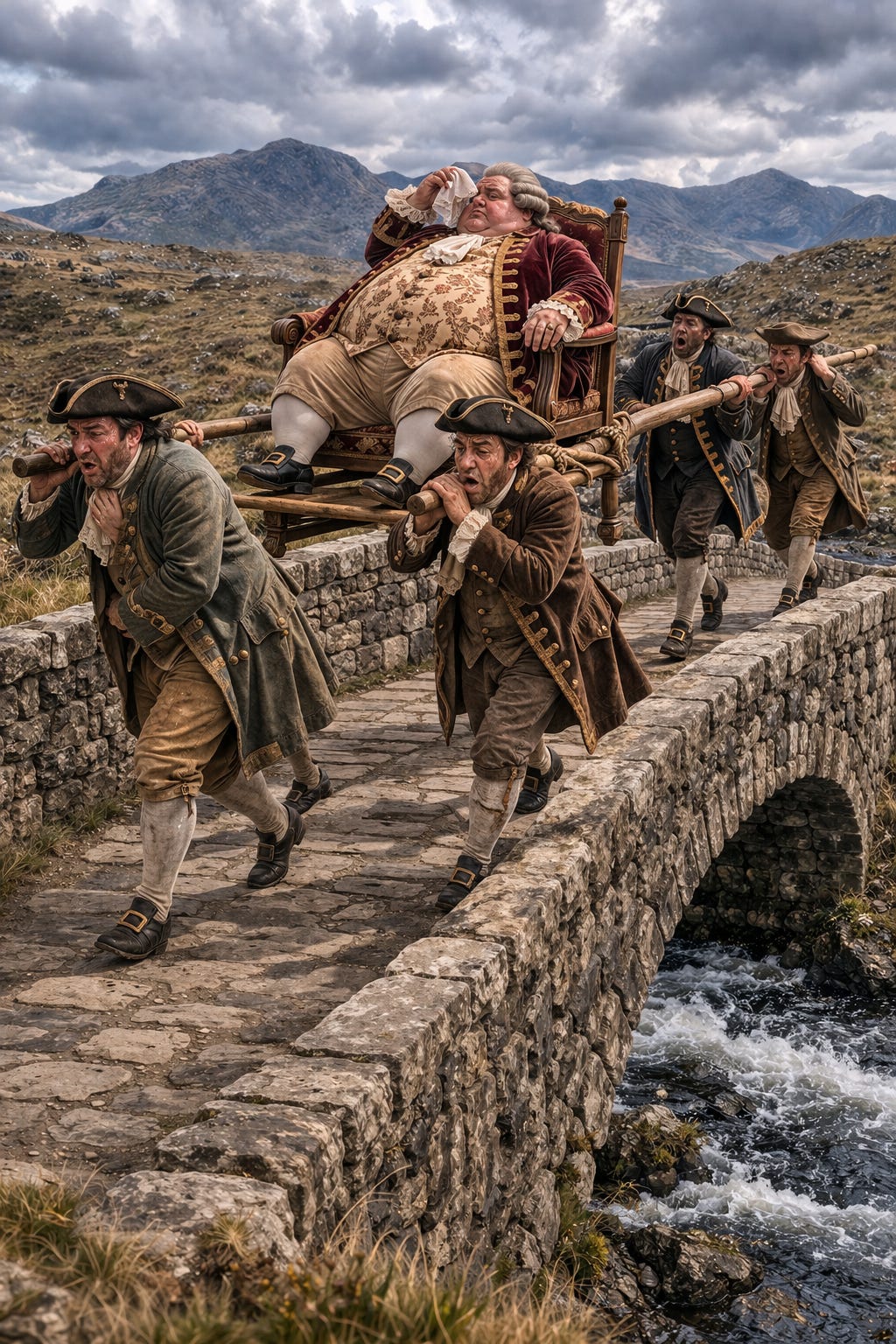
Spud grinned. “So they carried him in a chair!”
“That’s the tale,” said Mr. Rogers. “Over this very route, to Dolgellau, and then on towards London.”
Billy looked from the steep path… to the narrow bridge… and then down at the ground.
Billy paced carefully across Pont Scethin.
“This bridge,” he said, “is just about wide enough for a horse and trap… or a small cart.”
Spud’s ears shot up. “So wheels could get across here?!”
Mr. Rogers nodded. “It certainly seems so.”
Spud spun around. “Then why carry him? They could just roll him over!”
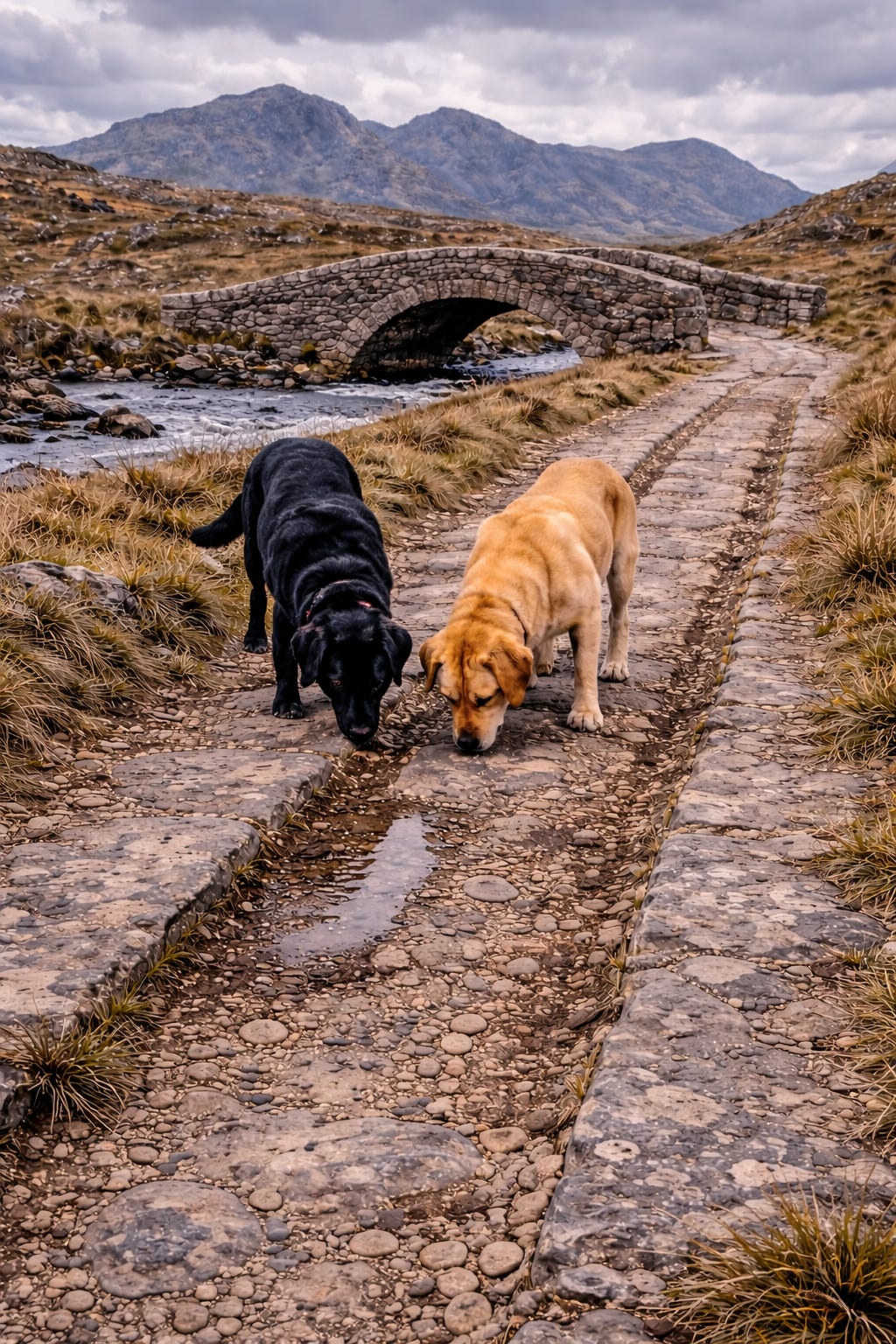
Billy didn’t answer straight away. He was studying the ground at the far side of the bridge
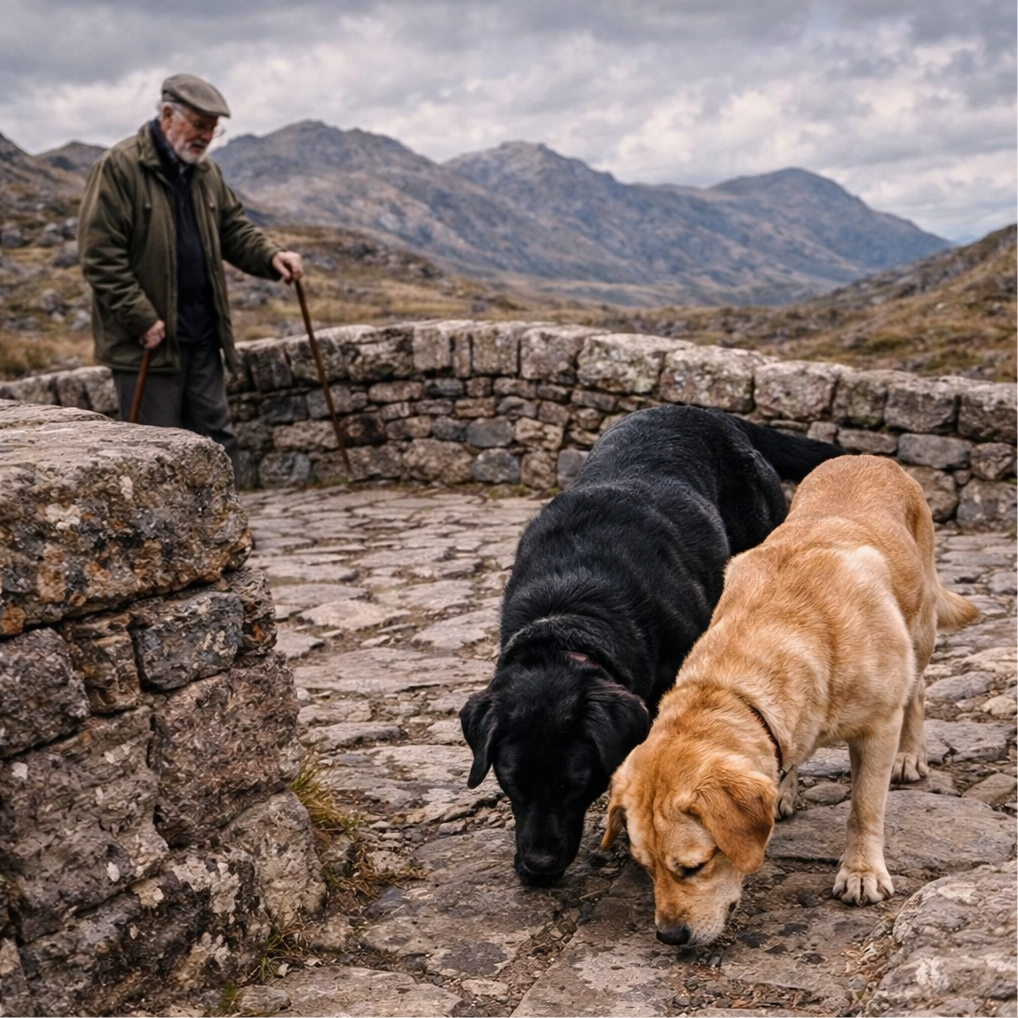
“Come and look at this,” Billy said quietly.
Two faint grooves ran along the track… parallel lines worn into the earth and stone.
Spud sniffed them. “Old tracks?”
“Cart ruts,” said Billy. “Left by wheels. And look… they’re evenly spaced.”
Mr. Rogers smiled. “Ah… now we come to another idea people like to talk about.”
Spud tilted her head. “What idea?”
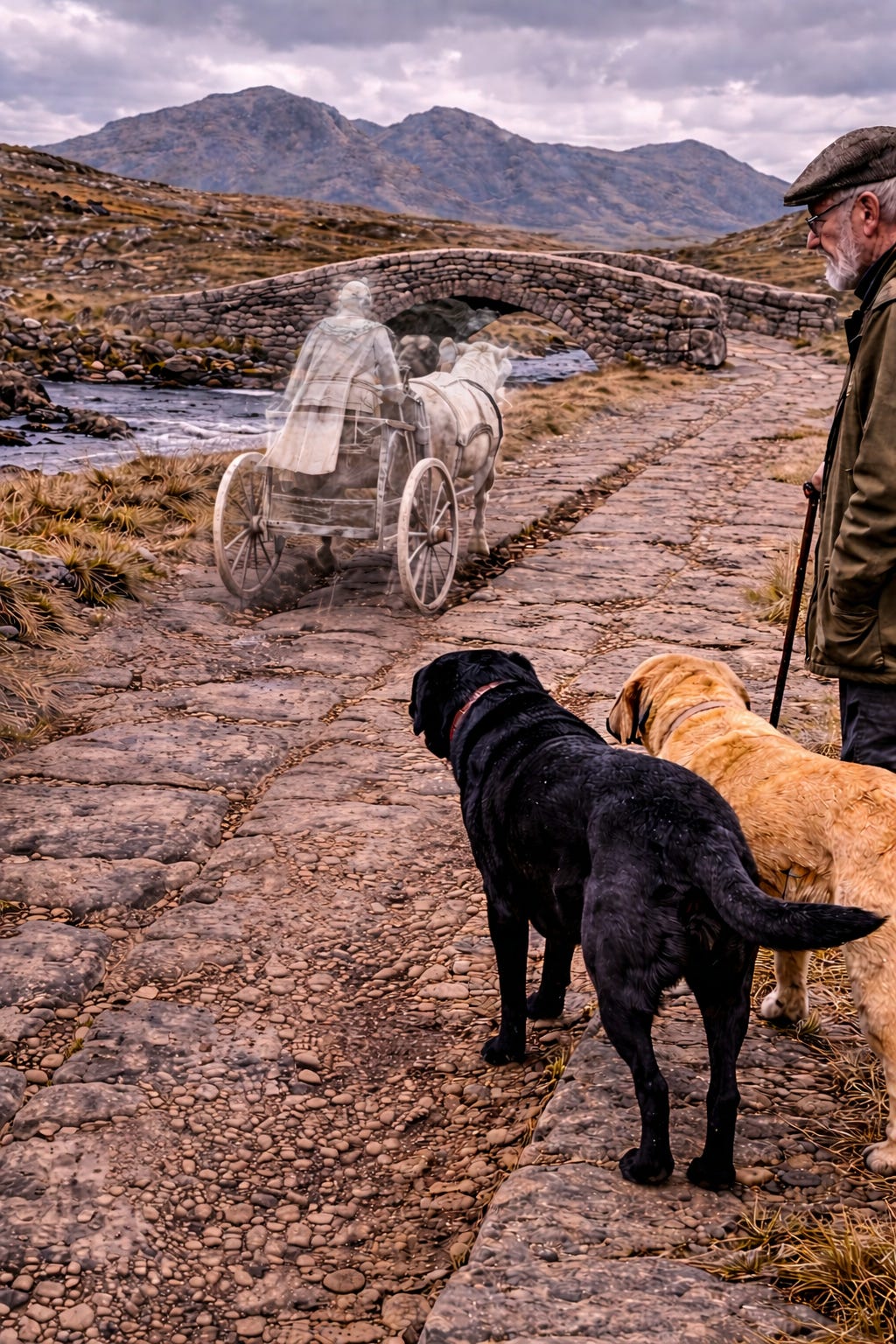
“That the spacing of these wheels,” said Mr. Rogers, “goes all the way back to Roman times.”
Spud’s eyes went wide. “Roman chariots came over here?!”
Billy sat down, thinking it through.
“If Romans had made roads here,” he said slowly, “and carts followed those roads… the ruts might set a pattern.”
“And then later carts would need to match that pattern,” Spud added, catching on.
“Exactly,” said Mr. Rogers. “Some say that became a kind of standard.”
Spud looked very impressed. “So this track could be following Roman measurements?”
Billy shook his head gently. “Maybe… but not necessarily.”
Billy stood and paced the width of the ruts.
“This route isn’t a built Roman road,” he said. “It’s rough and uneven. It’s more like a later track.”
Mr. Rogers nodded. “Quite right.”
“And wheel spacing,” Billy continued, “would naturally settle at a practical width. Just wide enough for stability, just narrow enough for tight paths.”
Spud added, “And once ruts form, everyone just follows them because it’s easier!”
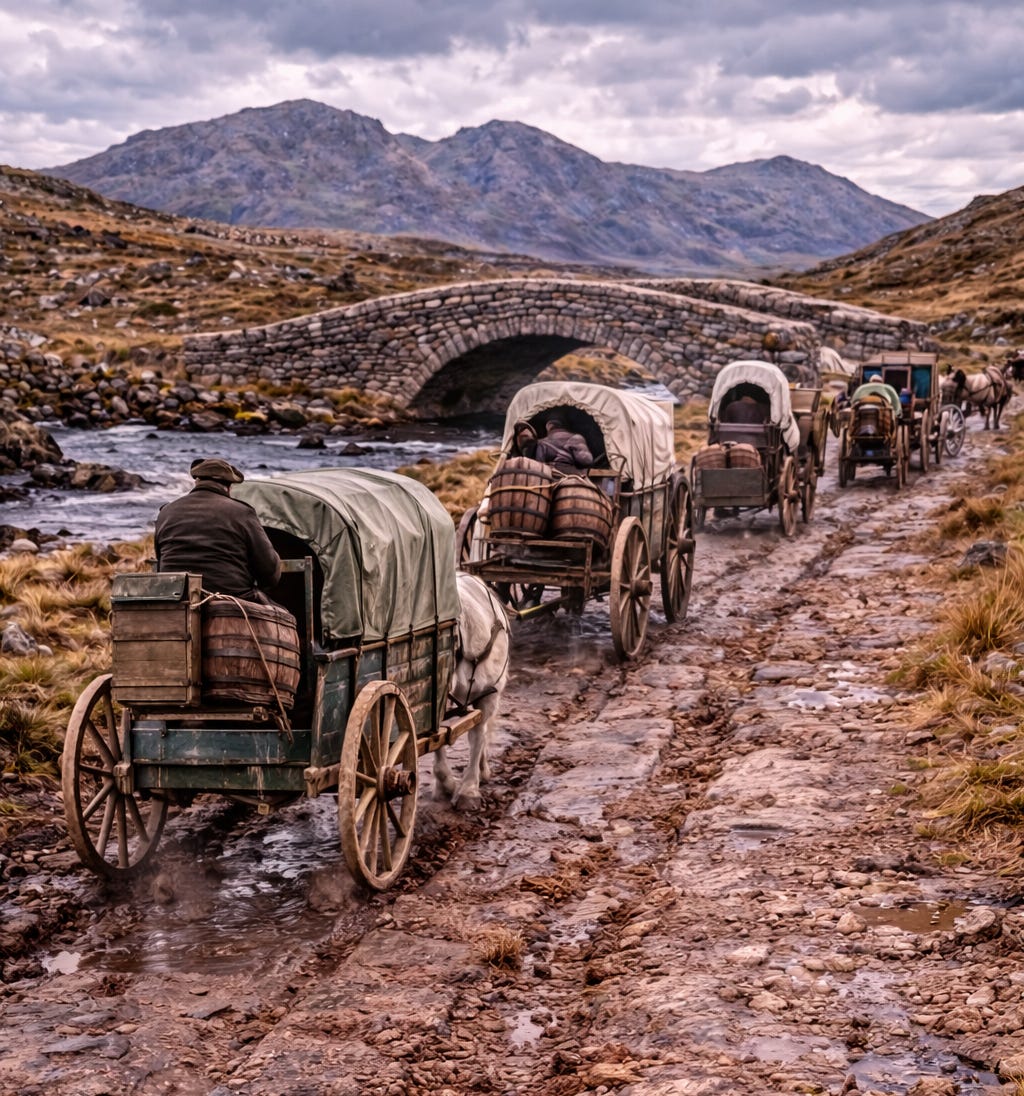
Billy smiled. “So instead of one ancient rule… it’s more like people adapting to what’s already there.”
Spud looked from the bridge… to the ruts… to the steep mountains beyond.
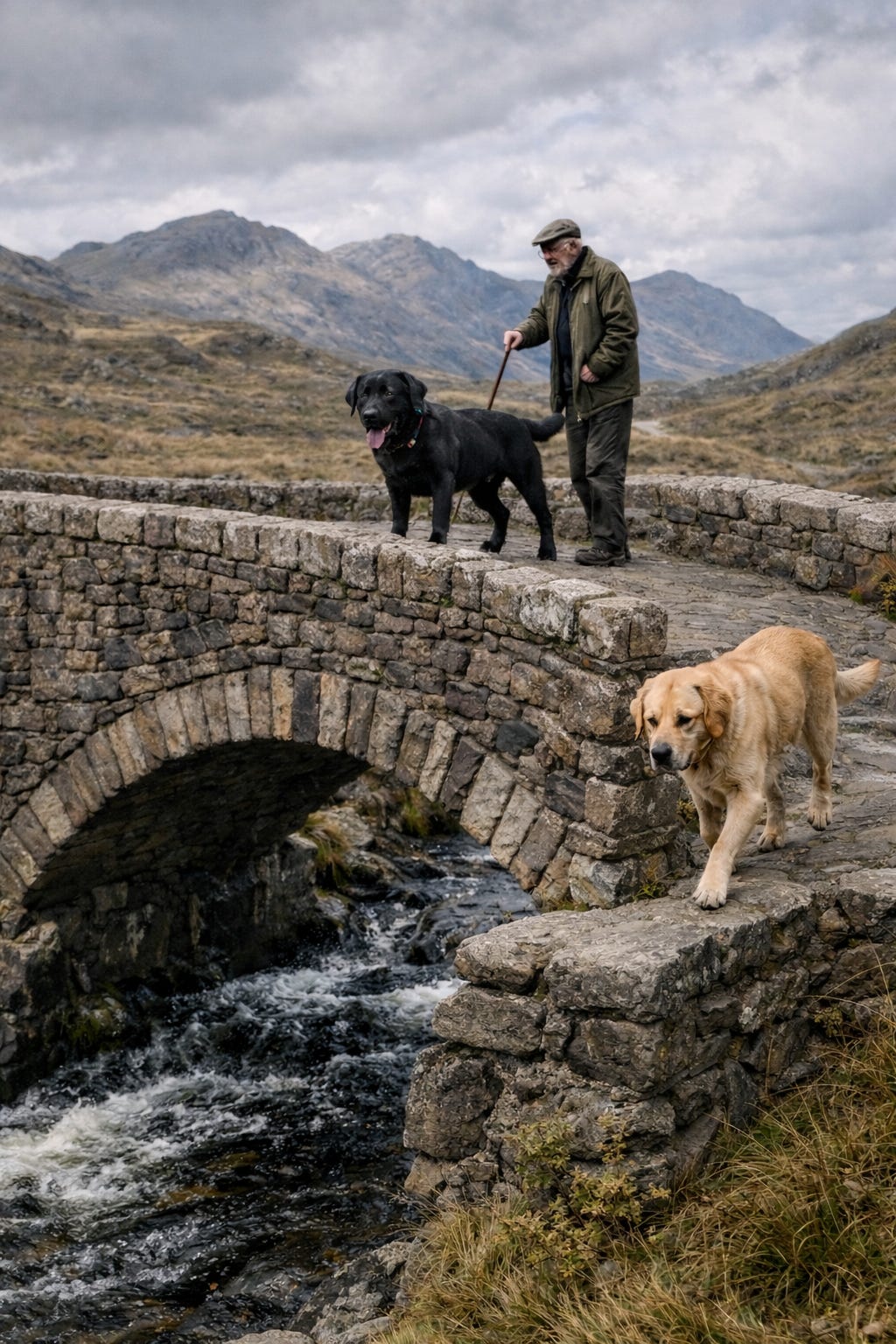
“So, there really was a Richard Vaughan?”
“Yes, he was probably a real landowner, from near here,” said Billy.
“And this was a real route people used,” Spud added.
“And horse-drawn carts could cross this bridge,” Billy said, “and their wheels left these ruts behind.”
Mr. Rogers gave a small nod. “All true.”
“But the idea of carrying a huge MP all the way over the Rhinogs…” Billy said.
“…that’s the part that grew into a great story!” Spud finished.
Spud grinned. “So we’ve got a bridge clue… a rut clue… and a Roman maybe-clue!”
Billy wagged his tail. “And they all tell us something real… if we look carefully.”
Mr. Rogers gazed out across the Rhinogydd. “That’s the beauty of these places. History isn’t always written down. Sometimes it’s worn into the ground beneath your feet.”
Spud bounded across Pont Scethin one more time.
“I still like the version where they had to carry him,” she called back. “With lots of puffing and swapping and complaining!”
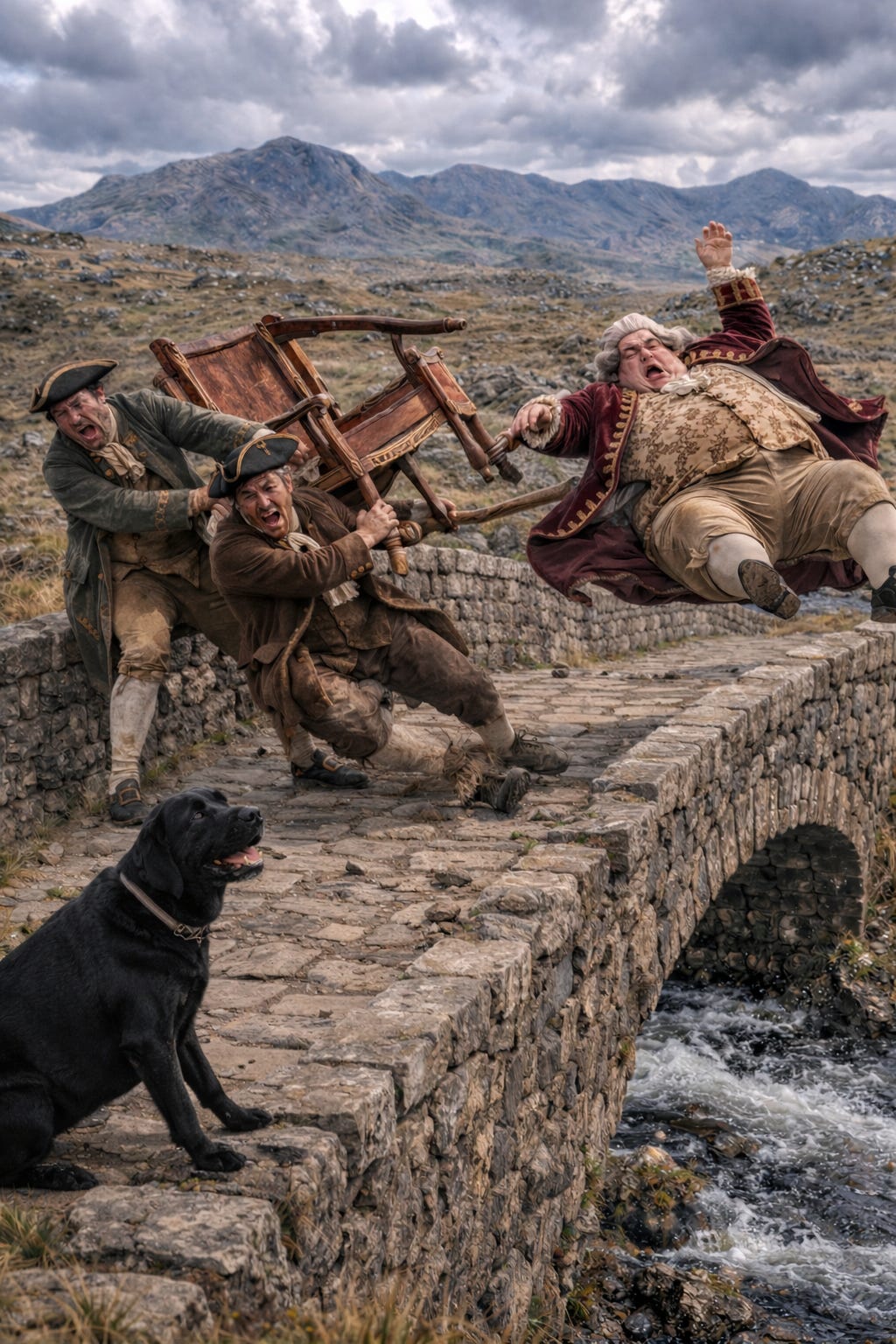
Billy laughed softly. “A good story always carries a bit extra.”
The stream rushed beneath the bridge, and the old track stretched on toward Dolgellau, its ruts, its stones, and its stories shaped by centuries of travellers, each leaving just enough behind for the next to wonder.
Several weeks later, our History Detectives came back along this same way. A grey mist clung thicker than usual to the Rhinogydd. Even the stream beneath Pont Scethin seemed quieter, as if it didn’t want to be heard.
Spud slowed her pace. “Billy… it feels different today.”
Billy nodded. “Remember the tale of the big, heavy chap who got carried across here by his servants, on a chair? Well, Mr. Rogers told me that there’s another version of the story.”
Spud swallowed. “Another version?”
They found Mr. Rogers standing by the bridge, more serious than before.
“You’ve heard the tale of Richard Vaughan being too heavy for a horse,” he said quietly. “Well, some people tell the tale with a darker ending…”
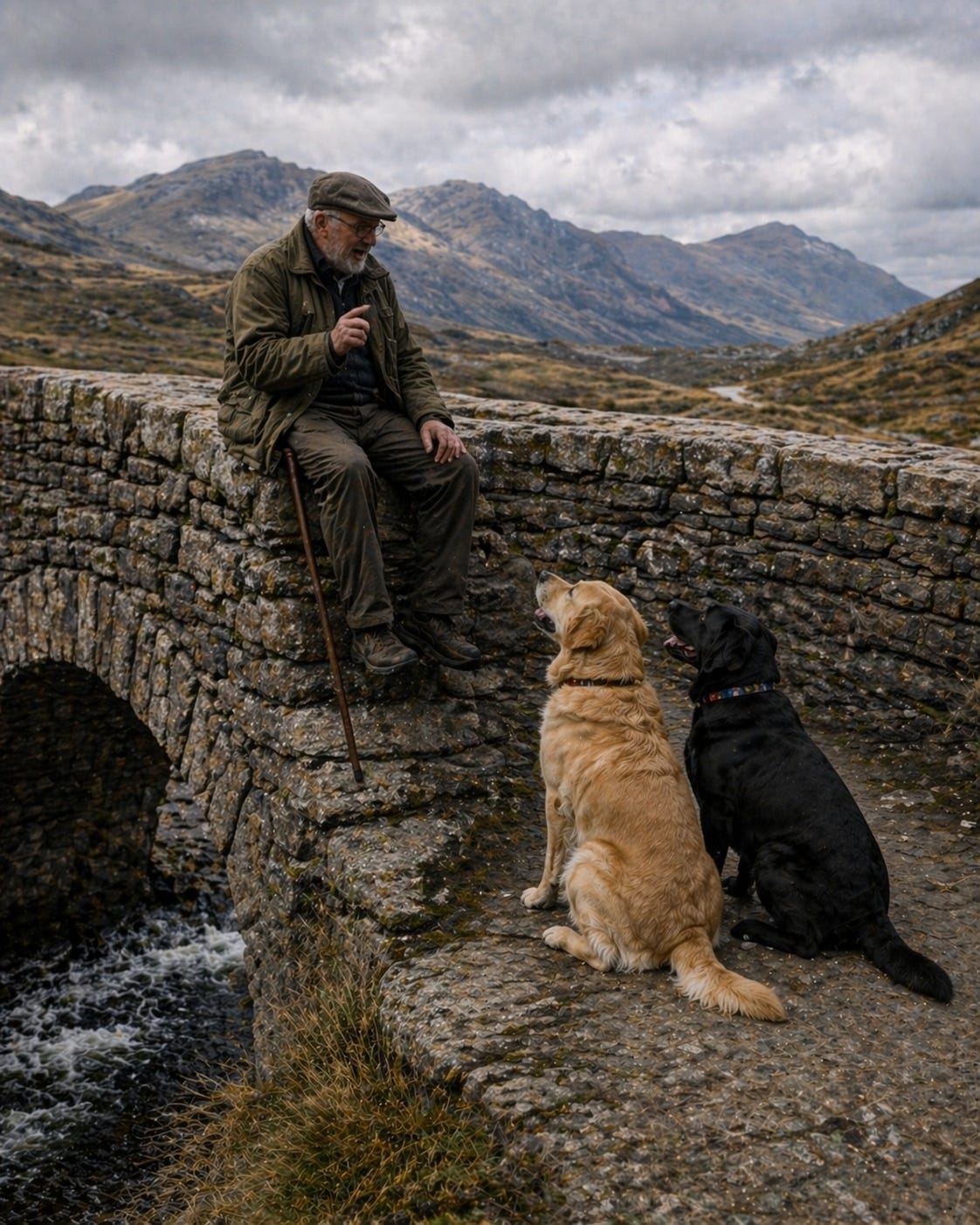
Spud’s tail stopped wagging. “How dark?”
Mr. Rogers glanced toward the misty slopes.
“They say,” he began, “that he did not live long. That he died young; perhaps not even thirty years old.”
Spud edged closer to Billy.
“And,” Mr. Rogers continued, “that someone tried to change his size… with a very early kind of surgery.”
Spud’s eyes widened. “Surgery?!”
“In those days,” said Mr. Rogers, “people did not understand the body as we do now. But the story claims that an attempt was made… to remove some of his weight.”
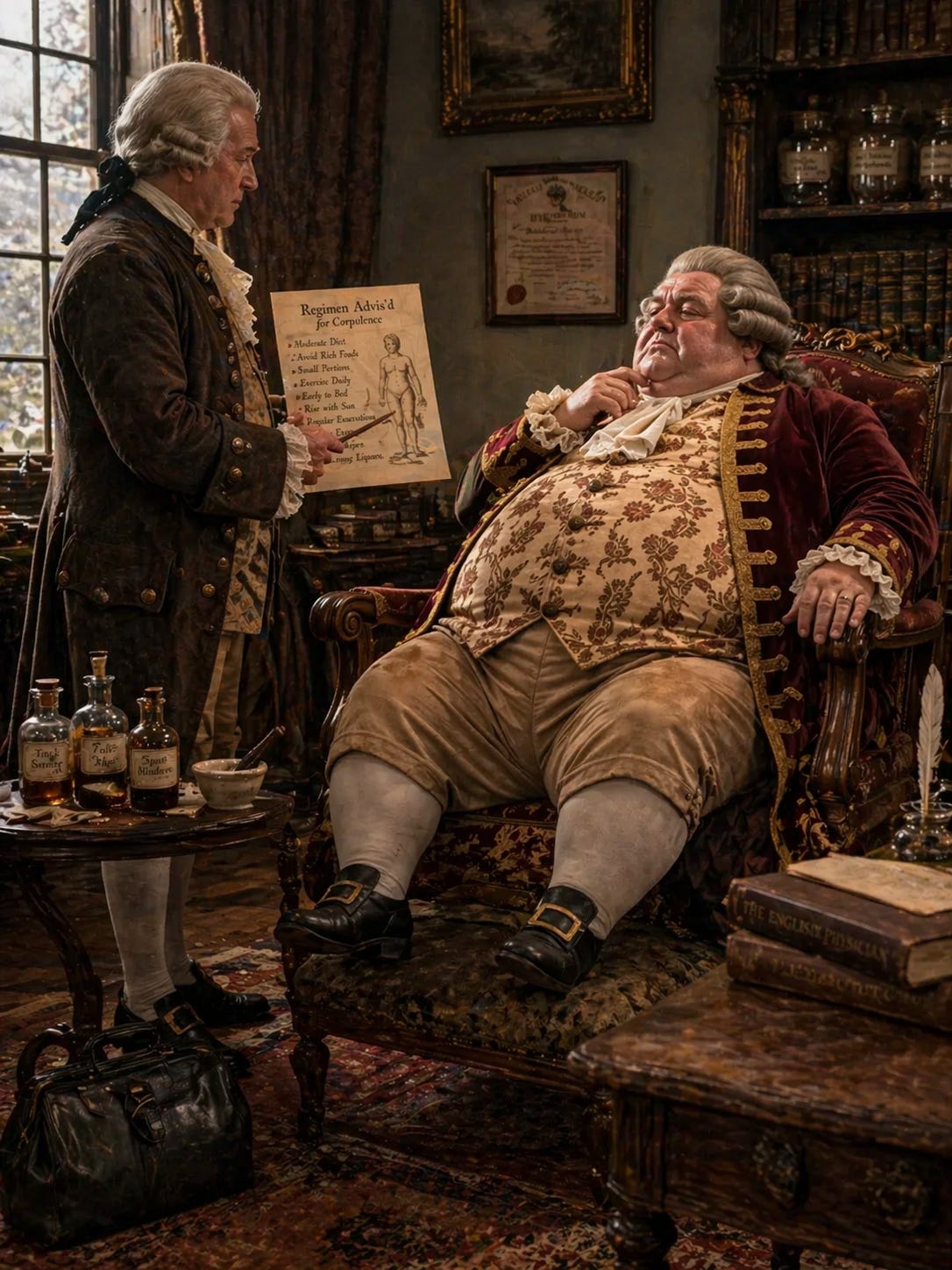
Spud shuddered. “That sounds like a terrible idea.”
Billy’s ears tilted back slightly. “And very dangerous.”
“They say,” Mr. Rogers went on, “that the attempt failed… and that is how he died.”
The wind moved softly across the stones of the bridge.
Spud looked around nervously. “So… he was carried over the mountains… and then…”
He gulped. “…that happened?
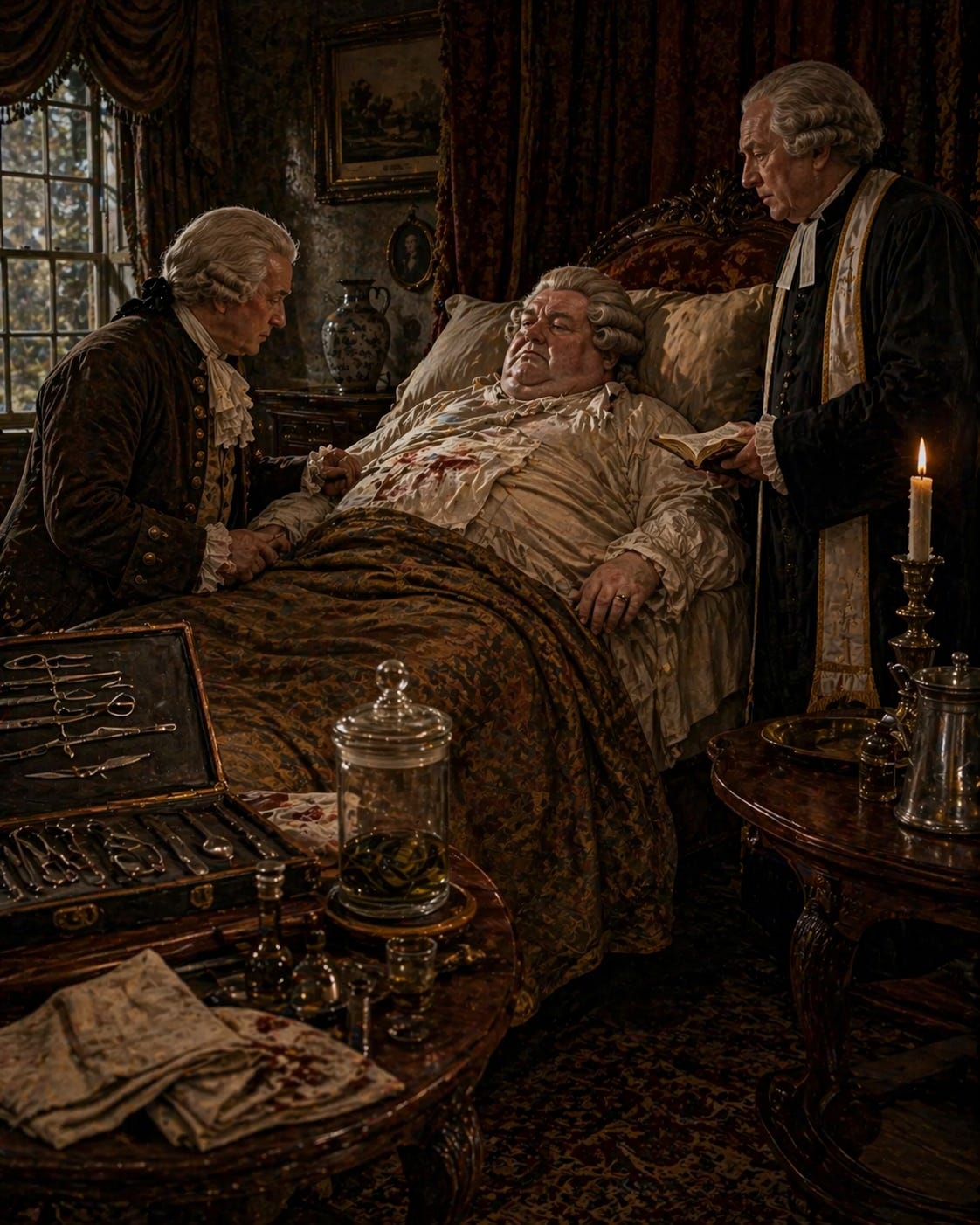
Billy placed a steady paw on the ground. “Let’s think this through…”
“Travelling all the way to London on horseback was difficult, especially for a huge man with a weight problem. Perhaps he believed that his doctors could safely remove some of his weight? “
Spud shuddered, at the thought. “But it sounds so real! And so horrible!”
Billy sat down, calm as ever.
“In the 18th and early 19th centuries,” Mr Rogers said, “surgery was extremely limited.”
“No proper pain relief,” Billy suggested.
“And no real understanding of infection,” Mr Rogers continued. “Even simple operations were risky. Doctors were still learning all sorts of new ways to try to cure people with medical problems.”
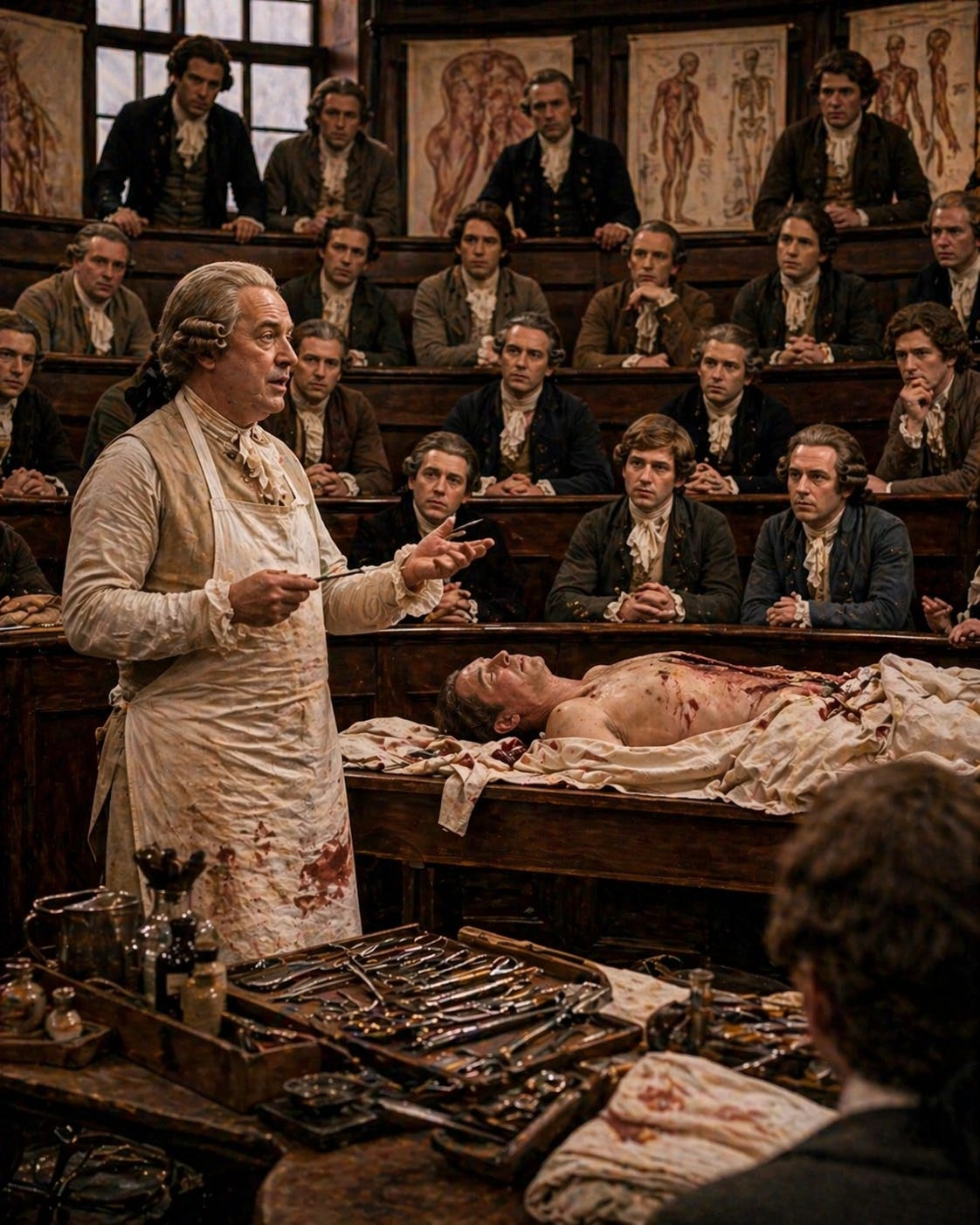
”Spud blinked. “So something like… removing weight…”
“…would not have been a known or safe procedure,” Billy said.
Mr. Rogers nodded. “True. However, there are no reliable records of such an operation on Richard Vaughan, or on anyone like him here.”
“But it did make an interesting twist to the story”, thought Billy.
Spud’s ears slowly lifted again. “So… what is true?”
Billy answered gently.
“There may have been a real Vaughan. He may even have died young.”
“And people don’t always know, or remember, the real reason,” Mr. Rogers said.
“So they make one up?” Spud asked.
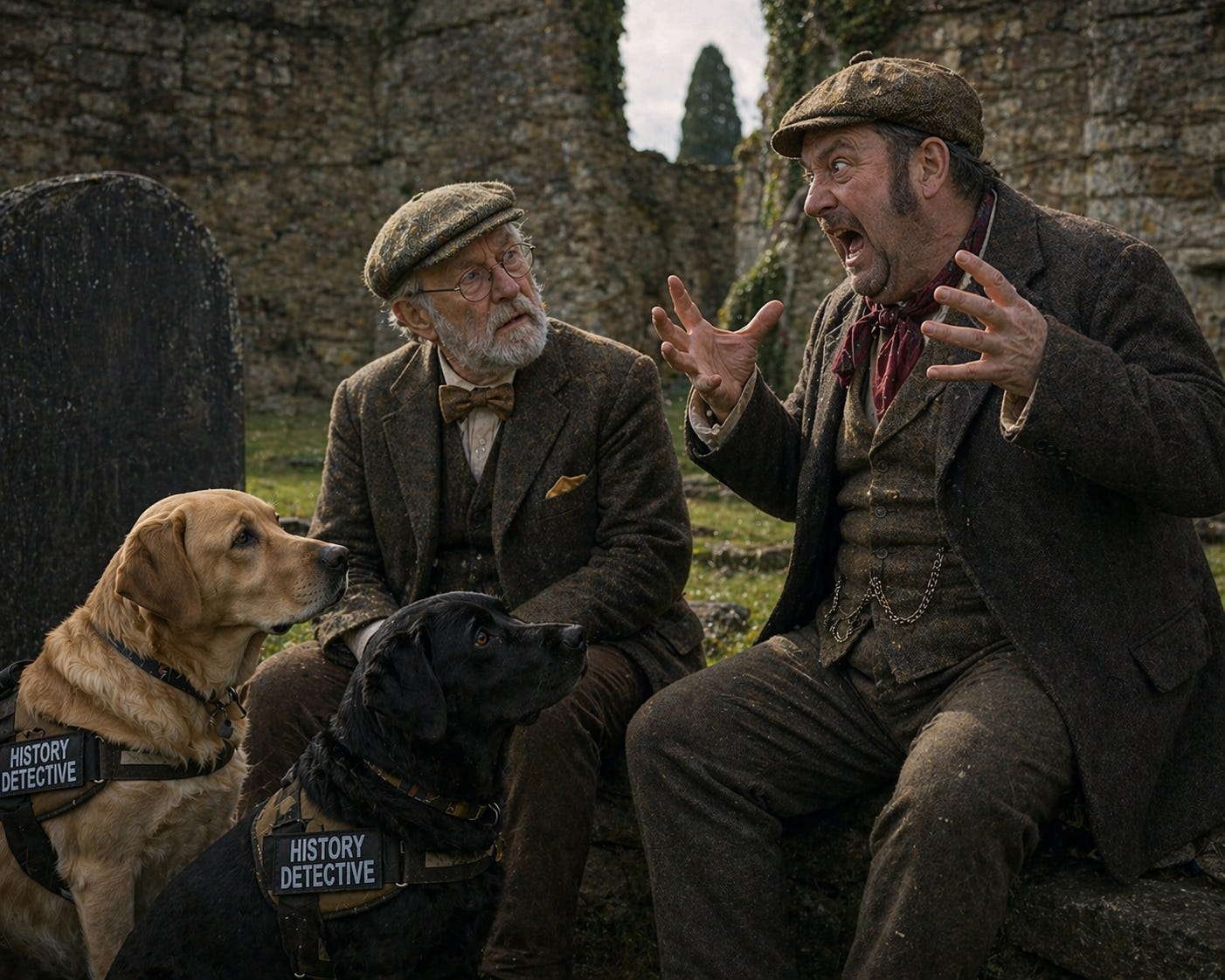
.“Sometimes,” said Billy, “they make it more dramatic. Or more frightening.”
Spud looked back at the ruts in the track, then at the narrow bridge.
“So the road is real… the bridge is real… the family is real…”
“But the story,” Billy said, “changes each time it’s told.”
Mr. Rogers gave a small smile. “Just like Eifion’s tales in the woods.”
Spud gave a nervous laugh. “Yeah… except this one’s a bit more… squirmy.”
The mist began to lift slightly, and the mountains returned to their usual quiet presence.
Spud trotted across Pont Scethin, a little faster than before.
“Billy,” she called back, “next time can we investigate something less… gory?”
Billy smiled. “We’ll follow the trail wherever it leads.”
Spud paused, then added, “Even if the stories get a bit… sliced up?”
Billy groaned softly. “Spud…”
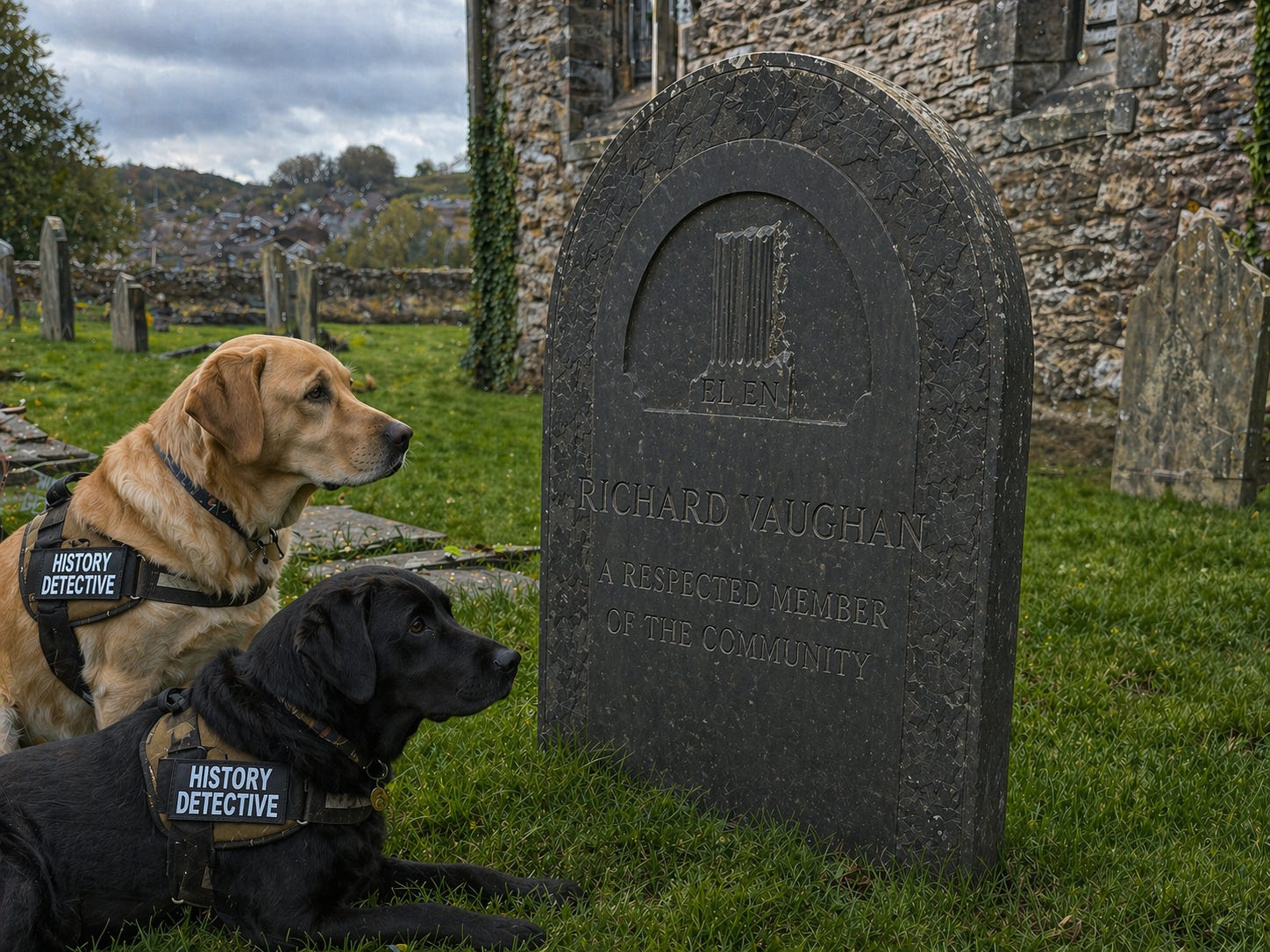
And somewhere in the Rhinogydd, the wind carried both laughter and whispers, reminding them that some stories grow not just from truth, but from imagination running a little too far into the dark.
Comments
Nothing yet. Say the first thing.
Sign in to join the conversation.