
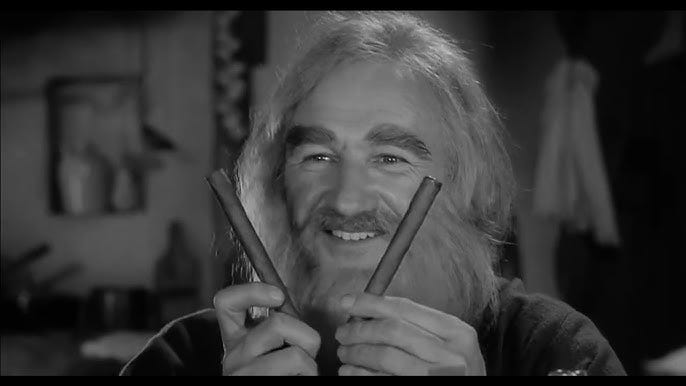
A major weakness of contemporary entertainment is the sameness of it all. Reflecting on this, I was reminded of the “Walk This Way” scene in 1974’s “Young Frankenstein.” It wasn’t an original bit by Marty Feldman as Igor or even in Mel Brooks’s script. But it had staying power in the culture, rather than being heard and forgotten the moment audiences left the theater.
The movies and TV shows cranked out today tend to be stripped down and boring; everything feels too scripted, rote, and soulless. They have no more life in them than the corpse Dr. Frankenstein exhumes for his reanimation experiment and don’t capture lightning in a bottle the way “Young Frankenstein” did.
The 1974 film, by contrast, brought together people who pushed every element to its maximum potential by instinct. You had a genius in Brooks directing and sharing writing duty with Gene Wilder as the titular scientist. A stellar cast featured Peter Boyle, Madeline Kahn, Marty Feldman, Kenneth Mars, Terri Garr, and Cloris Leachman.
Gene Hackman was so memorable that it takes a beat to recall that he only had one scene. He heard about the film and requested to be in it, and the only role available was that small one of the blind man. His final line as Boyle’s monster runs off, “I was going to make expresso,” was ad-libbed, and caused such laughter on set that the scene had to be clipped with a quick edit.
If you walked into a dinner party featuring Brooks and his team, what might your reaction be? Something from William F. Buckley comes to mind. Asked at a National Press Club luncheon what he would say to Winston Churchill if he could have him for an evening. “I would say,” he replied, “‘Please talk non-stop.'”
In December, I wrote a column for the New York Sun, “Mel Brooks’s Monster Comedy Classic, ‘Young Frankenstein,’ at 50, Shows No Signs of Aging.” My challenge was not to rehash IMDB trivia, to look at the film with fresh eyes — and the use of eyes and looks, especially for Boyle’s mute monster, became my theme.
Like any great art, you see something new in “Young Frankenstein” even after you’ve seen it 100 times. It stays the same, but you change, and so does your perspective. One of the things that surprises people, at least before the internet allowed us to dig into the bones of everything, is that Aerosmith’s 1975 single, “Walk This Way,” was inspired by Feldman’s performance.
The story behind the bit is found in “Marty Feldman: The Biography of a Comic Legend,” by Robert Ross. In it, the author quotes Wilder describing Brooks as a director who’d “pull on the reins” if actors weren’t doing what he wanted, “and if he wanted more, he would start tugging.”
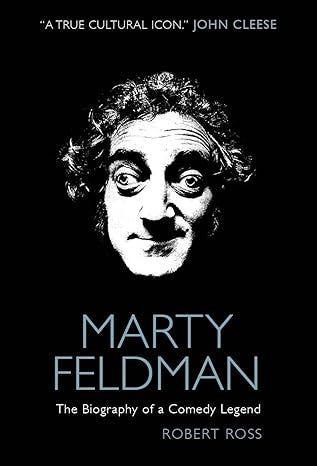
Feldman, Wilder said, “didn't respond well to the tugging. I'm not saying there was anger but as soon as the reins were loosened Marty would respond like anyone with freedom.” It was Feldman’s first Hollywood movie, and he was terrified by the prospect of working with Brooks, never mind sharing the stage with his co-stars. He described himself as “forced ... to be Stan Laurel because” Wilder’s “timing was so like Oliver Hardy.”
The scene where Igor meets Dr. Frankenstein at the Transylvania Station, Feldman recalled, was a “very cold” night and he was “very scared.” He “sort of adlibbed,” after saying, “Walk this way,” handing Dr. Frankenstein his walking stick and saying, “this way,” and exaggerating his hunched-over gait — a literal interpretation of the words.
“It's a terribly old music hall joke,” Feldman said. “I did that to make the crew laugh and Mel Brooks said, 'Let's shoot it.’ I said, 'Mel you can't. It's an old joke!' and Mel said, 'I want to shoot it!' So we did it, and we did it the other way without that joke and afterwards Gene said to me, 'Are you going to tell Mel to take that joke out? It's terrible.'”
“‘Well, I don't want it in,’” Feldman replied, feeling that tug from Brooks. “You tell him. You wrote the script.' We both said, 'Mel, please take that out,' and he left it in. He said, 'I think it's funny.' Audiences laugh at it. Gene and I were both wrong; Mel was right.”
The circle of mutual respect made the process effortless, with the actors deferring to their director who recognized they’d hit on something even if they didn’t. Brooks didn’t allow actors to improv dialogue on the set, but he did welcome physical pantomimes, which goes back to all those eye movements I discussed in my column.
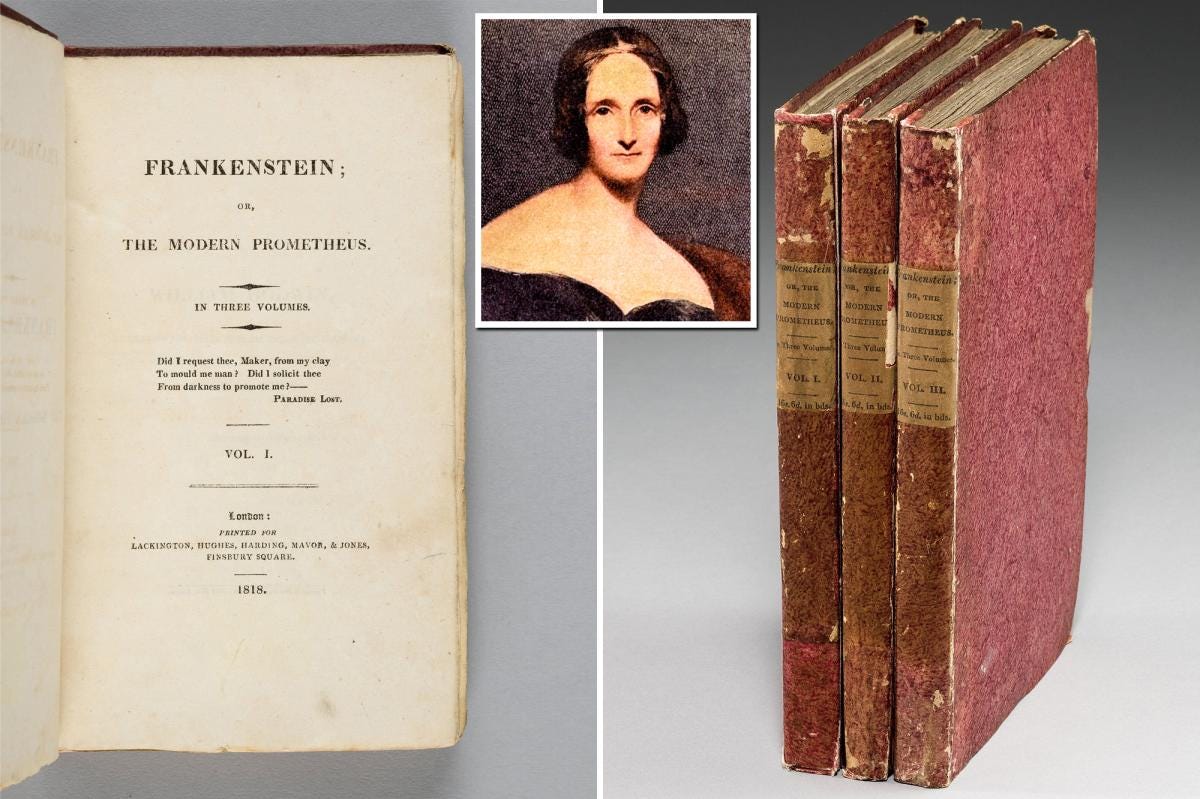
That “walk this way” was an old joke, and that the movie itself was based on Mary Shelly’s 1818 novel, “Frankenstein” — also known as “The Modern Prometheus,” referring to the tale of Greek mythology where the Titan, Prometheus, stole fire from the gods and gave it to humanity — makes the story an even better lesson for a Hollywood obsessed with metaphorical graverobbing of the past without adding anything new to the originals.
Unlike contemporary films strip-mining and deconstructing the past, “Young Frankenstein” built on that “terribly old” joke and “reimagined” what was then a 156-year-old novel to create something iconic. Enter Aerosmith, suffering from a bit of writer’s block at the halfway point of their album, “Toys in the Attic.”
The band members and their producer, Jack Douglas, headed to a Times Square theater to watch “Young Frankenstein,” and they were still laughing about Feldman’s gag when they got back to the studio. Douglas suggested it as the title for an unnamed song they’d been kicking around. They needed lyrics, and Steven Tyler took up the task at their hotel that night.
Unfortunately, the band was heavily into drugs and booze at the time. They’d later hit rock bottom far from Times Square’s lights in Manhattan’s Alphabet City. To give you an idea what that neighborhood was like, I recall once driving a DJ friend of mine and all his equipment there for a gig in my Ford Ranger pickup.
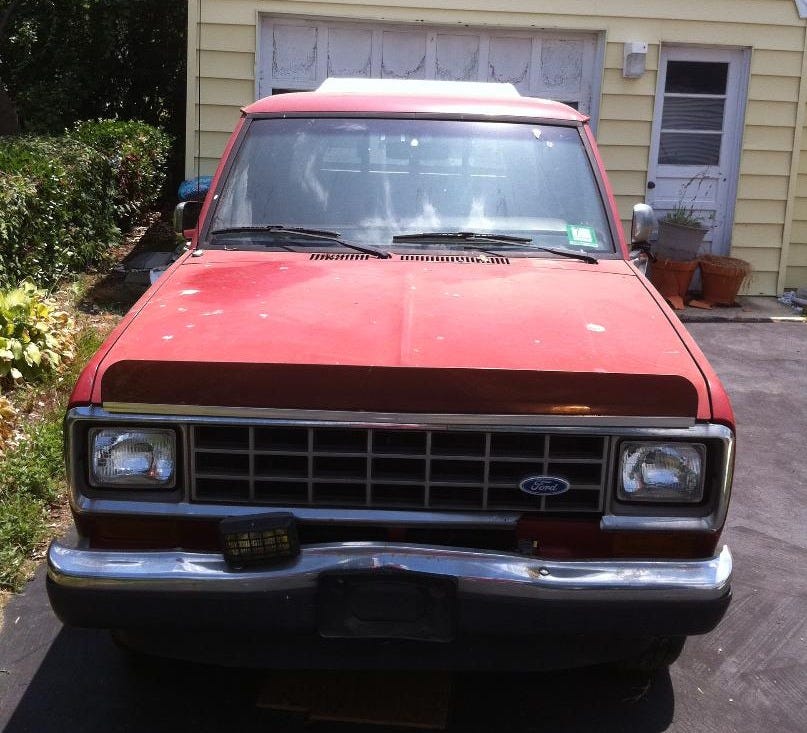
This was the late 1980s but not much had changed. I sat in the driver’s seat while my friend performed, and no less than three people eyed the truck, these being the days when you had removable faces on radios — or, failing that, would tear the thing out and put a sign in the window that said, “NO RADIO.” There were needles strewn in the gutters. Fortunately, my Goodyear Aquatread tires remained unpunctured and bolted to my rotors.
This was the place Tyler was headed when he lost the lyrics his cab ride back to the studio to present them to the band. "I must have been stoned,” he recalled upon realizing what had happened. “All the blood drained out of my face, but no one believed me. They thought I never got around to writing them."
Tyler took cassette recorder — as was the style at the time — with the instrumental track of the untitled song, "grabbed a few No. 2 pencils," as was also the style, and stole off to a stairwell. I didn’t mention paper because he forgot that, too. But the writer’s muse, having returned, was not to be denied. Too embarrassed to go back before his task was completed, Tyler spent a few hours scribbling the lyrics on a wall, returning later to copy them on a yellow legal pad.
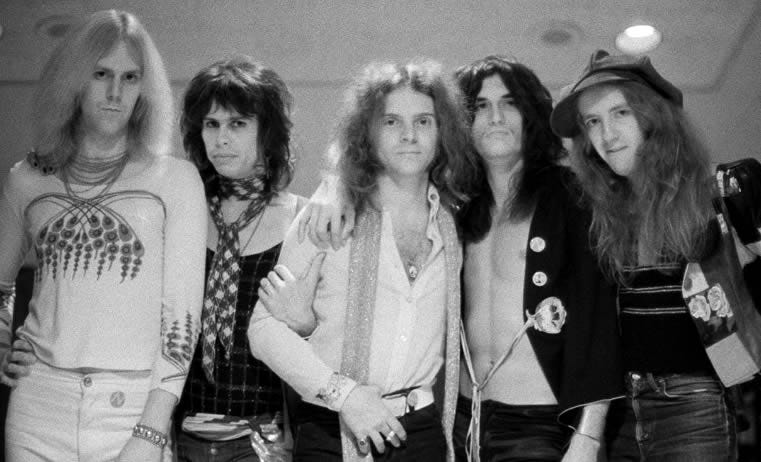
Guitarist Joe Perry pronounced the lyrics “great.” He noted that Tyler, drawing on his skills as a drummer, "likes to use words as a percussion element." That would come in handy later when the rappers Run-DMC heard the song. “The words have to tell a story,” Perry said, “but for Steven, they also have to have a bouncy feel for flow.”
Tyler, Perry said, “searches for words that have a double entendre,” as Feldman had done with “walk this way,” an otherwise mundane line of dialogue, “which comes out of the blues tradition.” The song hit #10 on the U.S. Billboard Hot 100.
Time, as time does, marched on, and tastes changed. Like Laurel and Hardy who were eclipsed by Abbott and Costello, new bands emerged to assume Aerosmith’s slot in the jukebox. By 1986, sex, drugs, and rock & roll had exacted its price. Fans wondered if their journey would end in those Alphabet City’s gutters.
Run-DMC was one of the bands enjoying Aerosmith’s former spot in the sun, but “Walk This Way” endured. On the “Sopranos,” the consigliere and music producer, Hesh Rabkin — played by Jerry Adler, who passed away this week at 96 — remarks that genres change, but “a hit is a hit,” and the song inspired by a movie proves the rule.
Tyler’s percussion-inspired lyrics and Perry’s riffs caught the ear of Run-DMC, and they thought they could cover it. When hip-hop producer Rick Rubin called the Aerosmith’s manager, Tim Collins, and suggested the groups collaborate, Collins had a question that illustrated the way music had changed: “What’s rap?”
Rubin was looking for a “white rock song that can be turned into a rap song,” and he thought “Walk This Way” could “bridge the gap.” Spin’s Sue Cummings wrote in 1986 that Aerosmith “were just out of rehab and their last album, “Done With Mirrors,” was flagging. Maybe an association with a young group,” which Aerosmith had never heard of, “in a hot new genre would freshen their image.”
Aerosmith earned just $8,000 for the recording session, but the new version of the song was still a hit. It introduced them to a new audience and reminded their old fans that they were back. That being MTV’s heyday, they two bands produced a music video that portrayed them as performing in neighboring apartments, banging on the wall between them and — as fit the merging of genres — eventually breaking it down to perform the song together.
The video became a permanent part of the MTV rotation. Aerosmith’s next album, 1987’s “Permanent Vacation,” sold 10 times as many copies as “Done With Mirrors.” The collaboration also opened the doors for hip-hop and rap music to become part of mainstream American culture.
It’s worth noting that in the ‘80s, MTV was facing criticism for not featuring Black artists, even redlining Michael Jackson, the King of Pop, as I wrote about in another New York Sun column: “‘Thriller 40’ Tells the Story of Michael Jackson’s Musical Opus and Why Others Have Yet To, as It Were, Beat It.” The “Walk This Way” collaboration helped break down that wall, too.
Fast-forward to 2025 and my Ford Ranger pickup is gone, Aquatreads and all. I no longer have to remove my radio’s face and MP3s have replaced cassettes and vinyl. But the Run-DMC version of “Walk This Way” is at my fingertips in the dashboard alongside the original. Hearing it, like watching “Young Frankenstein,” is as energizing as it was in the ‘80s, as a kid in high school excited to see the equivalent of heroes teaming up in a cross-over comic book.
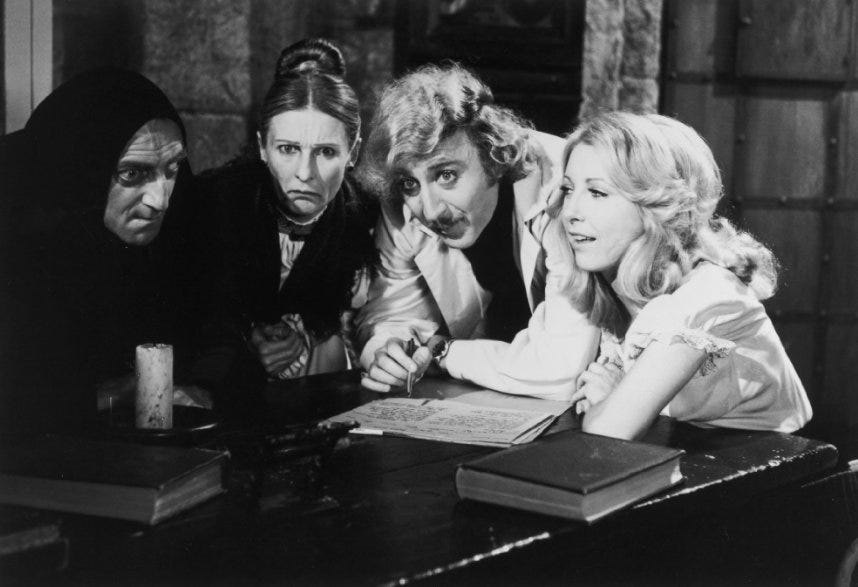
What began as a line that Feldman was ashamed of because it was too old and unoriginal became a memorable line in a comedy classic. It inspired a rock band, and what they built upon Shelley’s novel inspired a new generation of artists to build again upon that — each creative person standing on the shoulders of the others, not merely exhuming a long-buried corpse and giving it the illusion of life with CGI.
It’s not mere nostalgia that gives the film and the song their staying power. It’s looking and listening for the hands of the artists who mulled the old and let it spark their imaginations to create something new. That’s something we’ve lost in our culture’s cab ride from then to now, where studios race to spit out “content” instead of taking the time to make art.
We can hope that the lighting starts striking again soon, that someone will take up the baton — or the cane — as those old music hall comics handed it to Feldman and he handed it on down the line. Each pair of hands it passed through used that simple bit, so memorably delivered, to create something unique.
When it comes to delivering stories, songs, and entertainment that endures, that’s the way to walk.
No posts
Comments
Nothing yet. Say the first thing.
Sign in to join the conversation.