
When I first encountered the onetime Shanghai American Club, in 1997, it was locked up tight. It had outgrown its duties as the Shanghai People’s Court a few years earlier, but even with decades of grime and a chipped façade, the edifice on Fuzhou Road maintained its grace, unbowed by the unsavory photographs of crime busts still displayed on its stately brick walls.
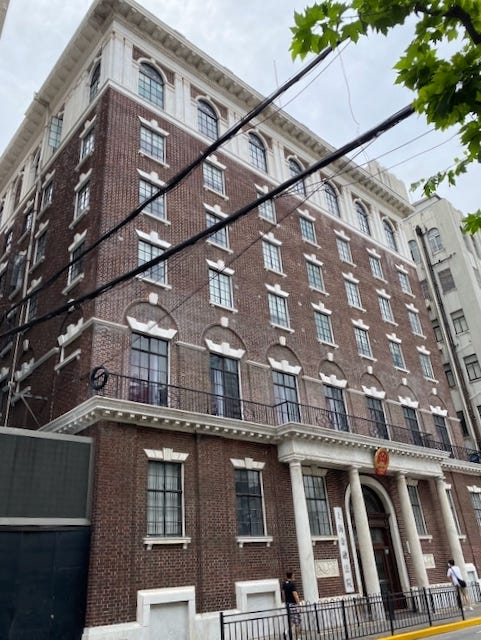
The building had been closed since 1991, after 31 years of loyal service, and it would remain closed for nearly two decades (save that brief, glorious moment in 2008 when the Hungarian Consulate held the Year of Hudec exhibition in the ghostly unrenovated space).
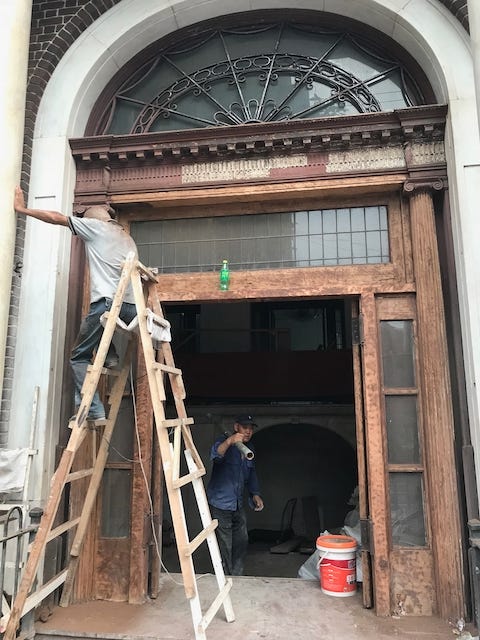
But in the steamy summer of 2018, the doors were open, as the building underwent a thorough renovation in preparation for its next act as the Shanghai Financial Court.
I’m never one to miss an infiltration opportunity, especially for a building as difficult to access as this one. It was a real treat to take advantage of all that construction chaos and wander through the entire building, all the way up to the former roof garden.
It was a bridge club that started it all. The “Slam Club”, which began in 1916, was the seed from which the American Club sprouted, and it grew quickly. In 1917, the club was incorporated in Delaware and by 1921, it had outgrown its original premises on Nanjing Road.
A new site on Fuzhou Road was acquired in 1922. By the time construction started, membership had reportedly reached 1,000 men, 90 percent of whom were American, although the Club was open to non-Americans as well. (But not women).
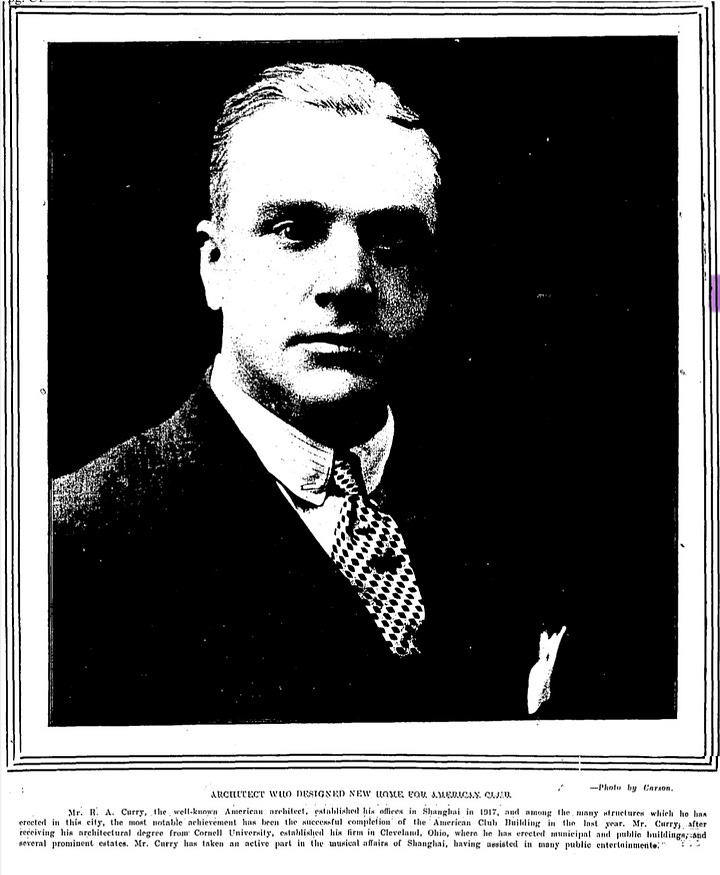
The Club was to be a showcase of the best of America. American materials were used, the American architectural firm R.A. Curry was hired, and the building was designed in the classic American Federal style.
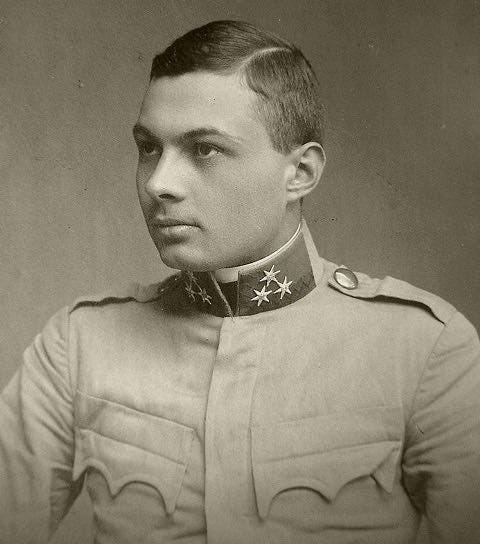
Shanghai was in growth mode, and architect Rowland Curry was busy, so he had his young associate work on the project. László Hudec wasn’t American, but he was a promising Hungarian architect who would go on to have one of the most stellar careers of any architect working in pre-1949 Shanghai.
When it was completed in 1924, men—and it was all men, until 1937—arrived in an entrance hall “of colonial effect, with marble pilasters,” said the China Weekly Review. They mounted the Italian marble double staircase to the main floor, or descended to the basement.
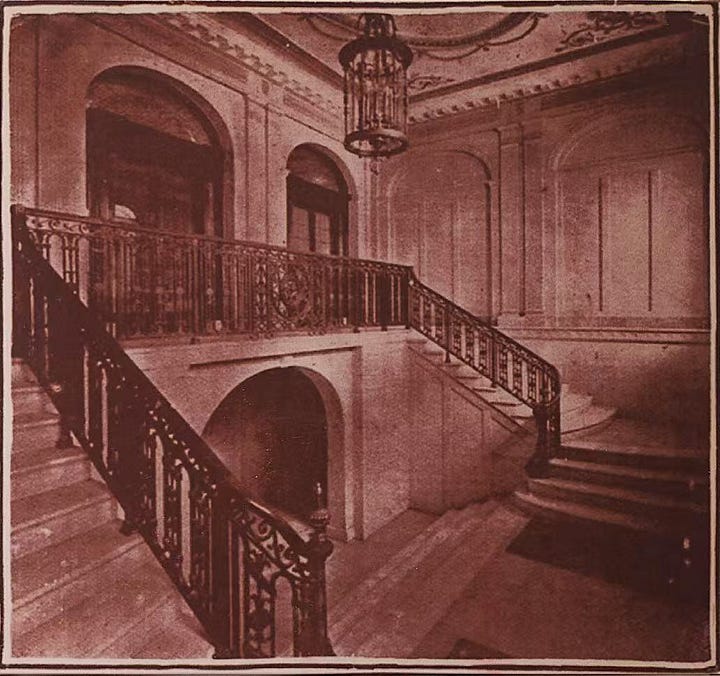
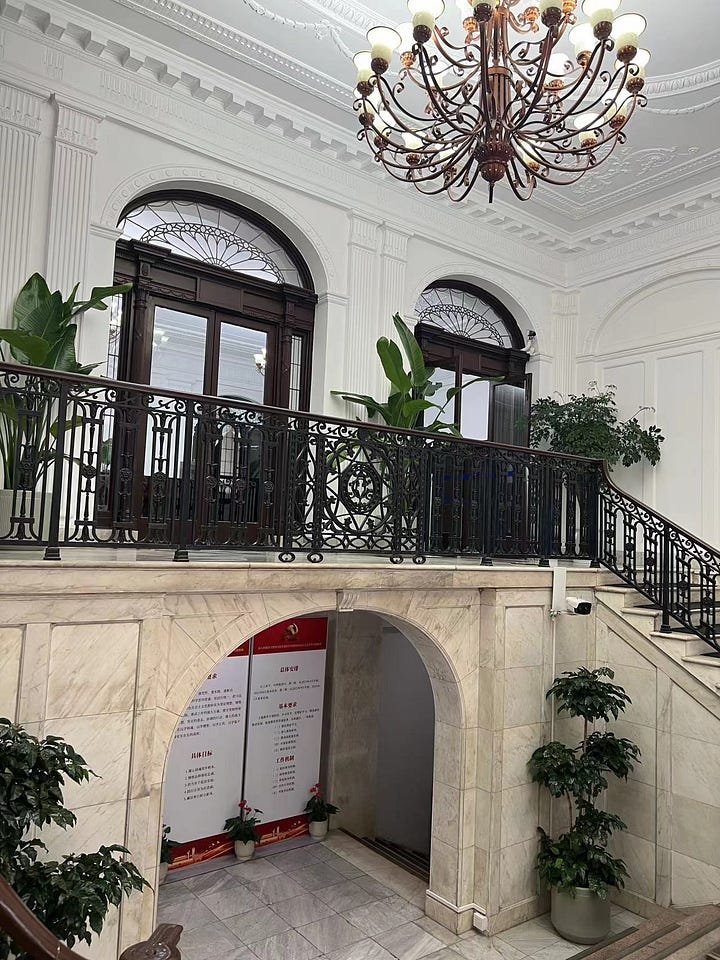
On the main floor, they could enjoy a tipple at the spacious bar, or have a game of billiards in the lovely oak-panelled billiards room. There was a card room, a lounge, a library and a mahjong room “designed in the correct Chinese style by an expert Chinese designer brought from Peking,” reported the China Weekly Review.
In the basement, Russian masseurs pounded out kinks in the Turkish baths, Russian tonsorial artists snipped in the barbershop, and there was a bowling alley and pin pool, too.
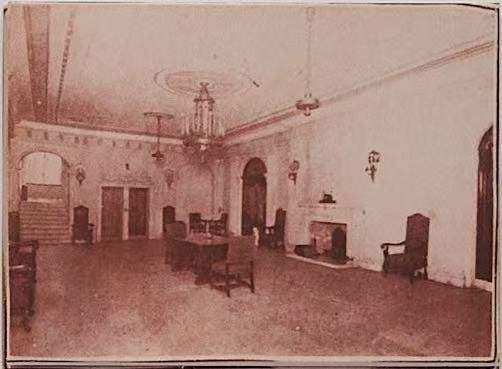
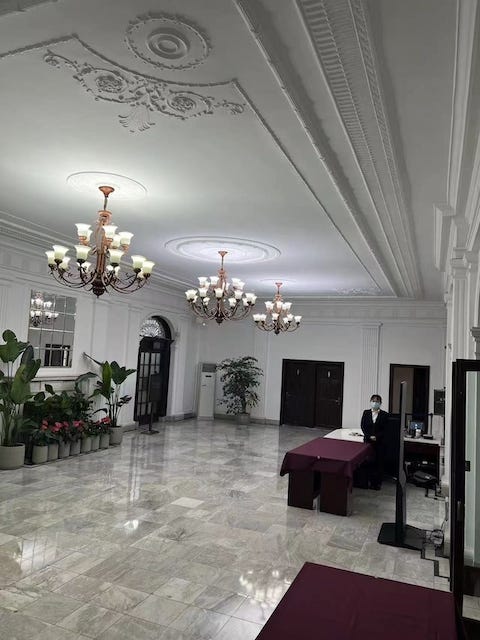
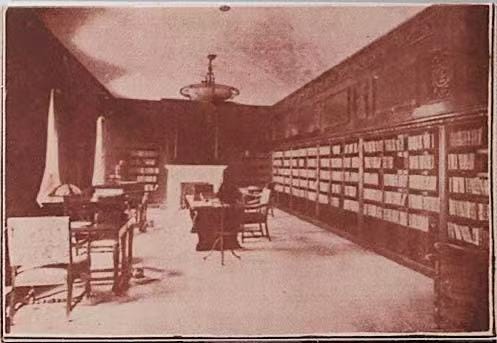
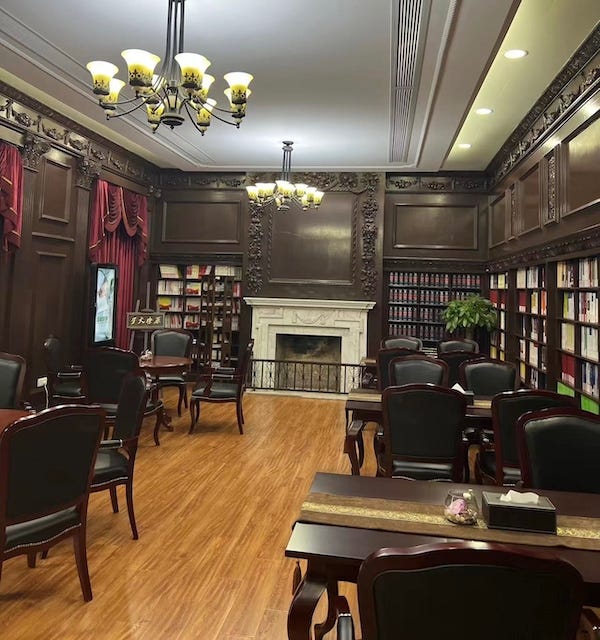
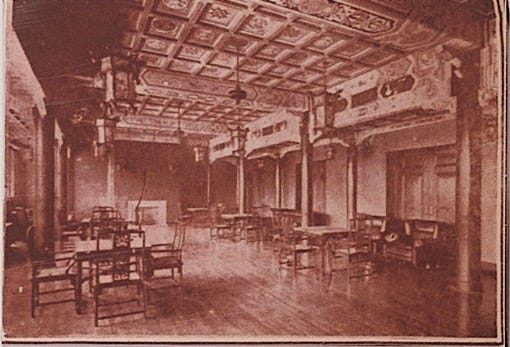
State-of-the-art Otis elevators whisked members up in the six-storey building. Like most men’s clubs, the American Club offered accommodation, here on the second, third, and fourth floors. Some members lived there long-term, others as a temporary measure when families were out of town, still others housed visiting guests here.
There were seventeen bedrooms on each floor, each with its own private bathroom and built-in closets. “All the elements of home comforts with those of Shanghai social life,” gushed the North China Herald.
These residence floors were the least interesting spaces in the building, just a stretch of hallway with rooms on either side. I didn’t get inside the rooms to see if any of the bathrooms and closets had survived, though!
But then came the pièce de résistance …
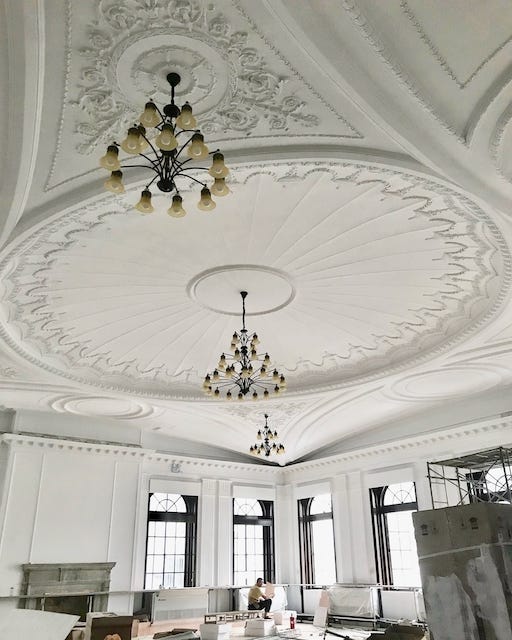
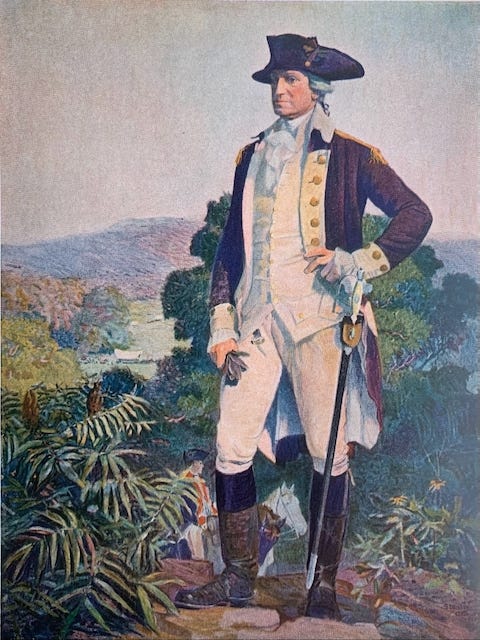
The fifth floor Dining Room and Assembly Room is, quite possibly, the loveliest room in all Shanghai. Just imagine it in its original state: gorgeous, dramatic ceiling, American maplewood floors polished to a high sheen, chandeliers dripping with crystals, rich velour curtains in wine red and bronze, and, over the fireplace, a 6 feet 2 inch (1.87m) tall oil painting of George Washington at Valley Forge, commissioned just for the American Club.
The Club commissioned Delaware artist Stanley Massey Arthurs to paint the Washington portrait—an upgrade from their existing portrait, a Gilbert Stuart replica.
The cost of the new portrait was mostly borne by the Delaware-based DuPont company. For the DuPonts, it was a simple calculus: an investment in goodwill that they hoped would lead to strong business relationships with the American community.
Arthur’s portrait of George Washington at Valley Forge was unveiled in 1926 at the Majestic Hotel. Why the Majestic? Because the Club was all-male and otherwise, women wouldn’t have been able to attend. In fact, the portrait traveled back to the Majestic in February every year for the Washington Ball, in celebration of the first President’s birthday, so that the ladies could attend.
Few alive today have seen the portrait in person, though: in 1941, Japanese officers took over the American Club, cut the George Washington portrait from its frame, and spirited it away. It has never been seen again.
Although Club was an all-male preserve, the Dining Room did have a ladies' room, decorated in grey tones with French plate mirrors. That proved quite useful in 1937, when the Club inaugurated a Ladies’ Section, no doubt driven by economic considerations, as war drove increasing numbers of members out of Shanghai.
The Assembly Room was converted into a Ladies’ Lounge, with tables for mahjong and bridge, and the ladies had their own reception area on the ground floor. Although initially open only to member’s wives, there was discussion about opening it further, as there had been keen interest from businesswomen. War intervened, so women’s membership never materialized.
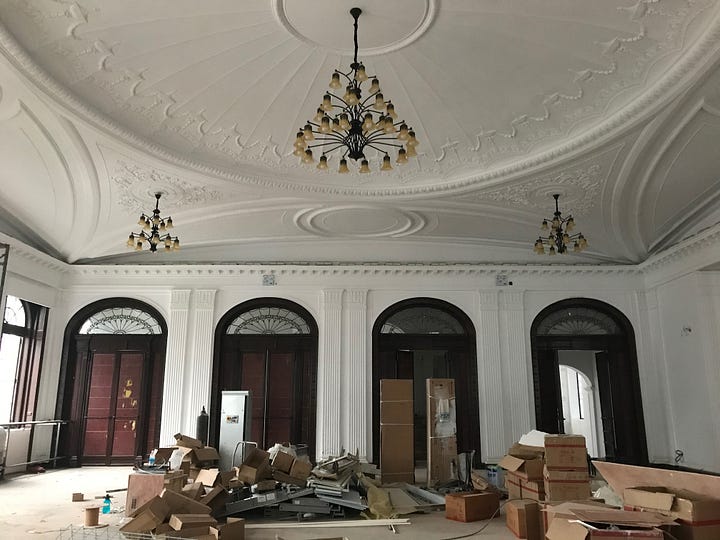
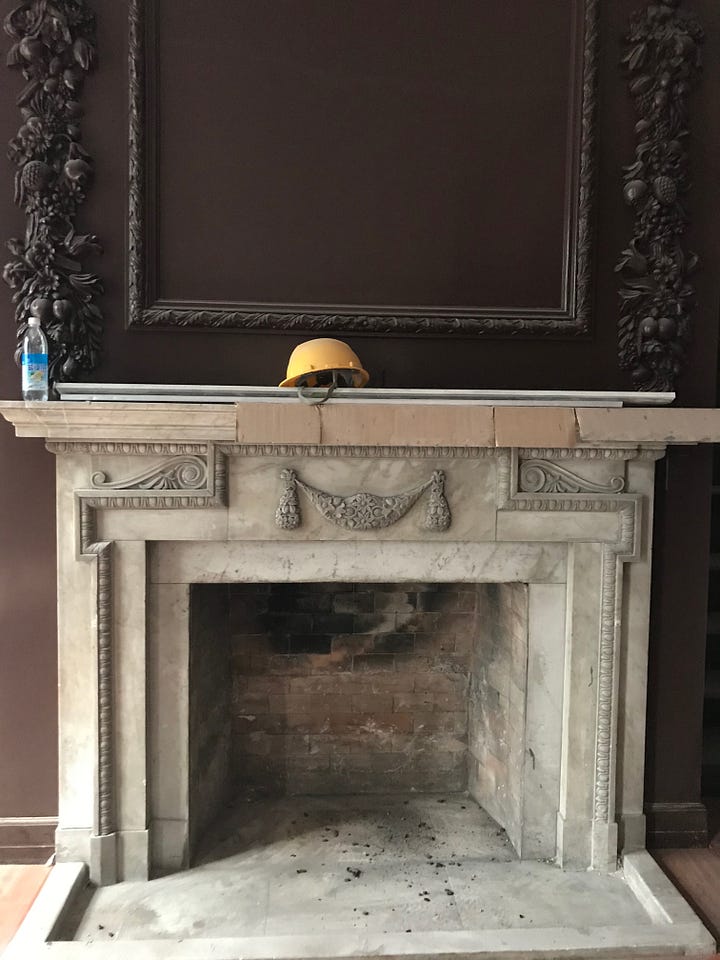
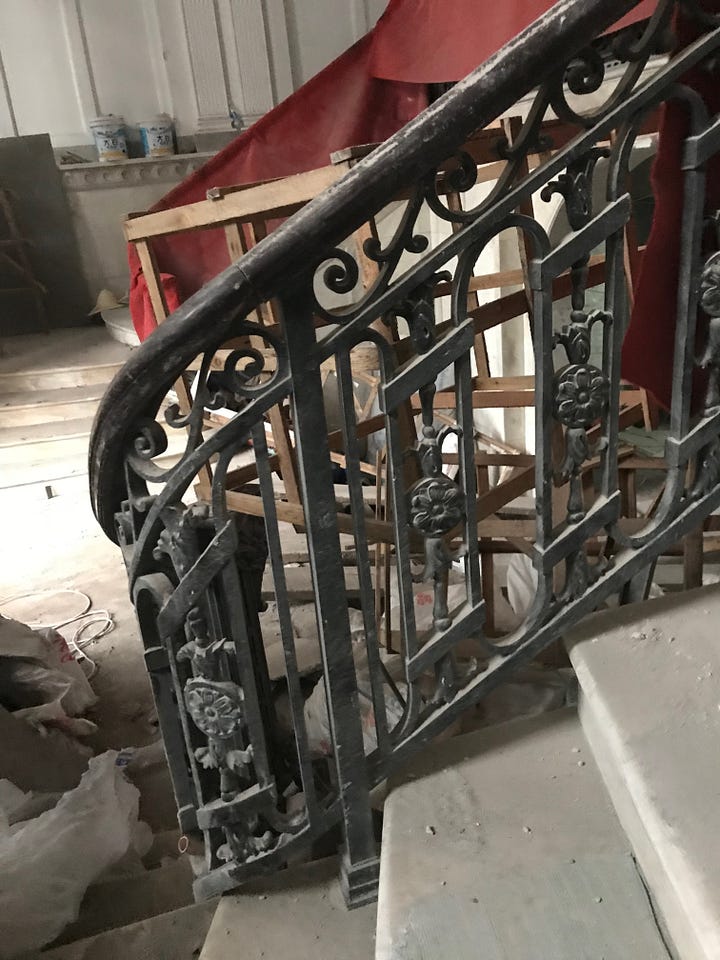
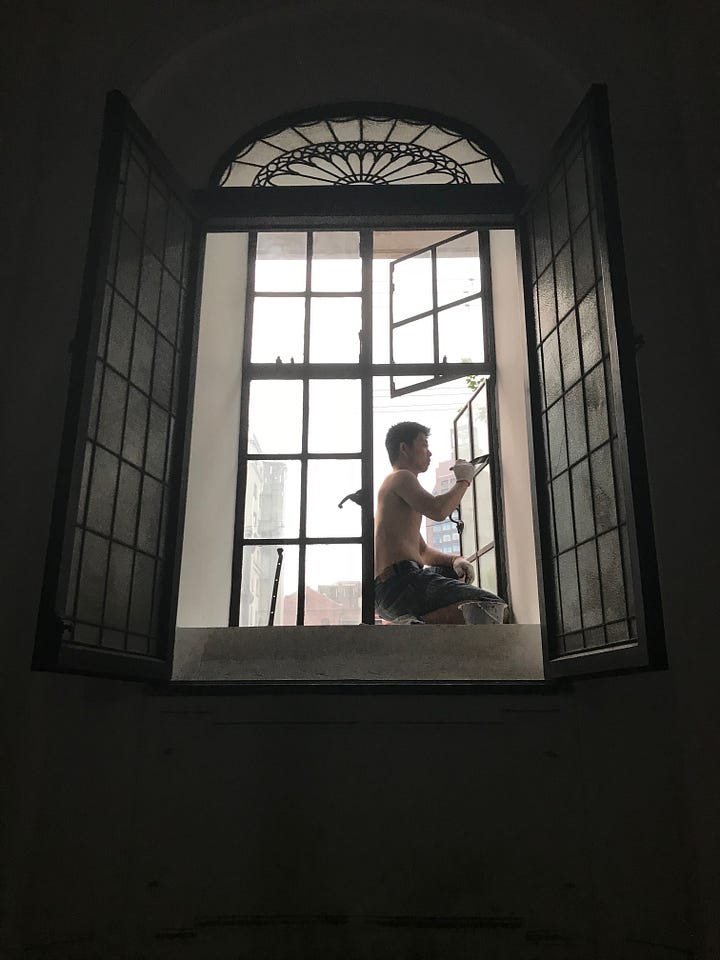
The sixth floor bears the low ceilings and narrow stairs of the staff quarters, and indeed, this is where the kitchen and servants quarters were located, for proximity to the Dining Room. It's worth heading up there, though, because that route also takes you up to the roof.
The rooftop garden is long gone, but in 2018, I could still see some of the buildings an American Club member would recognize: the sprawling Municipal Council building across the street (now renovated, with additions), the red brick Victorian building in its midst, the spires of Trinity Cathedral, and Elliott Hazzard's Shanghai Power building.
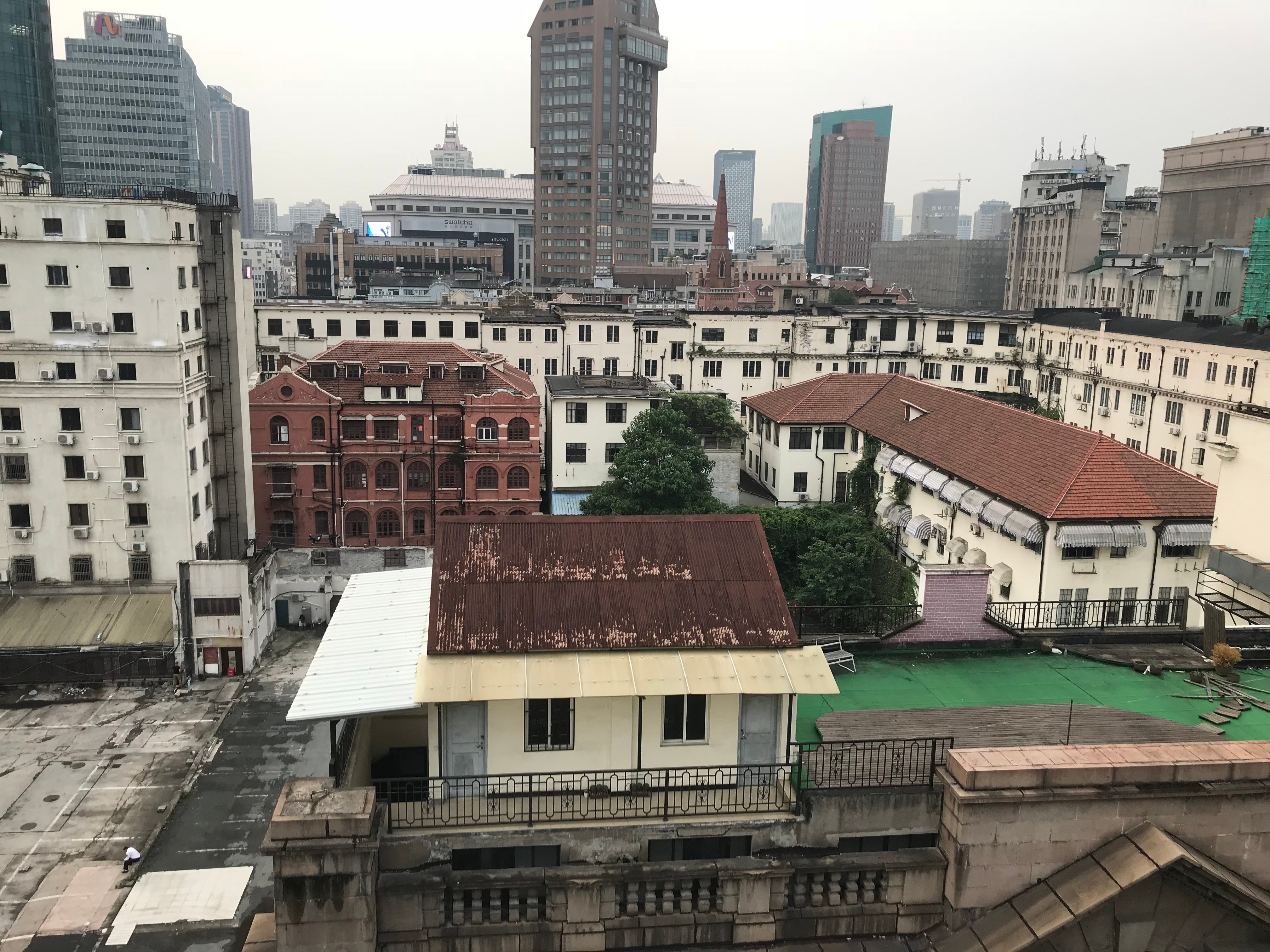
In September 2025, the Financial Court packed up and moved across the river. Too many financial cases to fit into this six-storey building, hmm? The building is empty once again, and me? I’m just hoping for some more construction chaos …
When the American Club opened, the North China Herald wrote,
“With the opening of the club, the American community has made it clear that it intends to remain in Shanghai … When Americans in the homeland settled on the frontier, they first erected a school building, then a church, but when they built a clubhouse, it was certain that they intended to remain where they were.”
Shanghai’s Americans remained where they were for another quarter century, but the vicissitudes of history meant that clubhouse or no clubhouse, they could not remain. But for all these years, their clubhouse has stood where they left it, its long-ago story still in the bricks, plaster, oak, and ironwork built more than a hundred years ago—and so, we hope, it will remain, whatever comes next.
This post is free for now, so share away ~ happy July 4th!
Subscribe for the stories of Old Shanghai that lie behind the walks—free or paid. Paid subscriptions help us get more stories out into the world.
You can also find us on Instagram, Facebook, WeChat, and our website.
"Shanghai Americans to Have Million Dollar Club Home", The China Weekly Review, November 10, 1923, accessed July 28 2018.
"American Club's New Building: Formal Opening: Comfort and Luxury in Every Way", The North China Herald, April 4, 1925, accessed July 28 2018.
"American Club Popular on Opening Day with Women; More Enquiries are Received", The China Press, July 2, 1937, accessed July 25 2018.
"The Washington Ball: Painting of George Washington Unveiled at Monday Night's Brilliant Function". North-China Herald, February 27, 1926. accessed December 5, 2023.
Comments
Nothing yet. Say the first thing.
Sign in to join the conversation.