
To read previous parts: Part I / Part II / Part III.
War had ended, but the peace left heavy debts behind. Those obligations touched off a new conflict.
To pay what it owed, Massachusetts laid hefty taxes on its people, demanding payment in gold or silver, which farmers rarely had. Those who could not pay were brought before the county court, where creditors won judgments against their land and livestock and, at times, even had them jailed. Debtors petitioned the state legislature for relief through the summer of 1786. When none came, some resolved that if the government would not stop the courts, they would do so themselves.
So on the morning of August 29, 1786, men from the countryside of western Massachusetts made their way toward Northampton, where the Court of Common Pleas was to open its quarterly session that day. They came in groups, some marching to fifes and drums, as they had done during the war. By noon, about five hundred had assembled, armed with muskets, swords, or simply hickory clubs.
The judges were gathered that morning at a nearby tavern to robe and put on their wigs before walking to the courthouse to open court. When they set out, they found the approach blocked by the protestors who had assembled under Captain Luke Day of West Springfield, who was a Continental Army veteran. Day handed the judges a petition asking them to adjourn until the legislature answered the complaints the people had already sent. The judges withdrew to the tavern to weigh the request.
By afternoon, the crowd in the street had grown to fifteen hundred armed men. Whatever the judges made of the petition, the situation in the street settled the question. They came back out and postponed the cases on the docket.
Within weeks, similar crowds closed courts in other towns. Calling themselves Regulators, the protestors believed they were acting in the tradition of 1776 — ordinary people resisting a distant government that taxed them beyond what they could bear.
Among them was a farmer named Daniel Shays, who had marched after Lexington and fought at Bunker Hill, and who had left the army in 1780 without receiving all he was owed. Over the autumn, Shays became the most conspicuous of the leaders, with the uprising taking his name.
Massachusetts Governor James Bowdoin answered the Northampton court closing within days. In a proclamation issued September 2, he denounced the Regulators’ conduct as “contempt and open defiance of government.” But the state legislature did offer them some relief: certain proceedings were postponed, legal costs were reduced, and the state allowed more flexibility in meeting some obligations.
But the legislature also moved to break the resistance. It passed a Riot Act authorizing officials to order unlawful gatherings to disperse and, if they refused, to call out armed men to seize them. It also suspended the writ of habeas corpus, letting the governor, with the Council’s approval, detain people deemed dangerous to the Commonwealth without the ordinary right to challenge their imprisonment.
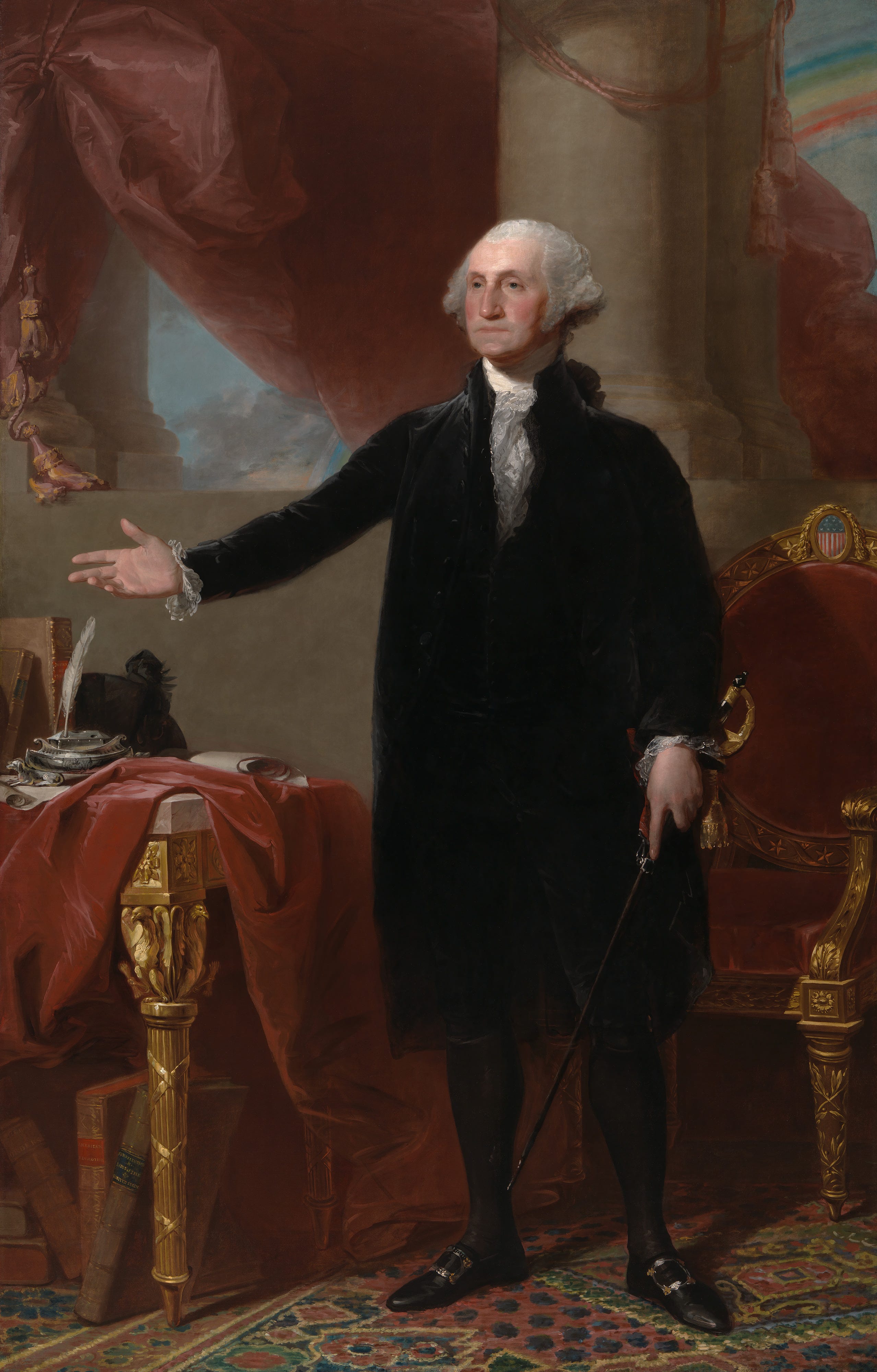
Word of the unrest had already traveled south in private letters, and nowhere did it land harder than at Mount Vernon, where George Washington had gone home three years earlier believing his public life finished. His old artillery chief, Henry Knox, wrote him that October with an account that lost nothing in the telling. Knox warned that the Regulators might come to twelve or fifteen thousand, and they meant “to annihilate all debts public and private” and to divide up property by law.
Knox’s figure was a guess, and almost certainly an inflated one, but Washington trusted his account of the disorders, and it shook him. What frightened him most was that Massachusetts might not be the end of it: “There are combustibles in every State,” he warned, “which a spark might set fire to.”
Despite the measures, and the alarm already spreading beyond the state, the uprising continued, and by January 1787 it had a new target. A force of some twelve hundred men under Shays turned toward the arsenal at Springfield, where thousands of muskets and other military stores belonging to the United States were kept. Although the arsenal stood in Massachusetts, the threat concerned Congress as well as the state, as federal property stood in danger.
Yet the national government had no dependable force ready to protect it. Congress had voted the previous October to raise additional troops, officially for service on the northwestern frontier, though the unrest in Massachusetts influenced the decision. But Congress had no revenue of its own with which to support the troops. As a result, the requisition brought in little — recruitment proceeded slowly, and no federal force was ready when Shays marched. The immediate defense of the United States arsenal therefore fell to the Massachusetts militia.
Governor Bowdoin ordered General William Shepard, a local militia commander and veteran of the Revolution, to defend Springfield with approximately twelve hundred men. He also placed General Benjamin Lincoln — one of Washington’s senior officers during the war — at the head of a separate force of some three thousand men marching west to suppress the uprising. Boston merchants advanced the funds for Lincoln’s troops, expecting the state to reimburse them.
Shepard’s men occupied the arsenal and positioned cannons toward the road along which the Regulators would approach. As the column advanced through the snow on the afternoon of January 25, Shepard repeatedly sent an aide and two other men to ask Shays, in his own words, “what he was after, or what he wanted.” Shays answered that he wanted the barracks and military stores.
Shepard ordered warning shots fired over the advancing men. When they continued forward, he directed the artillery into the column, finally with grapeshot. Three men were killed on the field and another died of his wounds; the rest broke and fled.
Writing to Governor Bowdoin the next morning, Shepard did not celebrate. “The unhappy time is come,” he began, “in which we have been obliged to shed blood.” Lincoln pursued the remaining force and surprised it at Petersham in early February. The Regulators scattered, and organized resistance collapsed.
The effort to fix the union had, however, begun before Shays marched. In March 1785, commissioners from Virginia and Maryland met at Washington’s home at Mount Vernon to settle questions of navigation, commerce, and jurisdiction on the waters the two states shared. The agreement they reached suggested something more significant: states could negotiate solutions to commercial problems that Congress had no power to settle uniformly.
That success widened into a plan for a general meeting of all the states on questions of trade, held at Annapolis in September 1786. Nine states appointed commissioners, but delegates from only five arrived; too few to do the work they had gathered for.
So the men who did come wrote a report instead, calling for the states to send delegates to Philadelphia the following May, “to take into consideration the situation of the United States” and devise what might render the federal government “adequate to the exigencies of the Union,” or in more modern terms, powerful enough to address the country’s pressing needs. The commissioners directed their chairman to sign the report on their behalf. That chairman was John Dickinson.
Ten years earlier, Dickinson had been the principal draftsman of the first plan of confederation formally commissioned by Congress for an American union. The man who had drafted Congress’s first official frame of union signed the invitation to build the next one.
Congress set strict limits to the work when approving the convention, authorizing the “sole and express purpose of revising the Articles of Confederation.” Many of the states, in commissioning their own delegates, used similar language. Whatever came out of Philadelphia was to be reported back to Congress and the legislatures, and would bind no one until every state agreed, as Article XIII required for any amendment.
That, however, is not what happened. And the break came quickly.
Comments
Nothing yet. Say the first thing.
Sign in to join the conversation.