
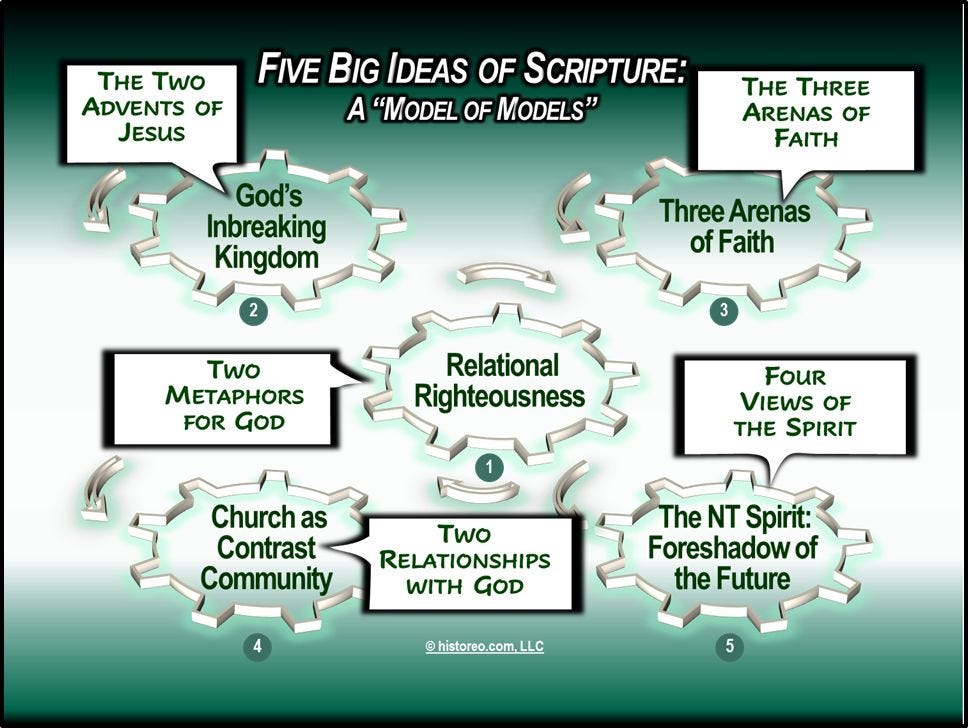
Good models can help us appear smarter than we are. One of the simplest models is a road map. On a road trip through unfamiliar territory, the "smartest" person in the car vis-a-vis navigation will be the one who has the map and knows how to use it. Something similar but much more important is also true in mapping ancient Jewish and Christian scriptures onto the lives of modern-day believers and their communities of faith.

In the early 2000s, I worked for the US Army and part of that work was explaining to mid-level and more senior leaders how business enterprise transformation should work within Army medicine—and I was good at it to the point of being certified by the National Defense University in that discipline. My success, however, was mostly due to the mastery of a model that made on-the-spot analysis of complex business-process problems possible—some would even say, “amazing.”
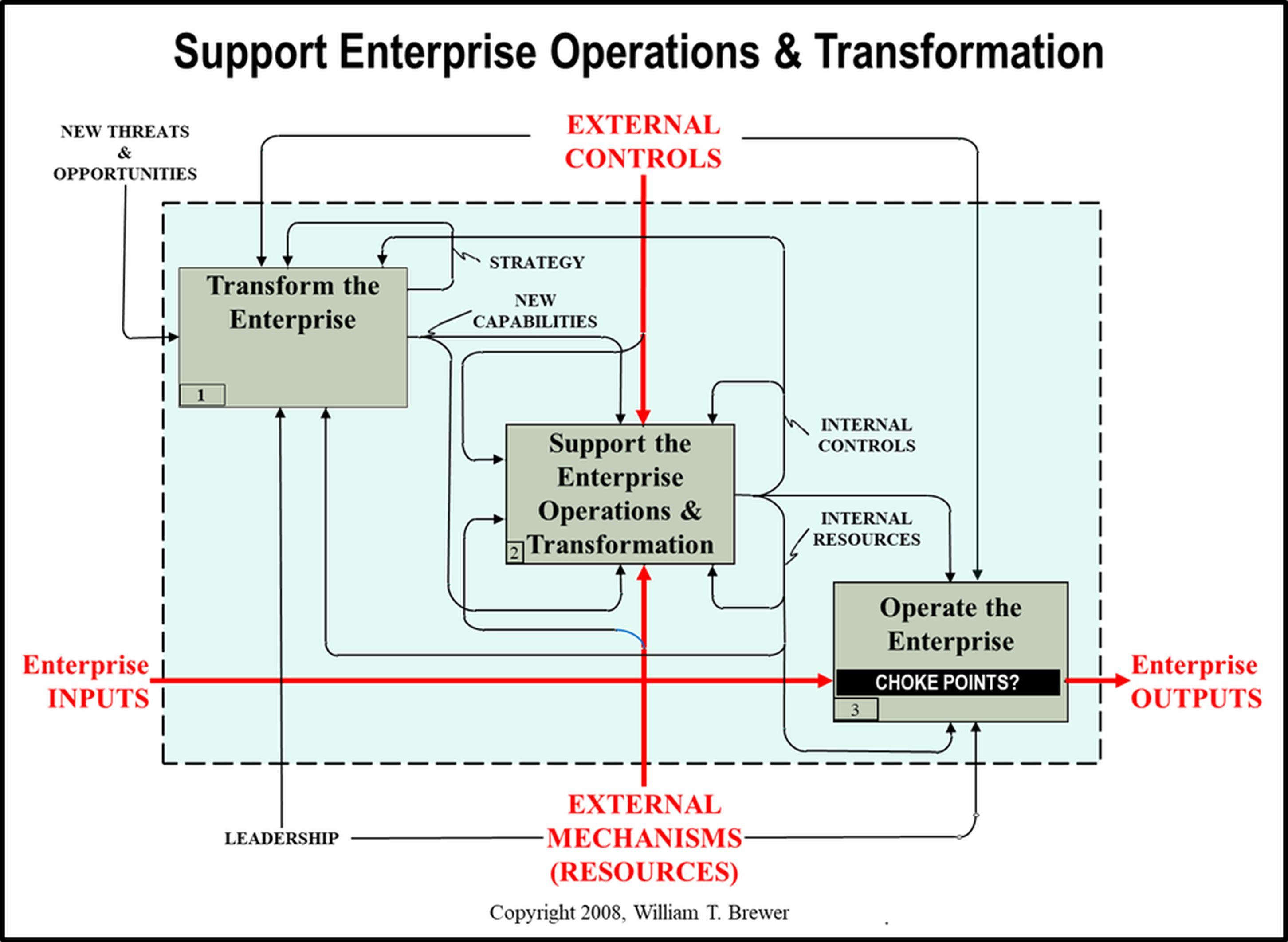
Over the years, I’ve found similar success in using models associated with training development, information security, project management, and computer networking. Much of the magic in modeling technical processes and systems comes from conceptualizing and defining relevant entities and their relationships. Religion, of course, is more amorphous than technology and associated processes, but trying to model spiritual entities and their relationships is still a fruitful task. For example, consider a model of the conscience in terms of
Subjective guilt—what we tell ourselves,
Objective guilt—what society tells us, and
Natural Law—what God tells us—what He has written on our hearts.
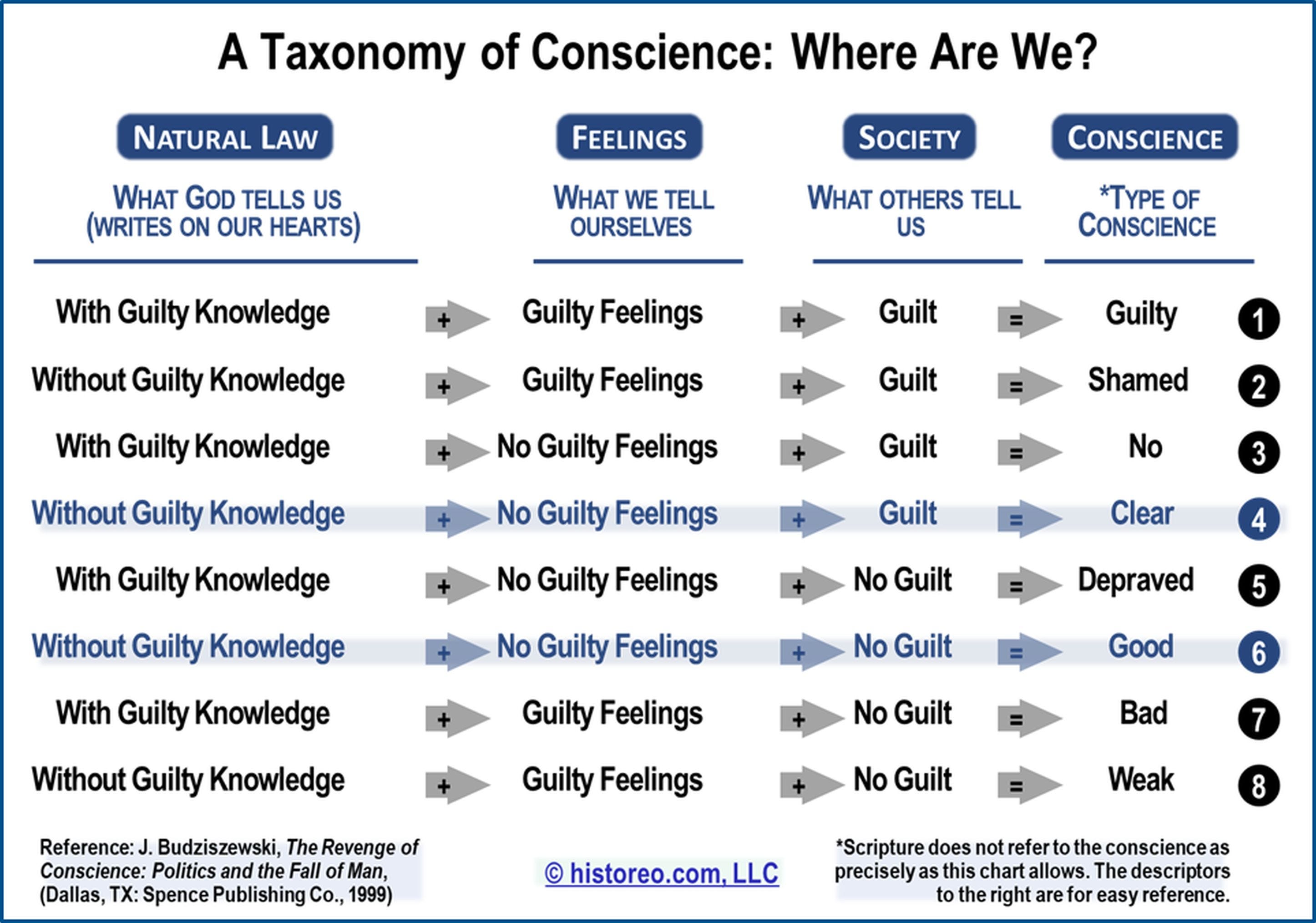
This model, for example, allows us to distinguish between a clear conscience (Line 4) and a good conscience (Line 6). From that distinction, we can then understand how a healthy conscience can have two states and why those two states are different enough to need two distinct words to describe them. In other words, we shouldn’t blur “good conscience” into a synonym for “clear conscience” because a good conscience is altogether good while a clear conscience is a good conscience that is being robbed of its deserved peace by a society that calls evil good and good evil—and only a moment’s reflection should be enough to recognize why this difference is not a trivial one. Consider the example of the Apostle Paul in Acts 17:16. Now while Paul was waiting for them at Athens, his spirit [conscience] was being provoked within him as he was beholding the city full of idols—NASB.
Questions: Would the preceding insights be apparent without our model of the conscience? Or, would anyone ever think of the conscience as having a taxonomy of eight distinguishable states each worthy of a unique term describing it? No, without a model helping us to see and articulate these things, we would find it difficult or impossible to perceive and explain the human conscience without it.
—Bill Brewer
© historeo.com LLC
Comments
Nothing yet. Say the first thing.
Sign in to join the conversation.