
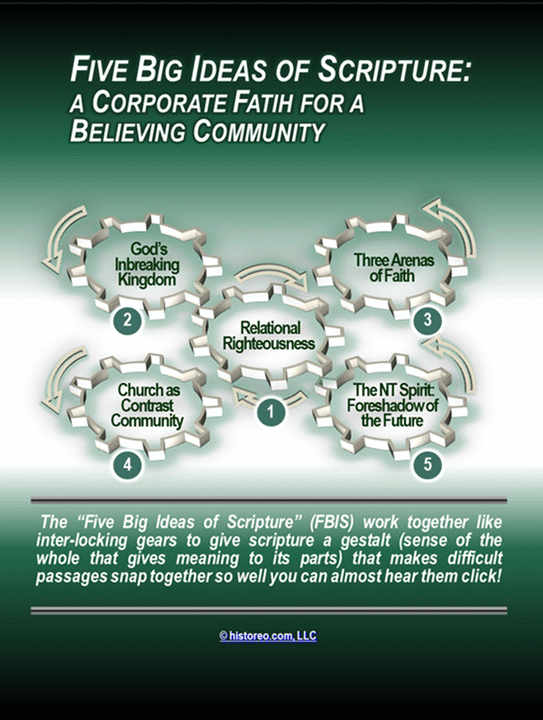
For many, reading the New Testament (NT) can feel like navigating a complex landscape of disconnected stories, laws, and theological arguments. It’s easy to get lost in the details and miss the big picture. What if instead of getting bogged down, you could grasp a set of interlocking ideas that will accelerate and expand your understanding?
This post introduces some of the most practical and rewarding concepts you’re likely to encounter anytime soon. Presented as a clear list, they offer a new and better lens for viewing scripture that transforms isolated verses into a coherent, dynamic narrative.
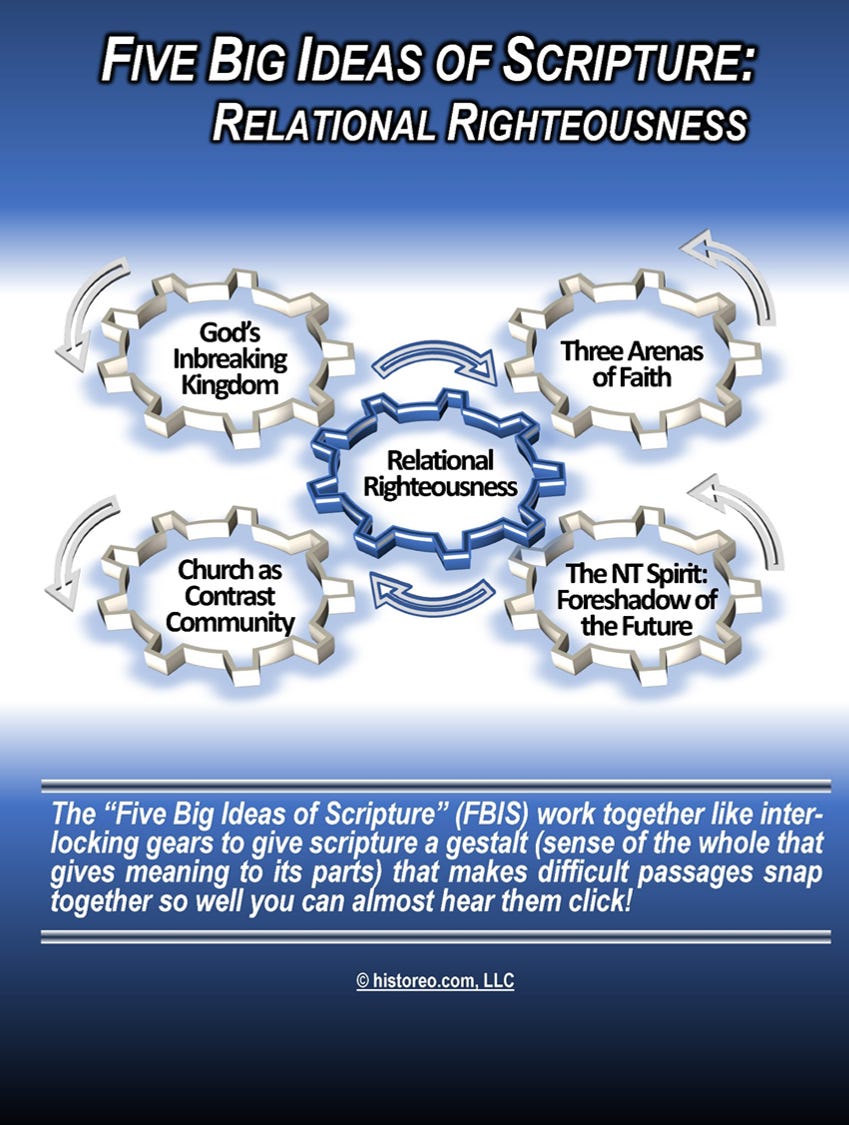
In modern thought, “righteousness” is often equated with moral perfection or adherence to an abstract ethical code. The bible, however, presents a profoundly different view. In scripture, biblical righteousness is primarily covenantal—about covenantal loyalty, covenantal faithfulness, and covenantal love within covenantal relationships with God and with others.
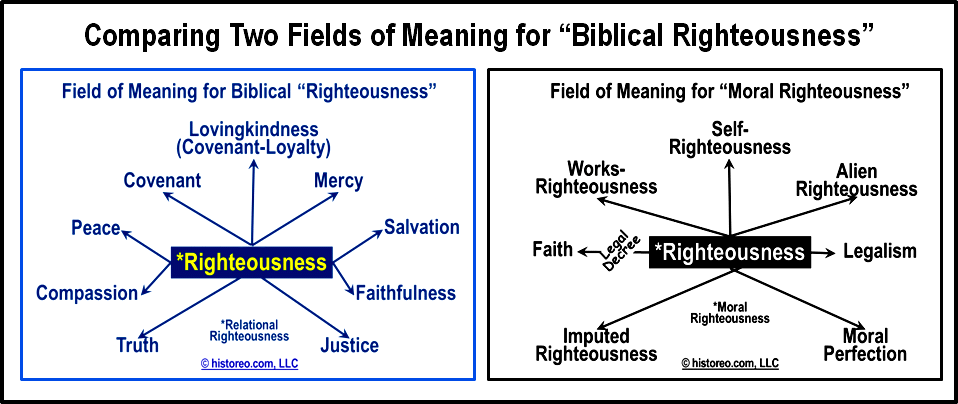
This does not mean morality is unimportant. Rather, it means moral righteousness is determined by the norms of whatever relationship is in view, with God’s own covenants serving as the “gold standard.” In coming to a better understanding of biblical righteousness, the focus shifts from (1) an individual’s conformance to an abstract system of ethics to (2) his or her faithfulness within real-world relationships, especially the ones God has ordained. Faith itself is the essence of being relationally right with God. As the book of James illustrates, “Abraham believed God, and it was credited to him as righteousness, and he was called God’s friend” (James 2:23).
So, “seek first ... [God’s friendship, His relational] righteousness,” and all the blessings of God’s kingdom will be yours (Mt 6:33). “Blessed are they who hunger and thirst after that kind of righteousness” (Mt 5:6).
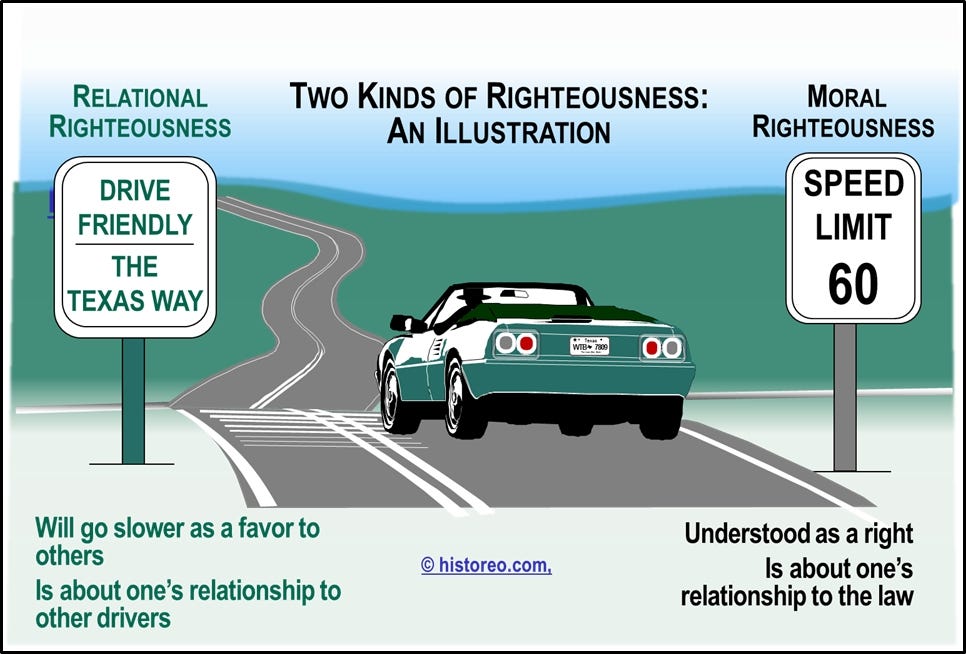
This is a surprising shift for many. It moves the center of gravity from individual performance and rule-keeping to relational faithfulness and friendship with God and with others. The primary question becomes not “Am I following all the rules?” but “Am I faithful to in my relationships.”
To understand the NT, it’s crucial to grasp its unique view of history. Ancient Jews expected history to unfold in two stages: (1) the present evil age and (2) the coming Messianic age. To this, the NT introduces an intermediate period in between the traditional two ages envisioned in ancient Judaism, with the beginning and end of this new epoch bracketed by the first and second advent of Christ.
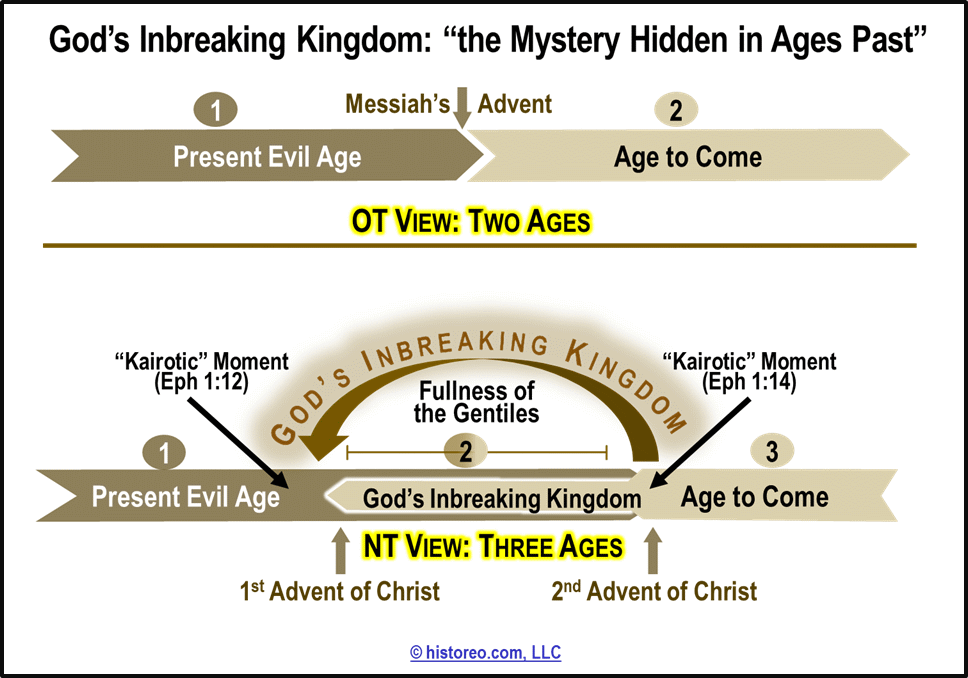
In Rom 11:25-26, Paul calls this new age “the fullness of the Gentiles,” for if not for the two-stage realization of the Messiah’s coming, there would have been no Gentile Christianity—only a Jewish one. In Eph 3:1-13, he describes it as “a mystery hidden in past ages but now revealed through the Spirit” in which the Gentiles are joint heirs with Jews of God’s promises through Abraham. Today, we live in this “overlap of the ages,” where the coming of God’s future reign has been inaugurated with the first coming of Christ and awaits its consummation with Christ’s second coming.
We call it “God’s Inbreaking Kingdom,” a concept that explains why so many core Christian beliefs—the coming of the Messiah, the outpouring of the Spirit, salvation, sanctification, justification, eternal life, resurrection, and cleansing from sin—are understood as both present realities and future hopes in the NT. That’s because just as the first advent of Christ was a limited and provisional manifestation of God’s kingdom to be followed by an exhaustive and definitive manifestation in a yet-future advent of Christ, so also with the outpouring of the Spirit, salvation, sanctification, etc. This single concept explains dozens of complexities, allowing us to see how believers possess eternal life now while still awaiting its future fullness, why believers claim a present salvation while still hoping for a yet-future salvation, why believers have already been resurrected to walk “in newness of life,” but still look forward to a future resurrection, . . .
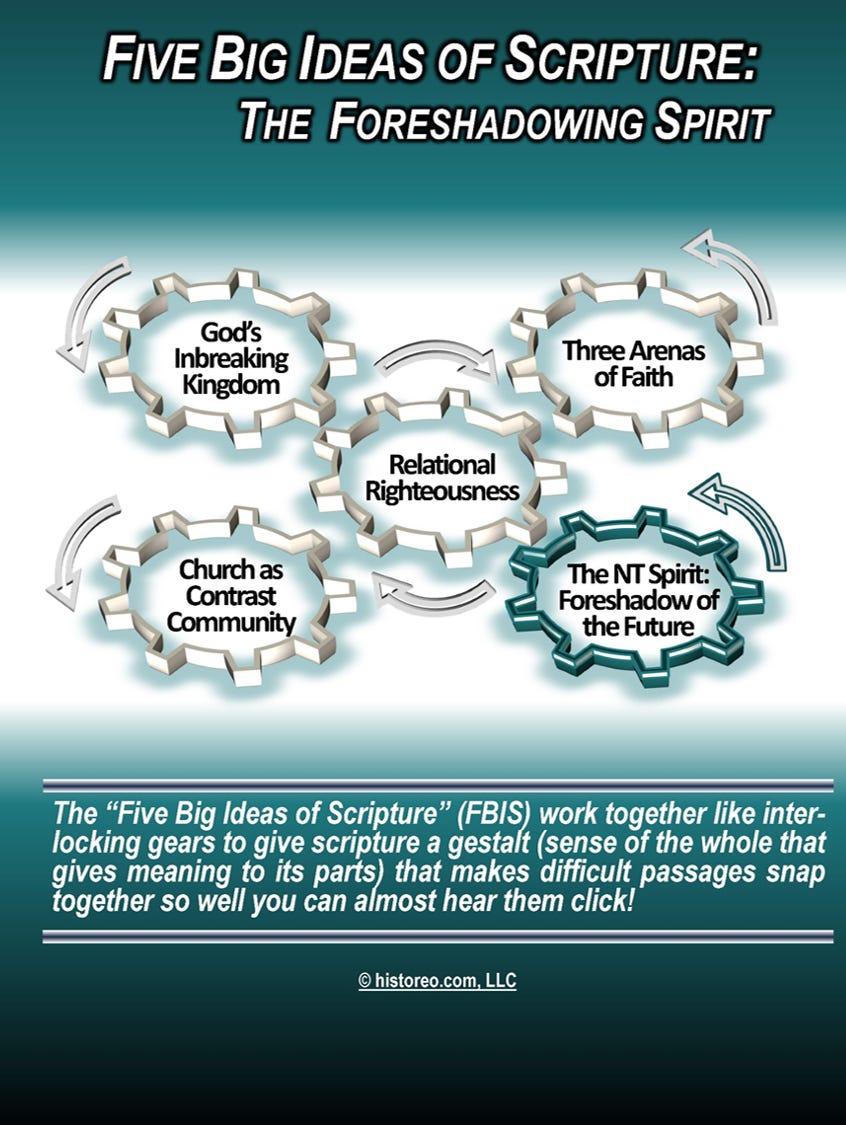
The early church came into being through a once-for-all, outpouring of the Spirit that supernaturally equipped believers with extraordinary gifts to establish and mature the church in an amazingly short period of time. Overlapping that extraordinary, but temporary providence was an ordinary, but enduring providence in the form of Greek mimesis (imitation) that, although often neglected, has sustained the Spirit’s presence in the church down through the ages. Mimesis as a spiritual discipline was not new in the first century. By then, it had been a core principle for spiritual development in the surrounding Greek, Roman, and Jewish cultures for centuries. When the first-century church needed it, mimesis was well-established, ready to serve as God’s ordinary providence in equipping His church with His Spirit.
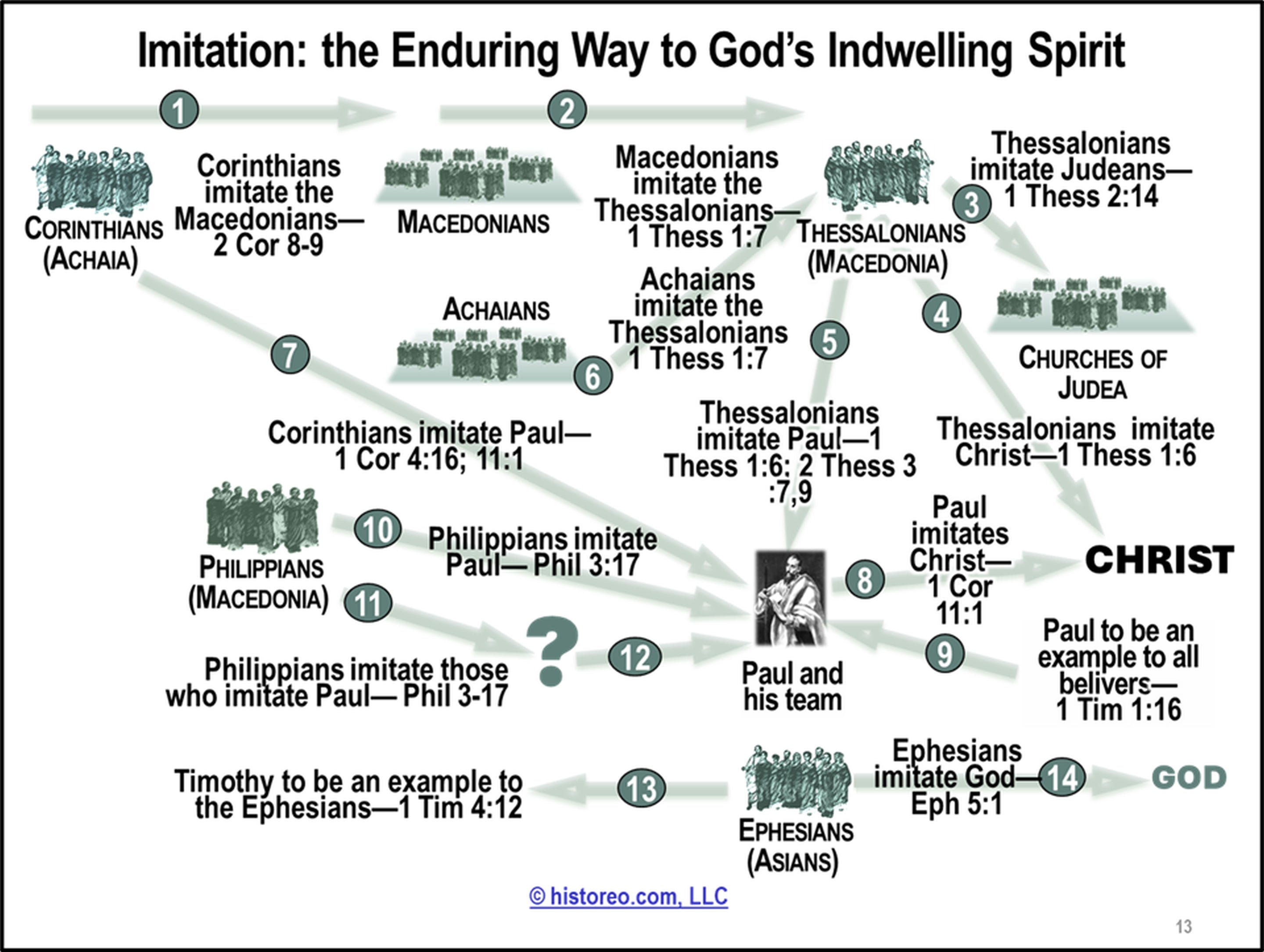
Biblical examples of mimesis are plentiful. The word appears explicitly in the NT only ten times, but its principles are woven throughout. Jesus states that He “can only do what He sees the Father doing” (John 5:19). His simple but profound command to “Follow me” is a direct invitation to imitation in the exalted sense of Greek mimesis.
In the NT, the word mimesis connotes spiritual growth as a disciplined act of observing and emulating Christ and other godly examples. It is often overlooked today for two reasons: (1) the word “imitation” has commonplace if not negative connotations in modern English, so we ignore its weighty NT significance, and (2) later theological traditions redefined the Spirit’s presence in legal, sacramental, or sentimental terms such that the lack of spiritual transformation in present-day believers seems entirely normal. The NT’s understanding of mimesis is a powerful counterpoint to present-day confusion over how God’s Spirit indwells His people.
The New Testament reveals that “faith” operates in three distinct arenas: Private, Corporate, and Common.
· Private Faith: This involves personal convictions and matters worked out in individual prayer, such as the personal liberties regarding food and drink described in Romans 14:23.
Corporate Faith: This refers to the specific beliefs and practices that give congregations their unique identities, such as the collection among Pauline churches for the Jerusalem saints in 2 Cor 9.
Common Faith: This encompasses the essential beliefs necessary for Christian identity that allow for fellowship between different communities, like the guidelines of the Jerusalem Council in Acts 15:1-21.
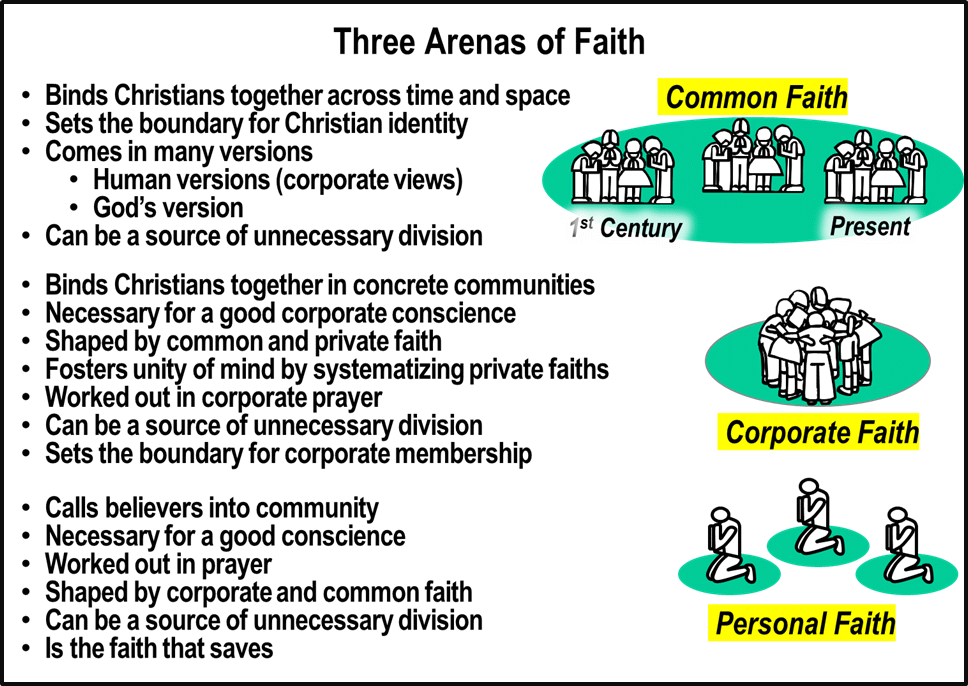
The key insight here is that recognizing these boundaries is critical for resolving fellowship issues. For example, when a congregation or group of congregations elevates its corporate faith to the level of common faith, it creates a “wall of hostility” (Eph 2:14) that separates them from other believers. Understanding the Three Arenas provides a practical framework for promoting unity and navigating differences among diverse Christian groups with wisdom and grace.
Scripture reflects two major traditions for relating to God: (1) The Ancient Near Eastern (ANE) “wisdom tradition” (found in books like Job, Ecclesiastes, Proverbs, and “the wisdom psalms“) which approaches God as Creator— a Creator who has embedded His wisdom into the very fabric of creation and has made it accessible to everyone who takes time to discover it. (2) The “prophetic tradition (as reflected in all the other books of the bible) which approaches God as Redeemer—a Redeemer who has made particular promises to a particular people.
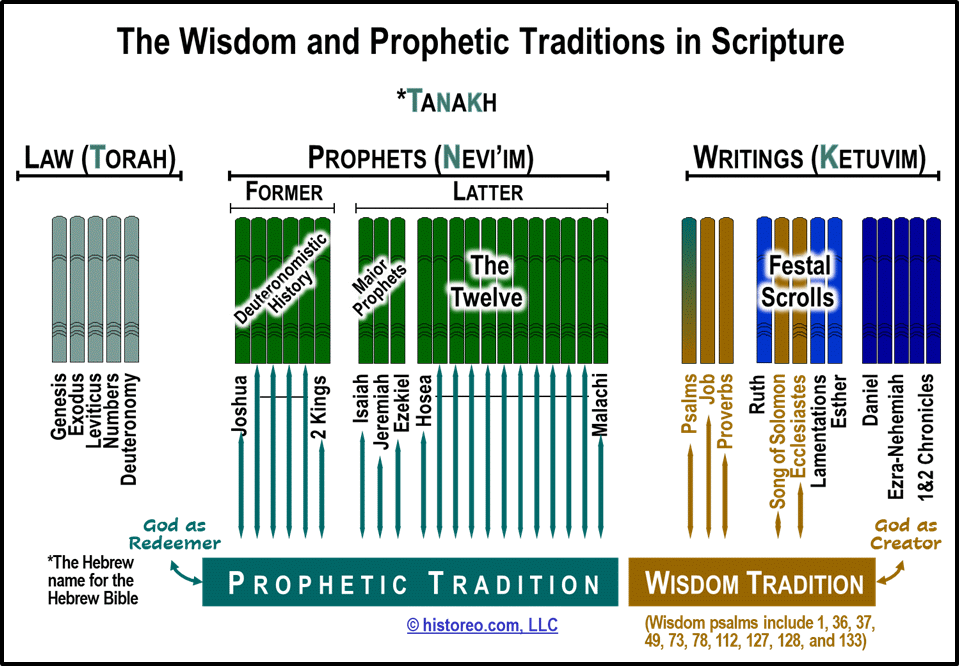
Believers must pursue a right relationship with God as both Redeemer and Creator. This means being “wise unto salvation” by responding to God’s redemptive promises, while also being wise in the practical skills of life like finance, marriage, and work by living in harmony with the principles of creation. Failing in the first relationship obviously has eternal consequences, but failing in the latter can too, albeit indirectly. People who are right with God as Redeemer but not right with Him as Creator may eventually find that the problems arising from their lack of practical wisdom have gradually overwhelmed their faith.
Yes, believers will frequently face situations where they must sacrifice their pursuit of God’s wisdom in Creation to their pursuit of His wisdom in Redemption. Overcoming evil with good, for example, usually requires it. The key to balancing the often-conflicting demands of these two “wisdoms” is to suffer wisely—not foolishly—when setting aside the former in favor of the latter. It’s the difference between an admirable life and a life that’s not so admirable.
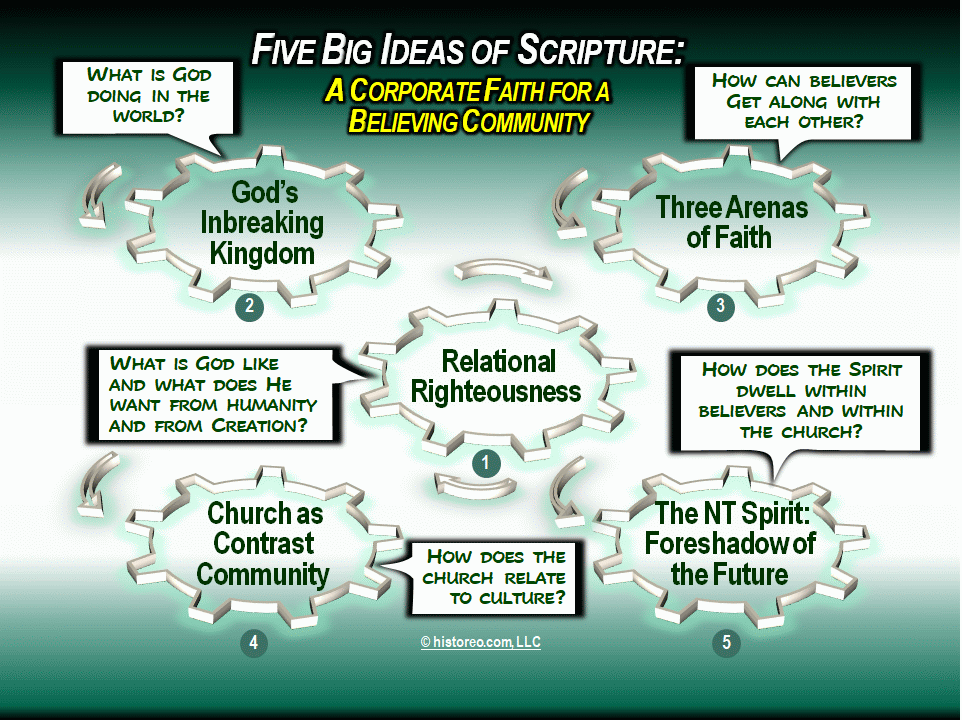
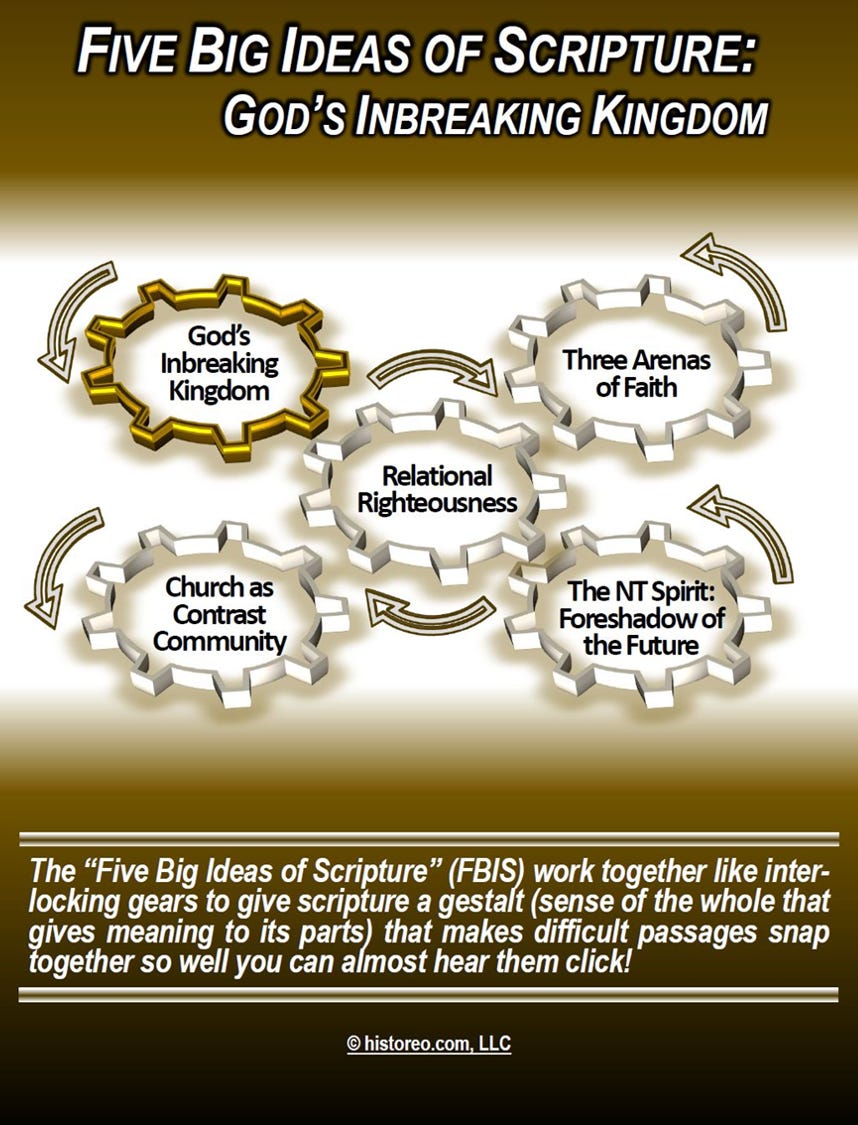
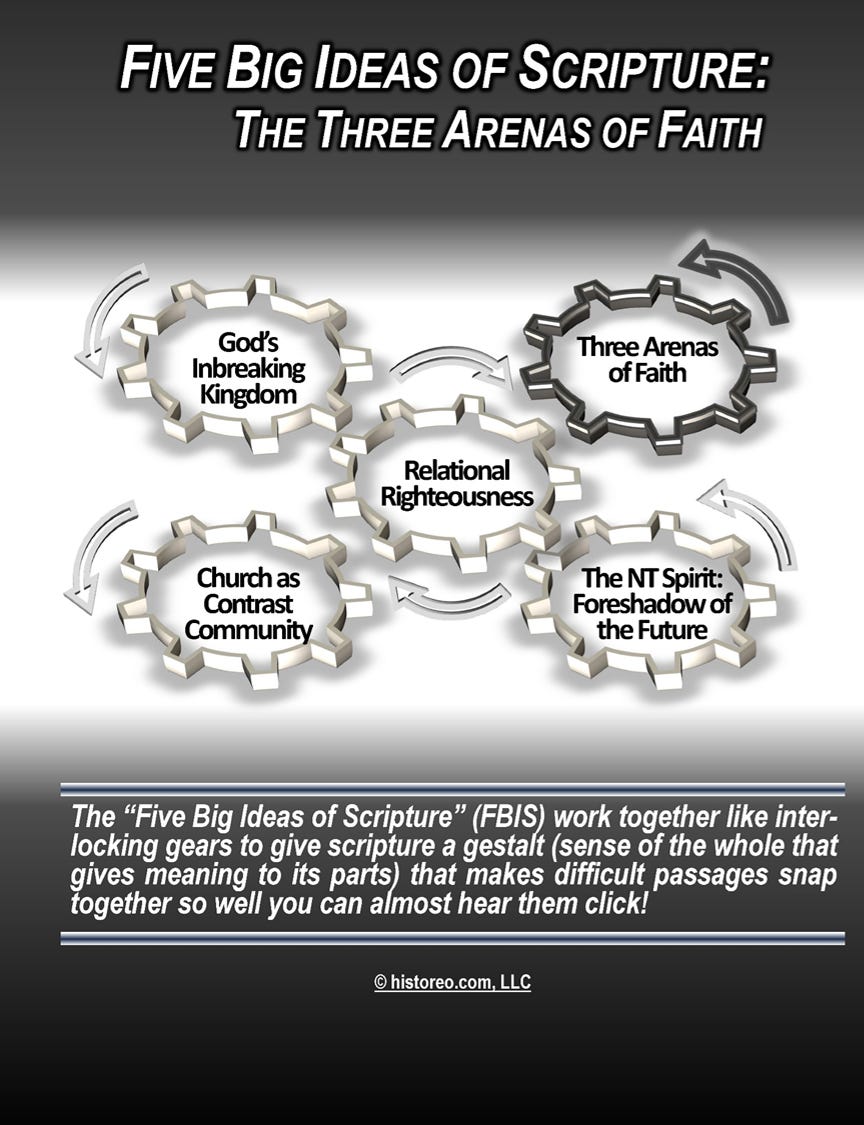
Taken together, these five ideas form a powerful and coherent framework for reading the NT. They shift our perspective from a list of disconnected rules and stories to a dynamic, relational narrative centered on a covenant-keeping God. Understanding (1) righteousness as relational, (2) God’s kingdom as both now and not yet, (3) wanting what Jesus wants through mimesis, (4) faith operating in three arenas, and (5) our dual relationship with God as Redeemer and as Creator, opens up scripture in new and profound ways.
Which of these five ideas most challenges your current perspective, and how might it open up a richer understanding of scripture for you?
Want to know more?
See the Five Big Ideas of Scripture.
— Bill Brewer
©historeo.com LLC
Comments
Nothing yet. Say the first thing.
Sign in to join the conversation.