
The Boardroom · Issue 02
AI strategy for people who make real decisions.
Every morning, a small team at HectorBeverages that makes Paper Boat opened Outlook and did the same 5 minutes, 50 times.
open the email
find the PDF
convert it to Excel
file it in SharePoint or forward it along
A purchase order here, a delivery confirmation there, a sales summary buried in an attachment nobody wanted to open.
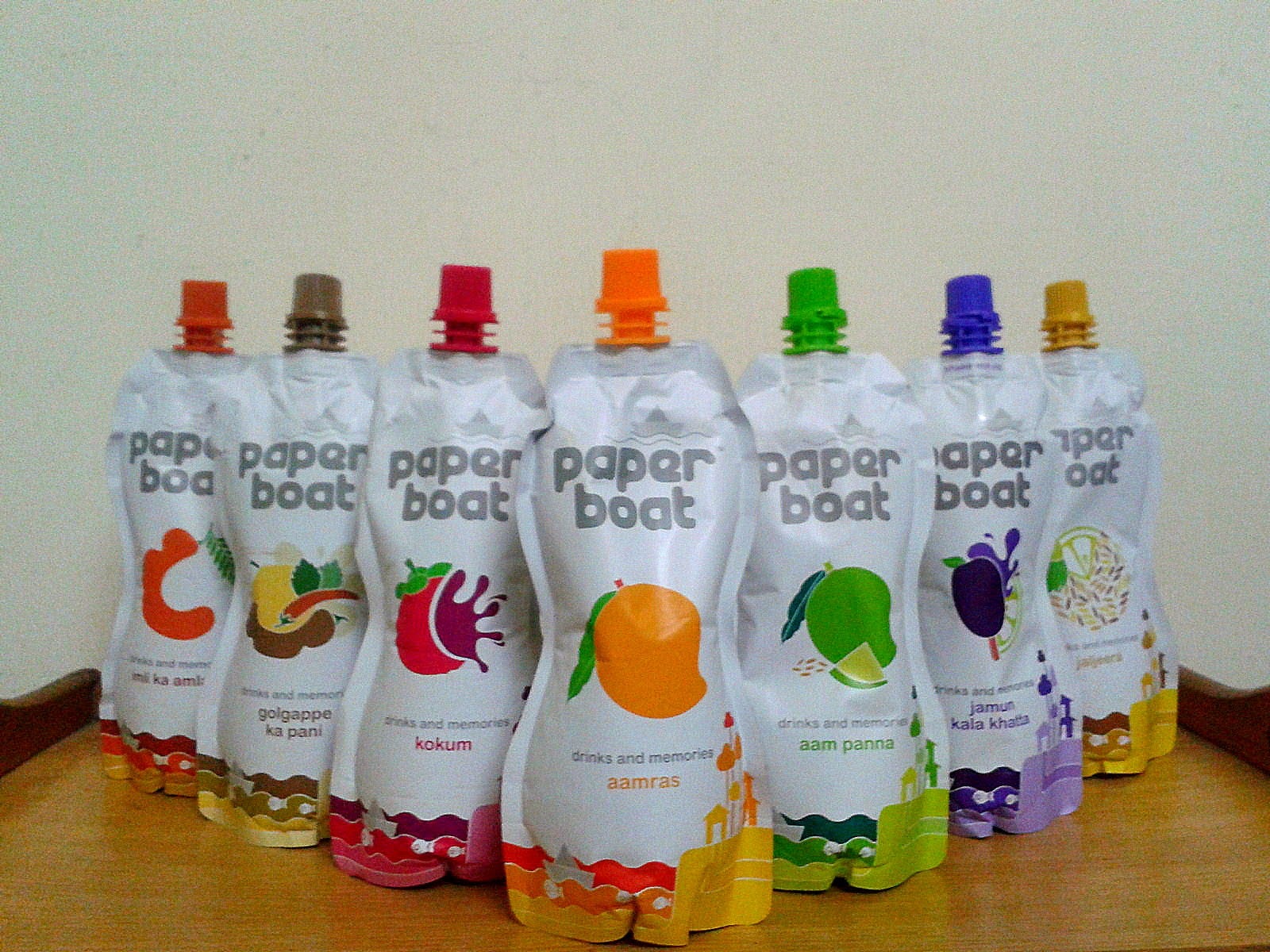
Paper Boat is a brand built on nostalgia.
Traditional Indian drinks, sold on memory and feeling.
And underneath that brand, the sales operations were running like it was still 2009.
Manual and repetitive.
Held together by people who were good enough at their jobs to never let it visibly fail.
That is the trap.
When manual work never visibly fails, nobody calculates what it costs.
If you are a Head of AI or an AI Architect evaluating automation for a non-technical business team, this is written for you.
Not a polished pitch.
A raw account of what we built, what broke, and what a team of 5 to 10 non-technical people learned about automation by the end of it.
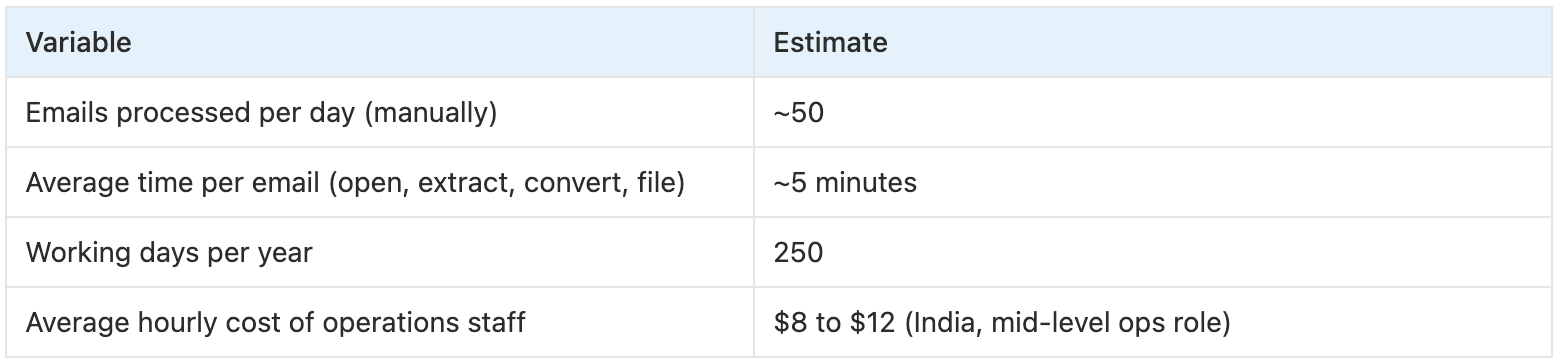
50 emails a day.
5 minutes each.
250 working days a year.
Run that and you get 1,042 hours annually spent opening PDFs.
At $10 an hour for the operations staff doing it, that is $10,420 a year, gone into a task nobody thought to question.
Nobody had run that number until we did.
You do not need a vague productivity gain claim to take to a CFO.
You need a number you can defend. Here is the one we use.
3 costs most leaders leave out of this math entirely, and all 3 are real:
Error correction
manual PDF entry runs 1 to 5 percent error rates
one wrong quantity or price cascades into chargebacks and disputes you do not see coming
Cognitive load
repetitive data work burns people out
error rates climb toward the end of a shift
that cost never shows up on a spreadsheet
Opportunity cost
a person spending four hours a day on PDF extraction is not doing account management or analysis
automation does not just save time
it frees capacity for the work that actually needs a human
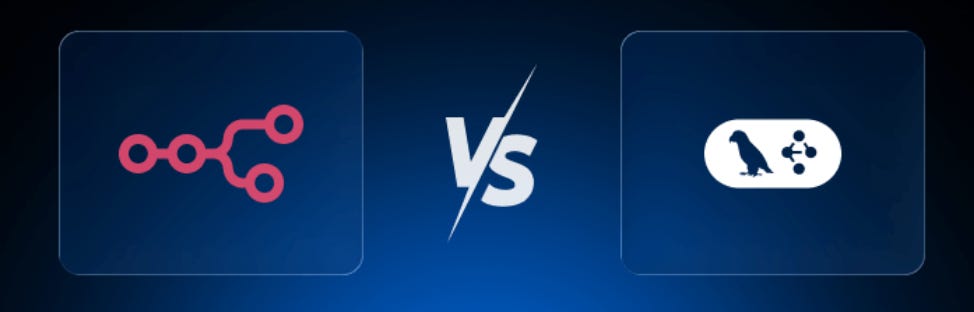
The moment automate this comes up in a room, someone says LangChain or CrewAI.
Or some agentic framework with a name that sounds like it belongs in a research paper.
Here is the uncomfortable part.
For this problem, all of that would have been wrong.
The HectorBeverages team was 5 to 10 people in sales operations.
not developers
not data engineers
some had touched Power Automate through their existing Microsoft stack
None of them could read a Python stack trace, and none of them should have to.
LangChain is a real framework.
It assumes you can read code, understand how an agent reasons, and debug a broken environment on a Friday evening.
CrewAI is the same story with different jargon.
Both earn their complexity when the intelligence is the hard part, when a system has to reason through unpredictable input and adapt.
This was not that problem.
Get email > find PDF > convert it > store it > notify
Same steps, same order, every time.
That is a pipeline not an agent.
We built it in n8n instead.
A visual canvas where every step is a node you can see and click into.
When something breaks, the operations manager in Gurgaon does not need a developer.
She needs to look at the screen.
Most leaders pick a tool based on what is trending, not on who will be operating the system 6 months after go-live.
Use this before you choose anything.
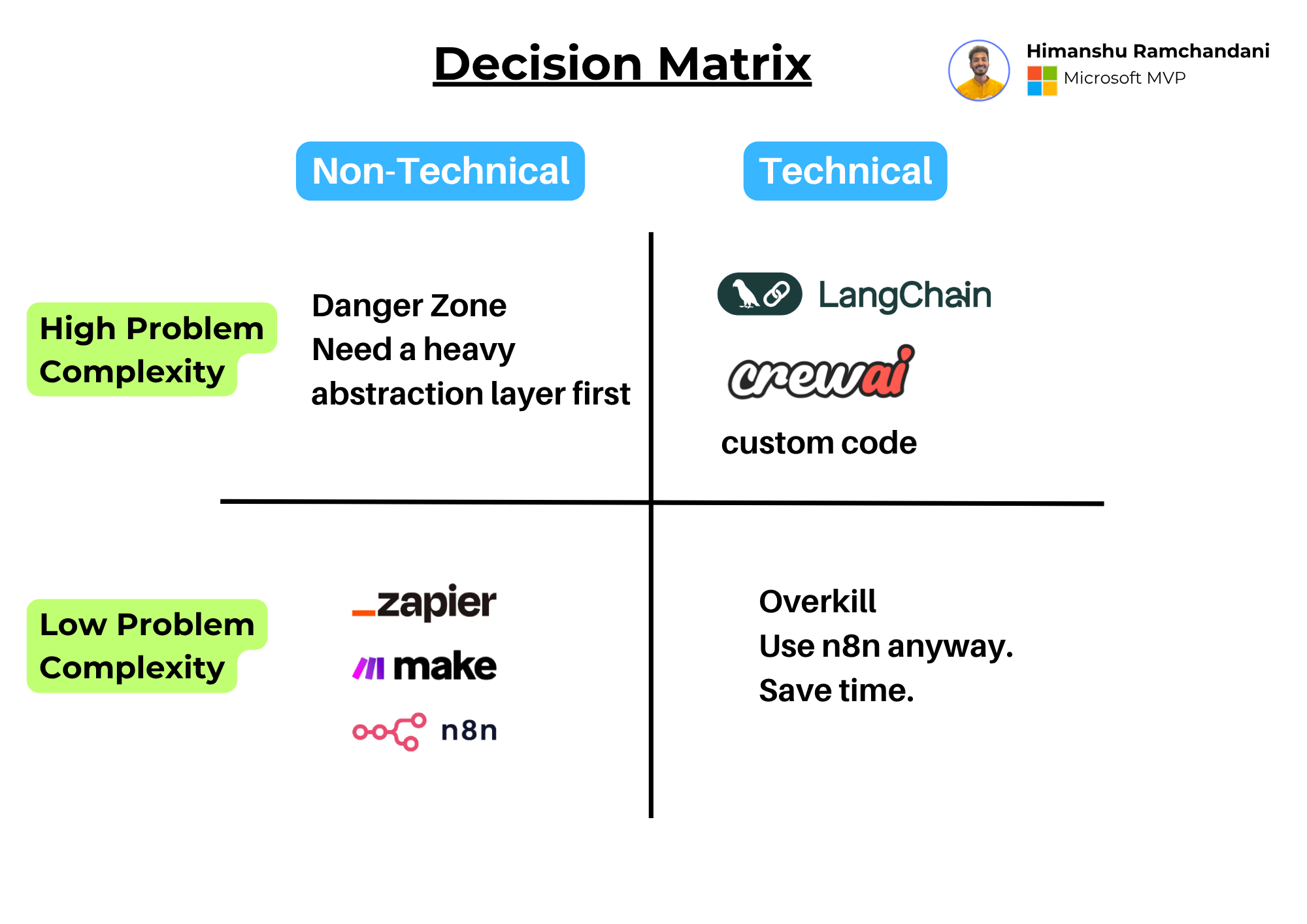
HectorBeverages sat in the bottom left.
Low complexity, non-technical operators.
3 questions to ask before you choose a tool:
Who breaks it?
If the answer is the sales ops manager in Gurgaon, your tool has to be self-diagnosable
- no stack traces
- no terminal accessIs the logic adaptive or deterministic?
Deterministic means the same input always gives the same output.
You do not need an LLM for that
You need a reliable pipeline- adaptive means the system has to reason and change approach based on context
- that is when the complexity earns its costWhat does maintenance cost in human hours, not just dollars?
A well-configured n8n workflow on a small EC2 instance runs around $50 a month or less
A framework that needs a developer for every change can cost ten times that in engineering hours alone
If you want a rule of thumb:
if the person who owns this in 12 months cannot describe what it does without opening a code editor, you have chosen the wrong abstraction level.
Before you sign off on any automation project, answer these:
can the person who will own this in 12 months describe it without code?
is the payback period under 6 months?
do we have a static IP or stable endpoint for webhooks?
are credentials documented with rotation dates?
is there a human checkpoint for high-risk steps?
do we have a monthly health check process?
are error alerts going somewhere a human will actually see them?
does the team have at least one person who can own this internally?
All 8 checked, approve it.
4 to 7, fix the gaps before go-live.
Under 4, the project is not ready.
What made this project different from a normal handover was that we built and trained at the same time.
The team watched the system get built, then built their own version alongside it using the same nodes.
By the end, two systems existed.

Ours running production.
Theirs as the thing they actually learned from, mistakes included.
That is the real difference between delivering a system and delivering a skill.
A team that owns a working pipeline still calls you when it breaks.
6 weeks in, the 50-emails-a-day problem was at zero.
Every incoming PDF gets processed, converted, filed, and summarized without a human touching it.
The team’s time moved from data entry to exception review, which is a better job by every measure that matters.
Engineering or Leadership
Comments
Nothing yet. Say the first thing.
Sign in to join the conversation.