
The Commissioners met at City Hall due to elevator issues at the usual locale. There—in that veritable chamber of Negativity—the bad vibes boiled over as the Wily Mark Wiley and Martini Bert Leininger tried to negate the public’s predictable time at which to come and petition their already hard-of-hearing Board of Commissioners.
And yet the onlookers1 were in for a double treat: for they also witnessed the final triumph of Martini Bert’s efforts to shoehorn the District Court into the old courthouse. Whether or not this is possible will, we presume, be learned in a very concrete way in November of 2028—just as Bert & pals are up for reelection.
Public Comment on the Attempt to Change the Timing of Public Comment
Susan Heath, on the attempted procedural change to move public comment in meetings to after the six-figure income NGO CEO reports that often precede the board’s order of business: “Each of you serve at our voting pleasure.”
Joseph Hendee, on the attempted public comment coup: “Public comment is not a formality; it’s one of the few opportunities have to address their representatives directly.”
Christina Bruns: “Not everyone can sit through an uncertain length of County business before having a chance to speak. . . I understand that the past year of heightened public engagement may have been uncomfortable for this board.”
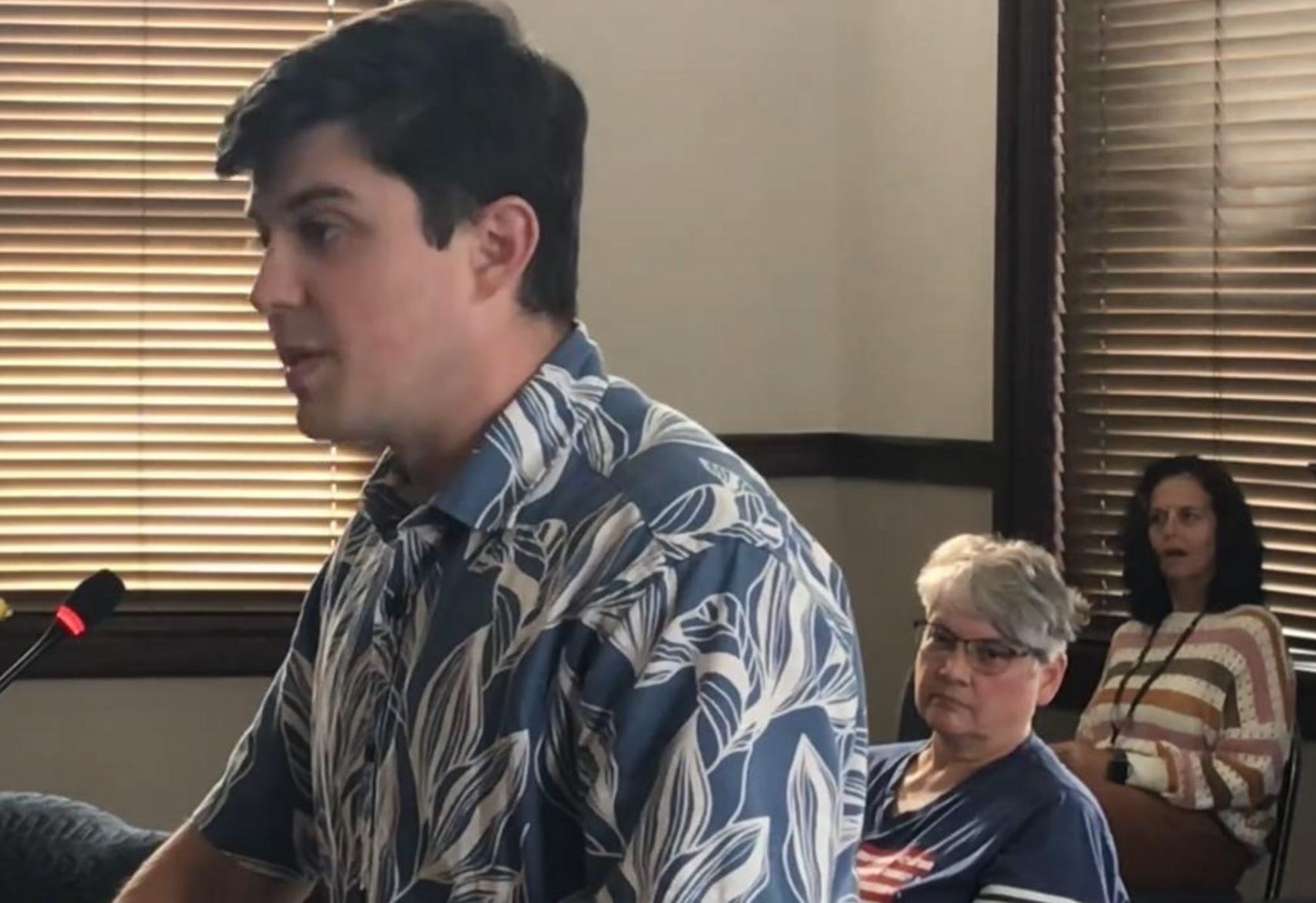
Joshua Wrekter, deck’t out in a fresh new T: “If the proposed rule on the docket for today passes, I wouldn’t be here. And of course that’s the point. . . We’ll have to wait in line to speak behind so-called nonprofit employees to give their reports. That’s the perfect image for how things work in this County. The people who spend the tax money—the people who this board sees as their true constituents—get to go first.”
Jean Hiese: “Your first task and obligation is. . . to the taxpayers of this County.”
Do Better Bentley: “Mr. Wiley, you in particular hold the people in contempt. It’s perfectly obvious with all of this. And now you’re holding the judges in contempt; you hold Lance Lashaway in contempt.”
Parker Hjelmberg, Hillsdalian chud, on target: “Whatever the reason for the proposed change, it will be seen as an attempt to shield yourselves from the heat. It will be seen as an attempt to make it more inconvenience and more uncertain for people who want to come in here and have their voices heard. It will then be associated with cowardice. There’s a lot of practical importance to public comment being held at the beginning of a meeting. There’s also a symbolic importance that has been referred to earlier. Citizens get to go first: there’s a real significance to that. Bureaucrats delivering their reports—they can wait.”
Public Comment on the District Court Facility
Judge Megan Stiverson, ready to escalate: “We ask that this resolution be tabled so that mediation can occur. Passing this resolution means absolutely no recourse other than to seek legal action. This is an action that can place the financial burden of hundreds of thousands of dollars of legal fees on the County. . . It is not possible to use the current Courthouse for all three courts in its present condition.”
Judge Michelle Bianchi, hoping for recourse: “It is time for us to reason together. . . We have to figure this out for all our citizens. . . They’re going to look at the facts, and they’re going to apply the law. . . I’m so frustrated with where we are right now.”
Other Public Comment
Stephanie Scott, on the allegedly illegal Moscow Township election, which is set to take place without an elected township clerk, much like the recent Fayette election: “I’ve had attempted negotiation with the County Prosecutor because she has a lawful obligation to prosecute.”
Mark Nichols: “I would like to cede my time to Stephanie Scott so she might finish.” Permission denied.
Susan Heath, on
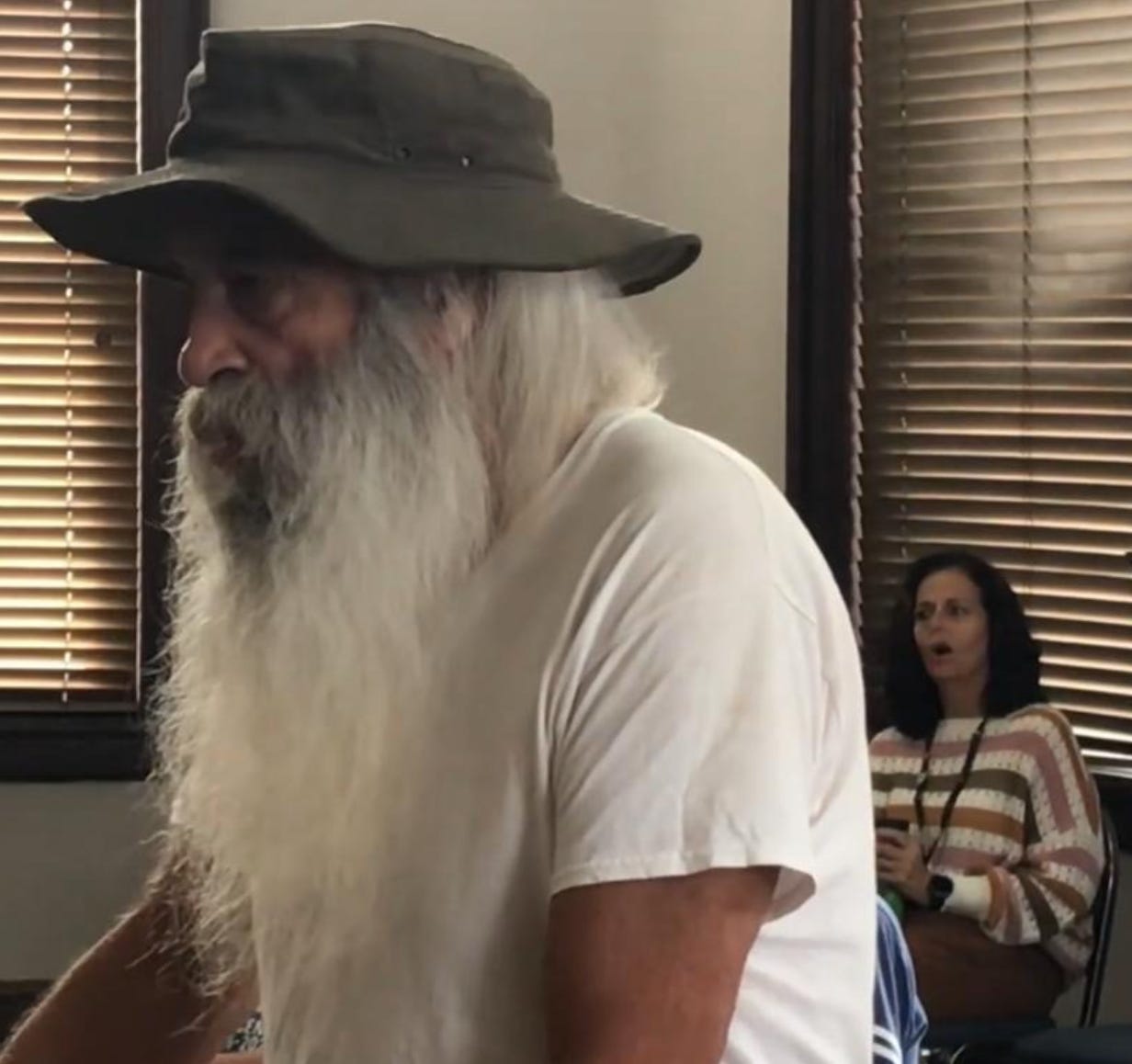
PresidentCounty Clerk Abe Dane’s anti-Trump messaging: “Regarding the Hillsdale County Clerk Abe Dane’s press release attempting to counter the President’s speech about election fraud across the country, and especially in our own state. . . As a former township clerk, I considered most of the President’s to be directed at higher levels—state officials, party machinations, and election equipment. When I saw Mr. Dane’s press release, however, it actually made me wonder more about our own County Clerks.” On a second press release issued by Dane on the same: “Mr. Dane doth protest too much.”Roberto Eich-ler began speaking but Clean Needles Wiley cut him off to ask that he provide his name: “Roberto Eich-ler. You gotta problem with that?!?!? Thank you very much. . . I think you’ve all got to go.”2
Changes to Rules of Procedure
As noted above, Martini Bert and Clean Needles Wiley schemed to move the first public comment period from its usual, predictable place near the beginning of meetings to after the lame reports and PowerPoints delivered by “Stakeholders,” i.e., not citizens but NGO directors. The change would render public comment’s timing less predictable and serve to head off public objections with highly curated reports meant to reflect as favorably as possible on the institution presenting itself to the board.
Bert, admitting guilt: “I am the one who wrote the changes. . . It will still give an opportunity for public comment prior to the conducting of any business by the Board of Commissioners.”
Benzing listed the ways in which the Commissioners are more permissive than some other boards (who do not meet at 9:00 AM on Tuesdays, we assume) with respect to public comment: “At least two of them, they structure their agenda very similar to what’s being proposed here: that scheduled guests speak before public comment. . . Many other bodies restrict public comment to agenda items at first public comment. . . While I understand the concerns. . . I believe we are still being very very open.” Fortunately his rhetoric did not align with his eventual vote.
Ingles: “It’s my opinion that the public deserves the first opportunity to address the Board.”
Bert and Wiley voted to pass the resolution to change the rules as presented, with opposition from the other three members— particularly Dark Kev! who came through once again, thwarting the blatant designs (hidden away in the consent agenda as a part of a larger slate of changes) to stifle public discourse.3
District Court
Years of mismanagement—decades, as Lil’ Bert’s absurdly long resolution accidentally demonstrated—led to a culmination on Tuesday, a strangely cathartic discussion that exposed yet again the Commission majority’s preference for Programs over Laws; for therapy over punishment; for rewarding left-coded bureaucracies—which will “educate” the backwards Hillsdale County electorate—while forcing the people to deal with the consequences of an overcrowded jail. Whatever one might say about the prospects of the three courts fitting in the Courthouse, the priorities are clear: the facilities and budgets of the majority’s preferred NGOs will be protected, even at the expense of the County’s most serious responsibilities.
Bert read his resolution, which included a lengthy justification for his decision to move the District Court to the old courthouse over the objections of the judiciary: “Whereas Hillsdale County, without additional revenue or reduction in General Fund appropriation, lacks the funds for any of the options proposed thus far for the relocation of 2B District Court,” among many other Whereases. The move necessitates the shifting of certain court offices out of the courthouse or to other rooms, and the renovation of large spaces to accommodate the District Court.
Benzing, outraged at the misplaced priorities of the County and the refusal to confront facilities issues before they become crises: “Meanwhile, our County jail remains at over capacity. While the need for additional cell space—and the ability to house the ever-increasing population of female inmates—is not afforded for. We have been ignoring that problem for decades.”
On the Annex, which he did not wish to sell: “We invested hundreds of thousands of dollars into that building.”
On a study indicating that the historic courthouse cannot fit all three courts: “We consulted with an architect with the National Association of State Courts. . . We were told by that report that our current courthouse could not contain all three courts. . . costing from $20 million to as much as $40 million.”
Benzing said they then hired an architect to give an estimate for renovating the DHS building, and after that, 25 Care Drive, both of which were deemed too expensive.
On something most local officials don’t want to see: “Sometimes we have to make difficult decisions. And that decision may be that we have to find a way to pay for it out of existing revenues.” This kind of rhetoric, ladies and gentlemen, is what our rulers refer to as Negativity. Try saying something like that at the City Council and prepare to get run out of town. . .
The crux, a rather disturbing conclusion should the County find itself on the losing side of a lawsuit against its own Courts: “What happens if a judgment is issued on a local unit of government by a court? If a local unit of government does not have the means to pay for it, they have to levy a new tax. The case law is very clear on that. Perhaps that’s the intent of this provision: if we get sued, we are forced to levy a new tax—a new tax that can exceed any Headlee limitations.”
More: “If we are sued by our judges, it will cost this body. . . approximately $240,000. However, we would have to pay both sides of that cost, or approximately half a million dollars.”
Ingles, on the County’s ability to cut spending on other things for the Courts: “We have, through the years, tried to find the plan. . . At this point, the only answer to it is an addition to the courthouse. Now, you say we can’t afford it, we can’t pay it. Respectfully, budget chair [Bert]: yes we can. And part of it, what we described in January, are ways it can happen.”
Wiley, caught in the crossfire, still hoping to escape making a public decision: “I will volunteer my vice chair to join me if that is the will of the board, that him and I get with the judges and work this out through a mediation process and come to some kind of collaborative instead of us making the decision. . . Just throwing that out there.”
Alas for Clean Needles! He has been around for too long. The resolution was forced to the table, with Benzing and Ingles opposed; Bert, Kev!, and Wiley (after a long pause and timid vote) for. Subsequently, the two judges present hurried out, with what we thought was a swift Bianchi kick of the door.
And, there you have it: years of turmoil and troubles resolved and ushering in a fresh new crop of controversy; for the establishment will now go to war with itself—get ready to open up your pocketbook!—in one monumental Lose-Lose-Lose.
Moscow Township Troubles
The Moscow Township Clerk resigned, effective July 31. Moscow Township, as a result, appointed Jennifer Campbell to run the election as temporary election administrator. Stephanie Scott later argued that this maneuver is of questionable legality.
Benzing, on the bloated responsibilities of clerks with respect to Michigan’s onerous election laws: “I believe that we will continue to lose clerks, continue to have a problem in finding people to run for any of these local offices.”
Unanimous support.
Data Center Discussion
Wiley wanted to talk Data Centers with the board, presumably to gauge general interest in throwing up barriers to entry.
Wiley: “Some bodies have taken action as far as creating a moratorium where they don’t want [data centers] in their community. It’s just a discussion I’d like to have.”
Benzing: “The position of the County of Hillsdale is that we have left the regulation of the kinds of business to local units.”
Bert: “As we do not have County zoning within Hillsdale County, currently there’s nothing we can do at this body’s level regarding limitations or moratoriums on solar projects or data centers.” He added that the County could frustrate the efforts of data center/big solar companies by having the Drain Commission implement a storm water management plan that would not be conducive to mass-scale industrial projects.
Later: “Data centers: let’s go reinvigorate the City of Detroit, and use the open space they’re going to have there.”
The board determined that nothing could or should be done at the present.
While the principle of local control is a fine thing in our opinion, we were made uneasy by its rather simplistic application in this instance. What are the petty, clueless officials of, say, Fayette Township (or any other) going to do when Big Data comes knocking with a team of lawyers whose monthly retainer exceeds the township’s annual budget? Who among us is inspired by the efforts of most local officials—the kind of people who are impressed with themselves for becoming board members in some township of 2,0004—as they govern (or not), whether in the imperial City of Hillsdale or the surrounding provinces? No, these people have a fundamental inability to make decisions on behalf of their constituents when the chips are down. . . They only signed up, after all, to feel important, to fill out their dumpy resumes and “give back to the community”—a most arrogant claim.
Public Comment
Stephanie Scott, on the Moscow election administrator appointment: “I can’t believe you guys just did what you did. You didn’t have a single discussion on what the statutes allow you to do. You just voted to conduct illegal elections here in this County. . . You guys can’t just vote in someone with a fancy contract and say there’s a contractor coming in to run elections.”
Unnamed Assailant: “I have to agree with Brad Benzing here: this board’s arrogance and incompetence gives all the evidence needed to form a lawsuit against you guys.” The Assailant soon retreated as Wiley garbled into his mic asking for him to state his name.
Roberto Eich-ler, not restating his name, with Wiley imploring him to do so throughout: “At least you guys got through the day. You have yourself a nice day, Mark. You’re the most disrespectful man. . . Do you remember Mussolini?”
Commissioner Comment
Benzing: “I’d like to thank the City of Hillsdale and Councilman Bentley. . . thank you very much for helping us out with these chambers; it is greatly appreciated.”
“What they’re mandated to do by statute is their job. . . If they’re uncomfortable with that, then they shouldn’t be sitting at the table.” Judge Michelle Bianchi says the Commission majority should resign.
“When someone parks their vehicle at a political clubhouse or shows up at public meetings, the community has every right to document what they’re doing in public view and talk about it.” Penny Swan plans to follow you and film you (from the road—so it’s OK!) if you disagree with her.
“I don’t even wanna go to County commissioners meetings anymore because I don’t wanna sit or be around all those crazy people.” And has harsh words about her fellow citizens.
“Every piece where there’s ballots being handled or cast vote records being transitioned from the clerk to the county, there’s accountability and chain of custody the whole way. . . So it’s not just one person that has access to something without anyone looking. It’s accountability the whole way, and it’s designed that way.” The embattled Abe Dane participates in another emotionally-vulnerable photoshoot.5
“Someone will rule, someone will exercise political power, someone will make the cultural artifacts and teach the classes that define the world your children live in.” Auron MacIntyre.
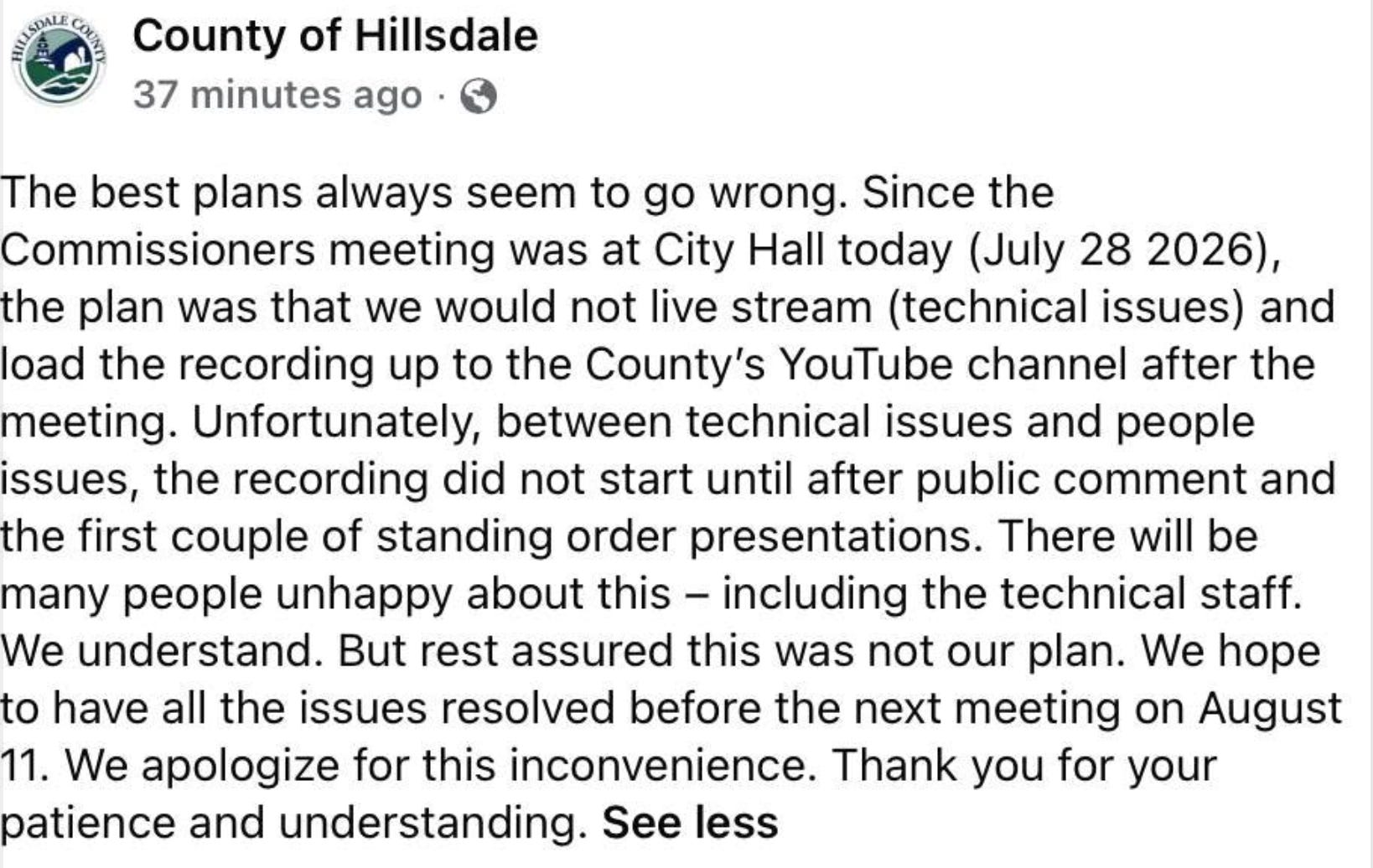
Not those who hoped to watch the live feed. County tech dropped the ball (hence our tardiness) and proceeded to scold the “many people unhappy about this” in a smug Facebook post—
We noticed that Eich-ler’s comments were taken rather poorly by a lady posted up in the back, from the Nichols translation—
She was also appalled by both Wrekter’s shirt and wretorick:
The County Commissioners—Kev! excepted—are the real chess masters of board politicking; all others are amateurs.
No posts
Comments
Nothing yet. Say the first thing.
Sign in to join the conversation.