
It’s not just history and culture that are right around the corner in the Highlands. Northeastern Scotland still offers a relative high degree of freedom and open space for creativity and alternative lifestyles.
Since I get to make a RadioTravel story about Scotland, I’ll once again limit myself to just the basics of what I’ll be covering in detail later.
Findhorn
Several years ago, I wanted to do a story on the well-known Findhorn spiritual community, but the trip never happened back then. Now, quite by chance, I find myself half an hour’s drive from the project, which is now called an “ecovillage.” The place is located on Findhorn Bay, which flows into the Moray Firth. A large, triangular bay of the North Sea, considered the largest “firth” (inlet) in Great Britain. I would have loved to make up for the story I missed back then, but I learn that the Findhorn Foundation, with which I had been in contact, has been dissolved, and its responsibilities have since been taken over by individual organizations. This includes media and public relations work as well. I don’t agree at all with this new approach, and I tell myself, “Oh well, never mind.”
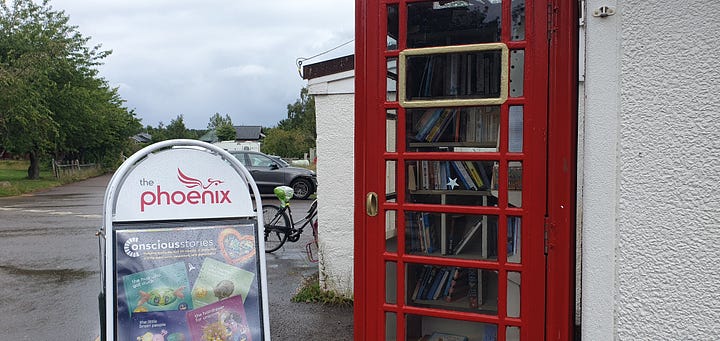
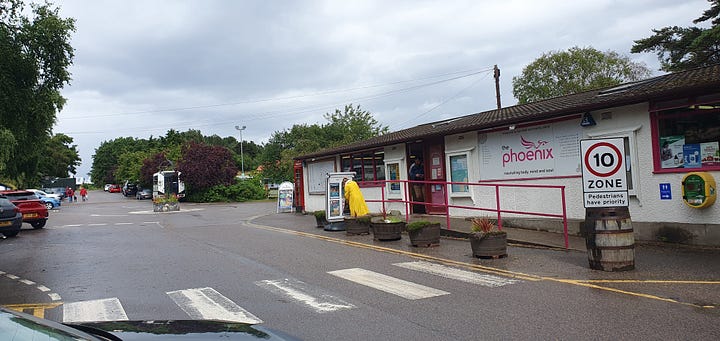
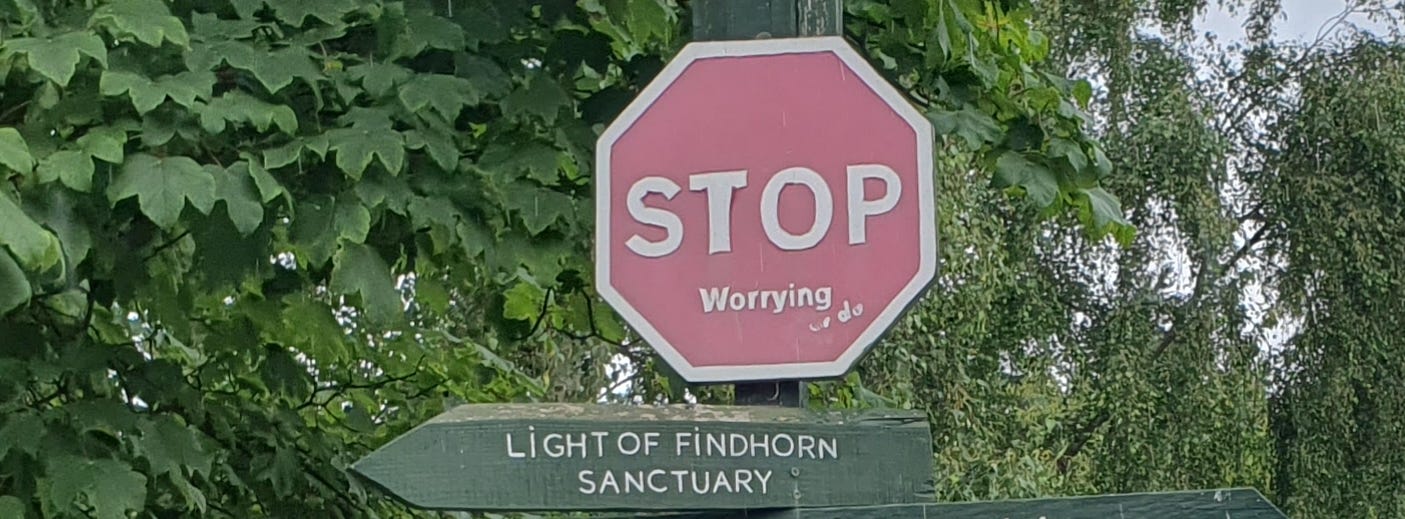
Still, I drive to the ecovillage just to see it for myself. I stroll down the main street. Next to the organic grocery store stands a disused, red-painted phone booth that now serves as a free “bookstore”: Residents drop off the books they’ve finished reading here—and in return, they can help themselves to others. Further down the street, a stop sign on a sort of traffic island offers this sound advice: “Stop worrying.” By chance, as I continue walking, I run into John of all people—the same John I’d spoken with on the phone when he was volunteering at the community office. We decide to head to the café a few steps down the street for a cup of tea and a chat. As we say goodbye, it starts to rain, and I retreat to the “Sanctuary”—a room for devotion and meditation.
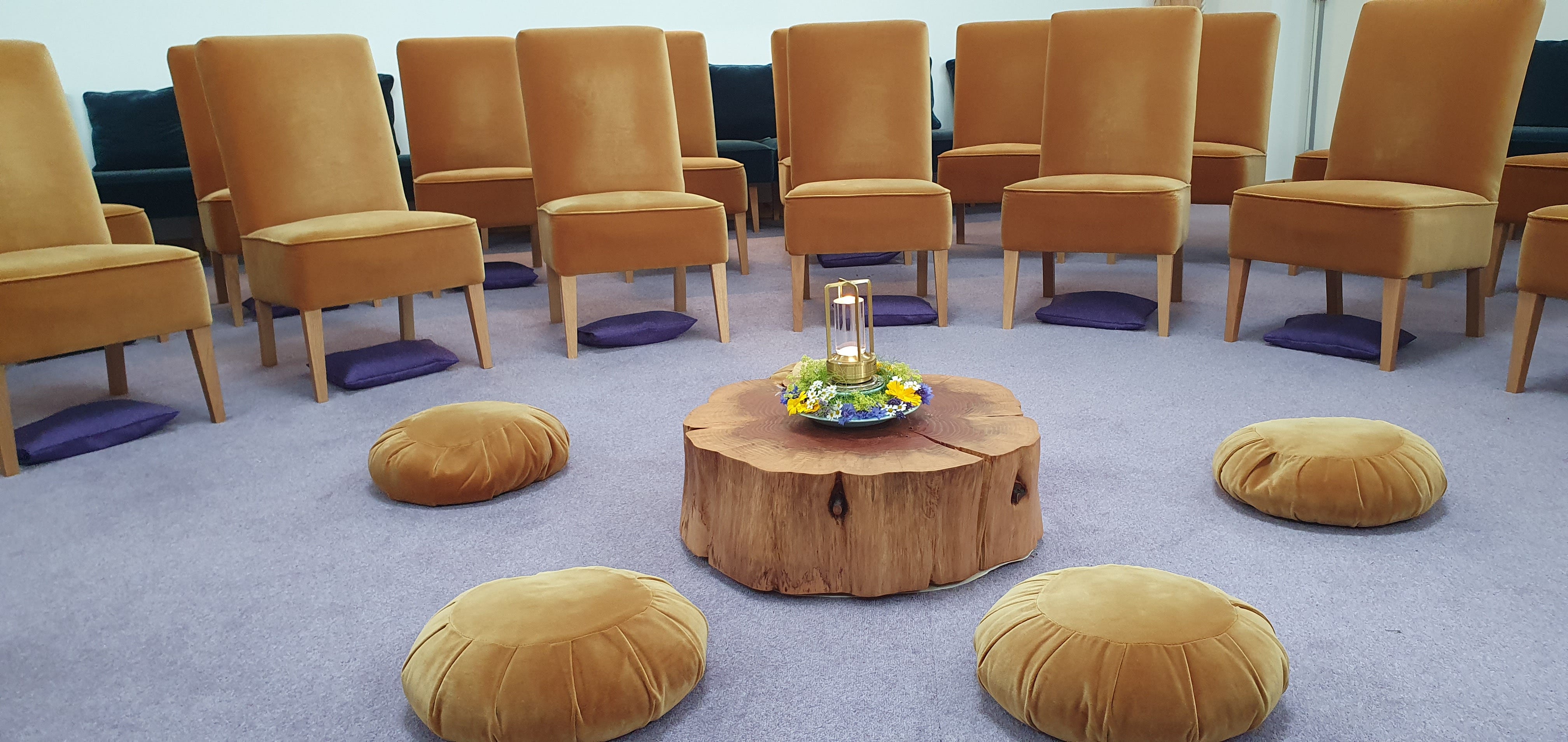
In the center, on a wooden block, stands a brass oil lamp. The chair seats and meditation cushions surrounding the arrangement are covered in softly shimmering gold-colored velvet. “Be silent,” it says on the outside of the door—and that’s exactly what I do. Since I’ve taken refuge here from the rain, I use the opportunity to simply do nothing for a while. I listen to the raindrops tapping on the skylights and the umbrella-shaped roof.
At any rate, the media relations representative later suggests that I visit the Marcassie community. The term refers to the residents—that is, the artisans—and the operation of the Marcassie Farm Lodges in Rafford, Forres. The certified organic farm produces vegetables, herbs, and fruit, and raises ducks, chickens, and a flock of sheep. What interests me most, however, is Naturally Useful. After a ten-minute drive, I arrive there.
Naturally Useful
Woodworker Karen Collins founded the craft center, whose core group currently consists of a triumvirate of women. On their website, they write that their work ethic is to “reconnect people to nature by making tactile functional things from materials that are naturally occurring and readily available.” By caring for our planet, they say, they are provided with the resources to make and sustain their lifestyle choice. “The act of making using traditional hand skills can bring tranquility, connect us to the present, and provide peace of mind, body and spirit”
Their Facebook page states simply: “Using willow, wood and wool we weave, craft and teach.”
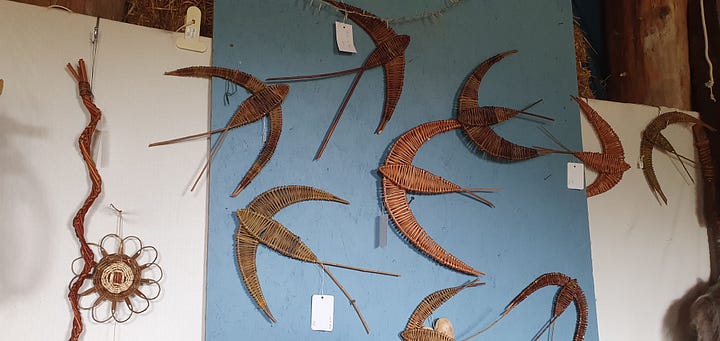
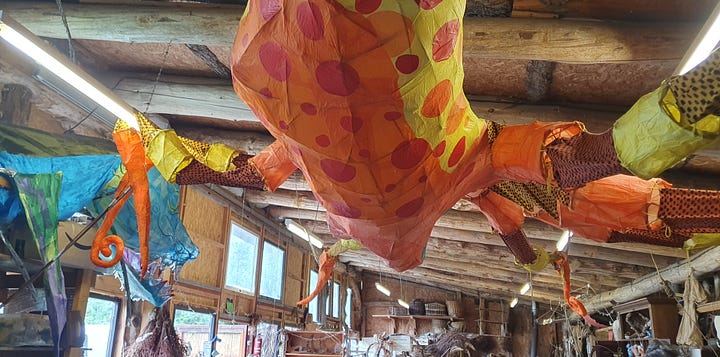
The workshop is a huge wooden shed where the women work and display many of their products for sale. I especially like the swallows spreading their wings—made of wicker—along one wall. The workshop is dominated, however, by a giant, colorful papier-mâché octopus hanging from the ceiling, which was crafted for a local festival. The animal figure reminds me of the wonderfully sentimental Hollywood movie “Remarkably Smart Creatures”, which I recently watched on Netflix. The titular supporting character is an old, sick octopus who sadly counts the days of his captivity in an aquarium and has the deepest desire to be allowed to die in freedom. Anyone who doesn’t shed a tear watching this movie has no heart…
I didn’t come here for the octopus, though. What drew me here is the fact that Naturally Useful offers a truly extraordinary product: urns and coffins made from willow wicker. They’re used for green burials—that is, natural burials. This is roughly comparable to burials in a forest cemetery. Here in Scotland and the rest of the United Kingdom, however, people are also allowed to bury the ashes of their loved ones on their private property.
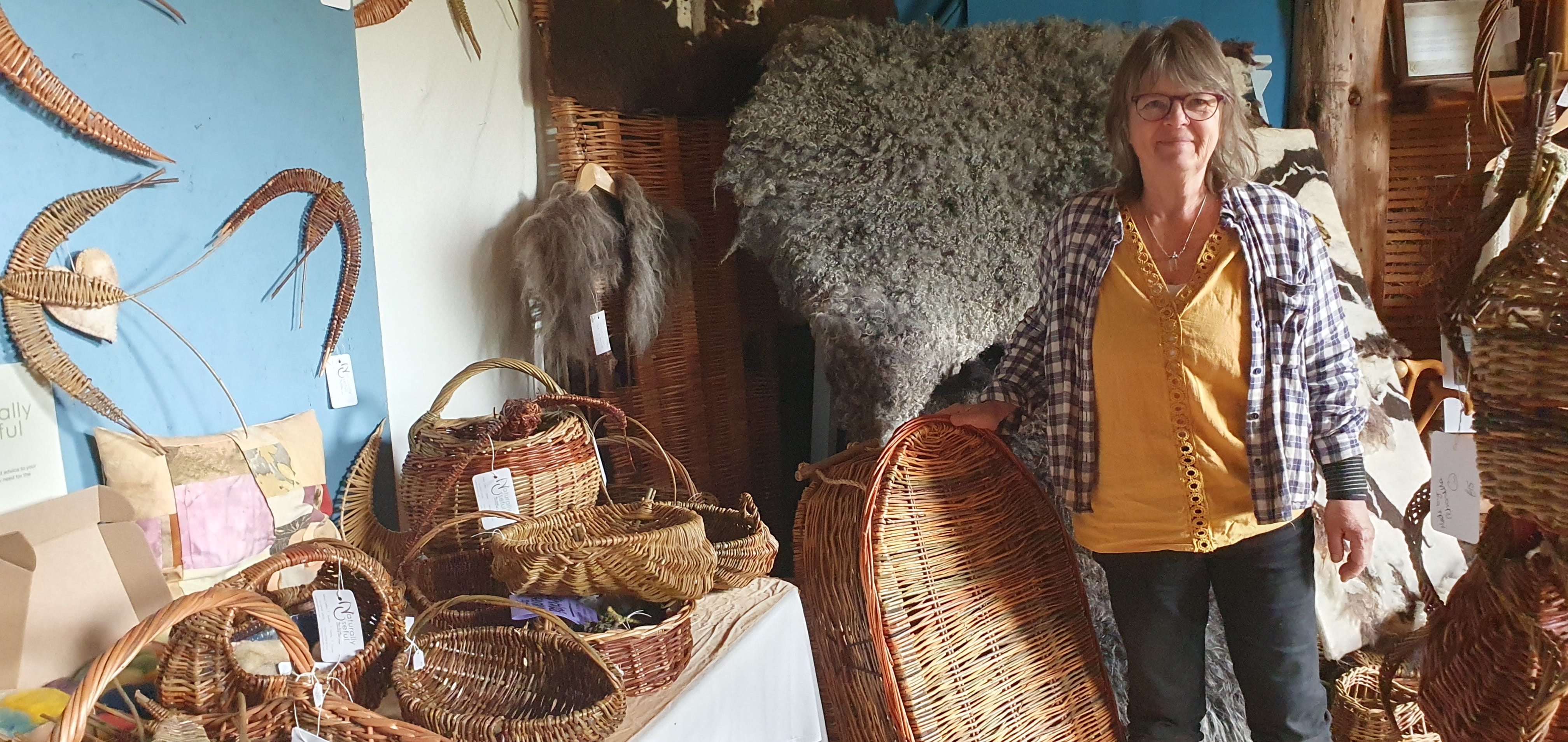
For anyone who wants to learn the art of willow weaving, Karen Collins offers workshops and classes—and even lodging. The small wooden lodges are located on the nearby grounds where the artisans grow the plants they use to dye their wool. Right next to them, the team cultivates the thin willow rods for their woven products in a field. Karen Collins also uses the willow for river restoration. More on this in my RadioReise.
I quickly pick up a whiskey-flavored Highland Cheddar (*hmmmm*) and an envelope painted by local artist Ailsa Kay at the community’s small shop. Her painting, rendered in black, white, and gray, depicts a “Great Auk or Pinguinis impennis,” a species of penguin that once lived on the Funk Islands off the northeast coast of Newfoundland. It was hunted by the millions for its meat, fat, and feathers—and has been considered extinct since 1844.
Highland Cycling Competence Center
How do you ride a bike with Alzheimer’s? To find out, I head back—and on to my last stop of the day. It’s actually just a five-minute drive from my current “home”: the Highland Cycle Ability Center—a rather stilted phrase. Some would probably describe it as a cycling center for people with disabilities. But Joanna and Alistair McGregor, the couple who founded the facility, don’t really like the word “disabled.” They prefer to talk about “people with different abilities.” Near their home, they’ve created a facility where people with physical or mental disabilities can enjoy a 1-mile bike path to their heart’s content.
McGregor’s son James was still a baby when he contracted meningitis. Hydrotherapy did him good. So his parents opened a swimming pool on the grounds of the hospital in nearby Inverness, where not only babies but also teenagers, adults, and the elderly can strengthen their muscles while floating in the warm water. Word of their success spread quickly. In 2012, someone involved with the Commonwealth Games—a sort of Olympics for Commonwealth countries that includes para-sports—asked the McGregors if they would be interested in operating a similar cycling facility. With the help of grants from the EU, of which the United Kingdom was still a member at the time, the couple opened the Highland Cycle Ability Center two years later.
Visitors can also ride the course several times in a row—most of them accompanied by caregivers or family members who pedal and steer the bike. The center’s team selects the right bike from a selection of nearly 80 different models. James, the McGregors’ son, who is now 56 years old, is a regular among the volunteers. Riding his “scooter,” he patrols the course, keeping an eye on those currently out on the bikes, and helps ensure that visitors return safely to the starting point.
From time to time, two other staff members load bikes into a trailer and drive them in a Land Rover to other Scottish cities where there is no facility like the Highland Cycle Ability Center. The Land Rover and trailer were donated by Highland Cross. Every year, this nonprofit organization run by volunteers organizes the 50-mile duathlon competition of the same name (20 miles on foot, 30 miles by bike), which runs coast to coast—from west to east—through the spectacular Highlands. To participate, the three-person teams do not have to be Scottish or British, but they must raise funds for charities in the Highlands. A positive sense of connection to one’s homeland.
This text was first published on my German website and translated by me.
No posts
Comments
Nothing yet. Say the first thing.
Sign in to join the conversation.