
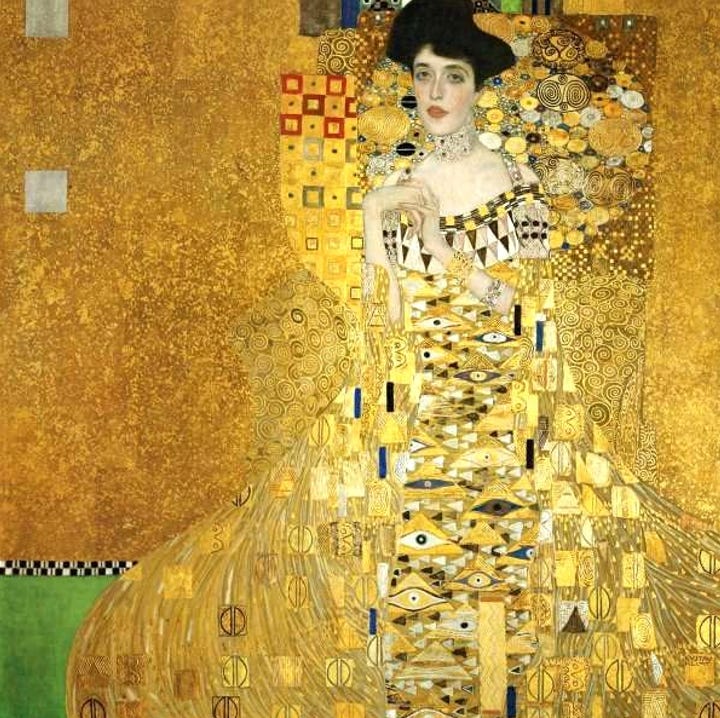
They adorn the walls of a million undergraduate dorm rooms. They appear on everything you can think of to print an image on, from tote bags to umbrellas to coffee mugs, calendars and jigsaw puzzles. Even if you’ve never heard the painter’s name, you know the images instantly. We know the lovers and fine ladies, allegorical and mythic figures and stylised forms, all wrapped in shimmering tooled and decorated gold. Faces emerge from fields of intricate symbolic geometric patterns, swirls and spirals, and figures are suspended in a strange and beautiful world that seems to hover somewhere between ecstatic vision and reality.
Gustav Klimt is one of the most recognisable modern artists, but less widely understood is how deeply he was artistically influenced by Byzantine and iconographic art.
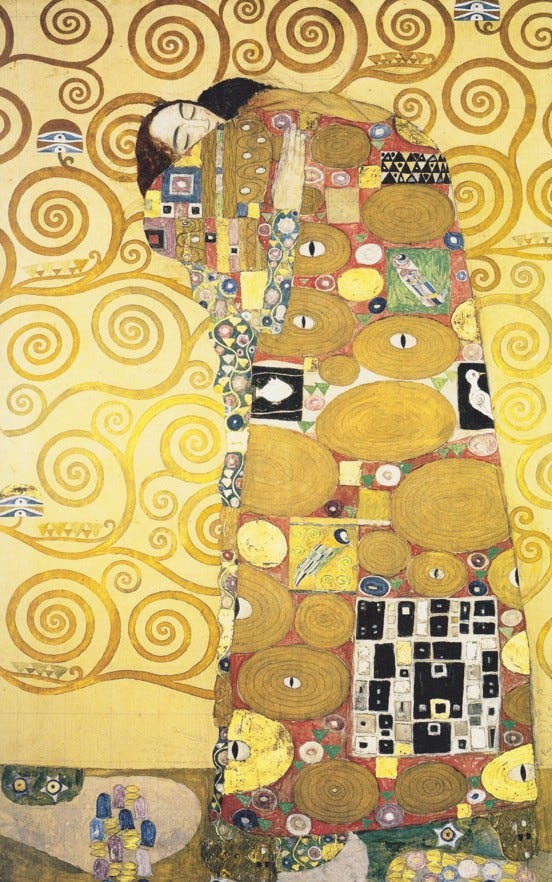
If you know what you’re looking for you will see it immediately. Beyond all the dazzle of the gold, we also recognise the flattened space and decorative surfaces that almost dissolve the human body into symbolic forms beneath them. All thought of conveying a convincing three-dimensional natural world is abandoned, irrelevant.
None of these belonged to the dominant visual habits of the immediately preceding Western tradition, which had come to regard the imitation of the visible world as the highest purpose of painting. Klimt is one of a number of late 19th and early twentieth-century artists who were looking far back into the past for an entirely different artistic language.
Around the turn of the twentieth century, a surprising number of Europe’s most innovative painters began looking beyond visual naturalism in search of a different understanding of what painting could be. They were not trying to revive Christian iconography, but they found themselves rediscovering principles, a visual language, that Byzantine painters had preserved and developed over the course of a thousand years.
It is one of the great ironies in the history of art. The very tradition that generations of critics had dismissed as “primitive” and artistically obsolete, became one of the hidden sources from which the 20th century European avant-garde drew inspiration.

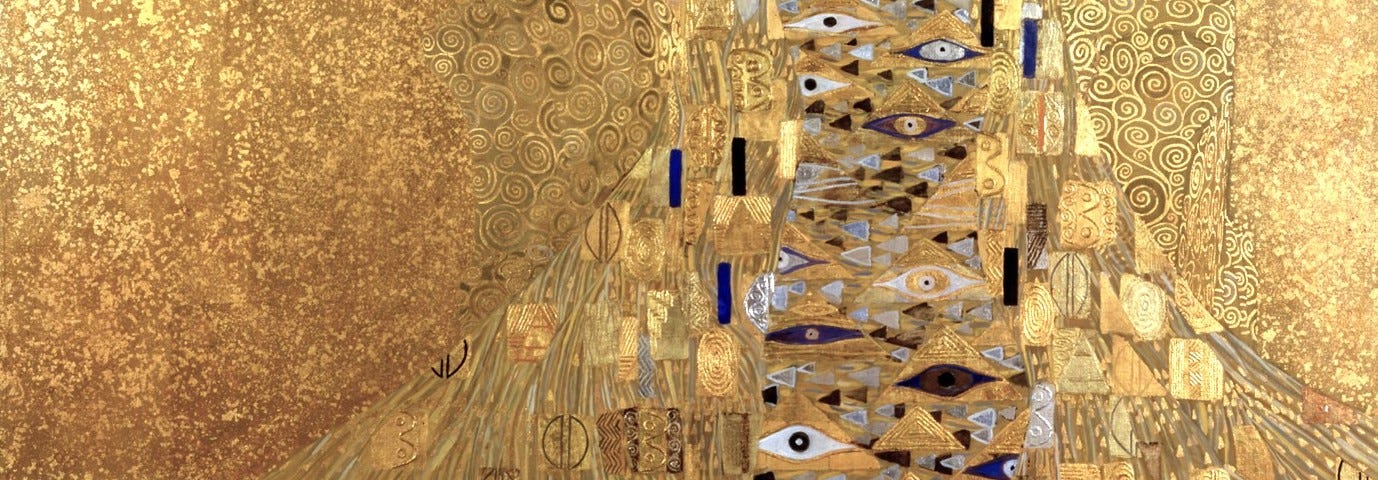
In today’s post for paid subscribers we will ask why one of the most famous modern painters turned away from the hyper-realism and narrative painting of his time to sixth-century Byzantine mosaics and medieval icons for inspiration?
We’ll discover why the gold, flattened space and symbolic forms and reverse perspective of Byzantine art captivated a generation determined to break free from the rigid conventions set from the time of the Renaissance.
We’ll see how, after centuries of being dismissed as “primitive” and artistically obsolete, Byzantine art unexpectedly became one of the hidden sources of modern painting.
Become a member
The Sacred Images Project is a unique source of thought on sacred art, and a permanent reference library for its history, theology and practice.
Free subscribers receive regular public essays, news and updates.
Paid subscribers get the more substantial research: long-form essays on the history and theology of Christian art, extra materials below the paywalls with serious looks at ancient primary sources, close examinations of individual works and artists.
Subscriptions support the research and writing that keeps the whole project going.
Paid members receive:
Weekly subscriber-only essays and in-depth series
Full access to the Reading Rooms and growing archive
Downloadable resources, high-resolution images and other member extras
Membership in the Ars Sacra Association and future members’ benefits
Annual membership: $75, 30% off the monthly rate.
Comments
Nothing yet. Say the first thing.
Sign in to join the conversation.