
I was recently sitting next to a journalist and a subeditor, and half-listening to their conversation. The subeditor congratulated the journalist on a story he’d published that morning, and asked where it had come from.
A good story presents itself to journalists in one of two ways: the journalist stumbles upon something, or someone – a ‘source’ – tips them off.
“An old colleague tipped me off,” the journalist said.
The sub-editor said something about this being old fashioned, and the journalist agreed, joking that ‘all those hours in the pub paid off’ while he impersonated the stereotypical journalist of 30 years ago who feasted on boozy lunch breaks and hacking phones, and, by default of the times, relied totally on offline methods of finding stories.
I dissect their exchange in the following days, but can’t get to the bottom of it. Journalism is definitely being eroded and devalued, but tip-offs surely remain a fundamental part of its skeletal remains? That something so crucial to journalism sounds old fashioned (because it often requires interpersonal skills) speaks volumes to how much the industry now feeds on social media and press releases. But still, I tell myself, actual human-to-human journalism remains in the present.
----
E has taken to writing. He draws compact squiggles in lines across his notebook while muttering about his dreams from the night before, or our plans for that day. I write beside him on the opposite page, and my writing is only marginally more legible. I worry that he could be capable of writing actual, proper letters, and he’s just copying my writing.
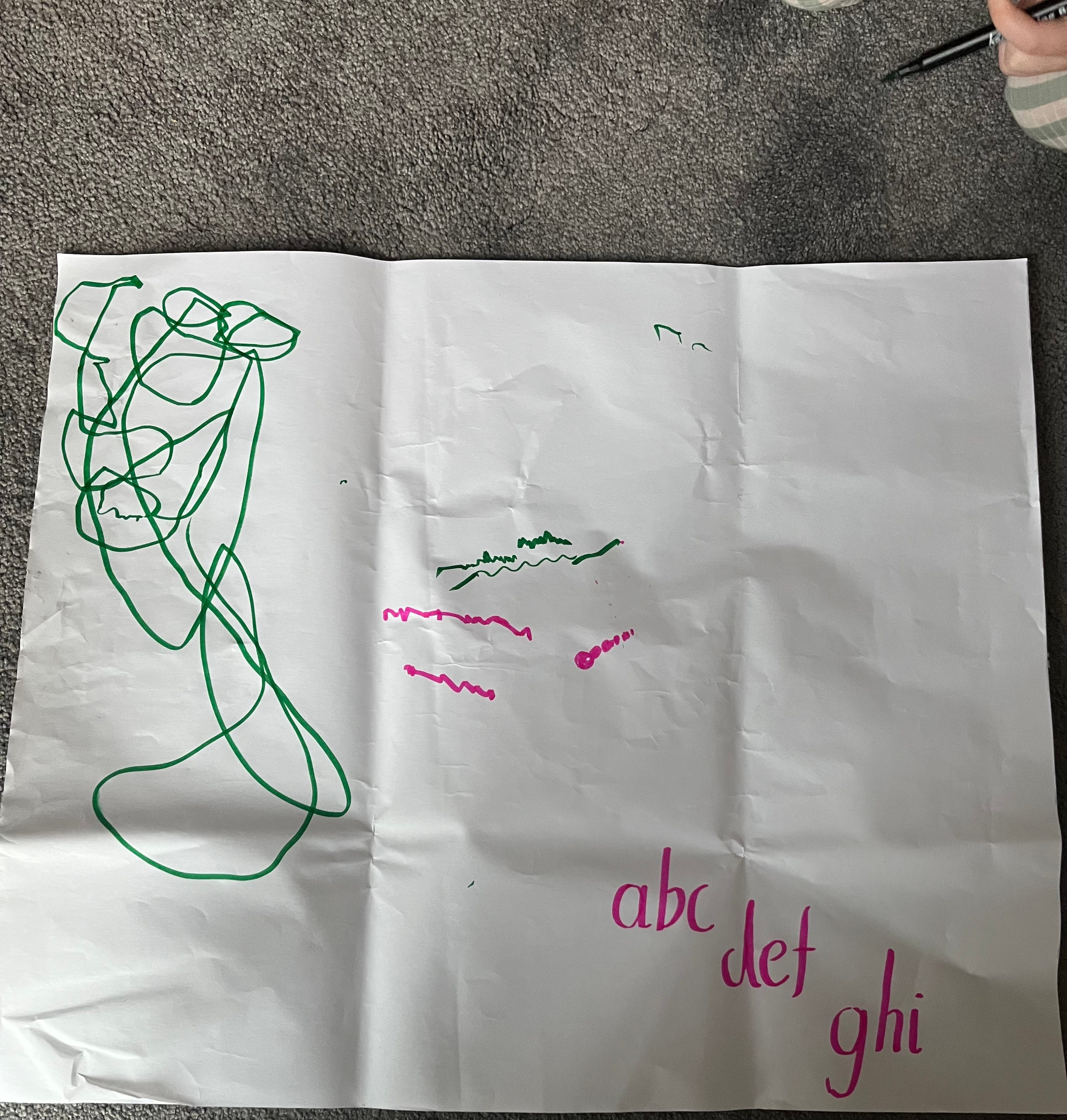
I decide I must get my handwriting in shape by the time he’s old enough to realise that it’s so messy because signing his name on his friends’ birthday cards is the only time I ever physically write anything.
I ask my mum if she still has my old typewriter in her loft. She brings it over and I present it to E. I place some paper in the top, but I can’t find anywhere that makes the ribbon for it anymore. Within two days, it’s sitting on the far end of the kitchen top, hidden under its lid. A visual metaphor of my motherly worries.
---
That weekend is one of those weekends where the outside world doesn’t penetrate the bubble we’ve made for ourselves inside. I know that, in my memory of it, the sun will never rise.
On the Saturday, R starts to make his way through the mountain of E’s baby clothes we’ve buried in wardrobes and corners in his little bedroom, spurred on by E finally going into his own bed, at least for the first portion of the night, instead of mine. I stay downstairs, keeping the chaos-maker away from the chaos.
When we all go briefly outside, late in the afternoon, the membrane around our house stretches out to accommodate us, shielding me from realising we’re letting go of the last vestiges of babyhood.
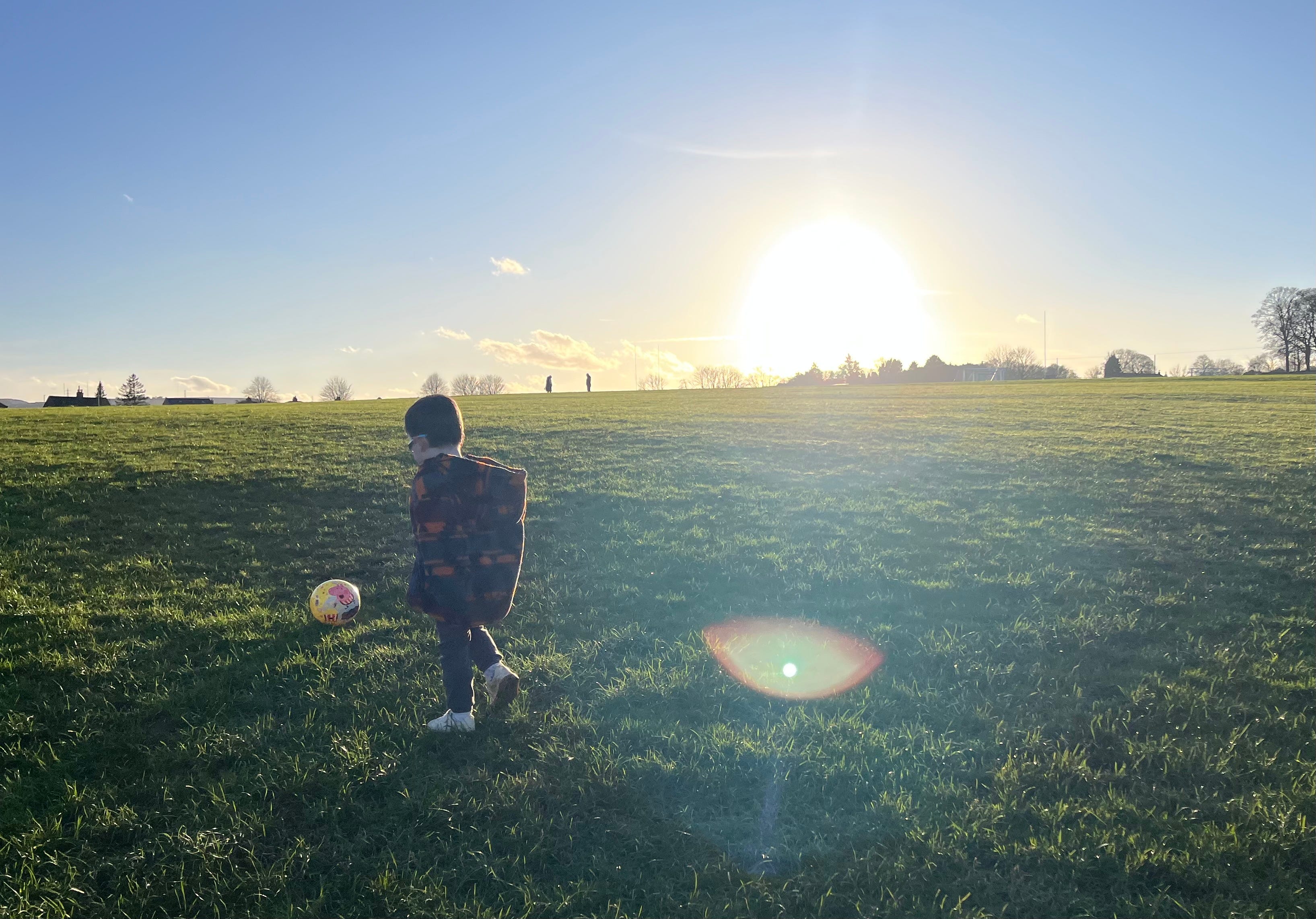
By the Sunday, E knows what’s going on upstairs, and takes to running upstairs every hour or so to reclaim an old baby toy he insists he never stopped loving. I follow him slowly, quietly tell him to stay out of the way and to not interrupt daddy, with a quiet question mark at the end of the sentence.
----
We all seem to be talking more openly about how depressing winter is, now. Since the pandemic, it seems, we trudge a lot less apologetically through January and February.
I wonder if everyone is one season in particular. I feel a reluctant kinship with this time of year – like loving a Tory relative unconditionally and illogically – and worry that I’m a winter person. Mysteriously captivating and darkly humorous, or perhaps just the type that saps people of their energy. I vow to remind myself now and again that the ability to love something in spite of its relenting darkness and bitterness and pervasive death is a virtue.
As February approaches, I get busier with work, but I also read something that says it makes evolutionary sense that we’re slower and sleepier in winter. I continue to run to E’s cries, feel vicarious relief when he resolves a bodily demand, and fill in the blanks of his emerging vocabulary – glad that at least one part of me is evolutionary aligned with my exterior life.
----
We walk around the local museum, which we’ve been coming to regularly since E was born three years ago. He interacts with everything among the ghosts of his and my younger, wobblier selves.
We go to the museum’s café and E sits on the table to drink his cup of milk, with his feet perched on my knees. He leans forward, giving up his weight to me, and we hug. Whatever the season, however tired, whatever is passing or staying, we sit for half a minute among the relics and fixtures of our blurred lives, plugging into all the reasons we’ve ever hugged.
----
A few mornings ago, I try to read to R a passage from the book I’m reading. E quickly realises the shift in attention away from him, and snatches the book from me – sans bookmark, of course. He runs to the stairs.
I ask R if I’ll ever be able to enjoy a book again, as my self-pity carries me off the sofa and into the hallway.
“Leave me alone, I’m reading my book,” E says.
I’m painfully aware of the desire in all parents for their children to grow up into better versions of them, but I can’t ignore my delight in him asking to be left alone so he can read. The egotistical pleasure! The experiment is working!
He takes my book under his arm and to nursery for the day’s show-and-tell, drops it in the box among the cars and dolls.
So much is rapidly changing, in our world and beyond. But the journalist and the sub-editor pop into my mind often, reminding me to be careful with writing off the things that are still here and important.
I watch E disappear into the primary colours of nursery. There he goes, my lifelong bibliophile, my little Dickens, into a world where necessary things from the past remain, and where I can tell myself that all the things I think are good will be firmly in place for ever.
No posts
Comments
Nothing yet. Say the first thing.
Sign in to join the conversation.