
Greetings from Motown!
Citizens of the World of Cars are taking stock of the fruits of a half year’s labors before shifting into summer vacation mode. There’s a lot to process.
The U.S auto industry is headed for the worst new product drought in decades.
Inflation is eroding the purchasing power of American consumers.
Trump’s tariffs and Chinese competitors are chomping at legacy auto’s profit margins. Vehicle exports from China are headed for a record, according to new data from Ember.
Volkswagen, under intense pressure in China and Europe, sent an SOS to the German government and unions, warning of 100,000 job cuts and multiple plant closures. The
tacticleaked plans prompted a scramble in Berlin to prevent plant shutdowns, aka some form of subsidy scheme.Industry executives are calling for trade deals that createn a Fortress North America to protect the U.S. auto industry from a similar fate. But did a 1,000-foot high wall protect Westeros?
There is some good news.
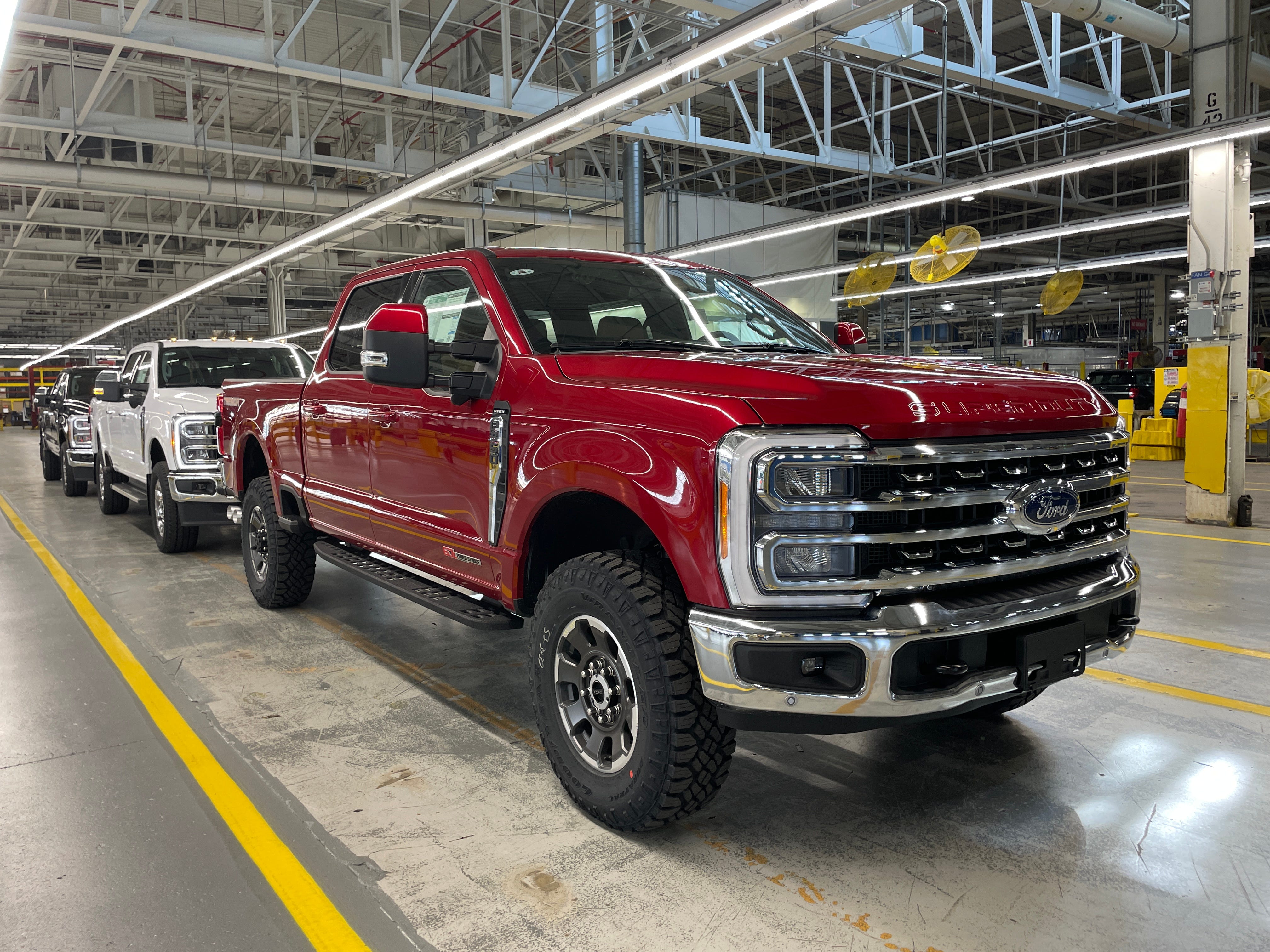
Ford scored a much-needed victory over its quality demons. The result was years in the making, and driven by human engineers who stepped in when AI couldn’t cope.
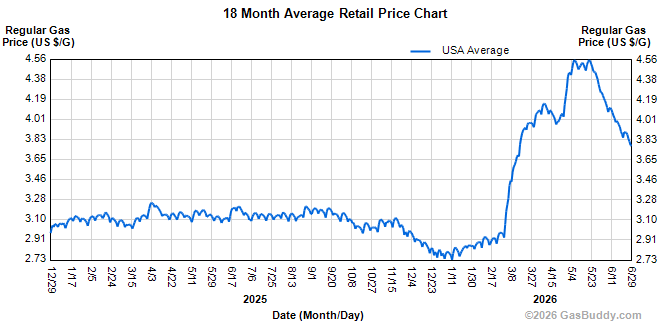
Plus, U.S. gasoline prices are coming down at long last. Although they are still roughly 30% higher than they were before Trump launched his war on Iran. (That is over, isn’t it?)
Speaking of summer vacations, the High Speed Rodeo is taking one after today. I’ll be back July 13. Happy Independence Day!
With that, let’s dive in.
Legacy automakers could write off as much as $100 billion for failed electric vehicle investments. That destruction of capital has consequences. Automakers plan to slow the pace of new model launches over the next two years, pushing the average age of models for sale in dealerships to a record 4.8 years by Model Year 2028, says industry analyst John Murphy in his latest Product Pipeline Report.
Put another way, if you leased a vehicle three or four years ago, you could come back to the dealership to find little has changed. (New cars that look like 2023 models are one reason why Tesla sales are flat to down, though recent Tesla sales numbers from Europe are positive. All eyes will be on Tesla’s Q2 sales report, likely dropping sometime this week.)
“They are looking at a very similar vehicle to what they own at a price point that’s 20-30% higher,” Murphy told the HSR. “Their motivation to buy another vehicle is very low.”
Things get better starting in 2029, Murphy said. But the macro picture for the auto industry isn’t pretty.
Looking back at the industry’s first 130 years, Murphy reckons that just 15% of automotive brands launched from 1895-2025 have survived. Looking forward, Murphy said history is likely to repeat itself with a substantial culling of brands, many of them (but not all) Chinese.
The threat to U.S. and European automakers from Chinese rivals is also a central theme in the latest survey of global auto industry competition from consultants at AlixPartners.
Automakers face a “triple conundrum” with the end of globalization as we knew it, stagnating demand in most major markets (except for Chinese imports) and the capital destruction caused by the “reset” of electrification strategies in America, AlixPartners concludes.
Automakers in America are watching as Europe conducts a live action preview of what could happen if Chinese automakers breach the tariff and national security policy walls currently protecting the U.S. market. Chinese automakers could have a 17% share of the European market by 2031, with strong presences in the automaking nations of Germany and France, AlixPartners predicts.
In the short term, Toyota, Hyundai and the Detroit automakers have a sheltered U.S. market. Chinese auto brand Polestar last week said it will quit the U.S. market later this year because of Trump administration anti-China policies.
But U.S. automakers face “an existential challenge of eroding long-term competitiveness” if they “squander the window” of time afforded by current U.S. policy to learn how to compete with the best Chinese automakers on metrics such as speed to market, software capability and electric drive efficiency. (Underscoring the narrowness of the window, Canadian officials said Chinese automakers are exploring local producton deals as they gear up to launch sales in the country. Chinese vehicles are already in Mexico.)
The new USMCA trade deal, or lack of one, will be central, AlixPartners auto practice head Mark Wakefield said during a web conference. Compliance costs for a new U.S.-Mexico-Canada treaty with stricter regional content rules could run as much as $2,000 a vehicle, he said. (That’s much of the profit margin on anything other than a large pickup or SUV.)
But worse for automakers would be replacement of the three-nation USMCA with bilateral deals that chop North America into separate markets with separate supply chains, he said.
“If the goal is to face off against China, it doesn’t make sense to face off U.S. vs. Mexico” and U.S. vs. Canada, Wakefield said. (You can hear more of his reasoning in this episode of Autoline After Hours, which I guest co-hosted with John McElroy.)
I am old enough to remember when “Quality is Job 1” was the theme of every Ford ad on television during the 1980s.
Quality has continued to be Job 1 at Ford, but not in a good way. During the past several years, Ford’s industry-leading number of recalls and sky-high warranty costs were an embarrassment to CEO Jim Farley. In 2024, he threatened to slash management bonuses if quality didn’t improve.
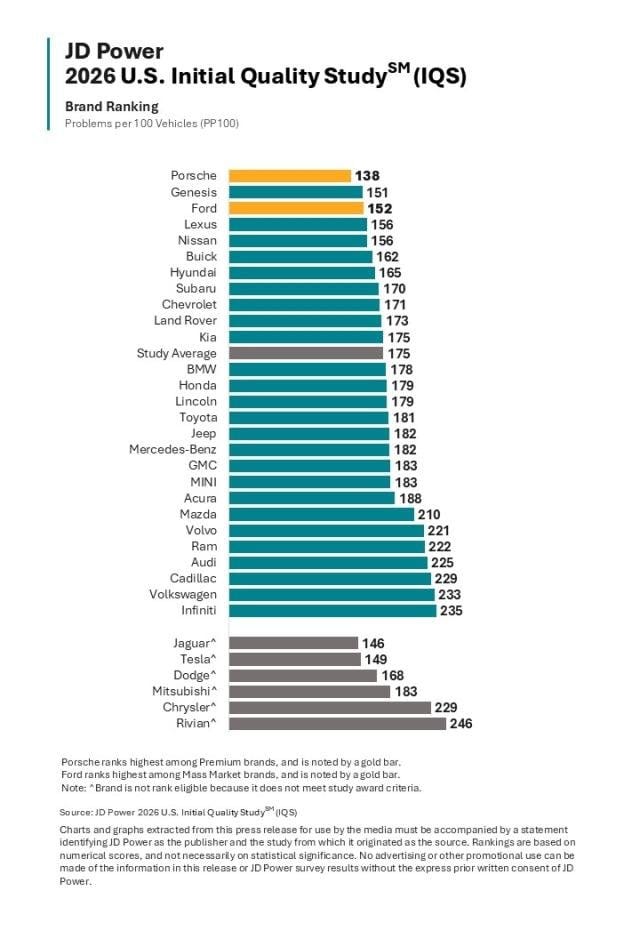
The latest J.D. Power Initial Quality Study gave Ford executives and production workers something to celebrate. The Ford brand bounced from below average in 2025 to best among mass market brands and #3 overall.
The story behind the scenes at Ford illustrates how hard it is for automakers to regain control of quality once it is lost.
More than three years ago, Ford began an intensive and expensive overhaul of its quality control strategy. The company put new executives in charge, invested in AI tools for catching quality snafus and then re-hired veteran engineers when the AI didn’t deliver.
The 2023 launch of the current generation of Super Duty pickup trucks at Ford’s Kentucky Truck plant was the first major road test for the new approach, Ford executive director for quality Josh Halliburton told the HSR.
“We wanted to make sure that launch was a good launch,” he said. “We did extra testing. We learned a lot.” Some of that learning came at high cost: Stopping production and road testing thousands of trucks before delivering them to customers.
During subsequent new model launches, Ford engineers got suppliers involved earlier in the production process to discover and fix problems before they escaped to customers. Workers scrutinized assembly line work stations to anticipate “what could go wrong and why,” Halliburton said.
Getting a good score on the Power new vehicle quality study is hard. Goofs by workers at the assembly plant are less often the problem now than badly designed software that causes the infotainment system to malfunction. Problems with Android Auto and Apple CarPlay were “the largest single contributor to the year-over-year decline in infotainment quality,” Power wrote in its latest report.
The next test for Ford will be improving long-term reliability, Halliburton said. Last year, Ford was below average among brands ranked in J.D. Power’s Vehicle Dependability Study.
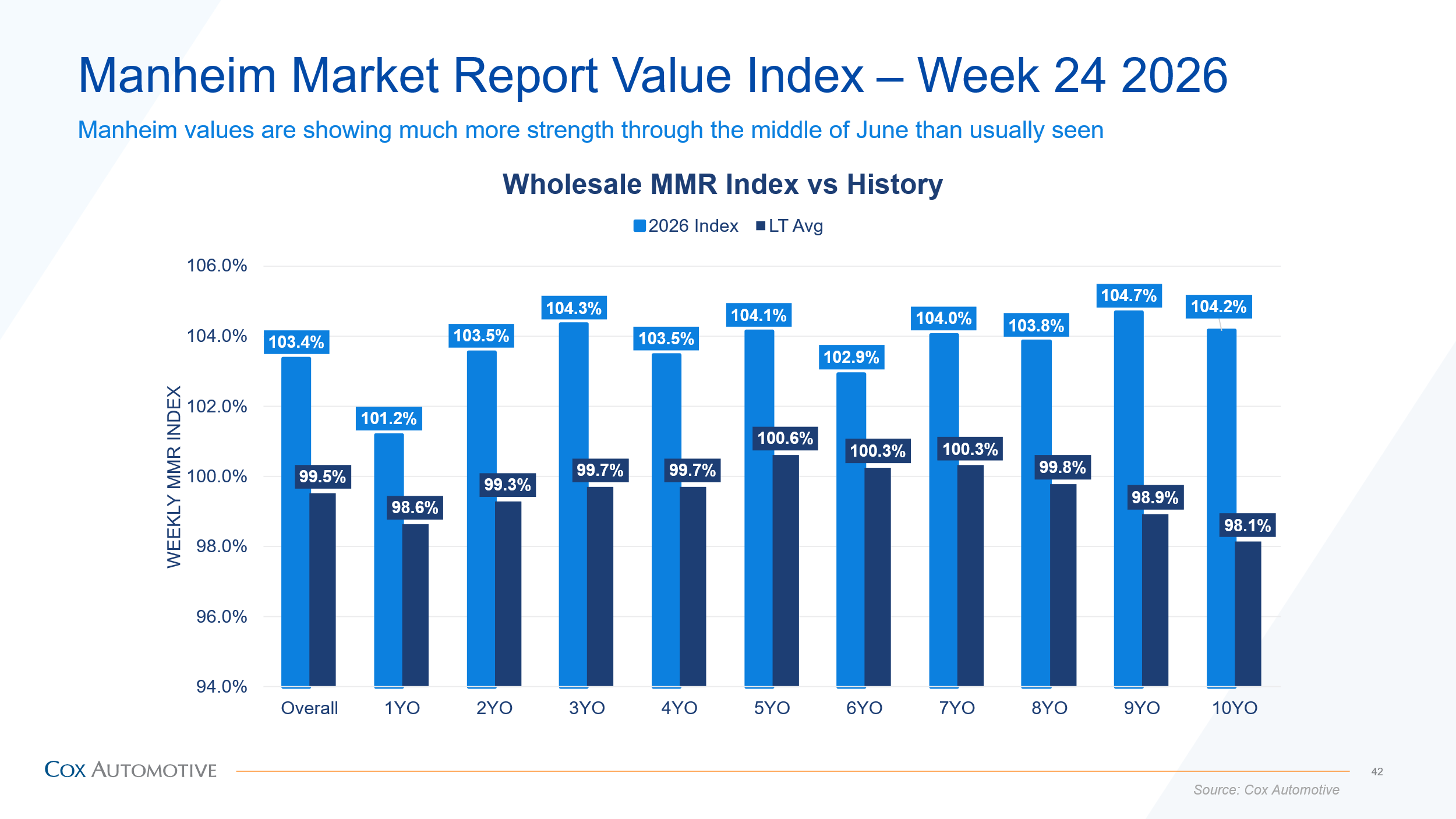
Here’s a sign of how rising new car and truck prices are warping the overall U.S. vehicle market: Prices for Eight to 10-year-old used vehicles are trending well above average as more consumers seek them out, according to new data from Cox Automotive’s Manheim operation.
By June of the average year, a 10-year-old used vehicle usually sells at auction for 98.1% of the price it would have fetched in January of the same year, according to Manheim data.
But this year, wholesale prices for 10-year-old rides are trending at 104.2% of the January price. As shown above, all age cohorts of used vehicles are trending higher than normal, according to Manheim data.
Used cars are normally depreciating assets. These days, they are appreciating, driven by the laws of supply and demand. Many households cannot afford the brand new vehicles that they want, or choose not to foot the inflated tab for a new ride when a used one serves the purpose.
There’s a lot more from Cox Auto’s mid-year review of the U.S. auto market here.
U.S. safety regulators are investigating why a Tesla crashed into a house, killing a woman inside.
Toyota sales plunged nearly 32% in China during May, dragging the group’s overall sales down 7.2%.
Ferrari replaced its head of marketing following the sour launch of the Luce electric vehicle, and hired a BMW executive as the replacement. In China, early demand for the Luce appears to be strong, albeit at ultra-niche levels.
Struggling EV maker Lucid is cutting another 18% of its staff.
Big pickup trucks and SUVs driving up deaths for pedestrians and cyclists, the New York Times concluded based on research correlating U.S. highway fatality statistics and changes in vehicle design.
Tesla and Britain’s NatPower agreed to the first phase of a $5 billion deal for Tesla to supply backup power infrastructure to the utility. Power grid infrastructure is the new black for automakers with excess EV battery capacity.
New vehicle technology can distract drivers from watching the road. What if technology could help drivers pay attention to their surroundings? That’s the issue MIT researchers explore in a new paper here.
High tariffs have not produced a boom in U.S. auto manufacturing jobs, as the HSR and analyst Warren Browne have reported. But it’s not just the auto industry. Reuters manufacturing reporter Tim Aeppel went to Iowa to investigate why Whirpool is slashing the workforce at an appliance factory even though imported household appliances face up to 50% tariffs.
Carvana is getting fresh attention from traditional car dealers with its high-tech approach to selling new cars. Right: Carvana doesn’t just sell used cars. The company has acquired several new car dealerships representing Chrysler/Dodge/Jeep/Ram and is installing futuristic, multimedia cube displays to help shoppers choose a ride. Commissioned sales personnel are out.
Automotive News reports that Carvana’s cube-equipped Dallas store was No. 5 among Stellantis dealerships in May.
Thanks for reading! More later…
Thanks for reading! This post is public so feel free to share it.
No posts
Comments
Nothing yet. Say the first thing.
Sign in to join the conversation.