
As many of our readers will know from my previous blog Meet the Night Flyers, High Life Highland Countryside Rangers and our Green Libraries are helping to shine a light on one of our most overlooked but fascinating groups of wildlife – moths! Through a new community-focused moth trapping project, people of all ages are being encouraged to discover, record and learn more about the incredible diversity of moths found right on their doorstep.
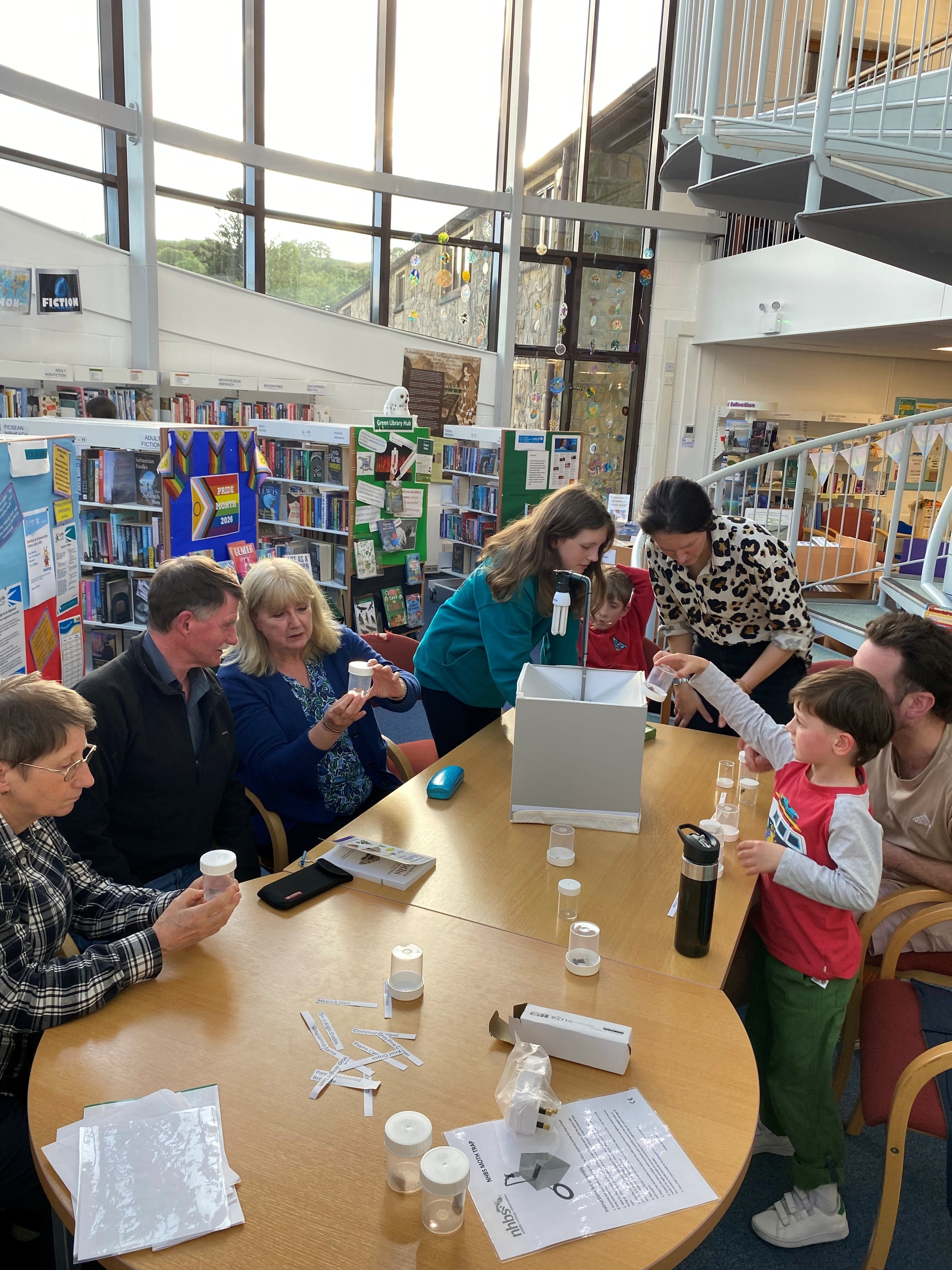
Recently, in addition to a very well attended Moth Workshop at Ardnamurchan Library, I also ran a session with the local primary school to introduce pupils to the project. The enthusiasm from the group was fantastic, with many pupils eager to have a go themselves and explore what might be fluttering around their gardens at night.
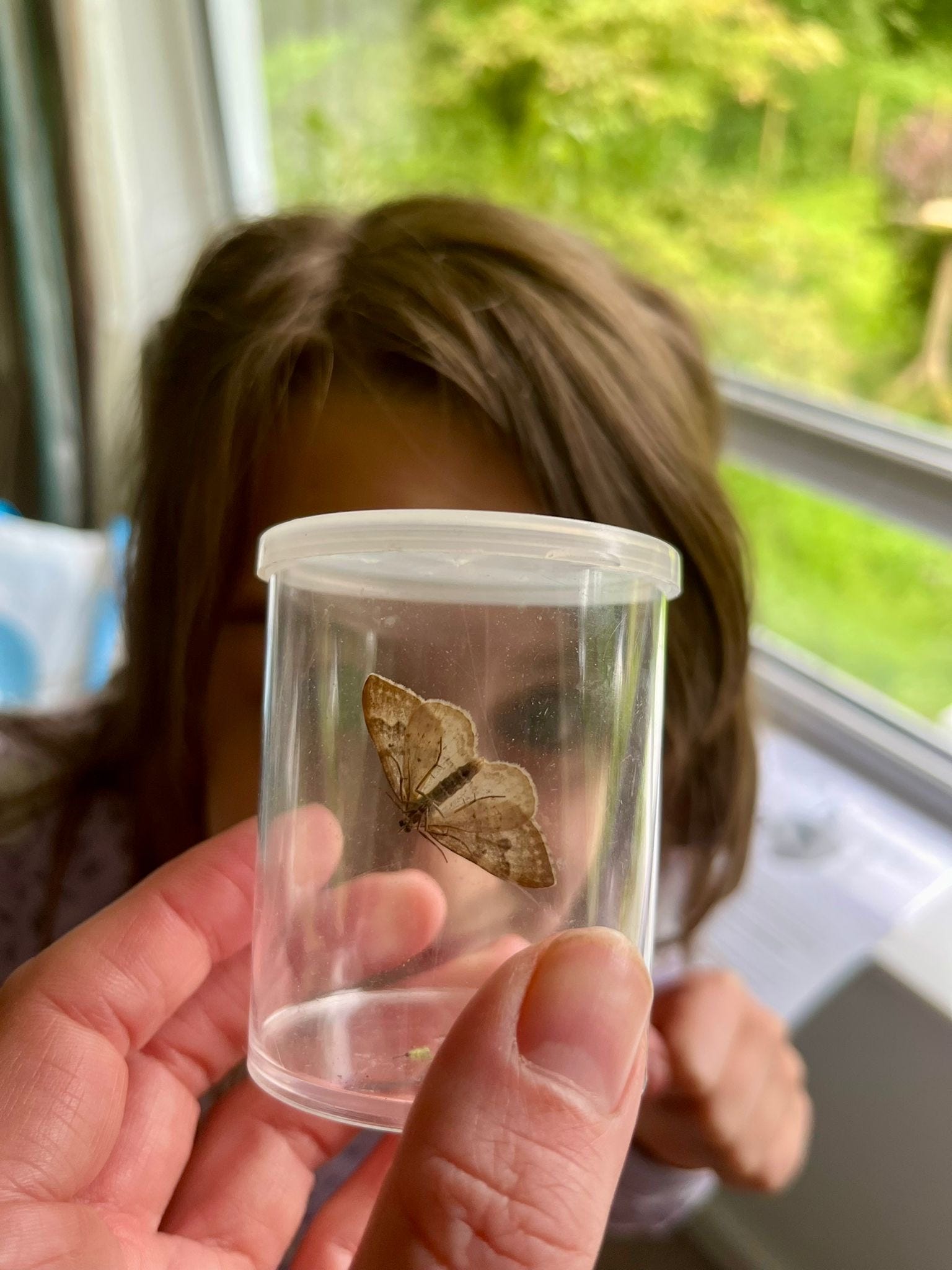
One pupil in particular, Cara, was completely captivated. Her curiosity and excitement stood out, and she quickly became the first to borrow a Library moth trap and try it out at home.
A garden full of surprises
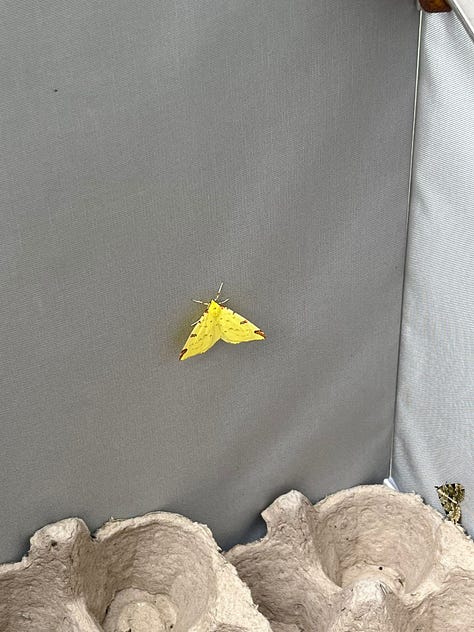
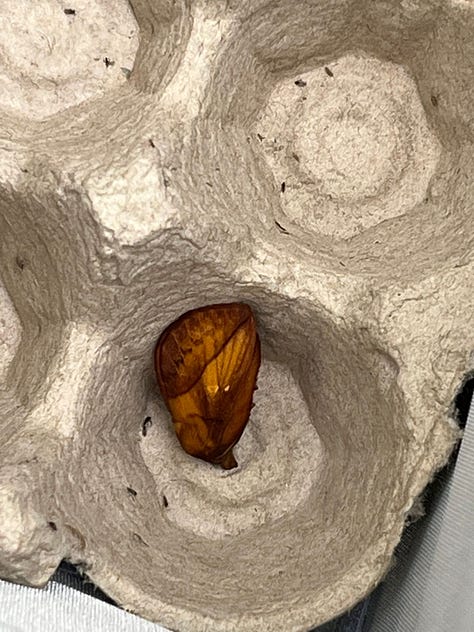
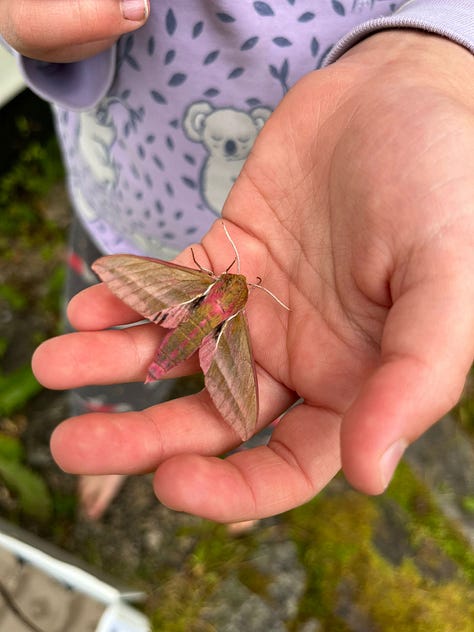
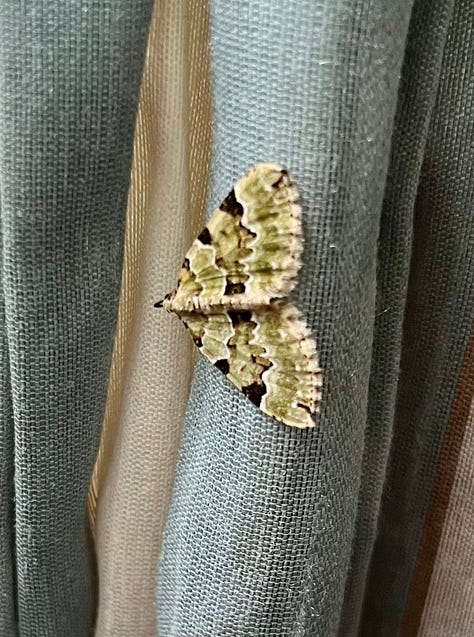
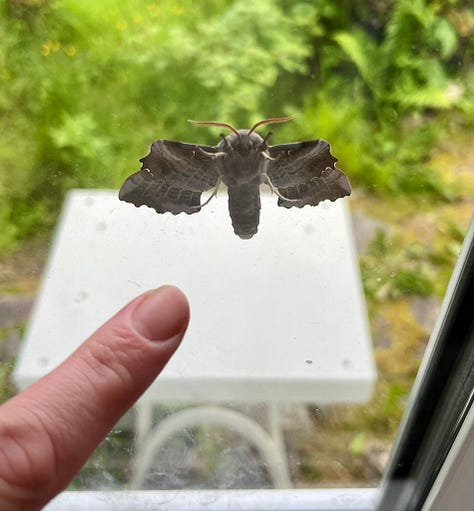
Cara’s first two nights of using the moth trap at home revealed a fantastic array of night-time visitors to her garden. Among her finds were some truly stunning species, including the bold and beautiful Poplar Hawk Moth, the striking Elephant Hawk Moth, and the soft-toned Light Emerald. She also recorded a range of smaller but equally interesting species such as Drinker moth, Silver-ground Carpet, Green Carpet, and Brimstone Moth.
For a first attempt, this was an impressive list – showing just how much wildlife can be found in even a single garden when you take the time to look.
Caras mum Victoria told me how exciting it was to wake up and find out what might have visited our garden in the night. “I couldn’t believe the number of different varieties, which I wouldn’t ordinarily see (without using the moth trap)”

Why moths matter
Moths are an important part of our ecosystems. They play a vital role as pollinators, particularly at night, and are a key food source for birds, bats and other wildlife. Yet despite their importance, they are often overlooked compared to their daytime relatives, the butterflies.
By encouraging people to record moths, this project not only raises awareness but also helps build a clearer picture of species distribution across the Highlands – information that is essential for conservation.
Bringing moths closer to home
To make it easy for everyone to get involved, moth traps are now available to borrow free of charge from all ten Green Libraries across the Highlands – from Wick to Dingwall and right along to Ardnamurchan. This means that whether you’re in an urban setting or a remote rural area, you can take part in this citizen science project and contribute valuable wildlife records.
Taking part is simple and rewarding. After borrowing a moth trap from your local Green Library, you set it up in your garden at dusk and leave it overnight. The traps use light to gently attract them overnight, allowing people to see species up close before releasing them the next day. Early the next morning, you carefully check the trap to see what has arrived, using ID sheets to help recognise different species, from the beautifully patterned “waves” and “carpets” to the tiny but distinctive “pugs.”
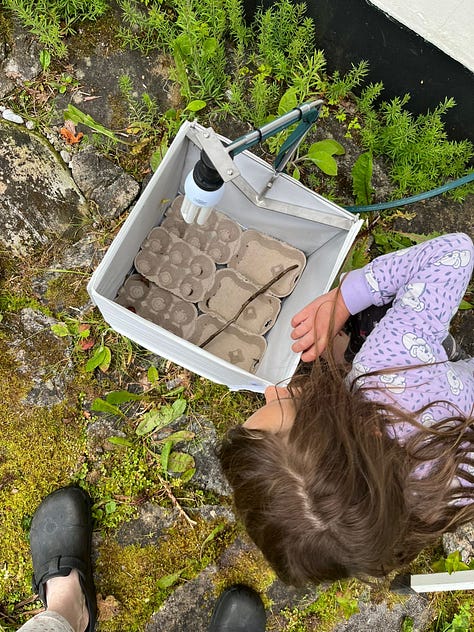


Once identified, the moths are safely released, leaving you with a fascinating snapshot of the hidden wildlife that visited while you slept. It’s a fantastic way to connect with nature and discover just how much biodiversity exists after dark. Please avoid trapping several nights in a row, so as to ensure the moths have plenty of time to feed between observation sessions.
So any other buddying young explorers out there? Why not get involved this summer!
Borrowing a moth trap is a brilliant way to experience nature in a different way. You never know what might turn up. Pop into your local Green Library to find out more and borrow a trap. Just like Cara discovered, your garden could hold more hidden gems than you think. Sometimes all it takes is a little light in the darkness to reveal a whole new world…
Thanks to Caras mum, Victora, for permission to use these fantastic photos!
Eilidh-Ann Phillips has been a countryside ranger in the wild, captivating expanse of West Lochaber since 1996. Now, as the High Life Highland Senior Ranger for South Highland, she is integral to a vibrant network that connects communities and schools to the nature, inspiring a collective appreciation for wildlife and heritage. Under her guidance, a passionate team of rangers across South Highland is dedicated to conserving the region’s stunning beauty and wilderness, nurturing the next generation of guardians for the area’s breathtaking landscapes.
Comments
Nothing yet. Say the first thing.
Sign in to join the conversation.