
Every record on this list made someone in the room uncomfortable at some point, sometimes the fans, sometimes just an earlier version of the person writing this. Some of these get judged from a distance, some get let back in years later, at a very different age than the one that first wrote them off. These are five moments when a band decided to risk it anyway, and at least one moment when I finally admitted I’d been wrong about why.
hardcore punk
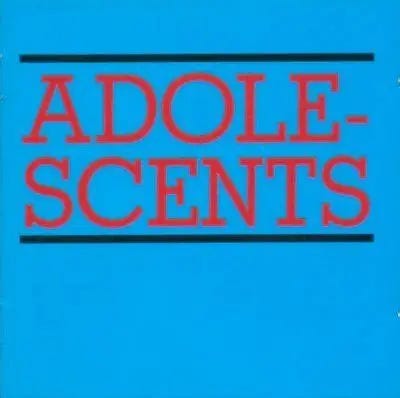
I was starting to study drums seriously back then, and studying drums meant inevitably studying whoever is playing around you in the song. Steve Soto was one of the first people who made me understand what the relationship between bass and drums could actually be in punk: not two instruments keeping time side by side, but a structure, kick and snare and bass building groove even inside three chord patterns at two hundred beats per minute. Alongside Mike Dirnt, a bassist just as underrated in my opinion, Soto taught me that punk could have rhythmic architecture, not just speed.
I found out later that people called him “The Nicest Guy in Punk Rock.” Reading his story, the way people remembered him after he died, I understood why that reputation stuck to him for so long: there’s something already generous in the way he plays, even inside the record’s anger.
The album itself is really a document of a band that didn’t exist long enough to overthink anything. Most of it was assembled from the band’s earlier singles and demos, recorded fast, with Frank and Rikk Agnew’s two guitars constantly trading rhythm and lead instead of splitting the roles cleanly, creating riffs that feel denser than three-chord hardcore usually did. Tony Cadena was seventeen, in a scene run by Black Flag, Circle Jerks, the Germs, too melodic for the purists, too fast for anyone who just wanted straight punk rock. “Kids of the Black Hole” runs almost six minutes, unheard of for hardcore in 1981, and never once loses tension across all of them.
Nobody in that room was thinking about legacy, they were just kids who happened to build something structurally ahead of its time. This isn’t really a hidden record in the strict sense, everyone in hardcore knows the name, but what’s still underrated is how far its reach actually goes: without this misfit of a record, melodic hardcore as a genre doesn’t have the same starting point. None of them knew yet what they’d built. The genre caught up to them a decade later.
💥 Why you should hear it: Because this is where I understood that punk could have architecture, not just speed.
🎧 Standout tracks: Amoeba | Kids of the Black Hole | Wrecking Crew
melodic hardcore / punk rock
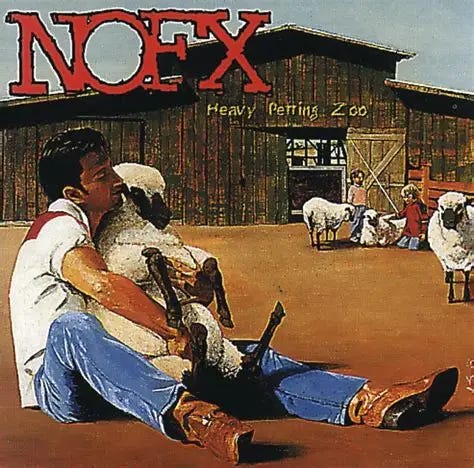
I left the house dressed like a good kid so my parents wouldn’t get suspicious, with the real outfit hidden in my backpack: a denim jacket with the sleeves torn off by hand, pins of every kind, a homemade patch with an anarchy A on the back, a red tie with a question mark over it like Billie Joe Armstrong, baggy pants, purple Doc Martens, hair spiked up with way too much gel. Bus into town, the only punk record store within a hundred kilometers, then a friend’s stereo at the skate park for the first listen.
First song, “Hobophobic”: wow. Second, “Philthy Phil Philanthropist”: what the hell is this, a xylophone, a ska verse, everyone looking at each other. Third, “Freedom Lika Shopping Cart”: genuine confusion, and it took me years to find out “Lika” was a deliberate typo, which told me a lot about how deliberately weird this whole record was built. “Bleeding Heart Disease” pulled me back onto solid ground. “Hot Dog in a Hallway”: we filed it under total failure and went back skating, wondering what the hell Fat Mike had in mind when writing this record.
And still it got me from the first minute, flaws included. Ryan Greene’s production keeps everything loose enough that the genre swerves land as a joke rather than a mess, tempos flipping mid-song, hardcore bursts giving way to melody and back without warning. Fat Mike is as much an innovator as Steve Soto, just less likeable: he plays bass in a way nobody else does, and bends punk to his will with an ease that’s almost annoying. Nobody wanted this record when it came out, and NOFX seemed to know it and do it anyway. Looking at what came after, War on Errorism, The Decline, the political turn the band would take a few years later, Heavy Petting Zoo is the record where Fat Mike first let the songwriting get genuinely strange instead of just fast, and that's exactly the muscle he'd need later. The fanbase is still debating on this, thirty years and still trying to catch up. I didn't need that long. I just needed everyone else to stop telling me I was wrong about it.
💥 Why you should hear it: Because sometimes the record that confuses you song by song is the one that ends up owning you completely.
🎧 Standout tracks: Freedom Lika Shopping Cart | Bleeding Heart Disease | Hotdog in a Hallway
punk rock / dark punk
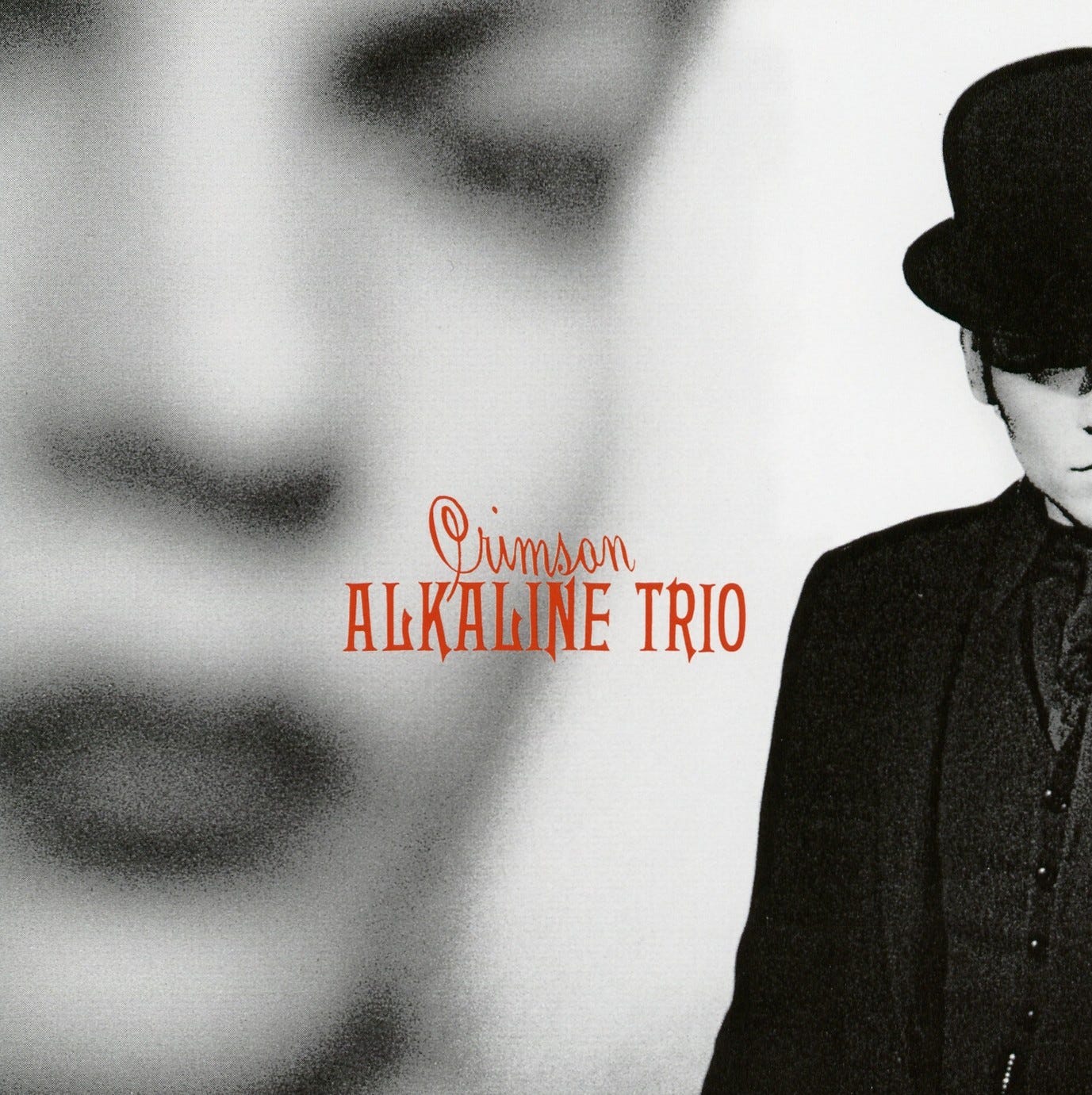
For years I skipped this one on principle. Word going around said Alkaline Trio had pulled the usual sellout move, bigger sound, bigger label muscle behind it, and I decided from a distance it wasn’t for me. I was almost thirty by then, which makes it worse, not better. It took Eyeballs coming out years later to send me back to it out of curiosity, and what actually struck me wasn’t the record itself, it was how stupid a stereotype can sound once you finally test it against the thing it was supposed to describe. Sorry, I am just too old to care what anyone else thinks anymore: for me, this is where Alkaline Trio outdid themselves.
Skiba wanted it huge, Andriano wanted it punker, and Jerry Finn earned his paycheck standing in the middle of that. You can hear it across the songs, a tension that never fully resolves, as if the record itself hadn’t decided which side to take. “Time to Waste” opens with a string arrangement that wouldn’t have existed on the earlier records, then drops straight into a full-band chorus that makes the orchestral intro feel like a dare rather than decoration. “Cliff Diving” runs on a Skiba-Andriano vocal trade tighter than anything on their earlier albums, one voice answering the other line by line instead of just harmonizing over it. Derek Grant fills the whole record with ghost notes and tricks that make even the simplest parts feel alive. Ah, Derek Grant.
This is one of my ten desert island records now, and the one that best shows the poetic depth this band is capable of. If I ever need an example to teach my daughter not to judge something before actually experiencing it, assuming she doesn't grow up only listening to garbage trap music, this record is probably the one I'll use. Not because of what it sounds like, but because of how long it took her father to stop deciding things from a distance.
💥 Why you should hear it: Because you can still hear two different visions of the band fighting for the same song, and neither one wins outright. This duel is just epic.
🎧 Standout tracks: Time to Waste | Prevent This Tragedy | Mercy Me
melodic hardcore / progressive punk
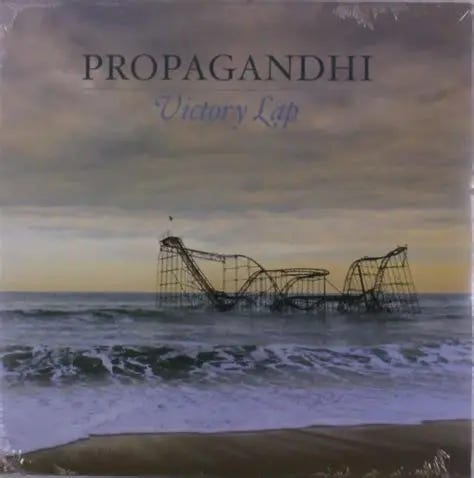
This record scratches an itch for metal better than actual metal does for me. When Chris Hannah sings, it feels like he’s grabbing you by the jacket collar and screaming things straight into your face, and honestly this record is probably what keeps me from doing that to people myself sometimes.
Anyway. Finding out they’d become a four-piece was already a shock. Finding out the fourth member was a guitarist, Sulynn Hago, at the time seemingly out of nowhere, was a bigger one. Chris Hannah has said he stopped spending months polishing every word of his usual sermons and chose to be more direct instead, and it shows everywhere: 36 minutes against the 50-plus of Failed States, songs that refuse to loop back on themselves.
The songwriting drops some of Failed States’ proggier detours in favor of riffs that hit and move on, but the complexity hasn’t disappeared, it’s just been compressed. Jord Samolesky answers both the people who called it too simple and the people who called it too dense on his own: blast beats, open grooves, constant shifts in dynamics under guitars that keep braiding two-part harmonies without missing a beat. “Failed Imagineer” packs more tempo changes into three minutes than most bands manage in a whole record.
From this point on, Propagandhi, a band that has never really stopped reinventing itself, became a different band entirely. Just as urgent, with none of the old need to over-explain itself. I still put this on when I need Hannah to do the screaming for me.
💥 Why you should hear it: Because sometimes a band decides that being direct is more radical than being clever.
🎧 Standout tracks: Victory Lap | Comply/Resist | Lowered Expectations
post-hardcore / melodic hardcore
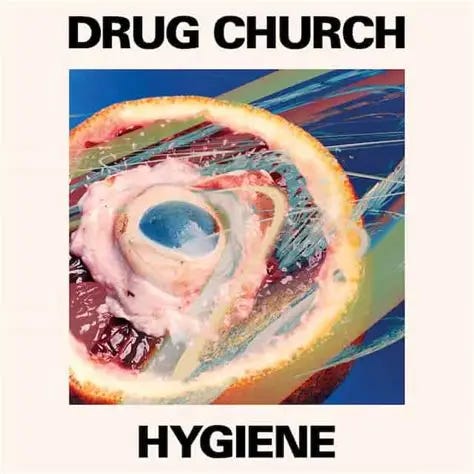
I like Drug Church because I don’t fully understand them. They’re odd, the same way that, in high school and still now, I was drawn to the girls who were a little out of fashion, a little bookish, a little too clever for the room, the kind who could flatten you with one sarcastic line or a well-placed pun better than anyone else around. The pleasure here is a form of unconditional respect: not understanding it and loving it anyway.
Cheer had already pulled them out of the underground in 2019. Instead of repeating it, Patrick Kindlon decided to write actual songs, in the structural sense: choruses, hooks, forms that resolve. “Premium Punishment” carries a chorus that really means it. “Million Miles of Fun” follows an A-B-A shape none of the earlier records attempted. Nick Cogan’s guitars sit thicker and more melodic in the mix than on Cheer, closer to alternative rock than hardcore in places, while Kindlon mostly avoids conventional melody for a rhythmic half-spoken delivery that makes the choruses hit harder once they finally open up.
Prude would come two years later and take them somewhere even bigger, but Hygiene is where the actual turn happened, quietly, while people were still deciding whether to be annoyed that the band didn’t sound quite like Drug Church anymore. Nobody throws you out of the room for figuring out how to be understood a little better. They just don’t always notice it happened until later.
💥 Why you should hear it: Because not fully understanding a band is sometimes the purest form of respect you can give them.
🎧 Standout tracks: Premium Punishment | Million Miles of Fun | Detective Lieutenant
Conclusion
Five bands, five different exits. Adolescents didn't know there was a door yet, they just walked through it. NOFX saw the room they'd built and set part of it on fire, on purpose. Alkaline Trio reached for a bigger room and got locked out of the old one instead. Propagandhi stopped checking who was still in the room and kept playing regardless. Drug Church changed while everyone was still deciding whether to be annoyed, and left the door open for whoever wanted to catch up later.
The room changes size every time. The music doesn’t seem to mind.
Which record closed a door you were glad to be on the other side of? Drop it in the comments.
Comments
Nothing yet. Say the first thing.
Sign in to join the conversation.