
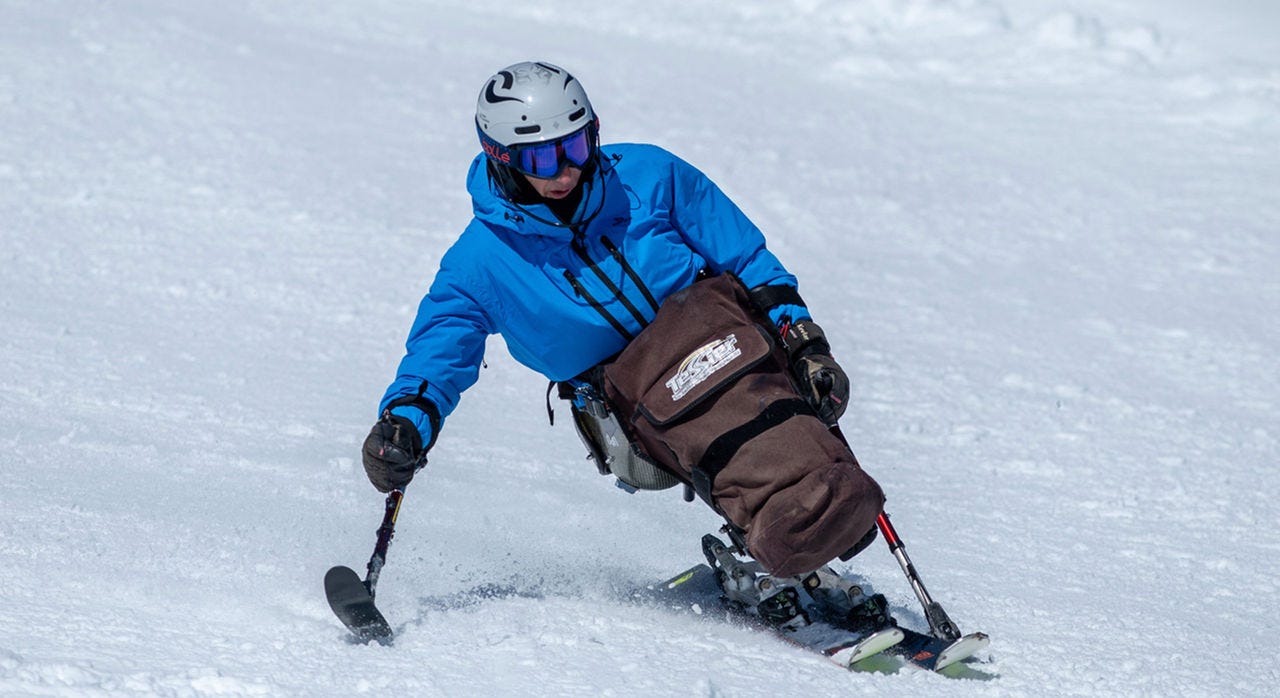
At first glance, skiing is not an especially promising candidate for an accessible sport. It takes place on steep, snow-covered mountains, relies heavily on balance and mobility, involves cumbersome equipment and depends on an infrastructure of chairlifts, gondolas, buses and mountain restaurants that was largely designed with able-bodied skiers in mind. Yet skiing itself has become remarkably adaptable, and the range of people now able to participate is probably much wider than many skiers realise.
The technology, equipment and expertise now exist to get a very wide range of people onto snow. The more difficult part can be everything surrounding the skiing. Getting from the airport to the resort, reaching the ski school from the accommodation, boarding lifts with a sit-ski, finding an accessible toilet halfway up the mountain or simply being able to have lunch with the rest of the group can present much bigger obstacles. Specialist instructors and equipment may also be available, but not necessarily during the particular week someone wants to travel. Adaptive skiing, in other words, does not automatically make for an accessible ski holiday.
Adaptive skiing is a broad term because the adaptations required are as varied as the skiers themselves. A mono-ski has a moulded seat mounted above a single ski and is generally intended for skiers who have sufficient upper-body strength and balance to ski independently. Outriggers — essentially shortened forearm crutches with small skis attached — provide additional balance and can help the skier initiate and control turns.
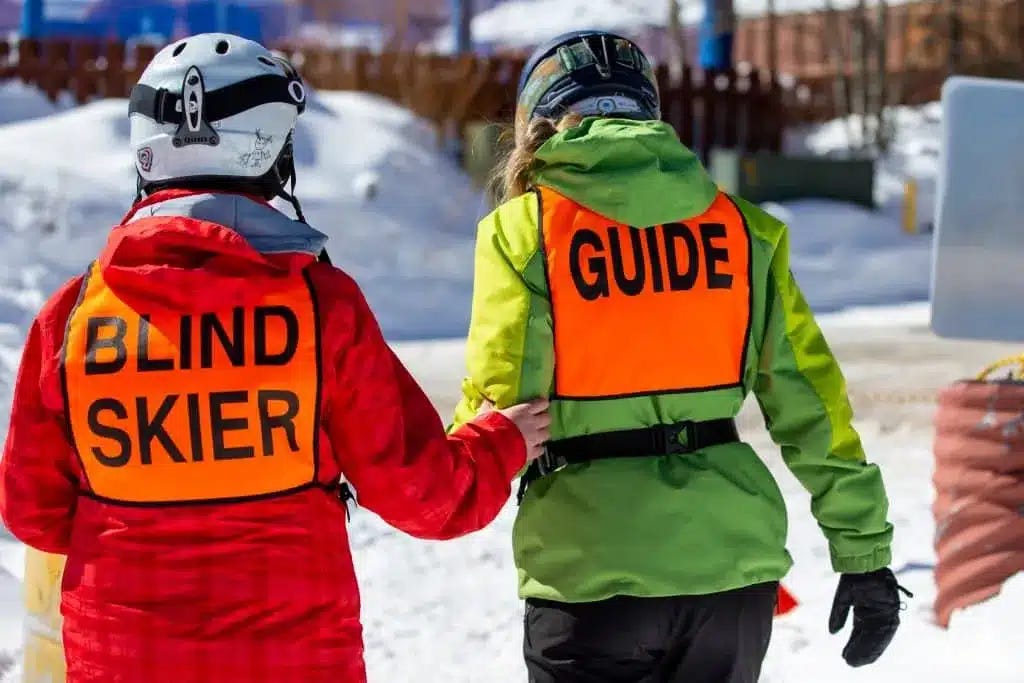
A bi-ski uses two skis beneath the seat, providing greater stability, and depending on the skier it can be controlled independently or assisted by an instructor skiing behind using tethers. Other skiers may use three-track or four-track techniques, prostheses or combinations of conventional skis and outriggers. Visual impairment presents an entirely different set of requirements: a skier might follow a guide wearing a high-visibility bib and use agreed instructions or radio communication. For people with learning disabilities or autism there may be little or no specialist hardware involved at all, with the adaptation instead coming from how the instructor teaches and communicates.
This is important when we start talking about whether a particular resort is “accessible”, because there is no single accessible skier and therefore no universal checklist. A resort that works extremely well for an independent mono-skier may be considerably less practical for somebody who uses a wheelchair away from the slopes. A visually impaired skier may encounter relatively few problems with the physical infrastructure but need an appropriately trained guide, while another skier may require assistance throughout the day. Accessibility is really a chain of requirements, and the links will be slightly different for everyone.
Some Alpine resorts have gone considerably further than simply adding an adaptive lesson to the ski-school brochure. La Plagne is a particularly interesting example. Its ski area permits sit-skis on chairlifts and some gondolas, with marked priority lanes and lift staff able to slow chairs and assist with boarding. Wheelchair-accessible toilets are provided at several points around the mountain, including at altitude — the sort of detail that sounds mundane until you consider trying to spend an entire ski day without it.
La Plagne also has a long association with adaptive skiing and specialist equipment. What makes it interesting is that accessibility has been considered as part of how someone moves around and uses the ski area, rather than being treated solely as an activity provided by a ski school.
La Plagne adaptive skiing / accessibility information
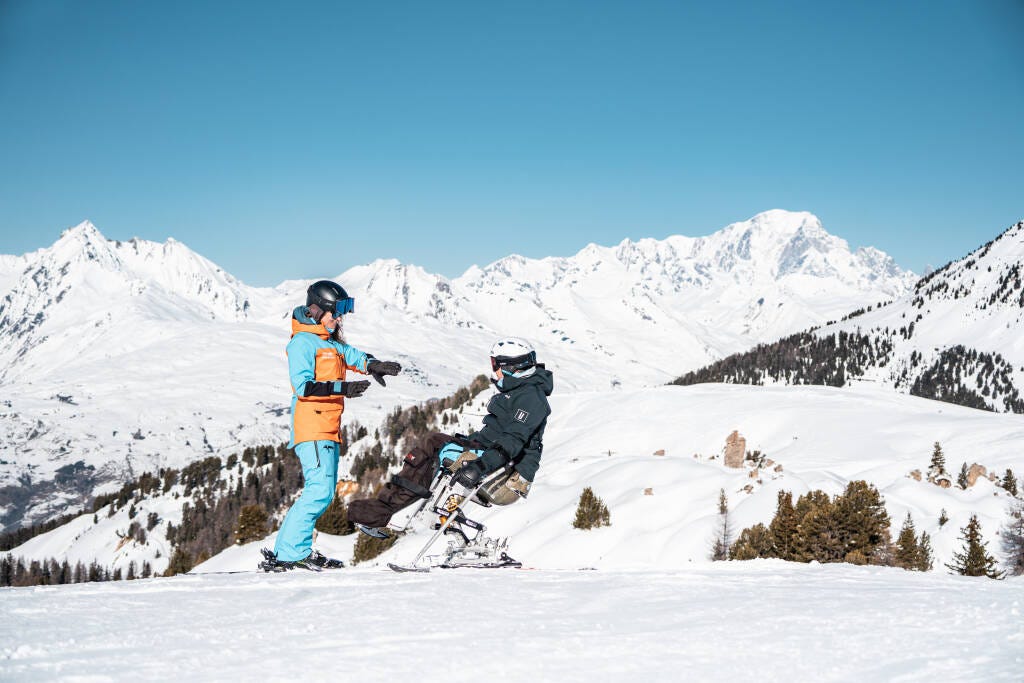
Tignes has similarly deep roots in adaptive snowsports. The resort was involved in the 1992 Albertville Winter Paralympics and will host the Para Alpine World Championships in 2027, with adaptive skiing remaining part of the resort in the decades between. For someone planning an ordinary ski holiday, that history matters mainly because of what it has produced on the ground: familiarity. Lift operators who regularly encounter different equipment know what they are dealing with, ski schools build up specialist experience, and getting an adaptive skier onto and around the mountain becomes part of normal operations rather than an unusual request.
Tignes adaptive skiing information
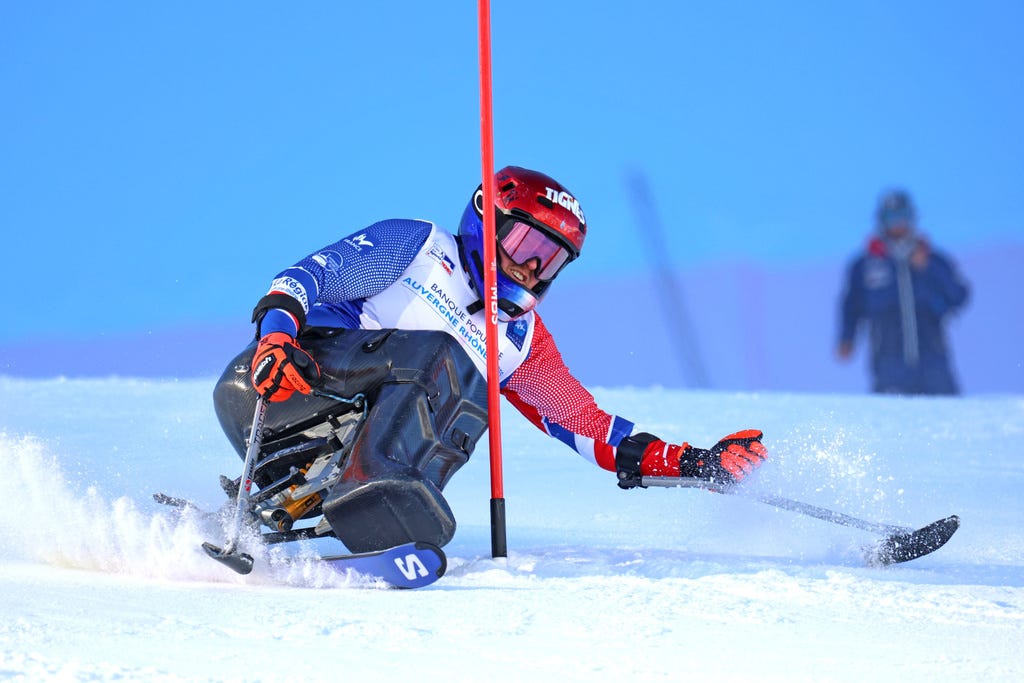
Les 2 Alpes approaches the problem from another useful direction. The Jandri lift has accessible facilities at its stations, giving access from resort level towards the high mountain, while the resort publishes information covering adapted transport, parking, public toilets, lift-pass arrangements and accessible facilities. There is even provision for the journey into resort, with wheelchair users able to use the Transaltitude service from Grenoble when booked in advance. These details are never going to produce photographs as dramatic as a sit-skier throwing up a plume of powder, but they may ultimately make a much greater difference to whether the holiday actually works.
Les 2 Alpes adapted tourism information
Avoriaz demonstrates particularly well why the label “accessible resort” needs some interrogation. On the skiing side there is plenty to recommend it: specialist adaptive instruction is available, equipment includes dual-skis and uniskis, and the resort provides ski-sleds that can be used by people with reduced mobility.
The complication is Avoriaz itself. One of the things many skiers love about the resort is its car-free, snow-covered centre. Instead of roads running between accommodation blocks, much of the town effectively becomes part of the snowy landscape, which is atmospheric, attractive and very convenient if you are moving around on skis. For somebody with reduced mobility, however, the same feature can create a considerable additional challenge.
Avoriaz itself acknowledges that its snow-covered streets can severely affect access for people with reduced mobility and provides information and equipment intended to mitigate the problem. That certainly does not mean that someone using a wheelchair cannot holiday there, but it illustrates the distinction rather neatly: a resort can have excellent adaptive skiing while the physical design of the resort makes everything before and after the skiing considerably more complicated. Finding a handiski logo on a resort website therefore tells you far less than you might initially assume.
Avoriaz tourism and disability information
For most skiers, getting from a hotel bedroom to a chairlift barely warrants consideration. For someone travelling with a disability, exactly the same journey can involve a surprising number of questions. A hotel may advertise an accessible room, but is there actually enough space around the bed? Is access through reception step-free? Does the lift accommodate the particular wheelchair being used? Can the ski room be reached easily, and is there somewhere suitable to store specialist equipment?
The route outside matters just as much. A 300-metre walk to the lift sounds perfectly reasonable in a hotel description, but 300 metres of packed snow is a very different prospect from 300 metres of dry pavement. Once on the mountain, there are further questions about which lifts accept particular adaptive equipment, whether lift staff can assist with boarding, whether gondola stations have step-free access and which mountain restaurants and toilets are genuinely accessible.
Instruction needs similar scrutiny. A ski school advertising adaptive lessons does not necessarily mean that a suitable instructor — or the right equipment — will be available on any given week, so this is one area where speaking directly to the ski school well before booking is particularly worthwhile. Even the transfer from the airport deserves attention. An accessible airport at one end and an accessible hotel at the other do not solve much if the vehicle connecting the two cannot accommodate the passenger, their wheelchair or their ski equipment.
None of these things is especially dramatic in isolation, which is perhaps why they are so easily overlooked. Put together, though, they can determine whether someone spends a week skiing and eating on the mountain with family and friends, or spends a large part of the holiday negotiating obstacles everyone else barely notices.
For British skiers interested in adaptive snowsports, one organisation deserves particular mention. Disability Snowsport UK has been helping disabled people participate in skiing and snowboarding for more than four decades, working with people with physical, sensory and learning disabilities and using specialist instructors and volunteers to help skiers find the techniques and equipment that work for them. In the 2025/26 season alone, DSUK supported 1,861 disabled children and adults and their families, delivering more than 7,000 lessons and activities.
For somebody considering their first adaptive ski holiday, an indoor snow centre or dry slope can be a much more sensible place to start than booking a week in the Alps and trying to work everything out after arrival. Predictable conditions give a new skier the chance to try equipment, work with an instructor and establish what assistance they actually need without weather and snow conditions becoming yet another variable. Indoor centres offer the experience of skiing on real snow before travelling, while dry slopes make regular instruction possible regardless of what the British winter happens to be doing.
Perhaps more importantly, a few sessions at home mean that when it comes to contacting an Alpine ski school, the skier or their family already has a much clearer idea of what they need and what questions to ask. Disability Snowsport UK is an excellent first port of call for information about adaptive lessons, locations and getting started.
Perhaps the surprising answer is that skiing itself can be extraordinarily accessible. Adaptive equipment and specialist instruction have found ways around physical barriers that initially seem fundamental to the sport, and people now ski seated, standing, guided, independently and assisted. The solution for one skier may bear almost no resemblance to that required by another.
The ski holiday surrounding them remains harder to adapt. There are resorts doing impressive work: La Plagne’s attention to lift access and facilities on the mountain, Tignes’ long relationship with adaptive snowsports and Les 2 Alpes’ consideration of transport and resort infrastructure all show what can be achieved. Avoriaz demonstrates the other side of the equation, where serious adaptive ski provision exists alongside a resort layout that can create significant difficulties away from the pistes.
Anyone planning an adaptive ski trip therefore needs to add a second layer of research to the usual questions about snow reliability, piste mileage and hotel location. Speak directly to the ski school about the individual skier rather than relying on a generic accessibility page, and confirm specialist instruction and equipment before booking flights. Ask the accommodation specific questions about access rather than trusting an “accessible” filter to cover every requirement. Look carefully at the route between the hotel and the lifts, and investigate facilities on the mountain as thoroughly as those down in the resort.
Above all, work out what accessibility means for the individual skier. The ski industry has become remarkably good at adapting the physical act of skiing to different bodies and different needs. The resorts that do this best are the ones beginning to understand that a genuinely accessible ski holiday depends on everything around the skiing working too.
No posts
Comments
Nothing yet. Say the first thing.
Sign in to join the conversation.