
You have to sell your soul a bit to make some money in this world. To live a comfortable life. The path of artistry is rarely compatible with material comfort. Most of us, to varying degrees, must join the workforce in some utilitarian trade to survive. Even those who pursue a more entrepreneurial path through their art compromise themselves in some way to please a paying audience. This is not inherently a bad thing. But the only way to keep your art pure is to separate it entirely from your financial life. In either scenario, you compromise something. Just never give away more of your time and energy than your spirit is willing to part with, for material gain. It grinds you down and degrades your soul over time. I know this, because at a point, I offered up more pieces of myself than I should have, having grown disillusioned with being an artist. And once you have a taste of material success, existing in a prolonged state of result-oriented action, it changes you, rewiring the signals in your brain, affecting how you think and move about life entirely. Again, not inherently a bad thing, but you forget what it’s like to enjoy the creative state of non-accomplishment, of not checking off to-do-list items or “moving the needle forward”, but just creating to create, instead of the constant anxiety that comes from “not doing enough”. I’ve been buying back pieces of my soul little by little over the years. I’ll never piece the whole thing back together as pure as it was. But I don’t want to either. My psychology has changed. And I accept that. I accept a partial material standard. Is it as noble as the artist who lives and dies in spiritual obscurity? No. But the noble man pays for his nobility in other ways.
Creativity is child-like. You must approach it with humility, trust, and the openness of a child to receive its full, unadulterated benefits. That is why many people carry bitterness toward creativity into adulthood, or avoid it completely. They have forgotten how to be child-like. The world has beat it from them.
Writing, painting, singing, dancing….. All children partake in these activities. It is why there is no such thing as “becoming an artist”. All people are born artists. Only, most do not remain that way.
Some of the most spiritually fulfilling friendships start out as contentious interactions: latent frictions between two individuals who are either too much alike or not alike at all. Almost always, it is the former. Those who habitually claim the latter know themselves the least. In either case, both are useful to your spiritual development. The lowest form of friendship comes from those who are somewhat similar to you but not similar enough, or different from you but not different enough. That is why a profound-noetic bond is formed right at the threshold of becoming one’s enemy, while being conscious enough to work through the visceral entanglement of each other’s psyche. One always despises a mutual trait, positive or negative, that is mirrored in an individual. It is the root cause of all enmity: an illusion creating the anxiety of having one’s uniqueness diminished, or the dread of a deeply-repressed shame revealing itself against one’s will. But when both individuals are willing to confront their inner discomfort, transmuting their tension into consciousness, an unbreakable bond can be formed, a solid foundation for relations established. It is those other, vacuous sort of attachments, which perpetually drag on the avoidance of conflict, existing in silos of superficial harmony, that bear the flimsiest framework for friendship. And when a conflict inevitably arises, it cannot withstand the tempest.
Crudeness, in both language and thought, is closer to God than abstraction and reason.
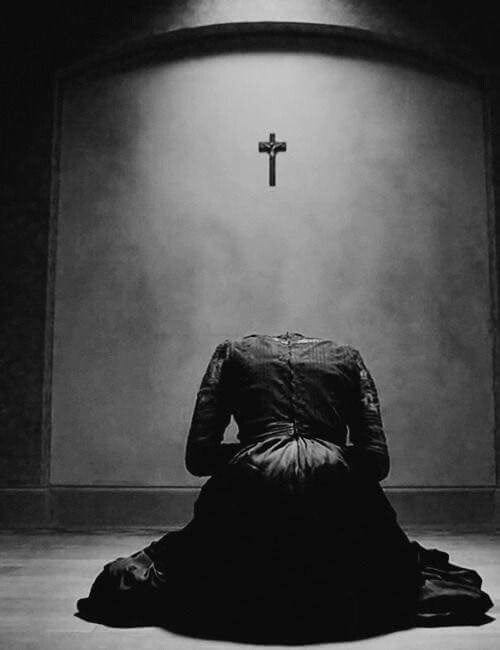
When considering the Ancient Greco-Roman world, we recognize that almost all facets of modern life are directly or indirectly inspired by it: our democratic institutions, our ideas of beauty and art, the precedence of logic and reason over intuition — so it’s absurd to pretend that modern religion does not stem from ancient ideals too. Many Christians, for example, proclaim originality over all narratives in the The Bible, denying any relation or derivation to older, more ancient myths. Yet when you study ancient civilizations and their religions, not just Greece, but Ancient Egypt, Mesopotamia, Sumeria, etc., you start to recognize familiar storylines that eventually make their way into The Bible via pagan ancestors. Before Noah and the flood there was Gilgamesh and the flood. Before the resurrection of Jesus there was Osiris and the Sumerian god Tammuz. There are Norse stories of apples of immortality, and a serpent that steals the plant of immortality, for example, that predate The Garden of Eden. Not to say that any of these stories are false or devoid of worth and meaning. They are continuations of symbols that help us to understand truth — not in the conscious logical sense, but in the intuitive sense, relating to the logic of the unconscious. But in modern interpretation, in a world suffocated by conscious logic, the unconscious is abandoned completely, and symbols are taken literally. And when the unconscious is abandoned and the interpretation of knowledge becomes purely rational, that is when symbols becomes dangerous.
There were many Jewish prophets and messianic figures in ancient times who claimed divine mandate or special favor from God, before and after Jesus. Several executed on Roman crosses too. The Empire’s tightening grip over Judea created a hotbed of spiritual unrest and disillusionment among the Jewish people. The idea that Jesus was solely unique or novel in his existence is a prime example of how popular history selects, isolates, and distorts figures into symbols (which are necessary for human morale), and discards the rest once the purpose is achieved. If some modern man appeared claiming to be a prophet, we would scoff at his pretension and mock his delusive grandeur. This is because people believe in symbols more than they believe in man. Symbols create nations, start revolutions, incite wars…
Man is fallible. Corrupt. Incapable of divine vocation.
Jesus the man had to die to become Jesus the symbol. What followed was the greatest PR campaign of all-time.
All discontentment in life can be seen as the tension between desire and reality.
You cannot always change the external forces of reality, but you can affect your inner desires.
The reason why mental health has become such a pandemic in The West is due to the heightened overrepresentation of what reality could be, instead of what it is.
The solution is not simply in altering your desires, but in calling your desires into question, to find out if they are really your own — or if they are imposed on you by the world.
It is not only being conscious in an unconscious world that matters, but also being unconscious in a conscious world: pushing the boundaries of your unconsciousness. It is easier to exhaust what is seen than what is unseen.
I walk among dead men and women, pastiches of different styles and eras long-extinct. Those who revere the past and hate the present. Those whose shriveled seeds of hope are cast into the black hole of the future — into abstraction — somewhere that’s never reached, and I’ve counted myself among their many ugly heads.
That is why I stand here today, not as a man baptized, but as a child.
Naive. Playful. Present.
This is the wellspring of all joy.
Comments
Nothing yet. Say the first thing.
Sign in to join the conversation.