
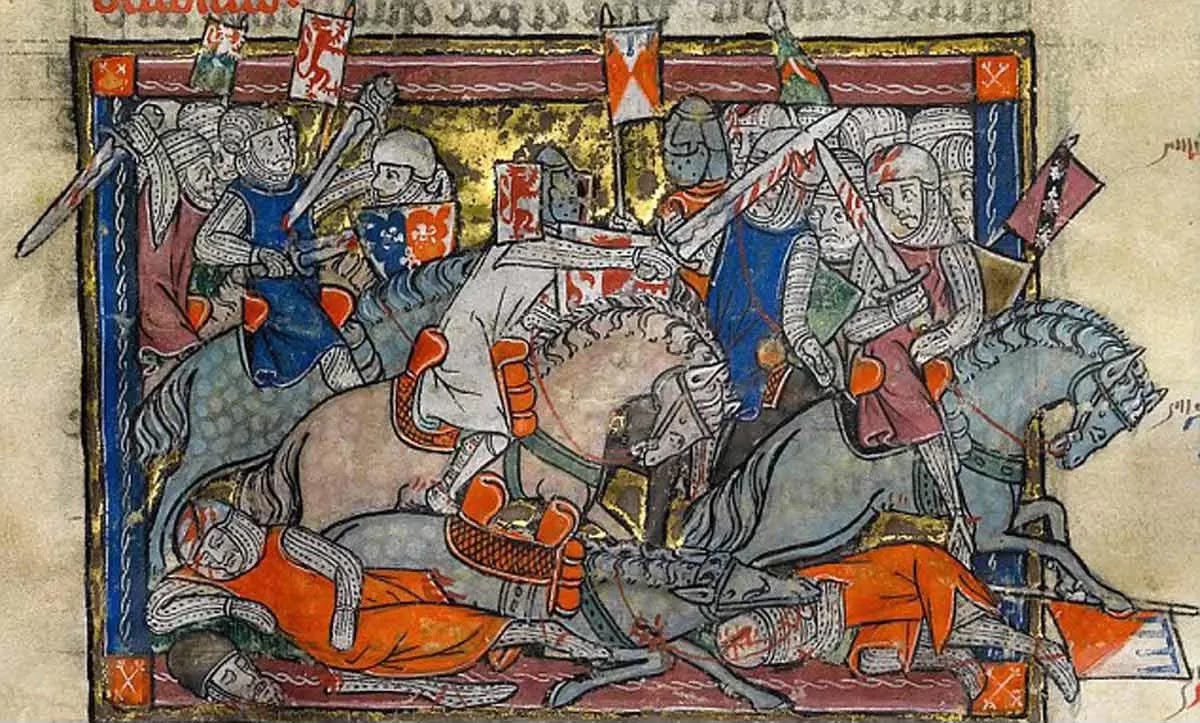
Something stunning has happened in British history. The effort to establish whether King Arthur was a real person has suddenly revived.
Fifty years ago, the academic profession came to a consensus view that the legendary Dark Ages hero had never lived. Scholars began excluding him from serious history books, leaving the study of Arthurian legend to what they termed amateurs, pseudo-intellectuals and cranks.
But a new generation of academics has restarted the quest. Why? Well, they point out that Arthur appears in at least three pre-Norman manuscripts. You can’t just ignore that, they say.
They believe those texts link him to real battles whose locations lie in Rheged, the Dark Age kingdom that covered much of what is now Cumbria.
And they think that when you use modern forensic analysis it is possible to see underneath the layers of legend and mythology that a real person lies there – who is a northerner. Now, you will recall that there are many versions of the Arthur myth and they place him in various locations across Britain (and even beyond).
But Cumbria has been strongly associated with Arthur for a thousand years. Many scholars believe one of the key historical figures who inspired the Arthur stories is King Urien of Rheged, a real person, not a fictional character. He became a folk hero among Welsh peasants because of his tragic heroism in dying at the hands of a treacherous ally in 590 AD while fighting the Anglo-Saxons, exploits celebrated in the poetry of 6th century bard, Taliesin.
Urien became a celebrated figure there because the Welsh were also fighting what seemed a similar life-or-death struggle against the expansionary English. There was an urgent need for stories of resistance and unity to rally the troops during a time of social upheaval and external threat.
Both Rheged and Wales were part of the broader Celtic-speaking world that once stretched across much of western Britain, sharing a language, customs, and a sense of kinship in opposition to the aggressive Anglo-Saxons who had colonised the east. This kinship exists in the Celtic name the Welsh used for themselves, Cymry, (comrades). This means the same as the Cumbrian Celtic word, Combrogi, from which we get the name Cumbria.
So, in the popular mind Arthur did the same thing as Urien: he fought the Anglo-Saxons, suffered betrayal and died tragically.
We can say for sure that Urien is not Arthur. But the trajectory of his life seems to have shaped the Arthur story. The most potent part of the Arthur legend is that it embodies hope.
Like the story of Jesus Christ, the tale promises that the ideal monarch, King Arthur, did not truly die but went to a mystical place—usually the island of Avalon—where he awaits the right moment to come back and save his people. At this point it is worth reminding ourselves that if scholars do find the “real” Arthur he is not going to be the illustrious figure of legend. He will lack many of the qualities that made his story one of the most influential tales in Western mythology.
It could even be said that searching for the original Arthur is pointless. This is because the most important thing about him is not that he actually existed. His real power is as a symbol of perfect leadership, moral virtue, and cultural identity, qualities that have made him far more significant in the long run than any single real-life war leader could have been.
Across more than 1,500 years, the Arthurian legend has repeatedly been recast and rewritten. It continues to resonate and appear in new variants all the time to meet the needs and concerns of different eras.
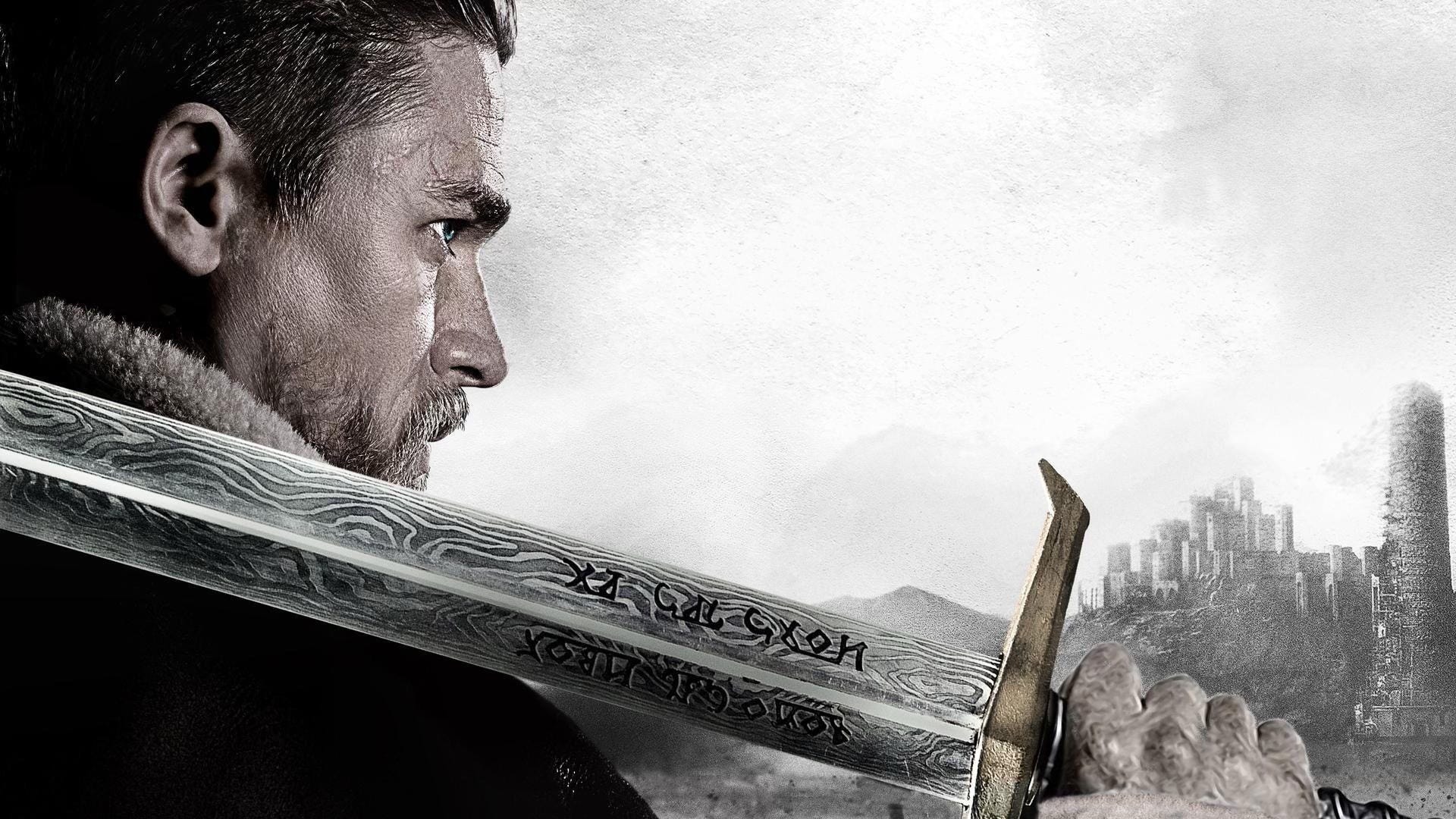
For example, a recent movie featuring the mythical king does exactly this. Guy Richie’s 2017 “King Arthur: The Legend of the Sword” features an Arthur who grows up in poverty as an orphan, not as a prince, and is portrayed as a streetwise, working-class figure. This Arthur embodies the anti-elite populist sentiments that run through contemporary world politics.
But let’s say scholars do track down the genuine, workaday real person who sparked all the myth-making. This Arthur will not enjoy the support of the Knights of the Round Table, Merlin, Uther Pendragon, Morgan le Fay, the Lady of the Lake, the magical sword Excalibur, (or Caliburn), Lancelot, Guinevere, or the Holy Grail. Why? Because all these characters and props are embellishments added by medieval poets who started writing 600 years after the “real” Arthur is supposed to have lived.
Yet, given all those reservations, important scholars such as Cambridge University Celtic specialist Rachel Bromwich believe they have found clues in manuscripts suggesting that there was an actual historical Arthur from the north, potentially in what is now southern Scotland, who fought and died in Cumbria.
The renewed attempt to track down the real Arthur centres on a Latin work entitled the Historia Brittonum. This is a peculiar and slightly weird book, even by the eccentric standards of the Middle Ages. It is a patchwork document compiled by a monk called Nennius in 829 AD from multiple sources, many of which contradict each other.
It mixes legendary stories, myth, and pseudo-history with a handful of verifiable facts. It claims, for example, that an entirely mythical refugee from the Trojan war called Brutus (a different person from Julius Caesar’s assassin) founded Britain, named it after himself, became king and then created “New Troy” (London).
Other fantastic material includes battles with giants, dragon prophecies, and miraculous events. But for all its quirky nature, the Historia Brittonum proved hugely influential. It introduced key motifs and stories—most notably the first definite reference to King Arthur—that became the foundation of the later Arthurian myth.
The Historia contains a list of a dozen battles that Arthur is supposed to have fought. Scholars give cautious attention though not uncritical credibility to this list for several nuanced reasons. For one thing, it provides the earliest known summary of Arthurian battles.
The section of the manuscript dealing with the battles adopts a form and tone that differs markedly from the rest of the text. It is much more specific and it attaches the battle locations to recognisable rivers and regions that in theory are placeable on a map. In addition, the Annales Cambriae (Welsh Annals), a separate Latin chronicle compiled in the mid-10th century, mentions real historical people and echoes some of the battles. This corroboration suggests that Nennius’ list has a degree of tradition behind it and was not just made up.
Academics say this list is the only detailed record that survives of any Dark Age events from the point of view of the indigenous British, that is, Celtic people.
If the new analysis of the locations of these battles is reliable, it overturns the traditional story that Arthur was a royal southerner with a magical sword who fought the Anglo-Saxons. In the new reading, he was a gritty northern military leader who earned a great reputation fighting in Rheged and the north-east of Britain.
The new analysis says the “real” Arthur’s opponents in the twelve battles were other North Britons, not Anglo-Saxons. Arthur’s objective was to secure cattle for his starving people in the wake of one of the most catastrophic events of the early medieval period.
Arthur’s followers had been hit by a famine caused by, most likely, the massive eruption of an Icelandic volcano in 536 AD, possibly Katla, Hekla, or Eldgjá. The explosion released immense quantities of microscopic sulphuric acid droplets into the atmosphere that remained suspended in the sky for years. This dimmed the sun and sent summer temperatures plunging by up to 2.5°C, causing extreme hardship.
Contemporary chroniclers described how snow fell in summer harvests failed for years. There were “winters without storms, springs without mildness, and summers without heat.” Annals written by northern monks record a “failure of bread” and widespread deaths through starvation. Plague and disease soon followed.
The key academic pioneering the new interpretation of the Historia is Professor Andrew Breeze of the University of Navarre in Pamplona in Spain. Professor Breeze points to extensive evidence that the volcanic eruption caused widespread social unrest across the north. The upheaval provoked the struggles that led to the eventual defeat of Arthur.
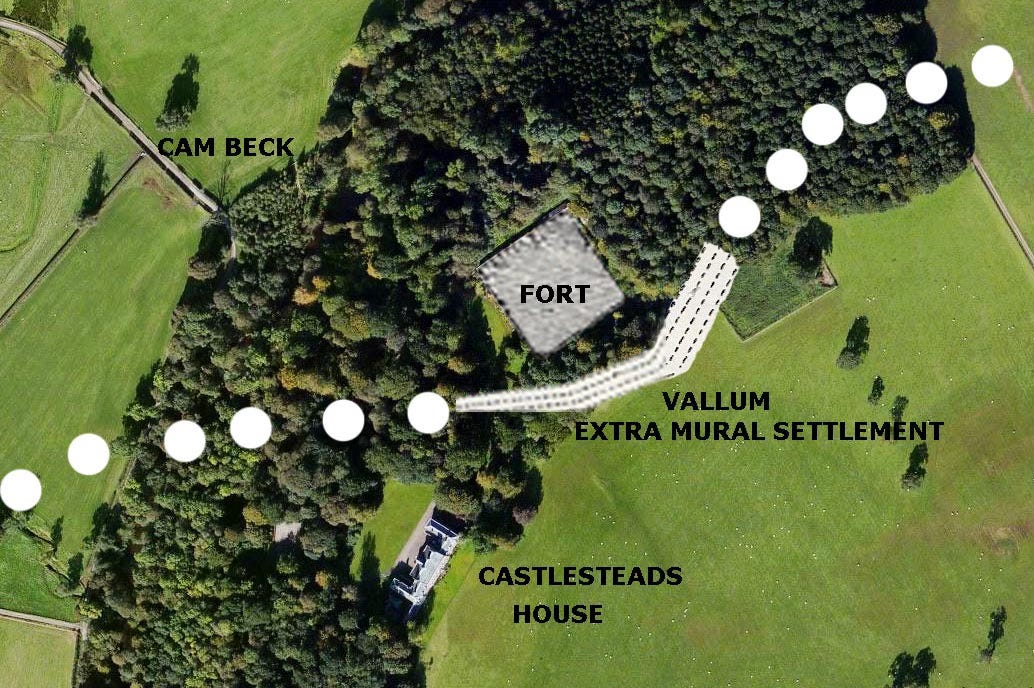
Breeze’s analysis suggests Arthur died in a real military clash recorded in the Annales Cambriae as the battle of “Camlann.” This, Breeze surmises, is a reference to the fort known to the Romans as Camboglanna on the Cumbrian section of Hadrian’s Wall. Today the place is called Castlesteads.
This whole subject is controversial because Nennius was not a historian in any conventional sense. He admitted that he rummaged through old chronicles and fragments of folklore “heaping together all I could find” to create a heroic narrative. His book became available at a time when ninth-century readers in Wales and the surrounding regions were facing attacks from Anglo-Saxon invaders trying to colonise
Wales. In his account, Nennius cast the semi-mythical Arthur as the hero of a fight to expel the Anglo-Saxons.
Critics question the reliability of Nennius’ work because he worked for Cynan Dindaethwy, the king of Gwynnedd, in north-east Wales. Nennius’ top priority was not so much objective truth as to amplify the power and prestige of the Celtic Britons. His mission was to create a powerful narrative capable of rivalling the Ecclesiastical History of the English People, a hugely influential book written by Bede, the 8th century historian.
The Ecclesiastical History blamed the Celts for not sharing knowledge of Christianity with the Anglo-Saxons for 250 years and even approved of killing Celts in retribution for this, the “gravest crime.”
By glorifying Arthur as a military leader and listing his victories, Nennius was pushing back against Bede. His political message was that the Britons were the rightful and original inhabitants of Britain, and the Johnny-come-lately Saxons weren’t. But if the Historia was a propaganda tool concocted to please Gwynedd’s elite, can one regard any of it as literal history?
Well, there are problems with it. The names of the twelve battles came from poems that originally existed only in oral form at the time Arthur would have fought them. They did not appear in books until until two centuries later. Nennius exaggerates Arthur’s military prowess.
At one point, Nennius claims that Arthur single-handedly killed 960 men at Mount Badon. That sort of ridiculous boast naturally creates doubts about whether we are reading reliable reportage. Nennius described Arthur as a Dux Bellorum (a Latin term for a military leader), rather than a king. That helps make Arthur seem like a more believable, down-to-earth figure, but it still does not provide concrete evidence for his existence.
On top of this, the list of twelve battles includes mythologised elements. The use of the number twelve, a multiple of three, makes the story sound more like a Celtic folk tale than accurate history. Three in Celtic mythology is an important symbol for unity and balance. It reflects the Celtic belief that life is deeply rooted in the rhythms and cycles of nature.
By the time Nennius compiled his work, Arthur’s story had been deeply rooted in Welsh myth and folklore for two centuries, so it was natural for him to credit Arthur with miraculous deeds drawn from that tradition. Despite the obvious problems, some academics think the Historia preserves the cultural memory of the Britons from a crucial time when few other sources exist.
They are convinced the list of battles refers to real conflicts even if the details have become fictionalised. Some scholars believe that if the locations can be identified, “Arthur” and his world might rejoin the ranks of genuine, recorded history.
The 12 battles as listed in the Historia are:
· Battle at the mouth of the river Glein
· Second to fifth battles: Four battles on the river Dubglas (or Dubglas) in the region of Linnuis
· Battle on the river Bassas
· Battle in the wood of Celidon (Cat Coit Celidon / Celyddon Forest)
· Battle at Castle Guinnion (Guinnion Fort)
· Battle in the City of the Legion (Urbe Legionis/Cair Lion)
· Battle on the river Tribruit (also listed as Trat Treuroit or Tribuit)
· Battle on the mountain called Agned or Breguoin (Cat Bregion/Monte Agned)
· Battle at Mount (Hill/Rock) Badon (Badon Hill, Monte Badonis)
Past attempts to locate the places where these battles happened have relied on unsystematic guesswork. That tempted academics to propose that Arthur’s military campaign extended over an implausibly extensive territory, stretching from Dorset to Edinburgh.
Arthur’s story is so attractive that different regions of England have tried to claim his legacy and incorporate their own local legends into his story. This has made it difficult to separate history from myth.
Professor Breeze is a philologist, an expert in the branch of knowledge that deals with the structure and relationships of words and how the meanings of words have changed over time. Breeze believes that Arthur’s battles happened in much more closely spaced locations across Britain than previous accounts have maintained. All but one took place in a tight geographical area of Northumbria and Rheged, he believes.
This is an extract from a new book called Secrets of the Hidden People. You can buy it at Bookends in Carlisle or Keswick and the New Bookshop in Cockermouth or Sam Read in Grasmere.
Alternatively, you can order a copy online here:
https://www.fletcherchristianbooks.com/product/secrets-of-the-hidden-people
Comments
Nothing yet. Say the first thing.
Sign in to join the conversation.