
Today’s article will be different. For the vast majority of the time, I write analytical pieces as the damage and sequelae from a myriad of pathologies and pathways are addressed by my suggested supplementation, as it was designed from first principles. It is “basically universal” as it targets systemic mechanisms (in literature, it is referred to as upstream pathways). In some articles, I add how you address what is described, in case of concern or to refresh your memory.
Today is different because I will present you with the “fix” before the problem. Why ? Because the “problem” demands it. Simplicity is the goal because choice paralysis is real, and even my own stack is quite extensive. Leading with the solution, then showing exactly why it is necessary, is more productive.
In recent weeks, several new papers on SARS-CoV-2-associated microvascular dysfunction have been published. These will be addressed in the rapid-fire manner I mentioned previously. While many of these focus on the effects of microvascular damage and dysfunction on the brain, some of the papers cover other regions. All cite impaired reperfusion. I have covered the subject of microvascular dysfunction over the last 2 years, including the kidney, liver, brain, and vascular system. Distinct mechanisms, similar outcome.
The problem with capillary and microvasculature damage and dysfunction is not from an “acute” perspective, meaning there are measurable effects within the short-term. It is the substantial contribution microvascular damage possess on inducing chronic conditions and downstream diseases over time. With a good set of data, microvascular changes alone can predict neurodegenerative disorders over a decade before the earliest symptoms show themselves.
From a simplified bird’s eye view, microvascular damage impairs both localized oxygen and nutrient exchange. This is followed by oxidative stress, then inflammation, creating a feedback loop. The surrounding tissue and cells are starved of fuel.
Another critical factor is phagocytosis, the process by which immune cells ingest and clear debris, pathogens, and cellular fragments. It is incredibly energy-expensive. Dysfunctional energy metabolism or impaired clearance is a major hurdle in many conditions, and it is especially significant in Covid sequelae. Microvascular dysfunction contributes to this directly.
Below, there is a larger, more comprehensive article on Creatine (I will break down one of the articles cited below, focusing on specific aspects of the findings which I didn’t before), and another shorter one, with the outcomes of a trial. In the second one, there is also a good article on dietary fibers helping correct tryptophan metabolism towards its proper pathway.
Given my focus on the brain, we start there.
If you are interested in health, or especially neurological health, you have heard time and time again that while the brain weighs little compared to the rest of the body, yet it demands a fifth of the total energy of the body. Our brains are quite literally energy gluttons. Under all forms of stress, metabolic, hypoxia, forced mental fatigue, mood disorders, TBI, stroke, and sleep deprivation, the brain's energy needs surge drastically.
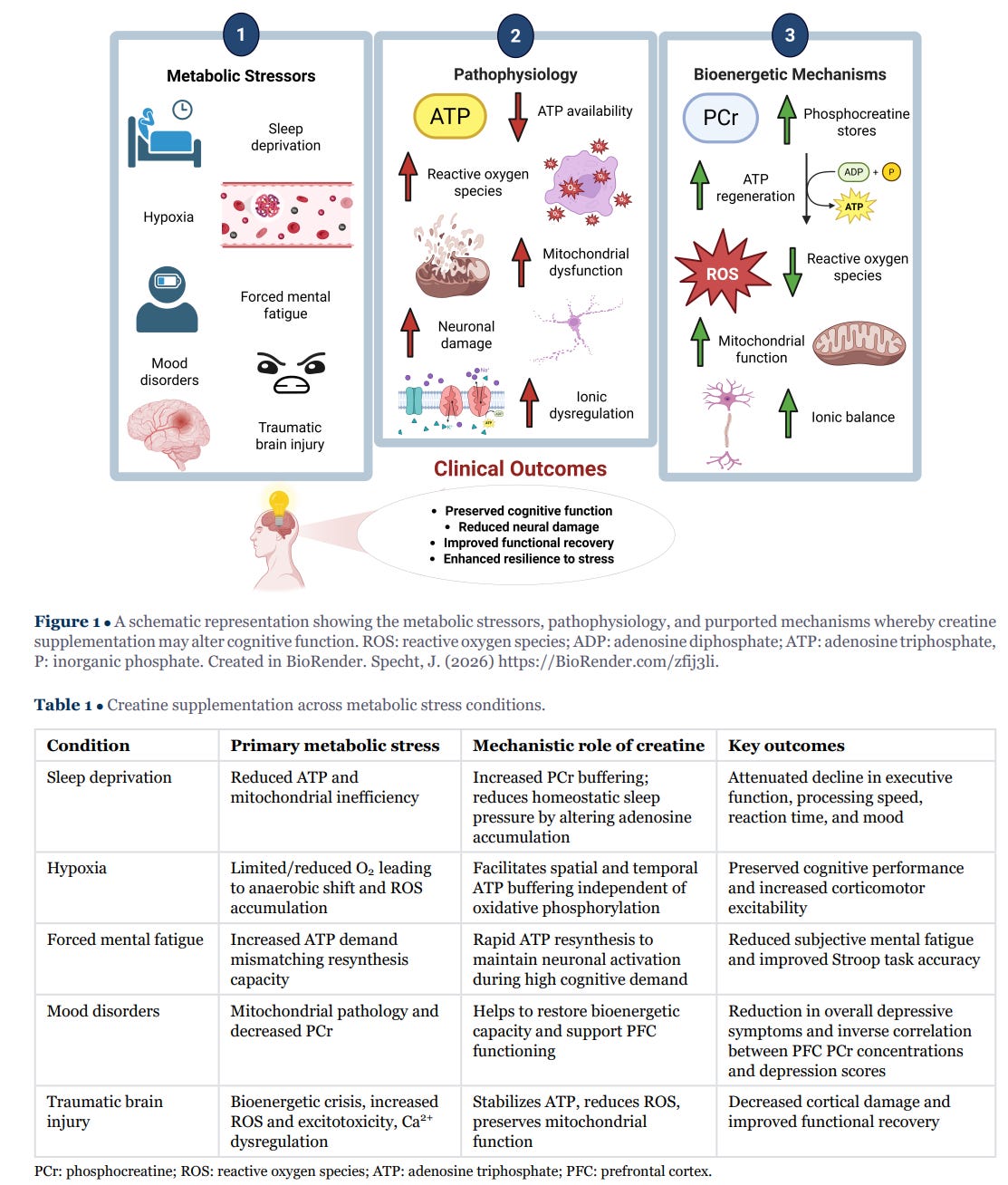
Prolonged wakefulness increases neuronal energy demand. The brain shifts cellular metabolism to alternative pathways to attempt to compensate, attempting to aid energy levels while being slightly neurotoxic. This impairs proper mitochondrial function, which reduces the amount of cell energy available. As you can see, as a byproduct of the energy necessity and expenditure, it can modulate your entire immune system in really profound ways (illustration below).
Sleep disturbances, insomnia, and any disruption of the process are extremely common after all degrees of a Covid infection, and one of the non-linear variables is that often there is no rhyme or reason. Some experience these weeks to months after the infection, with secondary triggers being common. Immune consequences of sleep deprivation. This paper is extensive and really good.
It takes “only” 1 to 2 weeks of sleep deprivation/insomnia for these effects to take place. So you understand the perspective I am writing from, there is a bidirectional relationship between the subject. Sleep disorders (short sleep duration, insomnia, obstructive sleep apnea and circadian rhythm disorders) negatively affect microcirculation, causing endothelial dysfunction, decreased capillary density, and increased inflammation.
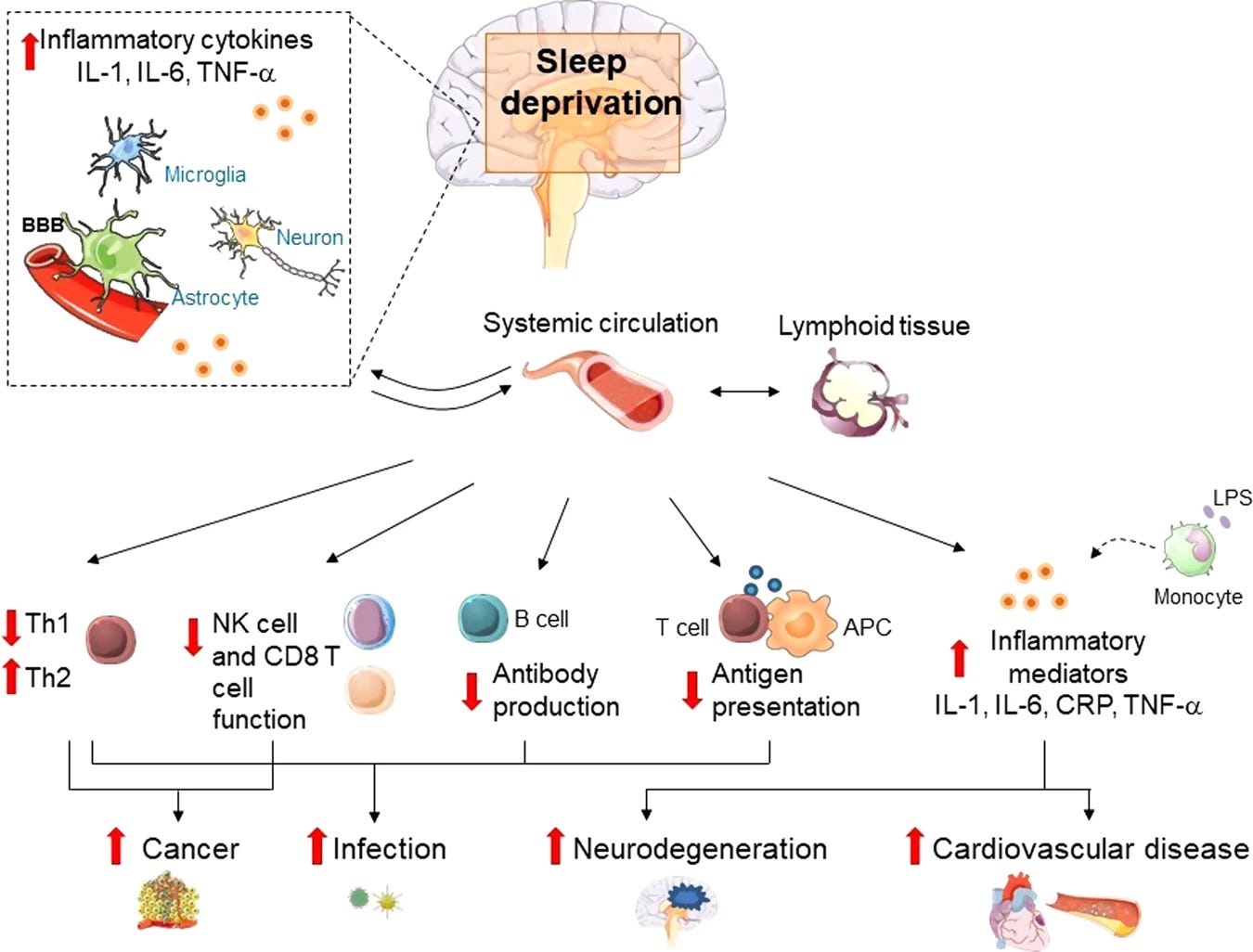
In simpler terms, sleep deprivation amplifies inflammation peripherally (outside the brain), and centrally (nervous system, and the brain). It thins the blood-brain barrier, allowing peripheral inflammatory proteins to enter the brain and central inflammatory signals to leak out. This shifts the immune response towards a Th2-dominant, “allergic” phenotype. It suppresses killer cells such as NK and CD8 T-Cells, delays antibody production, and impairs antigen presentation. The body takes longer to clear pathogens. Paradoxically, it also increases inflammation.
Creatine is the core part of the Phosphocreatine system (the PCr system), which is the body's fastest energy generation pathway, and it can generate cell energy (ATP) without oxygen. Most of the referred literature will cite this as effects on muscles, the primary example of explosive energy demand, but the same applies to the brain. Creatine is stored and spent quickly, which is where the idea of supplementation comes from, you supplement creatine for a better workout.
In addition to this energy-boosting effect, creatine can act as a neuroprotective compound. Creatine supplementation decreases neuronal cell loss, it can affect NMDA receptors in a protective manner (something Covid directly affects negatively), it supports neuronal membrane integrity, calcium homeostasis (remember, calcium in the wrong places is a big problem for the body), and, of course, mitochondrial function. Creatine improves neuronal resistance to energetic stress and oxygen deprivation by maintaining ATP availability independent of oxidative phosphorylation.
It can directly reduce your sleep need. The mechanism is the same, by increasing the available cellular energy and reducing ADP accumulation, it suppresses the adenosine buildup that acts as the body’s primary sleep signal. This is why supplementation can benefit night-shift workers and night owls.
Given the myriad dysfunctions brought about since Covid, creatine is directly relevant to hypoxia. Low oxygen compromises aerobic cell energy production and forces the cell to shift into producing energy without oxygen (anaerobic glycolysis). This causes metabolic stress, increases oxidation (ROS) and accumulation of anaerobic byproducts such as lactate and pyruvate, and compromises the cell membrane.
Under ischemic conditions (when blood flow is restricted in the body, causing low oxygen, etc), the body itself compensates via the PCr pathway, surging the pathway activity as a means to compensate and recover the body under a high-energy need, thus, mechanistically, more creatine aids in the protection and recovery of ischemic conditions. Multiple preclinical trials demonstrate this. In a randomized crossover study, short-term CrM (20 g/day for 7 days) increased total brain Cr (~9%) and preserved attentional performance in adults during hypoxic conditions (10% oxygen for 90 min).
The same principle applies to Traumatic Brain Injury and mood disorders. A pillar of depression, anxiety, etc., is bioenergetic stress, mitochondrial dysfunction, and depleted PCr reserves.
In the study mentioned in my first, more comprehensive creatine article, a pilot study titled Effect of Creatine Monohydrate Supplementation on Macro- and Microvascular Endothelial Function in Older Adults, the authors had highly significant findings. The highlights:
Creatine offers many physiological benefits for performance and health, but the effects of creatine supplementation on macro- and microvasculature are scarcely investigated.
We conducted a novel, randomized, crossover, pilot study to explore the impact of creatine supplementation on varied vascular measures versus placebo in healthy older adults who remain at risk of cardiovascular disease.
Creatine supplementation led to improvements in flow-mediated dilation, microvascular reperfusion, fasting glucose and triglycerides versus placebo; however, pulse wave velocity and biomarkers of oxidative stress were not affected.
The data support potential vascular-based benefits of creatine in older adults that require larger trials to expand upon these findings and explore their underlying mechanisms of action.
The significance comes from a word you should take note. Reperfusion. Impaired reperfusion means that the flow of blood is not re-established in the region or organ. The fact that creatine at higher dosages directly aids in microvascular reperfusion and directly helps with improving blood flow, is big. This improvement in microvascular function comes from even 5 grams per day, which is the “standard” dosage for creatine.
In another trial, creatine supplementation improved systemic microvascular function. In patients with elevated homocysteine and only in them, it lowered levels. Even in younger adults, creatine improved systemic endothelial-dependent microvascular reactivity and increased capillary density and recruitment.
Lastly, a recent review on Creatine for mitochondrial function, covering similar ground. So does a very recent Alzheimer’s trial on Creatine supplementation at 20 grams per day for 8 weeks, and the finding is in line with the overall evidence. It augments and improves systemic energy availability and mitochondrial capacity.
A picture is worth a thousand words, they say.
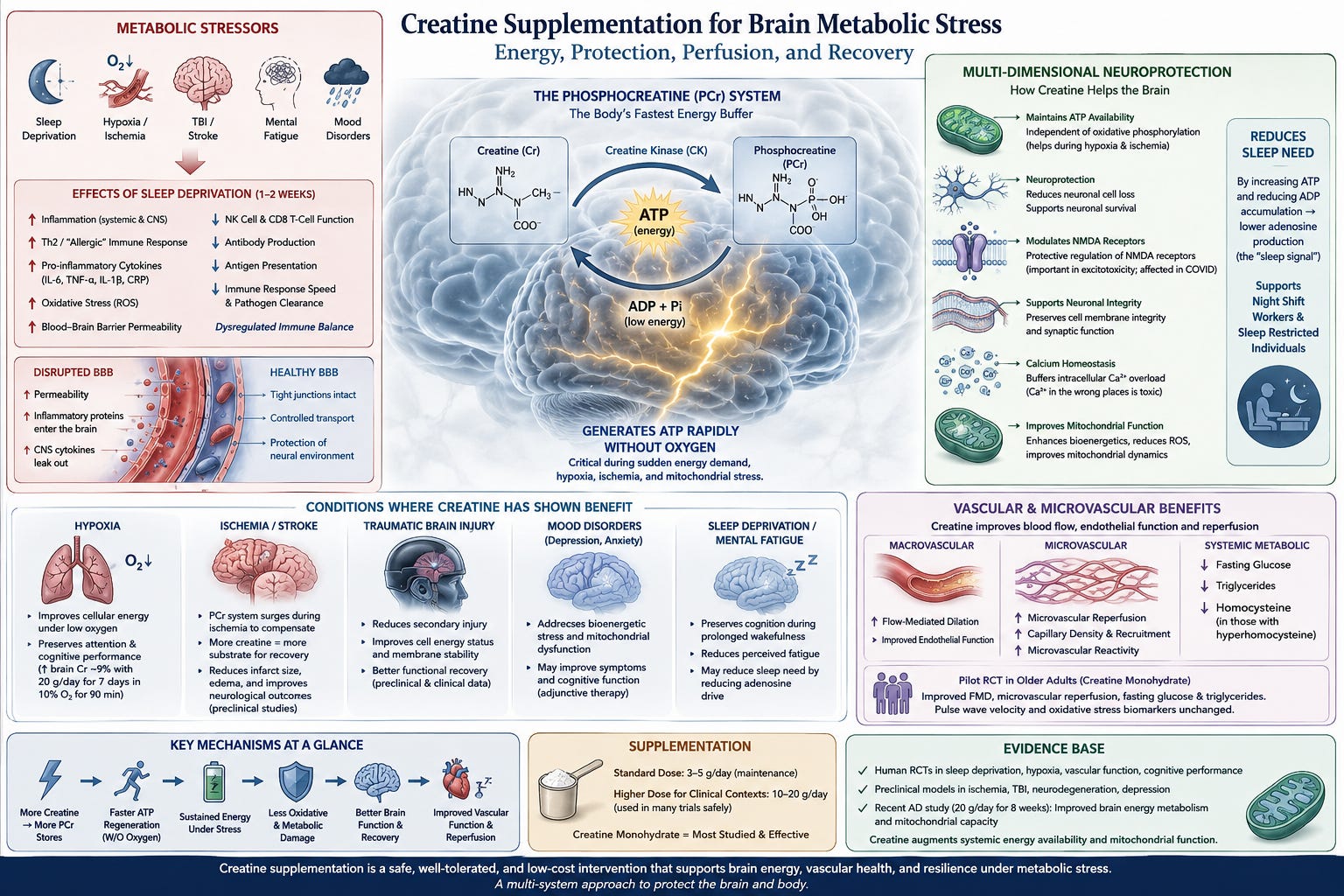
If you are considering creatine supplementation as a means to improve your overall health, cognition, or aid in the recovery of your body, here are some suggestions and pointers
Unless contraindicated by a competent specialist, Creatine is safe for your kidneys, there is a long-standing myth that creatine harms the kidneys. People with kidney disease or kidney conditions can still take it at lower dosages, but only under medical supervision with monitored bloodwork.
Creatine is well known to increase water demand, especially at higher dosages (anything above 10 grams/day). Set a reminder if necessary, at high doses, you will urinate more, and proper hydration is non-negotiable.
Creatine relies on two things for uptake. Carbohydrates (protein also works, but carbs work better), and sodium. If you decide to go with the higher dosage of 10 grams/day, and start having cramps, it is an early sign you need more salt.
The benefits of creatine come from long-term (chronic) supplementation at 5 to 10 grams per day. I found that the neurological benefits are much more perceptible at 10 grams per day. Loading dosage (20 grams/day, used in some trials) should be taken for the short term.
5 grams per day is a completely normal dosage. If you are not comfortable with 10 grams per day, 5 grams is completely safe long-term. Another possibility is taking 10 grams per day for 4 weeks and cycling it, as in taking one day, skipping the next.
I have found a great effect in taking Creatine with 400 mg of Vitamin E, it works very well together. Vitamin E at this dosage has many health benefits on its own.
If you have Mast Cell issues, creatine supplementation becomes a double-edged sword. It can aid in the tackling of Mast Cells, or fuel them. You need to start low and test to see how your body responds.
The immune system is not separate from our vascular system, macro or micro, as exemplified at the start of this article. My first journey into creatine as a means to intervene with the drastic effects of SARS-CoV-2 and its neotoxin (Spike Protein) was the effects of creatine on CD8 T-Cells, specifically as an anti-cancer approach.
Another set of highly important cells deeply scarred by Covid are Dendritic cells, which can remain dysfunctional long after even a mild infection. Think of DCs as cousins of Mast Cells, while not masters of immune responses like them, they bridge the gap between the innate and adaptive arms of the immune system.
DCs can be described as professional eaters, they eat pathogens, break them down, and present the fragments to T-Cells to initiate powerful immune responses. Plasmacytoid DCs (a subtype) act as early alarm systems against viral pathogens, releasing massive amounts of type I interferon and other inflammatory proteins.
•Dendritic cells upregulate creatine transporter (CrT) upon stimulation
•Creatine supplementation enhances dendritic cell function by modulating ATP balance
•Creatine treatment induces favorable intratumoral dendritic cell phenotypes
The authors found that intratumoral DCs upregulate creatine transporter (CrT;Slc6a8) upon stimulation, allowing them to import creatine as an energy-storage metabolite. DCs from CrT-knockout mice showed impaired activation and a reduced capacity to elicit antigen-specific CD8 T-Cell responses. Conversely, creatine supplementation enhanced mouse DC activation in vitro and in vivo, suppressing tumor growth in a sengeneic melanomal models.
Human monocyte-derived DCs respond similarly, creatine boosted their activation and immunostimulatory function. Mechanistically, CrT preserved intracellular ATP and sustained energy-dependent inflammatory signaling. The authors condluced that creatine metabolism is a previously unrecognized regulator of DC function, and that supplementation could augment DC-based cancer immunotherapy.
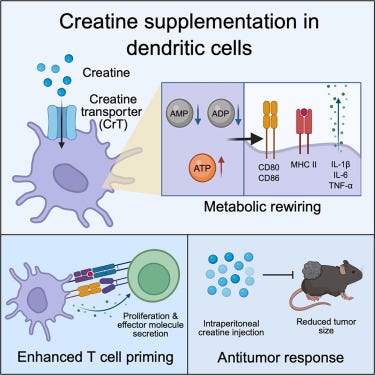
Few conditions impose a greater metabolic burden than tumor growth, both locally and systemically. Immune activation itself is energy-expensive. In the tumor microenvironment, DCs are central. When their pattern-recognition receptors encounter a tumor antigen, they present it to naive T-Cells, activating tumor-specific CD8 responses. They also secrete cytokines TNF-α, IL-6, IL-12, IFNs, CXCL9/10 that recruit and activate NK cells, macrophages, mast cells, and CD4 helper T cells.
The creatine system acts as a direct factor in both DC survival and activation. Supplementation increased survival and made DCs more effective at producing the cytokines needed to fight tumors. DCs lacking creatine or the ability to transport it had a markedly poorer capacity to prime antigen-specific T cell responses.
This fits a clear bioenergetic trend. Creatine is stored intracellularly in DCs, acting as a buffer fuel during metabolic stress. It helps regulate bioenergy homeostasis in activated DCs. Given that signaling and immune activation are energetically expensive, this buffering boosts the ability of DCs to respond when their receptors are engaged. The energy reserves allow DCs to sustain and power its function. They become more effective at fighting.
Even under severe geopolitical weight, supply chain issues, and an assortment of ills, creatine remains affordable. The low cost, allied with its decades of scientific research (it is quite literally one of the most researched substances in science) and quite a good safety profile, makes it a very apt choice for supplementation. Either by not having many choices, or wanting to cut down on too many.
Consider becoming a paid subscriber, and I appreciate the patience of those who continue to support my work.
You can also do a one-time thing by buying me a coffee.

No posts
Comments
Nothing yet. Say the first thing.
Sign in to join the conversation.