Venue Message Rate Limits: Architecting a Multi-Venue Quoting Engine Around Exchange Throttling
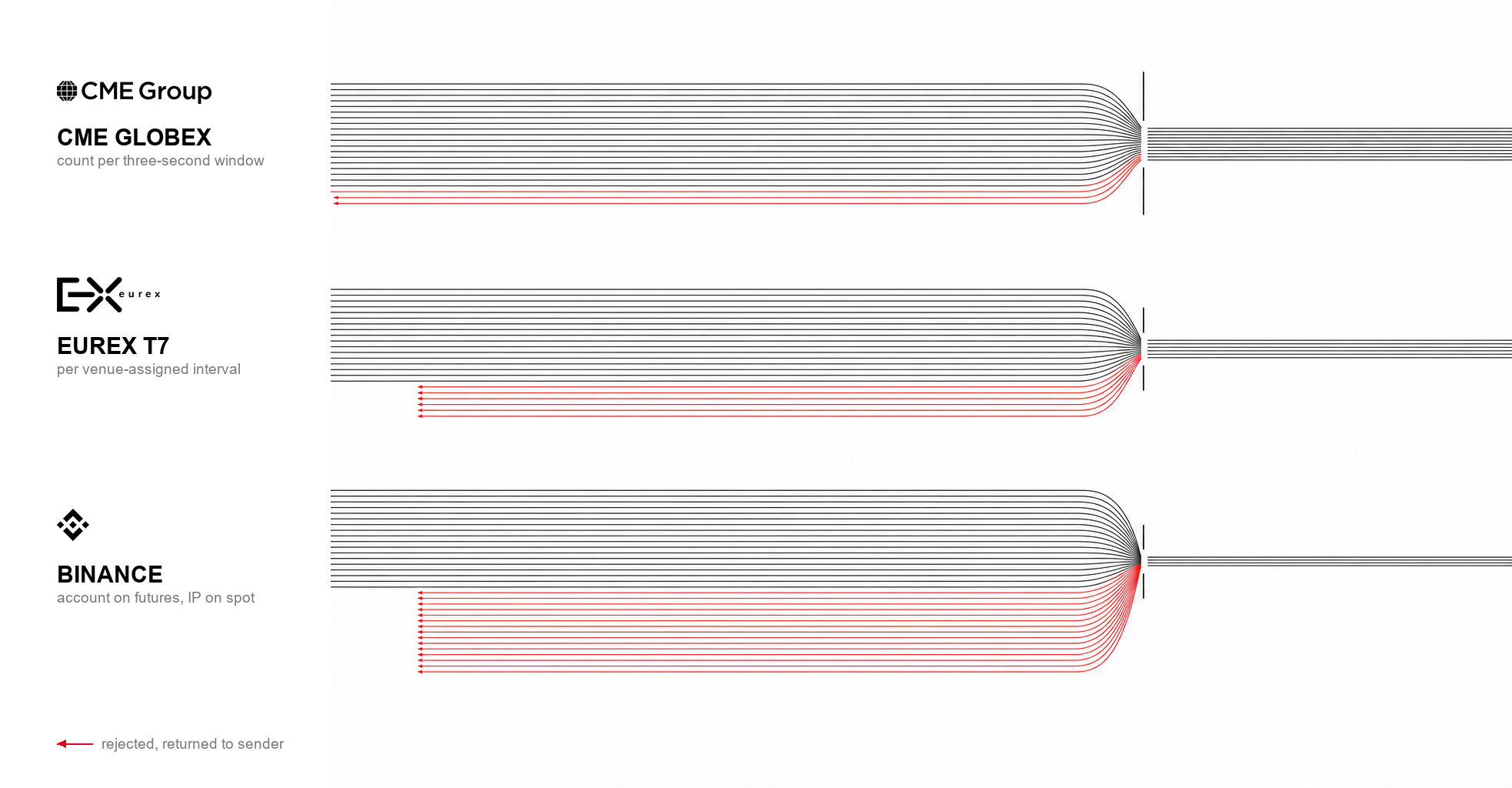
How exchanges actually meter your order flow, why one rate limit across venues fails, and the governor architecture that holds the line.

Senior technology executive in institutional electronic trading, 30+ years buy and sell side. Author of "C++ High Performance for Financial Systems," creator of VisualHFT. I cover exchange architecture, microstructure, and infrastructure that moves P&L.
Live Last read · last published · next check
How exchanges actually meter your order flow, why one rate limit across venues fails, and the governor architecture that holds the line.
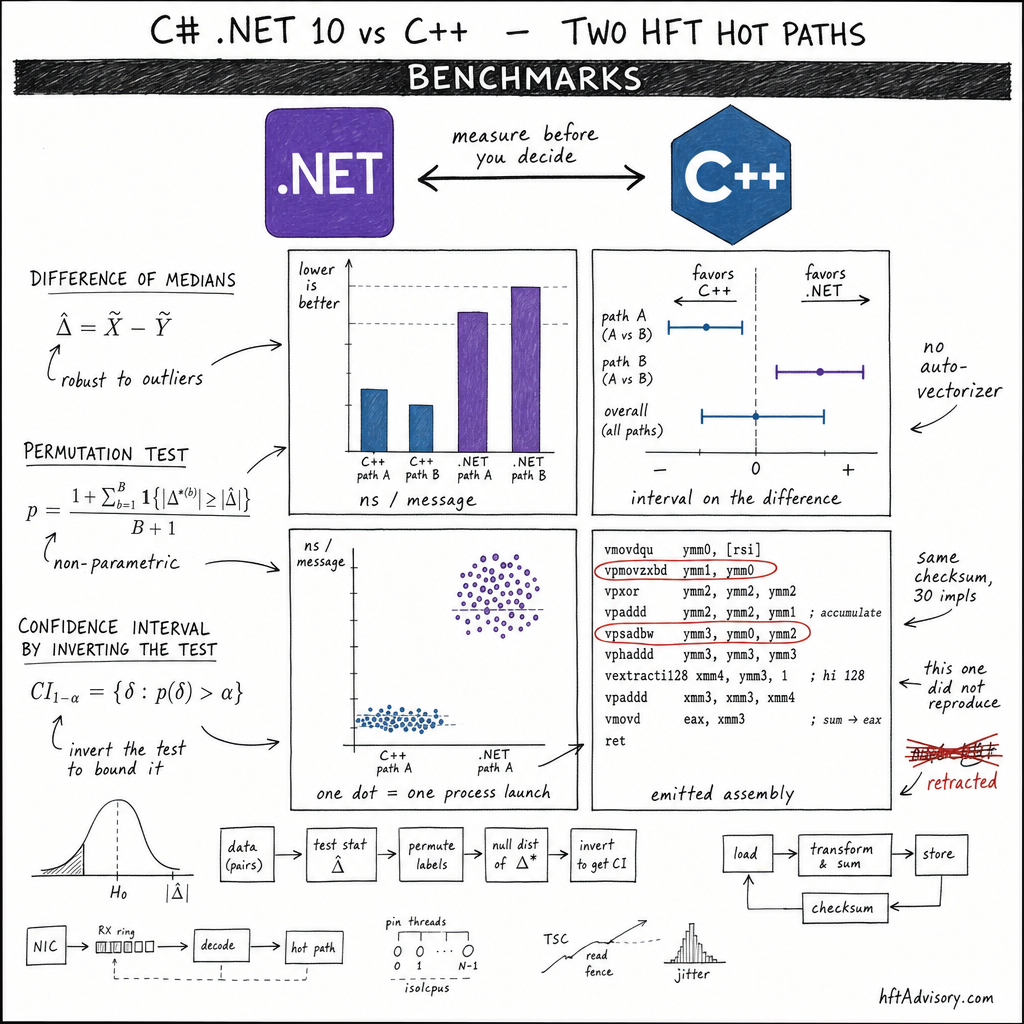
C++ wins the FIX decoder by a third, until you hand-write ten lines of Vector256. Then I re-ran the whole matrix and my own headline died. Full harness, 869 raw launches, every retraction public.
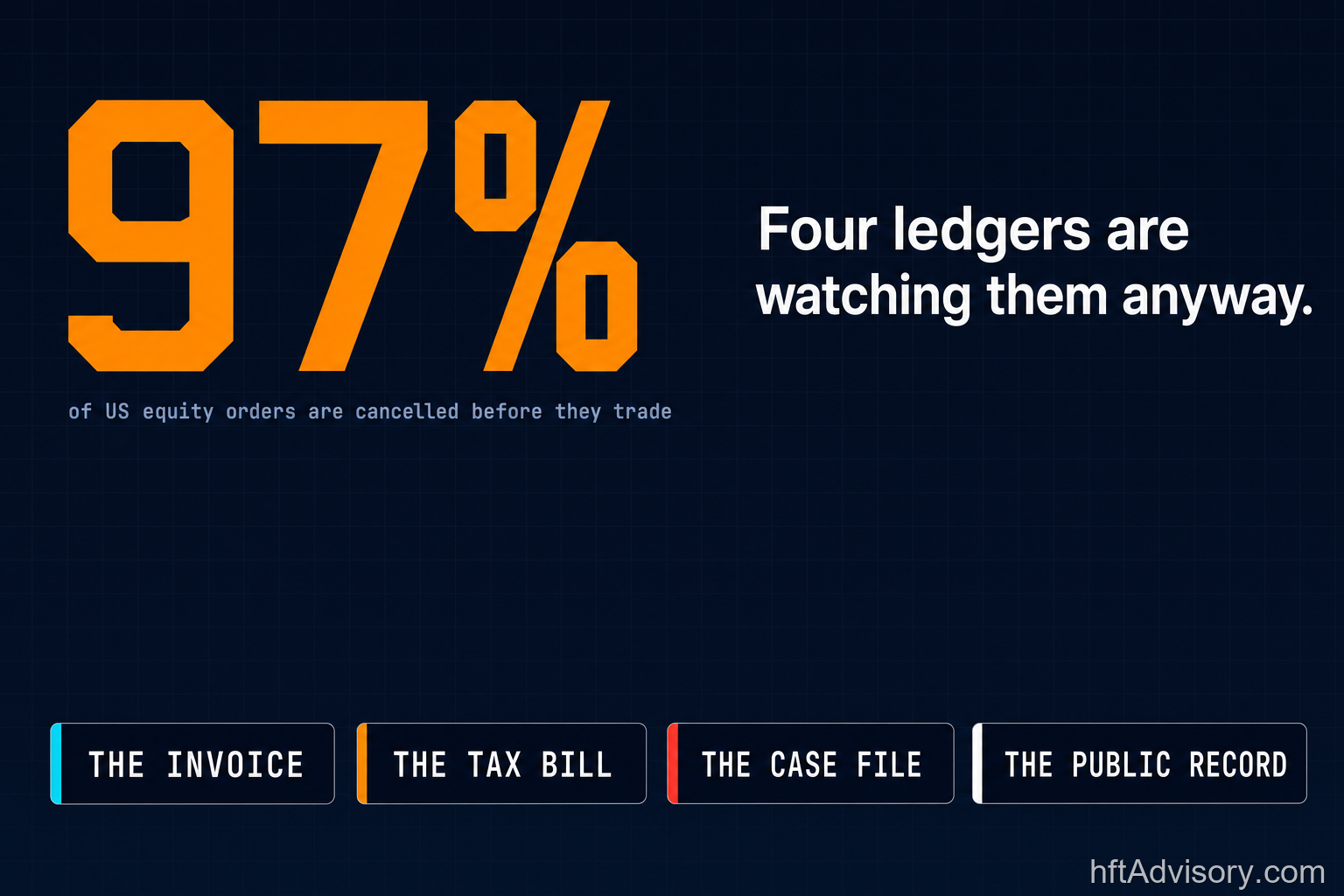
Venues price your order-to-trade ratio, two states tax it, enforcement reads it as intent, and Rule 605 now publishes it. One tape, four ledgers.
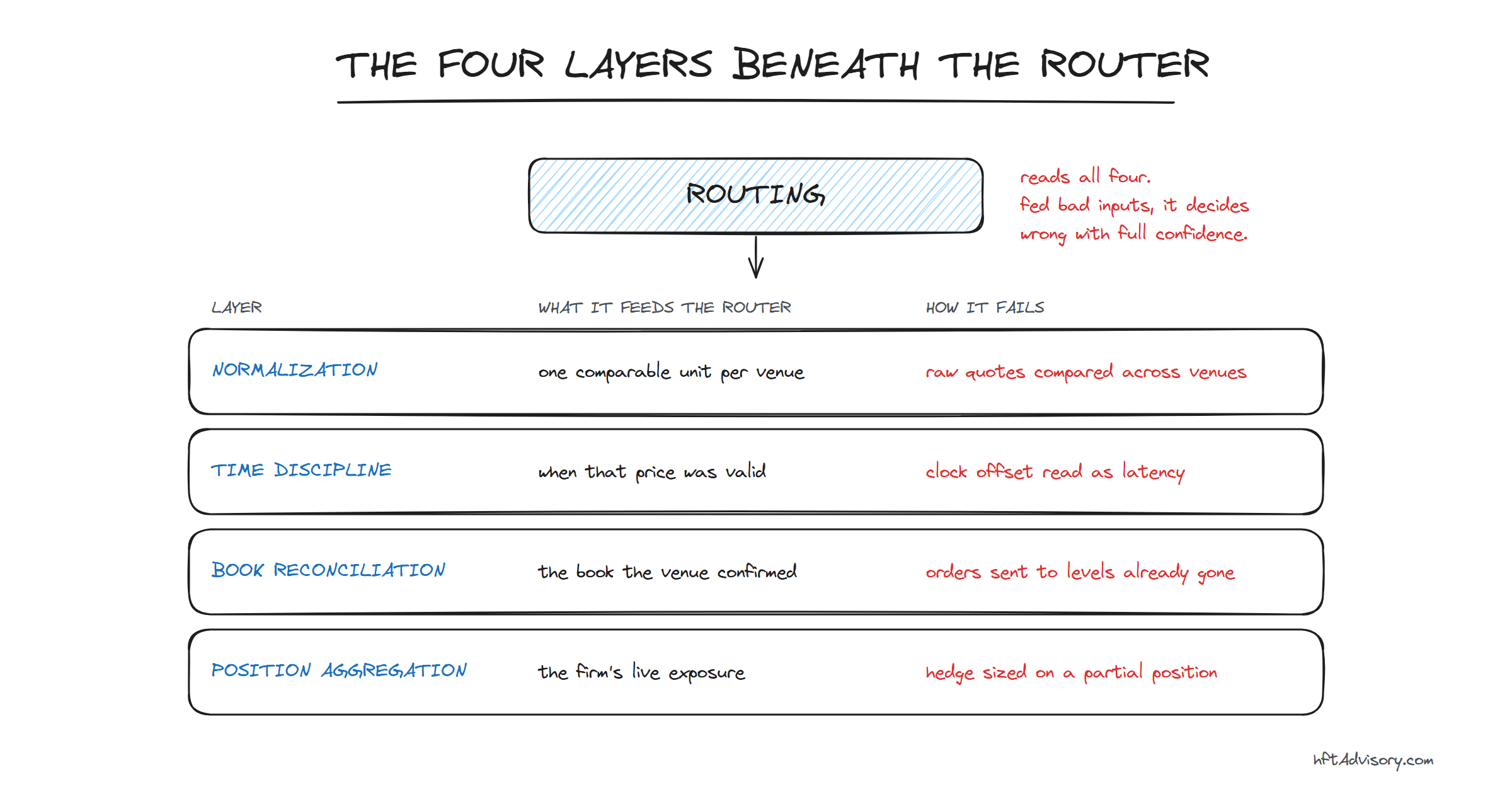
The four architectural layers a router depends on before multi-venue trading access becomes an execution edge instead of a hidden risk.
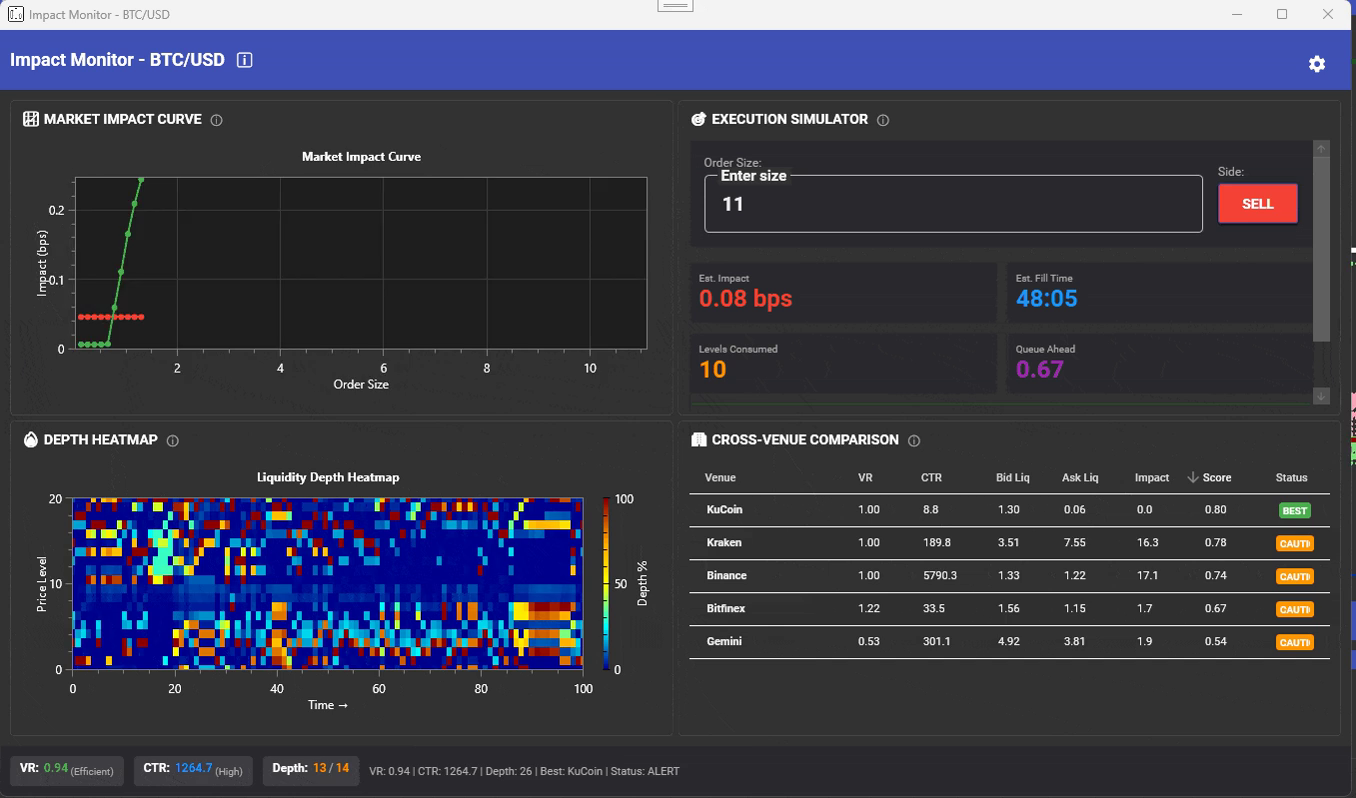
Perold, Almgren-Chriss, VPIN, and the market microstructure research behind measuring execution before, during, and after the fill.
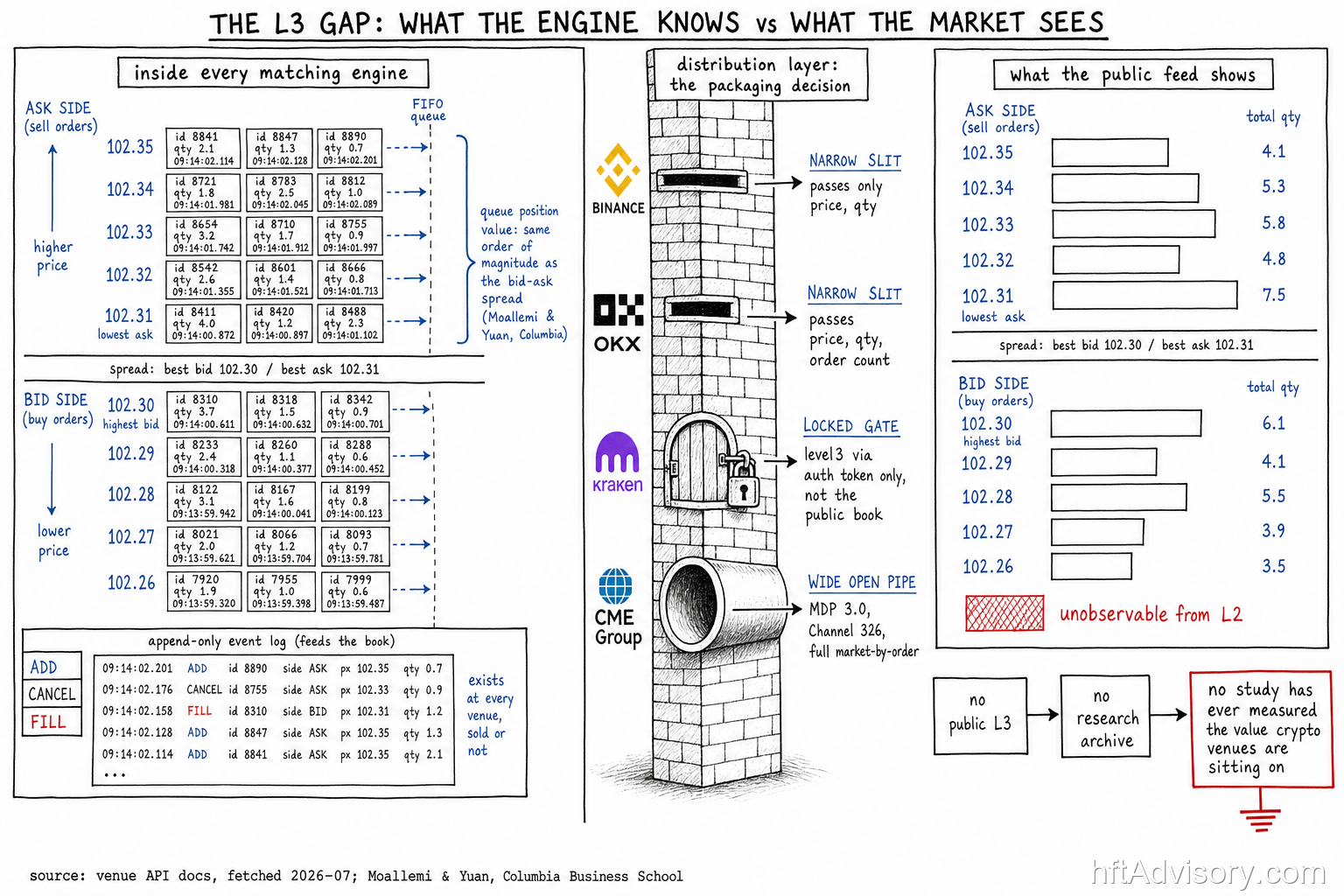
Level 3 market data exists inside every CLOB matching engine. Most crypto exchanges do not sell it. What that packaging gap costs and hides.
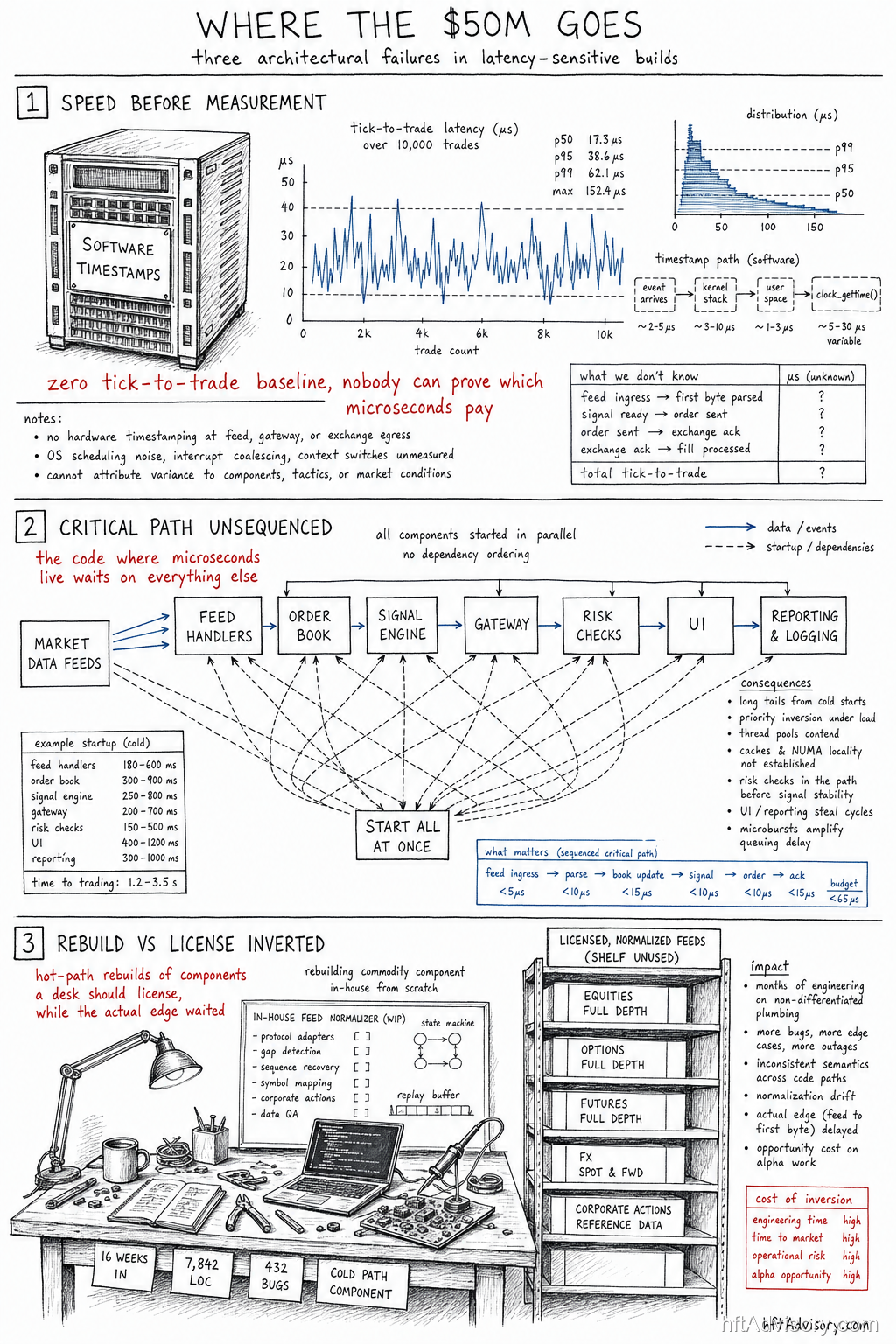
Where quant fund infrastructure money burns: a $50M build anatomy, three architectural failures, and the instrument-first framework that prevents them.
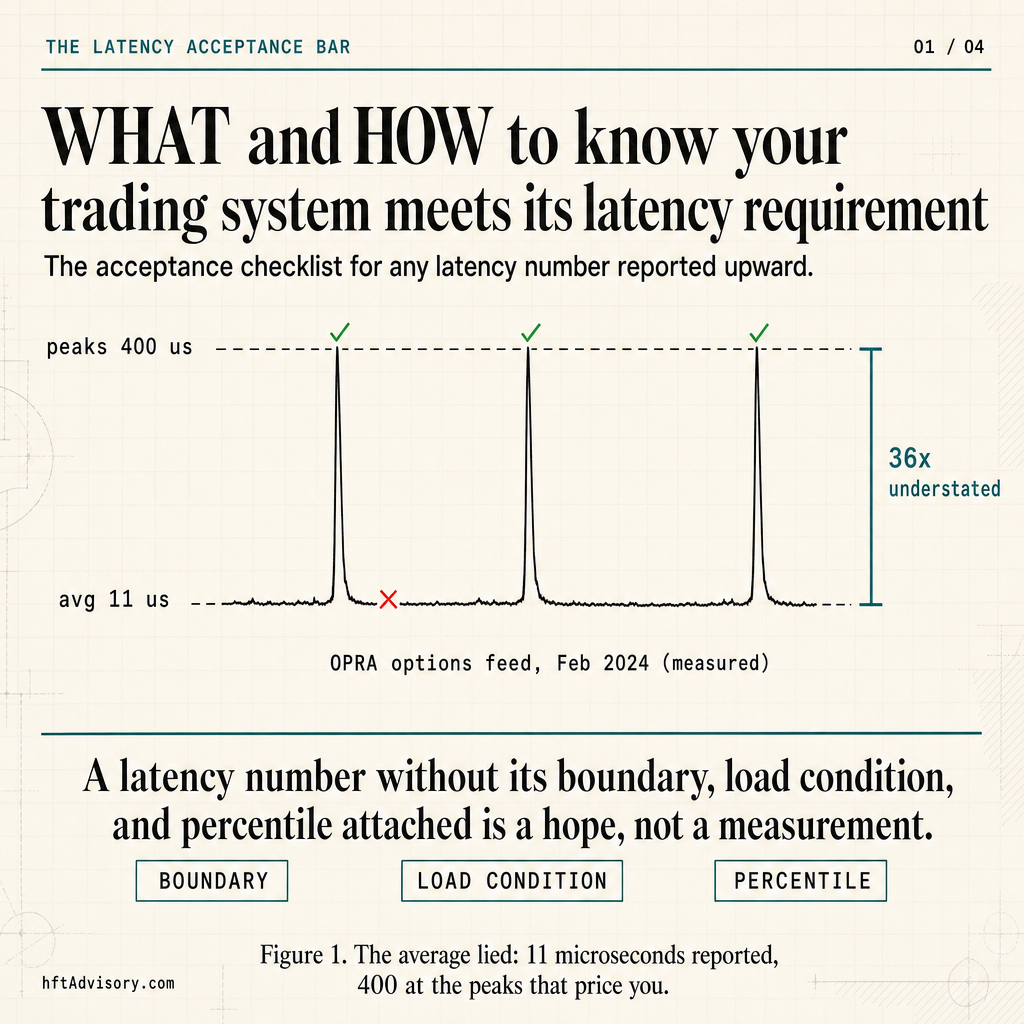
The boundary, load condition, and percentile a real latency acceptance bar needs, with the OPRA proof and a five-minute check.
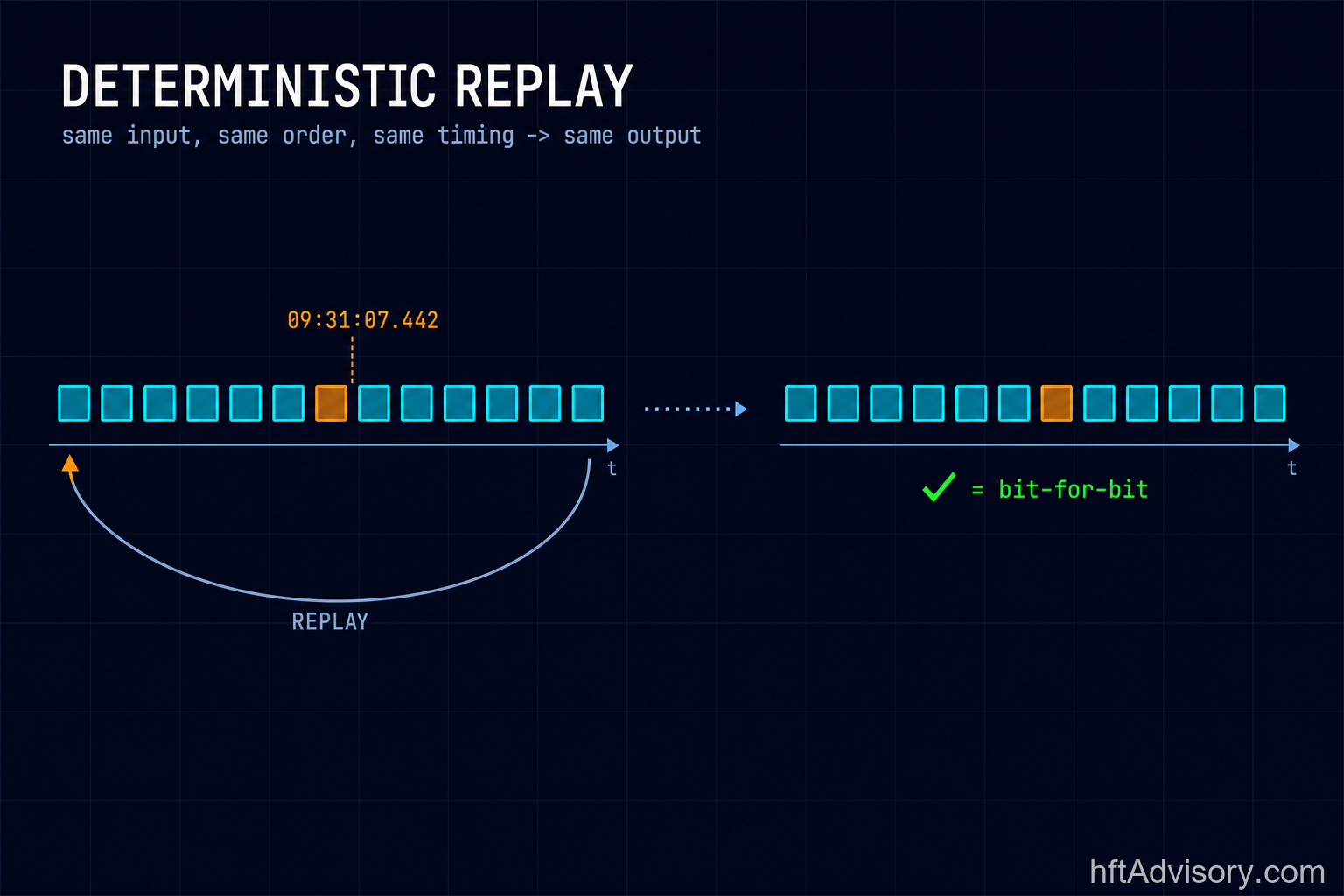
A design guide to a market-data path you can replay deterministically: capture at the boundary, fix event order in the data, replay through the same binary, then prove the output matches.
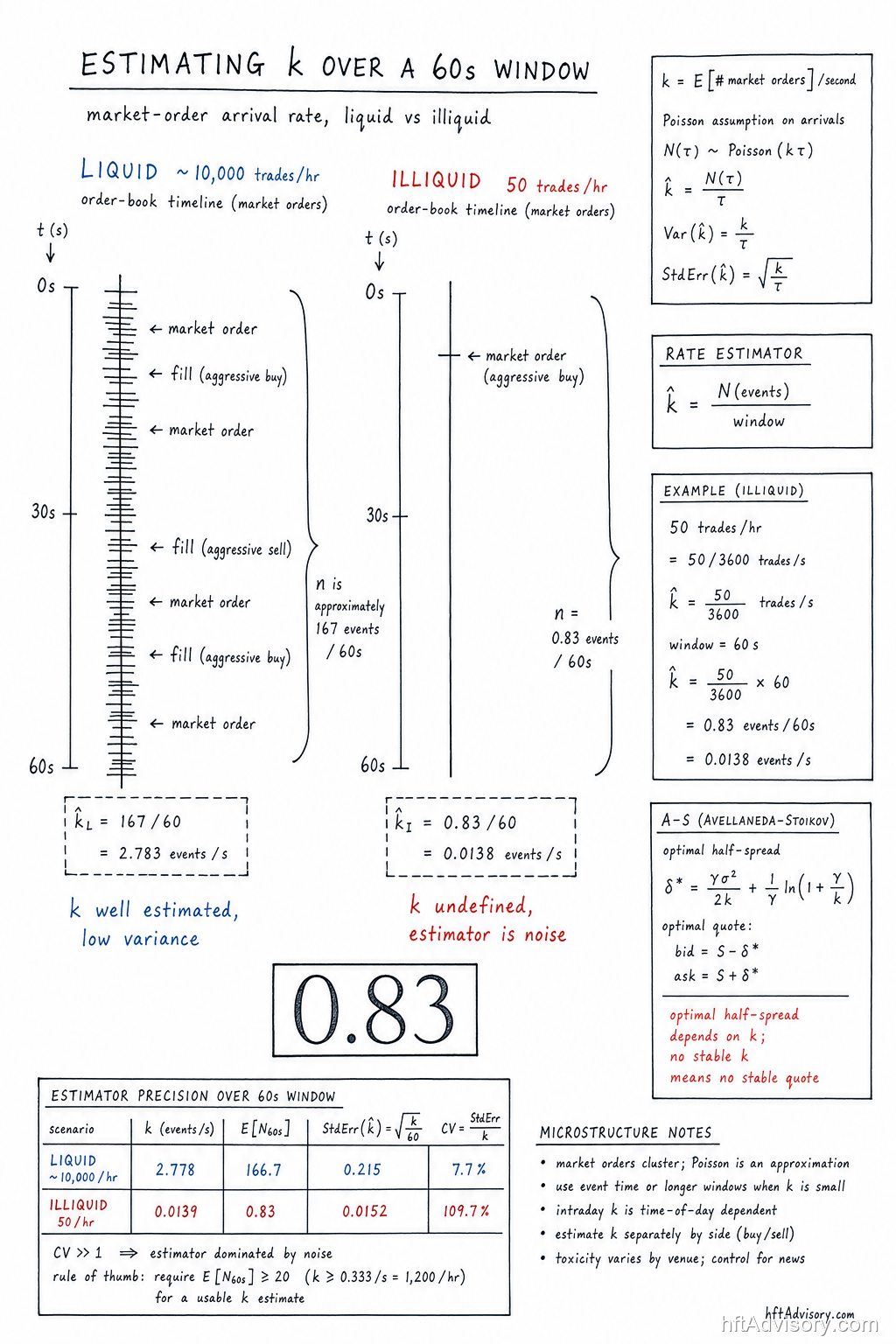
Avellaneda-Stoikov fails on thin books. The fix is not the model — it is the feature pipeline between the book and the quote.