
Even though The Vampire Lestat isn’t set in the ’80s, the decade (and the ’90s) loom large in the modern-day Anne Rice adaptation — especially in Sam Reid’s rock-god wardrobe. Well, when his character Lestat is wearing clothes, that is. Costume designer Lex Wood, a self-described 1980s glam-rock stan herself, breaks down all the details.
A few housekeeping notes: The 50% off annual subscription summer sale runs through July 4. Support independent journalism — and get some extras (and my undying gratitude) along the way! I’ll be back next Tuesday, then taking the week of July 6 off for the holiday. Happy summer!
xo Fawnia
As always, forgive any stray typos — I’m my own editor — and if you’re reading this in email, the full experience lives in your browser. If you’re feeling generous and if Louis’ alias “Thomas Pitt” also made you cackle, please tap the ❤️ at the bottom — it really, really helps!
Subscribe to Whatever Nevermind here!
Warning: Light spoilers for The Vampire Lestat below.
In one of the many savage burns in The Vampire Lestat, hard-nosed investigative journalist Daniel Molloy (Eric Bogosian) — somehow even more cynical after being turned at the end of last season — mocks glam-rock frontman Lestat’s (Sam Reid) repertoire and his clothes.
“Why have you chosen to waste [immortality] singing music no one wants to hear, in pants no one should ever squeeze into?” says Molloy, in his on-brand snark.
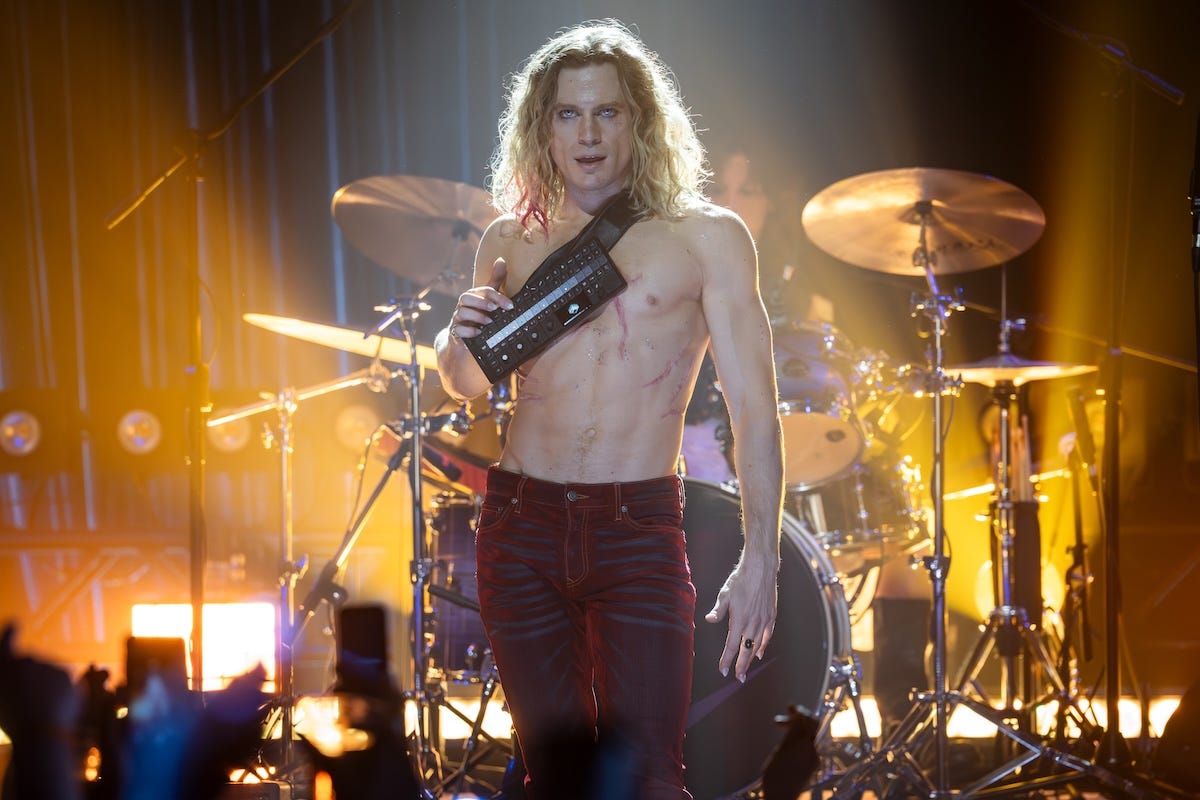
He needles the fiery, impetuous, and silver-tongued 200-year-old lead singer of an ironic hipster rock band that performs vampirism as an aesthetic. Ironic, of course, since Lestat — defiant in snug leather jeans and a sheer tattoo-printed long-sleeve top — actually is a vampire.
“I’m a huge Freddie Mercury fan, and I was brought up on a healthy diet of Queen with David Bowie,” says costume designer Lex Wood, who began the series as an assistant to Carol Cutshall on Interview With the Vampire.
With the title change, season three unfolds through Lestat’s unreliable narrator perspective — rather than his tempestuous love Louis Pointe du Lac’s (Jacob Anderson) version of him as “a mayonnaise villain.” As an irresistible, yet emotionally volatile and narcissistic showboater, Lestat would obviously see himself through a heightened lens — especially as he channels his music to confront two centuries worth of his demons.
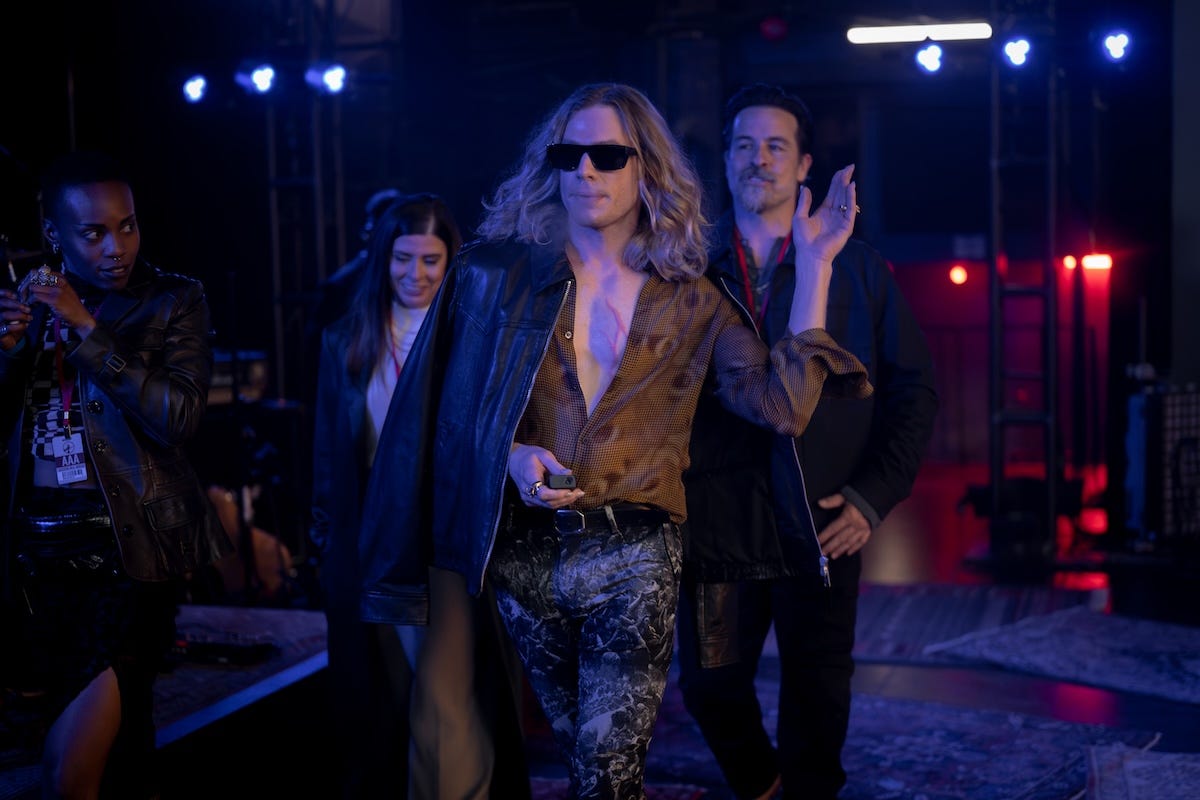
“[Mercury and Bowie] are both fantastic in terms of their looks, but also their changeable nature,” says Wood. “That idea of reinvention is incredibly inspiring, in terms of where Lestat finds himself this season. He’s figuring out what’s going on, he’s trying on different personas, and trying to work it all out.”
Daniel Hart also looked to Bowie and Mercury for inspiration for the original songs — more on that next week, btw — which vibed with Wood’s costume vision. Fittings with Reid, as he was developing his Lestat as a diva rock star portrayal, also informed how Wood custom-designed (and customized) his wardrobe.
“Sam is such an incredible performer, but he’s very giving as a collaborator and actor,” says Wood, who also custom-designed shoes for Reid to craft his distinctive Lestat strut each season. “When we first started fittings in early prep, we tried on a few bits and pieces, and tried to find what we thought was our starting line for Lestat.”
In the season premiere, Lestat makes his first stage appearance in Detroit — “with regional vampires,” per our snobby Brat Prince, in the audience — ready to perform the crowd-pleasing yet critically derided banger, “Long Face.” After the “oohs” and “ahs” intro that Molloy mocks, a shirtless Lestat dramatically spreads his long, geometric-patterned cape, throwing it off to reveal a fiery, abstract-printed red lining.
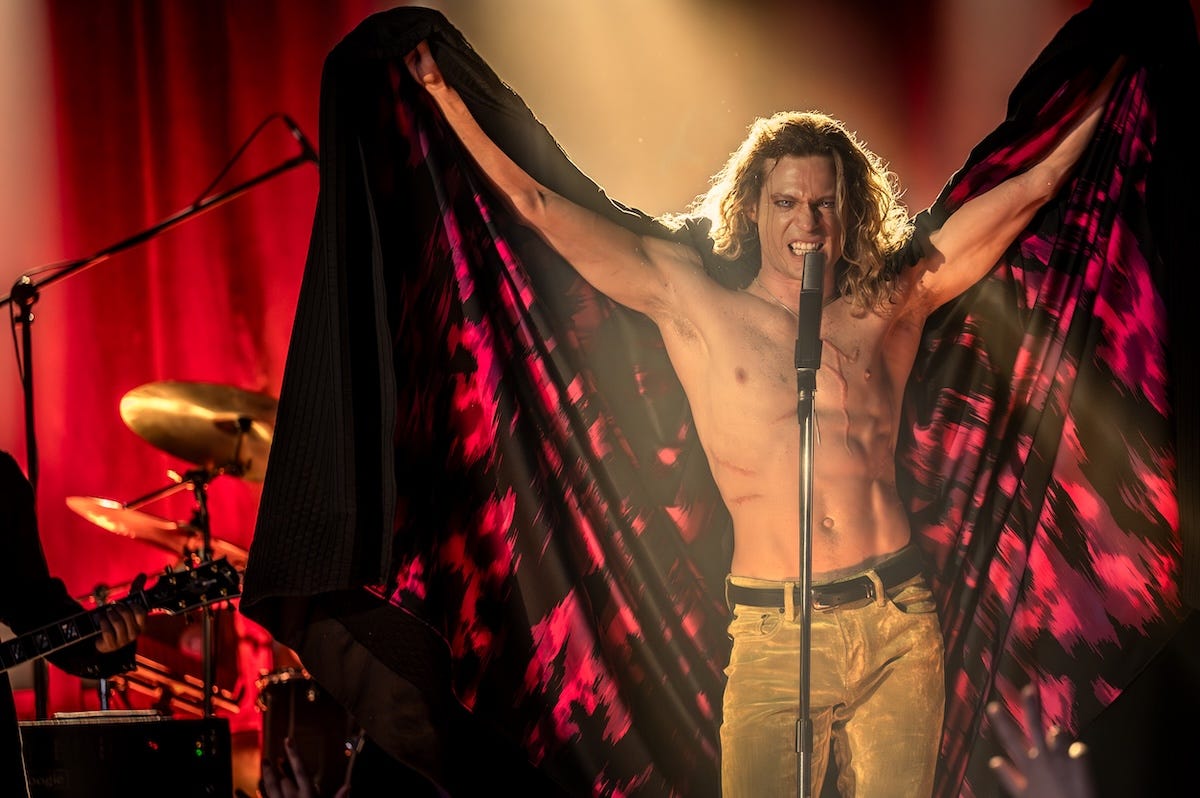
“I love that cape. It’s got the most beautiful shape,” says Wood. “The lining color features a little touch of Alexander McQueen, if I dare use his name.”
The tuxedo stripe on Lestat’s also-snug, acid-yellow velvet trousers nods toward his 18th-century Théâtre des Vampires days depicted in season two. His sweeping cape references Anne Rice’s 1985 sequel, while Lestat’s unpredictable, maximalist rocker image helps avoid any on-the-nose vampire or Count Chocula associations.
“There’s a really wonderful bit quite early on within The Vampire Lestat novel where he talks about touching the black cloak when he goes onto stage,” says Wood. “That is only one of two capes that we see this season, but I wanted to give that very clear nod to the beginnings of Anne Rice’s novel. We always pump up the color as much as we can, because Lestat’s a peacock when he’s performing. He wants to be seen. He wants the drama.”
The cape also threads back centuries to his tormentor and maker, Magnus (Damian Atkins). Through the ballad “Your Biggest Fan,” Lestat recounts to Molloy his traumatic experience held captive by Magnus, at the turn of the 19th century, in an early-’90s hair metal video format — gauzy lighting and requisite roses galore.
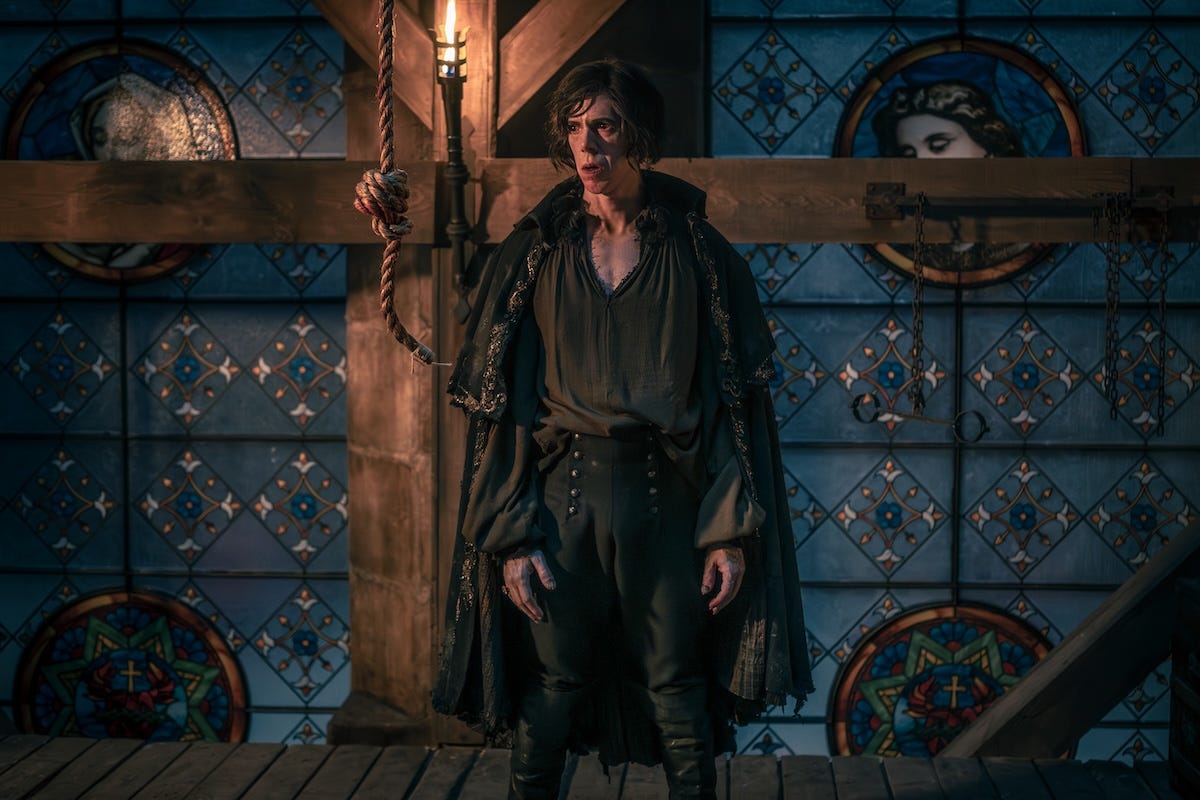
“Magnus, we wanted him to feel as old as he is,” says Wood, who referenced 16th-century capes for the 15th-century vamp. “That’s why only Lestat wears it at the beginning, because he’s literally shedding the silhouette of Magnus.”
During the high-energy anthem “Black Licorice,” Lestat battles with lead guitarist Larry (Schitts Creek’s Noah Reid) for the spotlight. He has a drug-fueled epiphany on-stage in a particularly notable outfit: a sheer printed unbuttoned shirt tucked into a black corset belt and, yes, tight leather jeans.
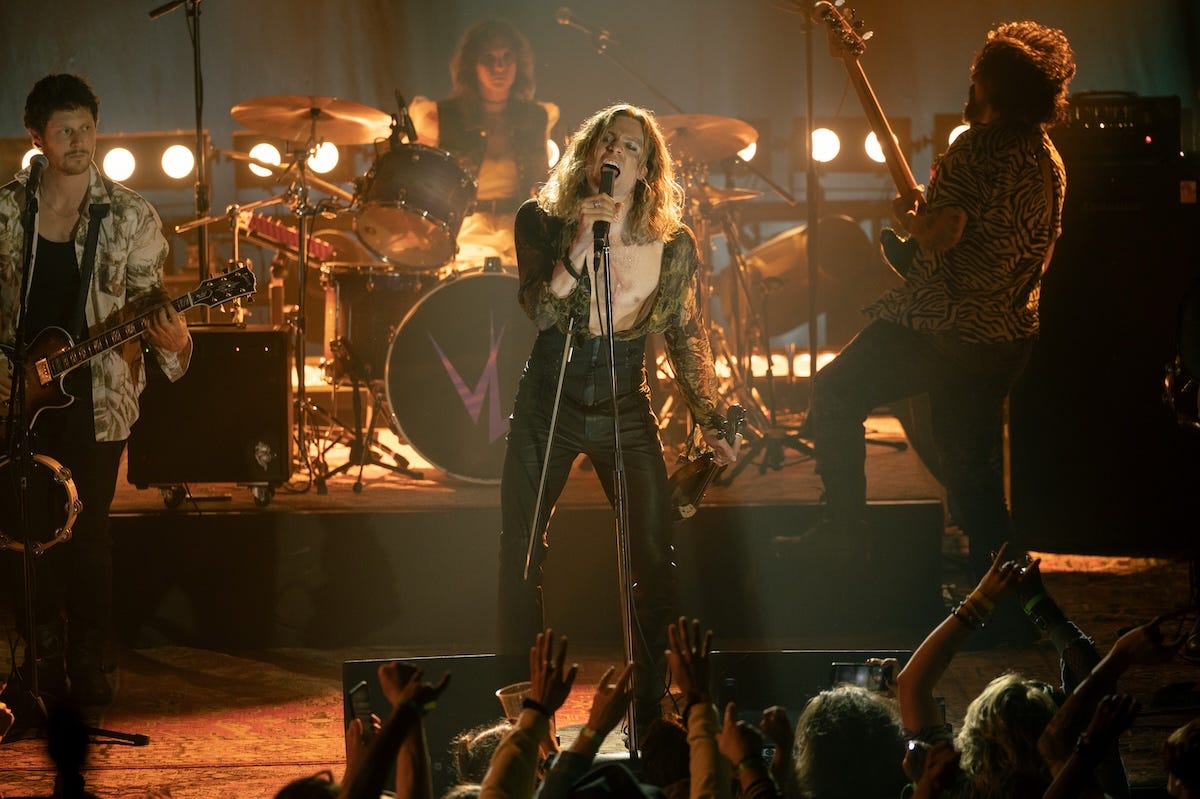
“We wanted him to have even more leather on because of the track,” says Wood, pointing to the trim on the corset, too. “The shirt employs an 18th-century cut across the back and the sleeve, but with a modern fabric. It’s a very, very light silk chiffon. We wanted a bit of that tough-soft—the duality. Lestat is trying to say that, ‘I can be this. I can get over this,’ so he’s not so out of the box, he’s just a bad vampire.”
Whatever Nevermind celebrates Gen X-ers doing cool things, explores stories and trends that define our generation, and dives into pop culture, fashion, and beauty from our perspective. Read more stories like this here.
High on a healthy dose of recreational drugs, Lestat takes his corset-look off-stage and onto the red carpet at the opening of Dracula’s Daughter Hotel. He arrives “fashionably late” — almost crashing his controversial Camaro muscle car onto the step-and-repeat. But he pulls it together to preen for the paps in a beautiful dusty rose suit with a silk shirt and lace-up waist cincher. (Wood explains that the corsets also help hide a harness and wires for Lestat’s cloud-gifted acrobatics and action scenes.)
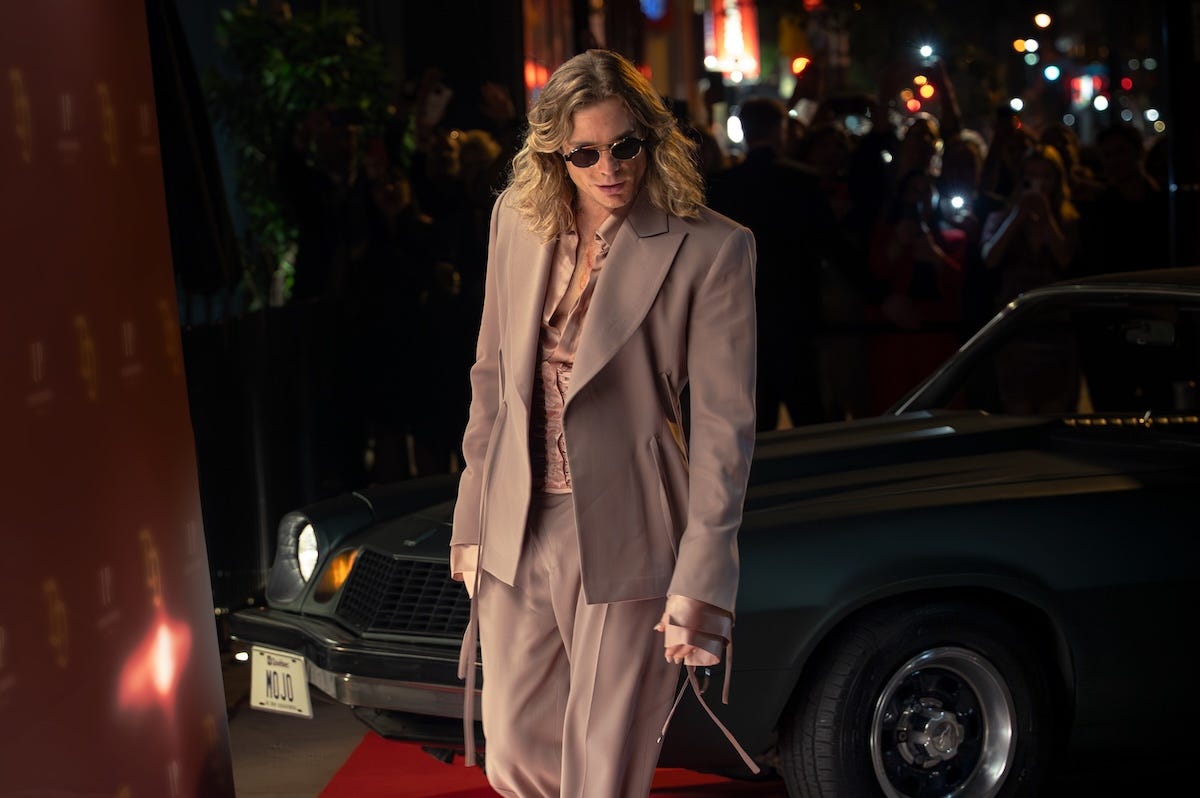
Wood designed the monochrome set — complete with theatrical ribbon ties at the cuffs to accentuate Lestat’s altered state and ensuing blood-spattered action scenes — for an earlier script paying homage to a legendary Anne Rice moment. In 1995, she made her grand entrance at a New Orleans book signing by popping out of a coffin ceremoniously carried out of a hearse by courtiers in black hooded robes. (Terrifying, yet fun.)
“In that sense, I maybe — in a slightly sick way — thought it was quite funny to have him in something baby pink, because it’s a bit of a rebirth from his coffin,” says Wood. “Then I found this fantastic Jean Paul Gaultier reference.” (Maybe this, as also worn recently by Jennifer Lopez?)
But ultimately, Lestat’s swaggy wardrobe — drawing on more than 200 years of fashion inspiration, including the ’80s and ’90s — signals how he sees himself.
“We wanted it to feel a lot freer. We wanted to add in more femininity, but also the idea that Lestat could easily pick something up off the floor and throw it on and look fantastic. Or he could take off something incredibly expensive and throw it down,” says Wood. “We wanted it to feel quite laissez-faire and quite chaotic, really.”
Comments
Nothing yet. Say the first thing.
Sign in to join the conversation.