
“I've been waiting for a guide to come and take me by the hand.
Could these sensations make me feel the pleasures of a normal man?
Lose sensations, spare the insults, leave them for another day.
I've got the spirit, lose the feeling,
take the shock away.”
-Disorder by Joy Division
In the course of my entries into this series, I've come to realize that most people reading don't actually understand anything about how the modern battlefield looks like. This is my mistake, I only had a rough outline from my time in the Marines & didn't truly understand it until I was there. I have a bad habit of omitting things that seem obvious to me but aren't to others of different backgrounds. In this entry, I will try to describe the situation at the frontline & the tactics used by both sides.
Firstly, the terrain. A major reason that drones have been so impactful on this war specifically is because of how flat the steppe is. It's very rare to see any degree of elevation, which is a shame as this elevation provides good concealment from reconnaissance drones watching from a distance. Even a moderately hilly area would be much better for concealing movement, let alone more mountainous regions. How close we are to sea level also makes it easy for the drones to fly, I know from operating them in 29 Palms that higher altitudes heavily impact their performance.
Another issue is that the Donbas is a farming region, it's black soil has been known of for millenia for it's fertility. This means it's made up of wide open fields. Movement through these fields is a death sentence, so roughly 95% of the frontline is actually off limits for soldiers. Movement is limited to treelines, the local term is pozadka. They are deliberately planted in order to help hold water & keep the wind from damaging crops. Hedgerows serve a similar purpose on a smaller scale, for those familiar. Basically all movement is through these treelines, as it's the only cover available. If the treeline is too thick to move through, or the area is relatively safe, troops will move along the outside of the treelines but never to far from it.
For a thick treeline, drones have a lot of difficulty actually seeing targets. You have all probably seen the videos of drones icing out random grunts, but if you pay attention you'll notice that it's very difficult for FPVs to see anything unless they're very close. If you stay still under some foliage you're almost invisible. More on drone tactics later though. Even if the drone sees you, they still have difficulty actually hitting you. They usually get caught up in the foliage & either detonate prematurely or crash. In actual forested areas, drones become a secondary threat because of how easy it is to evade them & how difficult it can be for them to even hit you. Unfortunately, the response to this is often to destroy the forest as much as possible so that drones can operate. The pictures below show what this may look like.
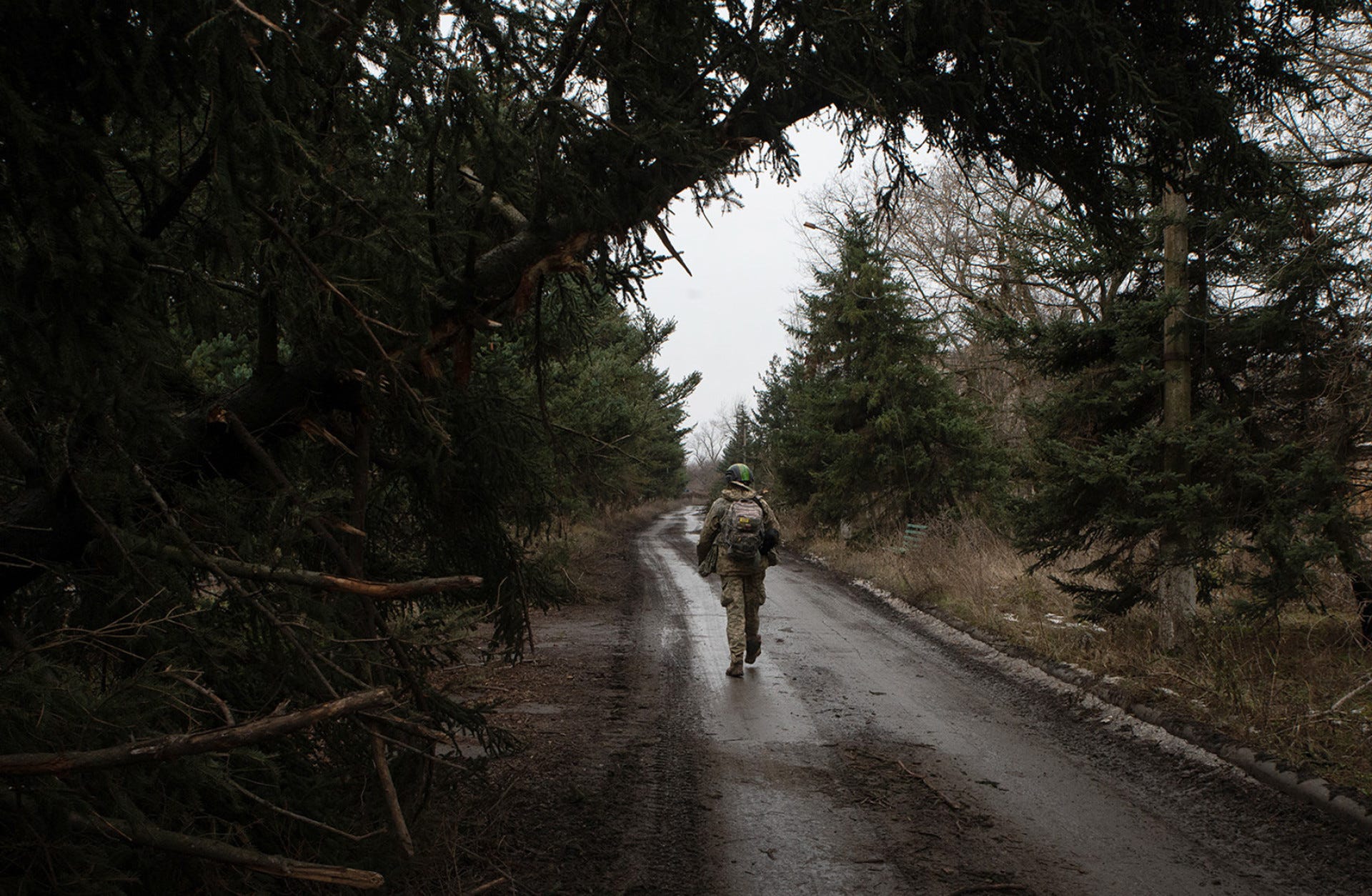
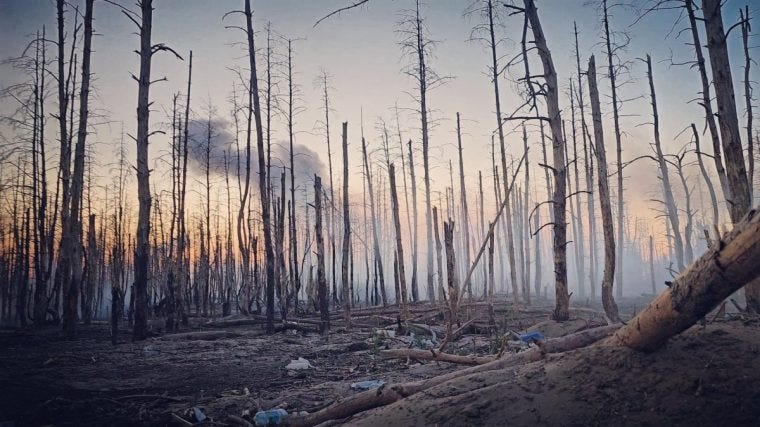
Even treelines or forested areas that have been worn down are fairly effective to hide troop movements. The dead trees, sticks on the ground & other small things make it much easier to camouflage yourself, even if you don't have actual cover. Alongside your uniform's camouflage, it's still fairly difficult for drones to spot you if you take cover behind some tree or bramble.
Because of the lack of foliage, & the cold itself, the war slows down heavily in the winter. There's little vegetation to hide in. The snow inhibits quick movement across open areas, it also leaves a nice trail for reconnaissance drones to track. Aside from that, no one wants to go out in -20° weather. The amount of clothing people wear (especially the thick winter gloves) make fighting a much more difficult task as even simple things become hard. I remove my glove to plot a route on our operations phone & now I can't move my fingers for 30 minutes. Vehicles also have a myriad of problems in the cold, including drones. It's almost like the war stops & only artillery & aircraft keep it going.
The ice is also a problem. During one mission, I slipped & almost knocked myself out with the buttstock of my rifle. I've seen guys get serious concussions from slipping on ice. While funny, it's not a great thing tactically.
As you can probably tell from recent videos, vehicles are not dealing with the drone threat well. Contrary to what some claim, there is still armored assaults happening. Ukies don't do them but oftentimes will pull up a tank to support the infantry. Russians still attempt the old school BTR assaults, but these are usually meat waves. Not only because of drones, but because NATO spent decades trying to counter the Soviet mass armor assault strategy, and the Ukies used this knowledge to great effect. If drones don't destroy them, they'll be ripped apart by rockets, javelins, MATADORs & other anti-armor systems. We saw this often in the Kursk offensive awhile back.
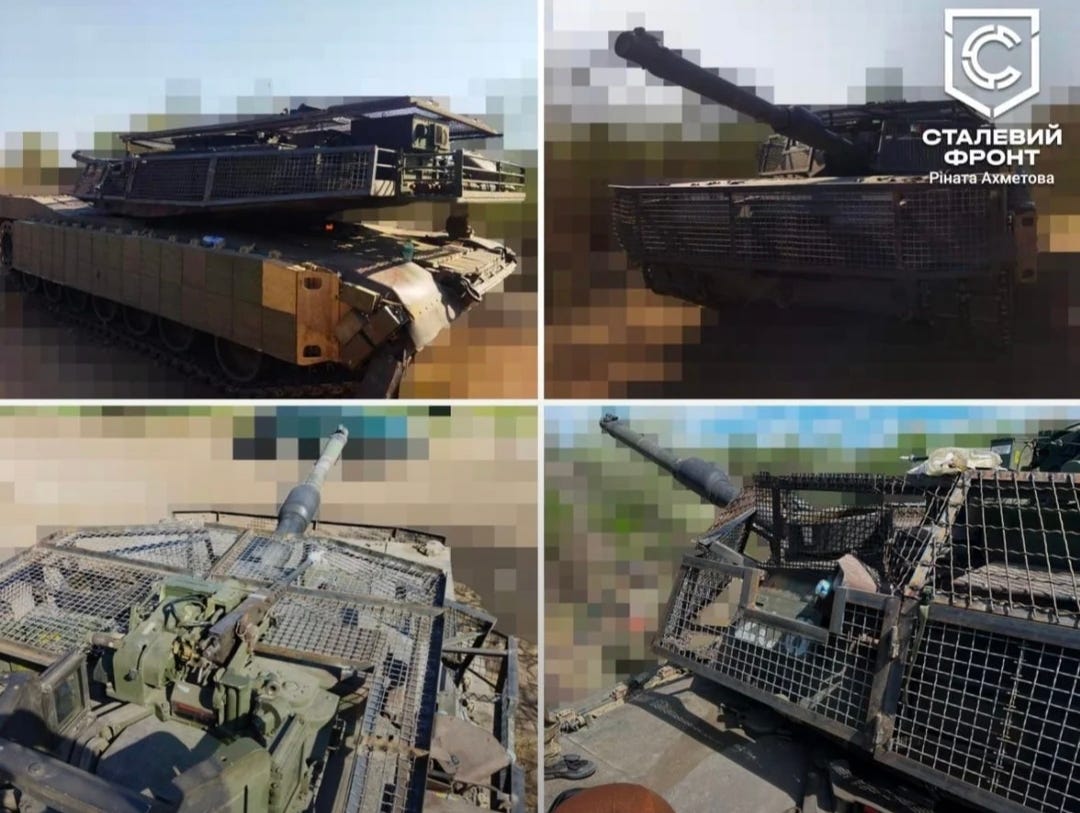
Armor still has a place in modern combat, but it's not the danger it was in the past. Contrary to popular belief, FPVs have a hard time destroying most armored vehicles. It usually takes several hits before the vehicle is actually disabled. Soviet designed tanks, with their infamous ammo carousel, are easier to destroy than Westefn designs. You can often see videos of FPVs one-shotting T-72s because the carousel is impossible to miss with a hit from the side or roof. Abrams & Lepards can often withstand a dozen or so FPV hits without being destroyed because of a better layout & ammo storage. Again, we saw this in Kursk where Lepards often shook of multiple FPV hits. The add-on armor, the cages you see on most armored vehicles, is fairly effective. Almost all anti-vehicle FPVs are using HEAT rounds (typically a modified RPG warhead) & the cages act as spaced armor. They also redirect the HEAT rounds’ jet because the drone crashes into the cage & redirects the warhead. These also tend to give some added protection from infantry anti-armor weapons, which are virtually always HEAT rounds. Not enough for a javelin or MATADOR though, in my experience, but enough to protect against RPGs & AT-4s.
Next, the gray zone. Most people assume the frontline is organized, that there's a line where the Ukies are & when you cross it you find the Russians. This is not the case. The gray zone can be anywhere from 1km to 30km depending on the specific AO. Teams deploy into the gray zone, then find their way to positions. In particularly chaotic areas, you will find Russian positions behind Ukie positions. The gray zone is pure chaos & you're never safe. It's similar to the old Special Forces teams that deployed into hostile areas back in Vietnam. The gray zone starts where you could be killed. Enemy FPVs are patrolling, you're in range of enemy artillery, you might find some Russian teams popping up miles from the actual zero line, usually on suicide missions. Often times the zero line moves but the gray zone doesn't, which is why you see vehicle grave yards behind many Russian advances. They moved forward but the Ukie drone teams are still in the same place & can operate with a fast kill chain.
For a full breakdown on the evolution of Russian tactics, I recommend this video. Great channel overall for understanding the war. The main tactic right now is sending in infiltration teams to find weak points in the Ukie line. This tells the commander which treelines are occupied by Ukie forces & which routes can be used by proper assault groups. These are usually suicide missions. Groups of 2-3 soldiers will walk a route & usually get killed or captured by Ukie forces. Due to lack of training, they often get caught by FPVs while walking through open areas. This is where all those drone videos of random Russians being killed by FPVs while walking through open fields alone. The two Russian POWs I spoke of in my last entry were on a mission like this, just seeing how far north they can get before being killed.
Most units in the Russian ground forces have a group of professional soldiers that are actually trained & experienced. They don't go on the suicide missions, they perform assaults based on the information gathered from the conscripts. Unfortunately, they often get killed because the Ukies patch the hole after the conscripts get iced. But it's usually a good fight at least. Oftentimes, the Russian commanders will continuously send groups of 7-9 people to occupy a position, usually a basement or an identified position. Most will die but 1 or 2 often slip through. They do this continuously until they have a good amount of people & force the Ukies to pull back. This is how they took Pokrovsk, slowly inching closer at a massive cost. This is also why Russians lose 179 people for every km² they capture.
According to POW testimony from my last mission, Russian units work based on money. If you have a decent amount of money, you can pay to go to the drone teams or get a logistics job. If you pay 13,000 USD, you get an injury faked & sent home. All of this money is payed to the commander. Apparently most infantry conscripts just try to survive long enough to save up enough money to go to a safer job. This is how it works in the 150th Motor Rifle Division, & our POWs say it's the same in every unit.
I should mention that the VDV & Marines do not operate this way & are full of well trained, professional soldiers. This is endemic to the Ground Forces, more elite units operate much more like proper soldiers & don't treat their men as disposable meat bags.
The Ukies don't do this. There are some units that are absolutely meat waves (1st Rifle Battalion in 3AB & 425th Assault Regiment “Skala” come to mind), but it's more in a way of assaults. They aren't sending groups of 3 men on suicide missions, but the honorific “Assault” in a unit name comes with a high casualty rate by default. Unfortunately, many tasks that need to be carried out in war are simply very dangerous. Assaulting is the most dangerous task one can perform, but also the coolest.
Many assume the conscripts are the meat wave elements but this generally not true. Conscripts are generally trench niggers, they just sit in position & wait for something to happen. It's fairly safe. More dangerous tasks are generally carried out by elite units like Azov or the Air Assault brigades. Professional soldiers have a much higher casualty rate than the conscripts of the Territorial Defense Forces.
Interestingly, Russia is the opposite. It does not deploy it's elite units to spearhead offensives, they are generally held in reserve to respond to Ukrainian counterattacks. This is why the VDV is currently fighting Ukies down in Zaporizhzhia, trying to limit the breakthrough there. It's also why many elite units, including VDV & Marines, were sent to Kursk to help stop that embarrassment. An issue we run into is that we kill over a thousand Russians a day, but almost all of them are untrained conscripts. What we need is for the VDV or Spetsnaz brigades to show themselves so we can kill the actual competent soldiers, which are in short supply nowadays.
It's impossible to talk about the modern battlefield without talking about the drone threat, every armchair warrior's favorite excuse to be a pussy. Firstly, the Mavics. Mavics are reconnaissance drones that have been in use since before 2022. There's various models that have different ranges, battery lives, cameras, etc. It should also be known that not all of these are actually Mavics, as in the specific model produced by DJI, but the name has stuck for any similar drone. These drones are typically unarmed but it's not uncommon to see them as droppers, drones that drop munitions from above the old fashioned way. More often, they are simply monitoring the battlespace. The ones with better cameras usually hang back over friendly lines & observe from a distance since they can zoom in easily. Models with thermal cameras are rarely used during the day due to their cost, only popping up at night. Although there's considerably less drones up at night, the thermal cameras still dominate so it's very rare for anyone to leave positions at night.
Thermal FPVs pop up occasionally but are very rare. The entire selling point of FPVs is their low cost, thermal cameras add to that cost massively. Most thermal FPVs have anti-vehicle payloads in my experience, to hit logistics vehicles. The standard FPV is very poorly put together, usually as cheaply as possible because, again, that's the main selling point. This means that a massive amount of them are actually duds, only about 25% actually detonate upon impact (many FPV videos online deliberately avoid showing another view because the drone just crashed without detonating, to pad their video archives). With particularly poor drone teams, like those organic to any random conscript brigade, this can go down to 10%. With elite drone teams like Birds of Magyar or Rubicon, this goes over 90%. A large amount of FPVs also simply crash from a malfunction. The frontline is littered with unexploded FPVs.
As said before, FPVs have very poor cameras. Even higher end fiber-optic drones can't actually make out a soldier in a treeline until it's within 50m. Mavics are used to guide FPVs onto their targets, the FPV pilots are usually watching the Mavic's feed until they decide to strike. Without a Mavic tracking you, it's very easy to shake a drone team. Usually amounts to just running after an impact, because the FPVs can't really scan to find you. If a Mavic is tracking you, it's pretty difficult to shake them without a thick wooded area. Usually you have to just hold out until the Mavic hits a low battery & needs to be replaced. Lower end drone teams will usually only have one Mavic so once it's gone you just have to hide from the FPVs. Higher end drone teams will have multiple Mavics that will replace each other in the air, often using an FPV to suppress movement so that ground targets can't take advantage of the change over.
Most resupply in the gray zone is done with drones, either ground drones or hexacopters. The drones will drop supplies near the position & often take a screenshot of where it landed to send to the ground team. They usually drop at night & the ground team picks it up at dawn. Leaving them out ill advised as it gives away your rough position. FPV teams also like putting waiters near uncollected supply drops. The ground drones also like getting blown up, hence the use of drones rather than vehicles. You usually pass a couple burnt out UGVs during infil. Russians don't really have ground drones but they do the same thing with their hexacopters.
Although they tend to keep their distance, vehicles are still used along the frontlines. Bikes & ATVs are not uncommon, especially for emergencies. Several units have used motorcycles for assaults, which usually ends poorly & has recently become less common. Tanks & APCs still show up, but must be deployed smartly. They usually deploy alone & only for a brief time frame. The EW counter measures have gotten very good to the point that FPVs can't get within 50m before losing connection, meaning fiber optics are the only viable option. Commanders will often only deploy vehicles in AOs where there's few fiber optic drones deployed. Even then, it usually takes several FPV impacts to even disable an armored vehicle. This is especially true of Western-built AFVs (Leopard II, Bradley, etc.), which have shown themselves able to shrug off dozens of hits. Soviet/Russian built vehicles are generally more vulnerable due to the infamous ammo carousel which is both easy to hit & always eventually goes off in the event of a fire. Vehicles like the BMP & BTR are simply poorly built & have much thinner armor than you might expect. I suspect much of this is due to the fact that most Western vehicles were designed to take hits from RPGs (the warheads of which are used on virtually every anti-vehicle drone), while Soviet designs were mainly focused on bullets. Thus, the older US-built M113 has a survivability closer to the BMP than to a Bradley.
The drone cages set up around vehicles are also far more effective than you might think. While the roof-mounted “cope cages” that Russia invaded with didn't do much against Javelin missiles, nowadays it's ATGMs aren't the big killer. Cages around vehicles act against FPVs in two ways. Firstly, it makes the drone crash & redirects the HEAT penatrator. Secondly, it acts as spaced armor which is very effective against the small HEAT rounds used on drones. When it comes to AFVs, the goal is essentially countering a very well aimed RPG-7 shot - often repeatedly. Many vehicles also use netting rather than a cage, which accomplishes the same purpose while also making it much more likely that the drone simply fails to detonate. You can often see vehicles driving around with drones stuck in their netting, many vehicle crews leave them there after engineers disarm it for fun as well.
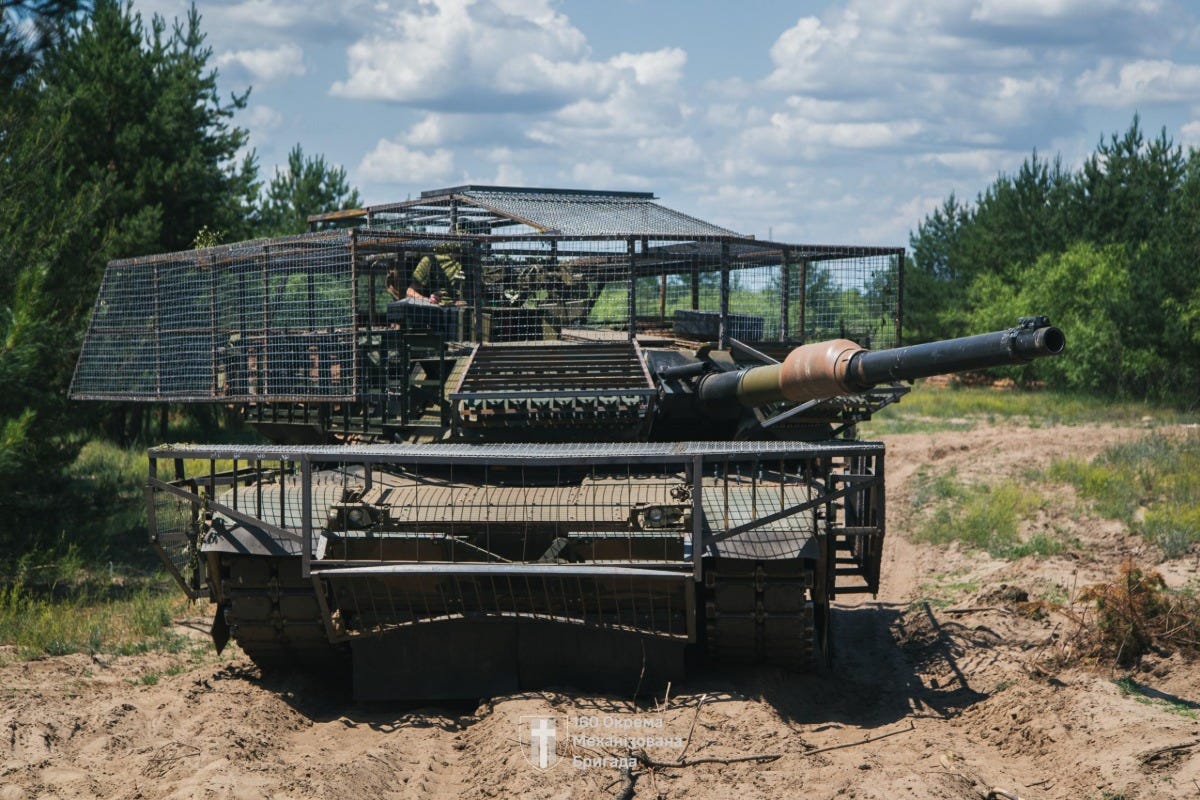
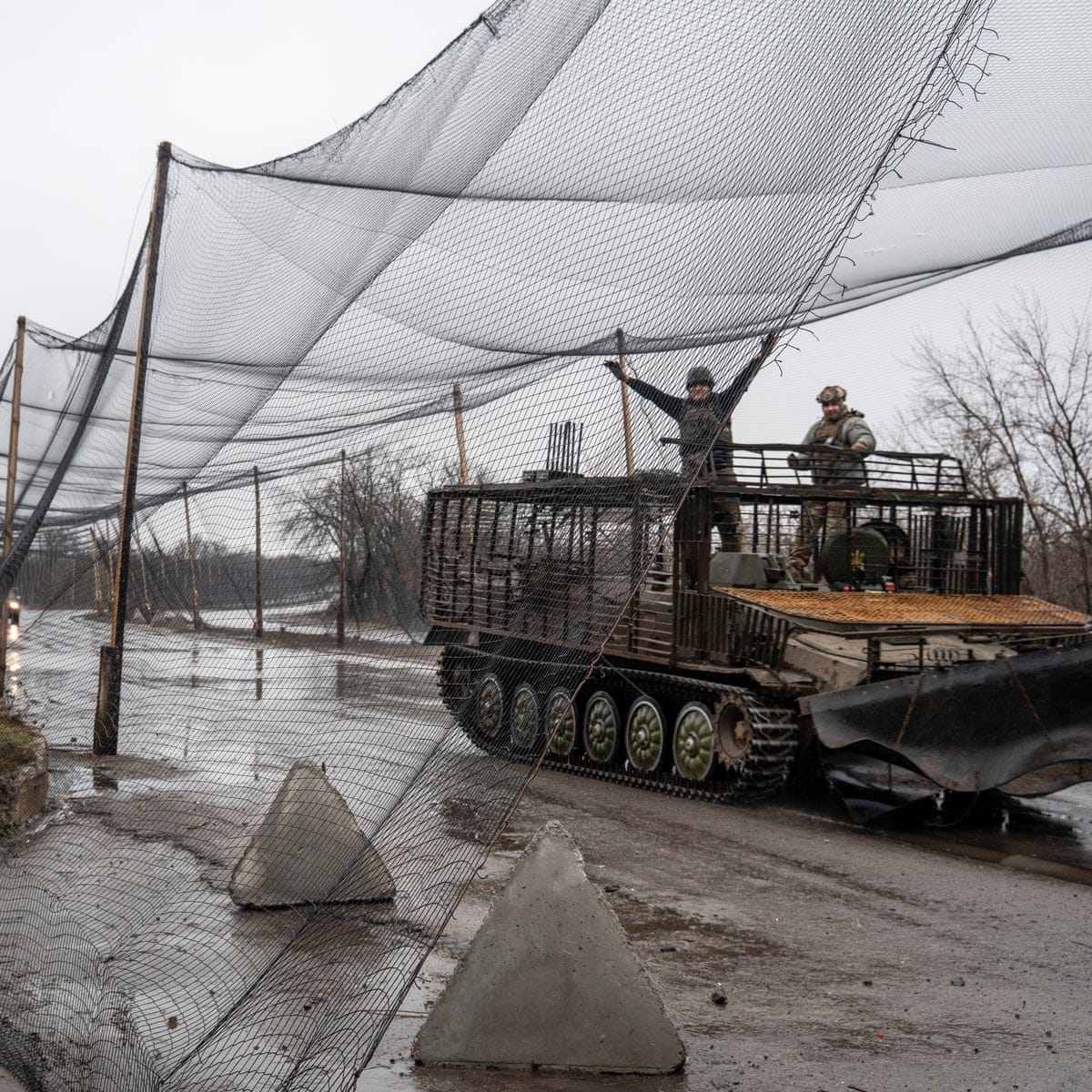
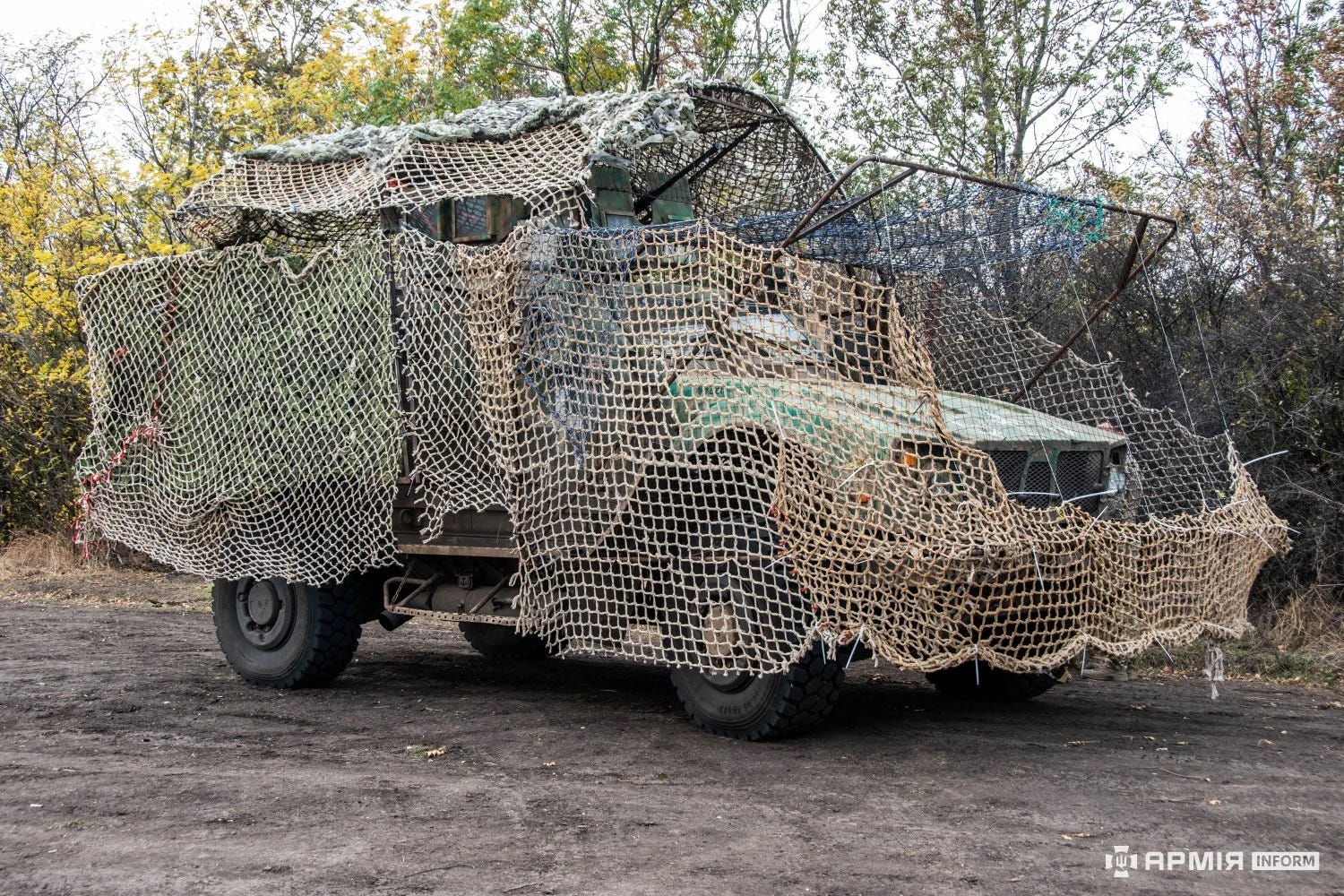
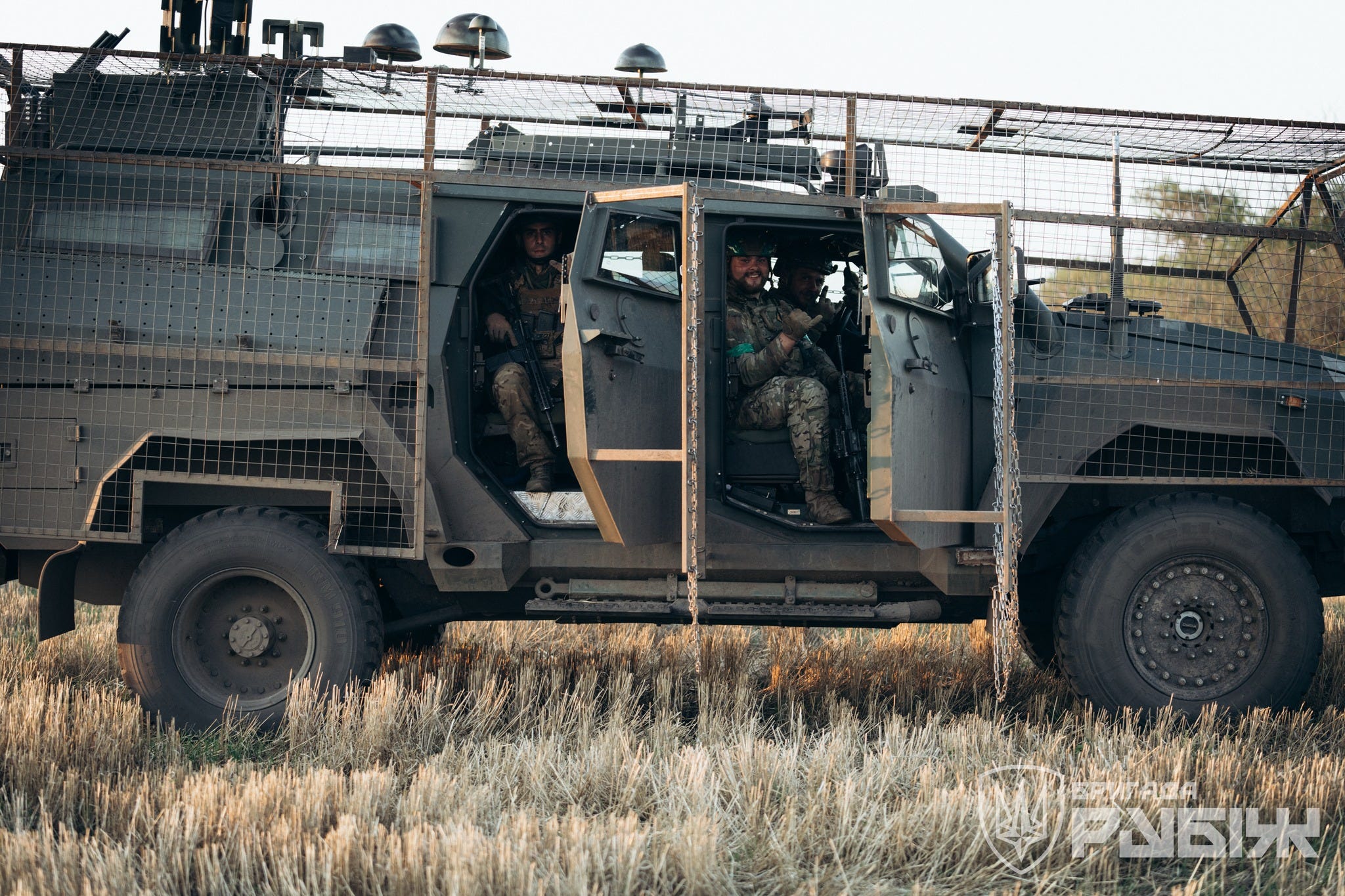
MRAPs have proven themselves to be the most effective armored vehicle on the modern battlefield, when compared to other APCs like the BTR or M113. They are very survivable, while still being fast. While it's not uncommon to see them get destroyed or at least abandoned after being immobilized, it's pretty rare that anyone inside gets hurt. They take hits a lot better than actual APCs while being much quicker. The only downgrade is firepower, which is going to be the roll of proper IFVs like the BMP or Bradley nowadays. The old BTRs certainly aren't out of the fight, but no one's itching to buy more of them.
The biggest reason that vehicles are so rare on the frontlines isn't for lack of demand, but for lack of supply. Both sides have simply exhausted their stockpiles of vehicles, especially the Russians. Ukraine never had many but has the issue of being drip fed vehicles from partner nations & an only recently set up domestic manufacturing complex. The T-90 & T-80 are practically extinct. Even the T-72 is becoming hard to find. The most common tank on either side is the long outdated T-64, while Ukraine has a slight edge with modern vehicles via donated Leopards, Challengers & Abrams. It's not only an issue with Ukraine & Russia, these vehicles simply die faster than they can reasonably be built. I brought this up in an older article titled World War III, it's an issue that also effects aircraft & other advanced systems.
In truth, armored assaults probably would be perfectly viable if either side actually had the vehicles to spare like they did in 2022 & 23. The Kursk incursion in 2024 proved that massive assaults can still be launched with an element of surprise, it just takes a lot more careful planning & the use of deception to counterbalance the ease of drone surveillance.
I should point out that the remaining Russian tanks are mainly relegated to use as artillery pieces, especially the increasing numbers of T-62s & T-55s dragged out of retirement. Ukies don't do this as much & mainly keep their armored assets safe until they feel the need to put them into action.
Another interesting tangent is the importance of weather. Drones can't fly in heavy rain or wind. Even moderate rain & wind significantly hinders the drones’ ability to see & maneuver, as well as limiting range & increasing chances of malfunction. This leads to units relying on poor weather conditions to make movement, as well as opportunistically taking advantage of poor weather when it occurs. This has always been a factor but it's been ramped up considerably. Best weather for moving is during heavy fog, drones still fly but lack any long range visibility. It also doesn't make you wet or deaf.
Comms equipment is pretty standard, everyone on both sides use the same Motorola radios. Russians often have a Chinese knockoff because of sanctions. They suck & I miss my PRC-152. Comms is always a major source of friction, here's no different. Both sides rely on power banks, whether they be the small travel ones or larger Eccoflows, to keep their comms equipment powered. We also use Starlink to communicate via phones, especially since it's always fairly reliable & allows for normal voice calls & image/video. Russians did ths too until recently, it doesn't seem like they've gotten a good replacement yet.
The situation at the front is a shitshow as always. We made up good ground down in Zap & up in Kupi, negating gains that Russia took over a year & 50,000 casualties to make. Their sacrificial conscripts have inched the lines a bit further in the central sectors around Pokrovsk but as of yet they've failed to make any significant breakthroughs. It looks like the fortress towns of Sloviansk & Kramatorsk will soon be swallowed by the gray zone, which will be sn absolute bloodbath. It took them a year to take Pokrovsk & that was much smaller & less defensible. It will probably take years for them to inch their way through there, and at least 200,000 killed or captured. They're already shy about making any big moves on Konstiantinivka, which they've been at the gates of for some time.
It's been a great year for Ukraine so far, hopefully we can carry it through the rest of the year. With the new ballistic missiles we should be able to effectively isolate Crimea & make logistics very difficult for Russian forces from Zap to Kherson, which should make life a lot easier on those fronts. The potential reopening of the northern flank from Belarus is highly unlikely as Russian resources are spread too thin already, as well as Belarus trying to stay out of the conflict as much as possible. They already tried this during the Sumy offensive last year, it failed miserably.
Regardless, we carry on. Syrsky doesn't take my suggestions so my only concern is my rifle & my health. My rifle was destroyed, so that leaves my health. Funny how that works.
Hail Victory.
No posts
Comments
Nothing yet. Say the first thing.
Sign in to join the conversation.