
“Be curious, not judgmental.”
It's a famous line from Ted Lasso’s dart scene, where he uses that advice to reframe his struggles with how others viewed him. I’m sure that—much like myself—you’ve heard this call to "be curious" several times, in a myriad of ways: at retreats, team-building off-sites, or dinner parties. But most people dispensing it don’t tell you how difficult it is to actually be and stay curious while assuming good intent.
I started writing this on my return flight from a two-week European trip, an adventure originally centered on the OFFF Festival in Barcelona. The co-founder and director, Pep Salazar—whom I’d met in Montreal—had suggested I skip the packed rooms of the 6,000-person event and venture outside, where real connections happen. While I’ve always lived through an experiential and relational lens, I didn’t count on how much this journey would challenge me. I had convinced myself that my go-to cultural icebreakers wouldn’t hold weight in a foreign context. Turns out, the journey forced me to redefine how I relate to the world when my usual anchors are stripped away.
This time around, Europe felt different. I felt awkward and out of place—my thoughts reverting to my less confident years—feeling as if I was bothering people. My limited French made this more apparent, and even in London, I had trouble understanding or being understood. I did better in Spain, though I still found myself apologizing ahead of time for my rudimentary Spanish. About halfway through the trip, my instincts started to return. By the time I arrived in Barcelona, I felt trapped in "spectator mode," and trying to push through it was hard. I lost my nerve several times. What happened next turned my assumptions on their head.
I went to the terrace of my hotel for a late-night bite. The staff was friendly but clearly closing up for the night. Since I was the only patron, they began their breakdown. I noticed something about their Spanish sounded... off. Curious, I started listening until one of them spoke the unmistakable Peruvian contraction: "Asu!" (short for a su madre). This opened a door. I immediately asked if they were from Peru. Ingrid and Pierre introduced themselves, impressed I had picked out the nuance. The conversation turned easy and relaxed, and they suggested where to find the best food from home: Yakumanka, a cebicheria on Valencia Street, was the clear winner.
The next evening, while dining at the bar at Yakumanka, the chain-reaction continued. I started chatting with the bartender, a 22-year-old who had recently arrived from Italy. She possessed a vast knowledge of cocktail culture and made me an amazing mezcal sour—a twist on a Peruvian favorite. Since she was also new to Barcelona, I asked her about local beer. She suggested I check out La Textil Collective. Once I found myself there at a different barstool, bopping to some great hip-hop, I recognized another accent: an American one.
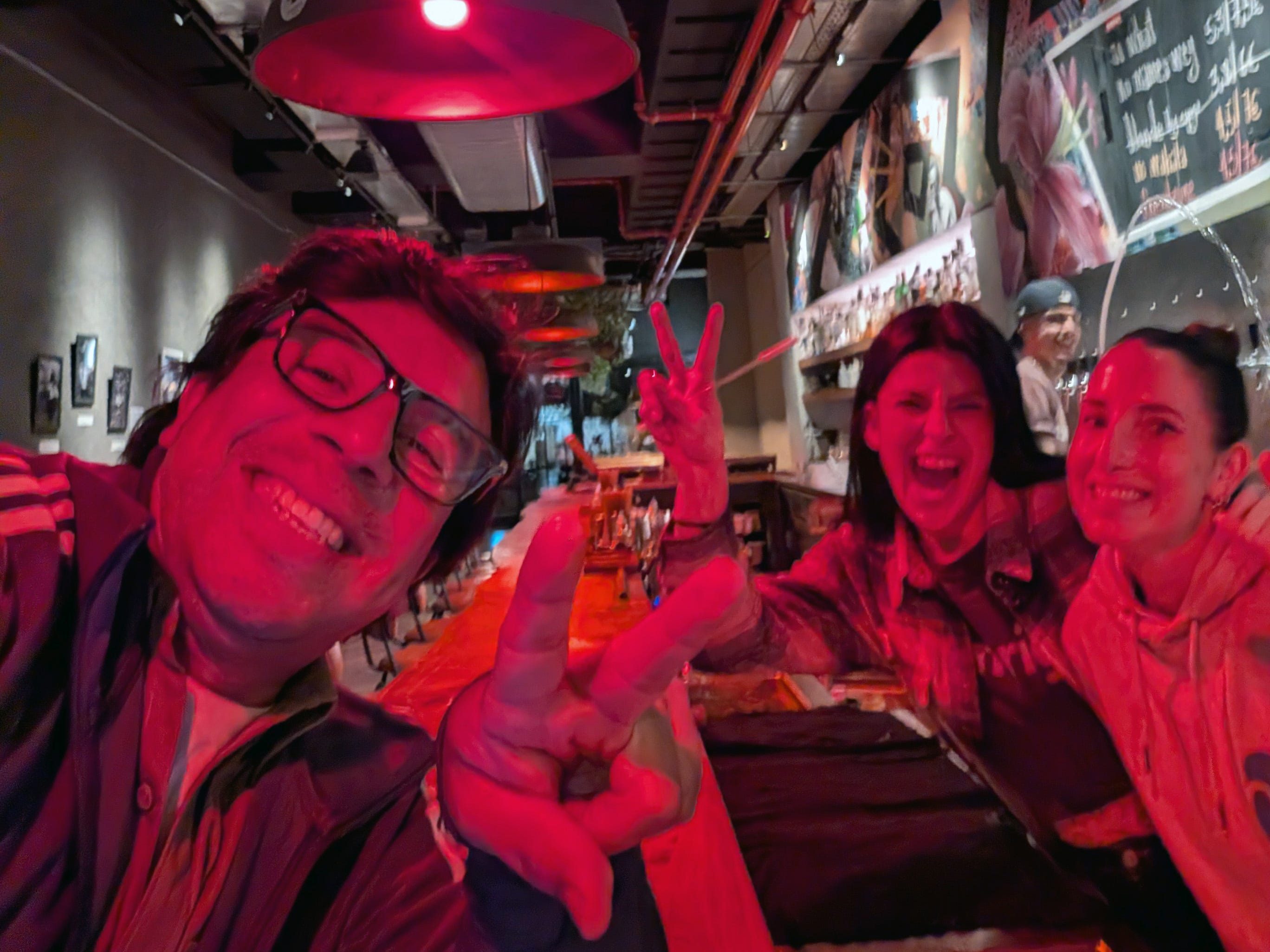
In the past, I might have taken that as a cue to head for the exit. Instead, I stayed in that investigative mode and decided to really look at the space—that’s when I noticed the stairs to the basement.
That’s how I met Shannon from Chicago, who shared many insider stories about living in Barcelona. Through her, I met David, the owner, who’s originally from Ohio. Though he was very busy at the time, he was interested in talking to me about branding around his future expansion and current renovation in the space. He asked me to come back the following day, which I did, and everyone working behind the bar recognized and welcomed me. David and I chatted for a few minutes, but the deep dive I’d hoped for didn’t materialize. In the past, I might have taken that as a cue to head for the exit. Instead, I stayed in that investigative mode and decided to really look at the space—that’s when I noticed the stairs to the basement.
Down in the dark, I stumbled upon a meetup for OFFF—the very festival I had originally booked the trip for. That’s where I met Aldo from Mexico and Lily from Lebanon of Cultura Groovy, who organized the event. Through them, I met speakers and creatives from Georgia, Hong Kong, and Italy. These were young, passionate people asking amazing, big questions about life in a round-robin way while sipping drinks in the cool night air. It was invigorating and intellectually fascinating. None of it would have happened if I hadn’t followed a curiosity about someone’s accent late at night and broken through my hesitation to ask a simple question.
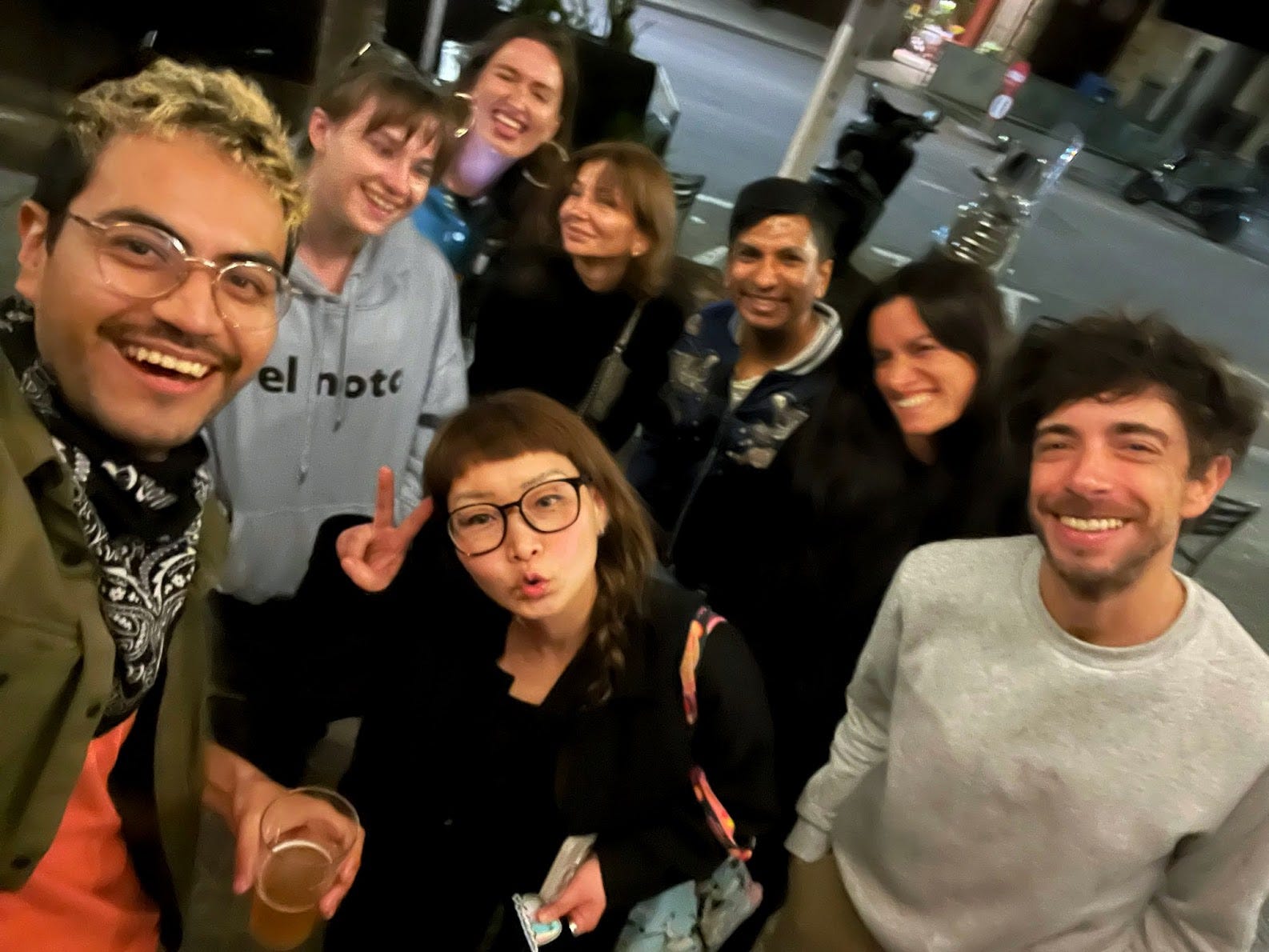
To truly understand who you are beyond your “things,” your daily rhythm, and your friend group, you have to travel. You have to remove the artifice around your identity and the security of commonplace self-definition. A mentor I met later in this trip recognized my courage and curiosity as real assets in how I show up. I believe my interest in people continues to enrich my life in ways I cannot yet imagine. Changing my frame of reference helped me discover opportunities for growth that I otherwise would have stepped right over.
To truly understand who you are beyond your “things,” your daily rhythm, and your friend group, you have to travel.
Turns out, the “...not judgmental” part of that quote is actually an invitation toward self-reflection. I was judging myself inaccurately, creating stories about what others might be thinking, and effectively limiting my chances to meet my next friend, collaborator, or client. I encourage you to take chances and ask questions. The trick is to be genuinely interested in the person, not as a means to a goal. That’s the only way you’ll find what you didn’t know you were missing.
Comments
Nothing yet. Say the first thing.
Sign in to join the conversation.