
This is a topic of study that I have been increasingly obsessed with over the past year. For so long, I have been besotted with astrology, and Western Astrology was all I knew. I do not follow it blindly, but more so, studying it like a language. It has been such a big part of my life that I can no longer remember the inflection point.
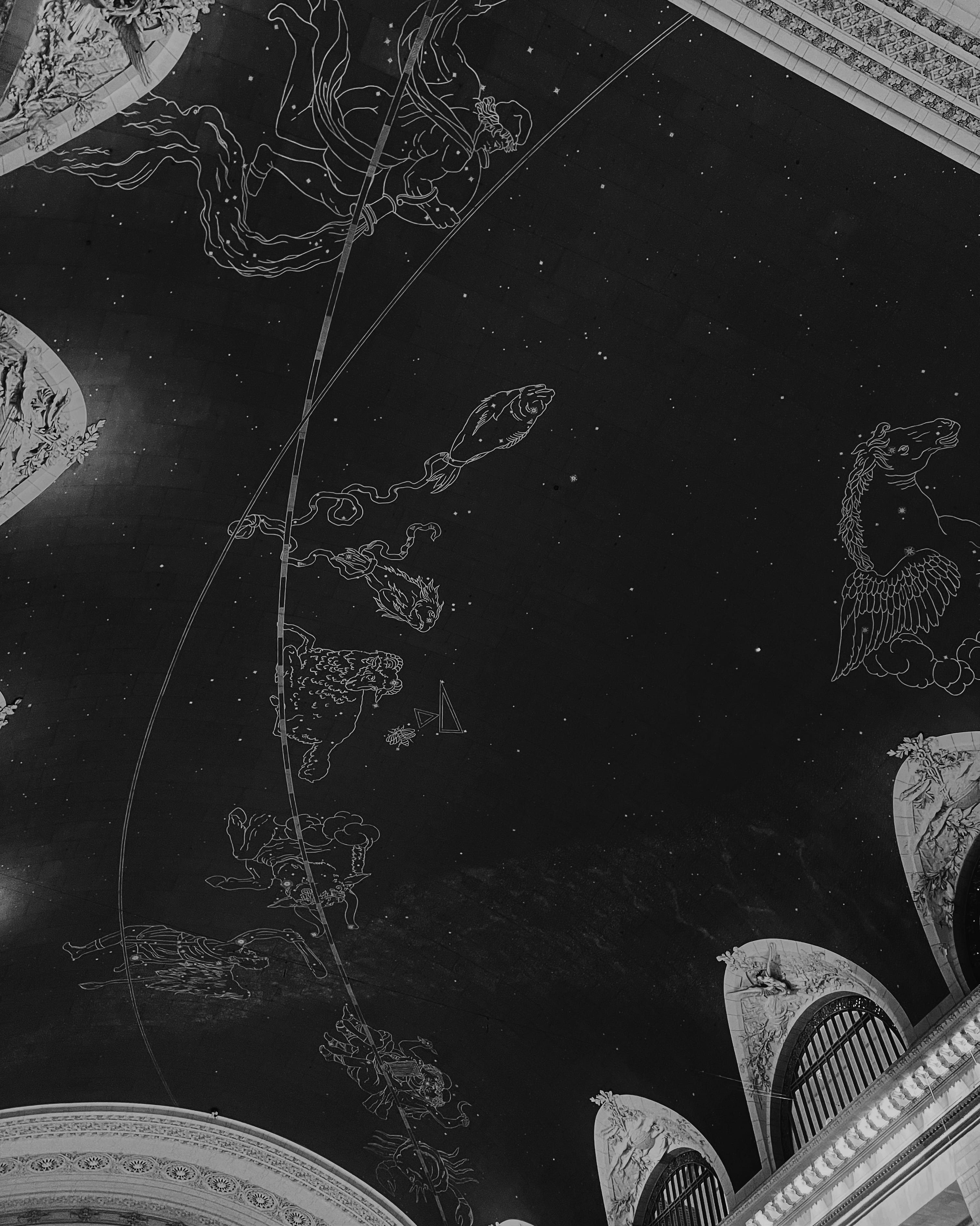
By a fateful encounter, I was introduced to Vedic Astrology (Jyotish), which opened a whole new world for me and created the biggest psychological shift for me. Though I was always aware of it, as I would hear about the comparison between your tropical (Western) sign and your “sidereal” (Vedic) sign. I just never bothered to look deeper into it.
I sincerely believe in fateful timing because learning of—and most importantly, being open to—Vedic Astrology at the peak of my Saturn Return felt serendipitous. Vedic Astrology gave me a completely different language for understanding timing—not merely personality. Western Astrology helped me to understand aspects of myself, and Vedic Astrology helped me to understand the seasons of my life. This added nuance truly gave me the all-around clarity I needed during some darker times of my life.
In Western Astrology, I am a Pisces Sun, Capricorn Moon, and Pisces Rising—and in Vedic Astrology, I am an Aquarius Sun, Sagittarius Moon, and Aquarius Rising. I was, in fact, quite bewildered when I was presented with these two charts side-by-side. I had identified with being a Pisces Sun for my entire life, that I entered a mini existential crisis at the idea that I am actually an Aquarius Sun. But I was already operating from a Library of the Feminine Psyche mindset by this point, so I dove straight into this new knowledge with an open mind. What I learned about myself through this new cosmic language completely took my understanding of my inner depths to the next level.
In short, the focus and philosophy of each system:
Western Astrology (tropical): is based on the seasons—aka anchored to the Spring Equinox. This is why the first sign Aries begins on or around March 21. This system focuses on your personality, psychology, identity—the “who you are.” It is considered to be the self-concept language.
Vedic Astrology (sidereal): is based on the actual position of the stars at the time you were born. This system focuses on your karma, the life path (dharma), the timing of events—it is about “what unfolds for you.” The special part of Vedic is its focus on the “Dashas”—its timing system that maps planetary periods and life phases. It is considered the life strategy system.
If you find your sign has shifted—as I did—do not panic. It is simply the difference between a seasonal calendar and the actual, living sky. Fascinating, right?
I take all new knowledge with a grain of salt (my Aquarius coming to the surface). But when I compared the previous events of my life to my Dashas, it aligned with such precision that it sent chills down my spine. Now, I have fully converted to aligning with Vedic Astrology.
Today at the Library of the Feminine Psyche, I share my on-the-go Vedic Astrology toolkit, which is a free way to get deeper insights into yourself and your life when you cannot always have an astrologer on speed dial, and it includes:
The Vedic astrology calculator I personally use
The settings I use to calculate my chart
How to give ChatGPT your chart
The first parts of your chart I recommend understanding
How to find your current Mahadasha and Antardasha
The prompts I use to analyze major chapters of my life
The prompts I use for career, money, relationships, and personal evolution
How I ask ChatGPT to examine upcoming transits and planetary periods
The prompt I use to make ChatGPT audit its own astrology reading so it doesn’t just tell me what I want to hear
My method for using astrology as a tool for expansion rather than prediction
Let’s dive in, darling.
Comments
Nothing yet. Say the first thing.
Sign in to join the conversation.