
You've probably come across Sigmund Freud, right? The guy with the beard and the cigar?
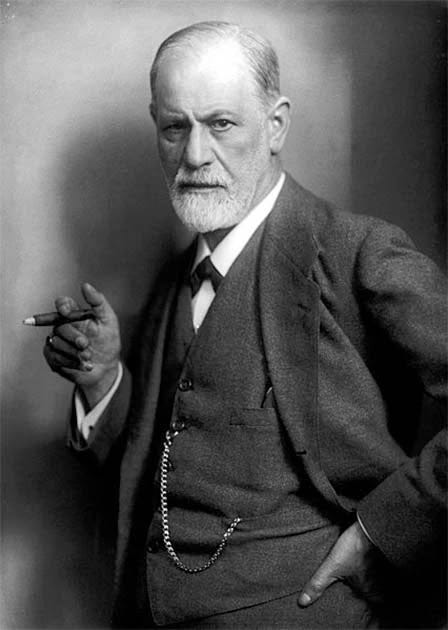
The one who supposedly unlocked the secrets of the human mind? The genius who invented psychoanalysis? Yeah. We need to talk about that. Because the story we've been told about Freud is a lie. A big, fat, convenient lie that has been protecting powerful men for over a hundred years while hurting countless women along the way. And trust me, once you see it, you won't be able to unsee it.
Who Was This Guy Anyway?
Alright, let's start with the basics. Freud was born on May 6, 1856, in Freiberg, Moravia (now Příbor, Czech Republic), into a middle-class Jewish family. His dad, Jakob, was a wool merchant with a short temper. His mom, Amalia, was her husband's third wife and much younger than him. Freud was the oldest of eight kids. That means from a young age, he learned about hierarchy, authority, and how to navigate power struggles. Sound familiar? Yeah..It should.
The family moved to Vienna, and Freud studied medicine. He was undeniably smart. Like, really smart. But Freud wasn't just trying to heal people. He wanted to be famous, to leave a mark and for people to remember his name long after he was dead. His letters and personal writings show that he cared more about his reputation than the truth. When evidence didn't match his theories? He'd ignore the evidence. He was loyal to his ideas, not to his patients.
The Seduction Theory
Now we get to the part that makes me genuinely angry.
In the 1880s, Freud started working with women who had what doctors back then called "hysteria." These women had all kinds of symptoms: paralysis, convulsions, crippling anxiety, strange phobias. They were suffering, and no one knew why. But Freud actually listened to them. And what he found was shocking. Almost all these women had been sexually abused as children. By their fathers,uncles..in short; by male authority figures. These weren't just random stories either. Freud documented everything carefully. He concluded that childhood sexual trauma was the main cause of psychological disorders. And at first? He believed them. He was actually going to expose the truth. But truth was dangerous.
If Freud published what he'd found, he'd be exposing elite,rich,powerful and respectable men. Fathers, uncles, guardians, men who were supposed to be the pillars of society. These men had money. They had influence. They could destroy Freud's career. They could ruin his reputation. And they did. They pressured him. They threatened to pull funding from his institutions. They warned him that his career would be over if he kept going down this path.
So Freud made a choice. A terrible choice that would affect generations of women. He abandoned the Seduction Theory. Suddenly, the women were no longer telling the truth. According to Freud, they had just "fantasized" these sexual encounters with their fathers. It was all in their heads. They were just hysterical. Let that sink in.
Women came to him, traumatized, telling him about real abuse. And he turned around and said, "No, you made that up. You're just hysterical."The abusers got away with it and the victims were blamed. And this became the foundation of psychoanalysis: blame the individual, not the system. Women's suffering was pathologized, dismissed as irrational female bs. Classic. You know what that sounds like? Every time a woman speaks up about abuse and someone says "but what will people say?" That's the same energy,same silencing; protection of abusers.
The Oedipus Complex: The Crown jewel
This, perhaps Freud's most famous (and most ridiculous) theory. Freud named it after the Greek myth of King Oedipus, who unknowingly killed his father and married his mother. According to Freud, every little boy between the ages of three and five goes through this phase where he unconsciously desires his mother and sees his father as a rival to be eliminated.
A grown man looked at little boys playing with their mothers and thought: "oh yes, he wants to sleep with her and kill his father." Freud believed that boys resolve this complex through what he called "castration anxiety." The boy fears that his father will punish him by cutting off his penis. This fear forces him to abandon his desires for his mother and instead identify with his father, which supposedly forms the basis of his superego or conscience. Think about how messed up this is. Freud took a Greek tragedy about a man who accidentally committed horrific acts and decided that every single little boy was secretly living out that same drama. He didn't ask children what they were actually feeling. He didn't observe families in any systematic way. He just decided this was universal and then bent all his observations to fit the theory. It's the same pattern we saw with the Seduction Theory: Freud had an idea, and instead of letting reality challenge it, he twisted reality to match it.
The Electra Complex and Penis Envy
It gets even worse. Freud didn't think girls went through the Oedipus complex the same way boys did. Because of course he didn't. He needed something special..something that would once again prove that women are just defective men. Enter the Electra complex. (Actually, Carl Jung came up with the name, but Freud embraced the concept.) Named after Electra, the Greek princess who helped her brother kill their mother to avenge their father's murder. Now, to understand the Electra complex, you first have to understand penis envy..the idea that forms its foundation.
Freud believed that around age three to five, a little girl notices she doesn't have a penis. According to him, this discovery causes "penis envy." She feels cheated, inadequate, defective. She blames her mother for sending her into the world "incomplete." This is the starting point. The Electra complex is what supposedly happens because of that envy.
Here is how it works:The girl, feeling defective and jealous, turns to her father. She desires him because he has what she lacks. She wants to possess him, to have his penis, and to replace her mother as the object of his affection. Eventually, the girl supposedly resolves this by realizing she can never have a penis. So she shifts her desire to wanting a baby as a kind of penis substitute. She accepts her "feminine" role and identifies with her mother.
In short;
1. She notices she doesn't have a penis
2. She feels inadequate and jealous (penis envy)
3. She blames her mother for this "defect"
4. She turns to her father and desires him (the Electra complex begins)
5. She wants to possess him and replace her mother
6. She eventually gives up and wants a baby instead (as a replacement for the penis she'll never have)
Mind you,this is what passed for "science" in Vienna's elite circles.Now you can see how it all fits together. For Freud, the Oedipus and Electra complexes were central to his theory of psychosexual development. But they were built on a foundation of misogyny: For boys: The Oedipus complex is resolved through fear (castration anxiety). The boy grows up with a conscience and a sense of morality. For girls: The Electra complex is resolved through lack (penis envy). The girl grows up feeling incomplete, envious of men, and destined to be secondary. Do you see the pattern?Boys = fear leads to morality. Girls = lack leads to inferiority.
Feminist psychologists have criticized this as reflecting a phallocentric (male-centered) view of female development. Karen Horney, a pioneering female psychologist, famously pushed back on Freud's "penis envy," arguing that what women really envy is not the organ itself but the social power and privilege that comes with being male. But Freud didn't care about that. He was too busy building his empire. These complexes weren't just abstract theories. They shaped how generations of therapists understood their patients. They influenced education, parenting advice, and cultural norms. Women's anger at oppression became "penis envy." Women's desire for independence became "Electra complex." Women's trauma became "hysteria." Every time a woman's legitimate grievances were dismissed as "daddy issues" or "penis envy," that was Freud's legacy. Every time a girl's ambition was pathologized as a desire to be male, that was Freud's legacy. Every time a woman's suffering was explained away as her own psychological failing rather than a response to real oppression, that was… Freud's legacy.
The Invisible Women Who Built Freud's Career
Now, here's something that will really get you. Freud didn't come up with all his ideas by himself. Women did a lot of the heavy lifting. But he took the credit. Let me introduce you to some of these intelligent wonderful women.
Lou Andreas-Salomé was a writer and thinker who deeply influenced Freud's ideas about sexuality and psychology. She was brilliant. She shared her insights with Freud. He used them. But he rarely gave her credit. Her intellectual labor just disappeared from the record.
Sabina Spielrein was both a patient and a collaborator. She explored ideas about destructive impulses and the "death drive." Freud later adopted these ideas as his own. She was forgotten.
Helene Deutsch did pioneering work on female psychology that expanded on Freud's theories. She was marginalized. Her work was published under Freud's name or ignored entirely.
Freud benefited from women's intellectual labor while making sure they stayed invisible. He took their ideas, their observations, their insights, and presented them as his own. Then he turned around and told the world that women were inferior. The audacity is honestly breathtaking. It's like someone stealing your homework and then telling everyone you're not smart enough to do it yourself. Except this wasn't homework. This was women's lives, their experiences, their suffering, their insights. And he just... took them. And got all the credit.
Oh, and Freud wasn't exactly a model of ethical behavior either. Shockingly. He experimented with cocaine. On himself. On his patients. He called it a "miracle cure" for depression, morphine addiction, and other conditions. He prescribed it to everyone. One of his best friends, Ernst von Fleischl-Marxow, became severely addicted because of Freud's encouragement. He ended up dying from the consequences of the drug.
Freud downplayed all of this in his letters. He minimized the damage. He prioritized his own experimentation and prestige over people's lives. He also manipulated his patients. He expected total compliance. If a patient's story didn't fit his theories, he'd twist their narrative until it did. He wasn't trying to help them. He was trying to prove himself right.
It is like you you going to a therapist, vulnerable, telling your deepest secrets, trying to heal. And that therapist is using your pain to build his own reputation. He's not listening to you. He's fitting you into his theories. He's telling you what your experience means, even when it doesn't match what you actually lived through…just another form of abuse.
Freud's ideas didn't just affect therapy. They shaped society itself. By framing trauma and oppression as internal psychological problems, Freud shifted blame away from abusers and social structures. It wasn't that men were violent. It wasn't that society was unjust. No. It was women who were "hysterical." It was their own minds causing the problem. This gave a scientific-looking justification for patriarchy. Men's dominance was "normal." Women's suffering was "their fault." And then there's the even creepier part. Freud's nephew, Edward Bernays, took these ideas and applied them to propaganda and advertising. He used Freud's insights into unconscious desire to manipulate people to sell products, to shape elections, to control public opinion. Psychology became a tool for compliance, not liberation. The same theories that told women their trauma was all in their heads were used to sell cigarettes, shape elections, and manufacture consent for government policies. Freud wasn't liberating anyone. He was giving the powerful new ways to control the powerless.
One thing about history,it's written by people who have a vested interest in keeping certain stories alive and others dead. History is always written by victors. After Freud died, his daughter Anna Freud took control of his archives. She carefully managed his reputation. She suppressed letters and documents that made him look bad. She polished the narrative. Scholars, public relations experts, and loyal followers built the myth of Freud as a pioneering genius. They minimized his ethical failures. They glossed over his manipulation of patients. They covered up the harm he caused. What we're taught in school isn't the real Freud. It's a brand. A carefully curated image designed to protect his legacy.
And it worked. Today, Freud is still celebrated as a genius. His ideas are still taught in psychology textbooks. His theories still shape how we understand mental health. The damage continues, but most people have no idea. That's how power works. That's how patriarchy works. They tell you a story that makes them look good, and you repeat it because you've been told that's the truth. A lie repeatedly told is always mistakened for truth.
The consequence of all this? Victims are still blamed for their trauma. How many women are being told they "provoked" their abusers? How many are told to "keep quiet for the sake of the family"? Women's voices are still pathologized. How many times have you heard a woman being "too emotional" when she's actually expressing legitimate anger?Psychology and mental health research still center male experience. How many drugs were tested only on men? How many psychological theories were developed based on male subjects and then applied to women? Institutions still reframe abuse and oppression in ways that protect authority figures. How many institutions have covered up abuse to protect their reputations? How many have silenced victims? That's Freud's legacy.
Freud's work provided a blueprint for controlling individuals. For normalizing hierarchy. For turning suffering into internal pathology instead of challenging systemic injustice. His theories shaped how we treat women, children, LGBTQ people, and marginalized communities. They influenced mental health, education, and cultural norms for generations. The damage is everywhere.
Freud was not a liberator. He was a gatekeeper. He shaped psychological theory to protect patriarchal and elite power structures. He silenced victims. He rewrote history to suit the powerful. He chose his career and reputation over the truth. His life shows us how ambition, ego, and social positioning can distort science. How knowledge can be manipulated to preserve power. Why we should interrogate authority. Why we should question historical narratives. Why we should seek truth unfiltered by those in positions of privilege.
The story of Freud isn't just about a man with some interesting ideas. It's about how power shapes science. How trauma gets rewritten. How one influential figure can leave a legacy that governs society, psychology, and culture for over a century.
Now, I know what someone might be thinking. "This is a Western thing. This doesn't apply to us." But it does. It really does. Because Freud's ideas aren't just sitting in psychology textbooks in Vienna. They're baked into the global mental health system. They've been exported all over the world, including Africa. They've shaped how we understand mental health, how we treat trauma, how we view women.
How many times have you heard a girl's ambition dismissed as her trying to "be like a man"? How many times have you seen a woman's anger written off as "just hormones" or "she's just emotional"? How many times has a woman's legitimate frustration with an unjust system been blamed on her not having a "good man"? That's Freud's legacy. This isn't just about some dead white dude in Vienna. This is about us. This is about our mothers, our sisters, our daughters. This is about the stories we tell ourselves about suffering and who is to blame. Understanding Freud's history helps us understand why our systems often fail women. Why victims aren't believed. Why abusers get protected. Why trauma is treated as a personal failing instead of a social issue.
We need to dismantle these frameworks. We need to center the voices of survivors. We need to stop blaming individuals for systemic problems. Freud partially built a system that protected the powerful. It's time we built one that protects the vulnerable.
Sigmund Freud is dead. But his ideas are everywhere. In therapy rooms,courtrooms,conversations around the dinner table,in how we think about ourselves, our trauma, our pain, and our bodies. He gave us a language for suffering, but it was a language that blamed the sufferer. He gave us a framework for understanding trauma, but it was a framework that protected abusers. He gave us a science of the mind, but it was a science built on lies, manipulation, and misogyny.
We don't have to keep using his framework. We can build something better. Something that listens to survivors. Something that centers truth instead of protecting power. Something that actually helps people heal instead of blaming them for their pain. But first, we have to know the truth about Freud. And now you do.
If you’ve enjoyed my writing and ever feel like buying me a cup of coffee, you can support me here: https://paystack.shop/pay/heretic_
Every little bit helps me keep creating.❤️
No posts
Comments
Nothing yet. Say the first thing.
Sign in to join the conversation.