
I am a reformed “people pleaser.”
For the first three decades of my life, if anyone asked me for a favour, my instinct would be to immediately respond with an emphatic, “Yes, of course!” And then I would pay the price later — burnt out from taking on too much, dejected at being taken for granted, depleted from carving out pieces of myself for others.
It took becoming a mother (and a lot of hard work on top of that) to slowly dismantle this deeply embedded wiring. And it still leaves behind a faint residue: I sometimes feel a sliver of aversion when I have to say “no” to someone. (Oh dear, am I adding fuel to the flames of DMs here?)
Which is how I found myself procrastinating over sending a particularly important email last Thursday afternoon.
I was recently invited to travel down to Sydney to be on an educational show about dopamine. It was a great offer and the producer was a lovely fellow — that residual desire to say “Yes” was simmering away beneath our entire back-and-forth. But after weighing the pros and cons, I knew I would have to decline.
Suddenly, folding clothes became an almost appealing task. Even preparing my tax statements — a near-universally avoided task — got a look in.1
I didn’t lack motivation. I had plenty of it. It was just pointed in the opposite direction to the task I needed to accomplish.
When there are two paths before you and one of them involves effort and no “reward” while the other contains no effort (which can be its own “reward”), it’s easy to see how you can become very motivated to take the path of least resistance.
It is this repeated journey through the path of least resistance that builds the habit of procrastination.
Here’s the thing they don’t tell you about procrastination. It doesn’t just postpone the inevitable, nor does it just steal your time. It also steals your attention.
People often talk about “open loops,” but any outstanding task that requires completion does take up cognitive real estate within your mind, particularly if it has an emotional component. Its memory trace is fresh (and charged with emotion), and any reminders within your environment constantly trigger its re-activation, eliciting another sense of aversion. And then another urge to avoid. When this urge is indeed answered with further avoidance tactics, the habit of procrastination embeds itself deeper still.
Usually, I really enjoy low-cognition activities like cooking, driving or walking as they give my mind a chance to wander. If I’ve recently done research or writing, it’s almost as if I’ve loaded my mind with a problem space and then left it free to explore. As a result, I often have many little lightbulb moments during these times — a little click by the rangehood, or an “aha” moment by the lake. But when there is a highly salient outstanding task occupying the far corners of my mind, any thought of work brings to mind that rather than a delicious insight.
In a cruel sense of irony, when you take the physical path of avoidance — the path away from a dreaded task — all mental paths lead right back to that task!
Attention is the price of avoidance.
If there is one habit anyone should want to instil, it would be the habit that rules all habits: the ability to lean into things, to embrace the discomfort of change. This habit of tolerance essentially allows you to build all other habits.
But there is a yang to its yin: avoidance. If tolerance is the meta-habit builder, then avoidance is the meta-habit preventer. Every time you avoid something, more situations become capable of triggering avoidance, and the urge to procrastinate grows more powerful.
And the more incapable of change you become.
These meta-habits go hand in hand. If you’re strengthening the habit of tolerance, you’re weakening the habit of procrastination. And if you’re strengthening the habit of procrastination, you’re weakening your ability to tolerate discomfort.
This is why it can feel so much harder to get back on the wagon after breaking a diet or missing a string of workouts. The absence of effort and discomfort during the break wasn’t net neutral — it was training your brain to favour the path of least resistance.
There is a special place where “avoiders” masquerade as “do-ers” known as Planning Purgatory. It is a vast ballroom full of people dancing in pretty little circles, burning calories and looking very graceful, sure, but never actually getting anywhere.
Be wary of ever entering such a place for it is very difficult to exit. Drawing up schedules, writing endless todo lists, sticking colourful post-its everywhere, learning without action, ideation without execution… these are all activities that can seductively feel like progress, but are really avoidance in disguise.
The key is to ensure that the action you take — however small — truly does yield output that moves the needle in the direction of task completion or goal attainment.
Anyone can have an idea. Very few can follow it through to execution.2 The thing stopping them is the same thing behind the craving that drives addicts.
It’s easy to recognise when you have a habit that doesn’t serve you. You often want something that runs counter to your health or higher values and feel powerless in the face of that wanting. It could be binge eating, drinking, scrolling, smoking… Every one of these behaviours is driven by a dopamine spike that makes you feel compelled to go and enact that behaviour, to get the “reward.” When you have binged, drank, scrolled or smoked in so many different settings and while in so many different moods, all of these internal and external cues become predictors for the reward. And they all then trigger the spike of wanting.
Procrastination is just the same. But here, the “reward” isn’t tangible — it’s the avoidance of perceived discomfort. Your brain perceives the higher value path to be the one that does not involve predicted discomfort and is supplying you with the motivation to take that path. That prediction is the dopamine spike. When you take this path of least resistance in so many different settings and while in so many different moods, these all become cues that predict avoidance — that trigger the urge to procrastinate. Continuing to fulfil that prediction strengthens its motivational pull and the spike hits harder next time (and in more contexts).
The only way to dismantle the prediction is not to fulfil it, over and over again until the spike reduces in magnitude. For someone who drinks, this means feeling the urge to drink and not following it.
For a procrastinator, this means feeling the urge to avoid a task… and turning towards it.3
The first step is recognising all the cues that trigger the urge to procrastinate — all the cues that trigger a spike. It’s never just the task itself. It’s a task coupled with something — a state, a mood, a thought, a location, more tasks — that triggers the urge to avoid.
There are three common task-related cues that trigger the urge to procrastinate: anticipation of effort (sometimes described as “ugghhh”), fear of failure and no idea how or where to start.
When these Big Three Task Avoidance Triggers — effort, fear and uncertainty — are routinely answered with procrastination, the predictive weight starts to leak onto other things in your environment. The table where you avoid work can accrue predictive weight, becoming the table that makes you feel like procrastinating the moment you sit down. The phone you turn to in order to escape doing a task itself becomes a trigger for avoidance. Just feeling tired or depleted — initially a state you were in while escaping responsibilities — becomes a state that can trigger the need for escape in the first place.
The more you procrastinate, the more your entire environment predicts you will procrastinate. And whenever your brain makes a prediction, it supplies you with the motivational oomph to turn it into reality. (It’s a bit of a game-rigger in that way.)
The brain only updates predictions based on hard evidence — based on what you physically do at the moment of prediction. Which means to break the habit of procrastination, you can no longer follow an urge to avoid a task. You can no longer do nothing! Ever. But the good news is that even the smallest piece of “something” counts.
The crucial part is following the urge to avoid a task with the smallest step towards that task within one minute of the urge striking. This is the plasticity window created by the dopamine spike that predicts procrastination, and it’s the window in which greater change is possible.4 (In this case, the change that will make you more capable of change!)
If you feel the urge to avoid sending an email, for instance, immediately following that urge with the act of opening your mail and drafting the first sentence counts as turning towards the task.
If you feel the urge to avoid working out, immediately putting on your joggers and doing a one minute warmup counts.
If you feel overwhelmed with the task before you, immediately writing down an action step you can carry out in two minutes — and then doing that step — counts.
Each moment of turning towards the dreaded task rather than away from it weakens the habit of avoidance whilst building the habit of tolerance.
As long as you don’t follow the urge to avoid (or even defer) the task with your usual activities of procrastination (which themselves can be habits that need to be dismantled), the prediction will lose its strength. And you will slowly become the kind of person that turns towards the hard things.
This part is subtle, but if you can wrap your mind around it, you’ll see how it is actually the biggest, most dangerous trap of all when it comes to the habit of procrastination.
When your brain makes a prediction (with accompanying motivational oomph) and your behaviour directly contradicts that prediction, you experience a dopamine dip. This is the very mechanism that weakens those synaptic pathways of avoidance. And it doesn’t feel great. It feels a lot like discomfort.5
Remember the first of the Big Three Task Avoidance Triggers? It was the perception of effort. Or, to phrase it a slightly different way, the feeling of discomfort upon task initiation.
When you first go against the ingrained habit of avoidance and actually try to tackle the “hard” task, the discomfort of that habit being slightly weakened can be misattributed to the “discomfort” of task initiation. You think that aversive feeling is evidence the task is too hard when it is actually evidence you are one step closer to being free from the aversive feeling in the first place!
The discomfort isn’t a price you have to pay for eventual change. It is the change.
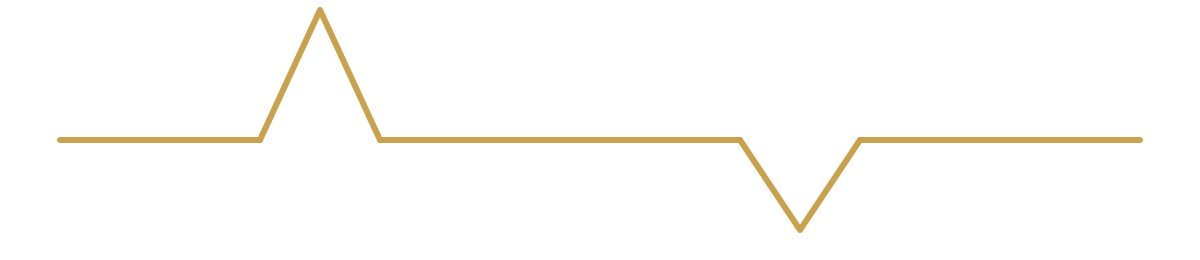
When you realise every moment of procrastination is weakening your ability to tolerate discomfort, the stakes become jarringly high. But when you also realise that every moment you go against the instinct to run away — that the discomfort you feel is evidence of positive change — the entire script flips.
To dismantle the worst habit you can ever build requires tolerating the discomfort of change. And tolerating the discomfort of change allows you to build the best habit you could ever build. It’s a win-win.
No moment is inert. Each one is training both habits — strengthening one and weakening the other. Which means every urge to avoid is also an opportunity. So the next time you feel a sense of aversion at the thought of a task, get out that laptop, put on those joggers, pull out that paperwork, and do — something.
What is the most dreaded task on your plate now? Or your most lofty goal? What is one tiny action you can take in two minutes that will make progress on either?
I’ve now triggered the urge to avoid within you. It’s up to you to take advantage of its plasticity window.
While you do that, I’m off to write an email.
For those struggling with the habit of procrastination, I’ve built the above protocol into an app that turns every urge to avoid a task into a rewiring opportunity. The app helps you track which avoidance cues you’re extinguishing and shows you your rewiring progress.
It makes the invisible change within your brain visible.
References for this essay, and for the wider series, are available as a collection in the Research Library, specifically:
Doing still-aversive tasks to avoid a now-more-aversive task is still avoidance, albeit a slightly more productive form.
When my husband read this, he said the project manager in him recoiled a little. He's right that planning has its place, but it should scaffold the work, not displace it. (It's just too easy to get caught up in the fantasy of progress it gives you.)
This works on the cue’s predictive power (its learned association with avoidance), not on the value of the “reward.” That matters because the procrastination “reward” is the absence of predicted discomfort – a relief-driven pull that reward-downgrading approaches leave frustratingly untouched. Weakening the cue’s predictive weighting is the strategy that applies here.
The spike itself lasts only milliseconds, but downstream signalling opens a broader “eligibility window” for plasticity that can persist for tens of seconds. The “one minute” is a practical stylisation of that window, not a measured deadline — the point is that the action must come while the spike is still shaping what gets wired, not that a stopwatch runs out at sixty seconds.
A dopamine dip (negative reward prediction error) is what downgrades the synaptic weight of a cue, and such dips are known to feel unpleasant. From those two facts I draw the claim that feeling the dip means the weakening is underway. Calling the discomfort the change itself is a slight poetic licence for “the felt correlate of the change” — but the mechanism underneath is real.
No posts
Comments
Nothing yet. Say the first thing.
Sign in to join the conversation.