
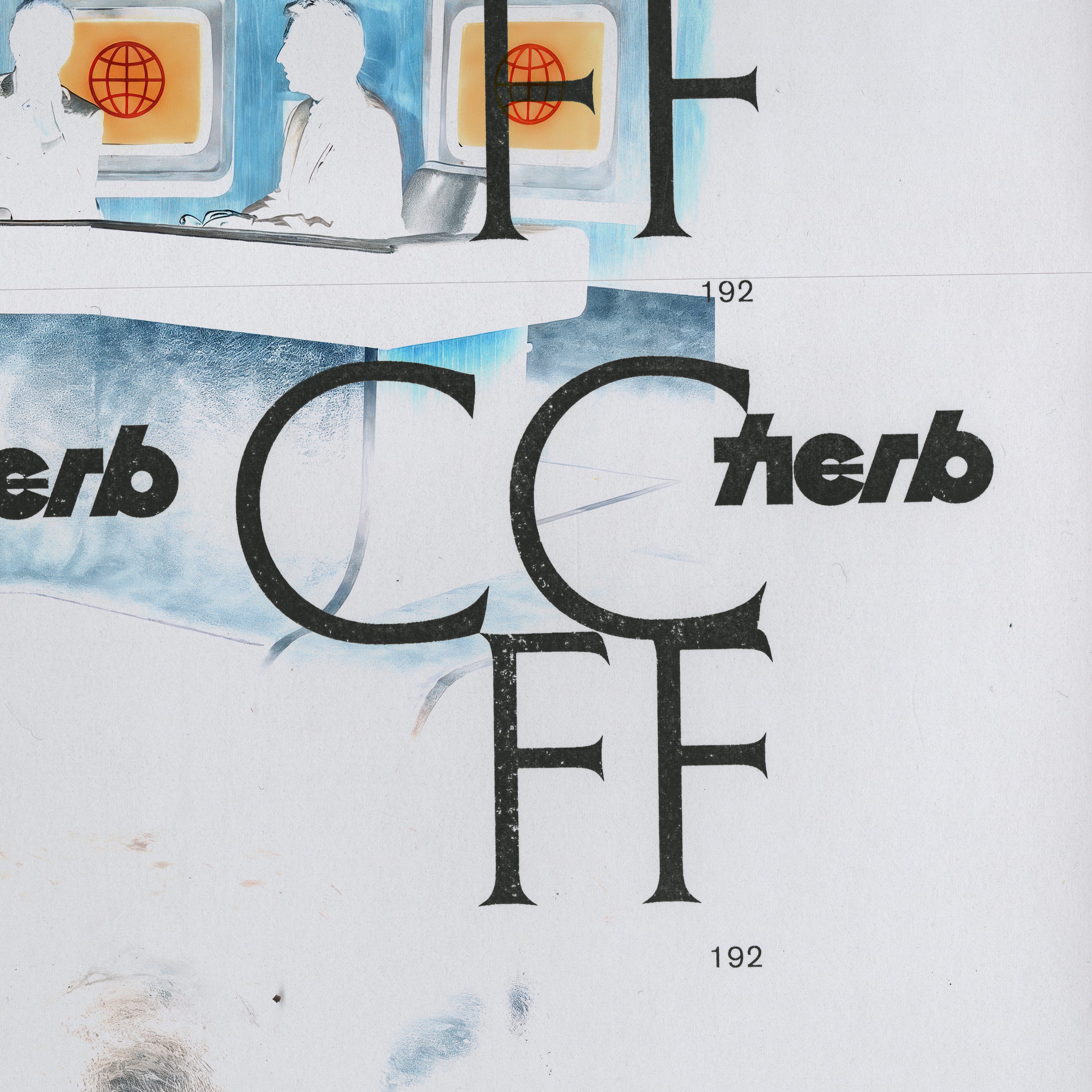
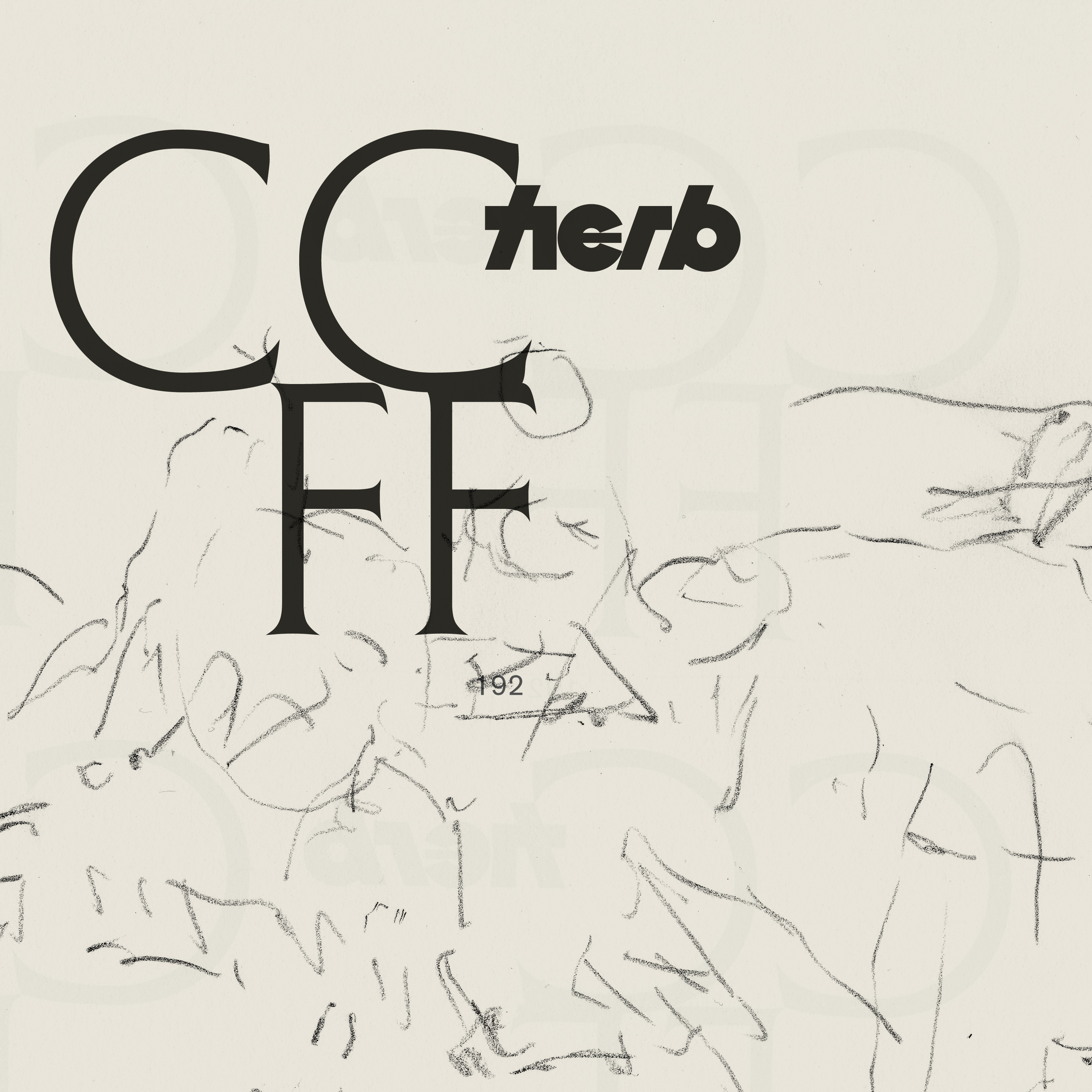
This Herb life isn’t a joke. It’s a deadly game, a high-speed thrill ride with sudden starts and stops. Someone riding the tiger longer, and with more aplomb than most, is Los Angeles-based Canadian artist/producer/DJ Mike Silver, aka CFCF. Wherever he goes, he brings his own bemused take on it. His Grammy nom and requisite NY Times piece is totem of Herb Majick, I’m still waiting for the follow-up story: A Canadian in Los Angeles would be a fabulous novella. Maybe Silver will soundtrack the film adaptation.
Silver’s obsession is perhaps the Venn diagram of the commercial world and the spiritual interiors it creates, where one can’t be fully separated from the other. It’s an academic approach to experimental pop, but equally pleasure-seeking. Silver has to go through the looking glass of commerce to find resonant truths, which is an honest response to this epoch, more so than a back-to-the-land refusal of it. CFCF projects encourage guilt-free but self-aware consumption; Enter through the gift shop.
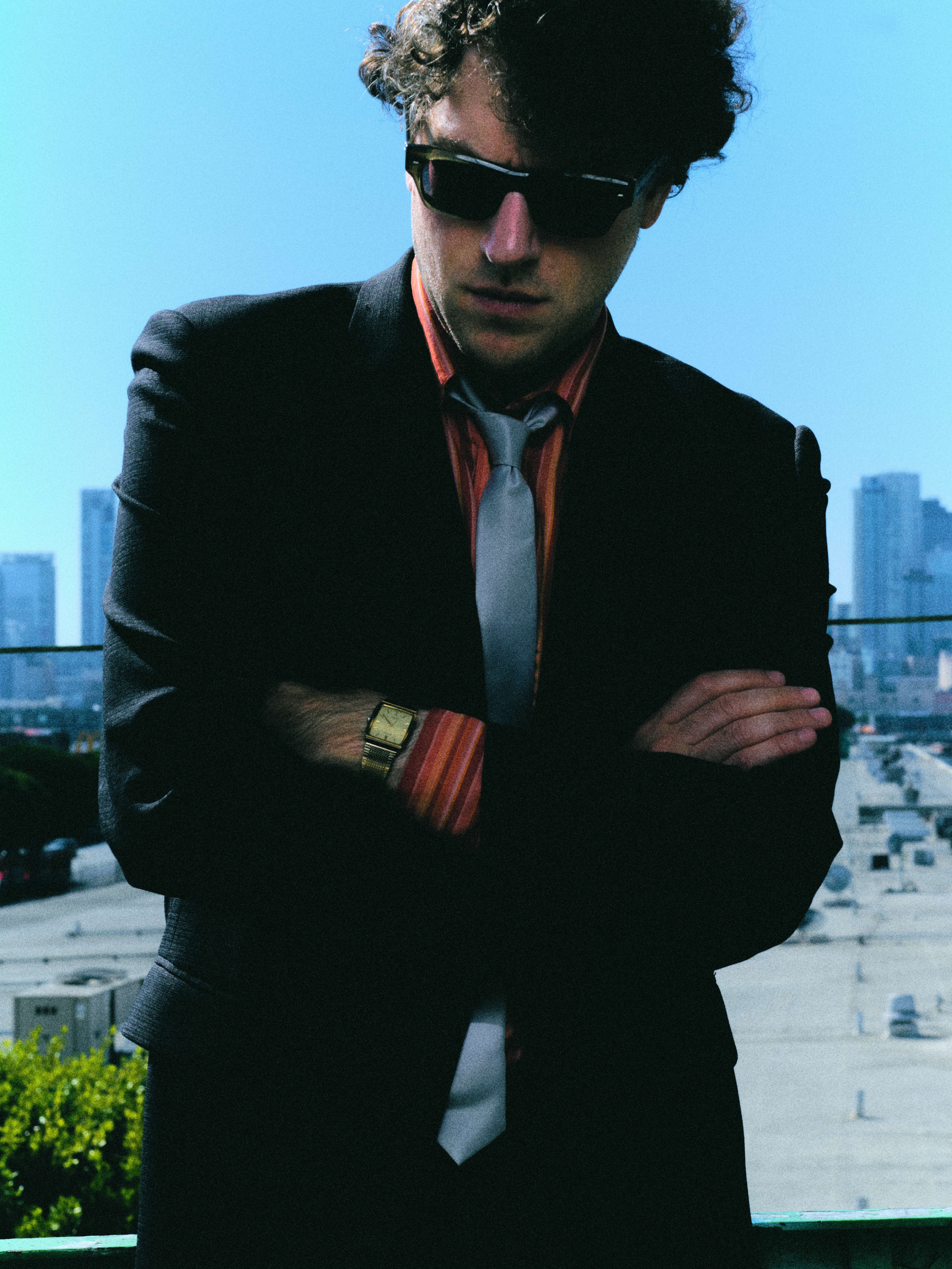
Having joined some of the most impactful label galleries of the ‘00s, debuting on the dangerously prescient Acéphale, 1080P, RVNG, Arts & Crafts, amongst others, forming a spread I doubt any other artist has matched, Silver has been mining the Herb stuff for a long time now, long before me and most, ripping between projects, already leaving town before the locals are on to him. He can’t help it really: his first concerts were a double header in 1999: The Chemical Brothers and, the day after, Warped Tour (Blink 182, Eminem, Pennywise, etc.). After a series of homemade diaramas, he released The Colours of Life in 2015, which found Silver mining the commercial vagaries of New Age played with a straight face. Max Read had him dead to rights in the NY Times:
“The Colours of Life” sounds a bit like the minimalist composer Steve Reich in places, or the Krautrock god Manuel Göttsching in others — but really, it sounds as if it should be advertised on basic cable with stock footage of candles. Or like a cassette tape you would buy from a bookstore with an entire section devoted to “Angels.” Or like seduction music played by a barefoot European man with a soul patch. Do you catch my drift? It’s cool, but it sounds as if it were recorded using a dreamcatcher as a pop filter. It sounds like the music for a 40-minute director’s cut of an airline commercial. It sounds like a poster of a wolf. It sounds like a hologram sticker of a dolphin. It sounds like a tattoo of an open eye. It sounds like the font Papyrus. It’s also really, really good.
His practice, which is obviously visually charged, also mimics that of conceptual fine artists in many ways. Mark Leckey’s (Herb 48) work can function as a simulacrum of these youthful feelings, drawing on lost utopias with a still-gooey melancholy expanse within, like cracking open an earthy-brown Hostess cupcake you found in your high school backpack. An inverse but equal parallel is perhaps Josh Kline (Herb 89), an artist who taps fellow world-builders like Galcher Lustwerk (Herb 59) for his films, projecting the outcomes of how we live now. If Silver ever catches up to the present in his arc and predicts a future, I’m guessing it may not be too far off from a Kline projection.
To give this lane a herby handle, we’ll say No-stalgia, or a revisiting of prior aesthetics, as both memory retrieval and an understanding of what to do with what you found. Oneohtrix Point Never’s mighty Tranquilizer (Warp, 2025) is a close cousin. As the bio says: “This is Oneohtrix Point Never at his most immersive, not looking back with nostalgia, but reframing lost sound as a vessel for new emotion. Speaking about the record, Lopatin says: “It’s a record shaped by commercial audio construction kits from a bygone era— an index of cliches turned inside out. It is a return to a process-oriented form of music making for me that I felt best evoked a certain kind of madness and ennui in the heart of culture today.”
Silver is in the oft-overlooked category on the shortlist of the era’s greats, perhaps cause he doesn’t stay in place long enough for the laggards to catch up. But that is changing as each new project delivers the goods.
While CFCF’s Liquid Colors (2019, BGM Solutions/Plancha) is called a “spiritual successor” to The Colours of Life, I think of that one as the true beginning of the CFCFCU, or the beginning of a themed arc of ‘90s-into-’00s halcyon days revisionism. The sonic template of LC is what journalists used to call “coffee table drum & bass” at the time, or a Jungle stripped of its fangs, its Ray Keith “Renegade” T-1000 red eyes swapped out for Claritin sky-blue blue contacts.
Silver has said: “I was interested in ‘corporatized’ pop jungle…totally inauthentic to the genre’s roots. At its most oversaturated, jungle and d’n’b was briefly the sound of capitalism. In fact once while I was in the middle of working on this album I had to make a call to some customer service line or other, my bank or something, and the on-hold music sounded exactly like this record I was making! I really knew I was onto something then.”
Shawn Reynaldo: Is Memoryland in any way related to your Liquid Colors album? There seems to be some level of sonic and aesthetic similarity between them.
CFCF: I actually wrote Liquid Colours while I was working on Memoryland. After working on Memoryland for a couple of years, I needed to take a break from it and had this other idea that I decided to focus on for a couple of months. Liquid Colours came together relatively quickly because I’d set these limits for myself and thought it could be a kind of pallet cleanser for me. And once it was done, I figured it would be a good bridge into Memoryland from what I’d previously released, because it’s kind of this easy-listening, new-age thing, but it obviously has this Y2K electronic bent to it. On the Liquid Colours artwork, it says “BGM for Memoryland Retail Environments and Relaxation Outlets,” so I had a sense that these records were part and parcel of the same world.
Liquid Colours is perhaps the THX-1138, perhaps, to Memoryland (2021), which felt, to me, the best-received album of Silver’s career so far, a very clear concept album that didn’t buckle under its own weight due to its fastidious prep and beautiful visual follow-through.
Cadence Weapon on what makes a Silver production different:
memoryland is less like an iPod on shuffle and more like swapping discs in and out of a CD wallet. It isn’t so much about the sheer number of callbacks as it is about the totality of each individual reference. When Silver tries a style, he doesn’t go halfway. His reproductions are faithful to the extreme, mimicking production tricks in a way that only the obsessively dedicated would even attempt. More than an archival exercise, it’s also a technical marvel and a labour of love. The album is like a misremembered greatest hits compilation.
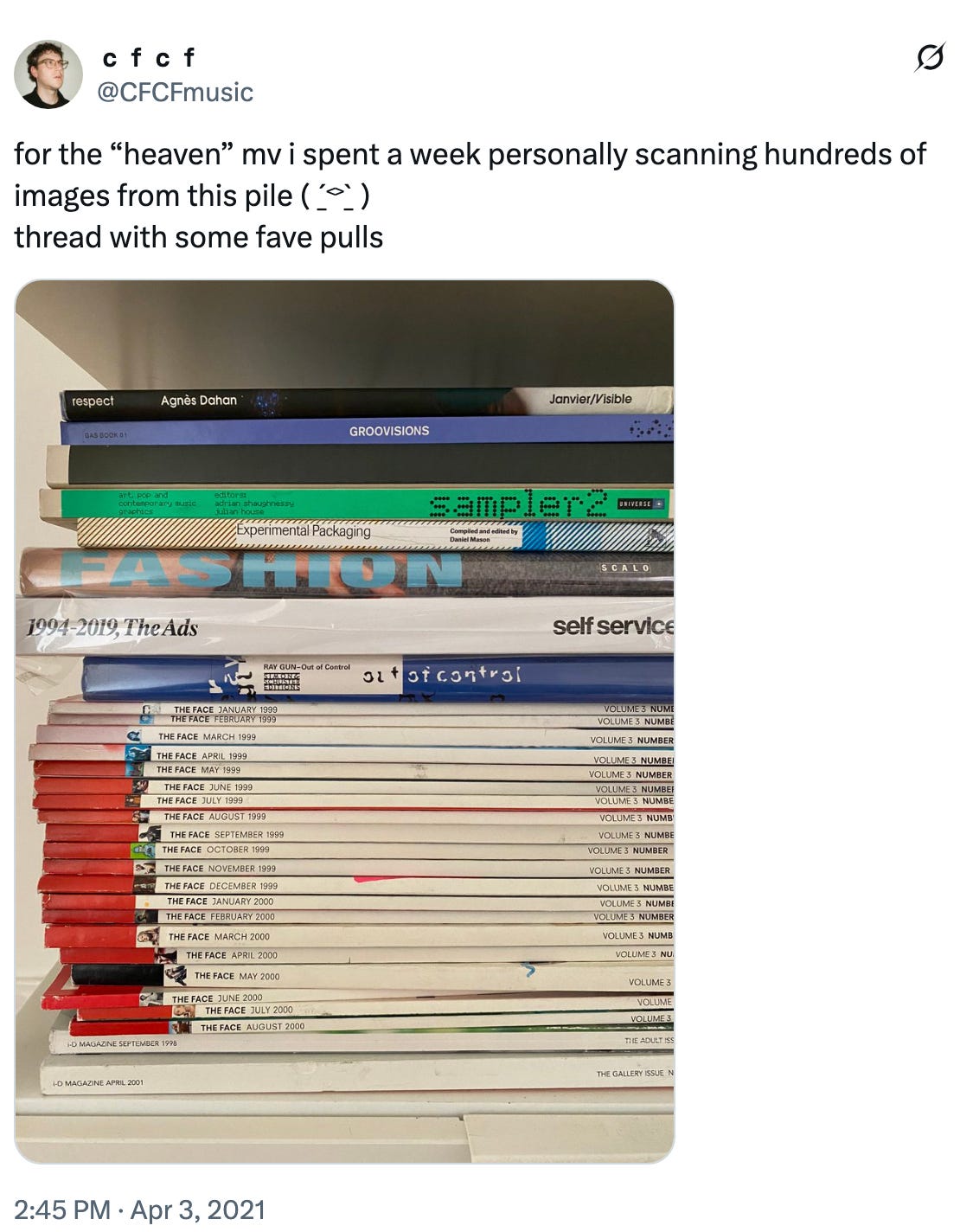
Memoryland’s release dovetailed with a creative expanse left by the pandemic, offering fans something more tactile than most any other release of its kind, and a first look at the resurfacing of aesthetics that were a little too fresh to be mined until then. If Memoryland is an unpacking of pre-Y2K theatrics and genre-smushing, what came next is on the other side of the millennium, a jauntier and more self-assured posture, more sardonic, more extroverted.
Indeed, this summer’s entry into the Silver songbook is the electro-pop album ‘L.U.V.’ which is apparently short for ‘Life in Ultra-Violet’, a continuation perhaps from ‘Memoryland’s closing tune. “The Ultraviolet Room.” Its arrival echoes with interest in “Indie Sleaze” and Electroclash, terms that didn’t exist or were derided in their time, respectively. I hope The Dare (Herb 83) or fellow Montreal conceptualist Tiga tap Silver for a dose of the sauce, or as the bio says: “dayglo Scandi-pop mingles with High Street London bubblegum; collaged speed garage collapses into electroclash garage rock. Tongue-in-cheek, sincere, sarcastically hedonistic; allusions to Dostoyevsky mingle with Uniqlo. Low-brow, high concept, poor taste with sophistication.”
Anna Gaca for Pitchfork described the stew: “L.U.V. takes the fundamental subject of most pop music (love), plays up the irony factor with songs technically about hot babes, cocaine, sex, and disillusionment (sleaze in an objective sense), then doubles back and suffuses it in genuine love for the sounds of Alan Braxe and Fred Falke’s celestial synth risers, Fischerspooner arpeggios, Basement Jaxx’s guppy-fish grooves, Daft Punk’s robot talkbox funk, and Kylie Minogue’s “Can’t Get You Out of My Head.”
It’s cool to see Silver hit his bandleader era on the album, pulling in guests including London’s Nuum & Seren Forever, Buenos Aires’ EQ, LA’s Touching Ice, and Miami’s TECHG1RLS. The project’s tone and art direction carry notes of Trevor Jackson’s (Herb 17) Playgroup project, positioning a hermetic, chromatic review of Jackson’s core inspirations: the optimistic, genre-bending of the early ‘80s. Silver carries the torch with his own set of references, but like a now-sentient mechanical claw, he brings together things that never went together, including my heroes The Sound and others in his YEAR0001-backed Ready2Wear DJ mix, a tableau of his current dataset.
Silver’s willingness to go method is a gift, a single-mindedness that allows his projects to be fully felt. His 2017 collaboration with Jean-Michel Blais is one of my favorite CFCF recordings, and a rare win in the electronic-meets-classical category, a subdivision that can usually be avoided for its imposed high-mindedness and a lack of the guts that made either genre great. “Spirit” is as aching as anything you can find from this genre. Whether Blais and Silver donned black turtlenecks on stage and in performance to be self-aware and funny, or because it's objectively sick and cool (or both), is a testament to Silver’s greatness alone.
Indeed, Silver’s gift is also that of curation, and he has been generous with his source files. His Night Bus mix series is considered a classic body of work in itself. Teen Daze opines below on Night Bus II which wrapped Underwold, Alicia Keys, Autechre, Vangelis, The Knife and the music of jaime brooks into a complete thought in advance of Vaporwave and other innovations.
Gabriel Szatan (via RBMA): “One of the stop-offs in between your early stuff and what you’re doing now was the Do U Like Night Bus mix – you inadvertently wound up pushing the genre name to much wider prominence. In a similar vein, there are elements on the new EP which have an almost vaporwave feel. Do you see these kinds of difficult-to-place genres as an update of New Age music created with different tools and sensibilities?”
CFCF: …With Night Bus, it’s funny to see it grow and take a life of its own outside of the message board from whence it originated and the mixes I’ve done. The way I see it is a really open thing that could be perceived as so many different things. But I’ve seen the press try to pin it as being a very specific London, kind of post-Burial style, which I felt was reductive of what I thought the term was. For me it was always a mix of that and a million other things: Julee Cruise and David Lynch soundtracks, chopped ‘n screwed stuff, Sunn O))) plus plenty of other things from the past 20 or 30 years. There’s a lot of variety, and that’s what exciting about it. It feels like a really fun, cool way to approach all this music that’s been around for so long.
For all the send-ups and quirks, I still believe Silver is aiming for the ineffible; he is seeking the divine and wanting to pay it forward, metabolizing his influences as a means of production. This is clearly personal, and deeply serious, stuff.
Andy Beta, via his Cascades review, arrives at the same place:
Cascades’s longest piece, a stunning rendition of John Cage’s 1948 piece, “In a Landscape.” For those more familiar with Cage’s later work, which embraces silence, dissonance, and chance operations, “Landscape” is a melodic composition clearly indebted to ambient godfather Erik Satie. On this version, Blais’ piano moves at a stately pace as Silver adds flickering electronics and a bit of radio chatter in the background (perhaps a sly nod to Cage’s shortwave radio piece, “Imaginary Landscape”?). Four minutes in, marimba and chimes ripple and synthesized strings quiver to life and it evokes a rolling pastoral scene the moment the sunlight lands upon it just so, so that every tree and hill on the horizon seems to glow golden… “Landscape” is one of the most unequivocally gorgeous covers imaginable.”
Bonus Beat:
Seattle’s Jeff McIlwain returns on Ghostly International Journal with his 10th album, (POW MAG’s Jeff Weiss is on my shoulder asking me to do a Too Short joke), a return to capital A Ambient (Aphex Twin 1.0, Locust, etc) and his time studying under Morton Subotnick to deliver Melting Days, out later this summer.
Comments
Nothing yet. Say the first thing.
Sign in to join the conversation.