
NOTE: This article was written using Grok after a long discussion of the current and future developments with AI Tools and Systems as they apply to businesses.

As a business owner or HR executive, you’ve likely fielded the usual questions: “Is AI really that big a deal?” or “Should we be doing more with it?” For months, the conversation felt theoretical. But right now, in the second half of February 2026, the evidence on the ground has shifted from “promising” to “unavoidable.” The latest wave of frontier models has crossed a threshold that directly touches every knowledge-work process in your company.
What changed? In the space of just weeks, leading labs released systems that don’t merely assist, they autonomously plan, execute, iterate, test, and even contribute to their own improvement. The result is a new operating reality for any organization that relies on cognitive labor: dramatically higher output per person, compressed project timelines, and a fundamental redefinition of what “entry-level” or “mid-level” work actually means.
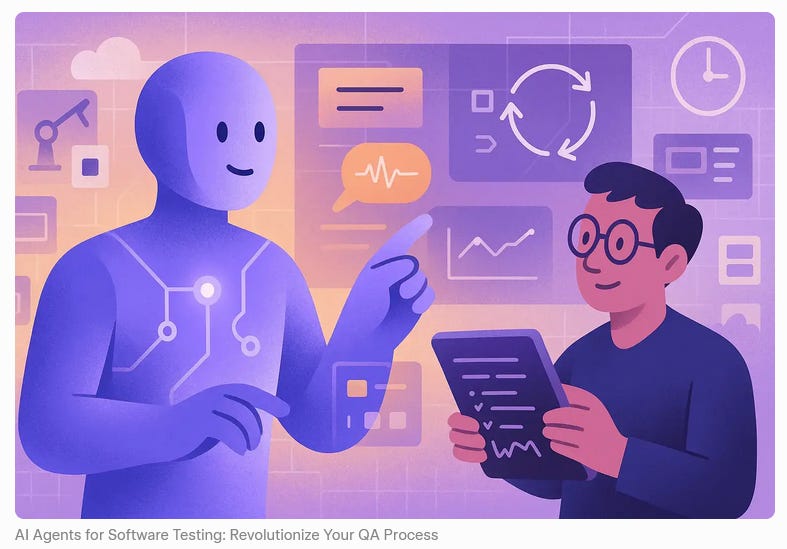
The most striking development is the rise of truly agentic systems AI that can take a high-level goal (“build this feature set with these design constraints”) and deliver a complete, tested, production-ready outcome with minimal human intervention. These models now write tens of thousands of lines of code, open and interact with the resulting application themselves, identify issues, refine the design, and only then hand back a polished result.
Even more consequential: some of the newest models were built with heavy assistance from earlier versions of themselves. This self-reinforcing loop. AI accelerating AI development is no longer a future hypothesis. It is actively shortening the time between major capability jumps.
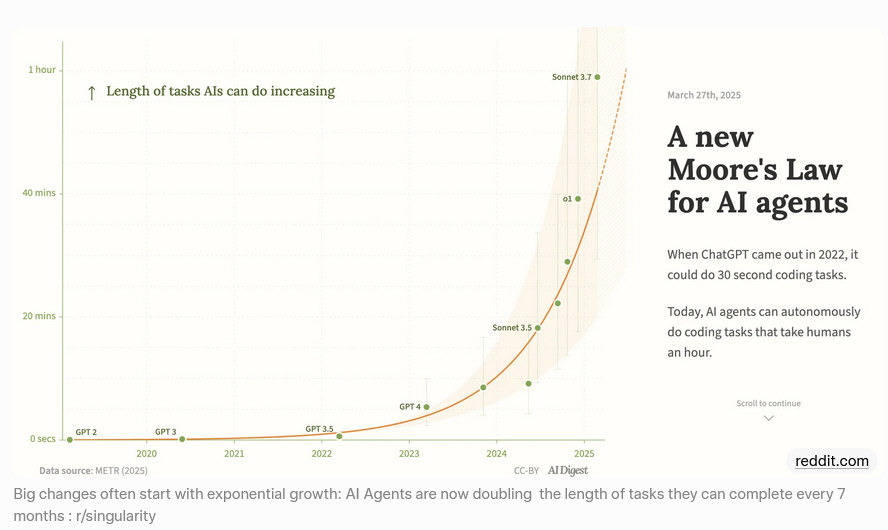
Independent benchmarks tracking real-world task completion (measured in hours of expert human effort) show the trend line bending sharply upward. What once took a skilled professional several hours can now be completed end-to-end by the best systems in a fraction of that time and the horizon continues to expand every few months.
For company leaders, this is no longer an R&D curiosity. It is a productivity multiplier that is already reshaping software teams and is poised to cascade into legal, finance, marketing, analysis, and customer operations within the next 12–36 months.
Is your company already involved with testing and/or using Angentic AI Systems?
Imagine your engineering lead describing an app in plain business language and receiving a fully functional, self-tested version hours later instead of weeks. That scenario moved from demo to daily workflow in many forward-leaning companies in late 2025 and early 2026.
The same pattern is emerging elsewhere:
Legal and compliance teams use AI to review contracts, flag risks, and draft responses at speeds that compress days of associate work into minutes.
Financial analysts receive complete models, scenario forecasts, and board-ready memos from natural-language prompts.
Marketing and content groups generate, A/B test, and refine campaigns end-to-end.
Customer service agents are being supplemented (and in some cases replaced) by systems that handle complex, multi-step issues without escalation.
The strategic implication is clear: cognitive work that lives on screens is now subject to the same automation economics that transformed manufacturing decades ago except this wave moves faster and affects higher-paid roles first.
For HR leaders, the next 12–24 months will test every assumption about talent strategy.
Entry- and mid-level knowledge roles face the most immediate pressure. The classic career ladder hire juniors, give them repetitive tasks to build expertise, promote the best is being compressed. Many routine analytical, drafting, and research tasks can now be handled at higher quality and speed by AI, often under senior oversight.
This creates both risk and opportunity:
Talent cost structures will shift. Organizations that integrate AI aggressively can deliver more value with smaller teams, improving margins.
Skills gaps will widen for companies that wait. The premium will be on professionals who excel at directing, auditing, and combining AI output with human judgment.
Retention and culture become more critical. Top performers want to work where they are augmented, not threatened. Companies that treat AI as a co-pilot rather than a replacement will attract the best people.
Reskilling investment is no longer optional. Forward-thinking HR teams are already mapping every role against current AI capabilities and building personalized upskilling pathways.
The uncomfortable truth: ignoring this transition does not preserve jobs it simply transfers competitive advantage to rivals who move faster. Do You Agree?

1. Run serious pilots with frontier tools
Move beyond free tiers. Paid access to the latest models (Claude Opus series, GPT-5 family, and equivalents) delivers capabilities months ahead of consumer versions. Assign cross-functional teams to automate one high-volume workflow each month and measure results.
2. Audit workflows ruthlessly
Ask every department head: “Which 40% of our current tasks could be delegated to AI today with acceptable quality?” Document the answer. The gap between perception and reality is still surprisingly large in most organizations.
3. Build AI fluency as a core competency
Mandate that every knowledge worker spend at least one focused hour per week pushing the models on real work. The organizations pulling ahead are those where experimentation is expected, not optional.
4. Scenario-plan your workforce
Model three futures: modest adoption (10–20% productivity lift), aggressive integration (40–60% in affected roles), and accelerated displacement (if self-improvement loops continue shortening cycles). Align hiring freezes, redeployment, and severance policies accordingly.
5. Strengthen financial and cultural resilience
Maintain dry powder for potential disruption. Communicate transparently that AI is a tool to amplify human potential, not eliminate it and back that message with visible investment in people.
The people who get this right will look back on early 2026 as the moment they gained an almost unfair advantage. The companies that treat it as another technology trend to monitor will spend the next three years playing catch-up.
You don’t need to have all the answers today. You do need to start treating AI capability as a core strategic variable right alongside capital allocation, talent strategy, and competitive positioning.
The ground is already shaking. The question for every owner and HR leader is whether your organization will ride the wave or be surprised by it.
What’s one workflow in your company you suspect could be transformed in the next 90 days? Drop it in the comments. I’ll share practical starting prompts that other leaders are already using.
If this resonated, forward it to the CEO or CHRO who needs to see it. The brief window for early-mover advantage is closing faster than most realize.
Welcome to the new era of work. Let’s build it intentionally.
For more information about the author of this article visit my website.
No posts
Comments
Nothing yet. Say the first thing.
Sign in to join the conversation.