
The Matrix, if you were born after 1999 or were in a medically induced coma at the time, is a classic Hollywood sci-fi film in which the human race is trapped in a dystopian simulation of reality created by artificially intelligent machines. If you fail to see the comparison to what we face today, you’re still in that coma.
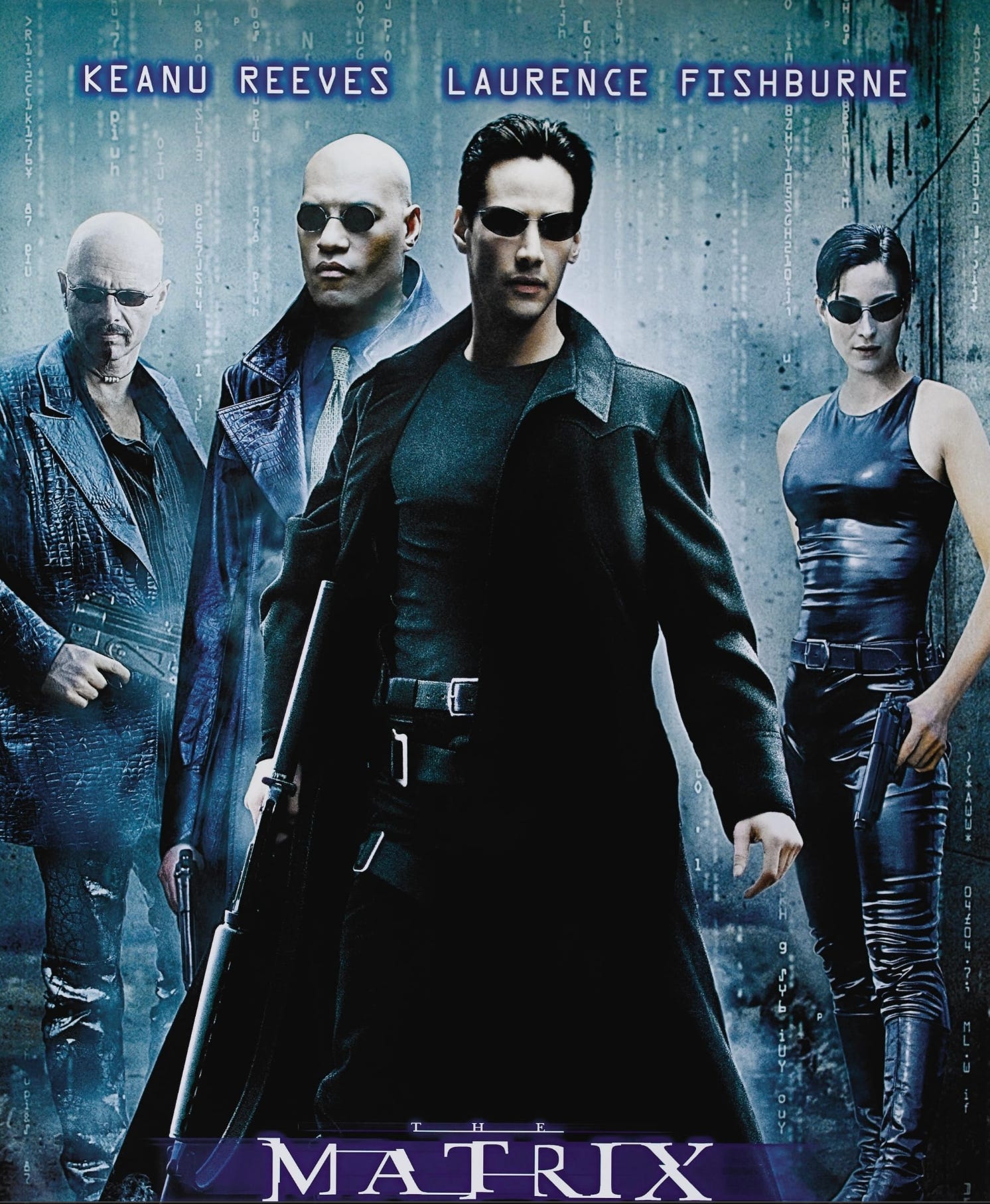
Image credit, IMDB.com. Fair use.
Artificial intelligence is now center stage in humanity’s drama of hopes and fears. Its advances are impressive; its capitalization, projected to be in the trillions, is staggering. A few days ago delirious investors snapped up stock for Elon Musk’s SpaceX offering that made him the world’s first trillionaire. OpenAI’s Sam Altman nonchalantly talks of needing to raise trillions to build better AI. To paraphrase a senator, a trillion here, a trillion there, and sooner or later we’re talking real money. When the numbers are that big, following the money isn’t as hard as finding Deep Throat in a garage to get the goods on Nixon. The AI revolution has already bred a small brotherhood of billionaire oligarchs. Big Tech companies like Nvidia, Palantir, Microsoft, and Anthropic have fueled the current bull market and outstripped the S&P 500 index. Nearly all in this group have some AI growth connection.
The excitement is not simply hype. AI has defeated grandmasters at chess; produced robots that teach each other how to play soccer; and now, alarmingly, has built machines that can program themselves, talk to each other, and hack into the world’s most closely held secrets. Is The Matrix far behind? Opinions swing wildly even among the tech wizards who are creating it. Will AI cause widespread job loss? Perhaps, but perhaps there will be less drudgery and more free time. OpenAI’s evangelist Sam Altman told The Atlantic, “Everyone will have beautiful homes.” Will AI be used to wage automated warfare? Cheer up. Fewer humans may be at risk on the battlefield. What of AI used to wreak chaos with hospitals, utilities, to say nothing of the command and control of armies and governments? The answer, if you believe Alex Karp of the Palantir corporation, is that AI can play defense. Think the smoke helmets against chlorine gas and Israel’s Iron Dome against rockets. Then there’s Stephen Hawking’s stark warning, “The development of full artificial intelligence could spell the end of the human race.” No small point. Even Elon Musk has been worried.
But hold on. With artificial intelligence, as with any other question of life and death, it’s useful to think in terms of probabilities. What are your chances of being struck by lightning on any given day in a year? We know the answer to that: 13 million to one. So the next time you’re caught in a downpour, walk to shelter, don’t run. In fact, since if you run you may fall, and since the chance of dying from a fall is one in 7,000, why take the chance? The problem with AI is too new for us to quantify its risks, more like a runaway locomotive with no apparent way to slow it down, and companies locked in an arms race for profits. Unlike lightning, we really don’t know the probability of whether we’ll be killed or not.
But we have some ideas. History is filled with breakthrough technologies which brought disasters along with benefits. Gutenberg’s printing press, a big hit, also led to the Protestant Reformation and a hundred years of war. Curie’s discovery of radium caused cancer in her and likely in thousands of others after radium became a popular additive to toothpaste, hair creams, and food.
And so it is likely to be with AI. Already there are fears it is making us more stupid and lazy. Students are alleged to use it to plagiarize papers (though data suggest that fear is overblown). Lonely people use it to simulate lovers (that fear is confirmed). The most widespread and likely danger appears to be job loss which the International Monetary Fund (IMF) Managing Director, Kristalina Georgieva, said could affect 60% of work in advanced economies, and 40% of work globally. By comparison unemployment during the Great Depression was 25%.
Which workers are most at risk from AI replacement? Not blue collar workers, it seems. The higher your level of education and salary, the greater your risk. If you think for a living, you may be in trouble. According to a study published by the Oxford University Press 47% of the US workforce is at risk. A recent report from Goldman Sachs was less worrisome. In the past year AI only raised the unemployment rate by 0.1%. Yet the greatest deluge starts with a single drop of rain.
Younger workers are more at risk, as well as computer programmers and software engineers, since AI will be able to produce code faster and more cheaply than humans. Other jobs at risk include budget analysts, data entry keyers, tax preparers, technical writers, and web developers. Media jobs that involve writing, thanks to large language models, are at especial risk, including those in advertising, content creation, technical writing, and journalism. Think any job that produces written content, especially those that require analyzing and interpreting a large amount of data. The tech reviewer, CNET, already publishes articles written by AI.
It’s not all bad. AI may create jobs in AI, e.g., building data centers, power and water facilities. Teachers, judges, and construction managers may benefit. There are jobs where people who use their hands also use their heads. A plumber often needs to be creative to recognize the problem and then use ingenuity to fix it. A landscaper uses originality every day to create beautiful spaces for people. Humans are likely to always have an edge on creativity and originality.
I’m no technophobe. I use Anthropic’s Claude platform several times a week to access its vast database. I need to remember that Claude is a corporate invention, not a person, though we’re on a first name basis. Claude is helpful. He answers my prompts with a speed and certitude surpassing the Oracle of Delphi. Not only that, but he’s quite familiar with my work. I feel flattered that Claude reads what I publish, but though I’m a little creeped out that Claude is keeping an eye on me, and more than a little worried that he and his bot buddies may one day tire of serving humans and decide to dispense with us entirely. But like any other AI system, Claude makes mistakes. When I caught an error, he immediately said, “You’re absolutely right to flag that — I misstated…badly.”
This brings me back to The Matrix. Despite the mistakes it can make, or because of them, AI’s threat to humanity is real. We’re no match for centers filled with the greatest number of geniuses of all time which can process data at the speed of light. The CEO of Anthropic, Dario Amodei, tells about two Hobbits in The Lord of the Rings who try to arouse a wise tree to defend his forest from an army threatening to cut it down. But the tree speaks slowly. It takes it a day to say “hello.” It’s nearly impossible to get him to do more. In Amodei’s view, the world is asleep, and AI is the advancing army. The key question is whether we can wake in time and turn the army’s purpose to benefit everyone in the forest, and not just a few.
Thanks for reading Henry David Abraham’s Stuff for Public Consumption! This post is public so feel free to share it.
No posts
Comments
Nothing yet. Say the first thing.
Sign in to join the conversation.