
On Monday of this week, I published an article outlining 90 potentially corrupt or unethical actions taken by Donald Trump during his second term. If you weren’t able to read that article, you can find it here: The Trump Administration Legacy Will Be Corruption-Corruption and More Corruption.
In that list of corruption, one category was conspicuously left out: potential war crimes and violations of the US Constitution in wartime. That is because it deserves its own column.
This category of corruption by the Trump administration is perhaps the most egregious because of the harm it does to the standing of the United States and the security risks they pose. Trump’s actions overseas do not make us safer, but they compromise our security, our alliances, and our moral standing in the world.
This column will present ten potentially illegal or unconstitutional acts by the Trump Administration related to foreign policy. The goal is not to adjudicate these, but to raise awareness of the scope of potential criminality to which Trump has exposed himself.
It will be up to Congress, the United Nations, and other international investigative bodies to provide conclusive evidence that puts Donald Trump in political and perhaps legal peril.
With the introduction of these ten new allegations, Trump’s total number of corrupt exposures now stands at 100. Certainly a record.
Donald Trump’s most aggressive actions on the foreign field include its actions toward Venezuela and Iran. This summary of questionable actions will focus on those two theaters.
Key Question: Did the administration have the legal authority to do what it did (is doing) in Venezuela and Iran?
That question encompasses both American constitutional law and international law and presents an enormous responsibility for Congress if Democrats regain control of the House: to determine what actually happened, what authority the administration claimed, what evidence supported those claims, and whether presidential actions crossed legal boundaries.
I am not attempting to make those determinations here. That is well above my pay grade. However, that is precisely what congressional investigations, inspectors general, courts, and, where appropriate, international institutions do.
Here are ten areas that deserve serious investigation.
The administration’s campaign against suspected drug-smuggling vessels raises perhaps the most fundamental question:
When does a drug suspect become a lawful military target?
The administration has treated suspected narcotics traffickers as enemies in an armed conflict. But drug trafficking is ordinarily a law-enforcement problem. The normal response is interception, arrest, prosecution, and imprisonment, not execution by military strike.
The scale of the campaign makes the issue impossible to dismiss as an isolated incident. The Washington Office on Latin America (WOLA) documented 67 boats struck in 63 attack events and 221 people reported killed, including two survivors whom U.S. authorities allegedly killed in a follow-up strike.
The central congressional question should therefore be:
What legal authority permitted the United States to deliberately kill people suspected of committing drug crimes rather than arrest them?
If a person survives an attack but is wounded, incapacitated, shipwrecked, surrendering, or otherwise no longer participating in hostilities, deliberately killing that person can raise an entirely different category of international-law concerns.
It is one thing to argue that an individual was a lawful military target when an attack began. It is another to kill someone after he has ceased to be a threat.
WOLA reports two cases in which U.S. authorities killed survivors in follow-up strikes. Those incidents deserve investigation down to the operational level:
Who ordered the second strike?
What did commanders know about the survivors?
Were the survivors armed?
Were they attempting to flee?
Could they have been rescued?
What rules of engagement governed the decision?
If the facts establish that people who were hors de combat were deliberately killed, the legal implications could be extremely serious.
The administration has effectively treated cartel activity as warfare.
But governments cannot necessarily create an international armed conflict simply by labeling criminals “enemy combatants.” This is important because the legal rules governing war are dramatically different from those governing ordinary law enforcement.
The administration therefore needs to answer a basic question:
What legal facts transformed the fight against narcotics trafficking into an armed conflict in which lethal military force was authorized?
Congress should examine the administration’s legal memoranda, intelligence assessments, rules of engagement, and communications among the White House, the Pentagon, and the Justice Department.
The answer cannot simply be: The president said these people were enemies. In a democracy, the law has to supply the authority.
This takes the issue beyond the individuals aboard the boats.
International law generally prohibits states from using force against another state’s territorial integrity or political independence. The UN Charter’s Article 2(4) establishes that basic rule, while Article 51 recognizes self-defense in the event of an armed attack.
The United States therefore needs a legal theory explaining why its military operations against Venezuelan-linked targets are lawful.
Is the United States defending itself against an armed attack?
Is it acting with Venezuelan consent?
Is there Security Council authorization?
Or is the administration asserting some broader theory of national-security necessity?
These are not semantic distinctions or questions. They determine whether the use of force is lawful under the international system the United States helped create.
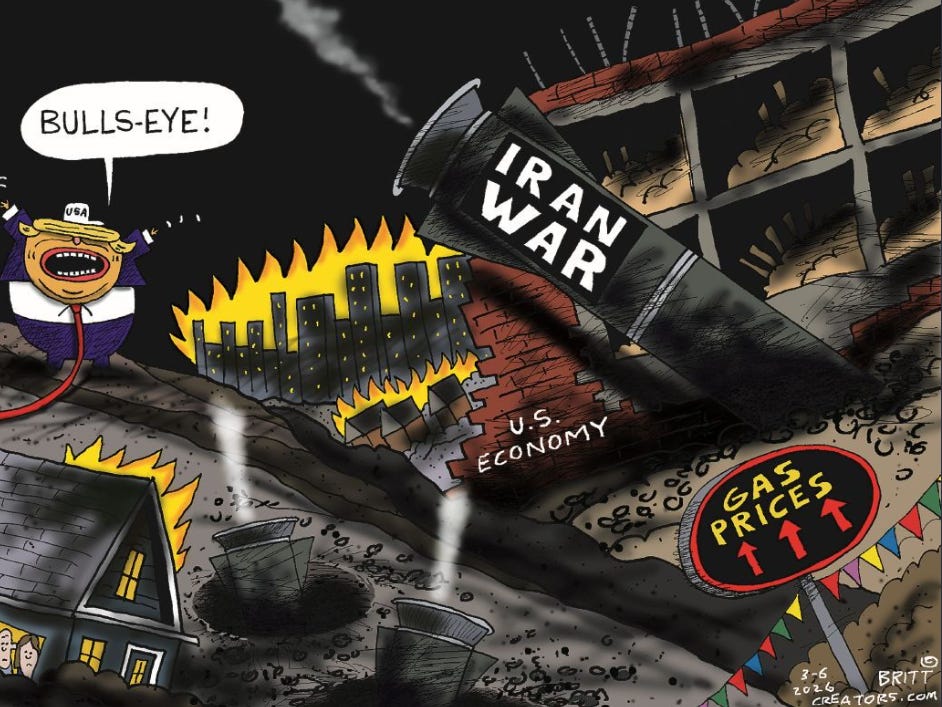
On February 28, 2026, the United States and Israel launched major attacks against Iran. The UN Secretary-General immediately condemned the military action and emphasized that states must comply with the UN Charter and international humanitarian law.
The United States subsequently notified the UN that it was acting under Article 51 and claimed an inherent right of self-defense. That assertion deserves scrutiny rather than automatic acceptance.
The Constitution gives Congress the power to declare war. The constitutional history also makes clear that the precise boundary between congressional and presidential war powers remains contested. The president does possess authority to respond to sudden attacks, but the executive branch’s claim to broader unilateral authority has long been disputed.
The problem is scale. There is a profound constitutional difference between ordering a limited military strike to repel an imminent attack and initiating a sustained war against another nation.
Congress had not declared war on Iran, and legislation introduced in Congress explicitly noted that neither the 2001 nor 2002 authorizations for military force provided specific authorization for war against Iran.
The constitutional question is therefore straightforward:
Did the president initiate a war that only Congress had constitutional authority to authorize?
In June, both chambers moved to invoke war powers authority regarding Iran. The House passed its resolution 215–208, and the Senate later passed its own measure 50–48.
That creates a remarkable constitutional confrontation:
What happens when Congress says the president does not have authority to continue hostilities and the president continues them anyway?
That question is bigger than Donald Trump. It concerns whether Congress still possesses meaningful constitutional control over the decision to wage war.
Trump has argued that the hostilities were terminated by a ceasefire, thereby affecting the War Powers Resolution’s operation.
But Reuters reported that military activity and the naval blockade continued even after the administration characterized the hostilities as terminated, while legal experts questioned that interpretation.
This raises a potentially important statutory question:
Can a president terminate the legal consequences of a war simply by declaring the hostilities over while continuing military operations related to that conflict?
If so, the 60-day limitation would become meaningless.
A president could theoretically fight beyond the statutory limit, announce that the war has ended, continue military operations under another description, and restart the clock.
That is precisely the kind of question Congress should settle.
The UN secretary-general reported that the initial Iranian attacks included strikes affecting approximately 20 cities and cited reports of a girls’ school in Minab being hit, with at least 85 people reportedly killed.
Iran subsequently submitted extensive allegations to the Security Council concerning attacks on civilian infrastructure, including sports complexes and other facilities. Those allegations themselves are not proof of a war crime, but they establish a clear evidentiary trail for investigation.
Congress should therefore ask about the targeting process:
What was the military objective? What intelligence supported the target? What civilian casualties were anticipated? What alternatives were considered?
International humanitarian law does not prohibit attacks merely because civilians are harmed. It does, however, impose requirements of distinction, proportionality, and precaution.
Those requirements need to be examined on a case-by-case basis.
One particularly important question concerns attacks against Iranian military assets outside Iran or far from the immediate battlefield. The farther an operation extends geographically, the more important the legal justification becomes.
Congress should investigate whether particular targets were:
lawful military objectives;
directly participating in hostilities;
necessary to the military campaign;
located within a recognized theater of war;
or attacked primarily as a form of coercion or punishment.
Here is why this is important: not everything associated with an enemy government automatically becomes a lawful military target.
A government does not acquire unlimited authority to attack anything belonging to an enemy simply because a war exists.
Look at the pattern in Trump’s actions:
In Venezuela, the administration argues that criminal organizations can be treated as military enemies.
In Iran, it argues that the president can initiate major military operations without a congressional declaration of war.
When Congress objects, the administration disputes the practical consequences of Congress’s war-powers authority.
And when international law is raised, the administration invokes national security and self-defense.
Taken individually, each claim can be debated. Taken together, however, they suggest something much larger:
A theory of presidential power in which the president can identify a national-security threat, define the threat as an armed enemy, authorize military force, and determine the legal framework under which that force operates.
That would represent a profound shift in the constitutional balance.
The question confronting the country now may be larger than Donald Trump.
It is whether the United States is still operating under a constitutional system in which Congress has meaningful authority over war or where the rule of law means anything.
If Democrats regain control of the House, I don’t think their first responsibility should be to announce that Trump committed ten war crimes. Their responsibility should be to find out what happened.
It means determining precisely what legal authority the administration believed permitted the war in Iran to begin and continue.
But there are enough serious questions here that simply moving on would be an abdication of Congress’s constitutional responsibility.
The ultimate issue is not whether Donald Trump’s foreign policy was aggressive. It is whether the president of the United States can make war without Congress, kill people without trial by labeling them enemies, and redefine the limits of international law through executive declaration.
If the answer becomes yes, then the implications are astounding.
It means:
the rule of law in the US is gone
the United States is being governed by a war criminal
the Constitutional system has been compromised
The final legacy of the Trump administration might not be just another impeachment or even a potential removal from office. Imagine an International Court of Justice putting a former President on trial for war crimes.
That could be Trump’s final legacy.
Share Things We Don't Talk About Like Politics & Religion

Available for iOS and Android
Comments
Nothing yet. Say the first thing.
Sign in to join the conversation.