
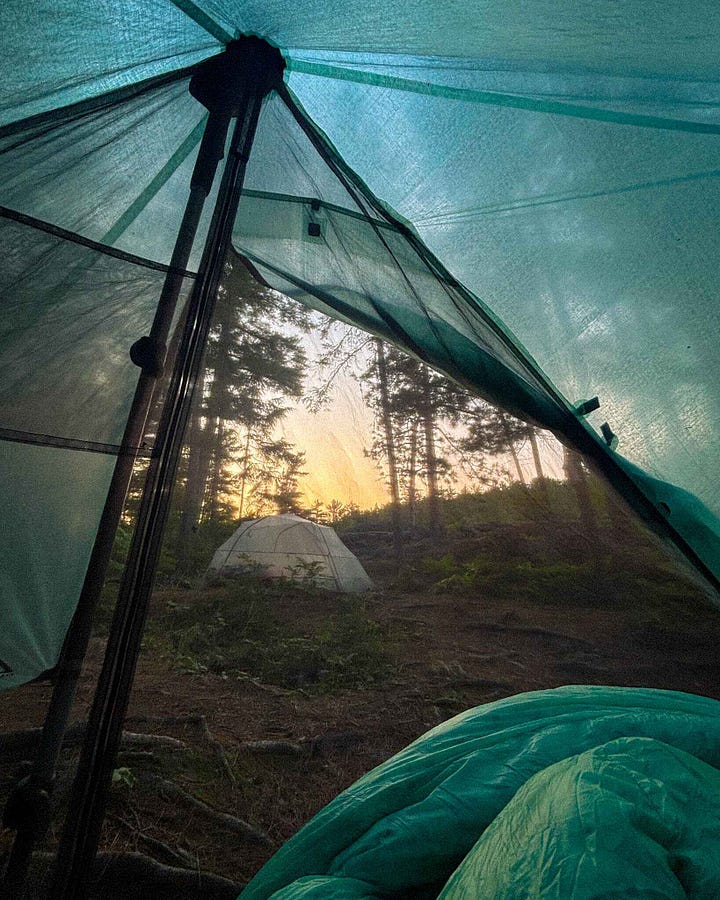
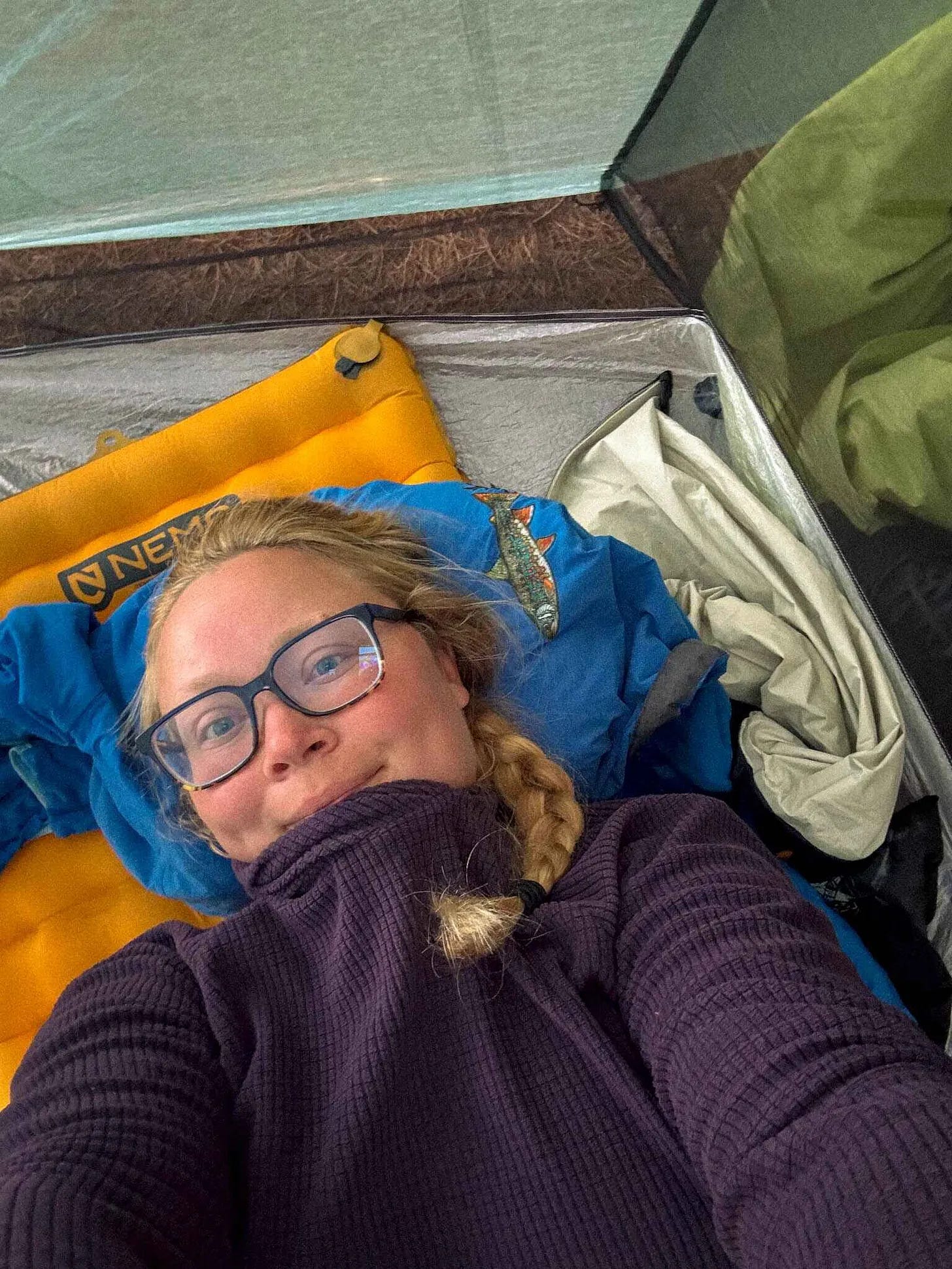
On the first night I fall asleep to the sound of thunder. Rain lashes at the side of my tent and I am lingering in some in-between space — listening and gauging the sounds of severe weather but not fully awake either.
Just a year ago, with the same friend who is sleeping in a separate tent next to me, I weathered the worst storm I’ve ever experienced in the backcountry with lightning so frequent the sky was a strobe, trees moaning so loudly I was sure they would crack in pieces over our heads. The memory of that storm is in every rolling rumble of thunder.
When I wake in the morning, I calculate that I’ve slept around four hours, which is pretty good for a first night out for me. I am so often kept awake by the sounds of potential risks.
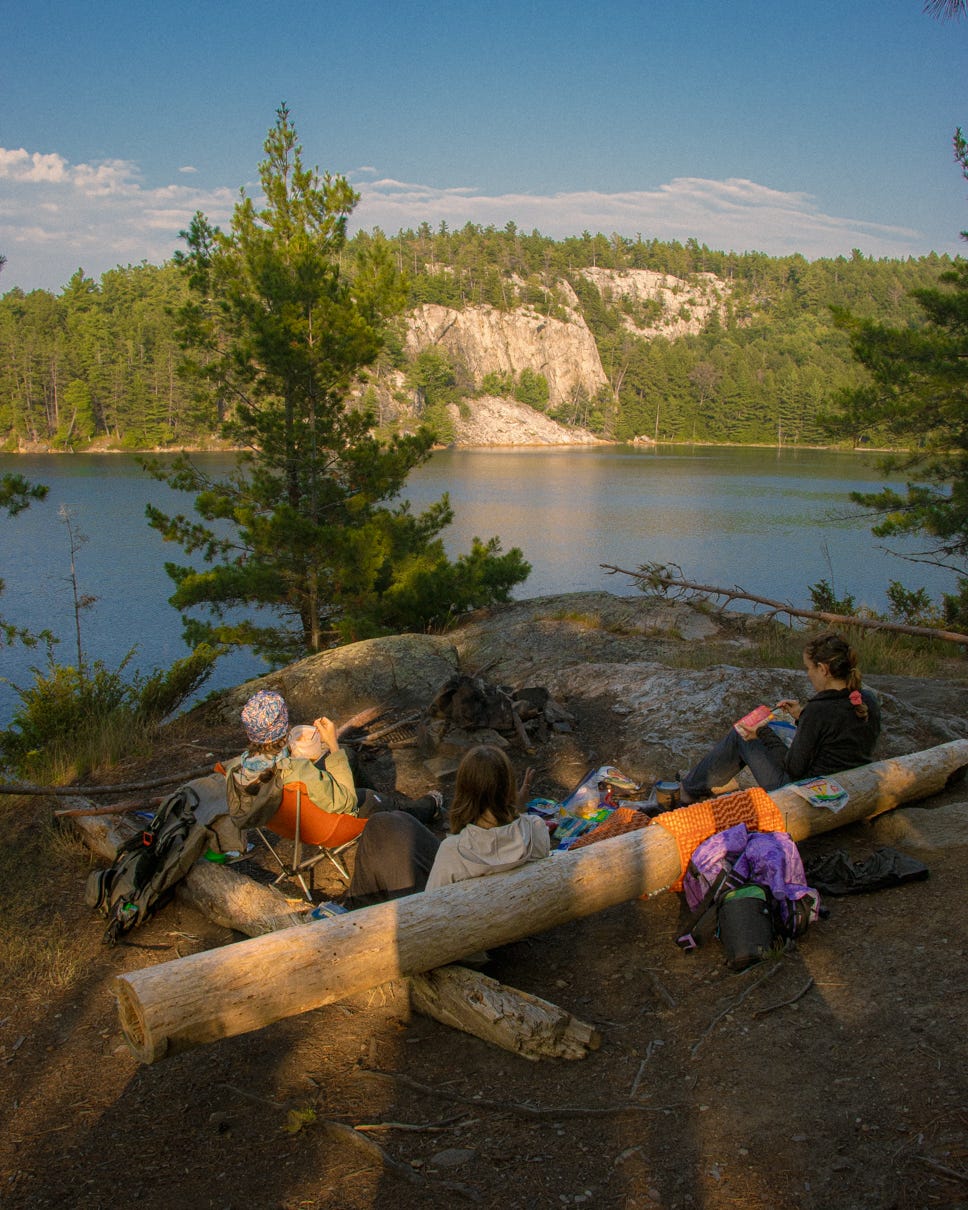
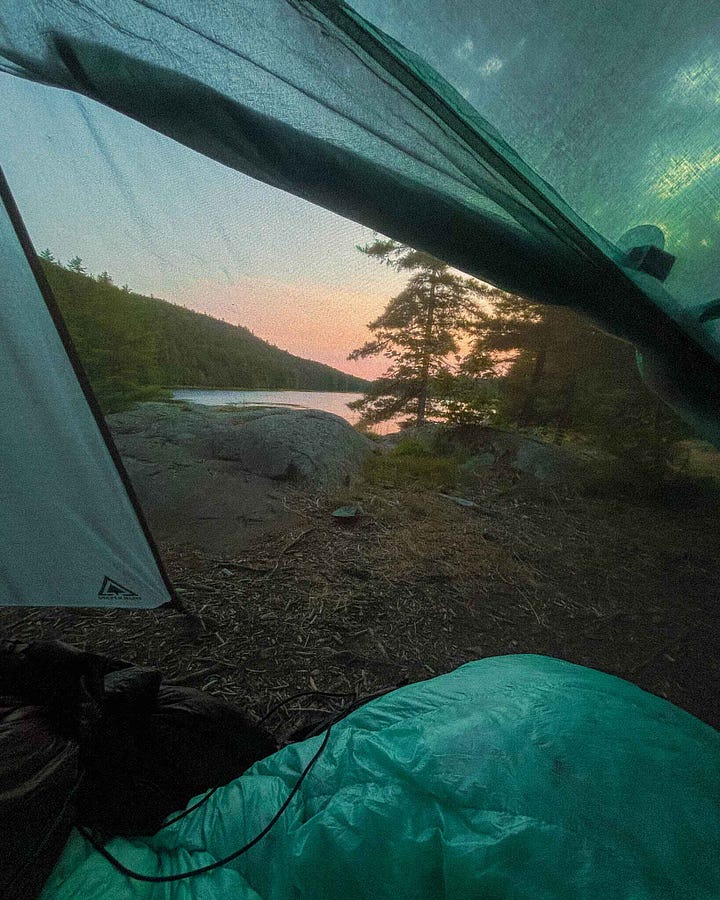
The campsite on Proulx Lake1 is one of the best campsites I’ve ever stayed in. I have a running list of favorites — there’s the site in the Teakerne Arm in British Columbia, and Playa Candelero in Baja, or Oak 6 home in in the Apostles and BC-1 in the Porkies and now there’s this one too.
There’s a dinner spot on a little cliffy peninsula over the bright blue lake. The water access is a little steep but ultimately not too bad. The swimming is flawless.
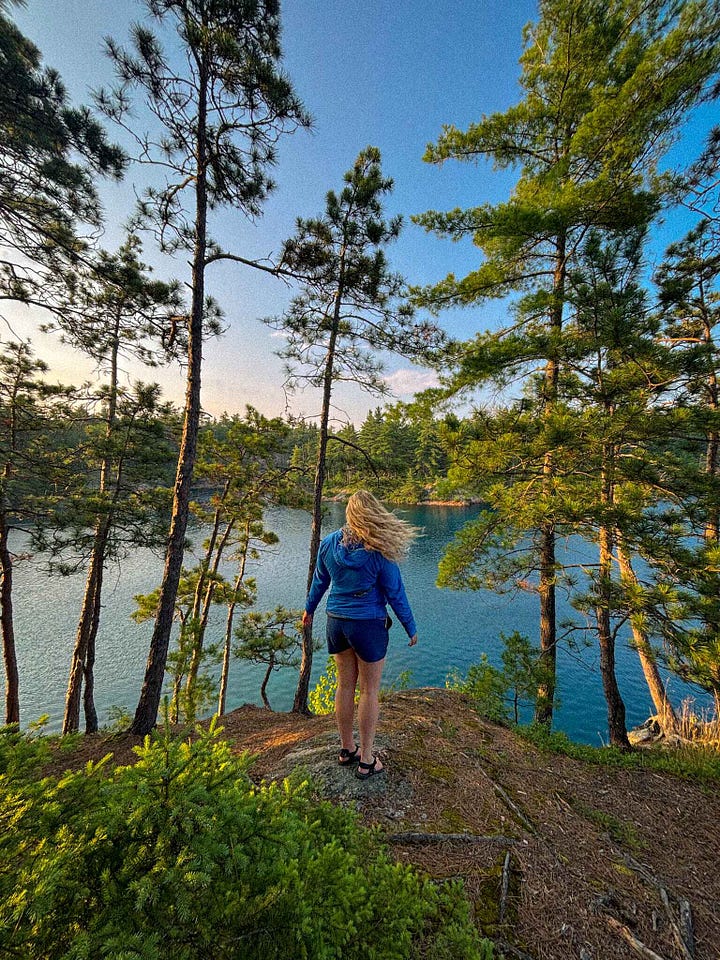
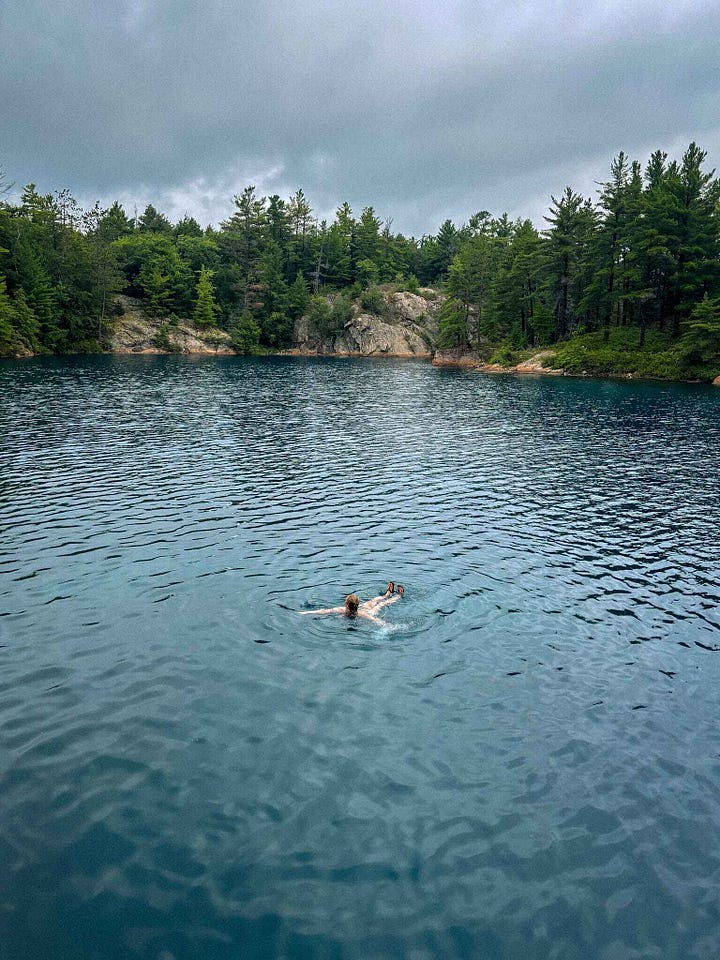
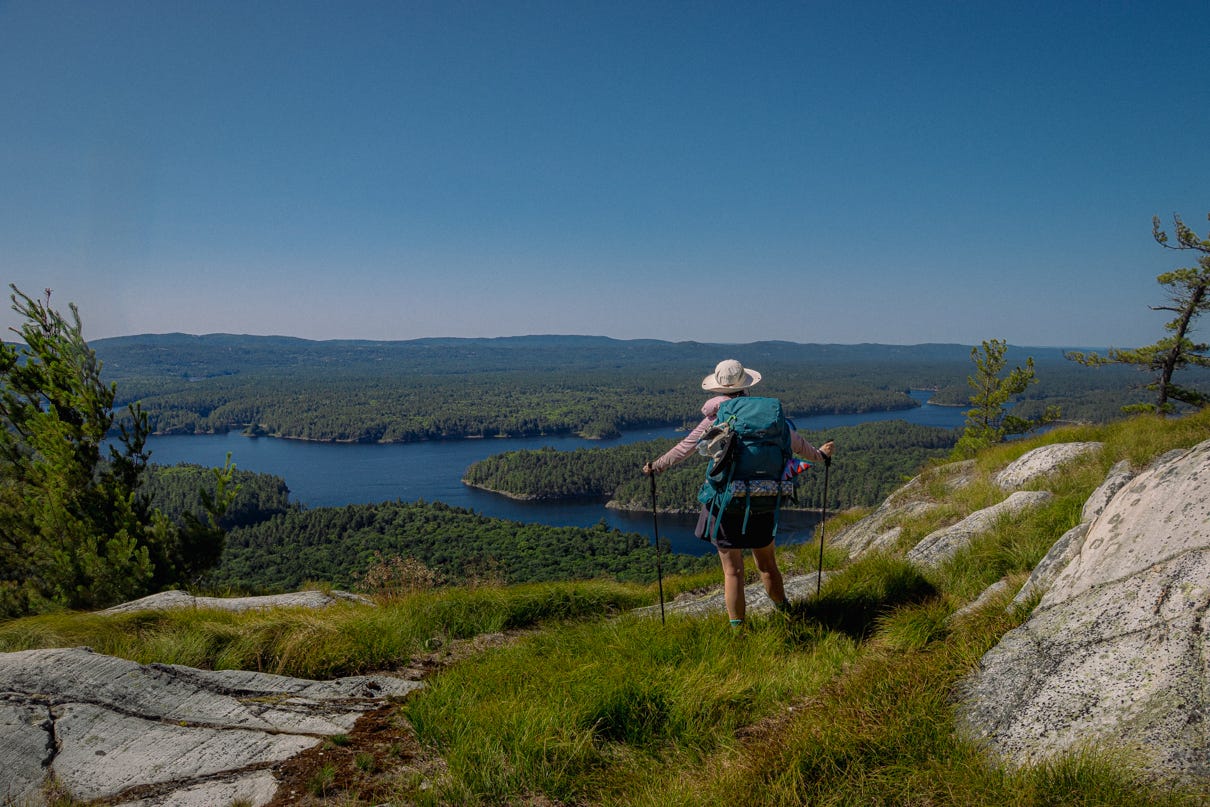
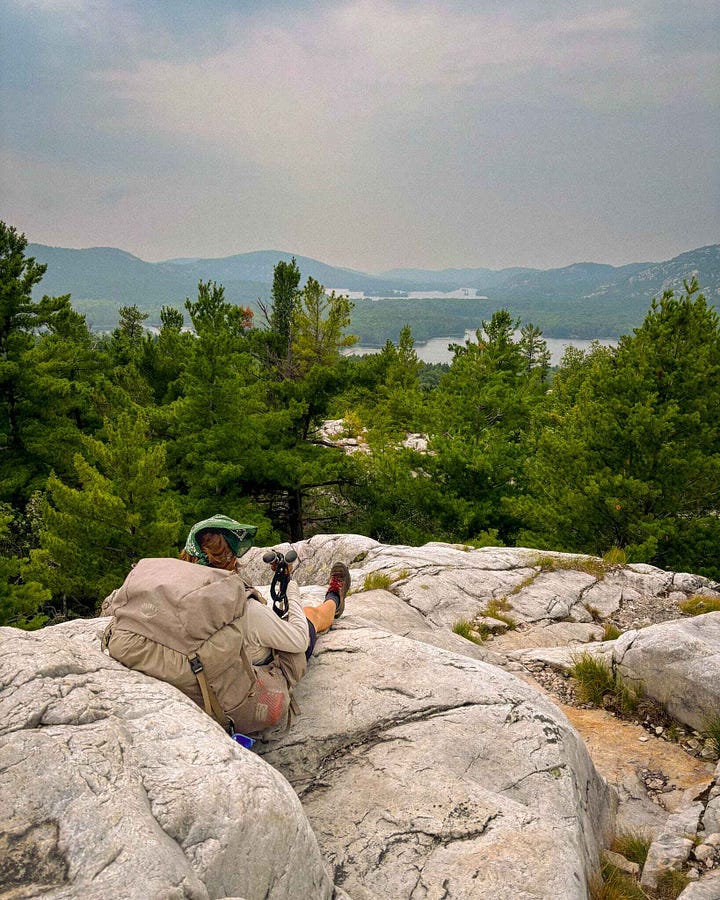
On the second day we leave camp late, a morning spent chatting and drinking coffee and swimming. It’s a less than four-mile day, but for me this is the hardest day of the whole trip. The terrain is challenging, with hand over fist ascents. I find myself calculating the odds of spraining an ankle or breaking a leg in a bad fall. There are sweeping views of the Georgian Bay in the distance and white rock, wind-scraped peaks.
On one level, it doesn’t feel like the Great Lakes Region to me — the peaks and terrain feels like real mountains, the preternaturally blue lakes like something out of a fairytale.
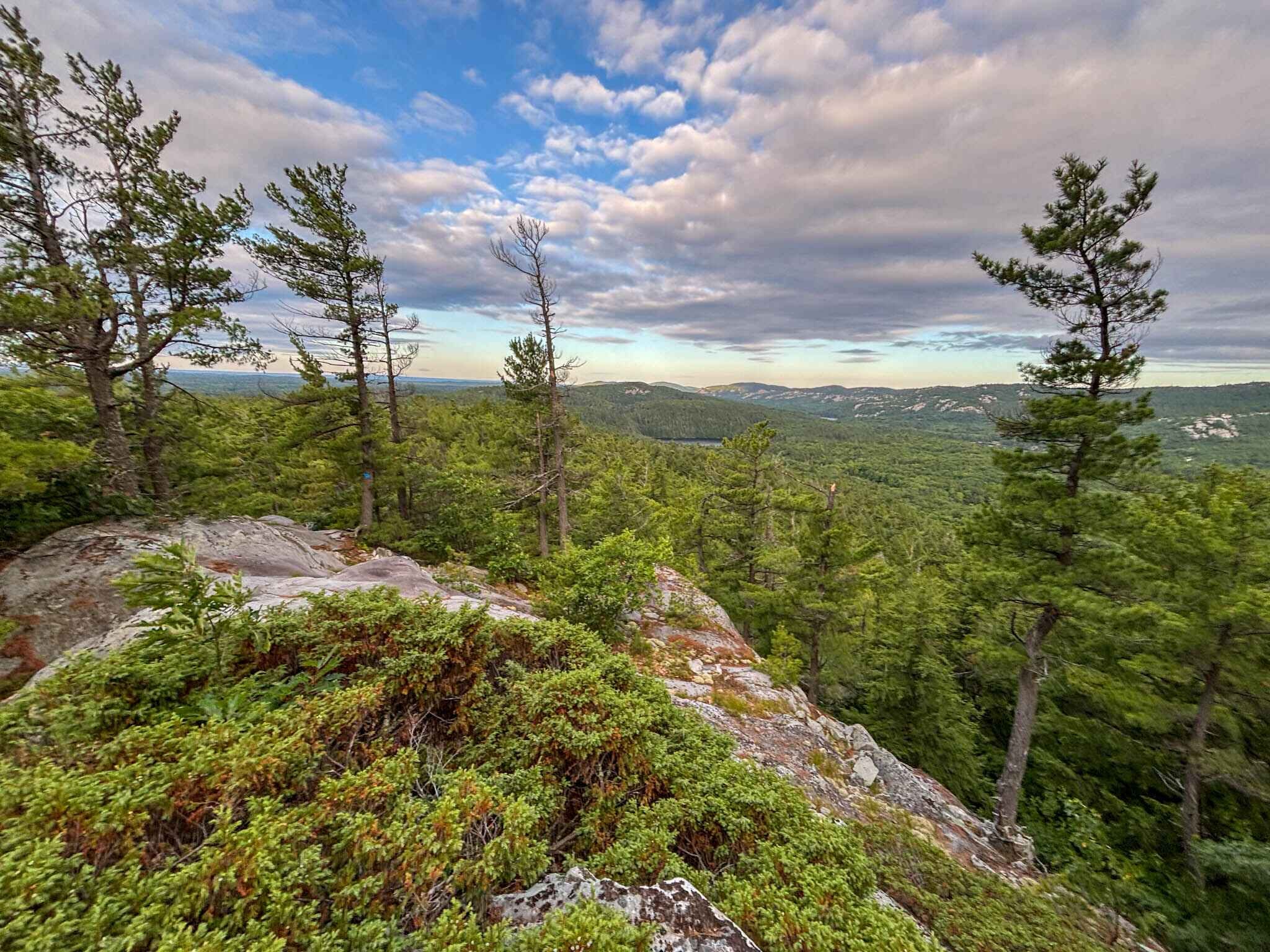
On the other hand the La Cloche Silhouette Trail feels quintessentially Northern Great Lakes to me. It has the same white pines and moss of Northern Michigan, separated only by less than two hundred miles and Lake Huron. It has the same wild blueberry patches as Northern Minnesota and the gunmetal gray of the Georgian Bay in the distance is the same color as Lake Superior has always looked from above on a windy day.
I imagine a sprawling map of the Great Lakes in front of me, from my feet at the peak I’m standing on all the way west toward Duluth.
We wake up at 4:30 am on the third day, with around 11 miles to go. The previous day we’d averaged less than one mile an hour and I was emotionally prepared for the trail to continue to be as challenging.
Thankfully, after a challenging first hour the trail eases up. The challenging ascents continue, but the footing gets better and it starts to feel less like rock climbing and more like a hike. Or maybe my attitude just improved. It’s hard to say.
READ: Ultimate Guide to the La Cloche Silhouette Trail
Six days is a long time to spend walking for most people — myself most-certainly included. I’ve worked for nearly seven years now as an overnight sea kayaking guide and through both the trips I’ve guided and longer personal expedition-style sea kayaking trips I’d sort of convinced myself backpacking isn’t really for me.
Sea kayaking lends to a more playful and dynamic trip. The hazards and risks are higher with water involved, and there’s more changing and more to respond to. You can bring a lot more gear and, critically, you’re not carrying anything on your back. For me, sea kayak trips have always struck the right balance between endurance trekking and play.
For a while, I thought I didn’t even like backpacking. Then this winter I backpacked the Trans-Catalina Trail and something felt different. It turns out I kind of like long hard days and the feeling of my whole world slimmed down to what I can carry on my back and a path in front of me. I finished the TCT, and started planning for six days on the La Cloche Silhouette Trail this summer, my longest backpacking trip yet.
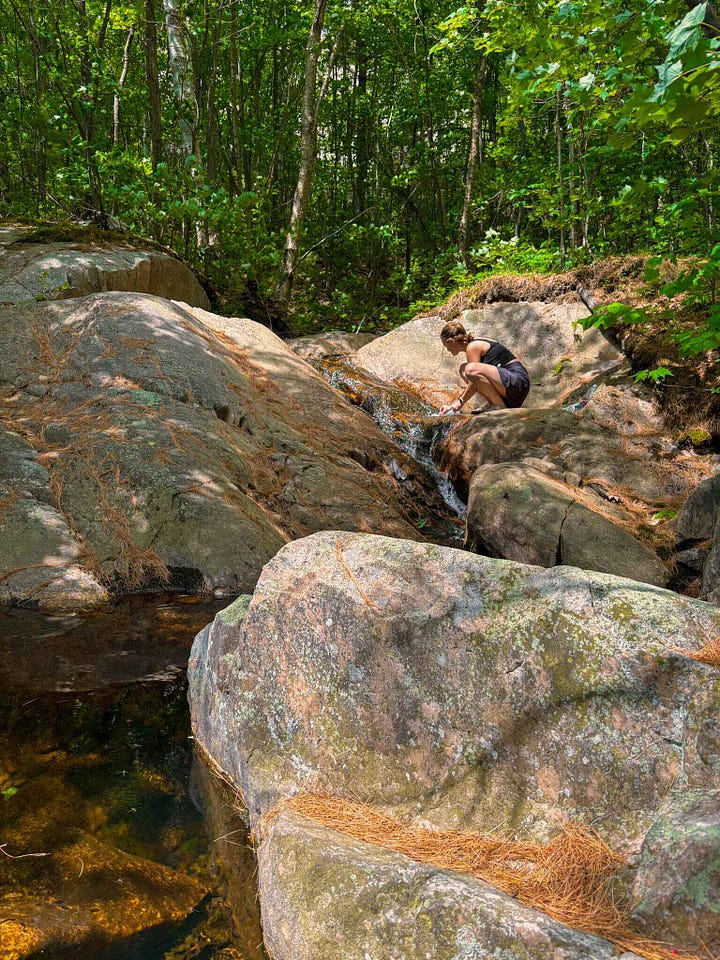
The La Cloche Silhouette Trail is 78-kilometers (just under 50 miles) and is rated very strenuous. The recommended time to complete the trail is 7-10 days. In planning for the hike fresh off the TCT at 38 miles in four days, I looked at the 7+ day recommendation and thought absolutely not, no way. There’s no way that 50 miles could take me more than five days at maximum even if the terrain was terrible.
While I actually stand by that assessment in the case of La Cloche, the trail was harder than I expected in some ways. I had prepared for the first part of our hike (hiked counter clockwise) to be challenging, particularly climbing up “the crack”.
I had not prepared for upwards of 7 climbing-like ascents where the trail is difficult to follow, and falling would lead to serious injury. I was not prepared to climb down a waterfall, several meters of slick rock face, and I was not prepared for the amount of times I’d toss my pack down first, and scramble down second. The trail was tough.
When we ran into a group of three hikers around the halfway point above Three Narrows Lake, they asked us if the trail would get easier from here, both to hike and to follow. Definietly not, unfortunately. Much, much harder on the Eastern half.
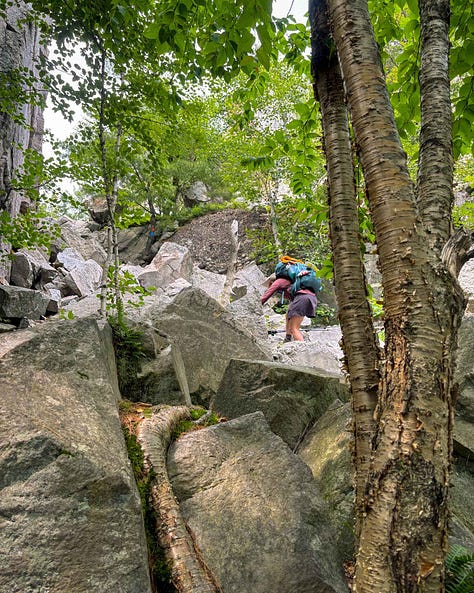
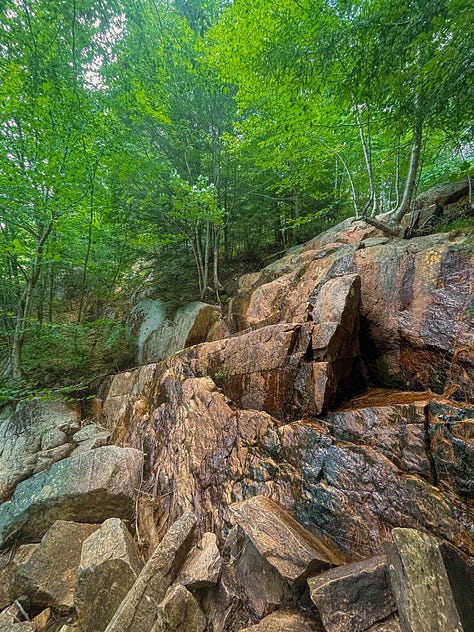
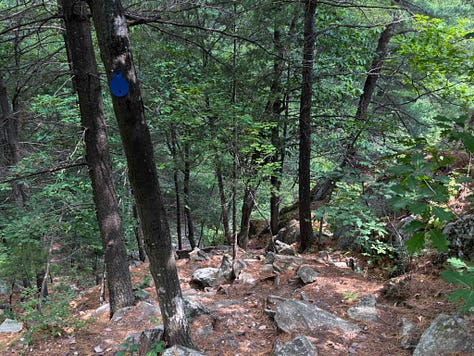
As challenging as portions of the trail were, three nights, four days would’ve been more than sufficient for the type of hike I like to hike (early start, into camp between 4-6pm), with a cap of around 10 miles a day on the eastern half, building to as many as 15 a day in the western half. Permits didn’t make that possible, and I was a little spooked by the warnings I’d read online.
The trail is extremely tough, but I would say for a person with plenty of backcountry experience who has a streamlined, lightweight kit and expedition mindset you definietly do not need seven days. I would even hazard a guess that I’m in worse shape than most experienced backpackers (define as, say, 15+ nights a year for more than three years), and I could’ve done four days. It’d have hurt, but I could’ve done it.
Plan your next backpacking trip? Check out:
How to choose the right camp stove for your adventure
Sleep can make or break your trip! Check out the best sleeping bags and how to choose
Find a review of the trail runners I wore (and didn’t even break in, yikes!) here (spoiler, it’s very positive this is the best my feet have ever felt on a backpacking trip!)
All campsites here need to be reserved through Ontario Parks. Campsite reservations also serve as your permit for this hike.
No posts
Comments
Nothing yet. Say the first thing.
Sign in to join the conversation.