
Over 5 million people just learned a new deep fake detection hack. And many of them are now, unfortunately, less safe than they were before watching the video.
If you make it to the end of this article, you’ll come away with a basic understanding of how deep fake detection tricks work, the difference between deep fakes and generative AI video, and how AI-assisted scams are actually playing out in the real world.
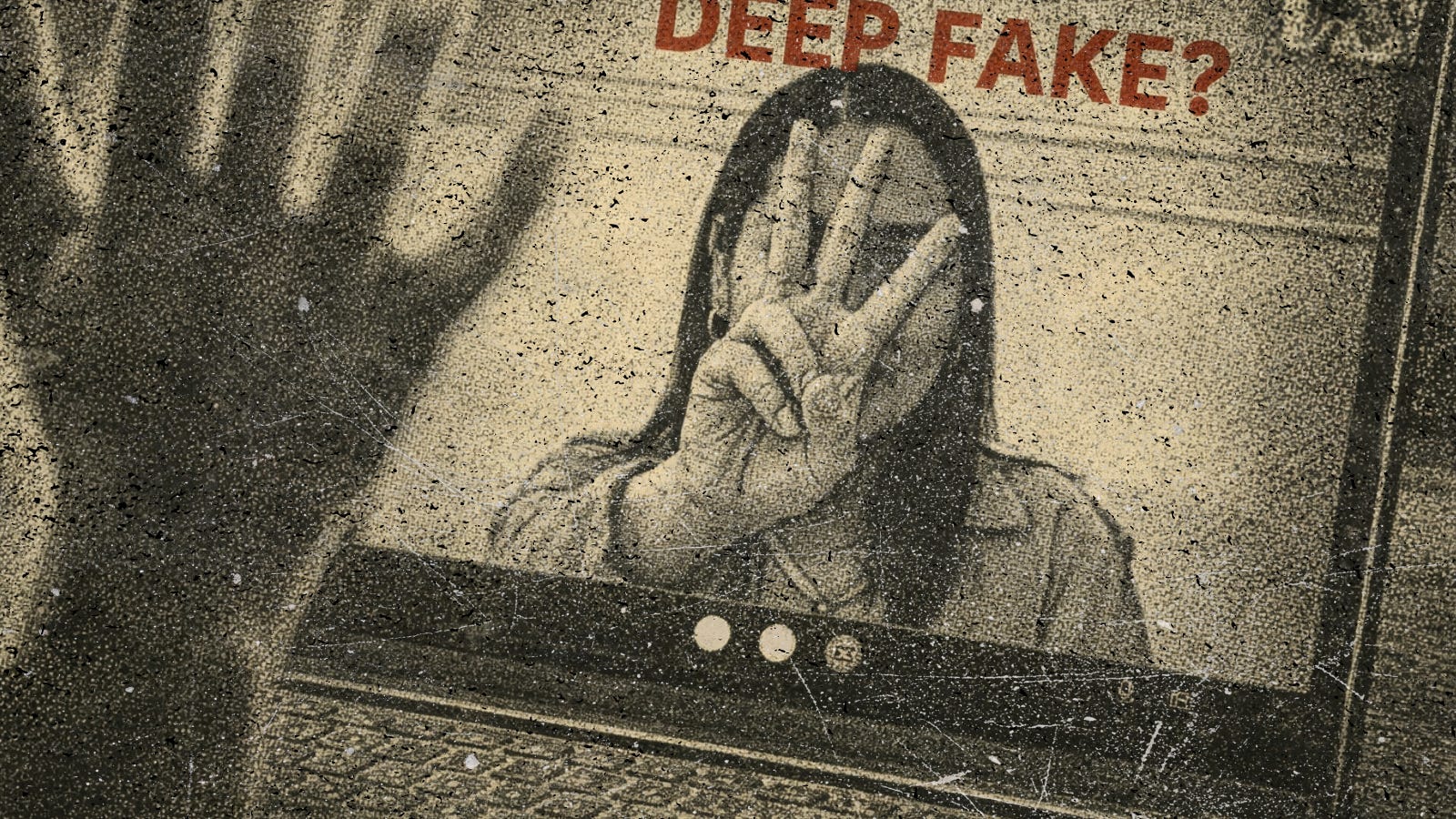
Last week, a clip started spreading across Instagram, TikTok, and X. It originated from a demonstration by cybersecurity researchers John Hammond and Jim Browning at Huntress Labs. In the clip, someone on a video call is asked to hold up three fingers in front of their face, but they refuse to do it.
The face shown on the other end of that call wasn’t really the person in the meeting. They’re a deep fake. And holding fingers up in front of their face was the trick researchers used to expose them.
It’s everywhere, millions of views and counting. And I get why this resonates with people.
We’re all watching AI improve at a pace that is genuinely terrifying. The idea that you cannot trust what you see, even on a live video call, is very unsettling. So when something comes along that promises to be a life hack to solve this problem it is naturally very appealing. And it has huge viral potential. But the short clips going viral, are missing critical context!
Here are the important questions that were left unanswered in the viral reels. Understanding them is crucial to avoiding these deep fake scams.
Some commenters on the viral videos dismissed the scenario entirely. The idea of accidentally joining a call with a deep fake feels like something staged for a cybersecurity demo, not real life.
There is now an entire category of scams built around video calls. Billions of dollars have been stolen. This can be considered a new type of phishing scam.
Traditional phishing is when a bad actor impersonates someone trustworthy, a bank, a boss, a colleague, usually through email or text, to get you to hand over credentials or money. If you have a computer or a phone, you’ve definitely encountered at least one example of this before.
Video phishing calls raise the stakes. Many people have learned to be skeptical of links in emails. But a convincing face on a video call can easily feel like the real deal.
These attacks are already happening. Job seekers have been targeted by fake recruiters using deepfaked hiring managers to steal personal information. Employees have been on calls with people who look like their CFO or CEO only to later discover it was a deepfake used to authorize fraudulent money transfers.
Earlier this year, Google’s cyber security division Mandiant reported attacks by a North Korean group targeting cryptocurrency executives. The attackers compromised the Telegram accounts of trusted people in the crypto space, and used them to initiate video calls.
The calls were used as one step in a multi-stage attack that resulted in the victims installing malware.
They are high-value individuals in the tech industry, and they were still successfully manipulated. If you’re thinking “this would never happen to me” it's worth reconsidering.
All that is to say, this is the scenario you’re preparing for when you’re watching things like the ‘three finger trick’ video.
No. The difference between a deepfake and fully AI generated video is important, both for understanding how the trick works and for understanding why it sometimes won’t work.
Let’s start with the origin of the word itself. The term “deepfake” was coined on Reddit, and it’s a mashup of the words ‘deep learning’ and ‘fake.’
Deep learning refers to a subset of artificial intelligence (AI) where models learn patterns from large amounts of data. You can think of deep fakes as a far more advanced version of those 2016 era face swap Snapchat filters.
Deep fakes are built using neural networks, a core technique within AI, systems loosely modeled on how the brain processes information, trained on massive amounts of data until they learn to recognize and produce patterns. The specific architectures used in deep fakes include autoencoders and Generative Adversarial Networks (GANs).
An autoencoder is a type of neural network that learns to compress a face down to its essential features, the shape of the jaw, the distance between the eyes, etc. Once it understands those features it can reconstruct them and map them onto another face, altering perceived identity.
GANs, Generative Adversarial Networks, take this further. GANs include multiple neural networks running in competition with each other. One generates fake images. The other tries to detect them. They train each other through this back and forth: the generator gets better at faking, the detector gets better at spotting, and the output keeps improving. It’s an arms race baked into the architecture (which, as I’ll get to later, is also a useful way of thinking about the broader problem).
In a deep fake, the underlying footage is real. The software overlays a generated face (and sometimes other features) on top of that footage. This is very different from what’s considered diffusion-generated video, aka the technology behind tools like Sora, or Veo. This is typically what most people think of when they hear ‘Generative AI Video.’
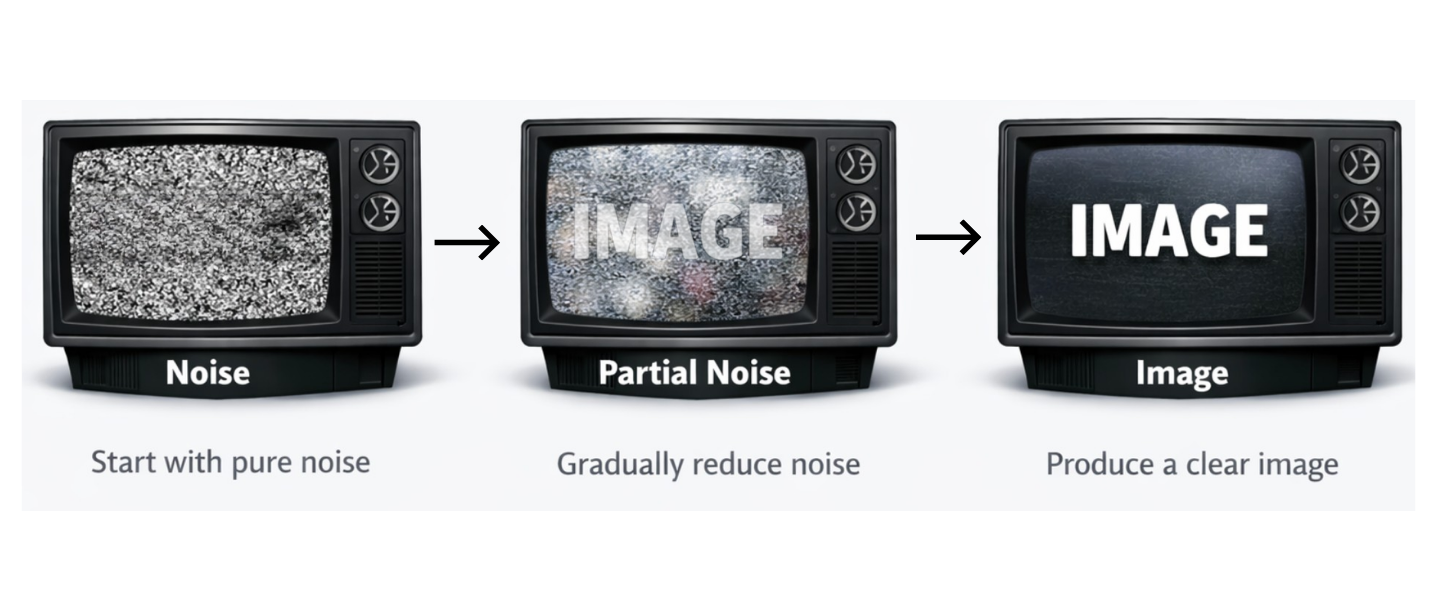
To understand diffusion, imagine starting with an image that is pure static, random noise like a TV with no signal. A diffusion AI model has been trained to gradually reduce that noise in a very specific structural way until a coherent image or video appears. Every single pixel in the final output is generated by the model.
The instagram user melanskia (with over 345k followers btw) presents herself as an Amish woman sharing her daily life, but the videos are diffusion generated. That means the person may not exist at all. The account could be run by anyone.

In contrast, accounts like clump.qc* create deep fakes. The base footage is real, but faces are swapped, often with recognizable public figures. One example included a deep fake of Ghislaine Maxwell appearing to be in Quebec, which spread widely before being debunked as a deep fake.
*This user’s account has been deleted since this video was posted. You can find it archived in several places here.
In short:
diffusion generated video = every pixel is AI generated
deep fake = faces mapped on top of real footage
This distinction is key to understanding why detection tricks work.
Thanks for reading Technically, A Substack | By Mia! This post is public so feel free to share it.
When you hold something in front of your face, fingers, a mug, whatever, it creates what’s called an occlusion. In the context of a deep fake, when your hand moves in front of your face, it blocks the view of key facial landmarks like eyes, nose, jawline, and mouth. The AI uses these landmarks as anchor points to track and map generated features onto the real footage underneath.
When those landmarks are obscured, the tracking breaks. It becomes unstable, and when it does, you can see it. The face glitches, the edges smear, and the image degrades into something that is not a real face.
These models are often built on older architectures that prioritized speed and price accessibility. They are doing a good amount of computational work in real time, and handling objects moving in front of faces is not something they were engineered for.
More sophisticated, resource-intensive deep fake systems already exist. And in these systems, the deep fake person can hold up three fingers, no problem. Occlusion doesn’t reliably break these models. They use 3D modeling and temporal data to infer what a face looks like even when covered. UC Berkeley deep fake detection specialist Hany Farid has been warning about exactly this: the next generation of systems has already solved the issues people are learning to associate with deep fakes.
No… not yet.
For the category of deep fakes that people are most likely to encounter, the trick can still work. Use it. But DO NOT let it become the whole of your understanding.
A scammer doesn’t need a perfect deep fake, just one that passes your one “quick and easy” detection trick. That is a low bar.
This is true beyond deep fakes. Any time you reduce verification to a single point of failure, you’re actively making yourself easier to fool.
And there’s a broader dynamic at work here, that’s known in cybersecurity as an adversarial system. This term is used to describe any environment where two opposing sides are adapting to each other in real time, each evolving in direct response to what the other does.
Every time a ‘how to spot a deep fake trick’ goes viral, it becomes part of that feedback loop. Meaning, it tells scammers exactly what to optimize next to give them more credibility.
This is what I want you to take from this article, and the Huntress Labs clip: not the ‘three finger trick’, but why the trick works.
If you understand why the trick works and when it won’t, then you also understand how deep fakes work. And then you can come up with your own tricks that adapt to different scenarios. For example:
Does the face move naturally at different angles?
Does the lighting match?
Can they interact with clothing or accessories on their person (eg: remove a jacket, roll up sleeves, put hair in a ponytail)
No one trick is foolproof. Think of them not as a single test, but as tools in an investigative tool box. And a toolbox can adapt as the tech evolves. A single trick will not adapt, and even worse, it will leave you vulnerable.
More importantly, these deep fake detection “tricks” are the last line of defense in a phishing zoom call scenario. There are earlier lines: skepticism about unexpected meeting requests, caution around links arriving through communication channels that feel off, awareness that attacks are becoming trickier.
But it is not quick and easy. It doesn’t fit in a 60 second viral social media clip. It is the only defense that doesn’t become useless the moment technology improves.
I want to be clear: I absolutely recommend watching the full Huntress Labs video. It’s incredibly informative, as is all their work in this space. I have no issue with the clip itself or with the people who shared it, it’s a compelling and useful demo.
What stood out to me, though, was how many people in the comments were taking away an incomplete or misleading conclusion from a short excerpt. That’s what this article is addressing… the missing context.
It is simply not possible to capture all the nuance of something like this in a short social media clip. Clips like these can be a great starting point, they can spark curiosity and encourage people to learn more. But taking them at face value or out of context, without digging deeper, can lead to misunderstandings that are potentially risky.
The goal of this article isn’t to dismiss or critique these “three finger trick” posts, its to build on them :)
No posts
Comments
Nothing yet. Say the first thing.
Sign in to join the conversation.