
Dana Hodde, Appalachian Ranger District, Pisgah National Forest
May 21, 2026
Click Here for Original Article from U.S. Forest Service
In September 2024, homeowners across Western North Carolina suffered major damage when Hurricane Helene ripped through the region. Now, in 2026, nearly two years later, many of the same homeowners face a growing threat driven by the conditions Helene left behind: heightened wildfire risk from all the trees blown down.
For Dianne and Randy Slemons, the risk is right next door. Their home borders Pisgah National Forest, where downed trees and debris from the storm have significantly increased fire danger. With the risk right on their doorstep, the Slemons family depends on work the Forest Service is doing to remove hazardous fuels left by Helene.
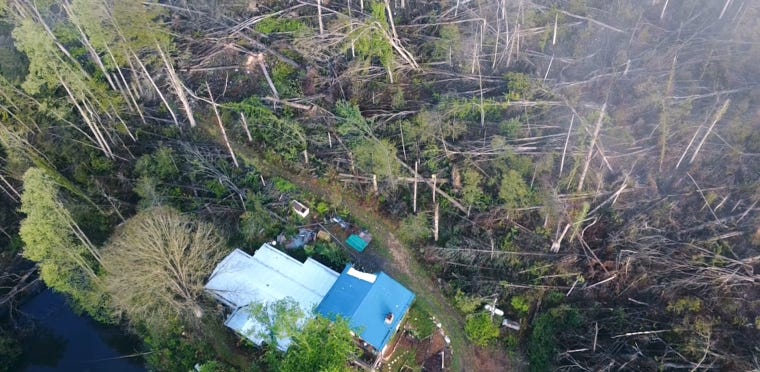
Randy and Dianne’s home is surrounded by storm damaged timber following Hurricane Helene.
(USDA Forest Service photo.)
The danger is anything but theoretical. In fact, Randy remembers calling to report the Poplar Fire in March. The flames were about a mile away, with a pile of storm debris in between the fire’s edge and his home.
Firefighters responded quicky, and the fire was contained a week later after round-the-clock work to build containment lines, supported by aerial water drops in challenging terrain. Even so, the risk persists for Randy’s community in Poplar, North Carolina. As fallen trees continue to dry out, the danger only grows.
“We’ve already been through one disaster… Hurricane Helene,” Dianne said. “The threat of wildfire is very much on our mind all the time. We could lose everything.”
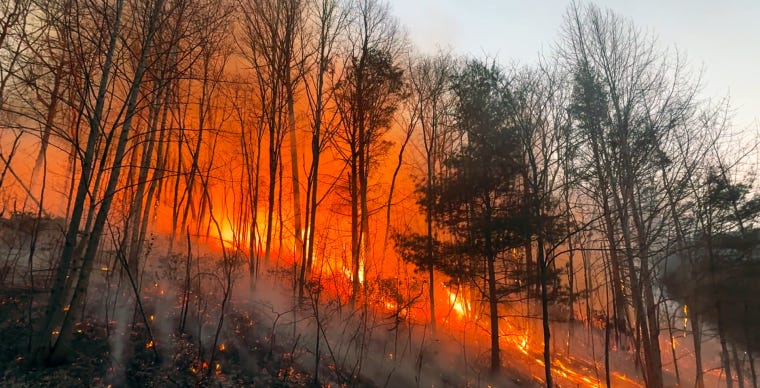
Flames from the Poplar Fire move across a steep mountainside in Western North Carolina.
(USDA Forest Service photo by Jenifer Bunty. )
More than a home
The Slemons property has been in their family for years. It’s where Randy’s mother lived and sits near the spot on the Pisgah where he later proposed to Dianne. Over time, it became more than just a home. They opened their land to others for retreats, weddings and anyone needing a peaceful place to reconnect with nature.
After the hurricane, the peaceful setting changed.
What was once a beautiful five-minute walk through a vibrant path of trees turned into a dense barricade of fallen timber, broken limbs and torn-up ground.
“Before Helene, our driveway was lined with these beautiful, tall trees; it was absolutely stunning,” recalled Dianne. After Helene, she said there were 127 downed trees just on the driveway.
A small silver lining from the storm was that it brought the community together. A few days after the storm, Randy heard chainsaws. Neighbors, and even people the Slemons had never met, worked together and cleared a path so they could get in and out.
“That was the first of many moments that showed the best in people,” Randy said. “From our local community to folks who came from far away, we’re incredibly grateful.”
Clearing the fallen trees was not just a priority for those living in Poplar. Firefighters and foresters with the Pisgah National Forest have and continue to work to clear roads and organize hazardous fuel reduction projects to remove excessive blow down.
The risk remains
Even with that progress the fire risk remains elevated. The blowdown from Helene means unusually heavy fuels and more intense fires that spread quickly and complicate accessibility for firefighters and heavy equipment.
Appalachian District Ranger on the Pisgah National Forest, Jennifer Barnhart, says properties like the Slemons’ are more vulnerable to the impacts of Hurricane Helene, because they border areas where severe blowdown occurred across the landscape.
“Homes like Dianne and Randy’s sit up against U.S. Forest Service lands. The hazardous fuels- that we have been doing and will continue to do- is essential,” Barnhart said. “The downed wood from Hurricane Helene poses high fire risk and safety hazards to the nearby communities. We have the opportunity now to reduce that risk and protect lives by removing those fuels.”
The work happening to remove hazardous fuels across Pisgah National Forest is focused on reducing that risk and helping communities recover.
Dianne says it’s making a difference, and that she and Randy support the Forest Service’s efforts to mitigate the potential risk to their home.
“We still have a lot to recover from on this property,” she said. “But knowing there’s work going on all around us, gives us peace of mind and helps us to feel much safer.”
Comments
Nothing yet. Say the first thing.
Sign in to join the conversation.