
Our 2026 war with Iran proves one thing conclusively: President Obama and his team negotiated the very best nuclear deal they could get from Ayatollah Khamenei and his brutal regime in 2015. Despite being in a desperately weakened military position, that same Iranian regime refused to give President Trump anything better in 2025 than what they had agreed to with Obama in 2015.
The choice for both Presidents was whether Iran represented such a ‘clear and present danger’ that it merited war.
Obama correctly accepted the Iranian nuclear deal because, first, the American military needed time to rest and recover from the “disastrous Iraq War” (to use the words of Iraq combat veteran Joe Kent). Second, the American middle-class was still traumatized by the 2008 collapse of the US housing market and the 2000-2012 decline in their standard of living. Third, the 2015 nuclear deal, as imperfect as it may or may not have been, bought us 15 years of time during which the Ayatollahs might age out … or might not. Looking at all these circumstances, President Obama did not want to start yet another ‘endless’ Middle Eastern war and – though some may want to ignore historical facts – neither did then-citizen Trump.
After he became President, in May 2018 Trump tore up Obama’s nuclear deal and reimposed economic sanctions on Iran. He fussed a lot about how bad the deal had been. But during his first term, he avoided going to war.
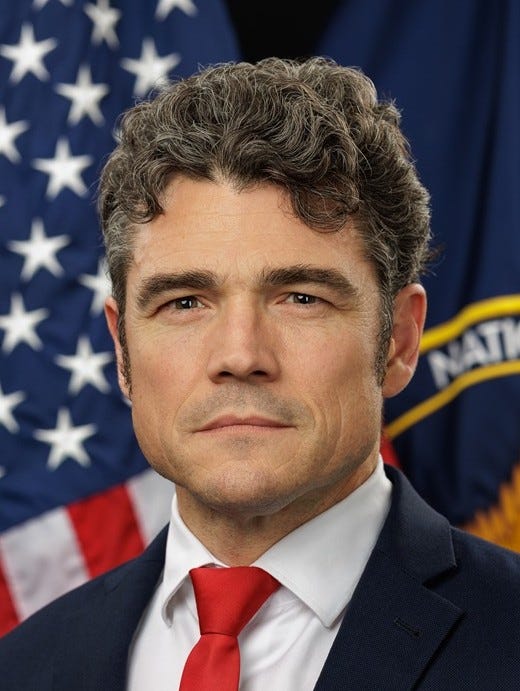
A year into his second term, after Israel had severely weakened Iran’s military position, President Trump chose war. He has yet to articulate a consistent reason for doing this. Joe Kent, in his 17 March resignation letter as Trump’s counterterrorism adviser, clearly states that “Iran posed no imminent threat to our nation.” But the President evidently saw an opportunity for regime change that might resolve the nuclear issue once and for all. That would be “a service to the world” as the Wall Street Journal Editorial Board wrote on 15 March. (1)
A Missed Opportunity
I have no pity for Khamenei and his henchmen, but I have a penchant for the disciplined execution of a coherent American strategy. The Khamenei regime was on the ropes on 8-9 January when 5 million Iranians – 1.5 million of them in the capital Teheran – came out on the streets and demanded regime change.
At that fluid moment, a strong nudge might have helped the Iranian protesters achieve vital American objectives without war. But President Trump could do nothing beyond Truth Social posts because he had ordered the US aircraft carrier which was supposed to be on duty against such contingencies in the volatile Middle East to the calm Caribbean to arrest Venezuelan President Nicolas Maduro. What a shame.
On 13 January, President Trump posted on Truth Social, “Iranian Patriots, KEEP PROTESTING … HELP IS ON THE WAY.”
Tragically, by 19 January, the Iranian regime had slaughtered some 35,000 protestors, regained its footing, and started preparing for a fight to the finish with America.
America launched the first attacks on 28 February.
Where Are We Heading?
Having started this Iran fight, losing it would be a strategic disaster for America of even greater significance than the “disastrous Iraq War.” The crucial question now is whether we patiently stick with the air war or put ‘boots on the ground.’
The air war will take longer and will involve risks. One significant downside is that it will likely cause longer economic disruption. But it is a strategy that can succeed.
Putting boots on the ground, as Joe Kent correctly warned in his resignation letter, ‘would rob America of precious lives and deplete the wealth and prosperity of our nation.’ (2)
For heaven’s sake, DO NOT PUT BOOTS ON THE GROUND IN IRAN.
For more, please check out my website above.
(1) Joe Kent served multiple combat tours in Iraq with the US Special Forces. He has been awarded 6 Bronze Star Medals.
(2) The full text of Kent’s resignation letter is available on his Wikipedia page.
No posts
Comments
Nothing yet. Say the first thing.
Sign in to join the conversation.