
Pork fat is stubborn. Served too cold, it coats the mouth like wax. Held hot on the line for too long, the internal structure of the meat eventually collapses. Finding the exact point where the fat yields without degrading the protein requires treating temperature as a physical tool.
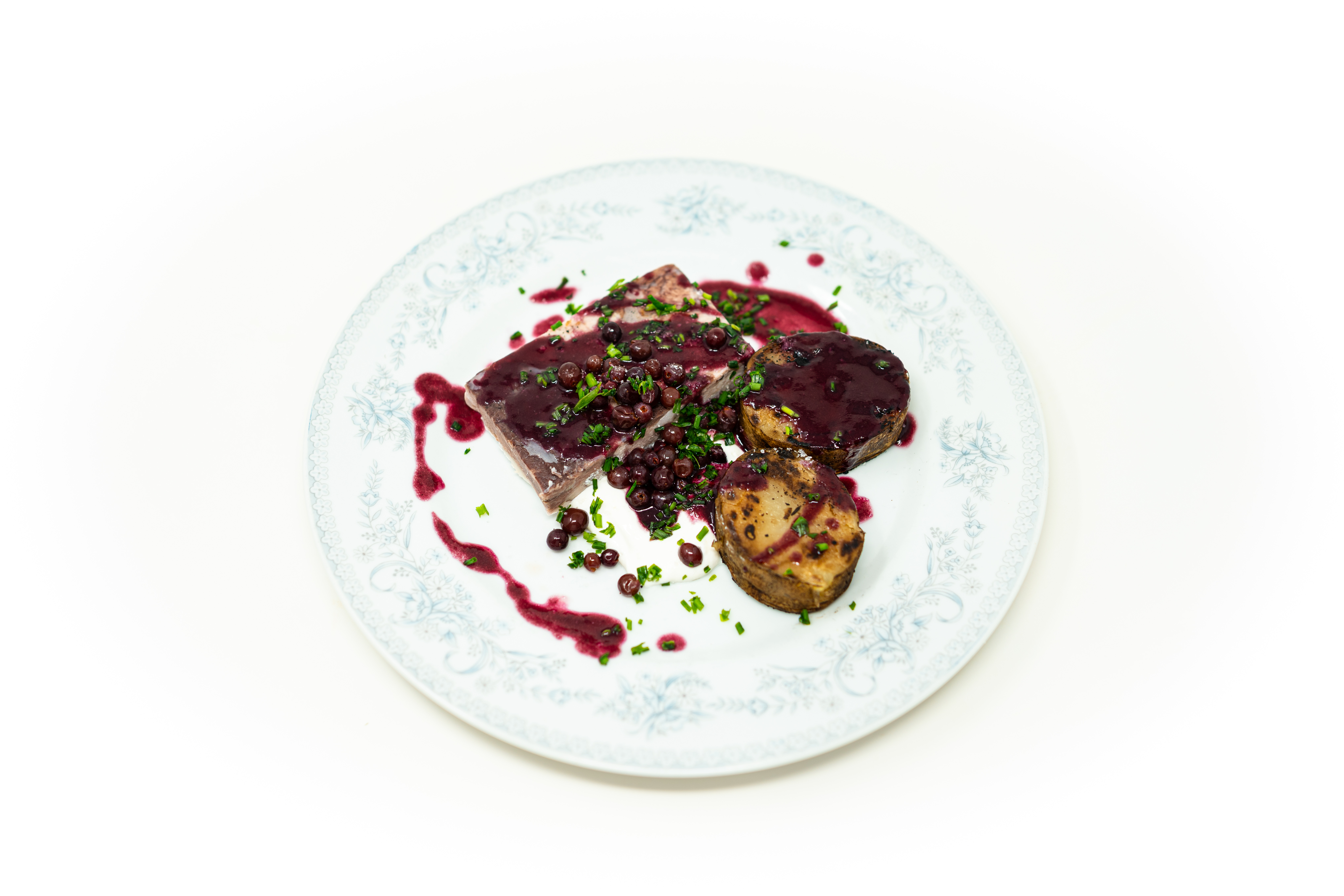
We built this plate around one specific thermal reaction.
The foundation is a standard braise, but the texture comes from the chill. Pressing the hot belly under heavy iron overnight forces the relaxed fibers and rendered fat to bind tightly together. The cold environment of the fridge solidifies the block, allowing us to slice clean, geometric portions.
Those portions are then pulled and left to sit until they reach room temperature. This is the crucial step. It softens the rigid lipids just enough to prepare them for a sudden shift in heat.
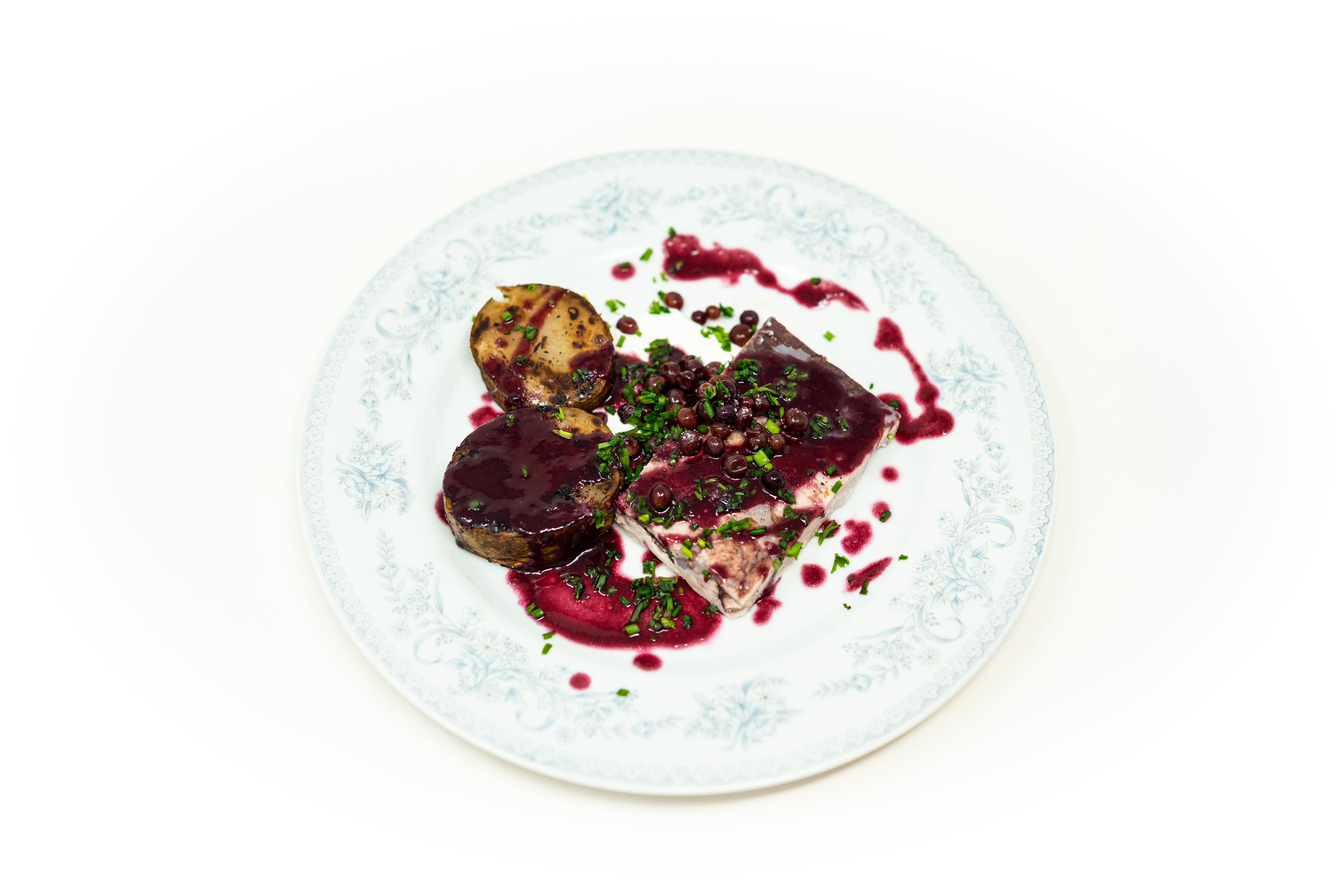
The rest of the plate provides structural contrast. Thick potato cylinders are dry-seared in a smoking cast iron pan to build a blistered crust, then gently braised in stock and thyme. The base is an aerated lemon whipped ricotta, providing a sharp, smooth dairy buffer.
The finish relies entirely on thermal transfer. A strained Concord grape agrodolce is served at a rolling boil. Natural pectins extracted from the grape skins give the reduction a heavy, syrupy weight. When poured directly over the room-temperature pork, the boiling acid instantly glosses the surface. The exterior fat melts on contact, warming the core to serving temperature right as the plate leaves the pass.
The complete breakdown, including the pickling liquid for the champagne grapes and the exact compression method, is live on the site.
Read the full recipe at hecooks.co
Comments
Nothing yet. Say the first thing.
Sign in to join the conversation.