
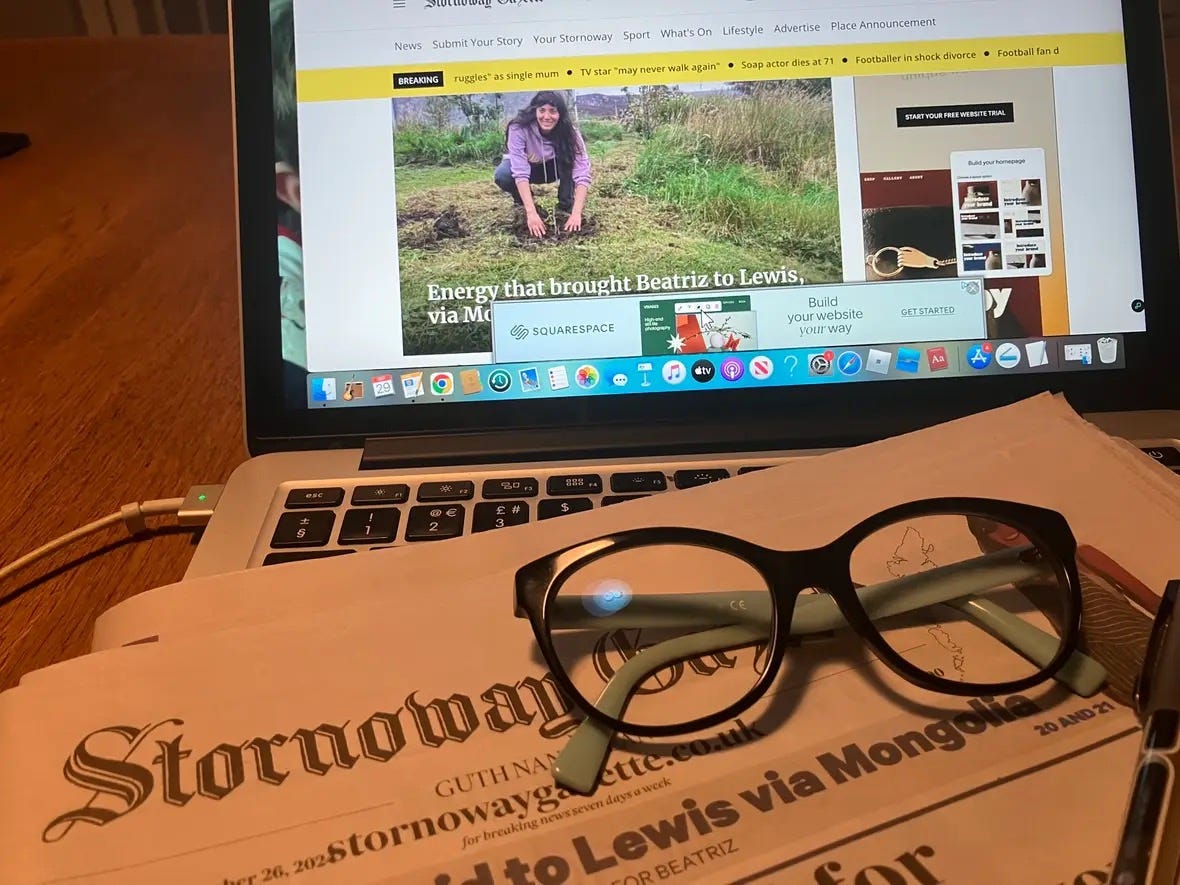
A massive thank you to all those readers of the Gazette who have shared their stories with me during this time and often trusted me to keep their identities secret too.
Thank you, most sincerely, to everyone who trusted me.
There have been some great stories over the past couple of years. Too many to list, even the top 10, so I’m not going to try, but there are a few significant moments that I want to mention.
Securing an interview with Stornoway’s very own Stephen Libby the week he won The Traitors – watched by 9.6million on TV – was very special.
I interviewed him over the phone, in my car outside Stornoway Sheriff Court, during a lunchtime break from court proceedings. We only had about 15 minutes and I had secured the interview by getting in touch with his dad, Donald, on messenger.
As any journalist will tell you, contacts are everything!
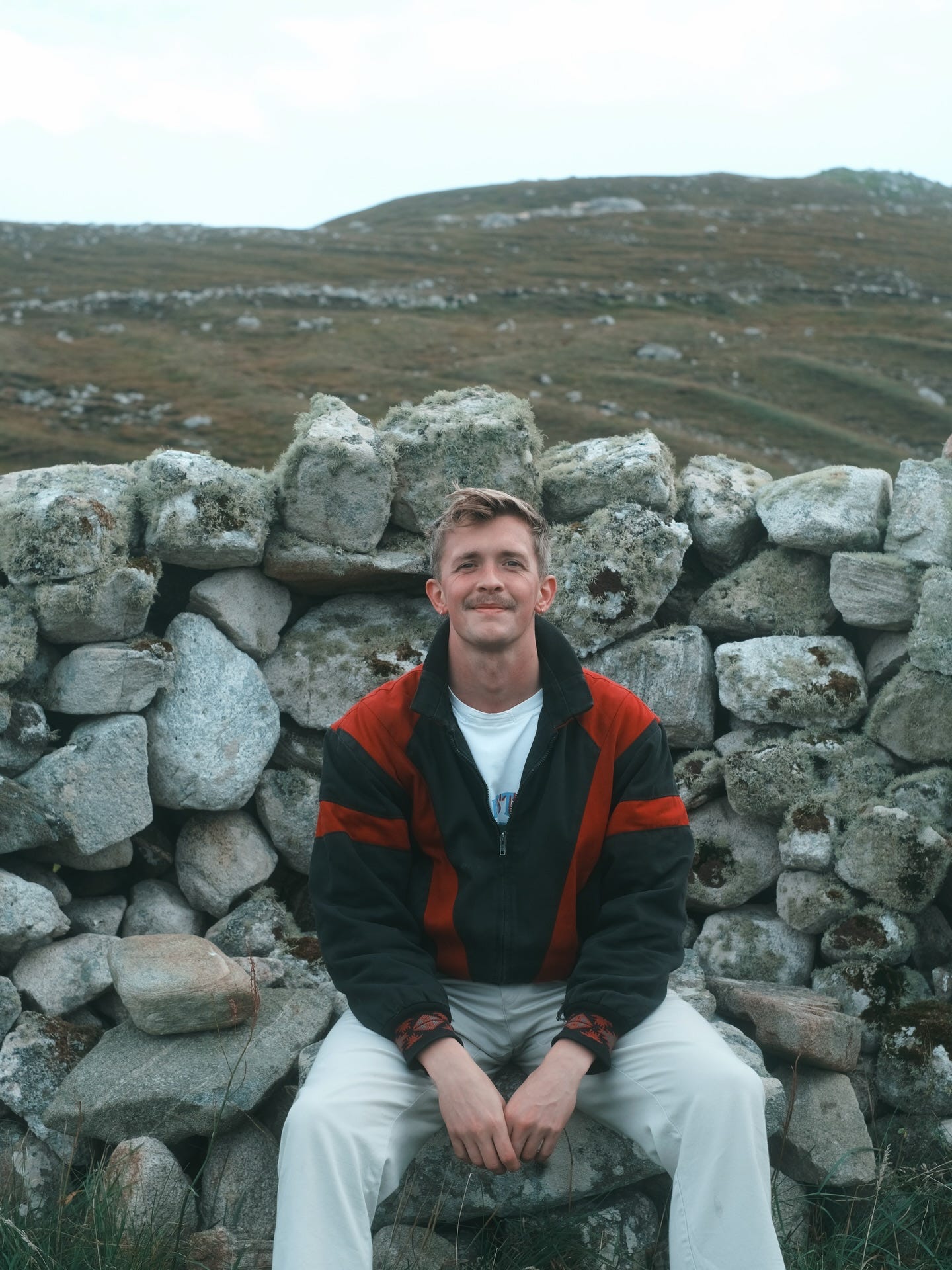
Anyway, when we got on the line it was obvious right away that Stephen (pictured below) was as pleasant in real life as he appeared to be on the telly.
“Stephen! I am so excited to speak with you!”
“Katie… I am so excited to speak with you!”
I find it unlikely that he actually was as excited to speak to me as I was to speak to him, given the week he was having, but it was really nice and gracious of him to say so.
The interview was lovely and made a very satisfying front page story for me, and The Scotsman also picked it up as the cover story for that weekend’s supplement.
Another interview that stands out in my mind – and is probably the most memorable of my time at the Gazette – was the one I did with Norman ‘Nam’ Macleod a year ago, about the night he saved the lives of two Spanish fisherman.
Nam welcomed me into the home he shares with wife Alison and told the story of the events of the night of 29 November 2023, which subsequently saw him and his crew receive multiple awards.
These included Technical Rescue of the Year in the Global Search and Rescue Awards and Nam himself won the Emergency Services award at the Daily Record’s Pride of Scotland awards.
The fisherman had suffered catastrophic injuries – one had lost a leg completely – after being dragged into the winching mechanism of the fishing boat.
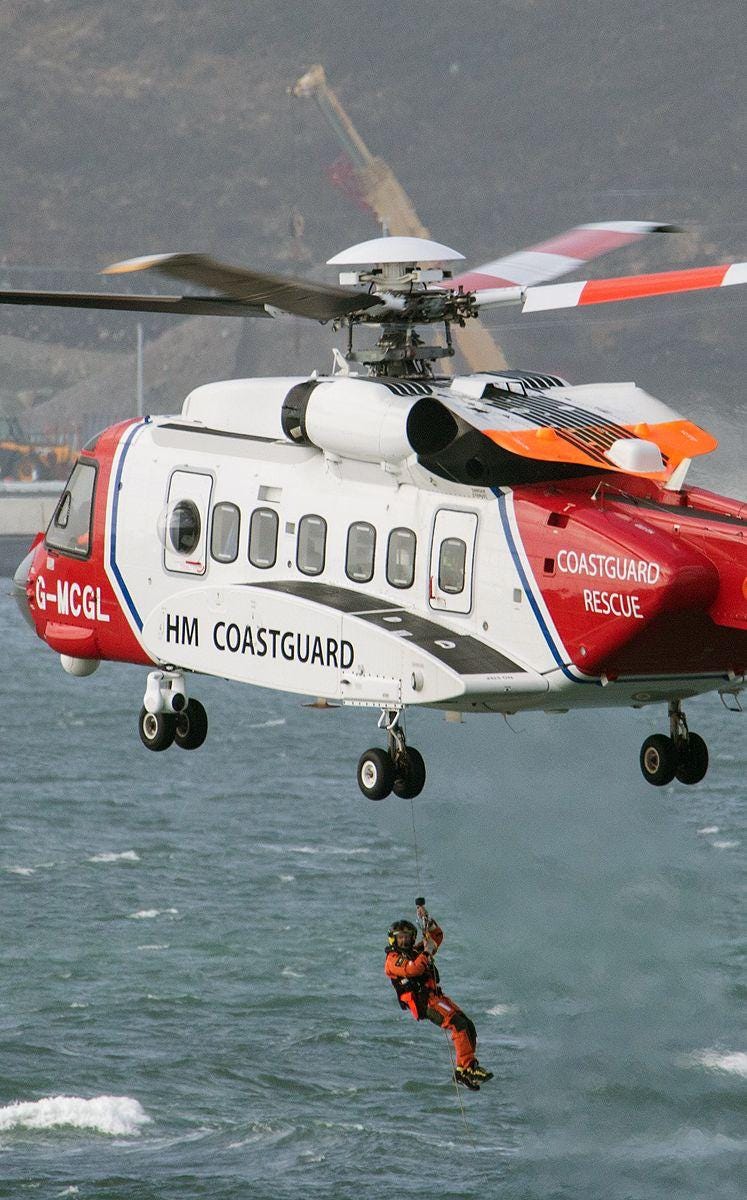
The HM Coastguard Search and Rescue Crew, based in Stornoway, were called to help and Nam was very generous and open in sharing his story with me.
Nam shared the “brutal” story in detail and spoke of it as a “career defining event”, one that defined the whole 30 years of his career as a paramedic, up to that point.
I came away from that interview deeply conscious of how intrusive we can be as journalists. Any story is only ever as good as the questions you ask and sometimes our questions can ask people to open up a whole box of pain, that they might have been trying to keep tightly shut.
We have to be so careful when we ask people to revisit these places in their mind.
I appreciate Nam being willing to do that. He told me afterwards that reading my article had made him feel surprisingly emotional.
Sometimes I think that interview with Nam (pictured below, in action) might have been my own career defining event, as the story went on to get its own recognition too.
I was shortlisted for Feature of the Year at the Highlands and Islands Media Awards in February this year for a portfolio including that interview and two other pieces.
Those pieces were an interview with Malcolm Macdonald, chair of Stornoway Historical Society, on his work to discover the missing names from the Lewis War Memorial, and an interview with ice climber Oz Miller on his decision to retire from international competition.
I didn’t win the award, in the end, but it was an honour to be shortlisted and I got some great feedback on my work from one of the judges, who kindly hosted myself and my pal Shona – my usual sidekick at such events – at the glamorous bash in the Kingsmills in Inverness.
The third story that stands out prominently as I look back on my time at the Gazette was a jury trial I covered as part of my remit as court reporter. I had never covered a jury trial before.
This was the trial of a man charged with the domestic abuse of his partner in a course of conduct that lasted several years.
His trial lasted five days and he would eventually be sentenced to three years for the abuse and a further year for threatening and abusive behaviour towards police who were involved in the case.
Jailing him, the sheriff told him the charges were “of the most serious kind”, and the fact we had covered the case was broadly welcomed, particularly as it coincided with ’16 days of activism’ in the campaign against violence against women.
The experience of working as a court reporter for the Gazette is one of the most valuable experiences that I will take away from my time at the paper.
Court reporting is a potential minefield and you need to know your stuff.
You also need to be able to take good notes in the courtroom as recording devices are strictly banned and this meant I had to finally – after dodging it for years – knuckle down and get my shorthand up to speed.
The parent company, Iconic Media Group, were really good at providing training and signed me up to an online shorthand class every Thursday with the lovely Jack Shennan.
With Jack’s help, and through hours and hours of laborious practice and drills, I came through two shorthand exams. I passed my 60 words per minute and then my 100 words per minute – both with 100 per cent accuracy, which I was delighted about.
In the practice of covering proceedings at Stornoway Sheriff Court, I like to think we did a reasonably good job of discerning what stories to cover and what stories to leave alone. I was once advised that we should not cover stories where “the damage to the individual from publication would be greater than the public interest – which is not the same as the public curiosity”.
In the absence of any other hard and fast rule about what to cover and what not to cover, it’s not a bad rule of thumb. And, I have to say, I believe in the principle of keeping some level of media coverage of court proceedings, even at a local level.
I’m not talking about the minutiae from back in the day. I still remember “man walks down middle of road” being an actual headline of an actual story in the Gazette, once upon a time. Presumably it was a breach of the peace.
And there was another time the Gazette reported the theft of a plant pot. The reporter referenced the “green fingered thief” with glee.
We have moved on. But certain cases – drug dealing, for example – should surely still be reported.
It is a key principle of court reporting that justice is not only done but is seen to be done – and that is where the media come in.
It takes skills, though, and that can require even time-served journalists, like me, to get skilled up.
My qualification in shorthand is one part of a wider qualification that I have been working my way through, backed by Iconic Media.
Learning is a lifelong thing and I was encouraged to embark on the NCTJ Diploma in Journalism by my shorthand tutor, who advised it would be valuable to my career.
That is despite having previously worked at national level (a news sub-editor at the Daily Record, latterly) and being an award winner (Top Story of the Year, in the 2017 Highlands and Islands Media Awards).
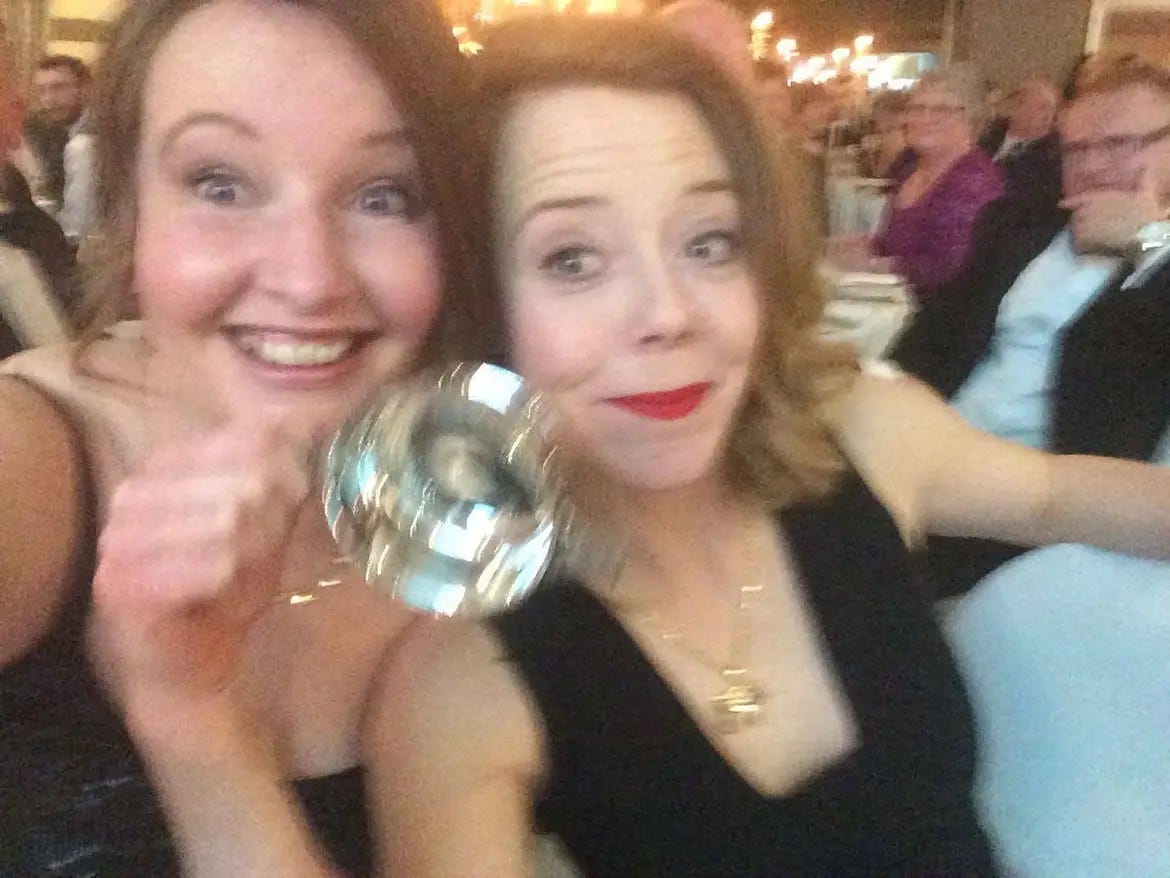
A very blurry picture of that awards night, for the craic…
This diploma, run by the National Council for Training of Journalists, is considered to give you the base of skills you need to work as a professional journalist.
My dad thinks it is quite funny that, after nearly 30 years a journalist, I am finally officially learning how to be one. Others will no doubt say I’d better keep learning…
I have found the core textbook on the diploma – Essential Journalism – to be an interesting, informative and encouraging read.
I have been working from home while at the Gazette and that can lead to quite a sense of isolation.
To read through this textbook, and read about journalists, about what kind of people they are and the principles they should be guided by, actually made me feel less alone while I was working at the Gazette.
It gave me a sense that I was still connected to my tribe – these journalists who want to tell the stories of people without the power or the platform to tell their stories or who don’t have the privilege of amplifying the causes they care about.
The Essential Journalism textbook details the moral obligations upon journalists.
Journalists should be people who work in the public interest, who hold power to account, and who differentiate between fact and opinion.
It details the types of people that journalists should be. What personal qualities they should have, if they are to go about their business in an ethical way.
The list of essential qualities includes being accurate, articulate, curious, desiring to tell stories and having an interest in people – “having a strong interest in what makes them tick”.
The desirable qualities includes being tenacious and resilient, motivated, courageous, questioning, outgoing, and empathetic.
I have marked the page where it said: “Good reporters have a strong sense of natural justice. They instinctively back the little person against authority, get angry at unfair treatment and want to give a voice to people who cannot speak up for themselves for whatever reason.”
I also marked the page where it spoke about the importance of being sceptical.
“A healthy mistrust of people in authority – politicians, spokespeople, press officers and so on – is crucial. All these people have agendas: ask yourself what those agendas are, and why they might be saying what they are saying. Do not take anything at face value. Question it.”
You could call that ‘critical thinking’.
On the subject of scepticism, the writer goes on to warn the journalist against becoming too cynical and cited an oft-quoted maxim, attributed to foreign correspondent Louis Here but sometimes also to Jeremy Paxman, as evidence of what can happen to your outlook if you become too cynical.
It goes: “When a politician tells you something in confidence, always ask yourself: why is this lying bastard lying to me?”
Far be it from me to suggest all politicians are lying bastards – and obviously we want to guard ourselves against becoming hard-bitten cynics – but that’s a good line.
Highly memorable and too good not to share. And it made for an entertaining moment in a course that I am finding rewarding, even at this stage in my career.
I will keep going with the diploma, as I start a new chapter, which will include continued writing on Substack.
As I leave the Gazette, I wish the paper well.
For me, I am excited about what the future holds.
No posts
Comments
Nothing yet. Say the first thing.
Sign in to join the conversation.