
Over 27 million of us, myself included, watched the Artemis II splashdown in the Pacific Ocean some six weeks ago. The successful mission was the farthest people had traveled from Earth in over fifty years. It sent back beautiful pictures of the Earth, the moon, and outer space. This one of the Milky Way galaxy is one of my favorites:
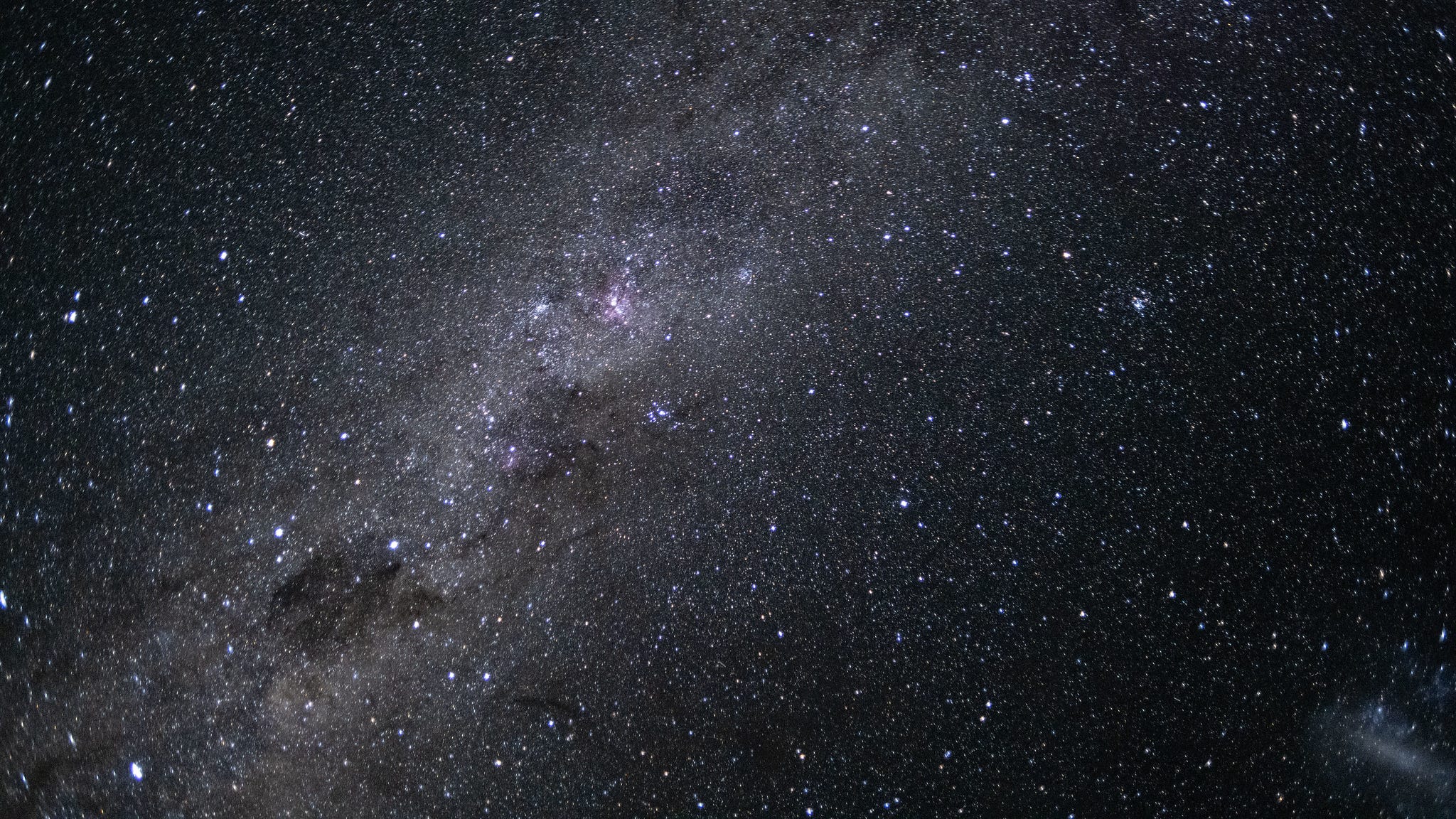
Our first series this summer is going to be on the stars, hence “Stellar” Theology. The stars create a sense of awe, remind us of the divine, and help us find our place in the world. If you have some interesting insights or trivia, I’d love to hear them. Please leave me a comment or send me a message.
Today, we’re beginning with awe. Looking up at the night sky on a clear night can inspire a sense of awe and wonder. It can help us feel connected to each other and to the earth and remind us that we’re not alone. A sense of awe and connectedness can calm your nervous system and reduce stress. Looking at the stars can simply boost your sense of well-being as you’re able to take deeper breaths and more calmly assess your situation and your place in the world.
When Stuart Hine loosely translated the hymn “How Great Thou Art,” from its original Swedish into English, he took artistic license to list the stars first when
“...consider[ing] all the works thy hands hath made.
I see the stars, I hear the rolling thunder,
thy pow’r throughout the universe displayed!”
The Swedish hymn, first written by poet and minister Carl Boberg after an intense thunderstorm in 1885, had separate verses about the heavens and the thunder.1 (It was originally nine verses long!) Both poets, however, refer to a sense of awe upon witnessing the power of God in creation.
The ancients also found the divine in the stars as many of the names of constellations come from Greek mythology. Creating constellations is a way of finding patterns in the night sky and making sense of one’s world. We all want things to make sense, even when they don’t.
Learning to read the stars helped early civilizations orient themselves in the world. Sailors used the stars to navigate and help them find their way. Astrology, as well, is a way of using the stars and lunar seasons to help one make sense of the world and determine how to act and what course to set. For one final more specific example, Harriet Tubman knew how to find the North Star to get her bearings, pointing her way north on each perilous trip seeking freedom for herself and others.
Today, we still use a solar calendar, based off the largest star in our solar system. Where would we be without our calendars, telling us where to be when and organizing our appointments, vacations, and other events? In modern society with electricity and windowless rooms, we may not be quite so consciously aware of how we construct our day and our time around a star, yet we still do. Everything has a time and a season to it. Stars help us orient ourselves and navigate our way through, even when we’re not looking up at the night sky.
Comments
Nothing yet. Say the first thing.
Sign in to join the conversation.