
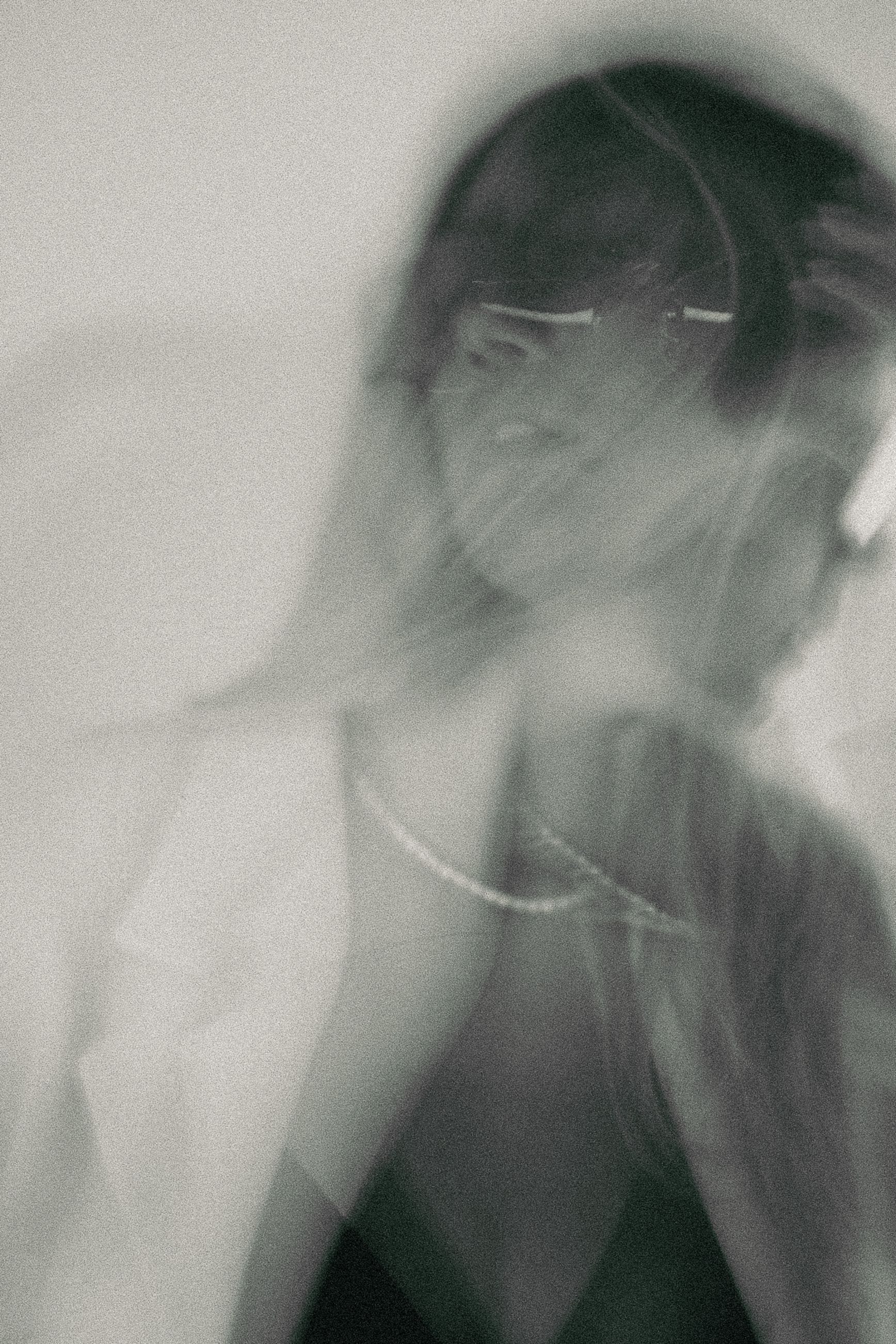
Something is happening to me. An unraveling of sorts, I suppose. I can’t quite say when it began. Perimenopause certainly seems to be a catalyst for many women to begin this transition, and I am no different. My children moving out didn’t flip the switch to my unraveling of self nearly as much as them actually becoming adults with their own lives and partners. (All good things, but it still shifted my place in the world.) Losing my largest freelance client thanks to the war in Iran certainly sped up the process. Suddenly I was jobhunting at 48, only to realize I had no idea what I wanted to be when I grew up.
But the biggest push was thanks to a Facebook algorithm serving me memes about being neurodivergent. I laughed just a little too hard; they resonated just a little too deeply. When it occurred to me that perhaps the posts resonated because I was part of that community, things began to make more sense. Weird little tics I thought were just me were no longer mine alone. Or, conversely, things I thought everyone thought or felt I found out were actually signs of neurodivergence. People roll their eyes at the rash of self-diagnosing via social media that’s going on, but when you live in a country with no healthcare and even less mental healthcare, it’s understandable.
For a while, I thought about pursuing a diagnosis because I hesitate to say I am something based on memes and Googling. For now, I’ve decided there are other more pressing matters where my health is concerned. For me, it’s enough that my life makes a whole lot more sense when I look at it through the lens of AuDHD. Understanding that whatever brand of neurospicy I may be, I should show myself a bit more grace and compassion for not doing all of the things just like everyone else does the things.
There was a time when I loved writing. It was how I processed my feelings, traumas, and life in general. The act of writing brought me joy in and of itself. I’m beyond fortunate to have actually built a career around that. My books broaden my world, and it’s been an amazing journey. But somewhere along the way, the industry began to change. Almost overnight, it became expected that writers crank out six or more books a year to stay relevant. I have friends who seem to easily meet this expectation. In my best year, I can turn out three or four books. Most years, I’m lucky to fit in one. As of this post, it’s been two and a half years since my last book was published, and that was a novella. A friend of mine has the mantra “butt in seat,” to explain how she turns out books like candy from a pez dispenser. For the longest time, I beat myself up because no amount of planting myself in front of a computer was prying a book out of my brain.
Writers are expected to be marketing ninjas, live and breathe social media, go to events, crank out weekly newsletters, and about a million other things while churning out a book every month or two. For the longest time I tried to keep up and berated myself when I inevitably failed. My friends could do it—why couldn’t I?
Looking at life through the lens of AuDHD also helped me make sense of how stuck I seem to be. I realized how much of my energy was going to masking—to trying to appear normal. Many who know me would say I didn’t succeed. But getting myself to be tolerably quirky took a lot of mental energy, energy I just don’t have anymore. I began to notice all of the coping mechanisms I’d put in place to limit stimulation, help myself navigate executive dysfunction, and navigate social relationships.
I’m struggling a bit to not make this post a deep dive into autistic burnout, but there came a point where I simply could not do the things I used to be able to. I will never forget stopping in the middle of a grocery store and looking at my husband helplessly. I shoved the list at him, unable to even speak, move, or process the words on the list and what I needed to do next. Justin didn’t have a clue what was going on, but he took the list and calmly finished the shopping and got me to the car. I’ve struggled with overstimulation my entire life. My kids knew to be quiet in traffic so I could concentrate on driving because I couldn’t do both. But it was the first time I’d ever totally shut down like a deer in headlights because the store was just too much—too loud, too bright, too many smells.
But the title of this post is unmasking, not burnout. Because unmasking is the thing all of this unraveling is about. And while masking is a term often used in reference to the neurodivergent trying to appear neurotypical, I’m of the belief it’s something all of us do: we put on the face we believe is expected of us. My beautiful eldest sister, the golden-haired golden child who could do no wrong in our parents’ eyes, puts on a mask each day. She becomes who the world expects her to be. That is, she did, until she began her own unraveling. My middle sister, the smart one, began her own unraveling not long after. Per usual, I’m trailing behind. The baby of the family, born so far after the other two the birth order books would call me a lonely only. (And yeah, that was absolutely a jab at my sister who used to love to remind me she was my elder.) Their unmasking looks different from mine, but it is happening all the same.
If you had asked me a year ago if I used stimming to calm myself down when I am getting overwhelmed, I would have looked at you like you’d lost your mind. I think most people hear autistic and picture Rain Man. Having an autistic niece and nephew, I knew better than that, but stimming? No. Definitely not something I do. Whether it’s a new thing for me (doubtful) or something I did but was unconscious of (more likely), I can say that my husband was the first to point it out. He told me he watches my fingers—if I start pressing them together in a particular order, he knows I’m at my limit and he needs to make excuses to extract us. Once I became aware of it, I could look back at many of my “quirks” and recognize them for what they were: tools to soothe a nervous system about to crash.
Having someone in my life I can be brutally honest with has quite probably saved me. Someone I can tell that I don’t know who I am anymore under all the layers of mask. He sees me, and he seems to know who I am even when I don’t. And—most importantly—he doesn’t try to insert himself into the process or tell me who the finished product should be. He just quietly watches and extracts me when the movement of my fingers tells him I have hit a wall.
I have come to realize that if I am going to flourish in this next phase of my life, I am going to have to do it as me, in all my weird little glory. That means wearing sunglasses in the store. Saying no to things I feel socially obligated to do but have no bandwidth for. Stimming when I need to. Making less eye contact sometimes. Resting when I am tired. Saying the wrong thing. Not expecting myself to publish the same number of books as my writer friends. Harnessing my superfocus when something interests me but not boxing myself in so I have the freedom to take a break when the interest wanes and suddenly my brain refuses to cooperate.
Justin and I recently listened to the audiobook An Immense World: How Animal Senses Reveal the Hidden Realms Around Us. It was a fascinating book that renewed my sense of wonder at creation. In it, the author talks about the concept of umwelt, that each species lives in its own unique sensory bubble, experiencing a different version of reality. It has me thinking about the fact that no two human brains are the same. Just as a different species’ umwelt shapes what they know of reality, our unique lived experiences, neural pathways, and nervous systems shape our own reality.
“Butt in seat” works great for my friend, and I am so happy for her. For me, it’s about as effective as telling myself to touch a hot stove. My brain requires a different approach, and learning how to work with the tools I have is a much better use of my time than trying to force myself to be something I’m not.
Equally useless is trying to appear “normal” when I never have been and never will be. Nor do I want to be. I actually like myself just as I am, so why do I spend so much energy masking?
I used to think I was transparent with my life, with my friends and my readers. Justin made the observation that I was transparent to a point. Because he always sees me, the real me, he knows how much of my soul I’ve poured into my books and my author platform. But he also knows it’s always measured. He sees me don my mask for the world and for those closest to me, hiding the depths of my emotion, the exhaustion it takes to exist, and tempering my words because I know my passion for many things is too much for most people.
After a lifetime of being told I was too much, I made myself less than. I don’t want to do that anymore.
I chose the name Heather Untethered for this substack because I want to be free from the chains that restrict my movement through life. I want to fully experience and share my joy, my anger, my curiosity, my love. If someone gets bored because I dorked out on hydroponics, they can scroll on. If my fury over people being treated inhumanely offends them, they can put down their phone and use their newly found free time to examine why cruelty doesn’t make them angry. My hope is that every time I see the name, it will remind that it’s time for me to be fully me, whatever that winds up being once I’ve finished this unraveling and stitched myself back together.
No more masks, no more filters. Just me, Heather untethered.
No posts
Comments
Nothing yet. Say the first thing.
Sign in to join the conversation.