
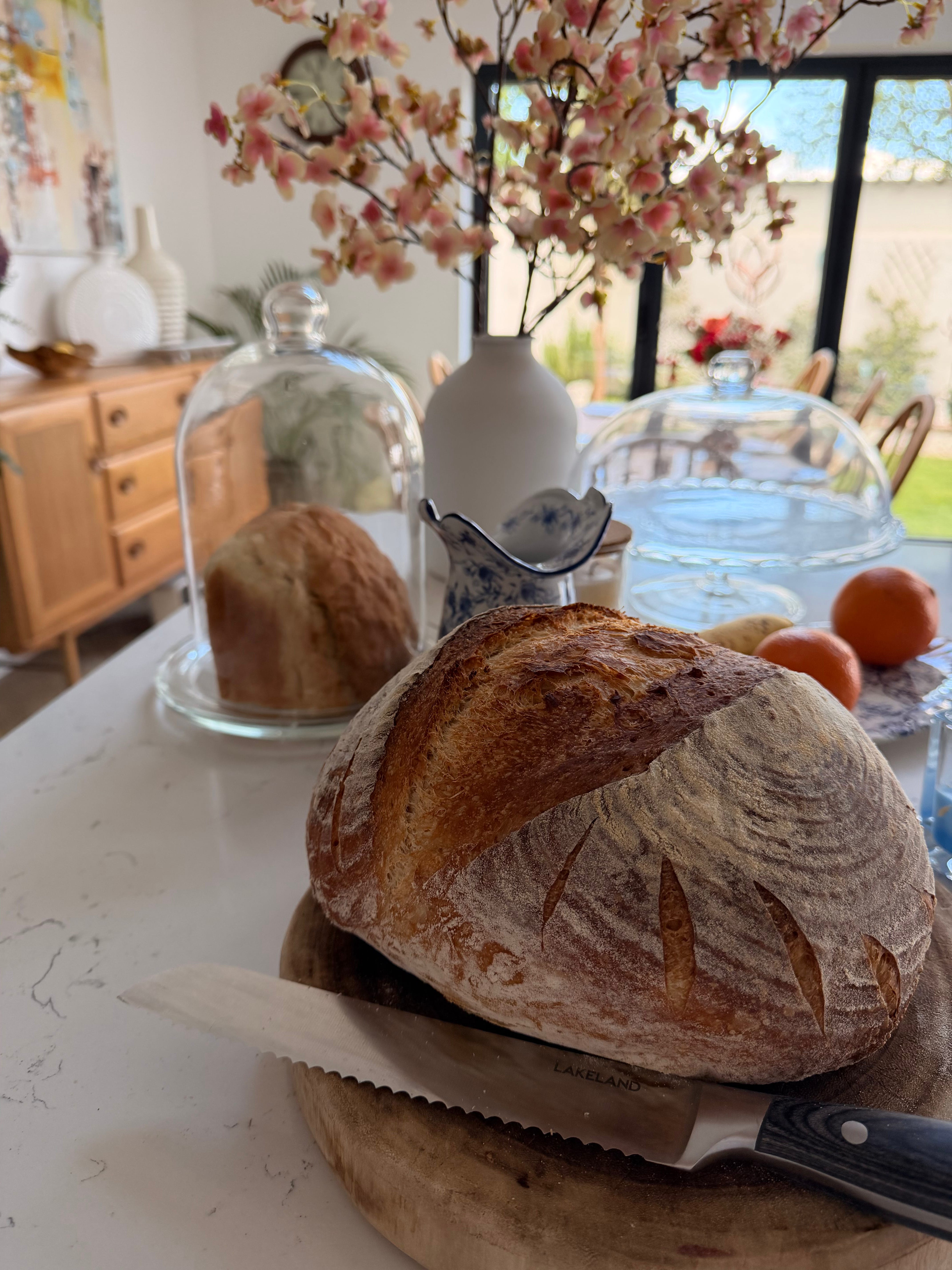
There are certain things from childhood that stay with you.
Not the big moments. The small, ordinary ones that you did not think much of at the time, but somehow never leave.
Growing up, when we were not staying on the farm, the baker came to our street at least twice a week. You would hear him before you saw him, and we would rush outside as he opened the back doors.
And there it was.
Bread, still warm. Cakes, buns, everything lined up neatly in trays. But more than anything, it was the smell. That deep, comforting smell of fresh baking that seemed to fill the whole street.
I think that is what I am always trying to recreate in my own kitchen.
Bread, for me, is joy. I am at my happiest when something is in the oven, when the house smells of flour and warmth.
My dad loved a lardy cake. We were just as happy with Chelsea buns or simple iced buns. My mum used to make them, soft and sweet, sometimes split and filled with jam and cream, which felt like the greatest treat imaginable.
And it was not just the baker.
The butcher would arrive in his white van, and we would stand outside choosing meat for the week ahead. The library van came too, with its own smell of paper and dust that I can still picture now. Even carpet sellers somehow found their way down our road.
We lived in a small village in Devon, but it felt like everything we needed came to us.
Looking back, those were not just deliveries. They were connections. To food, to people, to a way of life that felt slower, more grounded, and somehow more real.
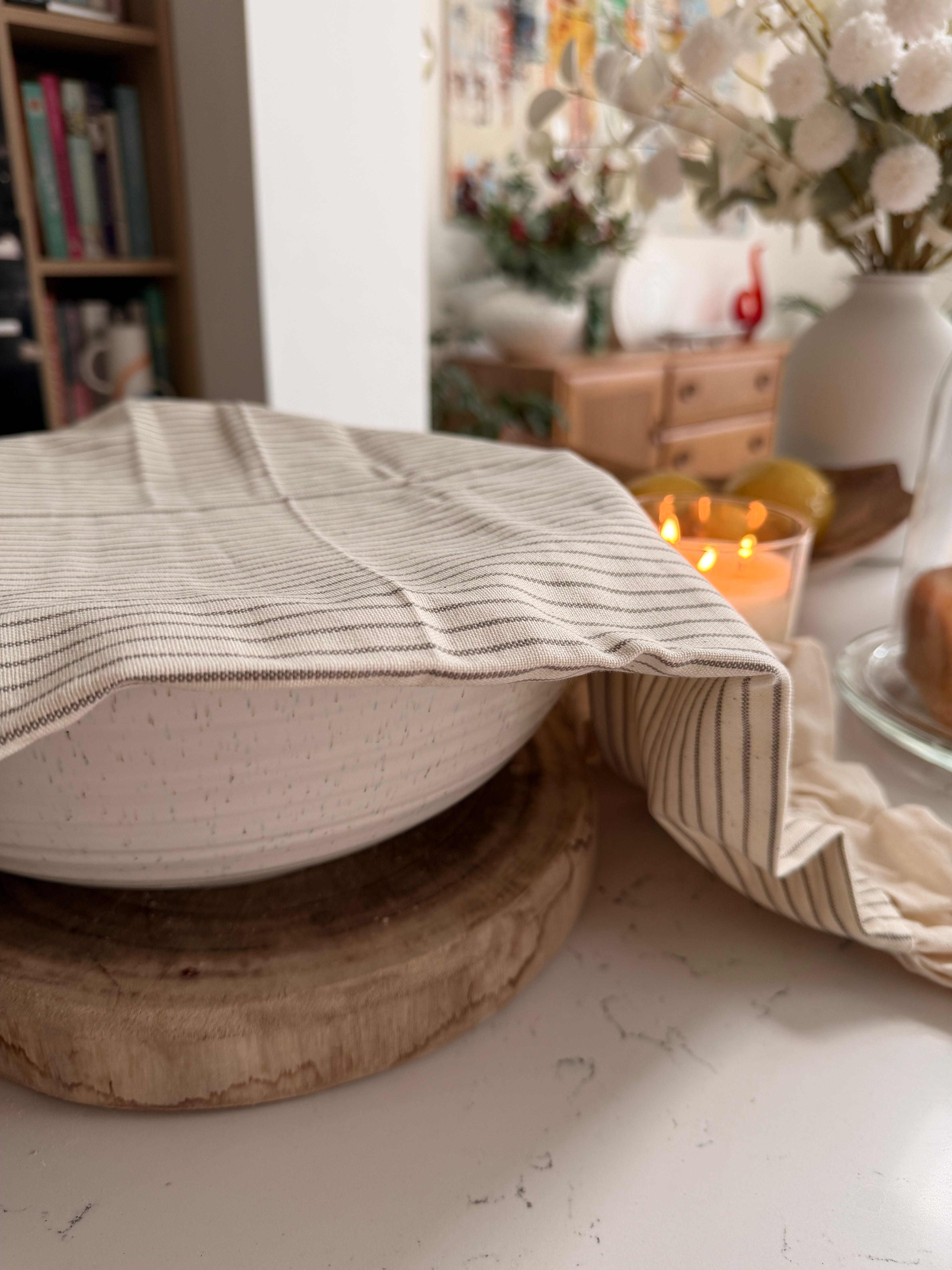
I think that is why I find myself baking so much now.
Not because I have to. Because I want to bring a little of that back.
And perhaps that is why I think so often about Aunty Mabel’s kitchen.
It was the centre of everything on the farm. Whatever time of day you wandered in, and as children we wandered in constantly, something was always happening. A pot on the stove. A cake cooling on the rack. The smell of something just out of the oven hanging in the air.
She always had a white sandwich loaf on the go.
But it was never lying flat the way bread usually sits. It stood on its end, upright, and she would slice it with the knife held flat, shaving off each piece rather than cutting down through it.
I used to stand and watch, completely fascinated.
I never knew why she did it. I still do not know if there was a reason, or if it was simply habit, passed down without question. But the image stayed with me.
Without really thinking about it, I have carried that into my own kitchen.
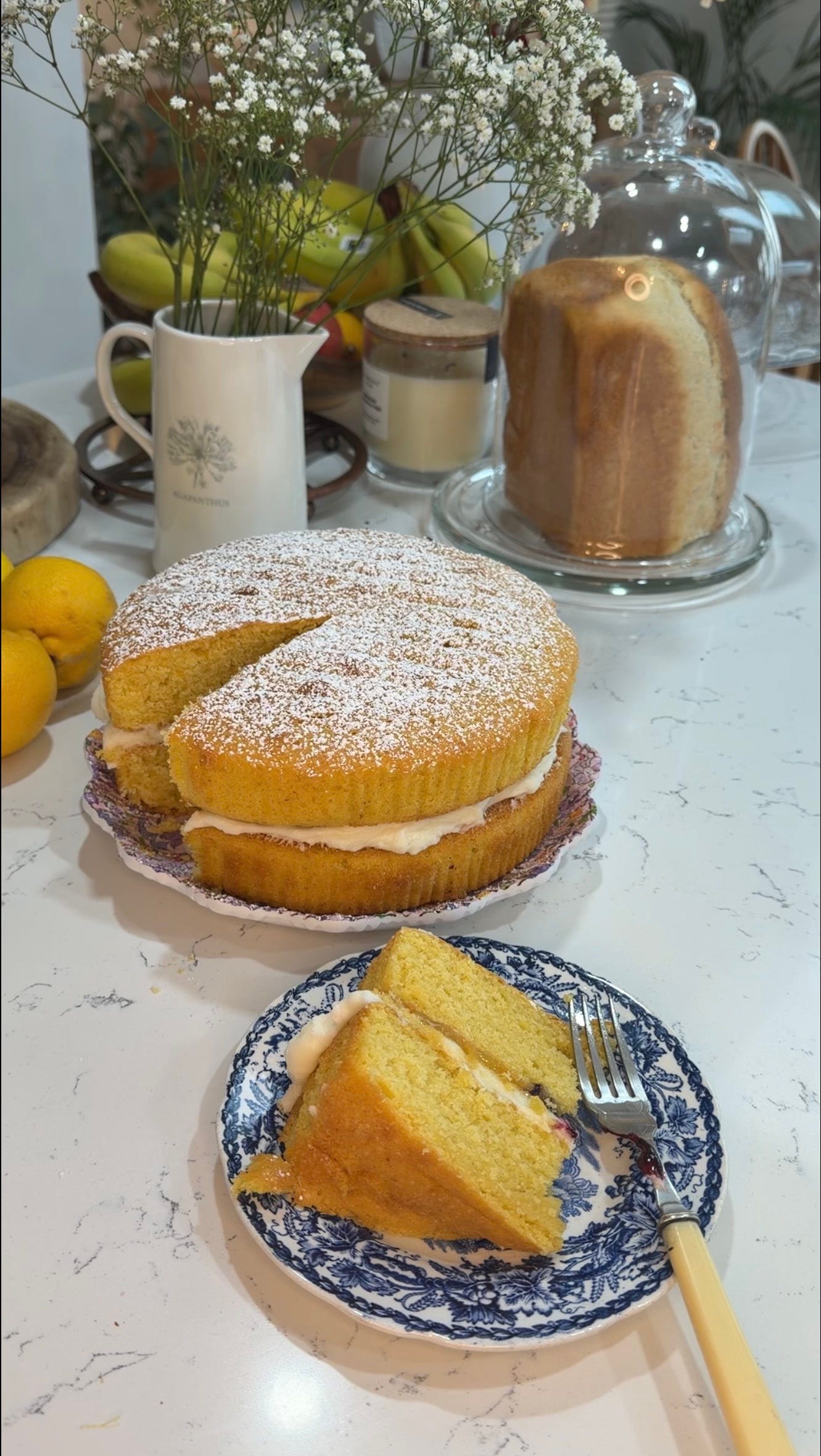
I keep our sandwich loaf in a glass dome on the island. Not tucked away in a cupboard, but out where it can be seen.
If people can see it, it gets eaten. If it is hidden, it is forgotten.
And the only way it really fits in the dome is upright, just as Aunty Mabel kept hers.
I still slice it the usual way. But every time I lift that dome, I am reminded of her kitchen. Of that quiet rhythm of food being made, sliced, shared, without anyone thinking too much about it.
Perhaps that is what I am trying to hold onto.
A loaf, visible, central, waiting to be cut.
This Week’s Bread
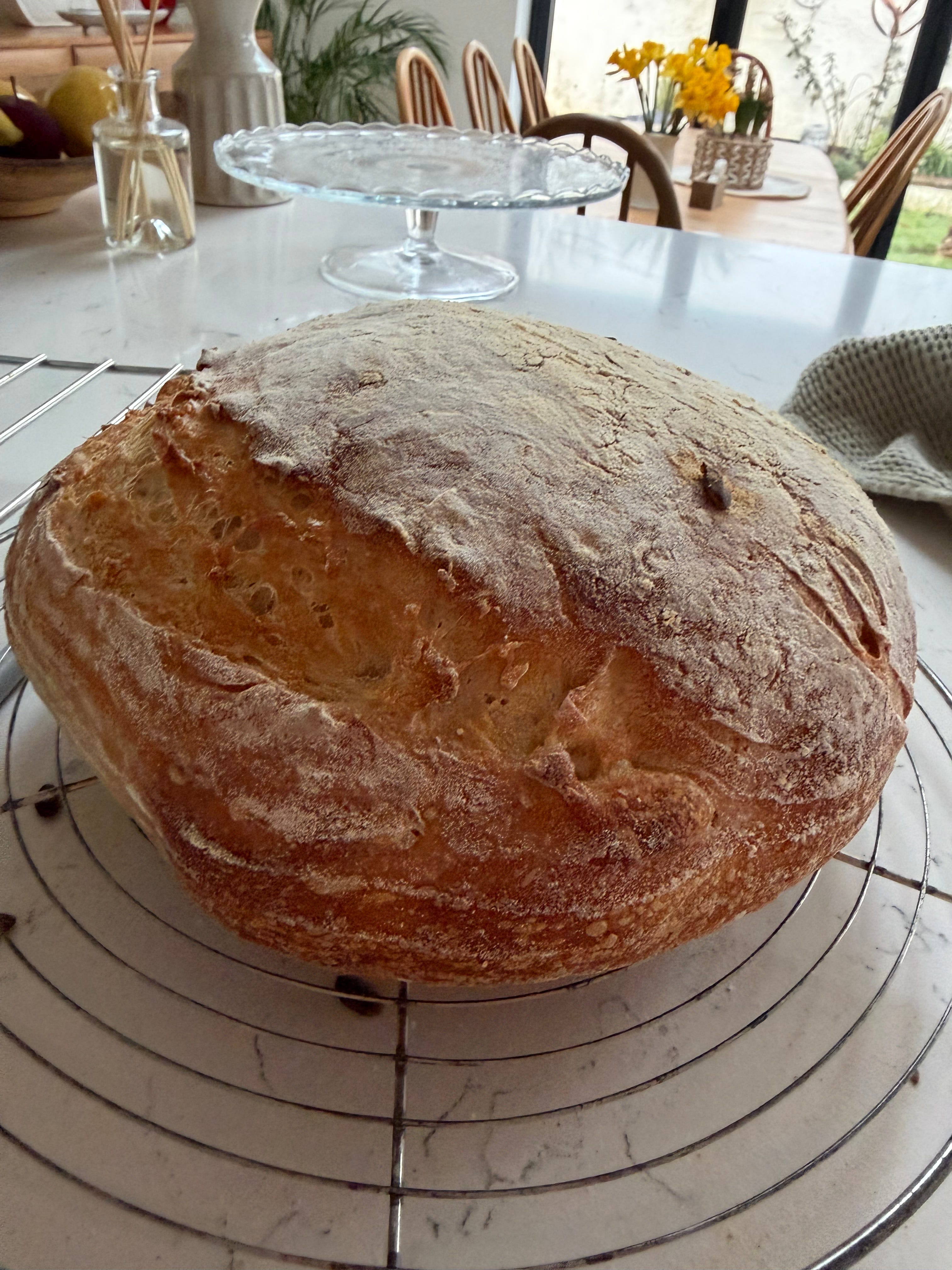
I bake bread every week. Usually twice.
A simple sandwich loaf for the week ahead. A sourdough for the weekend.
Nothing elaborate. Just bread.
And once you get into the rhythm of it, it becomes less about following a recipe and more about understanding what you are doing.
The feel of the dough. The timing. The quiet satisfaction of turning flour, water and time into something that feeds people properly.
These are the two I come back to again and again.
Everyday Sandwich Loaf
Makes 1 loaf
Ingredients
600g strong white bread flour
7g fast action dried yeast
10g salt
400ml warm water or milk
1 tsp sugar or honey
Method
I often use a mixer with a dough hook, but this can just as easily be made by hand.
Mix the flour, yeast and salt in a large bowl, keeping the yeast and salt separate to begin with.
Add the sugar and water, and bring together into a rough dough.
Knead for 8 to 10 minutes until smooth and elastic. It should feel soft and spring back when pressed.
Leave to rise in a lightly oiled bowl, covered, for 1 to 1½ hours until doubled in size.
Knock back, shape into an oval and place in a greased 900g loaf tin.
Cover and prove for another 30 to 45 minutes.
Preheat the oven to 200C.
Bake for 30 to 35 minutes until golden and hollow sounding when tapped underneath.
Cool on a wire rack before slicing.
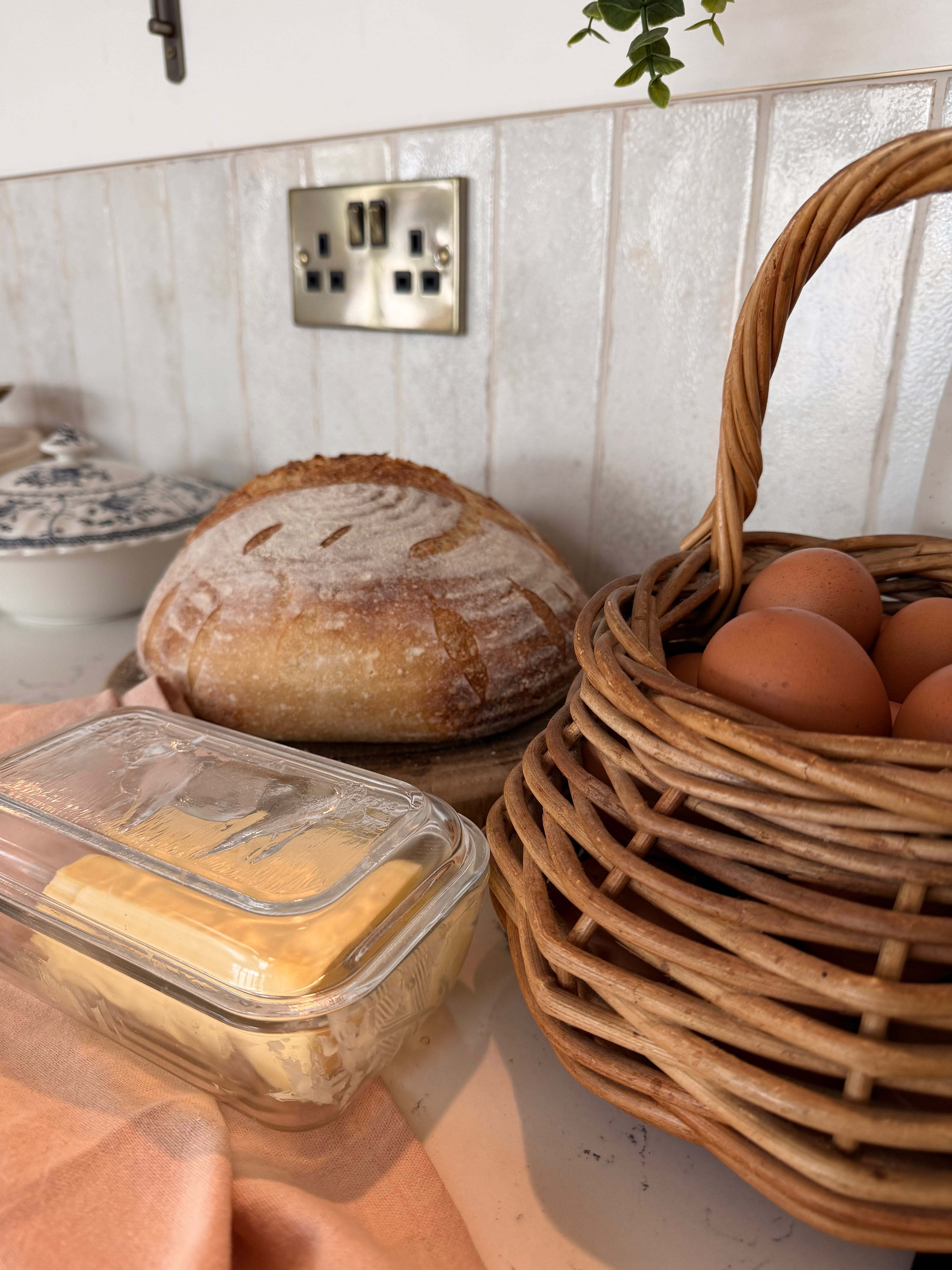
Weekend Sourdough
Makes 1 large loaf
You will need an active sourdough starter.
Ingredients
500g strong white bread flour
300g warm water
150g active sourdough starter
10g salt
Method
Place the starter in a bowl and add the water, mixing until milky.
Add the flour and salt and bring together into a rough dough. Cover and leave to rest for 30 minutes.
Over the next 2 hours, perform a series of stretch and folds every 30 minutes, pulling one side of the dough up and folding it over itself.
Leave the dough to bulk ferment until risen by around 50 to 75 per cent and looking airy. This can take 4 to 8 hours depending on the temperature.
Shape gently and place into a floured proving basket, seam side up.
Cover and refrigerate overnight.
Preheat the oven to 230C with a lidded cast iron pot inside.
Turn the dough out onto baking paper, score the top, and place into the hot pot.
Bake with the lid on for 30 minutes, then remove the lid, reduce the temperature to 210C, and bake for a further 15 minutes until deep golden.
Allow to cool completely before slicing.
And perhaps that is all it really comes down to.
A loaf on the counter. Something made properly. Something shared.
Not because we have to.
Because we choose to.
Until next week,
Sarah
Next Sunday: I will be sharing my fabulous spiced apple cake – my dad’s favourite.
No posts
Comments
Nothing yet. Say the first thing.
Sign in to join the conversation.