
The American public health system is undergoing its most dramatic restructuring in a generation. Under the Trump administration, new leadership at the National Institutes of Health (NIH) and Centers for Disease Control and Prevention (CDC) is implementing far-reaching reforms while simultaneous criminal accountability efforts target former pandemic officials. The convergence of institutional overhaul, legal investigations, and continued investment in next-generation vaccine technology has created a volatile landscape that critics describe as a long-overdue reckoning with institutional abuse of power.
NIH Reforms Under Dr. Jay Bhattacharya
President Trump’s NIH Director, Dr. Jay Bhattacharya, has moved swiftly to implement an ambitious reform agenda. A Stanford physician who rose to prominence during COVID-19 as a vocal critic of extended lockdowns, Bhattacharya is reshaping the nation’s premier health research agency from the ground up.
Central to Bhattacharya’s agenda is the development of an entirely new pandemic playbook. Working with fellow NIH officials, he has argued that the world needs fundamentally different preparedness strategies—ones that reject what the administration characterizes as the medically authoritarian approaches of the previous era, including prolonged school closures, economy-wide shutdowns, and top-down mandates. The proposed framework emphasizes targeted protection, individual medical autonomy, and evidence-based decision-making that accounts for collateral public health damages.
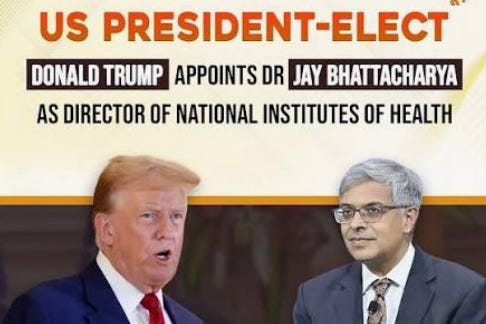
Perhaps the most concrete policy shift is the complete termination of federal funding for dangerous gain-of-function (dGOF) research. In August 2026, the NIH released a comprehensive government-wide policy banning such high-risk life sciences research, which involves genetically modifying pathogens to study their transmissibility and virulence. Bhattacharya described this as a “paradigm shift in federal oversight,” introducing enhanced review requirements, independent assessments, and strong enforcement mechanisms to prevent risky pathogen manipulation. The ban addresses long-standing Republican concerns that such research may have contributed to the origins of COVID-19.
Bhattacharya has also pledged to address the beleaguered Countermeasures Injury Compensation Program (CICP), which handles claims from individuals injured by COVID-19 countermeasures, including vaccines. Congressional committees have warned that without major reforms, the CICP backlog could take a decade to resolve, with thousands of claimants waiting years for decisions. The administration has signaled support for establishing a more transparent vaccine injury review body to restore public trust in vaccination programs.
Institutionally, Bhattacharya has consolidated authority by also serving as acting CDC director while the administration searched for a permanent appointee—a dual role that has drawn both praise for enabling unified decision-making and criticism for concentrating too much power in one official.
New CDC Leadership: Dr. Erica Schwartz
The search for permanent CDC leadership concluded in August 2026 when the Senate confirmed Dr. Erica Schwartz as the agency’s new director by a narrow 51–44 vote. Schwartz, a 54-year-old retired rear admiral, became the first Black woman to lead the CDC and the 22nd leader of the Atlanta-based agency.
During her confirmation hearings before the Senate Health, Education, Labor and Pensions Committee on July 15, 2026, Schwartz presented herself as a defender of scientific integrity within an administration whose health policies have frequently generated controversy. “Public health is in my DNA,” she testified. “If confirmed, my first priority will be restoring trust in public health institutions through radical transparency and unwavering scientific integrity.”
Schwartz’s most widely circulated testimony came when she declared: “As CDC director, my sacred responsibility is to provide the American people with public health guidance that is clear, honest, and evidence-based. I will never betray the science.”
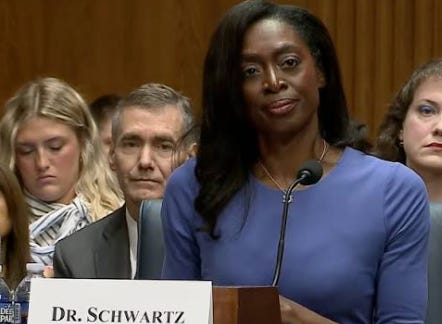
The confirmation has split the administration’s coalition. President Trump praised her military background and leadership credentials, while some “Make America Healthy Again” (MAHA) activists have expressed skepticism due to her institutional ties and support for childhood vaccines. Reports indicate she also backed some actions by HHS Secretary Robert F. Kennedy Jr., suggesting she may navigate a delicate path between institutional continuity and the administration’s reform agenda.
Senators pressing for stability at the agencies noted that confirming Schwartz and other nominees would be tasked with “bringing stability and restoring public trust in HHS.” Schwartz has also emphasized modernizing the CDC into a “near real-time public health enterprise capable of detecting threats early and responding faster,” while pledging to empower state, local, and tribal health authorities as the operational backbone of American public health.
Criminal Accountability Campaigns
These administrative reforms have developed alongside an unprecedented push for criminal accountability targeting former pandemic leaders. A nationwide campaign organized through advocacy networks has filed criminal referral requests with the attorneys general of all 50 states, urging investigations and prosecutions of Dr. Anthony Fauci and other senior public-health officials for alleged roles in what the campaign describes as the “COVID Criminal Enterprise.”
The referrals allege a pattern of misconduct during the pandemic, including suppression of alternative viewpoints, dissemination of misleading public health guidance, and potential perjury before Congress regarding the origins of COVID-19 and NIH funding decisions related to gain-of-function research.
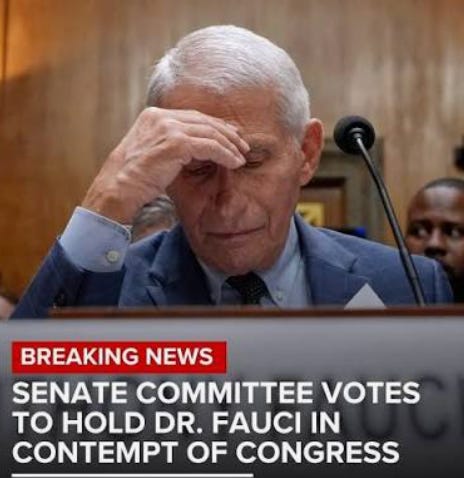
The campaign gained momentum following Fauci’s appearance before the Senate Homeland Security and Governmental Affairs Committee on July 29, 2026, where he invoked his Fifth Amendment right against self-incrimination rather than answer questions about his role in pandemic policymaking. On August 6, 2026, the committee voted 8-5 along party lines to hold Fauci in contempt of Congress, clearing the way for a criminal referral to the Department of Justice. Senator Rand Paul, who has long accused Fauci of lying about NIH-funded research and the lab-leak hypothesis, has been the driving force behind the contempt effort.
President Trump subsequently stated he is open to DOJ prosecution of Fauci, saying “maybe he should” face criminal charges. Legal analysts note that while President Biden had previously pardoned Fauci in the final days of his administration, that pardon does not extend to state-level charges or to conduct and testimony occurring after the pardon was issued.
Meanwhile, two NIH scientists recently faced charges related to virus samples, though colleagues characterized the case as largely about paperwork violations rather than malfeasance.
Next-Generation Vaccine Technology
Despite the NIH’s retreat from supporting certain mRNA programs and Bhattacharya’s criticism of pandemic-era vaccine policies, major funding for next-generation genetic vaccine technology continues through private philanthropy. The Bill & Melinda Gates Foundation has been investing heavily in self-replicating RNA (srRNA) and self-amplifying mRNA vaccine platforms, which could produce equivalent immune responses at substantially lower doses than conventional mRNA vaccines.
San Diego-based Replicate Bioscience has received multiple Gates Foundation grants totaling approximately $10 million to develop srRNA vaccines for tuberculosis, malaria, and HIV using the company’s novel platform. Self-amplifying mRNA vaccines encode both the target antigen and a viral replicase that amplifies the RNA inside cells, potentially allowing smaller doses and broader global distribution. However, the technology raises fresh biosafety questions, particularly given the administration’s new restrictions on gain-of-function and risky life sciences research.
A Phase 3 trial of Arcturus Therapeutics’ self-amplifying COVID-19 mRNA vaccine published in March 2026 reported longitudinally enhanced antibody function, suggesting the platform may have durability advantages over earlier vaccines. Whether such technologies will face heightened scrutiny under Bhattacharya’s risk-based framework remains an open question.
The U.S. Food and Drug Administration (FDA) approved mFlusiva, the first-ever messenger RNA (mRNA) flu vaccine, manufactured by Moderna.
Whistleblowers and Allegations of Suppression
Throughout the pandemic, physicians challenging official narratives faced significant institutional pushback. Dr. Pierre Kory, a critical care physician and president of the Front Line COVID-19 Critical Care Alliance (FLCCC), testified multiple times before Congress about early outpatient treatment protocols and alleged suppression of alternative therapies. While his advocacy for ivermectin was widely disputed in the medical establishment, Kory and colleagues argued that government agencies ignored or actively suppressed potentially effective treatments while rushing to approve novel vaccines under emergency use authorizations.
These whistleblower allegations have fueled the broader narrative that pandemic decision-making was characterized by groupthink, censorship of dissent, and harmful consequences for ordinary Americans—including educational deficits from school closures, economic devastation, and vaccine injuries left uncompensated.
The American public health system in 2026 finds itself at a crossroads. Bhattacharya’s NIH reforms, Schwartz’s pledges of scientific integrity, criminal referral campaigns, and continued advancement of genetic vaccine technology represent overlapping and sometimes contradictory forces. The administration’s supporters argue that these changes constitute necessary accountability after years of what they characterize as a chilling abuse of power—an era of mandates, censorship, and scientific opacity that eroded public trust. Critics counter that politicized prosecutions and rapid institutional overhauls risk destabilizing the nation’s capacity to respond to future health threats.
What is clear is that the pandemic era’s shadow continues to loom over every policy decision, every confirmation hearing, and every funding announcement. Whether the reforms will genuinely restore public confidence—or merely replace one set of partisan governance with another—remains the defining question for American public health.
No posts
Comments
Nothing yet. Say the first thing.
Sign in to join the conversation.