
Across the American West, water is not a convenience—it is the foundation of survival. From the orchards of Northern California to the wheat fields of Washington State, a silent crisis is unfolding as activists and regulators push to remove critical dams that store and deliver the region’s most precious resource. The proposed decommissioning of the Potter Valley Project in California and the Snake River dams in Washington is not merely an environmental debate. It is an existential threat to farmers, firefighters, and the rural communities that depend on reliable water. The Federal Energy Regulatory Commission must see these proposals for what they are—a reckless gamble with American food security and public safety—and halt any action that would remove these structures.
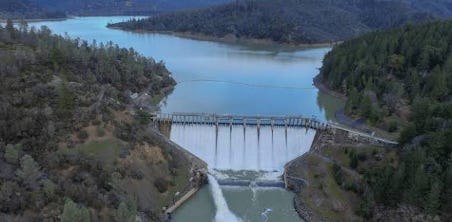
The Potter Valley Project, operated by Pacific Gas and Electric Company, is a remarkable feat of engineering that diverts water from the upper Eel River basin into the East Branch Russian River serving 750,000 residents. For more than a century, this flow has sustained hundreds of farms, vineyards, dairies, and ranches in Mendocino and Sonoma counties. It feeds the town of Potter Valley directly and underpins the agricultural economy that makes the region productive. Without the diversion, the Russian River basin loses a vital source of supply during the dry summer months, precisely when crops need irrigation and communities face drought stress.
California does not have a water problem; it has a water storage problem. Removing the Potter Valley dams would eliminate that storage and diversion capacity, turning a managed resource into an unreliable trickle. Farmers who have invested generations in their land would be forced to fallow fields, sell livestock, or abandon operations entirely. The surrounding towns, already stretched thin, would see their tax bases evaporate. In a state that produces two-thirds of the nation’s fruits and nuts, choking off Northern California irrigation is not a local issue—it is a national food security crisis.
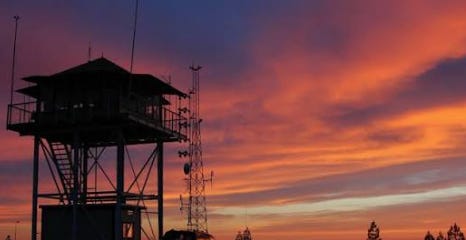
Then there is the matter of fire. Californians do not need a reminder that wildfire season is no longer a season; it is a year-round reality. When walls of flame descend on rural communities, every gallon of accessible water matters. The reservoirs created by the Potter Valley Project provide critical dip sites for aerial firefighting crews and drafting locations for rural fire departments that often lack municipal hydrant systems. Decommissioning these dams and draining their reservoirs would remove emergency water sources from some of the most fire-prone terrain in the country. Fire services already operate on shoestring budgets in Mendocino County; forcing them to haul water over greater distances while a fire rages is not policy—it is negligence.
Northward in Washington State, the lower Snake River dams—Ice Harbor, Lower Monumental, Little Goose, and Lower Granite—form another linchpin of regional survival. While much of the public debate centers on hydropower and barge traffic, the water management role of these structures is equally vital. They regulate flows that support extensive irrigation networks across southeastern Washington, feeding a agricultural sector that produces wheat, potatoes, onions, and legumes for global markets. The reservoirs provide the stable water elevations that allow irrigation pumps to function and that recharge aquifers used by rural municipalities.
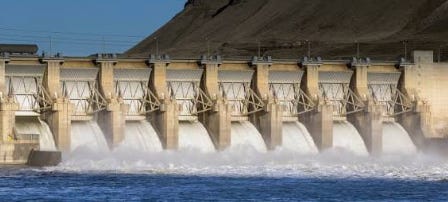
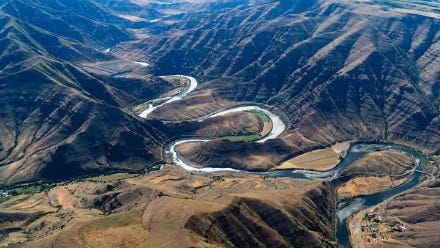
Removing the Snake River dams would not magically restore an uninterrupted river. It would sever the water delivery mechanism that farmers and ranchers have relied upon for decades. Eastern Washington is dry country. It lacks the consistent rainfall of the Cascades’ western slope. Without managed storage and regulated flows, farmland reverts to dust. The small communities that line the Snake and its tributaries—from the Tri-Cities to Lewiston—depend on this system for household water, agricultural processing, and local industry. Dam removal would not just inconvenience these towns; it would gut them.
Like their counterparts in California, Washington fire services depend on accessible water in rural landscapes. The Snake River reservoirs serve as strategic reserves for wildfire suppression across the Palouse and Columbia Plateau, where summer lightning storms and tinder-dry grasses create relentless fire risk. Aerial crews and ground teams use these water bodies as immediate sources to protect homes, ranches, and critical infrastructure. Decommissioning the dams in the name of ecological theory while ignoring the life-or-death logistics of firefighting is a trade that Washington residents should refuse to accept.
The broader economic ripples extend far beyond the farm gate. When a region loses irrigation, it does not only lose crops; it loses trucking companies, equipment dealers, meat processors, wineries, and the Main Street businesses that serve them. Schools close. Hospitals shrink. Young families leave because there is no economic future. Decommissioning these dams would be an exercise in rural erasure, wiping towns off the map because distant policymakers decided that fish recovery requires destroying human communities—despite technological alternatives like advanced fish passage systems, hatchery reform, and habitat restoration that do not require dam removal.
This is where FERC must step in. The Federal Energy Regulatory Commission is charged with balancing environmental stewardship with the public interest, and that interest explicitly includes reliable water supply, power generation, and economic stability. Under federal law, any proposal to decommission a licensed hydroelectric project must undergo rigorous scrutiny of not only ecological but also socioeconomic impacts. FERC cannot allow itself to become a rubber stamp for removal campaigns that treat agriculture and public safety as acceptable collateral damage.
The commission must recognize that the National Environmental Policy Act and the Federal Power Act require a holistic review. An environmental impact statement that ignores evaporating farms, abandoned firefighting assets, and dying rural economies is not science; it is advocacy masquerading as regulation. If PG&E seeks to shed its Potter Valley license, FERC must ensure that any successor operator maintains the project intact. If federal agencies advance Snake River dam removal, FERC should use its authority and public platform to oppose the destruction of essential water infrastructure. There are better ways to help salmon than by damning farmers and firefighters to failure.
America’s Western dams were built by generations who understood that prosperity in an arid landscape requires foresight. They captured spring snowmelt and stored it for summer crops, autumn fires, and year-round human need. The proposal to tear down the Potter Valley and Snake River dams ignores that wisdom. Farmers deserve to keep their water. Firefighters deserve to keep their reservoirs. Rural families deserve to keep their homes. FERC has the power to protect them all. It must act—and it must say no to decommissioning.

A final note of caution to the Commissioners: The Supreme Court’s landmark decision in Trump v. Slaughter has obliterated the “for cause” removal protections that once insulated independent agencies like FERC from raw partisan discharge, meaning President Trump can now fire any commissioner without cause, explanation, or due process—policy disagreement alone is sufficient to end your tenure overnight. If you approve decommissioning orders that sever water supplies to farms, drain critical firefighting reservoirs, and devastate the rural communities you are sworn to serve, you will face not only the wrath of Western landowners and emergency services, but the certainty that your seats are politically expendable in a single afternoon. Your predecessors believed their independence was constitutionally bulletproof; the Court has proven otherwise. Unless you wish to be replaced by commissioners who understand that these dams are the difference between agricultural survival and rural collapse, you would be wise to reject these removal applications immediately and protect the water infrastructure that keeps the West alive.
Thanks for reading! This post is public so feel free to share it.
No posts
Comments
Nothing yet. Say the first thing.
Sign in to join the conversation.